CBDCs vs Crypto: What does it mean for our future?

Cryptocurrencies have been in the news for all the wrong reasons recently with market crashes, multi-billion dollar bankruptcies, and record-breaking hacks and heists stealing away hundreds of millions of dollars of user funds grabbing all the headlines. It wasn’t supposed to be this way though, with Bitcoin, Ether, and the army of altcoins and decentralized finance (DeFi) protocols that followed them supposed to offer people a more accessible way into the world of finance, free from government oversight, surveillance, and even censorship and control.

Unfortunately, however, as we have seen this year, the supposedly decentralized crypto world has still ended up creating centralized pools of money and power that ultimately auto-destructed. In this context, calls to regulate crypto are increasing and with those calls also hopes and fears, depending on who you talk to, of central bank digital currencies (CBDCs) are also on the rise. The question is though, what are CBDCs and why do you need to know about them? Let’s check it out.

What are crypto stablecoins?

To build an understanding of CBDCs, why calls for them to be implemented are growing, and why some people are excited about them, and others are terrified, it is best to first get a grounding in crypto stablecoins. A crypto stablecoin is a crypto coin that maintains the same value and is pegged against the value of a real-world asset. The most common stablecoins are pegged against the US Dollar and there are many options available including the USDC coin and the USDT coin. Some stablecoins hold reserves of real-world assets to maintain their value while others use algorithmic protocols to maintain their value in what is supposed to be a completely decentralized manner.

Stablecoins perform several key functions in the world of crypto as they can be used in place of real money to take part in DeFi protocols to earn interest or financial yield, can be used to transfer money from one wallet to another, or can also offer a way to stay out of the volatile crypto markets while maintaining crypto capital that you can deploy into the crypto markets quickly and efficiently at any given moment.
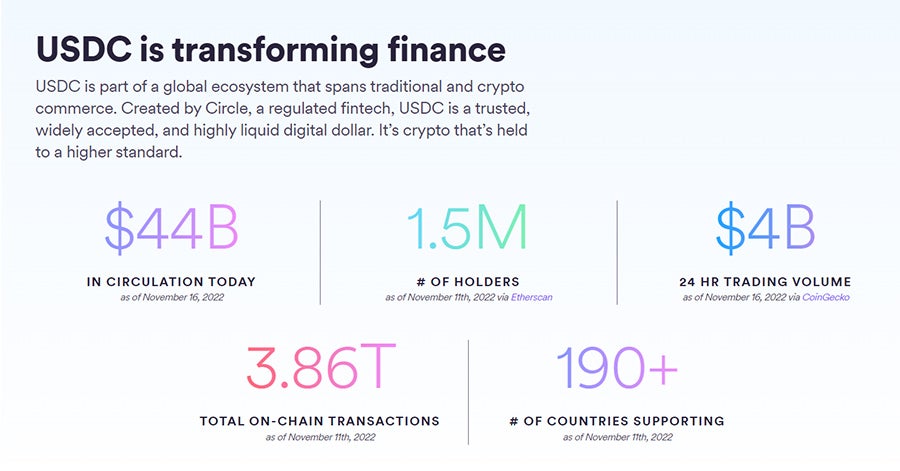
Facts and figures about USDC

Crypto crises and crashes

There is no doubting the utility of crypto stablecoins, but one fact remains about blockchain technologies and the crypto sector in general and it is that it is still a new technology. The technologies and algorithms underpinning it all still have not been perfected, which causes huge amounts of volatility even in stablecoins, which are supposed to sit outside of the volatile crypto markets. The FTX debacle has been the most recent example of huge amounts of money seemingly disappearing overnight due to the volatility, but we also have an example from earlier this year that specifically relates to stablecoins.

Back in May of this year, the TerraClassicUSD coin, more popularly known as UST, crashed in value wiping billions of dollars out of the crypto space in what felt like the blink of an eye. This was an algorithmic stablecoin that was supposed to hold the value of $1 USD but is now worth just over 2 cents. To maintain its value of $1 UST employed an algorithm that used the company’s main token Luna to offset sales and purchases of UST so that they wouldn’t affect the stablecoin’s price. Unfortunately, however, a crisis hit and the algorithmic mechanism was unable to maintain the price and the value of UST began to drop below $1 USD. This caused a cascading effect with fearful users frantically trying to sell their UST before the price dropped further and in turn, put even more pressure on the algorithmic stablecoin. What makes the whole thing even worse is that up until that point, holding UST allowed customers to deposit it in the Anchor DeFi protocol, which paid out 20% interest on the deposits. Many people had deposited their life savings in the protocol chasing the seemingly stable interest offered by the protocol. Estimates say that in total, the Luna/UST collapse wiped out over $60 billion.
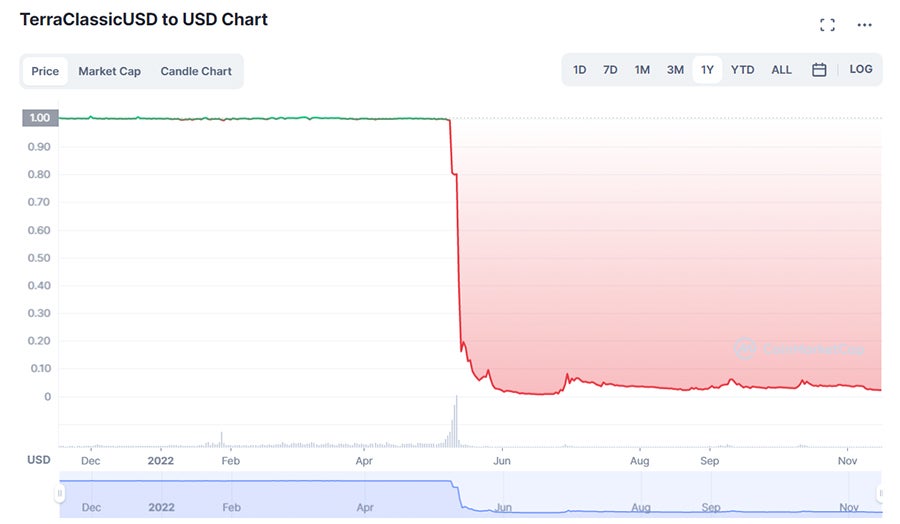
Terra chart
Image via: CoinMarketCap

Crypto regulations and freedoms

It is in the context of major crises such as the FTX crisis we have seen over the last few days and others such as the Luna debacle that calls for increased regulation of the crypto markets are growing and the subject of CBDCs is increasingly becoming a part of the crypto conversation. For many in the crypto industry, however, this flies in the face of the raison d’etre of crypto, which is to offer much freer access to a monetary system that is not controlled by a central authority. Many crypto enthusiasts like their freedoms and even though, as we explored earlier this week, it is relatively easy to track transactions across multiple blockchains, the plethora of decentralized exchanges and financial products we see in crypto right now represent positive steps toward a more just future than could ever be offered by CBDCs, despite their volatility. In fact, for many crypto enthusiasts, volatility is a mark of virtue as it represents a barrier to entry that requires dedication to overcome.

Central Bank Digital Currencies (CBDCs)

Despite the protestations of self-styled freedom-loving crypto enthusiasts, however, CBDCs are increasingly becoming a part of the conversation so it is important to know what they are. Simply put, CBDCs are very similar to crypto stablecoins except for the crucial distinction that they are issued by the central bank of a nation and pegged to the value of the fiat currency used in that nation. If the Bank of England issues a CBDC it will be a digital equivalent of the British Pound, if the FED launches a CBDC it will be pegged to the US Dollar, and so on. If a central bank is issuing the coin, then it is intrinsically linked to the value of the real-world asset because that is also issued by the central bank. It should be clear now then why voices are increasingly calling for CBDCs to come in. They remove the volatility that even affects crypto stablecoins altogether.
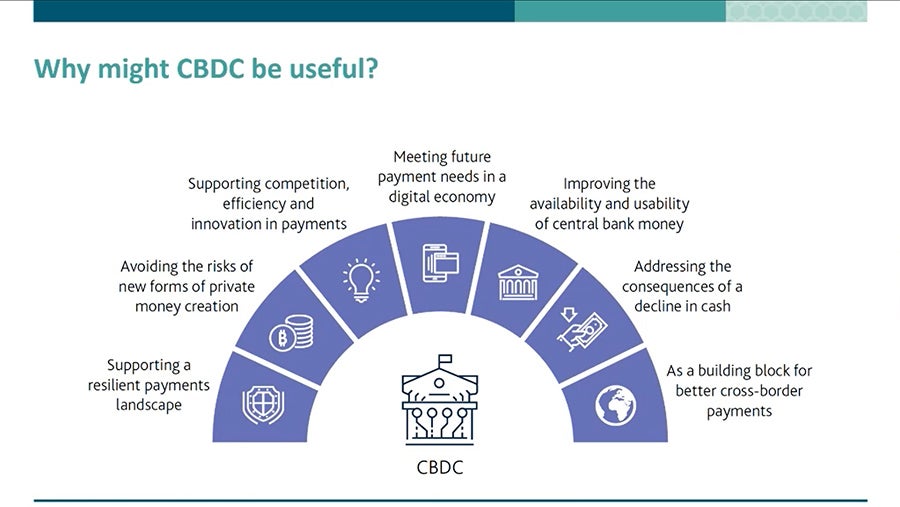
A diagram showing why CBDCs are useful
Image via: Bank of England

CBDC considerations

There are a few things to consider, however, when it comes to CBDCs. First off, there are still plenty of people who do not think they are necessary and who believe that decentralized algorithmic stablecoins still offer the best way to ensure people can participate in the exciting possibilities offered by DeFi, without being overly exposed to the volatility we’ve explored in this article. Two prominent examples are DAI and FRAX, although there is a constant stream of new companies attempting to introduce new stablecoins that use different algorithmic methodologies to maintain the value of the coin without submitting it to the oversight a centralized authority.

That last point is crucial because, as we saw earlier this week when looking at Blockchain investigations, the nature of blockchain technology is that it is transparent and open. Moving to a digital monetary system that is based on a CBDC could potentially enable to central banking authority to cut off access to the transparent transaction records meaning it would be more difficult to track the movement of money or investigate the implications of where it is gone. Potentially a government could make it difficult to follow the money so to speak. Another key issue here is surveillance. If digital money is flowing through a central banking authority, then it is very easy for the government to track every penny you spend and to know exactly what you’ve spent it on. We’re already seeing examples of this such as the technologically impressive digital Yuan, which is being issued by the Chinese government.

Implications for the future

The buzz and excitement that still swirls around the world of cryptocurrencies and DeFi make clear that these innovations truly offer something, up until now has simply not been possible. Despite the volatility and obscene amounts of money lost in various crises, new DeFi protocols are being launched every day and the speed of innovation is causing governments around the world to take note. CBDCs are already here and will likely continue to roll out around the world. As to whether this will have a positive effect on society remains to be seen but judging by the pace with which people have embraced the cashless society, increasingly using the likes of Apple Pay and Google Wallet, and using a whole new world of Finance apps like Revolut, Robinhood, and Mint, if CBDCs offer any sort of convenience at all, people will begin to use them en masse. The big question, at least according to many crypto enthusiasts, is whether they will even have a choice.


Blockchain investigations: Following the stolen FTX money

It has been a rocky week for crypto with the collapse of FTX, a major crypto exchange, seemingly wiping billions of the combined net worth of legions of crypto enthusiasts. We’re not talking here about the volatility of the crypto markets either even though the price of Bitcoin crashed to new yearly lows and has been up and down since. Instead, the real headlines have come from billions of dollars’ worth of FTX user deposits simply not being there anymore. In total, it looks as though close to $8 billion worth of crypto assets were essentially worthless as the company did not have the funds needed to pay out their value. On top of that, hackers were able to walk away with almost half a billion dollars. This article will try to unpick the chaos and look at how investigators are trying to get the money back and catch the people who stole it.

Following a Twitter exchange between FTX head honcho Sam Bankman-Fried and Changpeng Zhao, CEO of rival crypto exchange Binance, FTX users began frantically trying to withdraw their funds from the exchange, attempting to take around $6 billion worth of funds over a 24-hour period. This was a full-scale bank run that ended in FTX filing for bankruptcy and leaving so many users without access to their assets.

A deeper look at FTX

Back in its heyday Bankman-Fried’s FTX was seen as a prodigious company and he and his company were regularly compared to entrepreneurial luminaries such as J.P. Morgan or Warren Buffet. Behind the scenes, however, FTX was not run like other companies. For a start, despite venture capitalist firms investing billions of dollars into the company they did not have representatives on the board.

It is no wonder that things have gone so badly wrong when you further examine the corporate structure at FTX. As well as working without the oversight of a board of investors, the FTX top team were all living together in a penthouse in the Bahamas with several reports claiming that they were all in romantic relationships with each other. If you add to this the rather austere image that Bankman-Fried and his team portrayed to the world while living in a penthouse that has just gone on the market for just under $40 million the dysfunction and dishonesty that will come to mark FTX quickly becomes apparent.

How FTX failed

This leads to what ultimately caused FTX to fail, which was the mishandling of user deposits in misguided attempts to invest in companies and future endeavors. Bankman-Fried founded Alameda Research in 2017 before founding FTX a couple of years later. Alameda Research was a trading firm, investing in crypto projects and flipping the investments for profit. Once FTX had been founded, however, the close proximity between the trading firm and the exchange began to raise eyebrows, due to Alameda often profiting from the losses FTX customers were experiencing. According to the New York Times, although both companies were supposed to be separate entities, Alameda employees often had a full view of the FTX trading data when teams from both companies were working out of the Bahamas penthouse.

The links between the two firms sit at the heart of the recent crypto crash as loans made by Alameda to cover bad investments proved difficult to pay off as the cash was not readily available. In an attempt to plug this gap, the firm began using FTX user deposits to pay off the loans. Reports say that this amounted to a staggering $10 billion worth of FTX deposits being used to cover Alameda loans, an amount which the exchange simply could not cover.

The FTX hack

This brings us to the hack. Incredibly, on top of the billions of dollars of misappropriated funds squandered on bad investments, hackers were also able to steal almost half a billion dollars from FTX as the company was collapsing. Naturally, considering the dishonest and dysfunctional environment of the FTX head office/penthouse, suspicions have quickly turned to FTX insiders. It is still not exactly clear how the hack was perpetrated against the ailing crypto exchange but fortunately, due to the nature of blockchains, following the money is easy to do and even if the transactions are made anonymously, at the end of the day, turning the anonymous crypto coins into spendable currency will get people’s attention.

How investigators are tracking the stolen money

Blockchains work like centralized ledgers. Transactions and contract executions are computed and added to blocks and then added to the chain. The chain cannot then be altered only added to meaning that the transactions are all transparent and remain public forever. This means that crypto coins stolen in the hack can be tracked whenever somebody interacts with a blockchain to move them around. This means, that as Wired has reported, crypto investigators have been able to follow the cash, which crypto-tracing company TRM Labs values at around $338 million to a mere handful of crypto wallet addresses.

The result of this observability is that it becomes very difficult for the hackers to actually spend the cash. As head of investigations at TRM Labs, Chris Janczewski said to Wired:

“This potential thief has hundreds of millions of dollars. But it’s like they went into a bank, took as much cash as they could carry, and then the dye packs went off. They’ve got all this money, but now everyone knows it’s connected to this bank robbery. What can you actually do with it?”

All this leaves the thieves in a tricky situation as any time they try to access or spend the cash they have stolen from FTX, they put their identities at risk. Identities that may well be linked to team members at FTX itself. However, it is worth pointing out, however, that although people seeing their fortunes evaporate before their eyes may seem like the perfect culprits for a heist of this magnitude, they could also be more susceptible to scams. We report regularly on advanced phishing scams designed to take advantage of internet users and trick them into clicking on a link they shouldn’t or downloading an infected file. There is a good chance that the scammer may have taken advantage of the chaos of FTX’s fall to get a team member to do something they shouldn’t have.

How to spot a phishing scam Learn more

Whoever perpetrated the FTX hack, whether it was an internal team member, or an external hacker will likely face challenges getting the stolen money out into the real world as crypto investigators are watching the money closely. On top of the hack, however, thoughts must also go out to the unsuspecting FTX users who have seen their funds disappear through malfeasance and dishonest business practices.

Is it as bad as it looks for Big Tech?

You’d be forgiven for mistaking the tech sector for a dumpster fire right now. Even just a cursory glance at some of the biggest tech companies in the world shows massive layoffs, stock prices tumbling, and whatever the hell is going on at Twitter. It all looks to be a giant mess as the quest for constant growth seems to have over-extended Meta and caused problems for Netflix which doesn’t really have that many more markets to break into. Is it all as bad as it seems though? Today we are going to dig a little deeper beneath the headlines and explore some of the less-reported things going on in tech to get a more developed picture of the state of the tech industry and what it means for you.

Tech layoffs and downsizing

Back at the turn of the millennium, everybody was going crazy investing in any business that had a .com URL. People were making ridiculous amounts of money until it all went bust, with the dot com crash being one of the most famous things to have ever happened in the tech sector. Back then, when the bottom fell out of the market, tech companies were going bankrupt and lots of tech workers lost their job. In fact, around 107,000 tech workers lost their jobs thanks to the dot com crash. In 2022, so far, more than 120,000 tech workers have lost their job, more than during one of the worst crises to ever grip the industry.

The easy explanation for the huge numbers of layoffs we’ve seen this year is that more people are working in tech than ever before, thanks to more than two decades of unprecedented growth. If we take Meta, Facebook’s parent company, as an example, around 11,000 employees have just lost their jobs, which is more employees than Twitter ever had. The Tech sector has grown immensely. Despite this, however, the numbers are still pretty big and immensely worrying; according to the layoffs.fyi tracker Amazon has also laid off over 10,000 workers, but it is when you look at the percentages of workforces that have been cut, it gets quite shocking. Snap has laid off 20% of its workforce, as has Intel, Robinhood has laid off a whopping 30% of its workforce, but Twitter takes the prize having laid off a full 50% of all its workers.

What’s behind it all

Behind all this turmoil are a variety of factors, which we explored a little in the article we published last week covering the layoffs at Meta. These include the ongoing economic turmoil caused by global macroeconomic factors such as rising inflation, a slowdown in spending, contracting economies, and the ongoing war in Ukraine.

Facebook owner Meta is on a firing spree Read for more information

Another key factor to consider is that the last couple of years has seen unusually large growth for tech companies thanks to the pandemic. Furthermore, economic forecasts do not indicate that things are going to get better any time soon. Not only are things bad now, but they also are not due to get any better any time soon and this is why tech companies have been tightening their belts over the last twelve months. According to Dan Wang, an associate professor at the Columbia Business School, talking to Business Insider:

“When they cut costs, the first thing to go is typically labor costs and also advertising and marketing […] So when it comes to forecast what their numbers will look like, it’ll depend on how they have seen the trend in advertising spending on their platforms. When that doesn’t look good, then they have to accommodate those expectations by adjusting the workforces.”

Is it as bad as it looks?

There is no getting around the fact that the tech sector experiencing a seismic shock to the system right now. However, there are some broader considerations we can look at to get a more complete view of the situation. First up is the fact that we are seeing right now is no doubt a result of economic cycles. In some respects, these companies are seeking to ‘balance their books for this year so that they can start next year in a stronger situation. With the macroeconomic factors discussed above likely to last long into 2023 and maybe even 2024, the big tech companies will still be feeling the strain, but they may be going into the next economic cycle in a stronger position than where they are now.

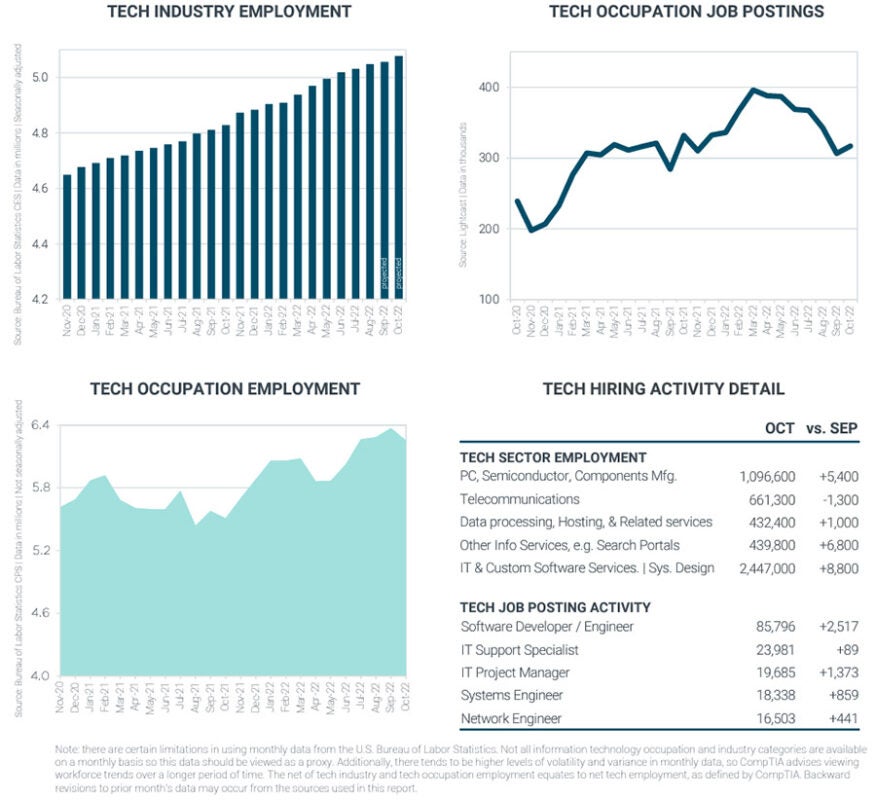
Also, even though we have seen record numbers of layoffs, interestingly the tech sector, in general, is still hiring at record numbers and in fact, according to CompTIA’s latest Jobs Report, tech companies hired 20,700 workers last month, marks the 23rd consecutive month of growth. This means, that if we take hiring into account, the tech sector has actually gained a whopping 193,900 workers so far this year. In total, that means it has actually grown by 28% from this time last year. This growth is being driven by the continued growth of the digital sector in general, which is seeing more and more people come online and more and more services being administered and provided digitally.

tech industry graphs
Image via: CompTia

Looking forward

Taking it all into account then, it looks like the broader tech sector is actually in a strong position with technology and digital technology seeping into more aspects of our daily lives. It is the big tech companies, however, who are more vulnerable to the broader economic factors that are affecting the global economy. The other factor that we have to raise here, above all else, however, is the workers. Losing your job is a horrible thing to go through, not least because of the financial strain it places upon you and your family, but also the emotional and psychological turmoil you face when you are cast aside by your employer. Fortunately, for these workers they have expertise that are in demand from a sector that is increasingly embracing remote work opportunities so it shouldn’t be too long before they find new opportunities.

Big tech is coming for your passwords

It is starting to look like passwords may soon be a thing of the past. We recently covered a story about new password-replacing technology that Google is implementing in Chrome and also have to tell you that it is not just Google moving in this direction either. Other big players like Microsoft are also pushing their own passwordless solutions and a broad alliance of big players including everybody from Amazon and Apple to Mastercard and Visa pushing for a passwordless future.

So, what’s it all about then? What is wrong with passwords and what are the merits of the proposed password replacements? Let’s take a look at the broader trend sweeping across the tech industry that is ushering us into a passwordless future.

The problem with your passwords

Tech experts have been saying for years that passwords are yesterday’s technology because, to put it simply, they are not very secure. Having access rely entirely on the correct input of a variety of numbers, letters, and characters creates vulnerability as it allows anybody who is able to input the correct combination access to your accounts. The password is supposed to verify your identity as, supposedly, you would be the only person who would know it, but in reality, all it does is ensure access to anybody who knows the password. The problem here then is that passwords may be weak and easy to guess, repeated across multiple accounts, or even be visible and easily found.

To be fair to passwords, the main problem with them is us. We have to remember our passwords and we should never have the same password for more than one online account, and passwords need to be both long and complex. Oh yes, we also need to regularly change our passwords if we are to stay one step ahead of the cybercriminals who are trying to break into our digital accounts. This is all too much for our human brains to take and we often break at least one of those rules, if not many, and if we do successfully follow them all it is normally because we have resorted to writing them down on something that we store close to our devices.

Image via: FIDO Alliance

We have seen various innovations designed to overturn those inherent cybersecurity weaknesses such as the very effective password manager apps or multi-factor authentication, but, ultimately, these too can fall short when it comes to keeping our digital selves and digital assets safe when we are online. This is why we are now facing a passwordless future based on innovative technological processes that will verify our identity securely and efficiently.

What are the alternatives?

We have already mentioned a couple of the alternatives available to replace passwords in our modern cybersecurity defense setup. Let’s take a look at them in a little more detail as well checking out a few of the other alternatives too.

Multi-factor authentication

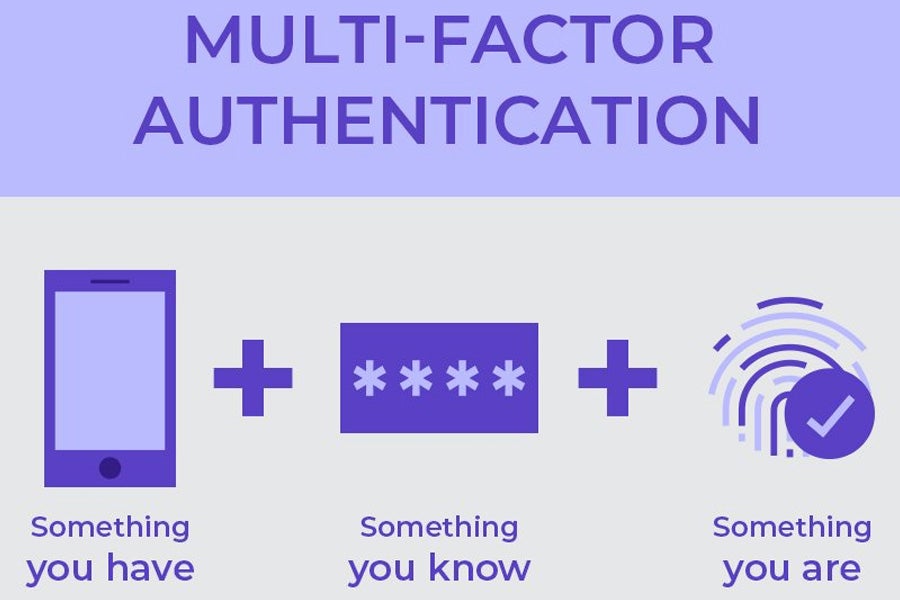
Multi-factor authentication or MFA involves using more than one method to verify your identity. One of these is usually a password, which is then often backed up by either a link or a code being sent to a mobile number or email address. Strictly speaking, however, one of these methods of authentication doesn’t have to be a password and could include other security credentials such as biometric data, a USB key, a signal sent from a smart watch, or even just a simple pin number.

mfa infographic
Image via: Firewell Technology Solutions

Password managers

OK, password managers are not an alternative to passwords, but they do offer insight into what a passwordless future may look like. With password managers you allow a program or app to manually set your new passwords complete with high levels of complexity and then securely store them in a single encrypted vault. This means that beyond the access credential needed to access your vault, you are taken out of the process of logging into your accounts as the password manager will do it for you. If you remove the human from the process, you remove the possibility of human error.

Biometric data

As mentioned earlier, biometric data is becoming an increasingly prevalent and powerful way of verifying your identity when trying to access your online accounts. More and more devices are shipping with a variety of biometric scanners from fingerprint scanners to facial recognition devices. These are becoming increasingly secure and hard to break and the tech industry is leaning on them heavily to secure our accounts.

Image via: Mike MacKenzie

Behavioral recognition

Behavioral recognition is an interesting way of verifying someone’s identity that involves tracking all of the actions they perform on a device and then assessing them against known patterns. Interestingly, these work in a similar way to how captcha technology verifies you are human but on a more advanced level. Whenever you agree to a captcha system verifying that you are human you give it permission to scan your internet history, which it then uses to verify whether you are using the internet like a human would instead of how a bot would. Behavioral recognition does something similar but on a much more personalized level.

Passkeys

Passkeys seem to be the main alternative that the tech industry is betting on to replace passwords. They work using two separate keys, one that is stored on the website server and another that is stored on your device. Matching access to these keys with biometric data creates a secure and mostly human-proof form of identity verification that is already starting to roll out across a variety of tech products.

What do the big players say?

As we mentioned at the beginning of the article, all the big tech players as well as a variety of companies and organization from outside the tech industry have clubbed together to form the FIDO Alliance, with FIDO standing for Fast Identity Online. The FIDO Alliance has been around since 2013 and includes a lot of big players that have been looking to push us away from using passwords and toward a password-less future. It should be no surprise that we are seeing big players implementing password-free verification solutions when they have allied together to just that. In fact, Passkeys are an innovation of the alliance.

Why the FIDO Alliance says Passkeys are better than passwords

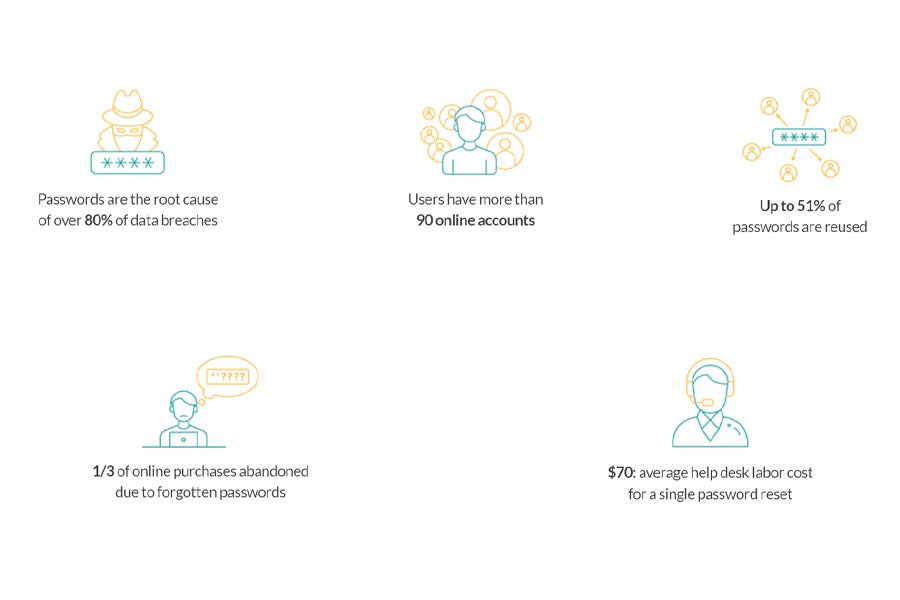
As we covered earlier, there are a plethora of vulnerabilities and weaknesses inherent in the use of passwords that revolve around our human frailties. On top of the security weaknesses, however, there are also several annoyances and stresses that come with password use. For a start, it is stressful to have to remember so many different passwords and to then have to change them again just as you think you are remembering them. On top of that, however, 1/3 of us walk away from online purchases because we can’t remember the password to the account we are trying to use. That is likely why big tech players are looking to turn us away from passwords because they are costing us money. Furthermore, according to the FIDO Alliance, it costs companies on average $70 to reset a password every time we forget one. Passkeys resolve all of these problems by relying on biometric data, which users cannot forget.

Conclusion

According to the FIDO Alliance more and, more companies are looking to incorporate Passkeys into their login procedures, so it does look like passwords are finally on the way out. In many ways and on the face of it, this looks like a positive move for users too as it removes a lot of the pain points attached to passwords and should ensure we maintain access to our accounts, even if we can’t remember how to access them.

EU tech regulations on the world stage

US and global tech companies have repeatedly bowed to legislative imperatives put forward by the EU. This means that no matter where you live, there is a good chance the EU will be making laws that affect how you use technology today. For example, speaking recently about EU-approved legislation that will come into force in 2024, Apple’s vice president of worldwide marketing, Greg Joswiak, made the strong assertion that:

“Obviously, we’ll have to comply, we have no choice…”

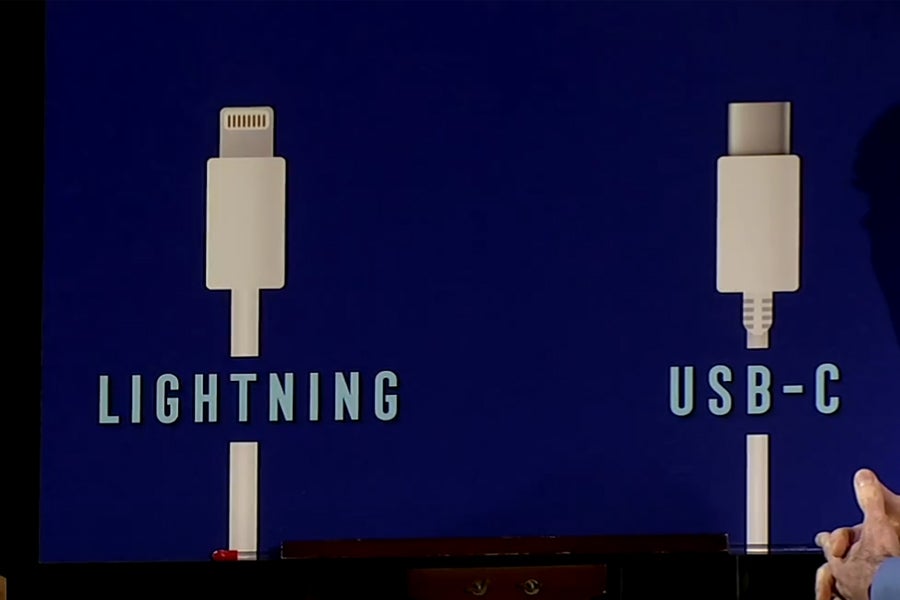
The regulation in question relates to USB-C chargers, the new EU law will mandate the use of USB-C charge points on a wide range of electronic devices including mobile phones, tablets, and headphones. With Apple having already stated that it will bend the knee to this new EU regulation and kill the Lightning cable for good, the question arises, where does the EU get this power from and why do big tech companies in the US and elsewhere have to follow European law? Let’s check it out.

Regulatory superpower

It is not just phone chargers either, but rather Europe has been consistently making moves to regulate tech and digital tech altogether in a bid to protect EU citizens from the risks associated with living in an increasingly online world. Cybersecurity has been a big focus of the EU with increasing threats putting institutions such as hospitals and schools in the crosshairs of some of the world’s deadliest cybercriminals. Another focus has been the promotion of ethical AI, which contrasts against the corporate AI surveillance systems being developed in the US and the state AI surveillance systems being developed in China. So, according to the EU, these regulations are focused on European countries and the citizens who live there.

What makes Apple obviously have to comply with these EU regulations is the size and wealth of the market that the EU represents. As we have already mentioned, these regulations only apply in Europe, it is not like a law passed in Brussels has to be applied in Washington DC. The issue is that there are so many people in Europe who buy iPhones that Apple cannot simply write them off as lost revenue because Lightning charging points aren’t allowed over there. Rather, Apple will have to make at least enough iPhones with USB-C charging ports to meet the demands of the European market.

Having to split manufacturing processes, however, brings with it its own set of problems with most of the savings that actually make producing and selling hardware devices profitable coming from producing them at scale. The more of something you produce, the cheaper each unit costs. Having to split production between two different types of iPhone will cost a lot of money. This means that as there is no regulation in the US mandating a particular type of charger there is no legal imperative to stick with the Lightning cable, despite the company’s desire to stick with what it sees as a very elegant and proprietary charging solution. The result is that when Apple complies with the EU regulation in 2024, it will likely switch all iPhone and iPad charging ports, even those in the US and outside of Europe, to USB-C.

There’s an obvious friction here between these two types of Apple charging ports. Image via: Tweet above

This type of law-making leverage makes the EU a regulatory superpower. It is able to regulate markets that are valuable and large enough for companies to have to fall into line with. If your company doesn’t have customers in the EU, you won’t have to follow EU regulations. If it does well then you won’t have much choice.

EU tech regulations in action

The most famous of the global EU regulations to date is the General Data Protection Regulation (GDPR). The GDPR came into effect on May 25, 2018, and extended many data privacy safeguards all around the world. Ever since the proliferation of internet companies like Facebook and Google and their targeted-ad supported revenue streams, user data has become a valuable commodity. Accordingly, many companies around the world enacted a wide variety of harmful and risky data practices that targeted user data, sold it on to third parties, and put it at risk of being stolen.

To try and protect EU citizens from these harmful and risky practices the EU drafted and enacted the GDPR to place obligations on data controllers, establish rights for data subjects (the people like you and me whom these companies are collecting data on), and impose requirements that need to be met when transferring data outside of the EU. Interestingly, GDPR applies to all types of data meaning sharing analogue data such as that recorded manually would also form a breach of GDPR. However, it is the types of data websites, apps, and online services collect that most compellingly fall within the reach of GDPR. If you have a website that collects data from users in the EU to sell to advertisers, then that website will be affected by GDPR. Websites are slightly different to manufacturing processes and, accordingly, we do see websites in different parts of the world that no longer work in the EU. Rather than making their websites GDPR compliant, some companies have simply blocked EU citizens from accessing them.

Implications for the future

Well beyond the fact that soon iPhones and iPads will soon have USB-C charging ports just like Android devices, there are other big things on the horizon coming out of the EU. As the GDPR focuses on data. There are certain sections of the regulation that discuss the use of data by automated systems and the rights of individuals when it comes to automated decisions being made that will affect them. The EU, however, is actively pursuing the development of ethical and responsible AI that fits with the values of the EU. To do so, it is currently drafting a new law called the EU AI Act, which will be the first full AI regulation drafted and enacted anywhere in the world.

The use of AI has been proliferating at an increasing pace in recent years becoming more and more involved in many different aspects of our life including deciding the posts that we see in our social media feeds, the recommended songs and shows that we see on streaming platforms like Spotify and Netflix, and even much more serious applications such as deciding whether we qualify for a job, are able to access welfare payments, and even whether we can go to school or hospital. With automated systems gaining more and more control over our lives, the EU is moving to regulate the technology using a risk-based approach that outright bans some high-risk applications of AI, and the hope in Brussels is that it will mark the first global regulation of the new technology.

Conclusion

The idea that the US innovates, and the EU regulates it is a bit of a cliché these days, but there certainly are words of truth in there. There is simply no appetite in the US to regulate tech firms like there is in Europe. The flip of this is that Europe is incredibly envious of the innovation coming out of the US and you can see that in many ways the EU is trying its hardest not to stand in the way of regulation with its laws and regulations. It is also worth mentioning here that companies and civil society are all pushing to influence the EU’s regulations as they are being drafted, which means it isn’t a case of hegemonic power. In fact, the EU has been pushing for unified charging port regulation for a decade, originally pressuring Apple to adopt the inferior Micro-USB port. The tech giant pushed back and claims that neither the Lightning nor USB-C ports would have been innovated if it hadn’t done so. It seems the laws and regulations coming out of the EU then, are not simply foisted onto the world but rather developed in tune with global issues and with global voices in the regulators’ ears. Yes, obviously Apple will have to comply with EU law, but only after it has already incorporated USB-C charging ports into many Apple products such as the Macbook.

Image via: YouTube

Is the Google car on the way?

Apple CarPlay and Android Auto have brought the major tech players into our cars to offer us incredible utility when we are driving. They essentially turn our smartphones into our car navigation computers presenting us the apps we can use safely while driving as well as safely showing us any extra information that could help us plan our day. There have long been rumors that Apple was moving into the car manufacturing business but today we have news that Google might be moving in that direction too as French car manufacturer Renault has announced a partnership with Google. Here is what you need to know.

Google Download Now

Renault and Google have announced that they are building on a previous partnership to further integrate Google Cloud infrastructure into what the companies are calling a Software Defined Vehicle (SDV).

In a Google press release explaining the partnership, the company put forward that both companies will work together to develop a set of onboard and offboard components, which will facilitate the creation of new onboard in-car services. Luca de Meo, who is the CEO of the Renault Group said:

“Equipped with a shared IT platform, continuous over-the-air updates, and streamlined access to car data, the SDV approach developed in partnership with Google will transform our vehicles to help serve future customers’ needs […] our strategic partnership with Google will allow us to accelerate our end-to-end digital transformation, from the design of the car to its market launch through its production.”

Sundar Pichai who is the CEO of Google and its parent company Alphabet also said:

“Today’s announcement will help accelerate Renault Group’s digital transformation by bringing together our expertise in the cloud, AI, and Android to provide for a secure, highly-personalized experience that meets customers’ evolving expectations.”

This means that Google is not looking to launch a car but rather that car manufacturers are increasingly turning to big tech to help them bring in the digital architecture needed to power their cars into the future.

In other Google news, did you know that the company is rolling out new password-replacing technology in a bid to boost security for all Chrome users?

Satellite support could be coming to some iPhones with the next iOS update

Apple has been making big noises recently about how its tech products can save your life. The Apple Watch 7 had this unsettling ad of a robotic voice putting in a 911 call for a real-life user who had collapsed, although there was no confirmation that they actually lived, and Apple has also been talking about the satellite tech coming to iPhones. It now looks like satellite compatibility is coming to iPhones sooner than we thought as iPhone 14 users may get it with the next iOS update. Let’s check it out.

iOS 16 Download Now

According to a report by MacRumors, Apple will launch the Emergency SOS via Satellite feature that it has built into all four models of the iPhone 14 as early as this month.

Apple has not released a specific launch date but has stated clearly in a support document that it “will be available with an iOS 16 software update coming in November 2022.” Thanks to the report by MacRumors we can assume that this means the update will be included in iOS 16.1.1, which Apple is already testing.

The Emergency SOS via Satellite feature offers users the ability to call in emergency assistance even when they have no cell service. Users can use the service, which will then direct them to a nearby area that enjoys satellite coverage and then ask for and send their details to emergency services.

The feature will be free to users for the first two years after launch at least, but Apple has said that it is planning to charge for the feature at some point. It will be available in the US and Canada at launch but Apple has also said it will roll out to other by the end of next year. For full information on how to use the feature, you should check out the support document.

In other iOS 16 news, It looks as though Apple is working on an update for Siri that will make it easier to get the virtual assistant’s attention.

Microsoft 365 updates will affect Outlook and OneDrive

Formerly known as Office 365, Microsoft 365 is the software giant’s flagship productivity suite that attempts to offer everything a business or personal user could ever need when working in an office. The 365 moniker represents the yearly subscription that is required to access the suite, which gives users access to rolling updates and feature upgrades. Well, in theory at least, as in an upcoming update it looks as though Microsoft Outlook and OneDrive, two Microsoft 365 apps will actually lose some functionality when it automatically rolls out to all users. Let’s check it out.

Microsoft 365 Download Now

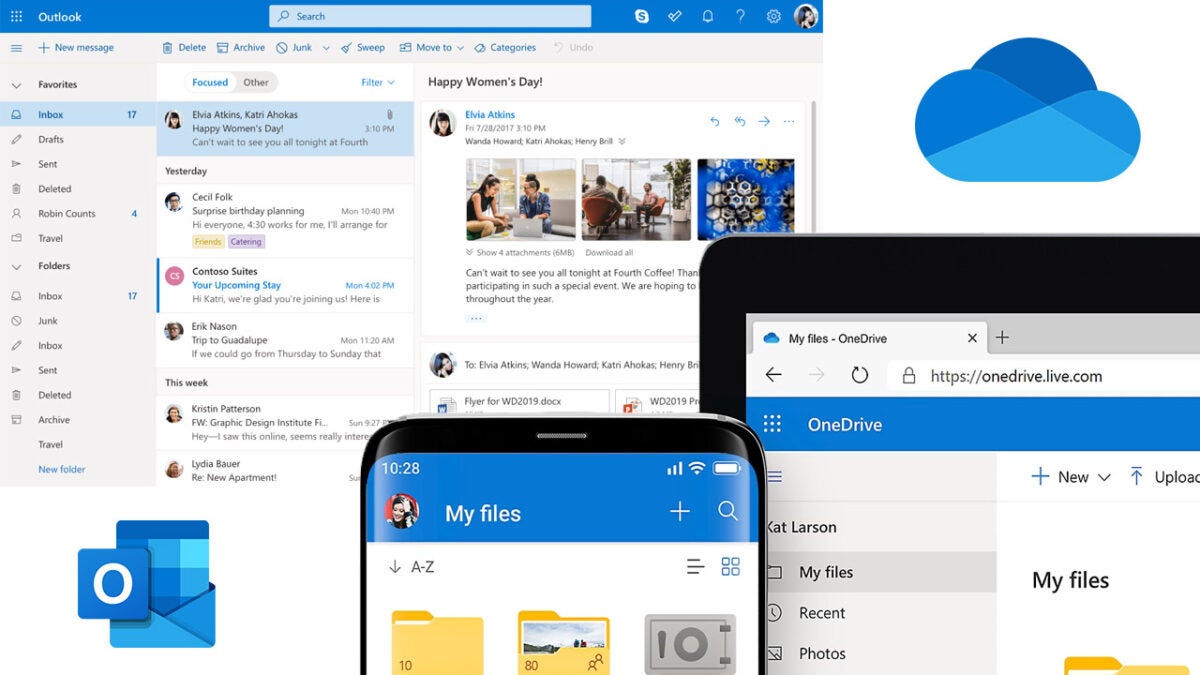
Microsoft has begun informing users of certain upcoming changes that they can expect to see in the near future. A part of the update will give Outlook an extra 50 GB of storage for one year but the bad news is that this year will act as a transition period toward the main phase of the update, which will see Outlook attachments officially being counted against your OneDrive storage allowance.

The move means that any and all attachments of any size will be deducted from your OneDrive storage allowance. Accordingly, if you are close to using all of your OneDrive allowance, you will likely come up against this new change when it rolls out. It is good that Microsoft is offering the transition year so users can better manage the flip to the new system. Our cloud storage allowances are becoming increasingly important these days as we move toward a more virtual future that isn’t necessarily restricted to access via a single device.

Another feature that Microsoft is cutting with the update, which should start to roll out on November 30, 2023, is that users will no longer be able to associate a new personalized email address with an Outlook mailbox. If you are already associating a personal email address with your Outlook mailbox before that date, it will continue to remain active. This will only prevent new email addresses from being linked.

In other recent Microsoft news, the company is working on a new way to offer lower-priced devices that will be supported by ads and subscriptions.

Airbnb will finally show the real price

If you are looking for a place to stay on Airbnb it usually means you are in a good mood as you are planning a vacation or trip. Unfortunately, however, there has been a longstanding issue with the app that has quickly turned those happy feelings sour for many Airbnb users and that is the Airbnb pricing system. For too long users have been clicking on a listing, thinking it falls within their budgets, falling in love with the property, and then having to turn away disappointed as Airbnb has added all the various service and cleaning charges on top of the listed price. Well now, it looks like that is about to change and Airbnb is going to start listing the full price of listings.

Airbnb Download Now

Airbnb has announced in a blog post that is introducing an update that will ensure users can see the total price of a listing when they are searching for a property on a map, browsing through search results, using price filters, and perusing a listing. As well as this, the company is also rolling out an update to the guest checkout page.

The update to the guest checkout page is needed because there will still be a single element of the price that won’t show up until the user heads to the checkout page and that is taxes. Although the new total price update will show a much more complete figure than it has until now, it still will not show the taxes they will have to pay, which will only come up at the end of the checkout process. According to the blog post, the update will rollout as soon as December:

“Starting in December, we will begin rolling out the option to display total price in countries without existing price display requirements. Total price will include all fees before taxes and be shown in search results, as well as on the map, filter, and listing page. Before confirming their booking, guests can still view a full price breakdown that shows Airbnb’s service fee, discounts, and taxes.”

This is a positive move from Airbnb, which will no doubt remove a lot of frustration from the booking process users have to go through on the app.

In other Airbnb news, did you know that the company is currently testing and rolling out anti-party technology?

Apple is making it 50% easier to call out to Siri

There is no doubting the popularity of AI virtual assistants such as Google Assistant, Amazon’s Alexa, and Apple’s Siri. They are useful and also increasingly becoming better and better at hearing and understanding our voice commands. One thing that has traditionally stood in the way of having a natural conversation with these assistants, however, is the wake word or phrase needed to get their attention in the first place. To help with this, Apple is rolling out a change to Siri’s wake word in a bid to make much more natural.

iOS 16 Download Now

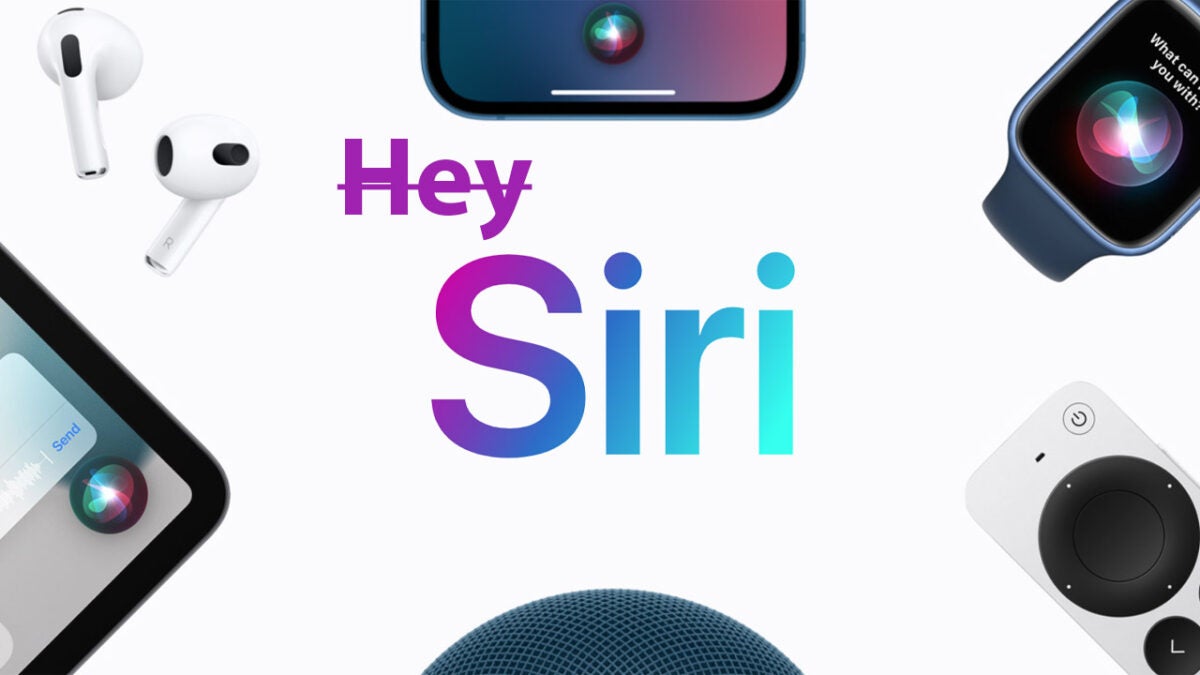
Bloomberg reports that Apple is working on cutting out 50% of Siri’s trigger phrase, cutting it down from “Hey Siri” to just “Siri”. According to the report, Apple is working on implementing the change across all instances of Siri from iPhone and Apple Watches to HomePods and Apple Macs, in a bid to make summoning the virtual assistant easier for the user.

Interestingly, according to the report Apple has been working on this update for several months, including testing it on employees. Although the move is designed to simplify the process for the user, it actually involves a fair amount of complexity enabling the AI assistant to pick up on just a single phrase. Having two words makes it much easier for the AI to pick up the trigger phrase.

This means that it is likely that we will not see the single-word trigger phrase rolling out to Siri across all Apple devices until early next year. Furthermore, it looks like Apple is also working on further third-party integrations for Siri meaning you may be able to use the virtual assistant to help you with more tasks too.

Another benefit of reducing the trigger phrase from one word to two is that it will further enhance the natural conversation feel you will get when talking to the virtual assistant. It is common to refer to people by name while you are talking to them, but it is very odd to try and get their attention by saying “hey” every time you say something new.

In other recent Apple New, the latest version of iOS is bringing a much more integrated news and weather experience.