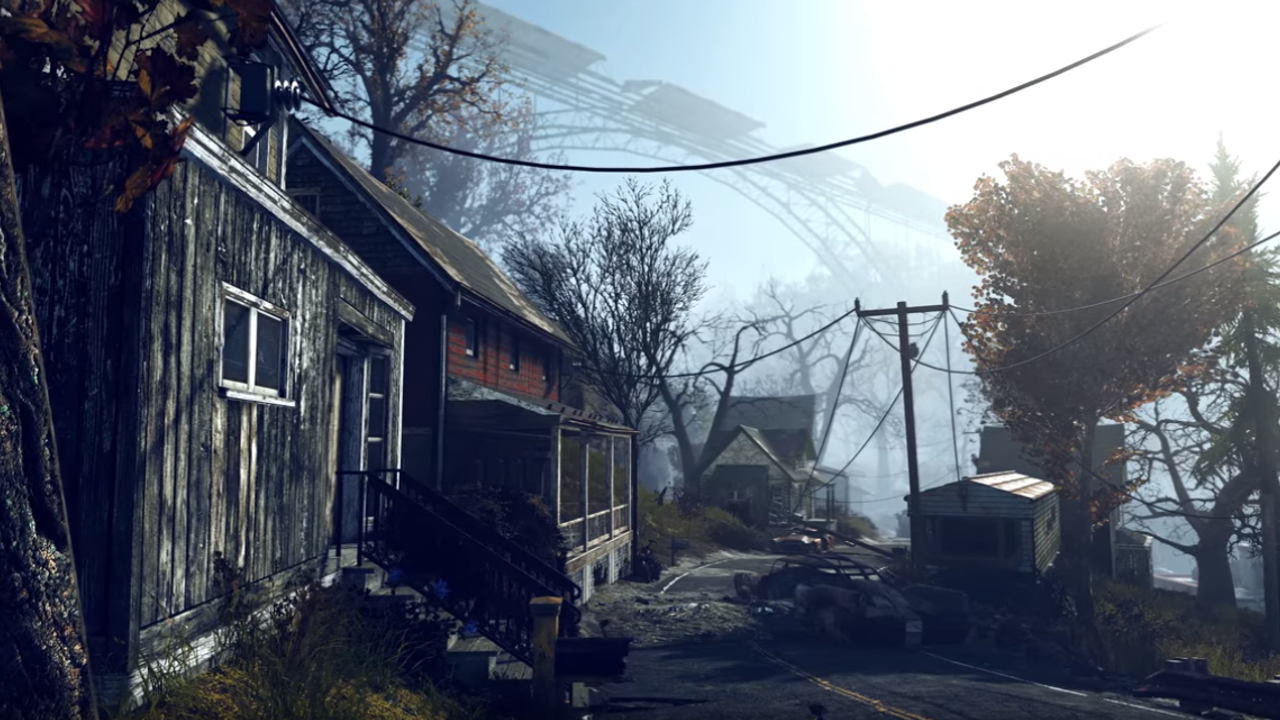
Take me home, country roads: Fallout 76 is officially on the way. Bethesda has confirmed that we have four months to go until the next entry in the Fallout series hits, and based on what we know so far, this entry is going to feel a little different than the other Fallout games we know and love. Looking to scratch that Fallout itch while you wait for the game to come out? Here are five games you can play while you wait for those country roads to take you home.
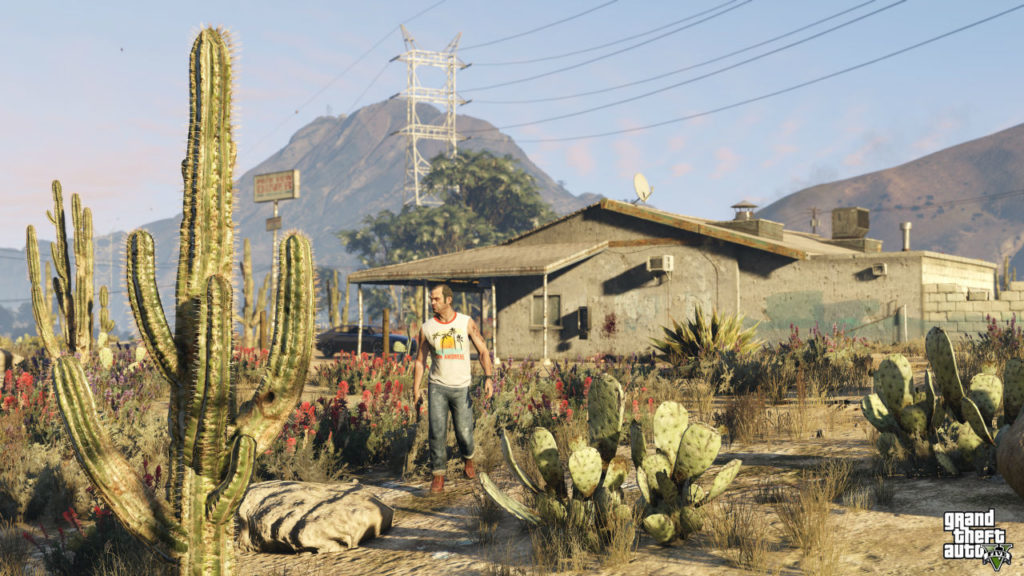
The biggest change coming in Fallout 76? It’s going to be multiplayer. Set in a huge game world at least four times the size of the Fallout 4 map, most of the characters you encounter in the game are going to be other players. So then, why Grand Theft Auto V? Though there probably won’t be much overlap as far as story goes (unless Vault 76 houses a team of professional bank robbers), the online aspects of the titles seem pretty similar. Grand Theft Auto V’s sprawling online mode puts you on a huge map with many other players as you complete missions cooperatively or competitively and build your character. It seems likely that Fallout 76 is going to play pretty similarly to GTA Online.
Though it might seem like cheating to tell you to replay another Fallout game, Fallout 3 makes the list for good reason. Fallout 76 is going to be a prequel, following settlers from Vault 76 in the recent post-apocalypse as they work to rebuild the world. We know Vault 76 is located somewhere in the hills of West Virginia; Fallout 3 is set close by in the ruins of Washington D.C. Lore-wise, it seems likely that these two games will have a lot of overlap. Play Fallout 3 to get a refresher on the geographical area, Vault-Tec, and most importantly, the Enclave. We know the villainous remnants of the U.S. government has a large presence in the area, and it seems likely that they’ll make some kind of appearance in Fallout 76.
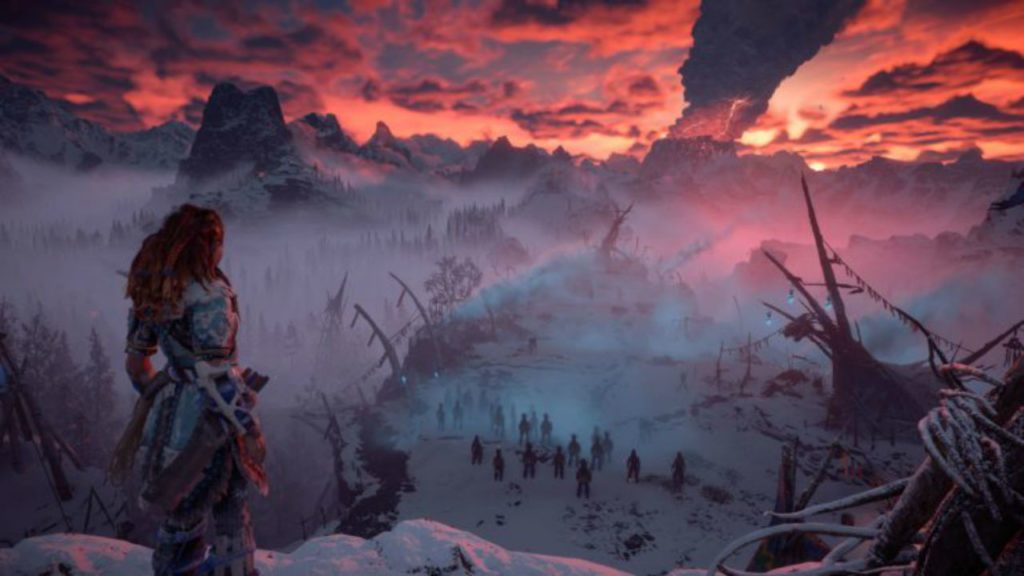
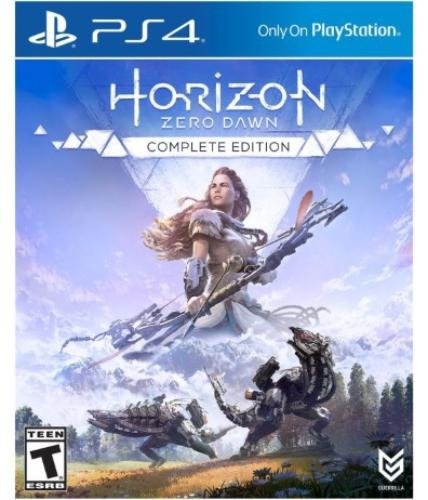
Horizon Zero Dawn takes a decidedly different look at the potential fall of humanity. Where Fallout predicts death by nukes, Horizon predicts death by robots. In the aftermath of the machine apocalypse, humans revert to an almost primitive state, grouping into various settlements and large tribes. These tribes are constantly butting heads to fight for food, supplies, and power. With players of Fallout 76 doing the same, Horizon may offer a preview of what the online world of the new game might look like. We don’t know yet what the world of Fallout was like so close to when the bombs dropped, but it seems likely that other people are going to be just as much of a threat as the irradiated creatures that are also roaming West Virginia.
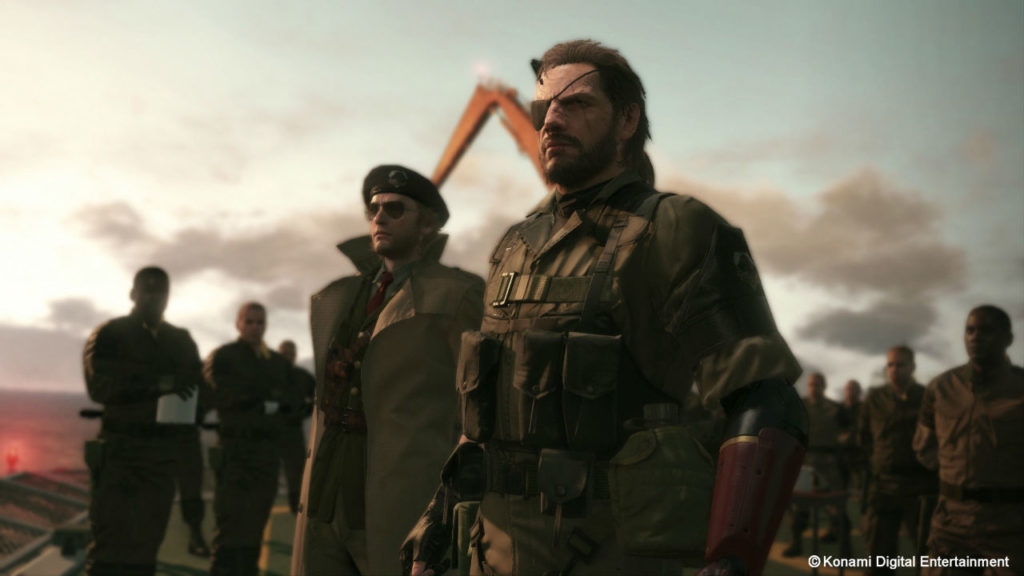
Though it may not seem like it at first glance, Metal Gear Solid V and Fallout 76 have quite a bit in common. Specifically, we’re looking at the multiplayer aspect of MGSV. Players are able to build a private army and go head to head with other players, infiltrating enemy bases to steal important supplies and kidnap personnel to help build up their own forces. Oh, and you can’t forget about the nukes. According to Bethesda, stockpiling and using nukes will be a big part of Fallout 76. Same goes for Metal Gear Solid V. Players have to option to build or steal nukes, and although it means a pretty hefty addition to your arsenal, it also means you become a much larger target for other players. We don’t know yet exactly how nukes are going to affect the multiplayer gameplay of Fallout 76, but it seems like a good idea to start practicing how to handle the mother of all bombs?
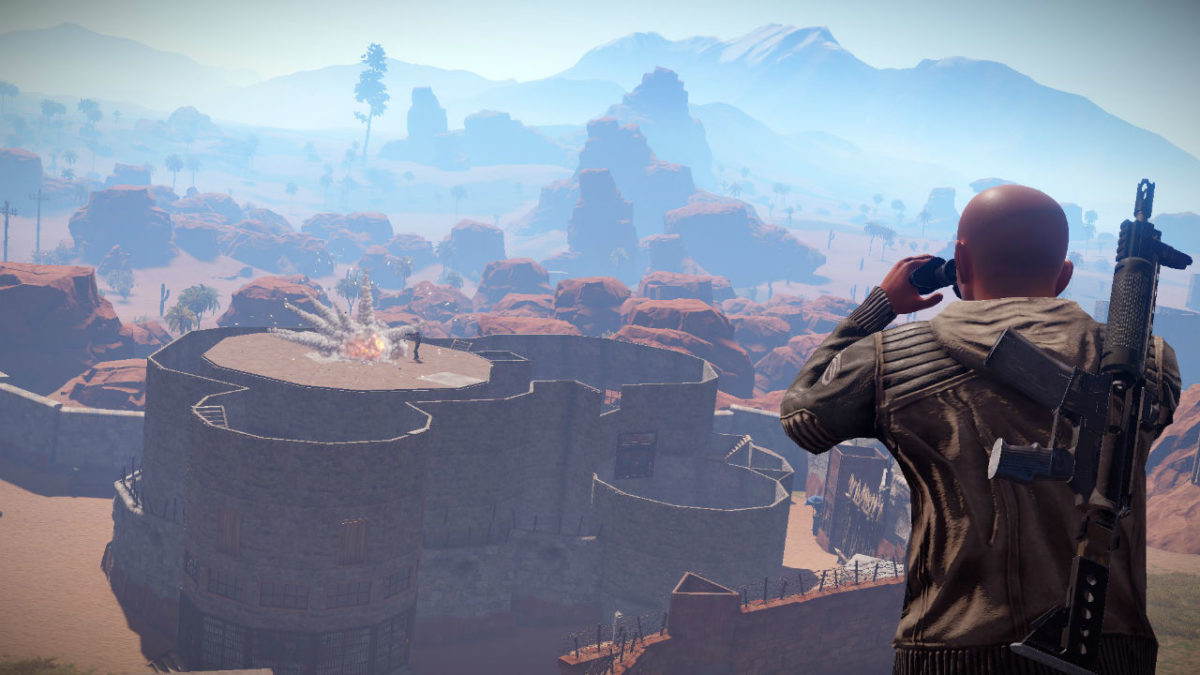
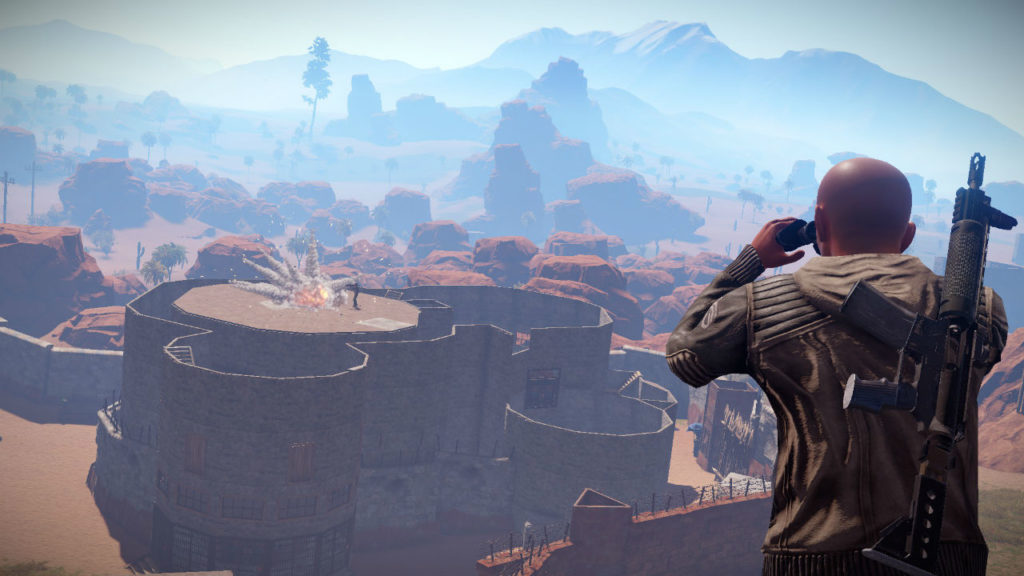
Rust is an online game where players fight for food, shelter, and survival in a hostile world where any situation can quickly turn deadly. Sound familiar? It should, since this sounds an awful lot like the world of Fallout 76. In Rust, players are able to gather survival necessities and build their own shelters. We don’t know yet whether basic survival is going to play as large of a role in 76 as it does in Rust, but it couldn’t hurt to be prepared. What we do know is that base building is going to be returning to Fallout 76, and that’s also a huge aspect of Rust. Whether it be building shelter or shooting it out with other players, playing Rust seems like the best way to prepare for your return to the post-apocalyptic world of Fallout.
We’ve got just about four months to go until Fallout 76 releases. With these five games to help you prep, you’ll make that time fly by. You’ll also have a leg up on the competition when it’s finally time to head into the irradiated Blue Ridge Mountains and make your mark on Fallout’s new online world.
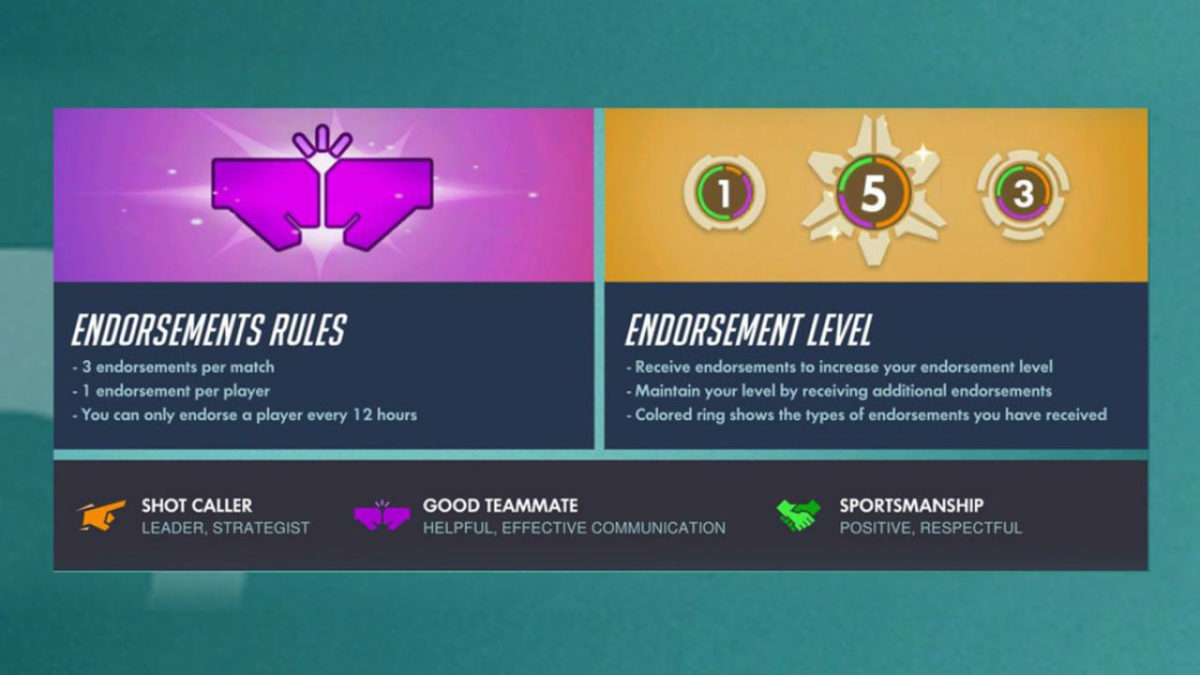
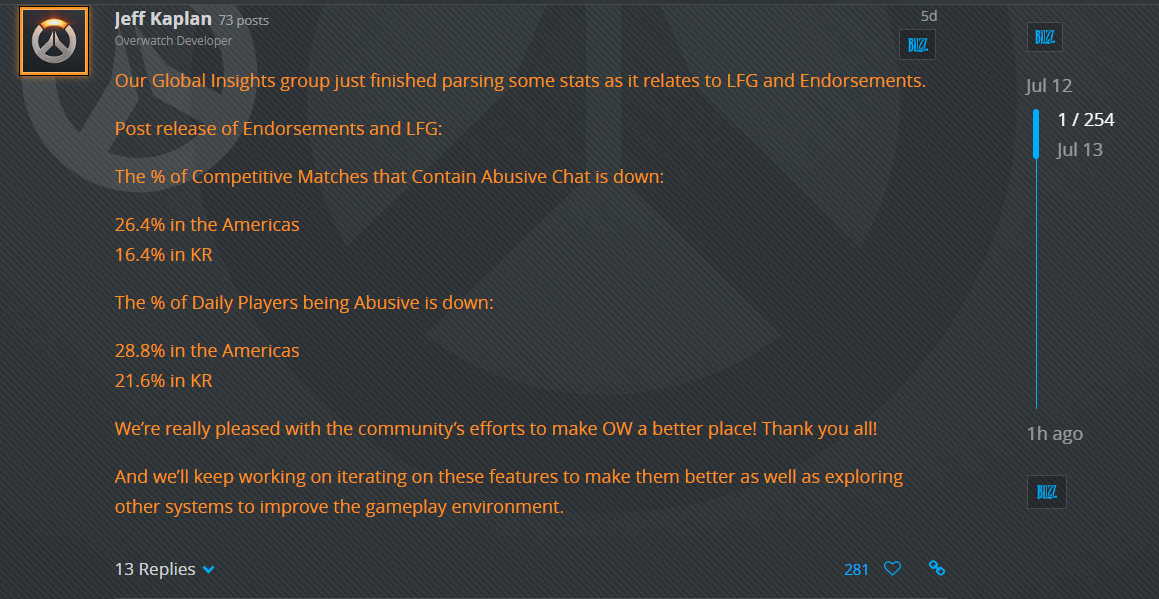
According to Overwatch lead designer Jeff Kaplan, Overwatch’s new endorsement system has had a significant impact in reducing toxicity. The post where Kaplan explains this can be viewed below:
As the post demonstrates, in the Americas alone, the number of players engaging in daily abusive behavior has gone down nearly 29 percent. While it remains to be seen if the numbers will remain at this level, this is undoubtedly already an impressive impact. While some players have complained that this system has led to people being “fake nice” in order to score XP and loot, a game environment of fake nice people beats out a toxic hellhole every time.
Overwatch had a noted toxicity problem in the past, with many players (especially women) feeling like the harassment and stressful environment turned them off of the game. Blizzard implemented smaller measures to curb this in the past. One example of a much less serious measure they took was automatically replacing the phrase “gg ez”, which mockingly means “good game easy”, with humorous phrases like “I feel very, very small… please hold me…” and “It’s past my bedtime. Please don’t tell my mommy.” The endorsement system seems to say that Blizzard is now taking in-game toxicity much more seriously than it has in the past.
Blizzard isn’t the only developer working hard to make their game communities less toxic. Ubisoft recently added an automatic chat filter to their popular online shooter Rainbow Six: Siege which boots players from games automatically for using racist or sexist slurs, among other words. While trash talk has been a staple of competition ever since man first picked up a ball, there comes a point where harmless trash talk becomes harassment. While this has been present in online gaming since its inception, saying “that’s just how the internet works” doesn’t cut it anymore.
Every great shooter lives and dies by its maps, and every amazing shooter has THAT map. Over the years these maps have caused countless amounts of eyestrain and trash talk due to their inventive and fun designs. Seasoned veterans of these maps often know their layout better than they know their own neighborhoods, and for good reason: navigating these maps is a lot more fun.
5. Goldeneye 007 – Facility
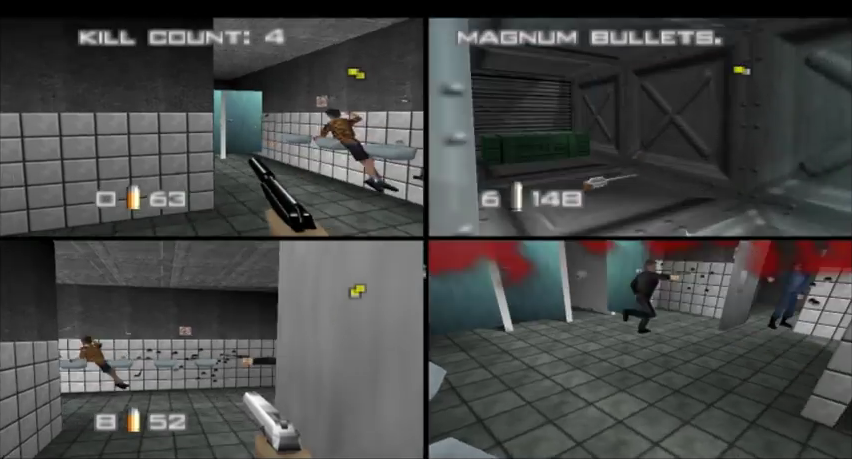
This Nintendo 64 classic is the OG of couch multiplayer shooters. Goldeneye 007 changed the gaming landscape with its variety of weapons, modes, and maps, with none being more iconic than Facility. Players had to master its many levels, scrambling via stairs or air vents to get the Golden Gun. Despite being a huge map, the hallways were thin and the rooms were small, leading to tense close quarters combat. The cramped hallways were also infamous for being constantly littered with proximity mines, leading to instant death for any player unfortunate to pass by. Finally catching up to the player who blew you up and taking him down with slappers is a cathartic feeling unmatched by any modern game.
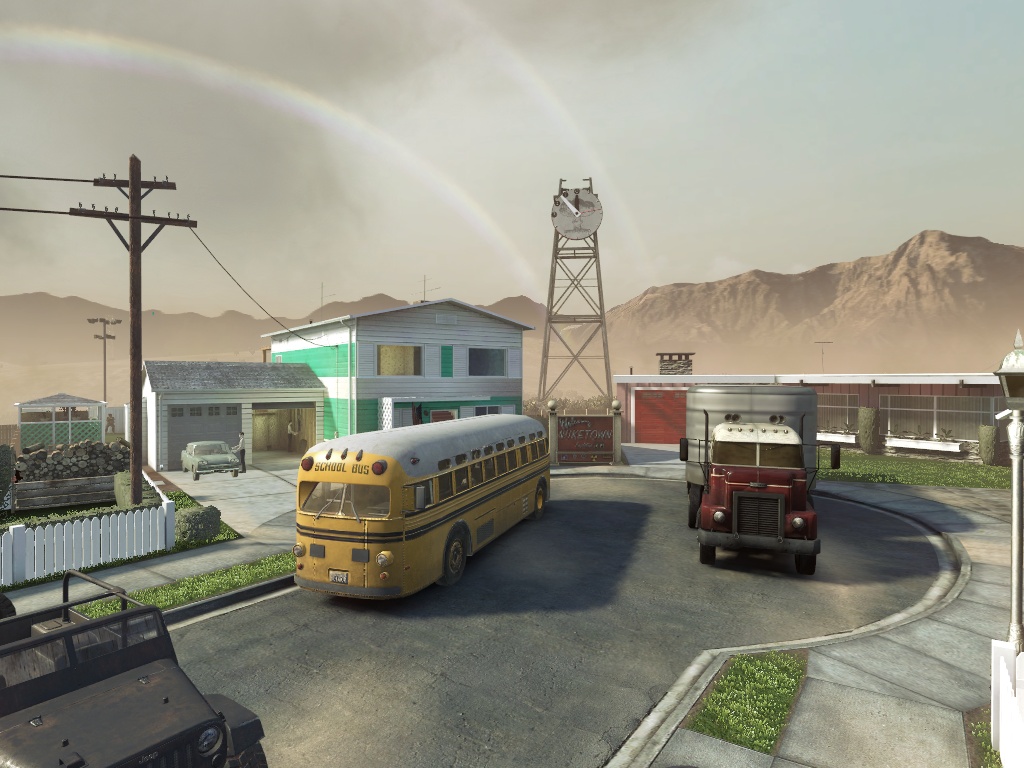
4. Call of Duty – Nuketown
One of the most iconic maps of the Call of Duty series, Nuketown packs a lot of chaos into a tiny map. Nuketown features a stereotypical 1950’s model neighborhood, complete with bright pastel colors and creepy mannequins, that gets destroyed by a nuclear blast at the end of the round. The layout of the map is simple, with two houses opposite each other, backyards behind them, and vehicles in the middle. This simple premise strips the COD experience down to its basics, favoring map knowledge and skill. Nuketown is so popular that it has appeared in every Black Ops game to date, including as a terrifying zombie map.
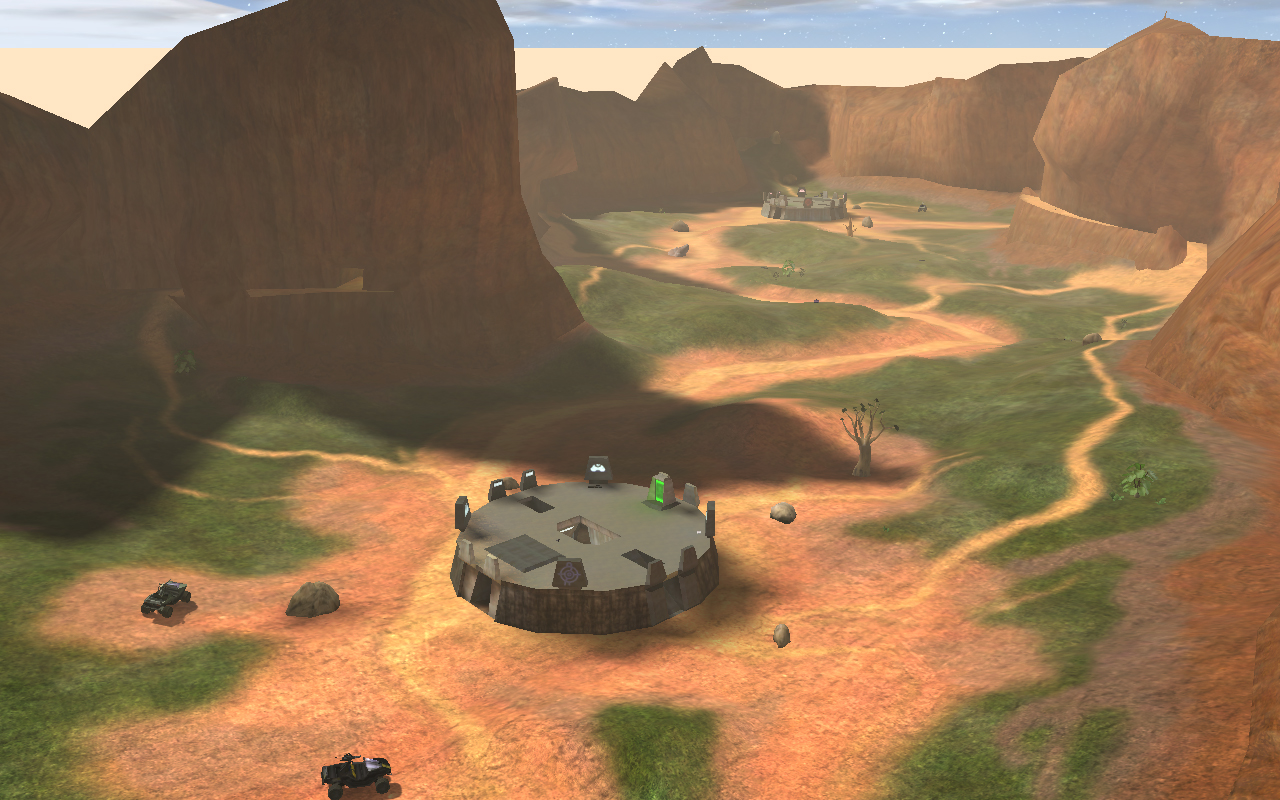
3. Halo – Blood Gulch
The Halo series has had no shortage of amazing maps, but Bungie arguably created their best one in the original game with Blood Gulch. The premise of the map was team deathmatch at its finest: two teams, one red and one blue, each started in a base. From there, they would use vehicles like the fast and powerful Warthog or the brutal semi-invincible Scorpion to assault the base of the enemy team, blowing them away and taking their flag. The simple team vs team dynamic of the map was the catalyst for countless LAN parties. It even spawned one of the most popular and long-lasting machinima series ever in Red vs Blue.
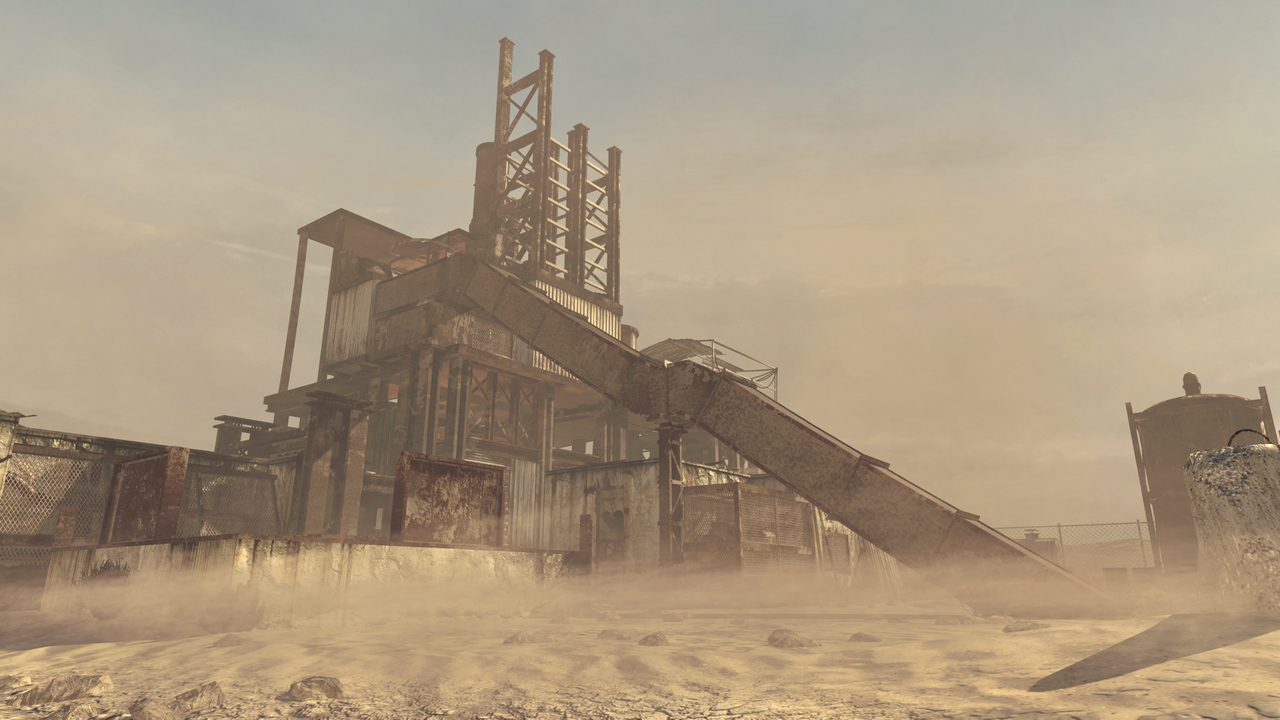
2. Modern Warfare 2 – Rust
There is perhaps no better saying that exemplifies the Xbox Live generation than “1v1 me rust”. Younger players may not realize that at the time of its release, Call of Duty: Modern Warfare 2 was everywhere, achieving a level of ubiquity that almost matches Fortnite today. The game was a perfect mess of imbalanced weapons and perks, and was a breeding ground for salty players screaming into their headsets. When emotions came to a head and pride was on the line, every player knew that the only map where beef could be settled was a 1v1 on Rust. Often played with snipers only, 1v1’s on Rust were a tense affair. The tiny map didn’t leave many places to hide, and any player that was able to scramble to the top of the structure in the middle found themselves at an immediate advantage. So many scores were settled here back in the day, and hopefully, the rumored Modern Warfare 2 remaster actually sees the light of day so that newer players can experience the intensity of putting your whole gaming career at stake in a single match.
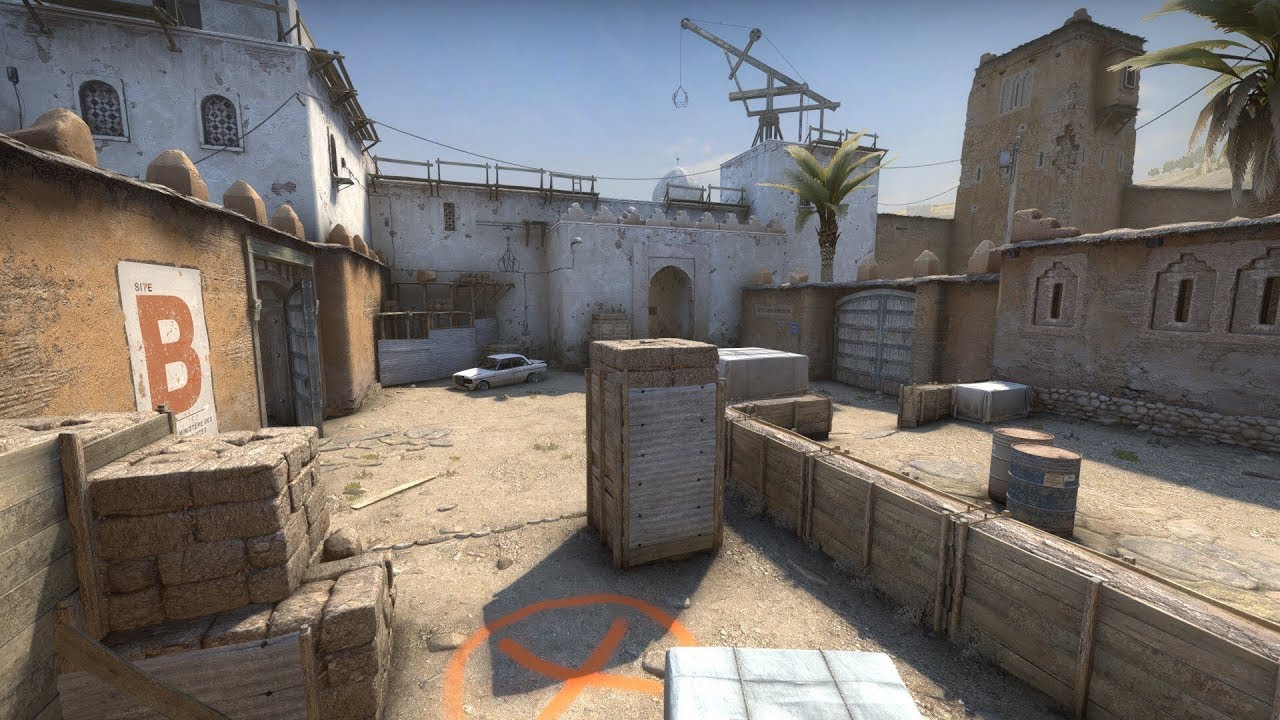
1. Counter-Strike – Dust2
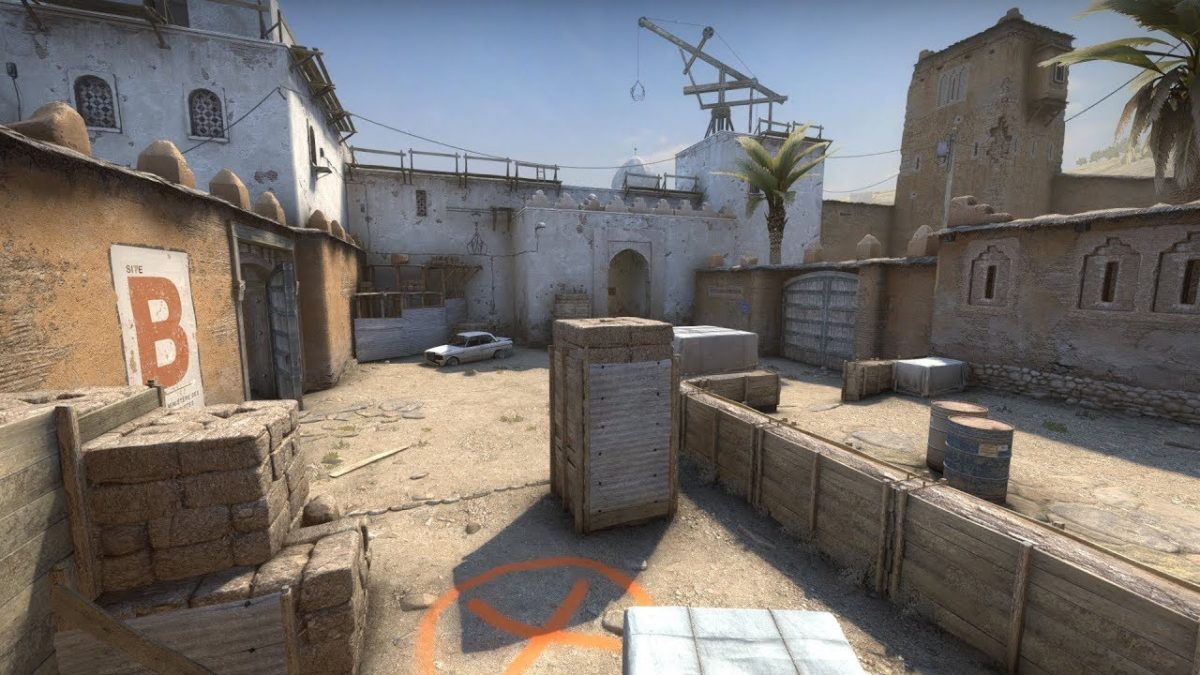
What else could it be? Counter-Strike’s dust2 is not only a masterful example of map design, but it’s one of the most well-designed levels in video game history. As the round starts, both terrorists and counter-terrorists must make a decision on which bombsite to rush. Do they split up their team between A and B? Gamble on one site and send the whole team? Cover is minimal except at the most important sites, and there are no out-of-place nooks or camping spots that feel like they’re unfair. The middle lanes of the map are high-risk, high-reward areas that lead to the best defensive spots but require a fight to push through. Feeling perfectly balanced for both teams, the map can be played thousands of times without feeling old, due to its combination of straightforwardness and mind games.
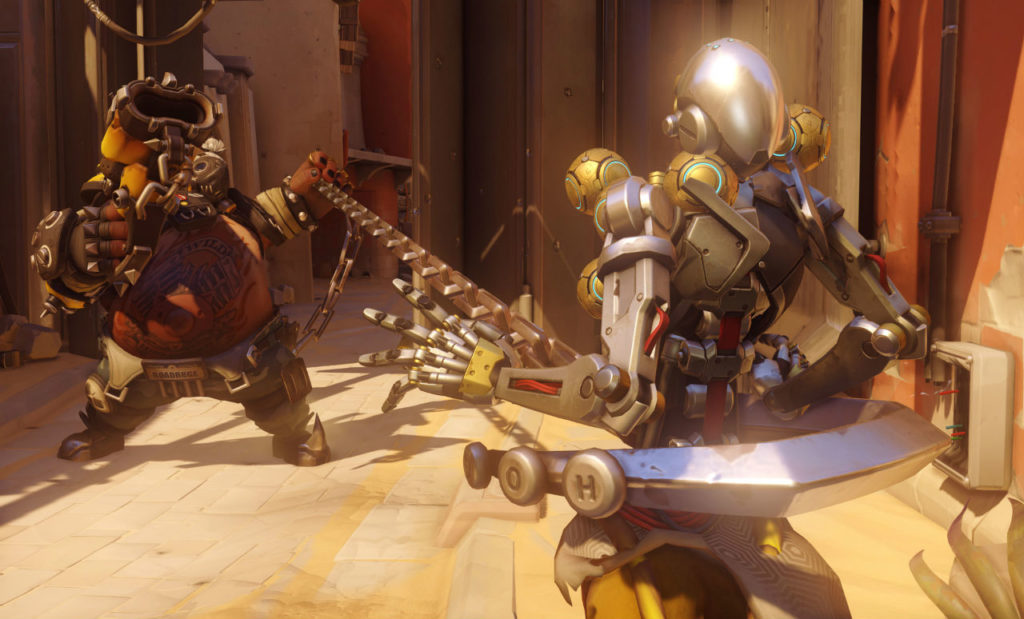
The Overwatch roster currently features 28 playable heroes, with players able to take control of everything from a talking gorilla to a robotic monk. With such a huge list of characters to choose from, trying to find the hero that best suits your play style might seem like an impossible task. Whether you’re a new player or just trying to switch things up, here are a few tips to help you quickly find your best hero.
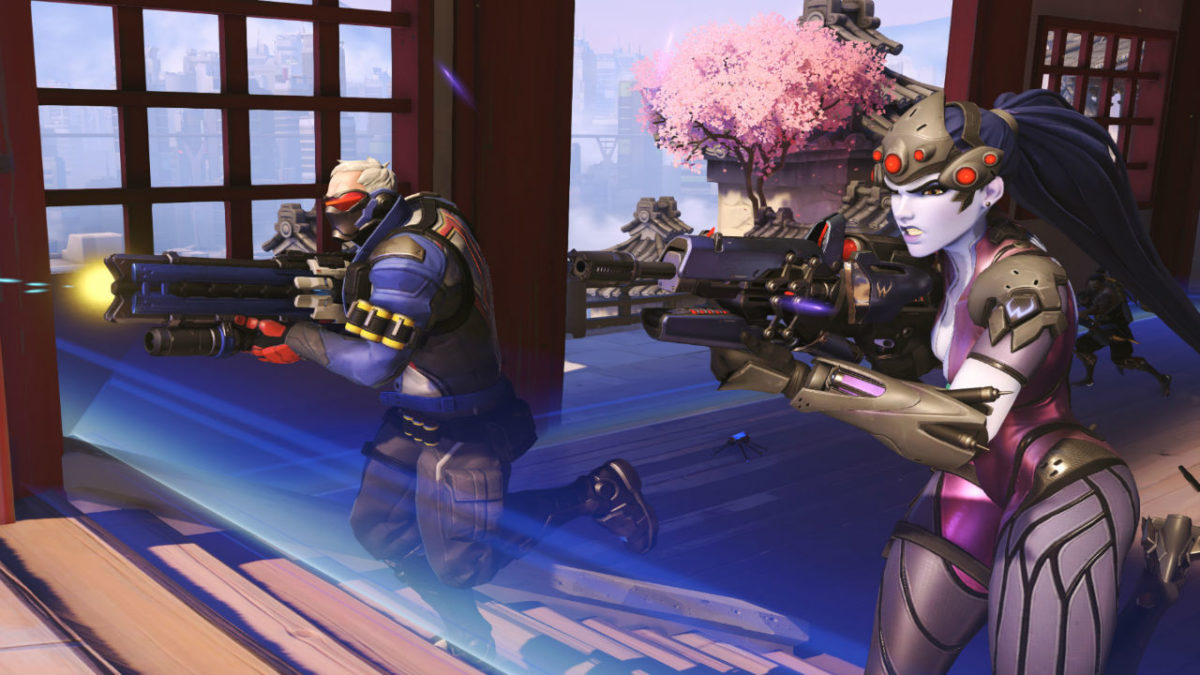
With 28 playable characters, your first goal should be narrowing down that list to a handful of characters that you think might be right for you. The best way to start your search is to think of the games you already play. Though there are a few more unique options, most Overwatch characters fit into some familiar play styles. If you’re a fan of classic first-person shooters like Call of Duty or Battlefield, starting with Soldier: 76 can be a great way to get the hang of the game. Doomfist has a lot in common with characters from fighting games like Mortal Kombat, and Widowmaker is just one of the sniper heroes that should appeal to all the marksmen out there. Team Fortress 2 veterans will also find some familiar classes: turret-building Torbjorn is reminiscent of the Engineer and Mercy will feel familiar to fans of the Medic. Take a look through the classes and see if anything sounds familiar to you. You might be surprised at what you find.
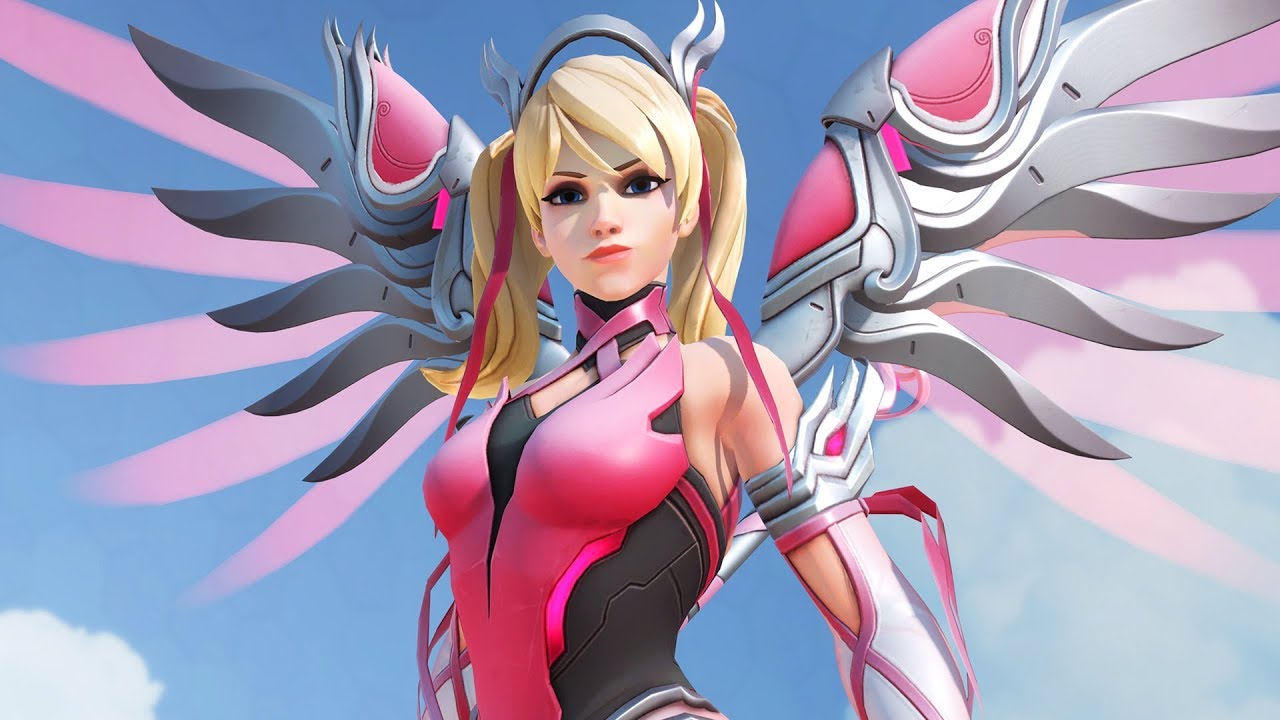
How Overwatch raised a jaw-dropping amount of money for breast cancer research
Rather than trying to settle on an individual character from the list, it can help to think of what role you want to fill. The hero roster is subdivided into Damage, Support, and Tank roles.
Damage heroes focus on dealing damage to the enemy team, as the name implies. This role would be most suited to a player with quick reflexes who prefers fast-paced, frontline combat.
Support characters are the healers of the game, and play an important role keeping the team at full health while at the same time enhancing their abilities with damage boosts and other buffs. This class may be tricky to get the hang of for more casual multiplayer gamers, but it can also be extremely fun and gratifying.
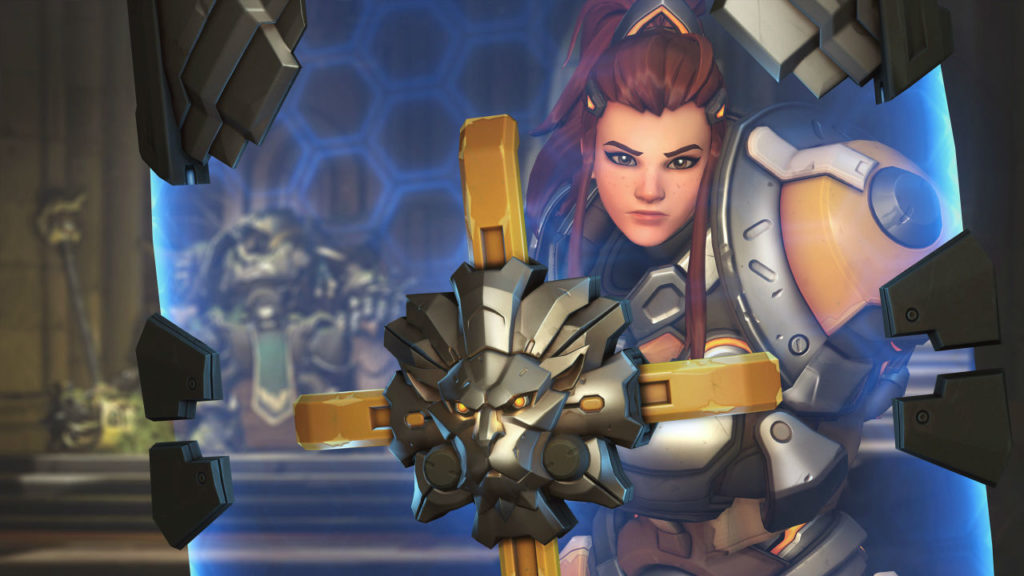
Finally, Tanks have huge amounts of health and armor, and generally come equipped with some kind of shielding or defensive ability. Tanks soak up damage from the enemy team while leading the charge to the enemy objective, and keep other players on their team safe from harm.
If one of these roles appeals to you more than the others, start testing out the characters in that role. Selecting your character by finding the role you want to fill is a much easier way to narrow down the list than sifting through each hero one by one.
Don’t Get Stuck
This is maybe the most important thing to remember when choosing your hero. We all have our favorites, whether it be Tracer, Reaper, or Reinhardt. It’s a tough thing to realize, but your favorite character might not be the character you’re best at playing. Focusing on playing a single character or a character that you like may be preventing you from finding the character you actually excel at. So instead of trying to play a character that just isn’t working for you, experiment and test out some new heroes.
Don’t Play Just One
Overwatch is much more fun once you start playing characters based on what your team needs. After you’ve found and mastered your first hero, try to master at least one hero in each role. Don’t be afraid to leave your comfort zone. There’s actually quite a bit of overlap between the roles. There are Support characters that play like Damage characters, Tanks that play like Support, and everything in between. There’s a bit of a learning curve to each hero, but the only way to learn them is to pick one and start playing!
One final tip to keep in mind: have fun. Overwatch is one of the most accessible multiplayer games out there, and such a huge roster means there’s a hero for everyone. Using the tips on this list will make finding your best hero easier, and the faster you do that, the faster you’ll start winning.
A wise pirate knows the devil’s dance of combat: The swerve and the thrust, the swipe and the parry. An even wiser pirate knows that “he who fights and runs away lives to fight another day.” The wisest pirate of all knows that combat is a job best suited to your lackeys. Your time, meanwhile, is better spent sweeping in with a blunderbuss to pick up the pieces once the dust settles, and hoisting sail to the nearest vendor. There you can sell the remains of your dear departed colleagues and use it for grog money.
Don’t give us that look. This is a game about pirates!!
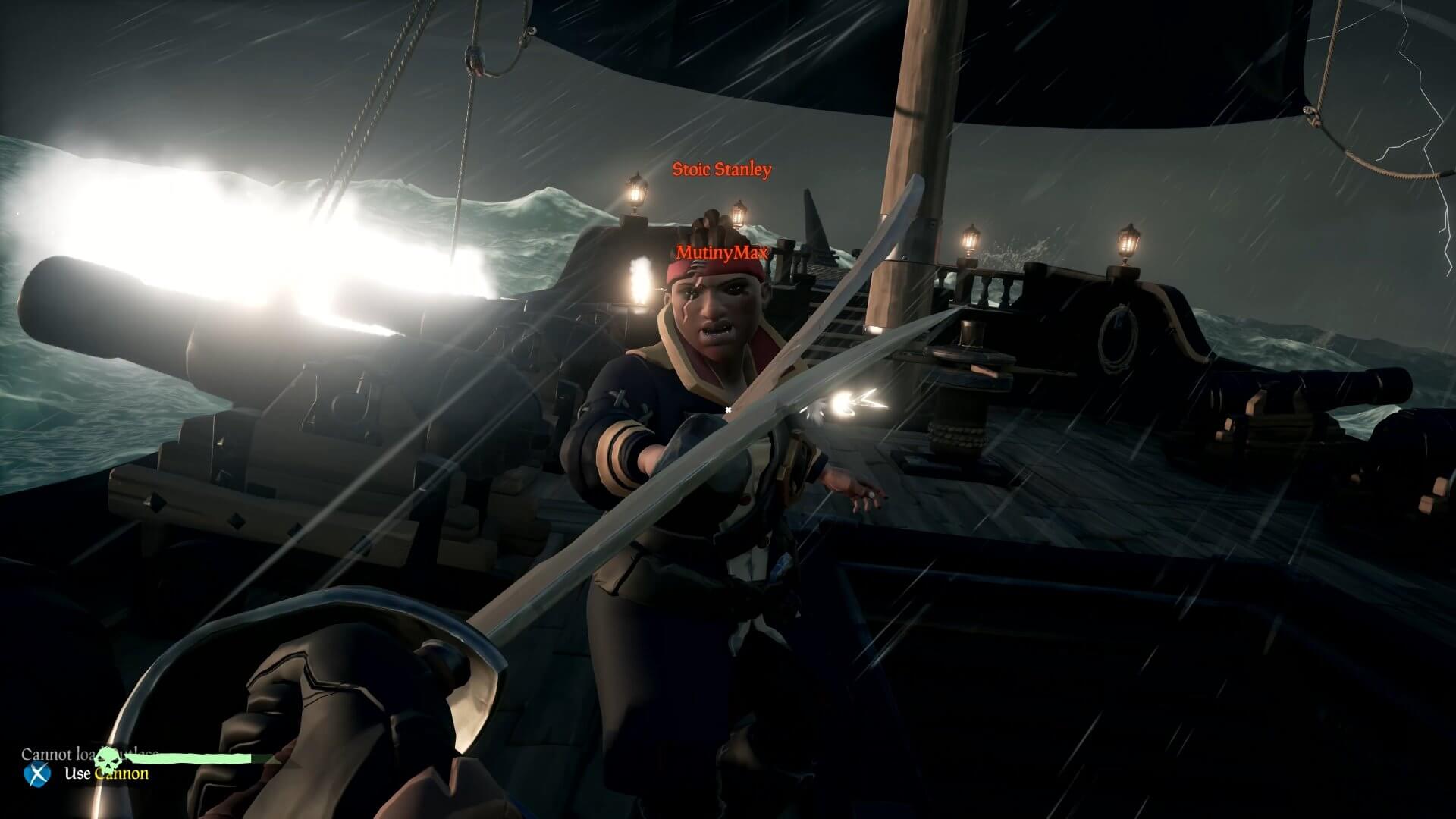
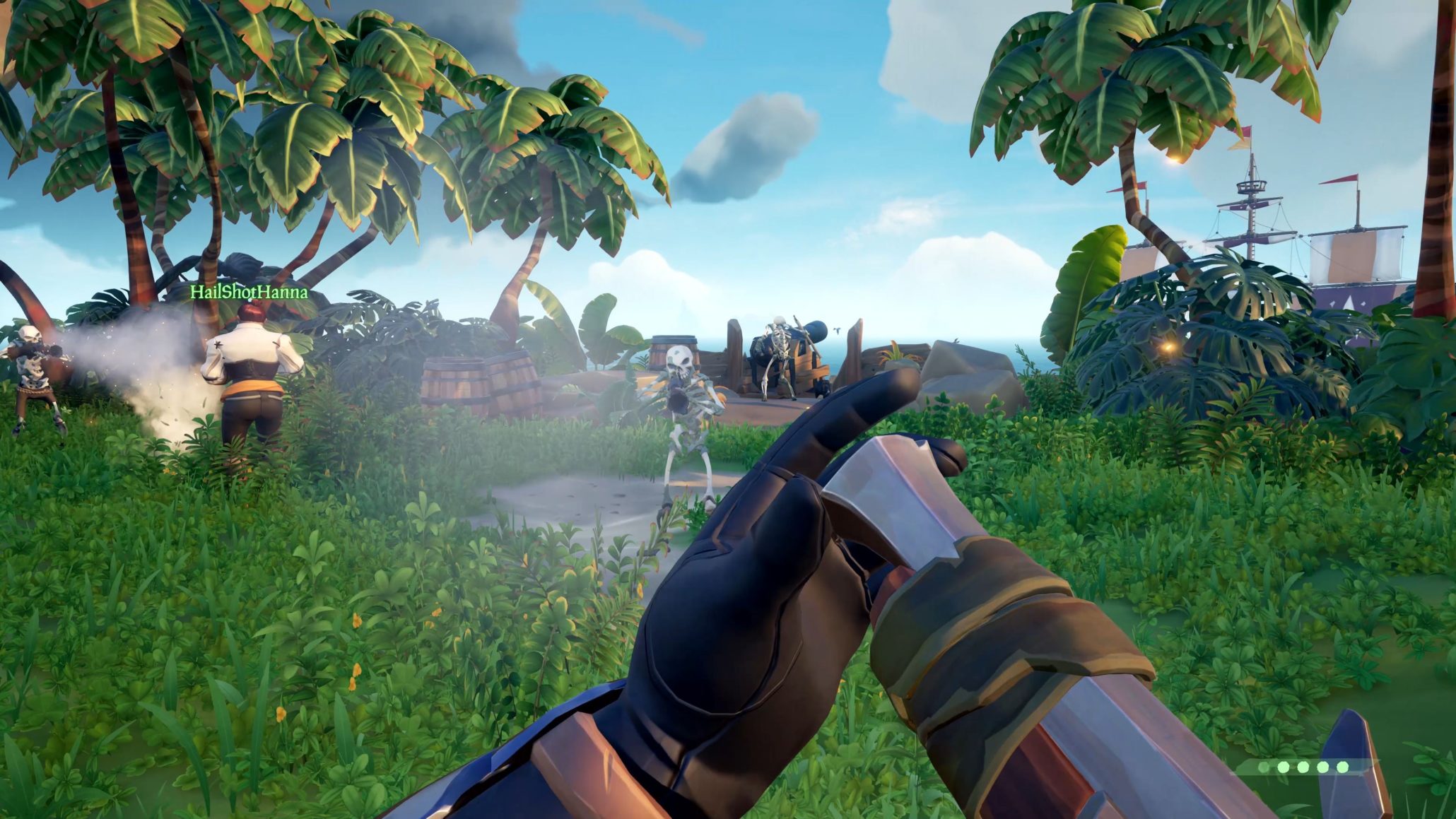
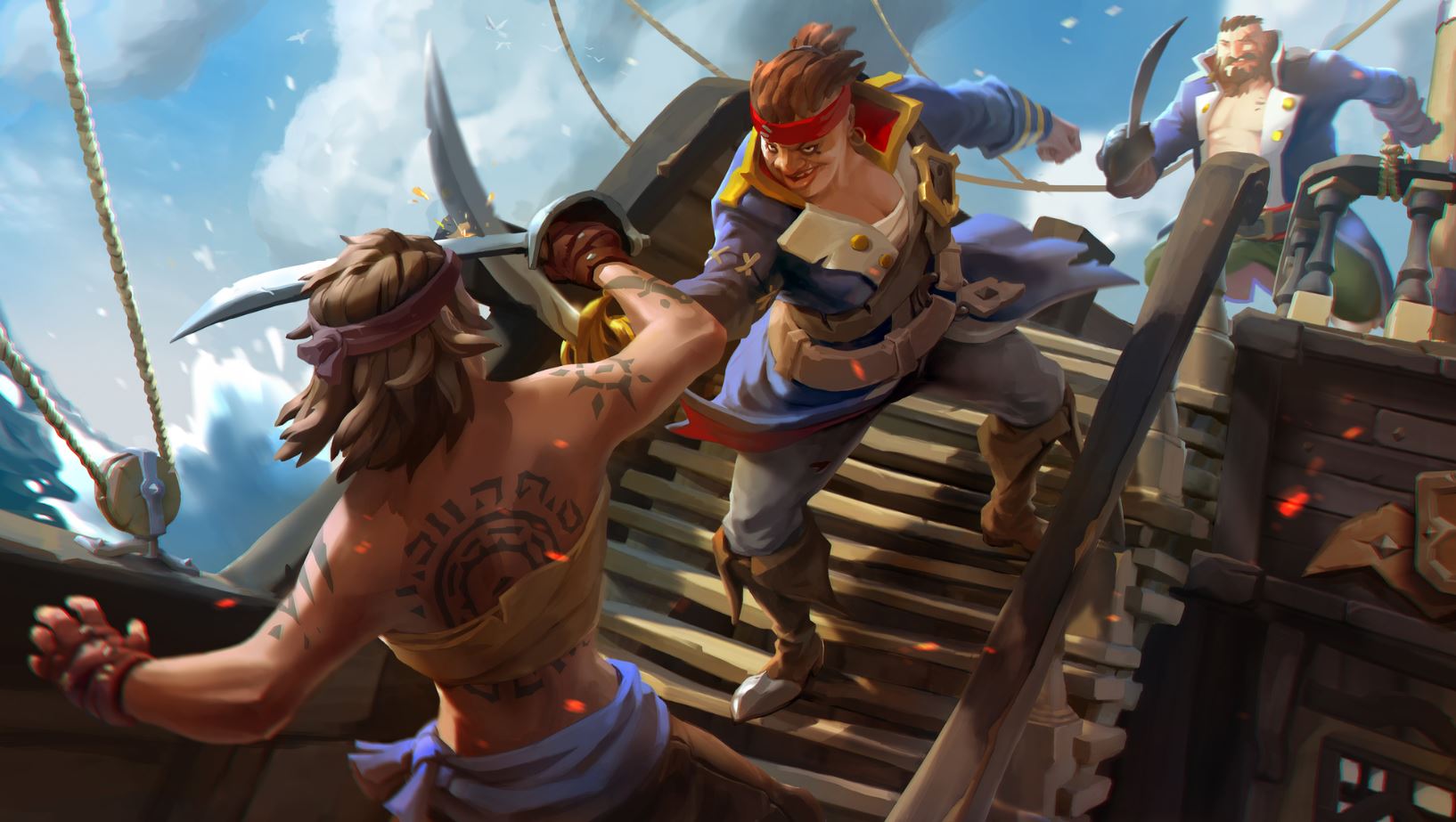
Truthfully though, combat is an unavoidable pillar of Sea of Thieves’ gameplay, and knowing the ins and outs of a fight is the difference between a plunder and a blunder (guess which one ends with you walking away with the loot). Every player can carry two weapons, so choose wisely. What you bring into the battle is going to play a huge difference in your role. To help you decide, we’ve put together a guide that will hopefully make that choice a little easier.
Pistol
Powerful and versatile, each player begins a match with a pistol and cutlass by default. You’d think that any starting weapons are sub-par when compared to ones you’d pick up later, but in the case of Sea of Thieves, you’d be wrong. The weapons here are a balancing act in this title, and the deciding factor of any PvP is rarely the weapon a player is using, but the angle from which he is attacking. Every weapon has its place, and the pistol is no exception.
** Any upgrades or purchases you make at a vendor are aesthetic onlyand will not have any effect on a weapon’s damage or utility. You’ll just look cooler.
https://www.xbox.com/en-US/games/sea-of-thieves
The pistol outmatches the blunderbuss in terms of accuracy (as you might expect) and it also has a faster reload speed, meaning that you can fire off a second shot before the other guy does. This is important for one big reason:
A single shot from the pistol will deal 53% damage to a human target. That means if you can land two shots, they’re down. See where we’re going with this? You dominate mid-range combat with the pistol. It may not feel like it fires all that quickly, but the fact of the matter is that it’s still firing faster than the other two firearms. Combine that with the two-shot kill and you have a very powerful weapon indeed.
Cutlass
Your other default weapon, the cutlass is the mark of the true buccaneer. Yes, it has less range than any other weapon. Yes, it does the least damage. Yes, it takes three hits to kill even a basic skeleton. We still think it’s the best weapon you can get your hands on in this game.
Hear us out.
At the end of the day, the sword is only as good as the swordsman. Mastering the cutlass will take time, practice, and patience (at least two traits that pirates do not have in abundance). The primary attack is a sword slash that deals a small 20% damage. Logically, landing the three-hit combo will do 60% damage. Now we’re getting somewhere. In addition, hitting another player can slow them, hindering their ability to turn. Unable to adjust their view angle, you should be able to dispatch them far more easily.
The sword’s lunge ability does a mighty 49% damage, and is one of its defining features in Sea of Thieves. The lunge lends a unique balance to the rock-paper-scissors combat for this game. Charging the lunge (primary attack button) will slow your walk speed, BUT if you block you will negate the movement penalty. Jump at the start of your lunge and you can cover still more distance, closing the gap between you and the guy with the pistol or Eye of Reach.
The cutlass is also the only weapon in the game that can block, making it your best defensive option. On top of all that, and this is a no-brainer, the cutlass does not use ammo! We recommend having a cutlass as a backup weapon on most of your adventures. Its defense, mobility, infinite usage, and general classiness make it our top choice.
For more advice on the best ways to use a cutlass, definitely give this video a thorough look:
Eye of Reach
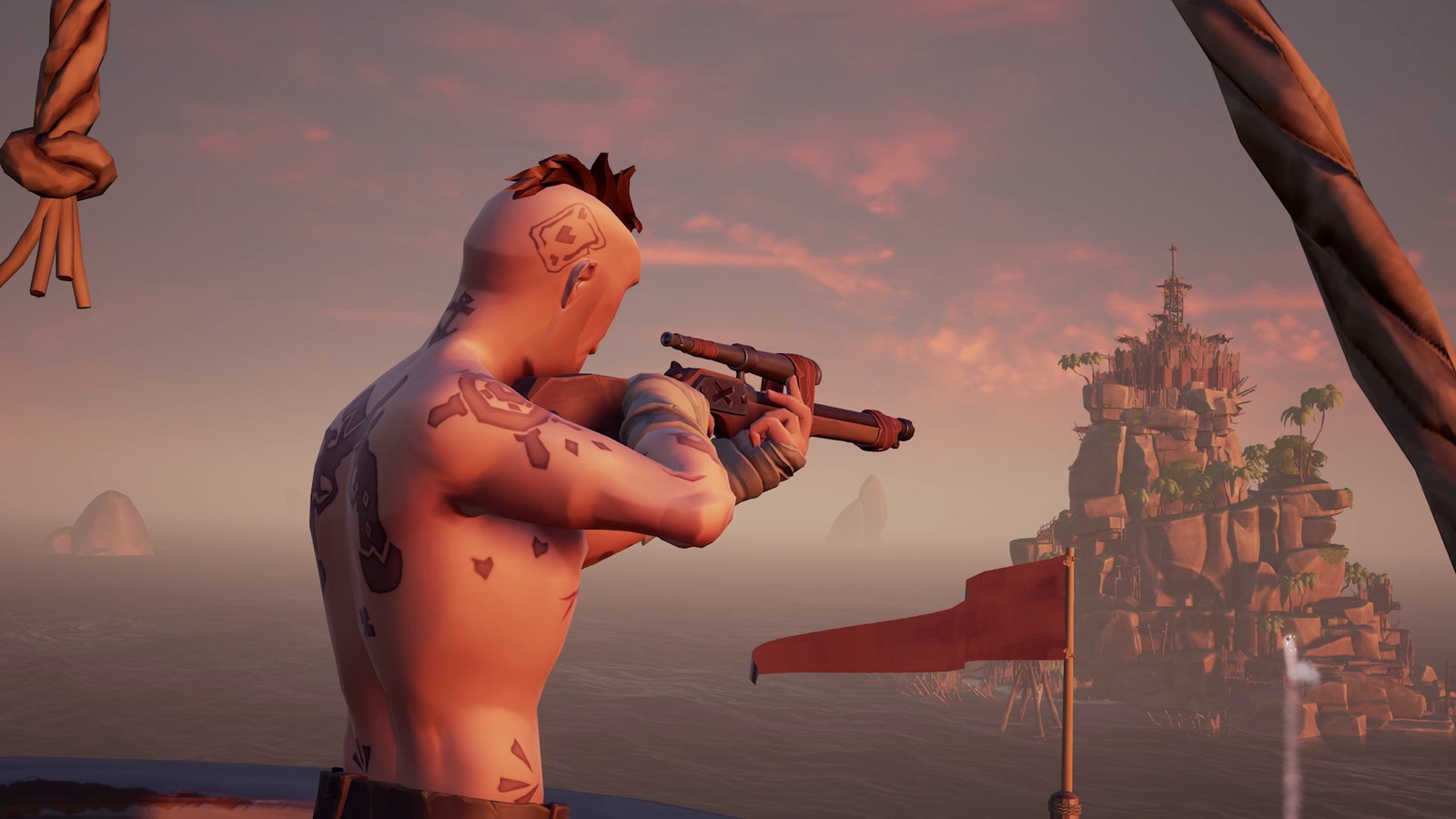
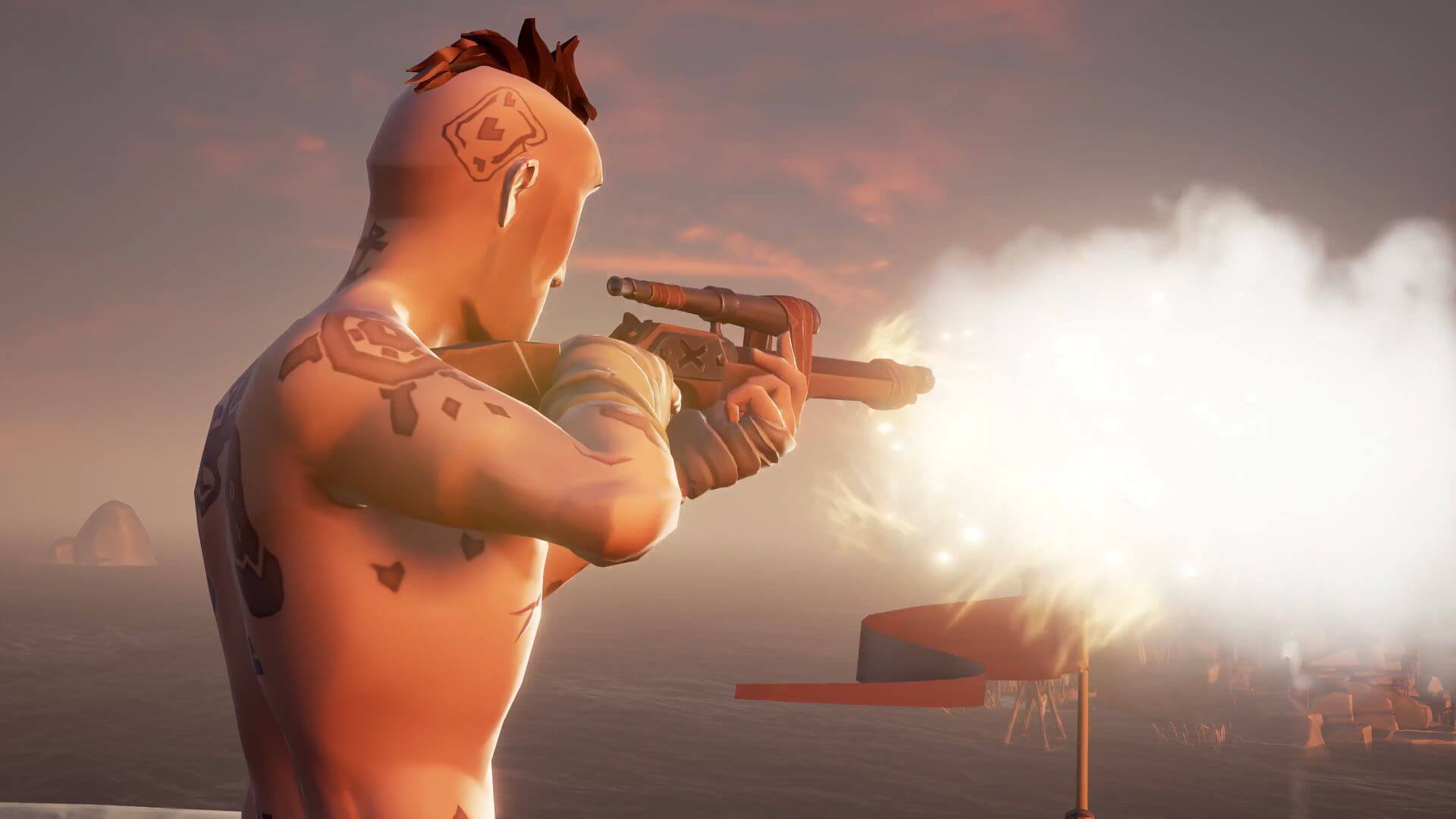
Found in an armory (scattered around the game world), the Eye of Reach is the game’s sniper rifle. With a slow rate of fire and reload time, this weapon favors a high risk/high reward style of gameplay, much like the blunderbuss.
Accurate from extremely far, the Eye of Reach also doubles as a spyglass. We found it unexpectedly useful when scouting new areas or when doing recon on skeleton forts. It is generally advisable to have at least one of your crew hit the seas with this in his hands. It’s invaluable for scouting, backing up the players leading the charge, and for picking off enemies before your ship even reaches the island.
With the Eye of Reach, it’s important to keep several universal factors of Sea of Thieves’ combat in mind:
There is no friendly fire in Sea of Thieves. At least not directly. If you’re the team marksman and you’re watching your teammate’s back, don’t hesitate to pull the trigger, even if you’re you have the shot; you can’t hurt him.
Headshots will not do extra damage. Again don’t hesitate to shoot. If you’re not firing from far away, we advise quickscoping over long careful aiming.
Lastly, damage in or out of water is the same in Sea of Thieves. If the fight lands you in the water (which it often does), remember that that has no bearing on the damage of your gun. Considering the Eye of Reach does a whopping 79% damage in a single shot, you’re nearly unmatched in terms of raw damage, on land or underwater.
The blunderbuss is the go-to weapon for any pirate who’s had enough monkeying around. And no, that’s not a Monkey Island reference. This is a shotgun, tried and true, and should only be used at close quarters. The blunderbuss fires ten shots at once in an unpredictable formation. Each of those shots deals around 15% damage. The more shots that land, the more total damage you’ll do.
It takes a minimum of seven shots to instantly down an enemy, which means that the only chance you have to score that sweet one-hit KO is to fire as close to point-blank range as you can afford to get. Careful when you take your shot; the rate of fire is slow, and you’ll probably be in the thick of the fight if you’re using the blunderbuss like you’re supposed to.
Much like the Eye of Reach, however, we think it’s a good idea for at least one teammate to be using a blunderbuss at all times. It comes in extremely handy when ambushed by a horde of skeletons or when going toe to toe with a ship full of enemy players.
For a side by side comparison of weapon damages in Sea of Thieves, along with more awesome combat strategies, check out the video below.
Step carefully and we’ll see you on the high seas!
Virtual Reality games have been coming out slowly over the last few years, as we perfect VR as a gaming platform. Despite their slow development, we already have some amazing games for this platform that everyone should be trying out. Here are our top 5 VR games out so far:
1. Job Simulator
This game is funny and adorable, and sure to give you a few laughs. Based in a future where robots have made desk work obsolete, you get to try out being an office worker in the present day. If you’ve ever worked in an office, you’ll enjoy the tongue-in-cheek quips this game has to share.
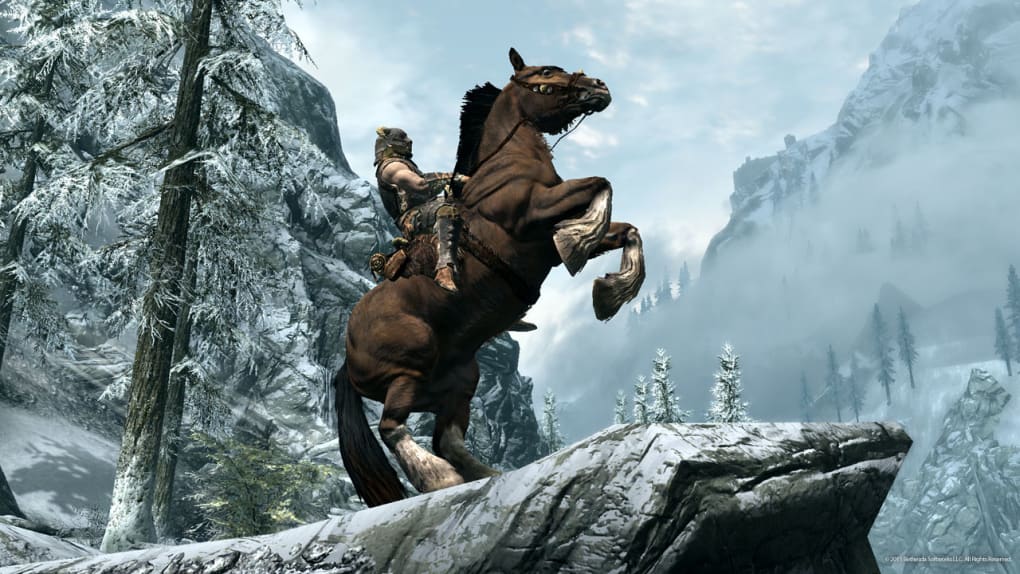
Even if you’ve played Skyrim 100 times (and let’s face it, you probably have), Skyrim in VR is a whole new experience. The best thing about Skyrim is being able to create your own mythical adventure. VR enhances this experience in ways you would never expect. The VR version of Skyrim is definitely worth playing for fans old and new.
This game is the most physically challenging VR game out there. Sprint Vector gives you various challenges, mostly races, in which you compete to the best of your physical ability. While you would expect this to take a strain on your lower body, your hands and arms play the biggest part in how fast you go. It’s definitely a unique experience.
If there is a game that rivals Sprint Vector in how immersive the VR experience is, then it’s Superhot. You’ve probably seen screenshots from this game, or maybe even gotten to test it out at a few VR testing sites. Not only is the gameplay incredible, and fluid, but the story is fantastic. Definitely worth checking out if you’re interested in VR
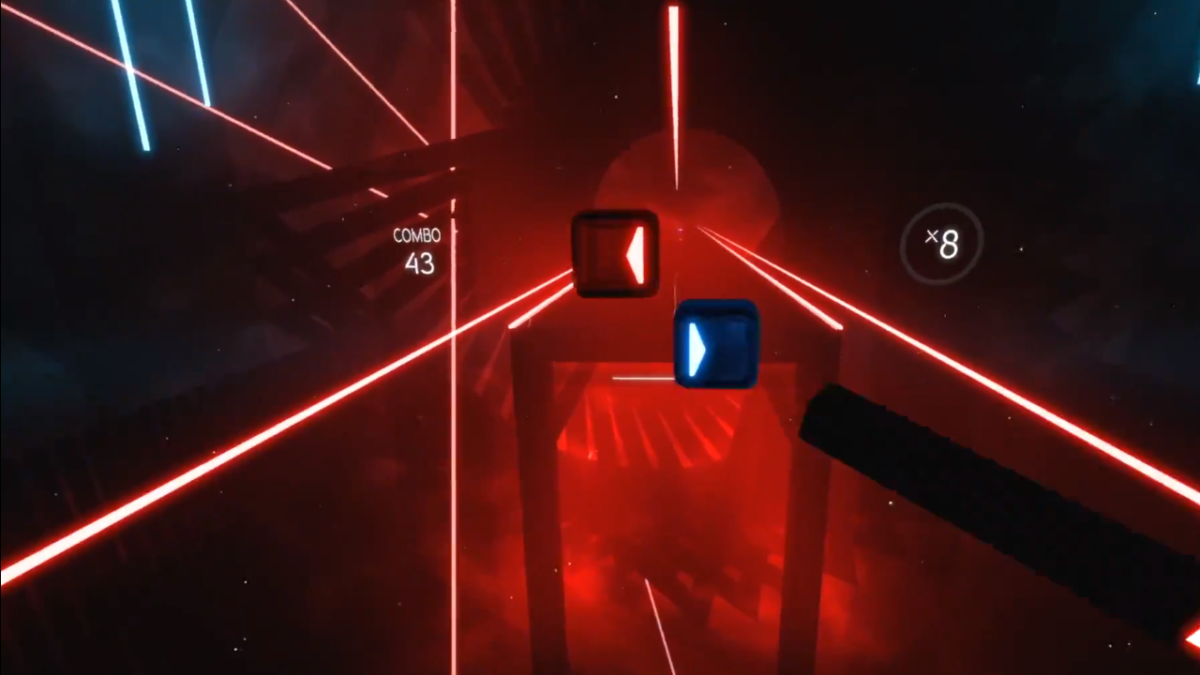
Have you ever wanted to be a Jedi? Well you finally can with Beat Saber. This game is the perfect mixture of Dance Dance Revolution and virtual reality. You truly feel like you are slicing through cubes as they come at you in rhythm with the music. It’s incredibly immersive and one of the best VR games out there, by far.
It’s been eight years since Elder Scrolls V: Skyrim. We completely understand if by now you’re getting a bit tired of Lydia as a follower. While there are a ton of follower mods out there, sometimes if you want something done right it’s best to just do it yourself. So exactly how hard is it to make your own follower in Skyrim? We’ll show you in these 15 steps.
It goes without saying that you’ll need a copy of Skyrim to test this properly, so if you don’t own the game, here it is:
Alternatively, if you own Skyrim or Skyrim: Special Edition Steam, you actually already own the Creation Kit. On Steam you can find it in your Tools tab under ‘Library.’ Just scroll down and double-click to install.
Once you have the Creation Kit installed, we’re ready to begin. Please do not forget to saveyour progress oftenand be patient when working with this software. There are thousands of assets at work here, so it’s very touchy and crashes quite often.
http://elderscrolls.wikia.com/wiki/Creation_Kit
1. Getting started
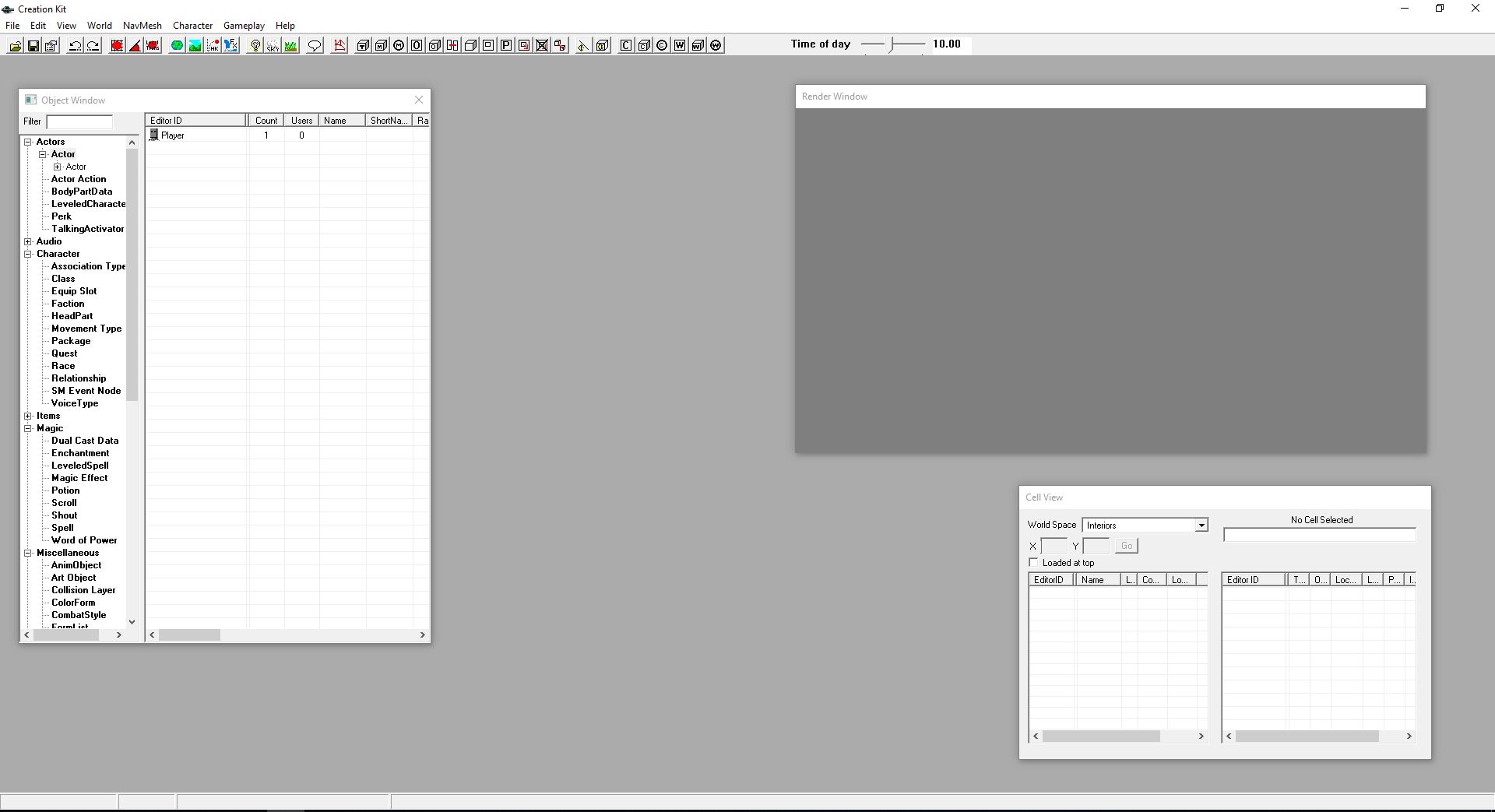
Once you’ve opened Creation Kit, you’ll be faced with this screen:
Click File > Open, then double-click ‘Skyrim.esm.’ Open it up. If a prompt comes up saying you haven’t selected an active file, ignore it. Similarly, if you get a message about missing plug-ins, just say ‘yes to all.’
Right-click on the massive list of actor names that appears on the left and say “new.” This will open up the character creation window. Now we’re ready to get working.
2. Name your follower
At the top left of the window that just opened, you’ll be putting in a ref ID. This is the unique tag that the game will identify your new character as. This will not be the character’s visible name! As such try and balance your Ref ID to be both unique and easy to remember, something like “JohnDoe101ActorFollower.”
After, type in your follower’s name. The “short name” afterward is optional. The name will be your character’s label in-game, while the short name is shorthand for quests. For example, “Jane Doe” might be referred to as “Jane” in your quest log.
Don’t touch any of the options below, like Invulnerable or Protected. We’ll do that later.
3. Assign Basic Traits
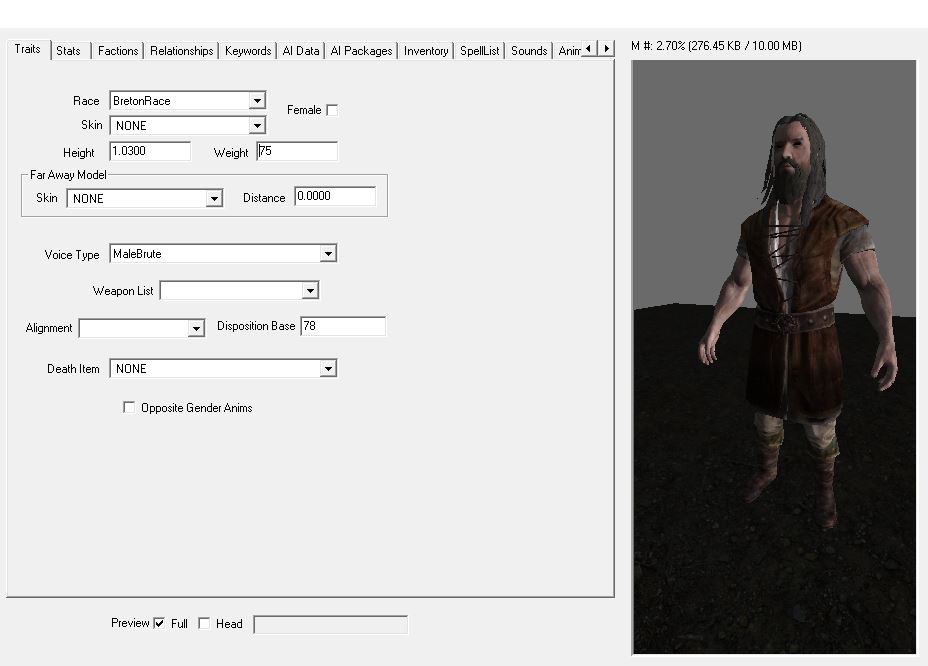
On the right, you’ll be presented with a handful of checkboxes for your character’s traits. Up top, pick your character’s race and sex. For the sake of this tutorial, we’ll be covering how to make a human follower, not an animal.
Next, you should tick the “preview” checkbox at the bottom of the window to see the character’s full body. This will help with the adjustments we’re about to make.
A character’s height and weight are very touchy, so if you make adjustments to their default they should be very minimal or they’ll look odd in-game. For reference, check the preview on your right as you go along.
4. Give your follower a voice
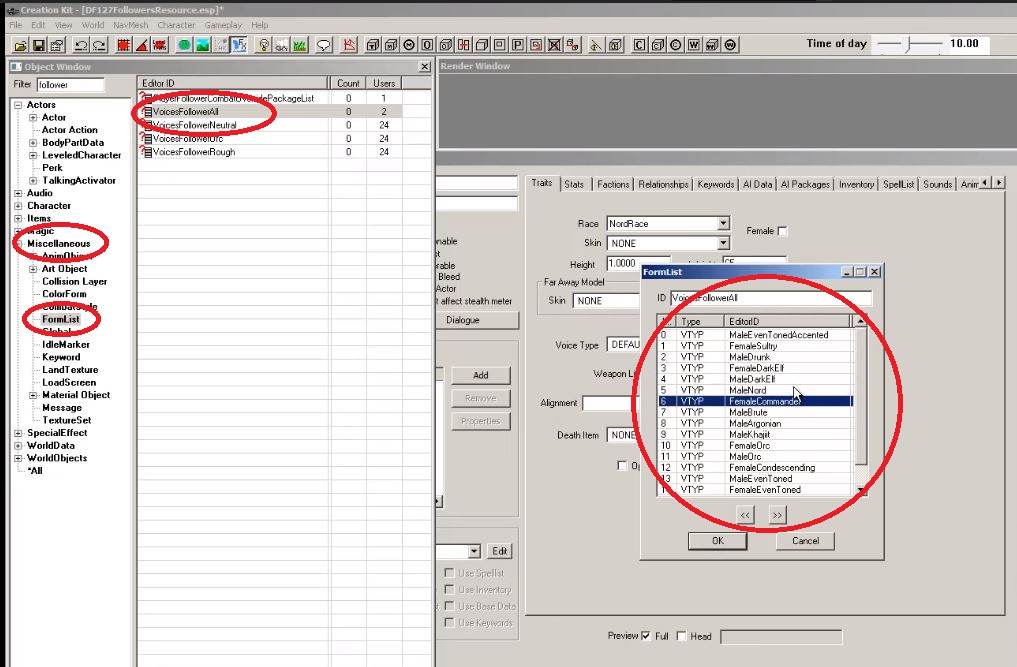
This next part is important. Still on the Traits tab, if you go down the Voice Type dropdown it will at first seem like you have a ton of options. This is sadly misleading. Most of these voices will unfortunately not work with follower characters. In order to find the ones that do, you’ll have to dig a bit:
https://www.youtube.com/watch?v=tLgSYzOaTnA
In your object window on the left, expand the Miscellaneous options and click on FormList. In the filter up top, type “follower.” Now double-click the “VoicesFollowerAll” option and scroll through to pick the one you want for your follower. If you don’t know what these voice types sound like, check out this video for samples:
5. Set your follower’s stats
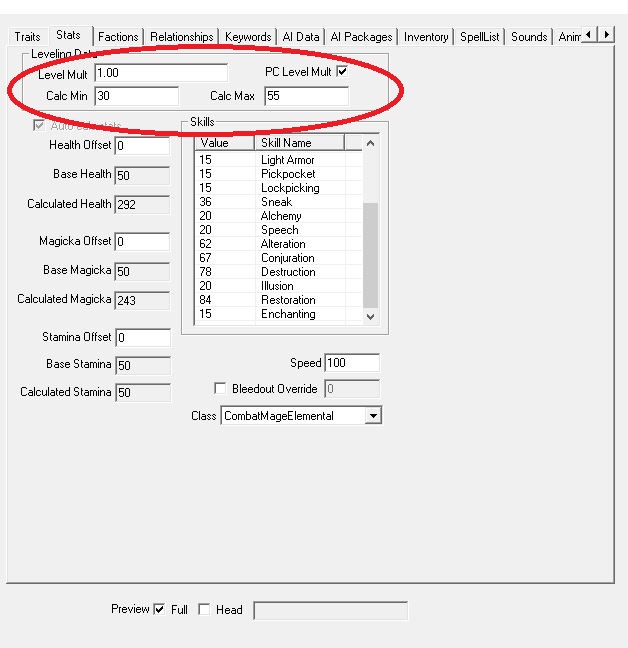
The stats tab is where you pick your follower’s level and how good he/she is with the various skills in-game. You can start by setting a follower’s level by simply typing it in the “Level Mult” portal, but we recommend a different approach:
Tick the checkbox that says “PC Level Mult” and it will unlock the two portals below that say “Calc Min” and “Calc Max.” From here you can put in the follower’s min and max level, so that they will better scale with the player character and the enemies you encounter. For example, our character starts at level 30 lowest, but caps at 55:
The bottom window has a variety of build options like Blade, Beggar, CombatScout, etc. Clicking through them will change which skills get priority for your follower. How good a follower is at any particular skill is a combination of both their “class” and their level window. Two CombatMonk class characters may have differing levels of Sneak depending on what level they are.
6. Set your faction
This tab and the next don’t have much wiggle room and aren’t as subjective as the past couple, so you’ll need to do the next steps exactly as written. Luckily they’re pretty simple:
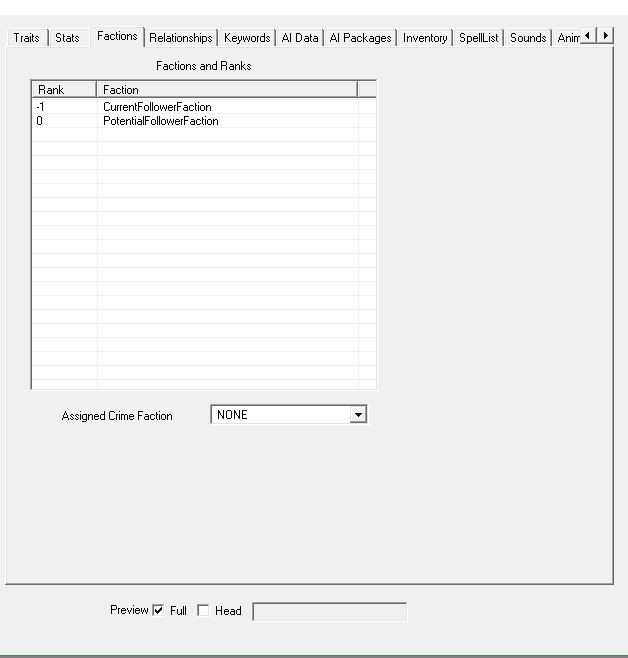
Go to the Faction tab. Now right-click in the empty lined box and say “new.” Then type follower in the filter. Choose “CurrentFollowerFaction” and “PotentialFollowerFaction” options. They should both appear in the window.
Now select the “CurrentFollowerFaction” and press F2. Then type in “-1.” This basically sets your character as unassigned to you from the start, which means they will only join you after you speak with them, as is the default in this game.
Frankly, if you set this value as anything other than -1 it’s unlikely that your follower will work at all. Do it right and your factions screen should end up looking like this:
Before we move any further, NOW is the time to check the boxes under your character’s ref ID and name. A quick runthrough of what these mean:
7. Can your follower be killed?
CharGen Face: Your follower’s face will be in the preset faces at the start of game. Essential: Your follower cannot die. Protected: You cannot kill this follower, but enemies and falls can. Respawn: After this follower dies, it will come back. Unique: This is only one follower, and there are no duplicates of this character running around the game world. Summonable: This character can be summoned via conjuration. Ghost: Weapons and spells will go through this follower. Invulnerable: Weapons and spells will impact this character, but they will be unaffected. Doesn’t Bleed: No blood animation when this follower is struck. Simple Actor: Disables several of the facial animations on this follower. Doesn’t Affect Stealth Meter: If this follower spots you while you’re crouching, it will not affect your sneak meter.
Pick whatever combination of these you like, but you’ll at least need to check the“Unique”box.
8. What is your follower’s relationship with you?
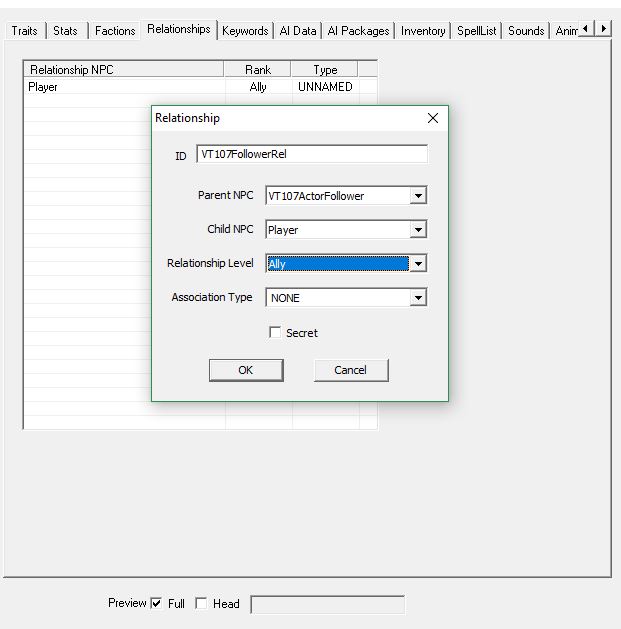
In the Relationship tab right-click in the window and click ‘new.’ Again make your ID straightforward and official – something like “JohnDoe101FollowerRel.” Your Parent NPC portal should be auto-filled to match your follower’s ID. Keep it that way.
Then simply make the Child NPC “Player” and the relationship level “Ally.” It should similar to this when you’re done:
Skip the Keywords tab and click the one that says “AI Data.”
9. Set your AI Data
This section is a little more up to your discretion. The AI attributes here affect your follower’s expressions and behavior. We do recommend, however, that you at least set the Aggression to “Unagressive” and your Confidence to “Average” just so your follower doesn’t go berserk and start attacking you should you accidentally hit him. The Mood portal determines your follower’s facial expressions, so set that with whatever you think best suits your dude.
Setting the Assistance and Morality will affect whether your follower will perform unsavory actions like attacking or stealing if commanded. Finally, the combat style should more or less mirror the class you picked out back on the Stats page. Again this might take some trial and error to pick out the one best suited for your follower.
Skip the AI Packages tab for now. We’ll come back to it soon.
10. Set your follower’s outfit and inventory
In the Inventory tab you get to pick out your follower’s clothes. Click the dropdown under “Default Outfit” and pick the one you like. What you’re really setting here is what your follower will wear when they’re not in your service. That means when they’re wandering around their starting location and such. Any armor is best given to them by you, in-game.
11. Set up your follower’s perks and spells
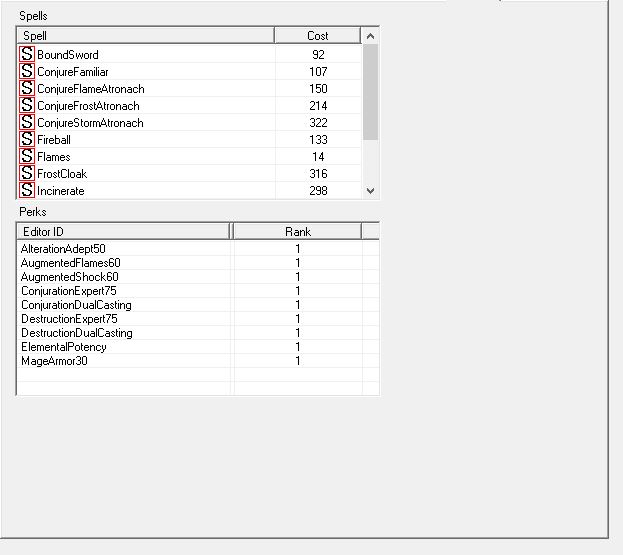
Here’s where you pick your follower’s perks and, if they use magic, their spells. We made our example follower a mage just so you can see what it will look like. If you use magic, right-click in the “Spells” window and pick out any spells you want this follower to use.
Note: Your follower will always use the strongest spells available, and that means he’ll default to using high-cost magic if they have access to something like Incinerate, Icy Spear, or Thunderbolt. If you don’t want him to run out of magicka too fast, don’t give him these spells! You can see how much mana your follower has back on their Stats page.
Next, pick your perks. It might take some guesswork to determine which perk is which, but you can always come back to adjust later. We made our character (above) a destruction conjurer with some points in alteration if you’d like to compare:
If you choose a more warrior build, the page might look something like this:
Now tab over a few to get to the Character Gen Parts
12. Make a face
Now you finally get to the fun stuff – pick what your follower’s face looks like! We recommend you start by clicking the “head” checkbox at the bottom of the window for a zoom-in view to get the best possible accuracy.
Start off with cycling through the presets, then get more in-depth with the options in the Base Head Parts box. If you want to go really crazy click the next tab over, Character Gen Morphs, to fine tune your aesthetic.
13. Where does your follower live?
If you haven’t been saving your progress lately, DO SO NOW. This next part is notoriously finicky, and the kit will often crash here.
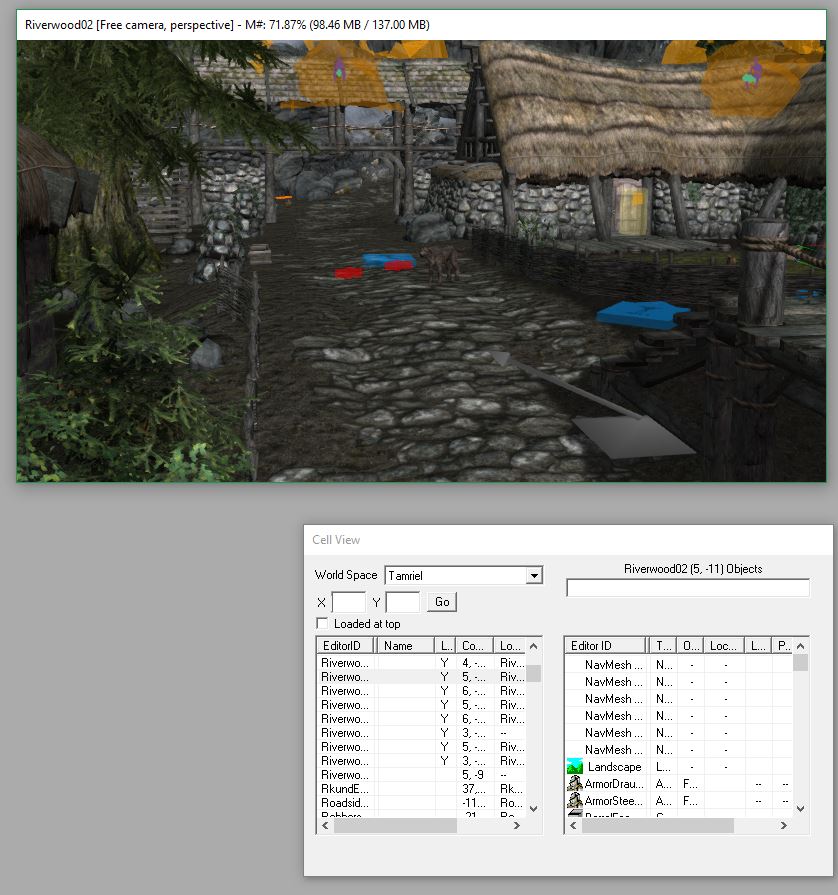
Notice the “Cell View” window towards the bottom right of Creation Kit. This is where any and all locations in the game are listed. Click where you want your follower to spawn. (We like Riverwood since it’s easily reached from the start.) If you get any error messages upon loading up your location, again just hit “yes to all.”
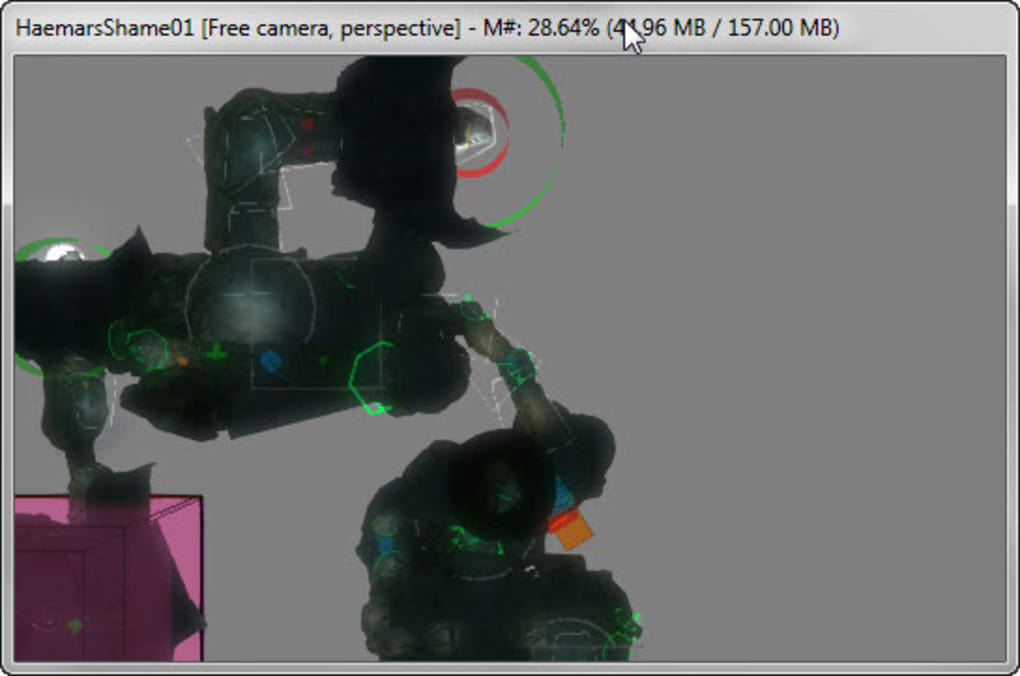
Navigating inside the Creation Kit takes some practice, but at it’s most basic, Shift controls the vertical angle while the mouse wheel zooms in and out. Be sure to take into account where everything in the game world was at the start, so you don’t accidentally save with a rooftop missing or something. If you do accidentally delete something, your best bet is probably just to close out and open the kit back up again.
Once you’ve found where you want to place your follower, all you have to do is drag it from the Object Window right into the map. Press ‘F‘ to make sure your follower lands on the floor correctly and doesn’t wind up embedded in the dirt or any similar embarrassment.
14. Nobody just stands still
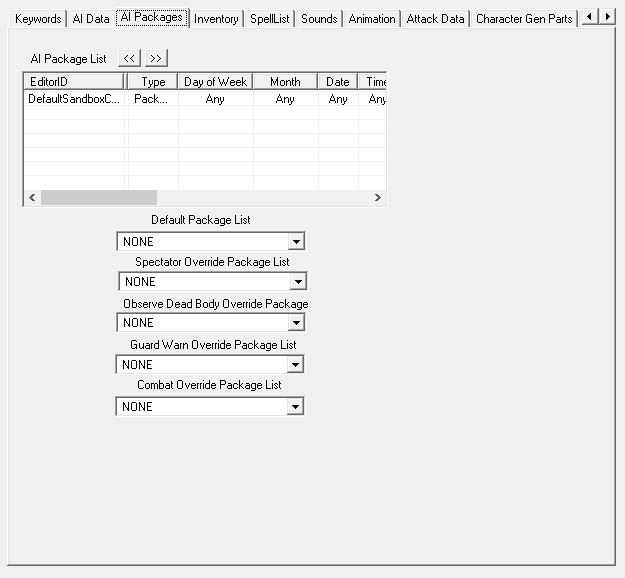
The icing on the cake is to add an AI package. Tab over to it and right-click in the window. Hit “add” this time, not “new.” “New” is if you want to make a completely new AI package, and we suggest just using one of the defaults, especially if this is your first time making a follower.
In the filter that comes up, type “defaultsandbox” and pick one of the four options that start with “DefaultSandbox.” The number after just refers to the radius in which your follower will wander from where you placed him, so probably the bigger the better.
Save your progressonce you’ve set this!
15. Meet your masterpiece
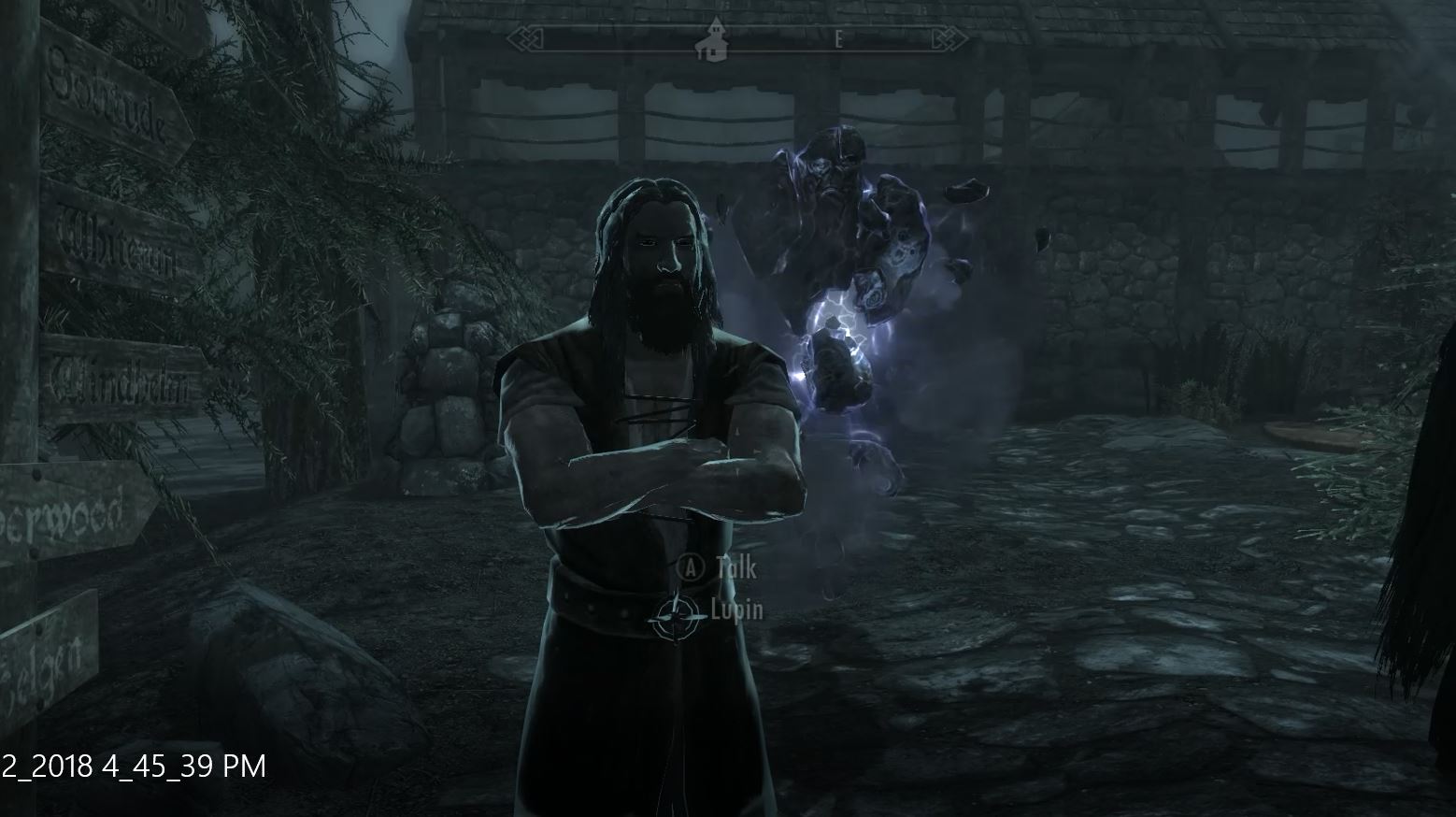
From here all you need to do is boot up Skyrim and go to the location where you placed your follower! Once you meet your creation if anything isn’t working correctly, do not fear; it happens to the best of us. Just back out and re-open the Creation Kit and try and troubleshoot.
It might also help to check out some of Bethesda’s default characters in the Creation Kit to get a better feel for how you might want to base yours. For mages, we recommend checking out Tolfdir or Nirya. Brynwolf or Karliah for thieves, Faendal or Aela for archers, and Lydia or Farkas for warriors.
Don’t beat yourself up if you’re still having trouble with this. The first follower you make is always the hardest one. Follow our guide here as best you can, but you may still find your character isn’t one hundred percent what you want. Trial and error are your best teachers, and all the characters you make afterward can be modeled off your first as a blueprint, saving you a lot of work.
15 free Skyrim mods to satisfy fans until Elder Scrolls 6
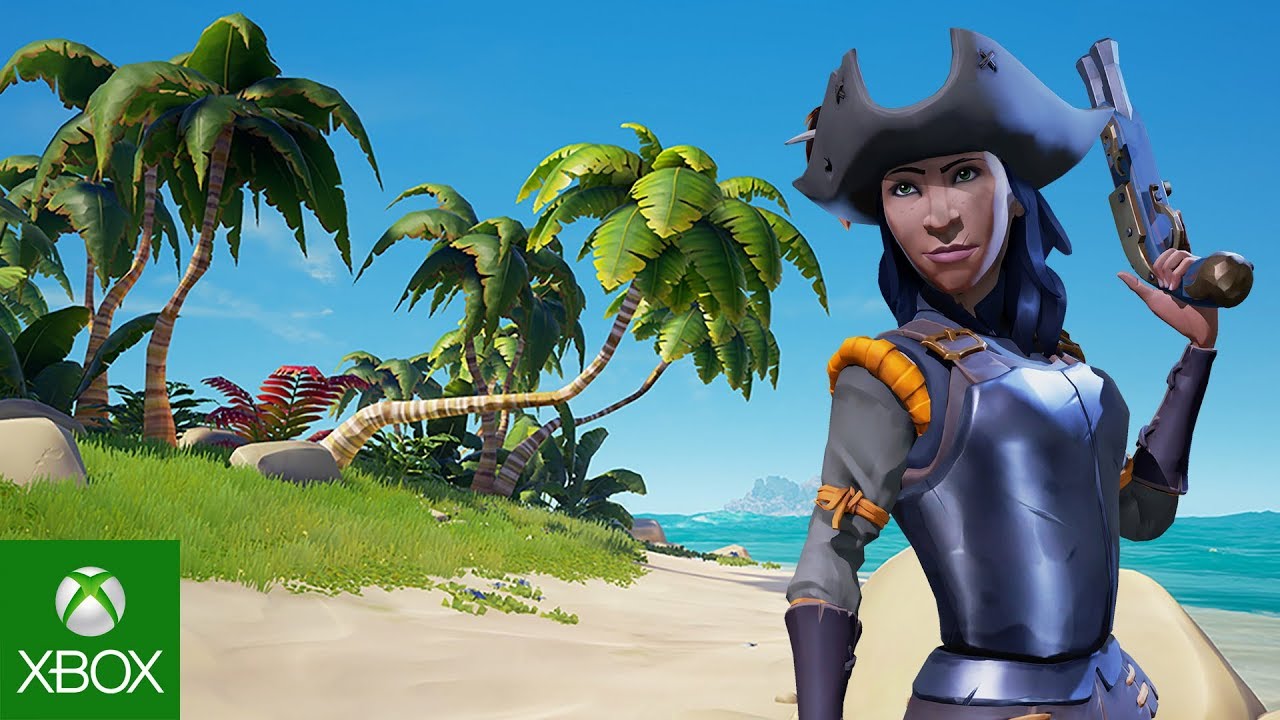
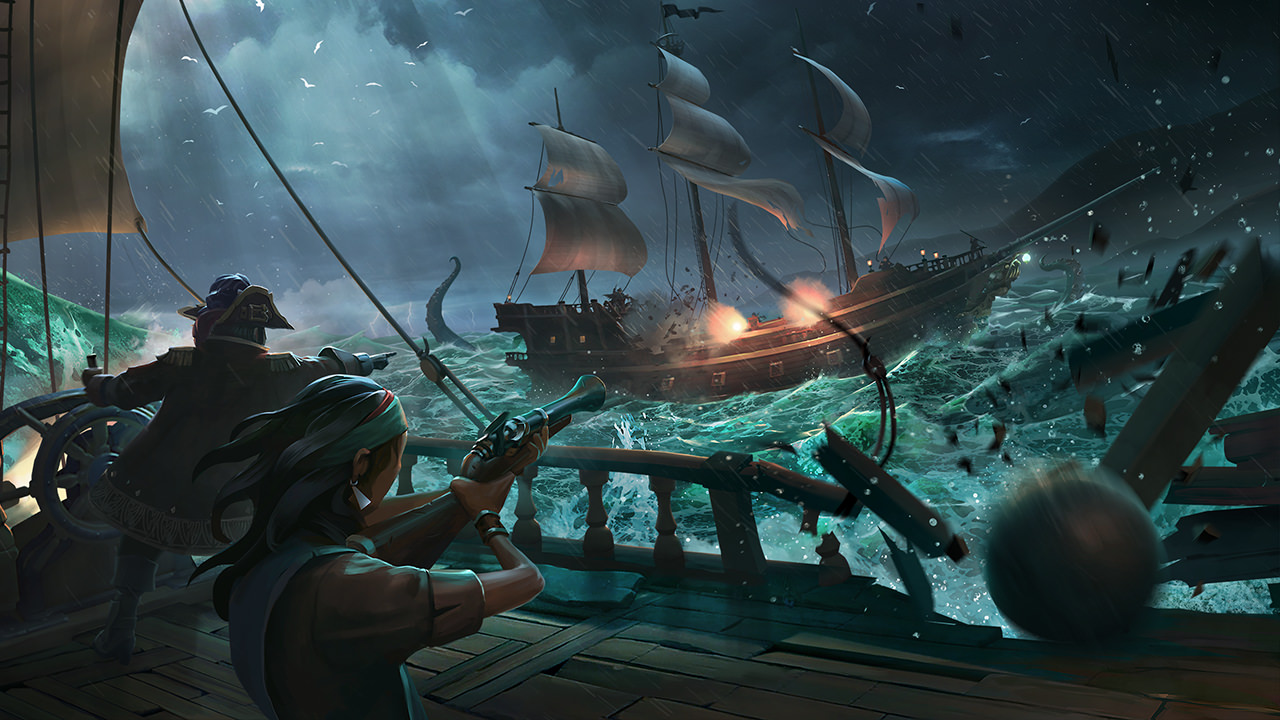
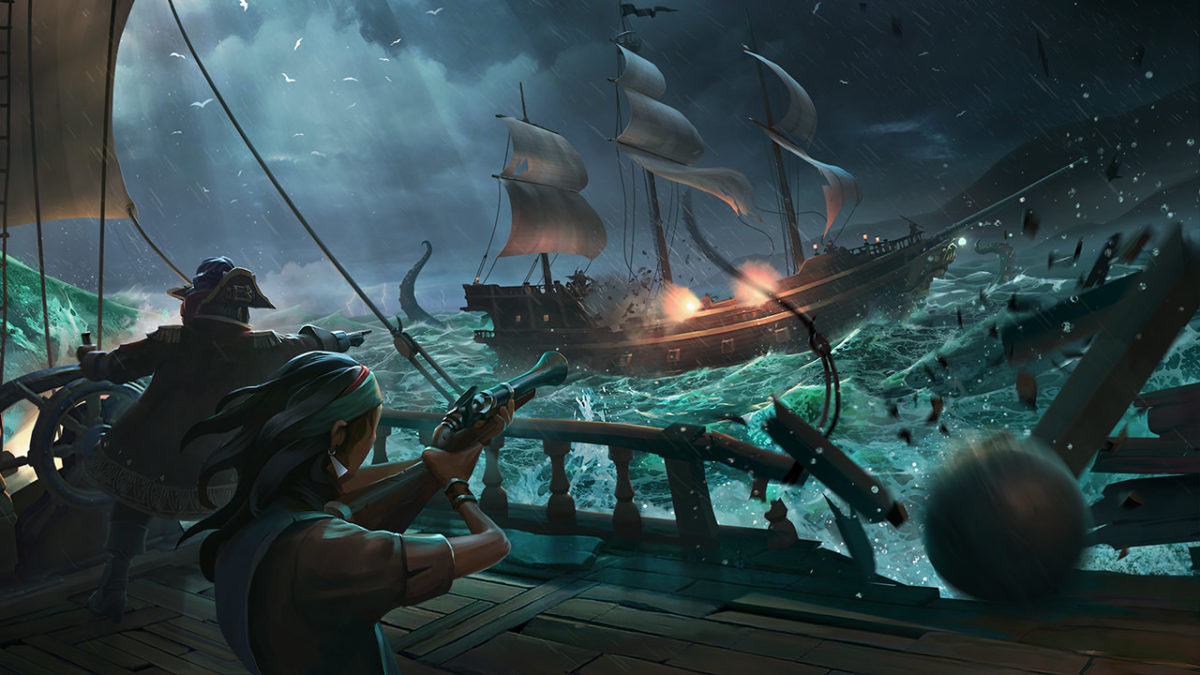
Sea of Thieves is a game about plundering the high seas in search of grog and booty. You’ll be commandeering the seas on your Sloop or Galleon, dodging all manner of angry skeletons, ferocious sharks, perilous rocky coves, the legendary Kraken, and – most terrifying of all – the other players in your match who might be just rowdy enough to try and cast you down to Davy Jones’ locker. Sound fun? Grab it here:
Jumping into a living, breathing world like Rare created with this title can be unnerving, especially with the game’s lack of tutorial. We’re sharing five tips that will play the part of the parrot on your shoulder, giving you advice and encouraging you to let your conscience be your guide.
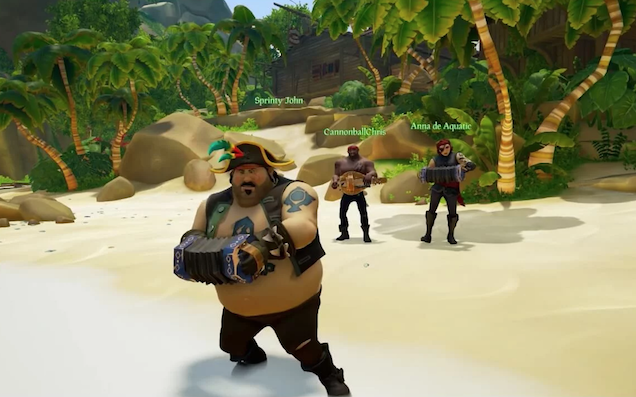
Kind of a given, but if you can play this game with friends, do so. Trust us, it’s the way the game is meant to be played. Besides just raising the camaraderie up to 11, pretty much all the game’s mechanics assume you’re with a hearty crew.
The element where this especially comes to mind is navigation. Sailing a ship is NOT like driving a car, and having another pair of eyes can be the difference between a shiny new galleon and a waterlogged shipwreck.
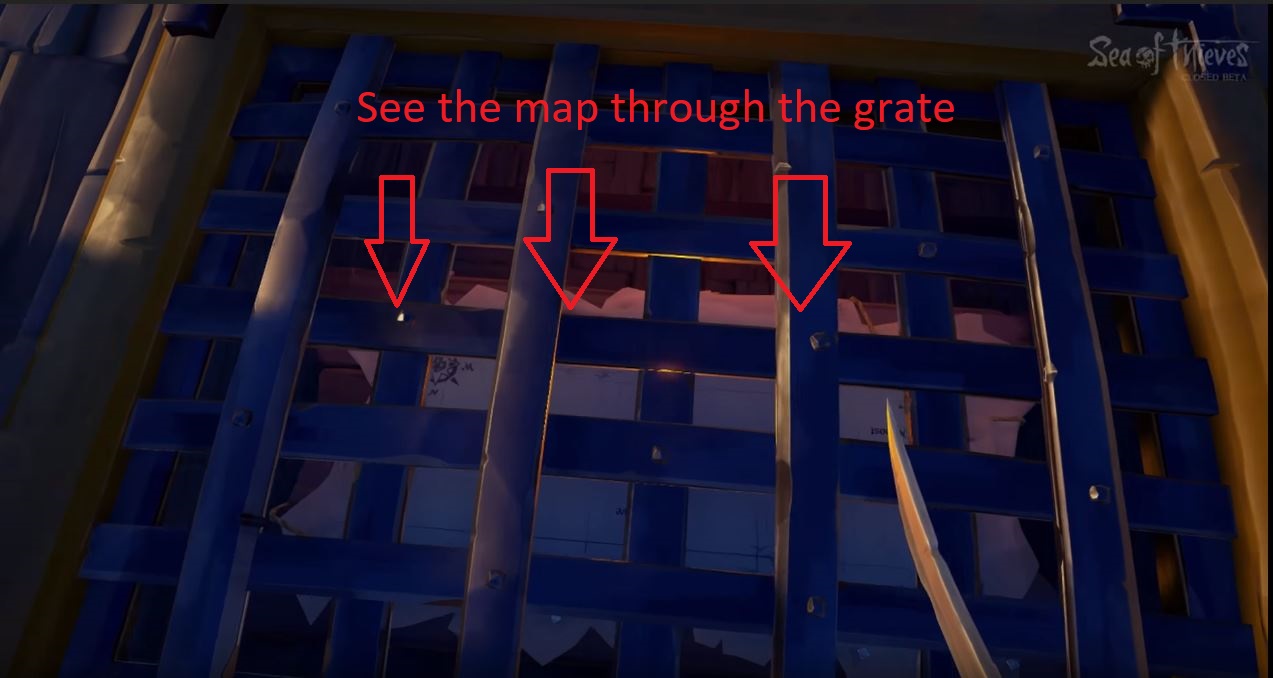
As if to reinforce this point, the map on the Galleon is in the hold, below the deck. The wheel for steering is two floors above that. The game doesn’t want you to do both. The most efficient way to plot your course is to have one player down below deck yelling directions to whoever is steering.
Trying to check the map and steer is deliberately clunky and inconvenient. Additionally, having another pair of eyes can be incredibly helpful when you’re scouting for clues during one of the game’s many treasure hunts.
2. Familiarize yourself with your vessel
Navigating and sailing in Sea of Thieves is a huge portion of the game. The more practice you get on the high seas, the more adept a sailor you become. The more adept a sailor, the better your survivability in ship-to-ship combat. Not to mention you’ll be able to pull some crazy maneuvers in and out of battle. There are two ships in Sea of Thieves: The Sloop and the Galleon.
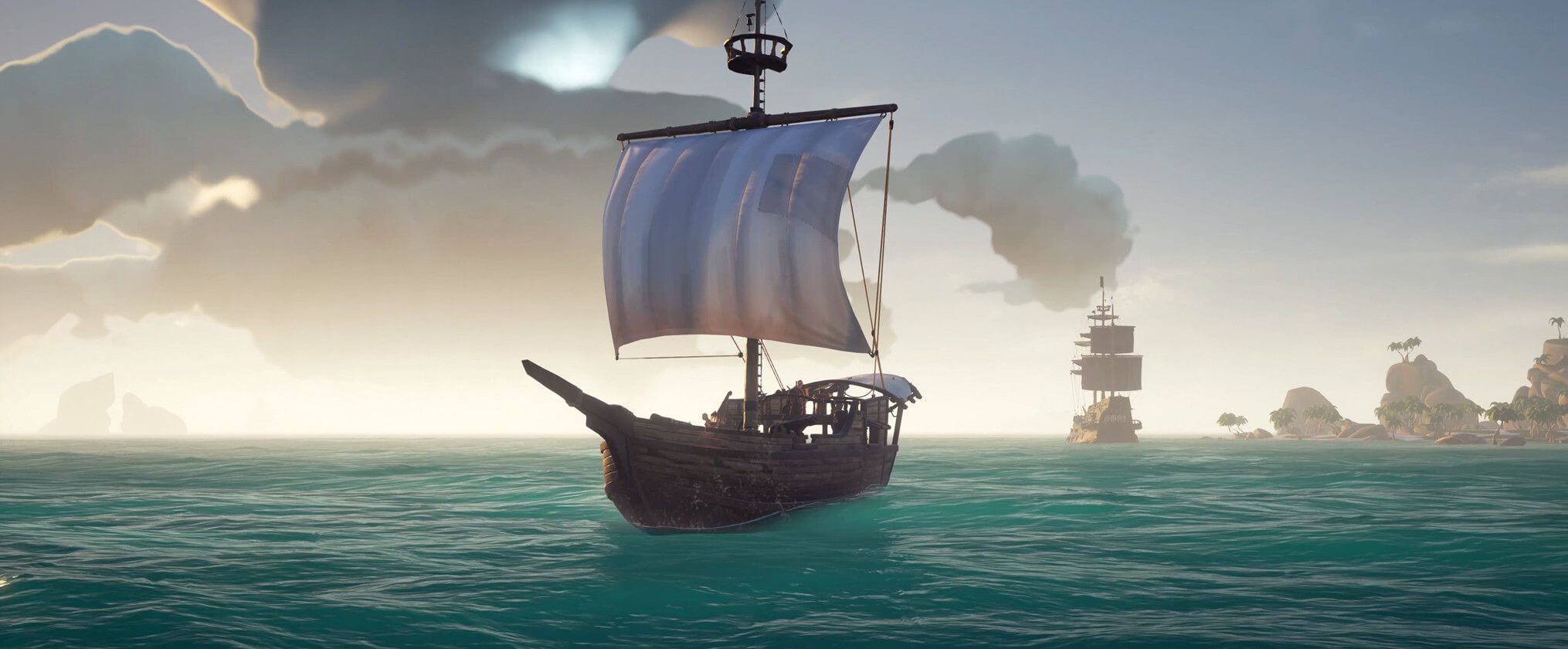
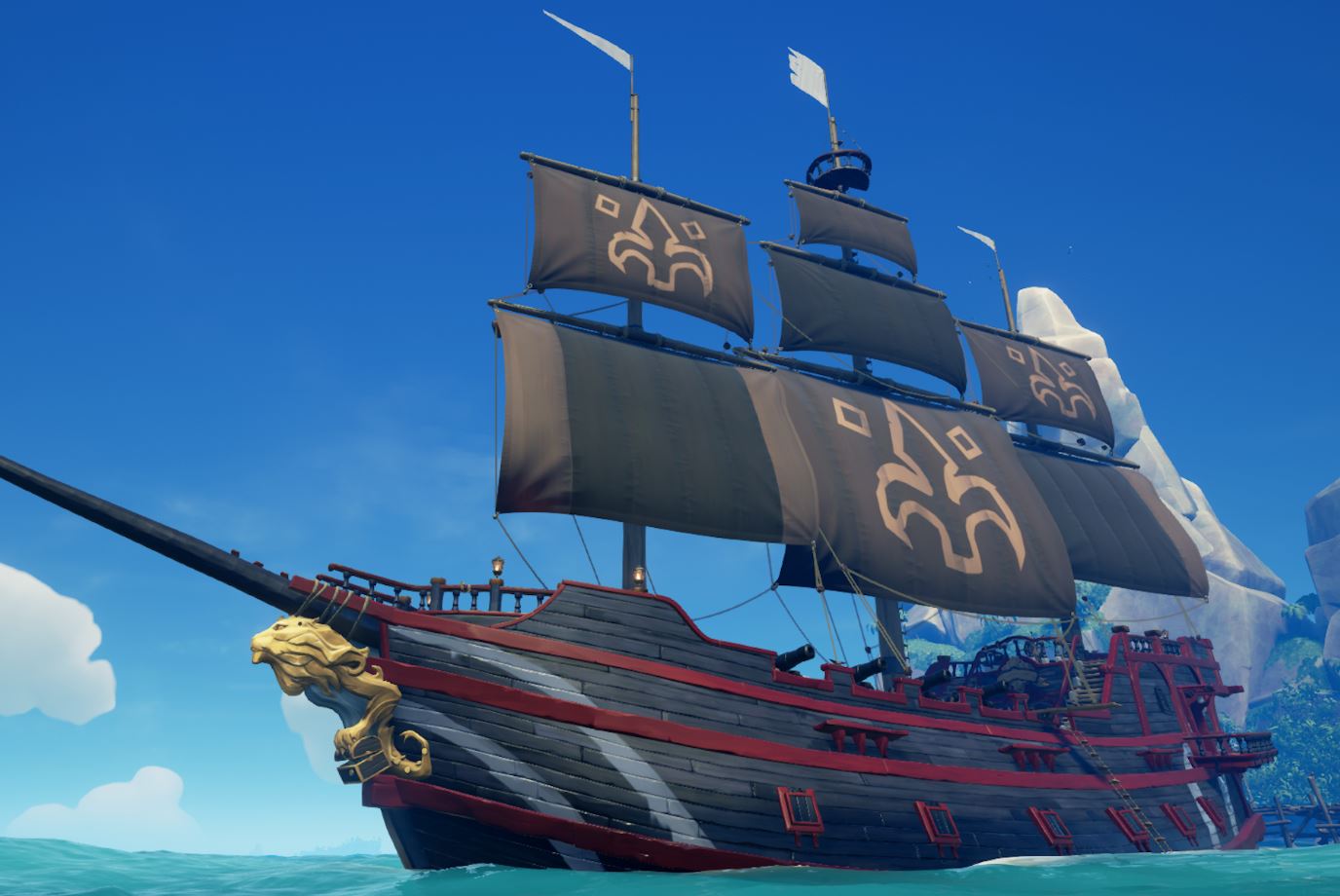
The Sloop is faster and smaller, but isn’t decked out for a fight like its big brother. They are easier to repair, however, and their size makes them immune to Kraken attacks. We’d recommend starting off with a Sloop in Sea of Thieves, and upgrading to a Galleon when you get the hang of the game’s steering mechanics.
The Galleon is the king of the seas, boasting twice the firepower and durability of the Sloop. Since it lacks the Sloop’s maneuverability, we’d recommend around four players work together to make for the most efficient navigating. Of course, a ship is only as good as its crew, so be sure that your teammates know their roles before the lot of you go head to head with other players.
For both ships, don’t forget to use your sails properly! Look up and try to gauge the direction of the wind. If you angle your sails to catch the wind just right, you’ll see them puff out. That means you’ll be moving as fast as possible.
3. Learn your tools
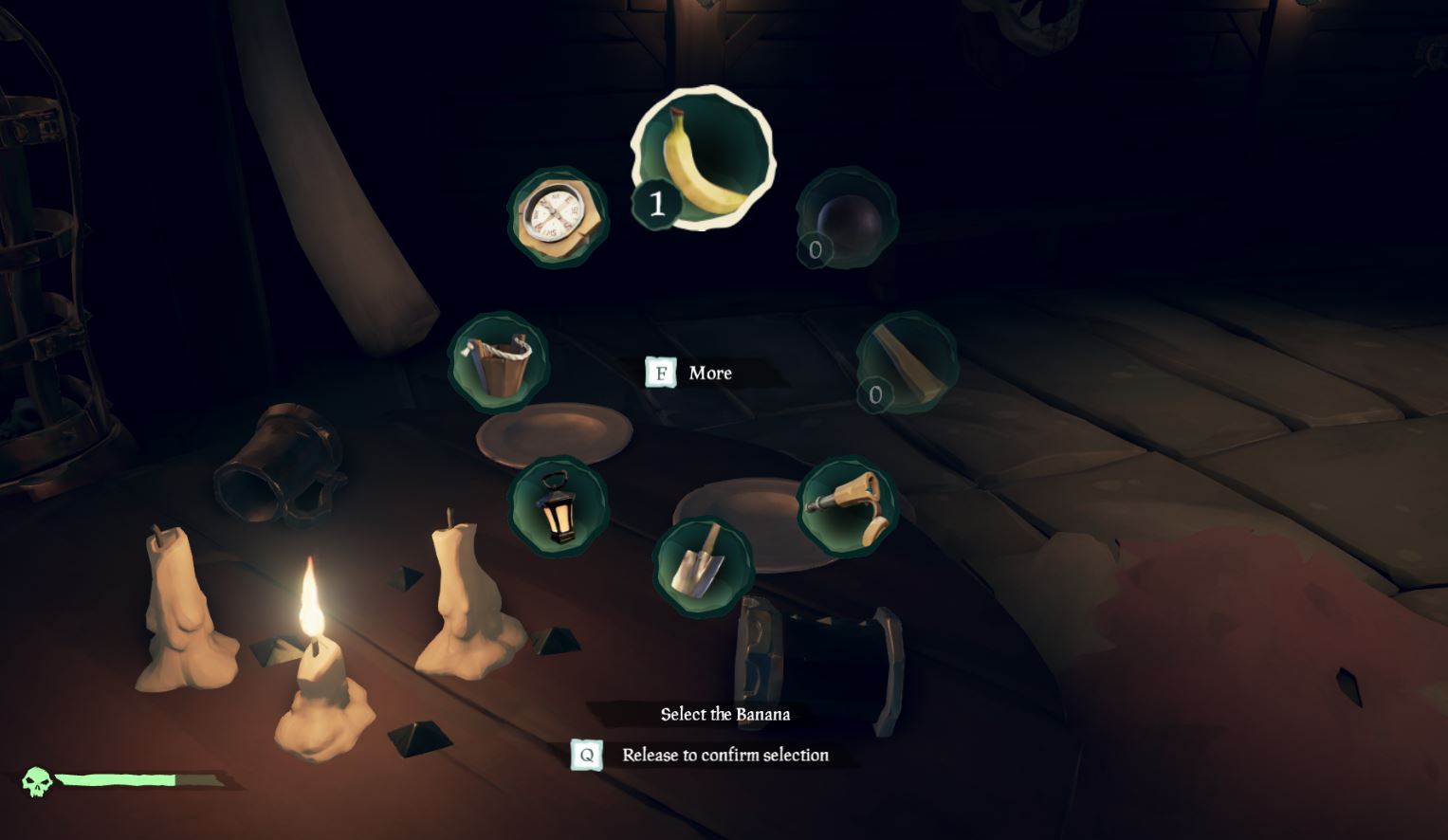
There are eight different tools in your inventory radial. You should become familiar with their purpose so you always have the right one for the right job:
Compass: The most important tool at your disposal, the compass is how you discern the right direction when away from your ship. Keep track of where you go after you drop anchor and go on land; your compass will help you get back.
The compass is also hugely valuable when you’re on land trying to hunt for treasure. Keep it handy. You can also look to the North Star if you’re wandering around at night.
Lantern: Handy when spelunking, the lantern is your default item for brightening caves or dark islands when exploring at nighttime. You can also right-click (left trigger on XB1) to lift the lantern higher, lighting up those dark corners.
Pocket Watch: Not terribly useful outside of Merchant Alliance voyages, this tool tells you the time and date. It can also help with determining how long you have before dark, but you’re a pirate – just look up at the sky!
https://www.windowscentral.com/sea-thieves-items
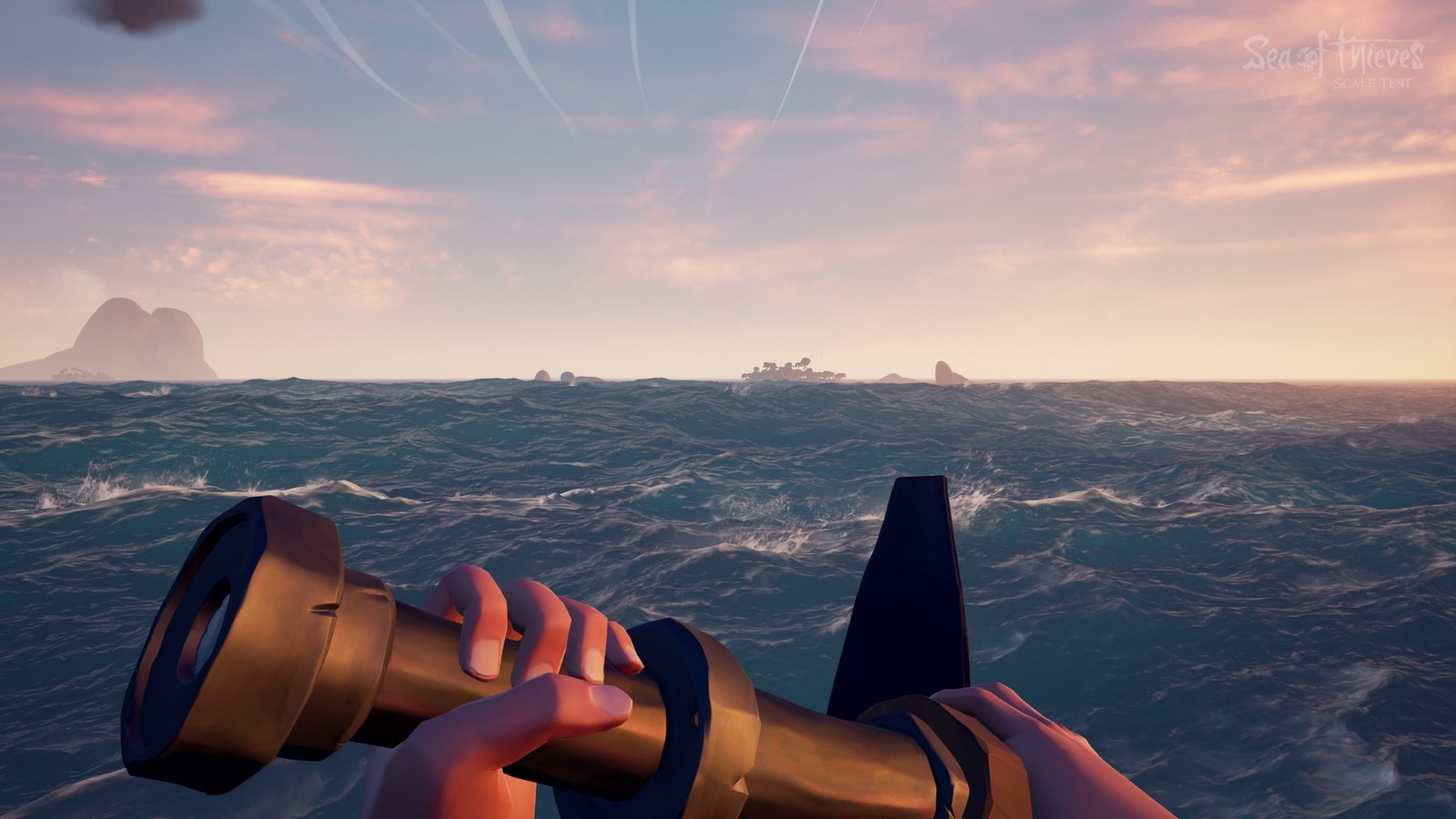
Spyglass: An unexpectedly valuable piece of equipment, this can help you spot islands, enemies, and passing ships. Passing ships should definitely be taken into account and shared with your crew. Know when to fight and when to flee, especially during timed quests or when low on supplies. Another tip is to put out your ship’s lanterns at night; other players will have a harder time spotting you in the dark if you’re not lit up like a Christmas tree.
Shovel: This digs up treasure. Listen for the clank sound; that means you’ve hit the chest.
Bucket: All players begin with the bucket, and all unfortunate players will likely end up using it. A lot. The bucket is for when your ship is taking on water and threatens to sink. Use the bucket to pour out the water, ideally when another player is patching up the hole.
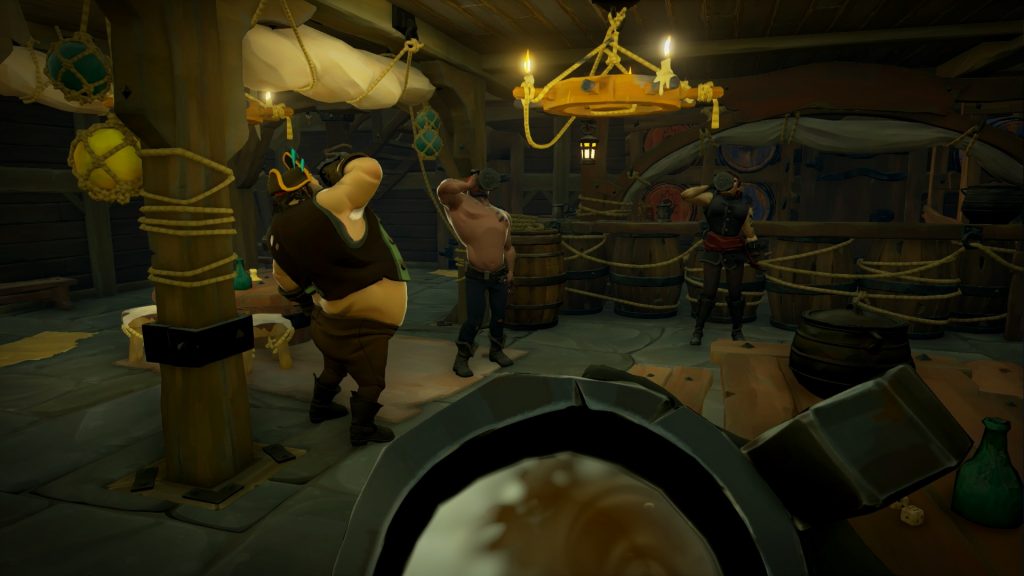
Tankard: Not useful unless you want to roleplay. The tankard will hold grog for player consumption; you can find one in your equipment chest. Fun if you want to pretend you’re Captain Jack Sparrow.
4. Choose your weapons wisely
You can only carry two weapons on your person in Sea of Thieves, but can choose from four: The cutlass; blunderbuss; pistol, and Eye of Reach. When you’re picking your weapons, be mindful of two factors: What your other teammates are carrying; and whether you’re well-rounded if any of you wind up alone.
The cutlass requires the most finesse and practice. Able to swipe, parry, and lunge, it’s your most versatile (and classy) choice. The cutlass can also block, making it a viable defensive option, and is the only weapon in the game that does not require ammunition. We think it’s the best backup weapon you can pick.
The flintlock pistol is a good close-mid range gun, and accurate players will find it’s a good counter against careless sword wielders who can’t reliably close the distance. It also fires faster than the blunderbuss or Eye of Reach, so you’ve got more margin for error.
The Eyeof Reach is Sea of Thieves’ sniper rifle, using a fixed scope to engage enemies from great distances while maintaining higher accuracy. It can be incredibly useful from a hilltop or the crow’s nest of a Galleon, but don’t get caught using it alone against a pack of skeletons.
The blunderbuss is the champion of close quarters fighting, and we recommend beginner players rely heavily on this. Our blatant tip is to “practice with the sword, but proceed with the shotgun.” It’s also the only weapon capable of dispatching multiple assailants at once, making it your best choice against the game’s many skeletons hordes.
Our last tip for beginner players is to loot, loot, loot. This goes for completing quests and pillaging enemy vessels, but also extends to exploring small islands for wood, chests, or life-giving bananas. All supplies you find that belongs on your ship should be put there quickly, as you’ll never know when an enemy ship might decide to challenge you.
As for the bananas, we recommend you keep as many on your person as you can. Each will restore 25% of your health, and can be consumed one at a time to give you a fighting chance should you get ambushed.
Sea of Thieves is a ruthless, cutthroat world, but if you keep these five tips in mind and stick close to your friends you might just stay alive long enough to face down that Kraken. Or to launch yourself from a cannon only to plummet down to your death, questioning your life decisions all the way.
One of the greatest joys in life is kicking back on the couch with a friend and playing video games. The hardest part? Settling on what to play. The PlayStation Now streaming service offers a huge variety of titles available to play instantly, including many that offer local co-op. These are the best games for when you’re looking to team up and kick some butt.
1. Resistance 3
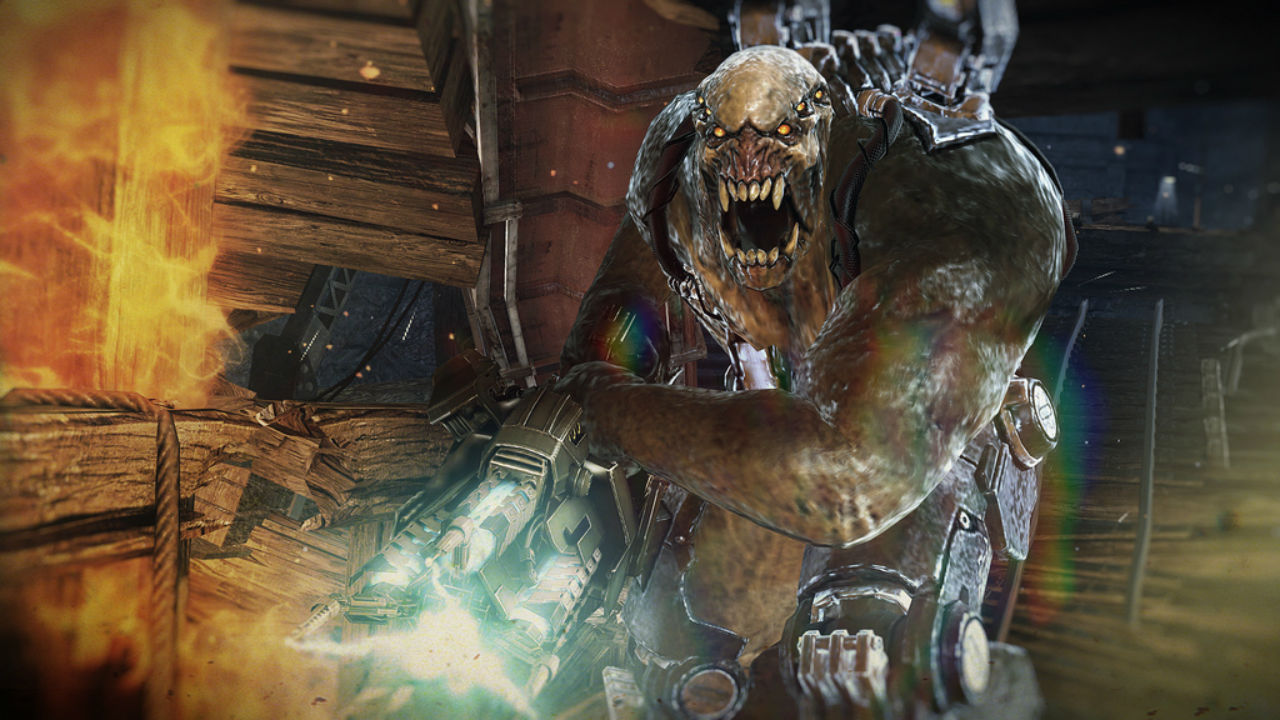
If you’re a fan of action-packed first-person shooters, this is the game for you. Resistance 3 is set in an alternate-reality version of 1953 after a hostile alien invasion decimates Earth. The entire single-player campaign is playable in co-op mode. The drop-in drop-out feature makes for a low stakes co-op experience, and means you won’t have worry about replaying the same sections if your partner has to leave for a minute to get some pizza. The action is fast-paced and a diverse list of creative weaponry offers unique ways to fight your way through the alien horde. The story is also surprisingly deep and will keep you hooked all the way to the bitter end.
2. Resogun
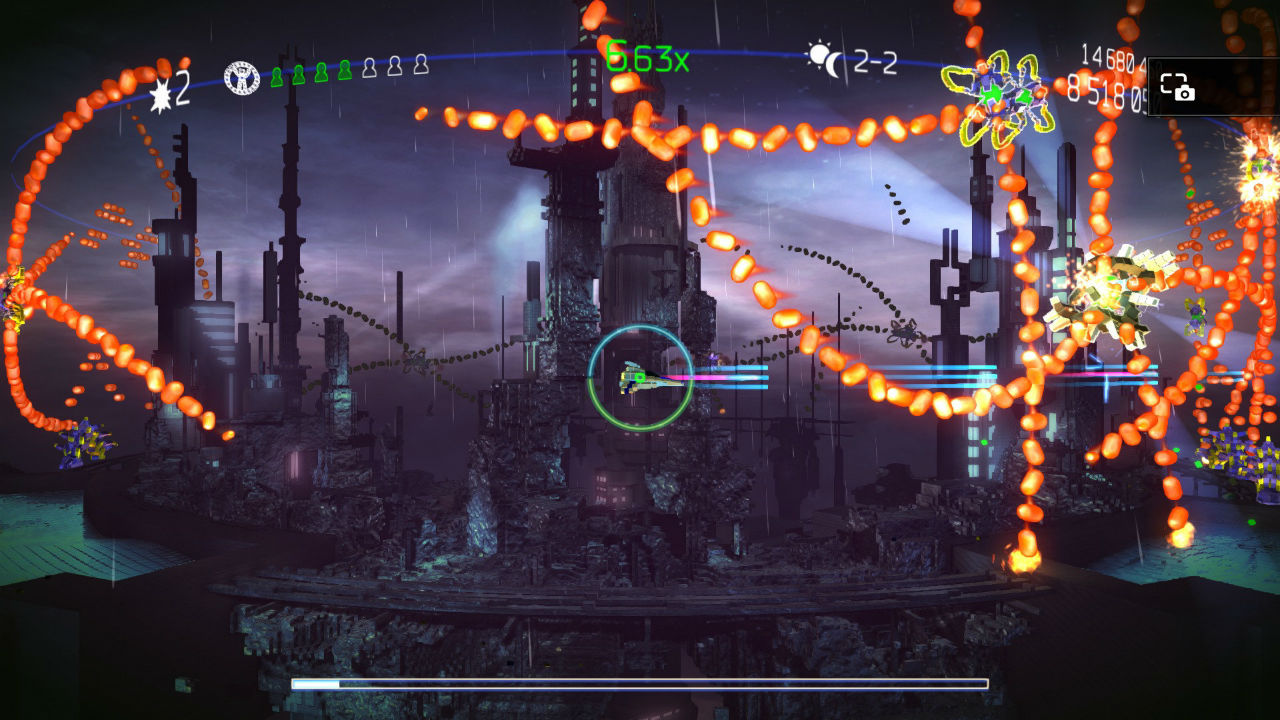
Resogun is perfect for fans of bullet-hell shooters. In a lot of ways, Resogun feels like the neon-drenched older brother of Gladius. Players choose from a selection of unique ships, and then the action starts. Lasers, powerups, and boss battles abound. Though only two players can take control at a time, Resogun has the makings of an excellent party game. If you’ve got a group of friends over, passing around the controllers as you try to fight your way through the levels makes for incredible amounts of fun. Also, the killer soundtrack would make the perfect background music for any party.
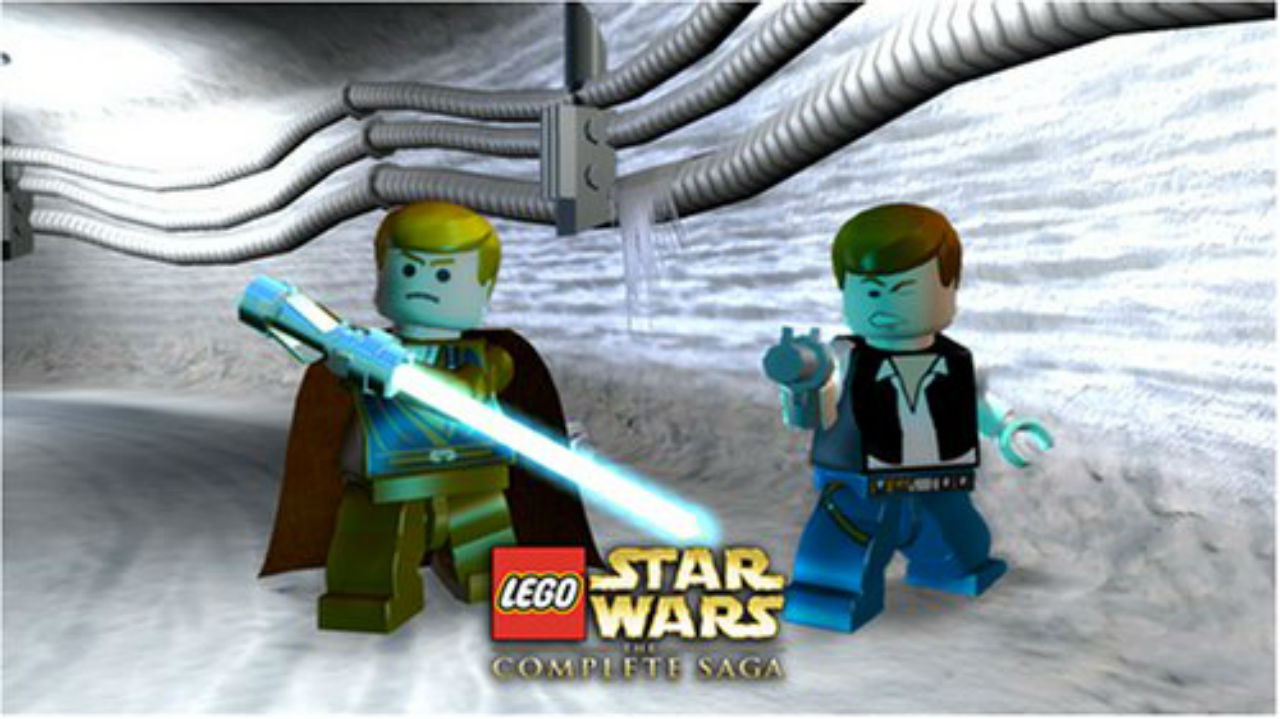
Though it may seem like a kid’s game at first glance, Lego Star Wars is fun for anyone at any age. Players can drop in and out at any time, taking control of Lego versions of classic Star Wars characters or building their own characters from Lego bricks. As a team, you can solve puzzles and battle your way through levels from all six original Star Wars movies. The Lego games offer their own brand of lighthearted humor and poke fun at the series in a way that will get a laugh out of any Star Wars fan. Who knew Chewbacca looked so good in a top hat? If Star Wars isn’t your thing, a whole host of other Lego video games are also available on PlayStation Now, ranging from Harry Potter to Indiana Jones to Batman. The best part? Every single game in the series offers couch co-op.
4. Resident Evil 5
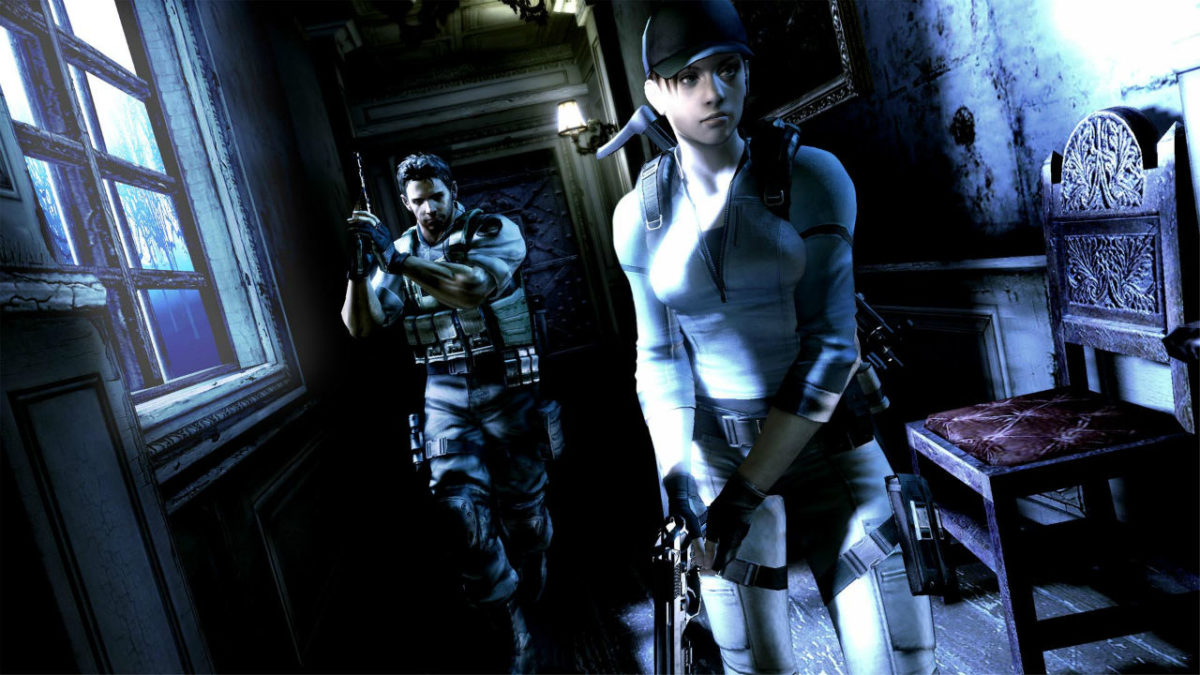
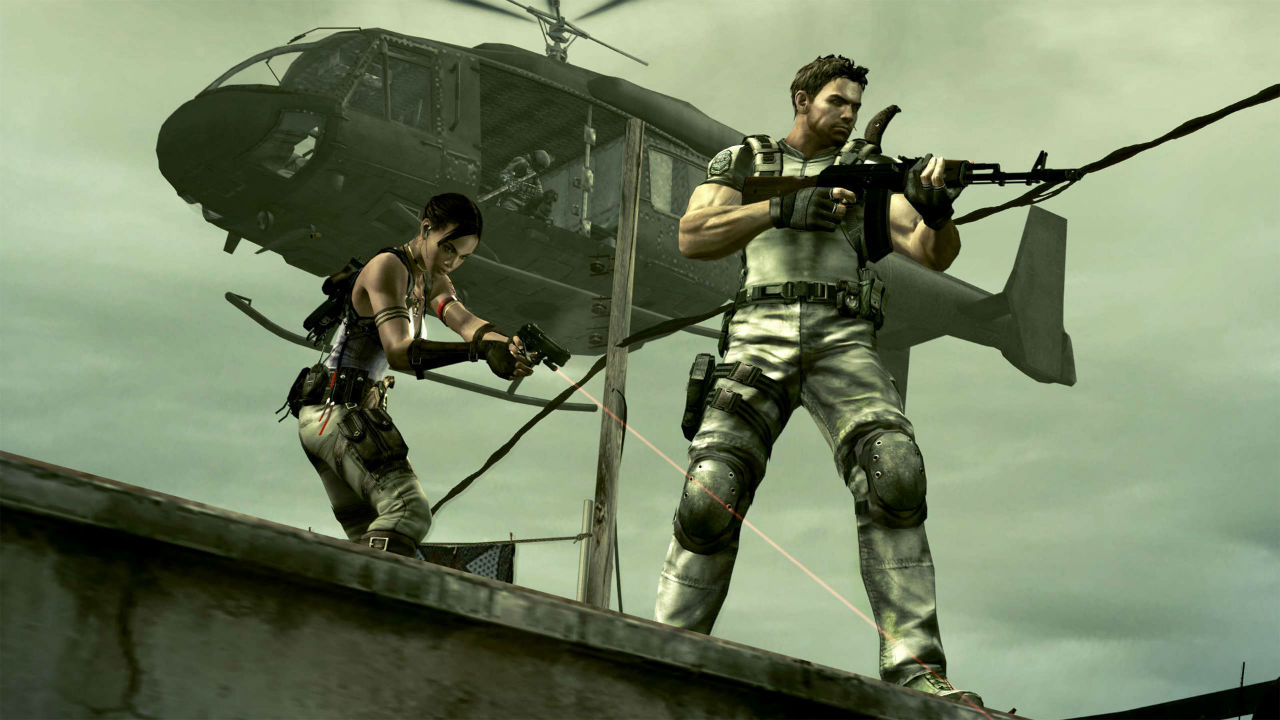
Resident Evil 5 is the first game in the series to offer split-screen co-op play, and it’s certainly one of the best. Players control B.S.A.A. agents Chris Redfield and Sheva Alomar as they attempt to stop a viral outbreak in Africa. This game is like a more action-oriented, multiplayer version of Resident Evil 4. Playing through with the story with a partner is the best way to experience the game. Fighting through the horde and taking on the game’s horrific, intense boss battles with a friend at your side makes the victories that much more satisfying. Several other co-op Resident Evil games are also available on PlayStation Now, such as Resident Evil 6 and Resident Evil Revelations 2.
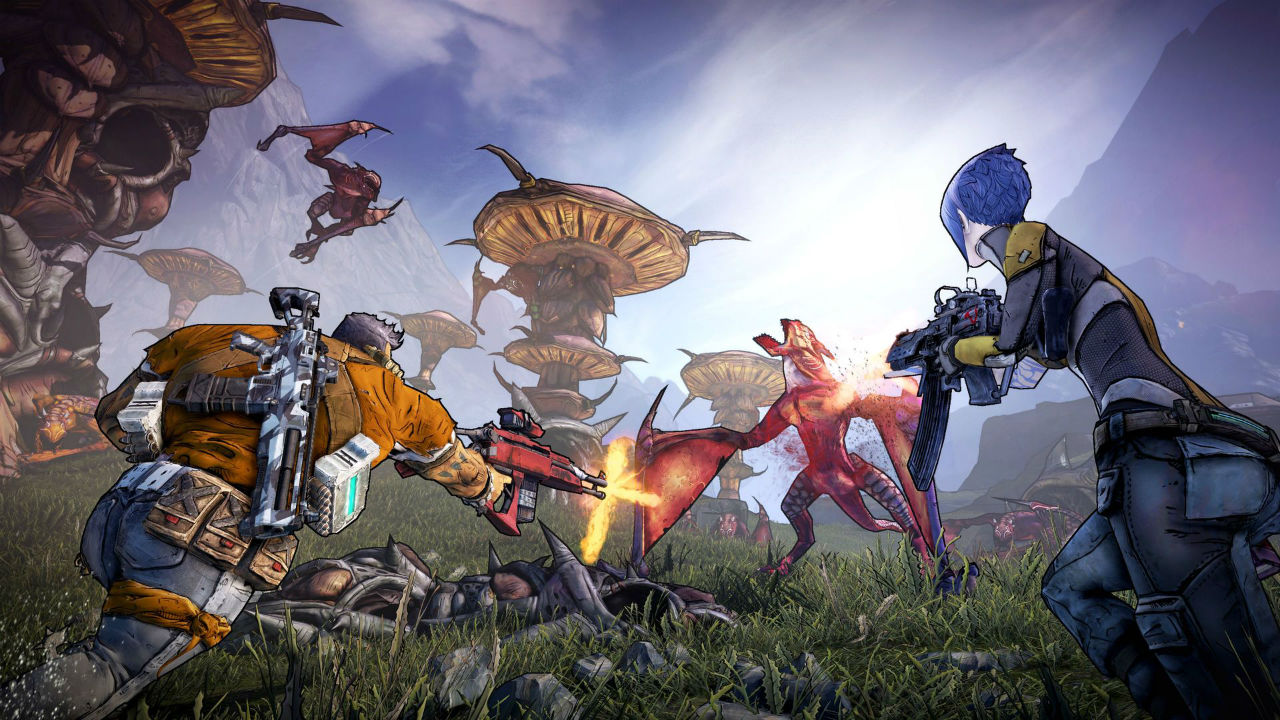
Borderlands 2 has everything you could want from a co-op experience. Borderlands is the love child of a first-person shooter and an RPG. The best part of this game is its customizability. Players can choose from four character classes and level them up with unique skills and abilities, meaning there’s something here to fit everybody’s play style. Whether you prefer hanging back and sniping from afar or getting more up close and personal, you can tweak your skills and gear to fit how you prefer to play. You can also save your characters, meaning the next time your buddy comes over, their character, skills, loot, and skins will all be right where they left them. Borderlands 2’s story also stands out, and there’s plenty of hilarious moments that will leave you and your friends in stitches. This is the perfect game for a night in. Make sure you have plenty of snacks handy.
With a huge variety of titles and co-op games to choose from, PlayStation Now offers something for everyone. Now that you’re armed with this list, the hardest thing you’ll have to decide on is what toppings to get on your pizza.
The second half of 2018 is gearing up to be a powerhouse. We’ve got AAA releases coming left and right, so let’s not miss a beat and get right into the 10 best games coming in the second half of 2018.
Spyro Reignited Trilogy (September 21) (PS4, Xbox One)
The Insomniac Games creation is emerging after a long hiatus. The Developers at Toys for Bob have worked from the ground-up to bring Spyro in all its HD glory to the current generation of consoles. If you’re a fan of the original or nostalgia or both, look out for this game this fall.
Warhammer 40k: Inquisitor-Martyr (July 5) (PS4, Xbox One)
Even though we are a few days past its release, Warhammer games are always a treat. Inquisitor-Martyr places you into the role of a Space Marine aboard the Martyr, a massive ship floating in space. With near top-down gameplay, it is very reminiscent of Diablo and early Warcraft titles.
We Happy Few is a very intriguing concept for a year dominated by Battle Royale. It’s a single-player survival experience set in a dystopian town where the populous is sedated by the upper-class. Flying under the radar as an early-access game on Steam, We Happy Few will be released in less than a month, so make sure to pre-order your copy.
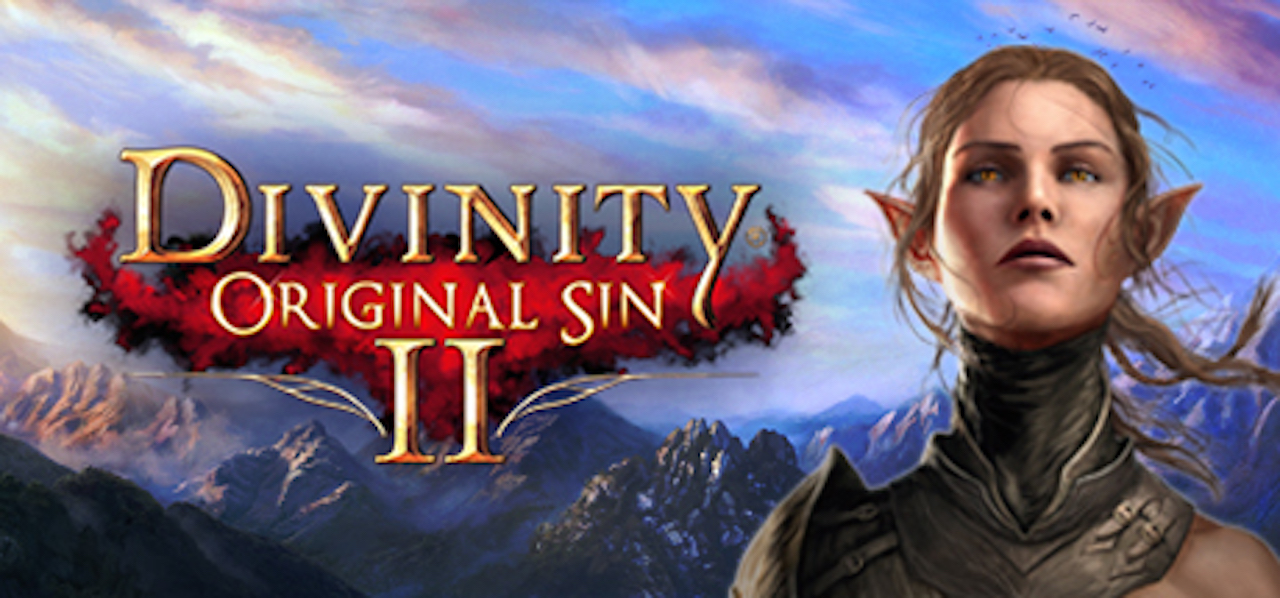
Divinity: Original Sin 2 (August 31) (PS4, Xbox One)
Divinity: Original Sin II is not your typical action-adventure game. The concept errs towards high fantasy and plays much similar to Inquisitor-Martyr and Diablo. The graphics are stellar and, even though the learning curve can be steep, it’s worth giving this sleeper a chance.
A lot of hype has been surrounding Insomniac Games’ Spider-Man reboot. Most recently, a gameplay trailer was released which revealed the villains set to challenge Spider-Man at every corner. Spider-Man will boast a slew of new abilities and be able to interact with his environment in surprisingly unique ways. This is definitely a game to purchase if you’re a fan of the MCU.
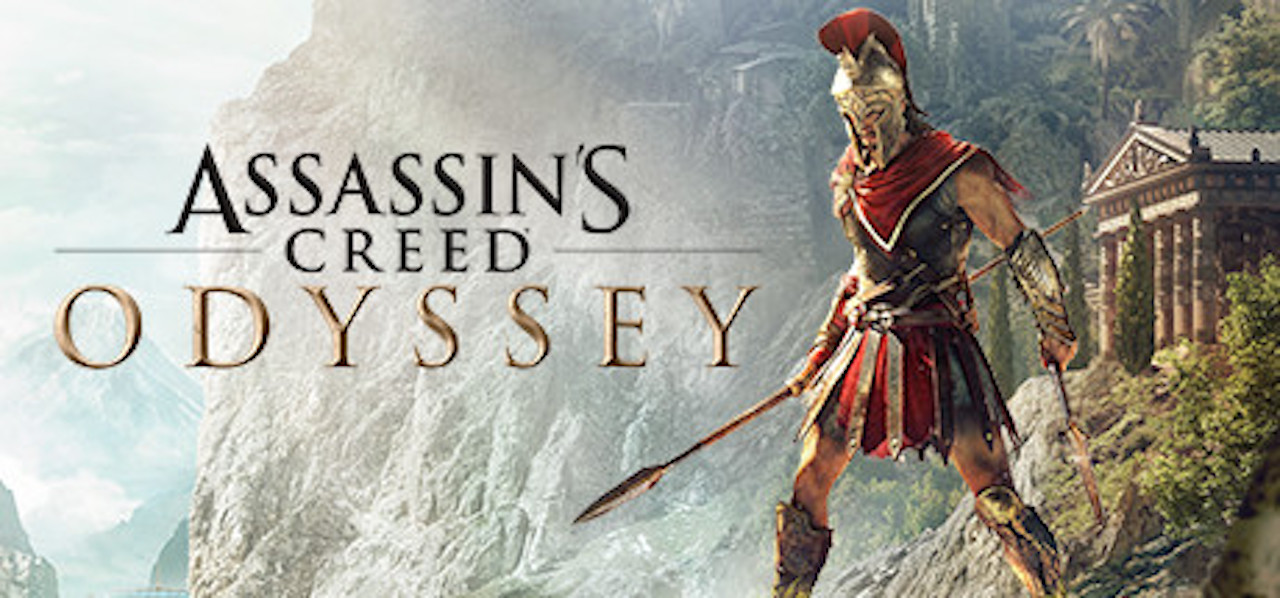
Assassins Creed: Odyssey (October 5) (PS4, Xbox One, PC)
Riding the success of Assassins Creed: Origins, Ubisoft Quebec has been hard at work on yet another chapter in the series, this time taking their stories to the land of Ancient Greece. In Sparta, you have the option to take control of either a Male or Female character during the Peloponnesian war and fight to become the most notorious mercenary in all of Greece.
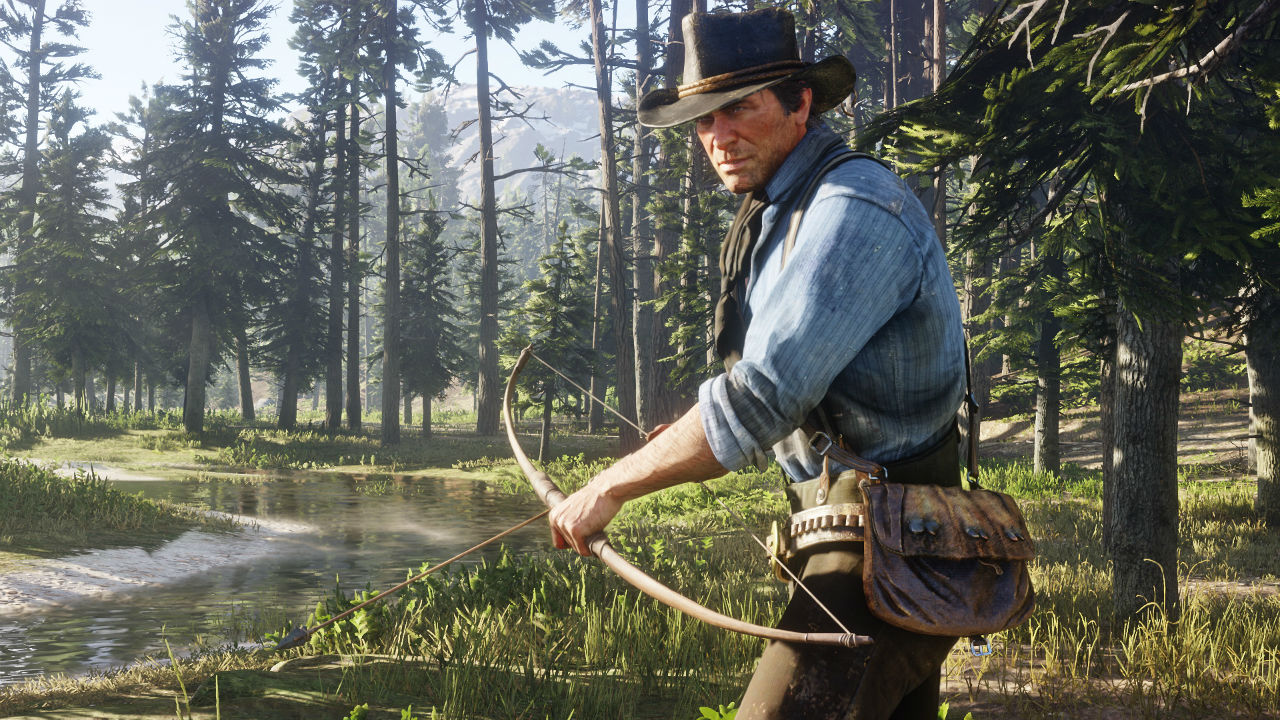
Red Dead Redemption 2 (October 26) (PS4, Xbox One)
One of, if not, the most anticipated game of the year. Rockstar consistently releases quality titles and Red Dead Redemption is no exception. Set as a prequel to the first game, you take control of Arthur Morgan, an outlaw involved with the Van der Linde gang, and fight for survival against whatever the Wild West throws at you.
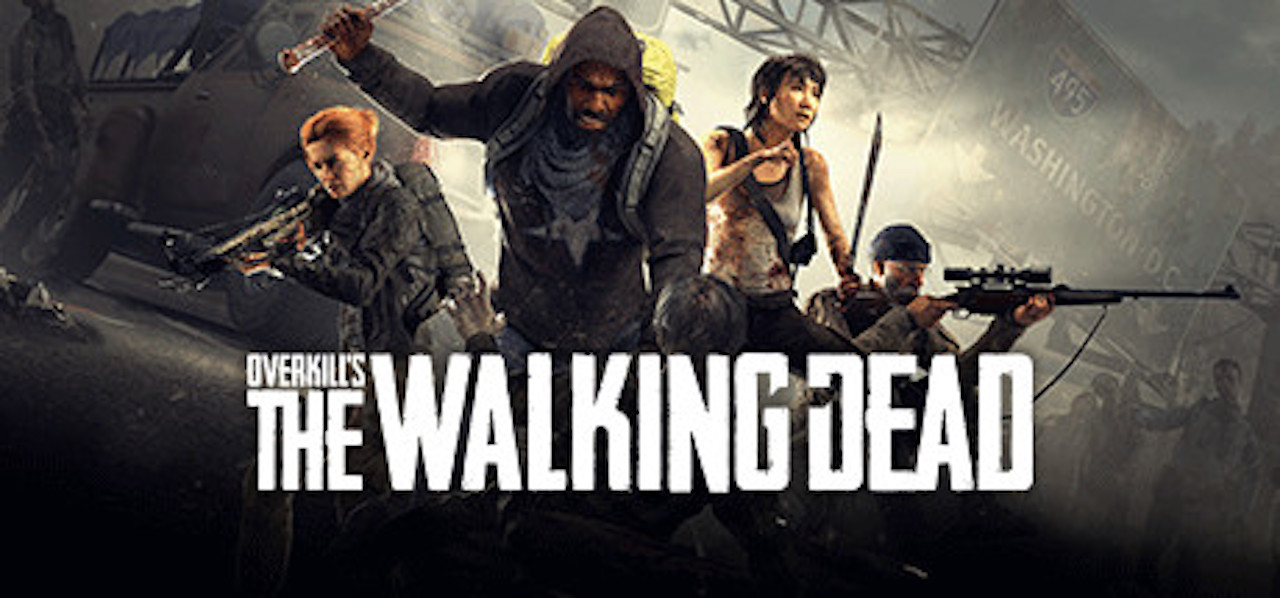
Overkill’s The Walking Dead (November 6) (PS4, Xbox One, PC)
Overkill’s new product is a Left for Dead-style game set in the comic book universe created Robert Kirman. The most recent title about the Comic was created by Telltale Games, so Overkill has some large shoes to fill. The game itself looks to be more survival oriented than run and gun, so be on the lookout for heart-racing gameplay and terrific graphics.
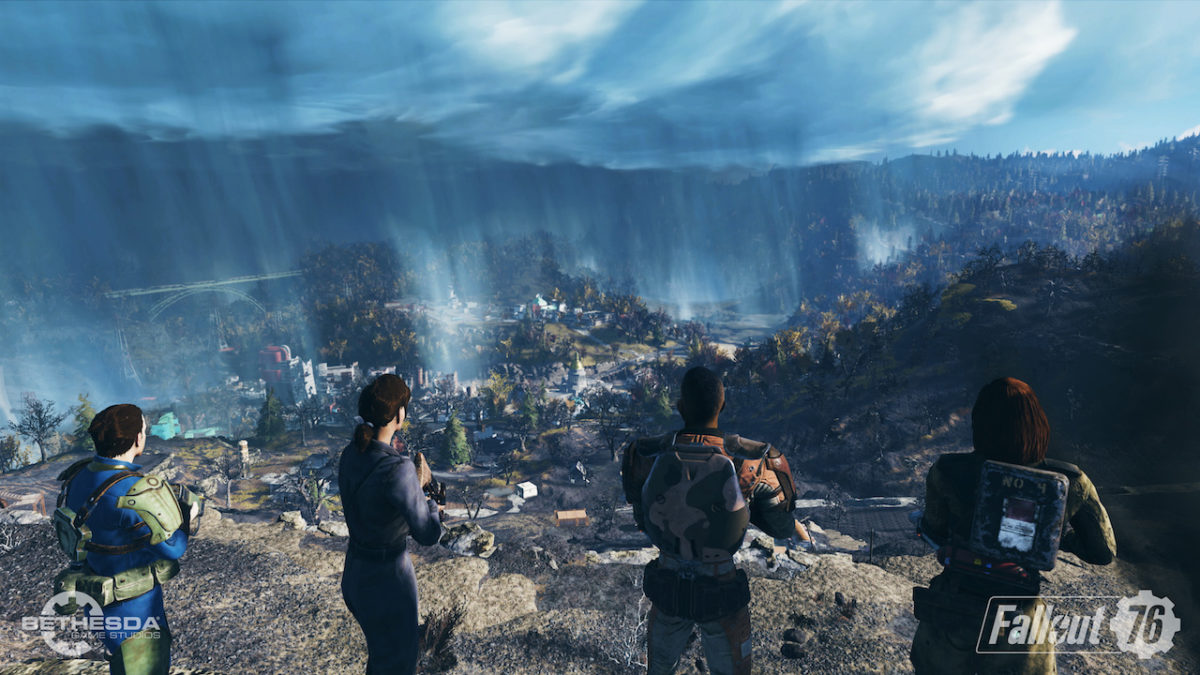
As we approach the end of the year, Bethesda is blessing the gaming community with another addition to the Fallout series. Fallout 4 was a triumph in more ways than one, but it also lacked in a few departments, mainly quest diversity. Fallout 76 looks to fix those issues and bring the community closer together by creating servers for players to enter with up to 24 to 32 other players. Bethesda claims the map is four times the size of Fallout 4, so you might be hard-pressed to find another player.
More destruction. Better physics. Extreme weather conditions. A release date near Christmas. What more can you ask for from a Just Cause entry? Avalanche and Square Enix are in South American once again, following Rico Rodriquez on his quest to rid the world of oppressive regimes. The physics engine has been taken to the limit with tornados uprooting bridges and sandstorms pushing helicopters off the tarmac. Just Cause games are designed to be adrenaline-filled fun and a new entry into the series is very welcome.