Google Sets the Stage for Blockchain App Regulation on Android

Blockchain technology will soon find its place within the Google Play Store, but it will do so under strict regulation and thorough verification processes to ensure user well-being. Google is preparing itself diligently for this.

Yes, some may argue that this comes late, that the bubble already burst in 2022, but where there is demand, there is also supply, even if on a smaller scale. That’s why Google, aware of the risks associated with Blockchain technology, such as scams, gambling addiction, or other issues, will regulate them under stringent rules.

Google’s rules for the Blockchain on Android

Google has taken the initiative to publish many of the requirements for entering the Blockchain market in advance. Among other things, it advises requesting verification well in advance, as the acceptance process can take up to a month for both developers and clients. The service will be fully operational starting from December 7, 2023.

Some of the most important rules mentioned include:

  • Compliance with the regulations associated with this service in each region is mandatory. Therefore, even if the regulations in the US are met, operations in Spain must also comply with the country’s and European Union’s regulations.
  • Services and functionalities must be clearly detailed. App promotion and gambling incentives will not be allowed to avoid false expectations.
  • Developers will have strict control measures to prevent deception, scams, and fraud in their services.
  • Mining will remain prohibited.


If you want more details, Google provides them in this video.

Full details on Google’s policies with Blockchain technology are detailed here.

Rise and fall of the crypto bubble

The world of cryptocurrencies, Blockchain, and NFTs has been around for a long time, and over the years, its perception has evolved significantly. A decade ago, it was seen as something more associated with the “anti-establishment” movement against traditional banking. However, in recent years, it has shifted towards a showcase of wild capitalist tendencies. In fact, many would prefer not to remember what an NFT is, especially those who suffered financial losses from it.

After an intense 2021, this technology started to deflate in mid-2022, and in 2023, it has become niche content for a specific type of user. Social media platforms like Instagram and Facebook are already moving away from NFTs. Will the Blockchain market adapt to the current paradigm? We will soon see how this sector evolves: whether it remains in a secure niche or if its downfall has yet to hit rock bottom.

‘Unhackable’ blockchains are getting hacked

Blockchains might not be as air-tight as we once thought.

Blockchaining

High-profile security breaches and issues with privacy are massive concerns for everyone.

Now, we’re seeing more of those security issues are emerging in crypto. That’s surprising since blockchain technology has been presented as the solution to our privacy woes.

Whether blockchain is slated to become the new “backbone” of the internet or the future home for our genetic data remains to be seen. However, we’ll need to remove the rose-colored crypto-glasses if we intend to move more sensitive info onto the blockchain.

As reported in the MIT Technology Review, hackers have stolen nearly $2 billion worth of cryptocurrency since the beginning of 2017. Most of that money has been taken from the exchanges — not from lone-wolf hackers, but organized crime rings.

The belief that blockchaining is unhackable does seem odd. This is because blockchain hacks are one of the main reasons that the general public has even heard about this decentralized technology.

Here’s the thing: blockchains aren’t unhackable

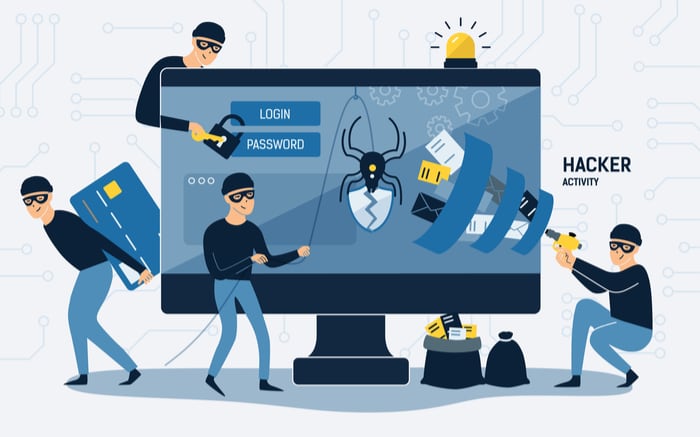
Hackers

Blockchains are powerful platforms. But if we’ve learned anything from looking at high profile breaches, it’s that all technology has weak points.

For some reason, many people have gotten the idea that blockchains were an impenetrable force. Password protectors, VPNs, and even blockchains are not entirely hack-proof.

They’re leaps and bounds ahead of using the web unprotected — but you still need to be careful.

Are blockchain hacks actually on the rise?

There’s been a near-constant stream of attacks going back for at least five years. The most notable example is Mt. Gox, where nearly half a billion dollars in bitcoin was stolen from users and the company.

This year, there’s been the Cryptopia breach, a January attack that wiped out approximately 94% of the company’s holdings. The total amount is unknown, but data analysts estimate the stolen coins could be worth about $16 million total.

There’s also this attack that hit the Ethereum Classic blockchain where hackers made off with $1.1 million.

In the ERC case, Coinbase detected suspicious activity in the form of a 51% attack, a type of attack once thought to be hypothetical. This occurs when a group of miners with more than 50% control blocks new transactions to maintain the majority.

By controlling the computing power, the attacker(s) can monopolize the mining of new blocks. Then, they can prevent other miners from completing blocks while siphoning off their rewards.

Are blockchains safer than actual banks?

Online BankingForbes wrote critically about blockchain in January. The article says that people keep backing blockchain because there’s a case of industry anxiety.

It goes on to say there’s never been anything on this scale in the traditional banking world — a $2 million Bank of America robbery from 20 years ago is the biggest heist listed on Wikipedia. That number pales in comparison to the amounts stolen via hacking.

The point isn’t necessarily that the technology is bad news, but that people should be wary of keeping large sums in blockchain-powered accounts.

Meet the decentralized versions of YouTube, Google Docs, and Google Photos

Looking for privacy? Want to earn cryptocurrency? Check out these versions of your favorite sites.

blockchain

When we talk about blockchain technology, the conversation usually surrounds big idea topics. How cryptocurrency can save developing nations or save us from being slaves to big tech and ISP monopolies. But there are a whole host of decentralized apps that offer an accessible, and secure alternative to some of our most used regular apps.

Decentralized apps, otherwise known as DApps connect developers and end users without the middle man. Users get to access a tool without dealing with the Amazons or Facebooks of the world.

This is the source of appeal for privacy-focused consumers. But, without centralization, you need to have incentivization, which is why just about every blockchain-based system comes with some sort of coin attached.

Below, we’ve highlighted a few DApps that you’re bound to find useful—-whether or not you care about trading in digital currency. Oh.. and you buy them in the Dapp Store — how cute is that?!

Graphite Docs

Graphite Docs blockchain alternative Google

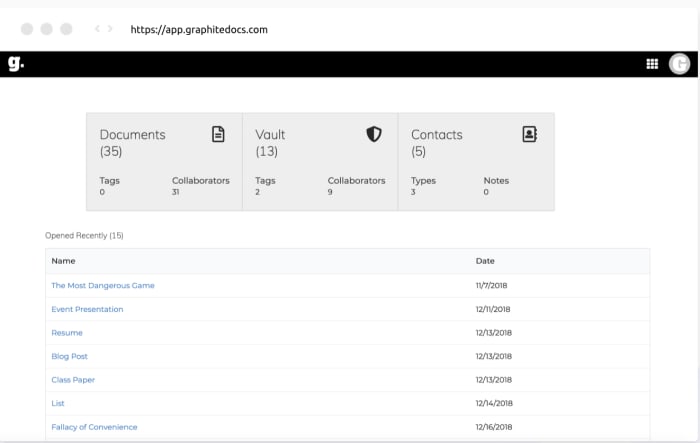
Graphite Docs is the decentralized solution to Google Docs, only Graphite comes with the promise of full control over your data and who gets to access it. The basic premise is the same as Google’s solution — create documents, share files, and collaborate with others.

Interface-wise, Graphite looks pretty good. It’s incredibly minimal but in a good way. Black and white design, a clean dashboard that makes it easy to organize your documents, and cross-device functionality. Unlike some blockchain platforms, Graphite Docs doesn’t make it a hassle to log in, but doesn’t compromise on privacy.

Overall, this looks like a good solution for those seeking an alternative to Google. And, it potentially presents an opportunity for legal professionals, journalists, and businesses handling sensitive data to benefit from the cloud.

DTube

DTube blockchain YouTube

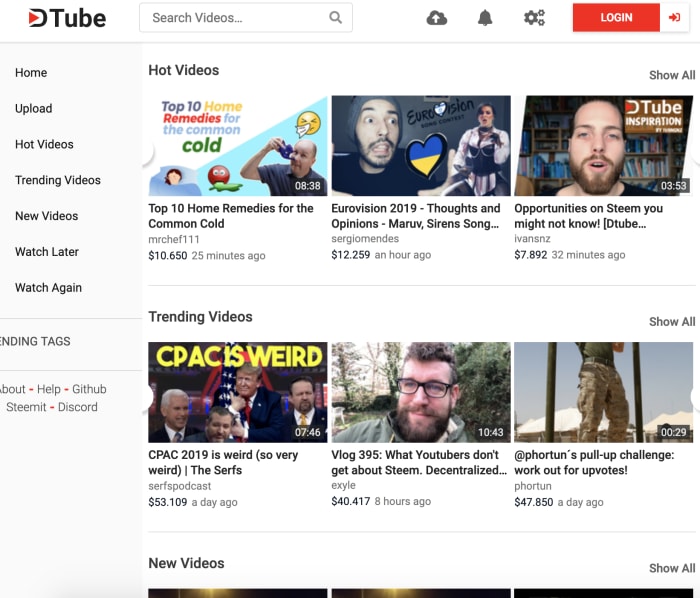
DTube, as you might have guessed is the decentralized answer to YouTube. The app looks similar to the familiar video site, but there are a few key differences. Content creators can upload videos and have the opportunity to earn cryptocurrency.

The app is censorship resistant, claiming that only the users can censor content through the power of upvotes and downvotes. There are no ads and creators don’t have to worry about algorithms prioritizing popular content over new posts.

We browsed around, finding that most of the content is about crypto and blockchain topics. Granted, that’s probably because DTube isn’t exactly widely publicized on mainstream internet publications or social networks.

DTube is easy to use, though some users might find the payout system a little confusing. Rewards come from the STEEM blockchain, which unlike Ethereum or Bitcoin, just keeps printing money, which is then given out as rewards.

As a point of reference, STEEM is a currency made for social platforms — offering immediate revenue streams for bloggers and content creators.

One downside? Videos are currently deleted after 60 days. As a DTube SysAdmin wrote on Reddit, “Our storage system scales nicely, our funding does not.” Another issue is that the search bar doesn’t seem to return any results for anything. Might wanna jump on that, DTube.

Bounties Network

Bounties Network jobs

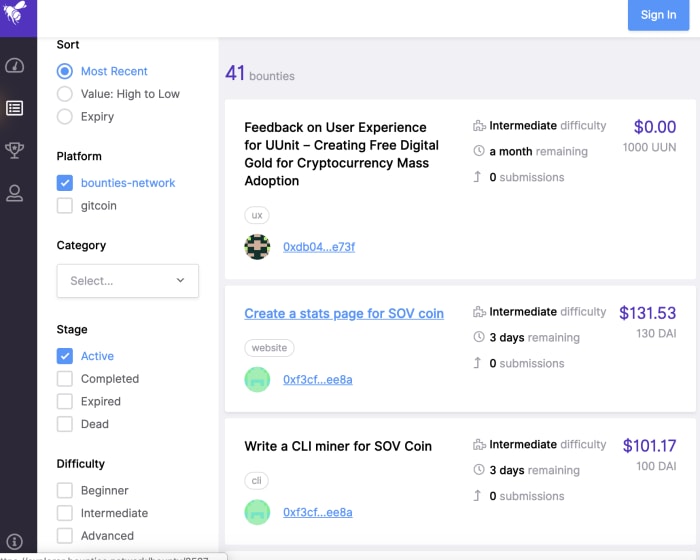
The Bounties Network is a website that aims to change the way we collaborate. What that actually means is, the app is designed to help people self-organize, whether they’re starting a grassroots movement or looking for a fair freelancing agreement.

Look around the website, and there’s almost sort of an Upwork or Fiverr vibe. It’s a list of tasks worth varying amounts (all in crypto). Tasks range from designing a graphic for a hoodie to performing user testing. And bounties are token agnostic, so one person might pay out in ETH while another uses DAI.

Indorse

Indorse home page

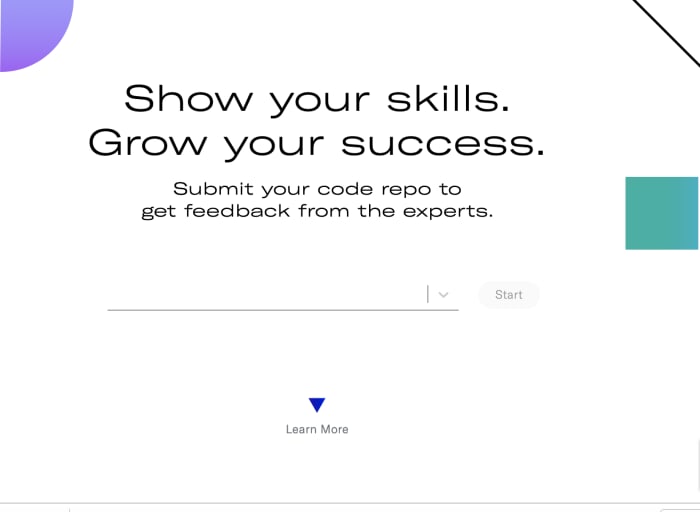
Indorse is a blockchain-based platform with the tagline, “a revolutionary way to validate skills.” In essence, Indorse is a pared-down linked in for blockchain, primarily for coders. How it works is, you’ll submit your code through the platform and an expert will validate your skills. From there, the idea is, you’ll be able to find jobs based on merit over connections and earn rewards for claiming and validating skills. For companies, Indorse presents qualified candidates with proven skills — which ideally, cuts back on the time spent recruiting new candidates.

Textile Photos

textile photos secure photo sharing

Forget the iCloud, Textile Photos brings your memories to a secured blockchain platform. It’s a simple photo app, how it works is, when you take a picture, your photos sync across all your devices. From there, you can create private threads to share content, and according to the official website, be yourself without worrying that photos will fall into the wrong hands.

Textile Photos is censorship resistant, open source, and fully encrypted. And this one doesn’t require a trip to the DApp store, you can find it in the App Store and Google Play, too.

Is the blockchain buzz dying down?

Does blockchain have a future or was it a flash in the pan?

Over the past few years, the blockchain has been receiving a whole lot of buzz. Just yesterday, the technology was on the verge of disrupting everything from banking to supply chains, as well as solving transparency issues and serving unbanked populations.

And then came the ICO explosion and the ridiculous coins that came with them. Every company wanted to ICO, but that turned out to be a poor strategy for long-term growth.

Excitement turned to hype, and now, this great vision for the future seems to have fewer cheerleaders.

As Axios reports, the blockchain buzz has largely turned out to be well, buzz.

So, post-crypto fever dream, what’s next for the chain? Here’s what experts are saying.

What is the future of blockchain?

blockchain

Some say it’s just baby technology — it’ll grow up

Blockchain expert and co-author of the book, “The Blockchain Revolution: How The Technology Behind Bitcoin is Changing Money,” Don Tapscott says the community is still in early days. Tapscott believes that the technology can change our world down the road, but we’re not quite there yet.

Eventually, with greater understanding of how the technology works and clear-cut regulations governing its use, we may see a shift. But for now, not enough people actually “get” how it works or how to regulate the technology.

This piece in the Harvard Business Review brings up a similar sentiment — stating that in order for blockchain to change the world, the world needs to change first.

However, as it stands, we don’t have the framework to support the infrastructure needed to bring the decentralized platform into the mainstream.

Blockchain is an expensive, complex project that must be carried out on a global scale. As it stands, the companies leading the blockchain charge are facing something of an energy crisis.

So, it’s no surprise that some changes need to take place before it becomes a reality for regular folks.

We’ve also hinged a lot of hopes and dreams on the blockchain

Controversial Bitcoin developer Jimmy Song says we’ve been holding up blockchain as this beacon of hope. And wrongly so.

Song’s beef with blockchain stems from the idea that the technology has been touted as the answer to all of our technological problems, where in many cases, those problems may well be better addressed with a different approach.

Martha Bennett, an analyst at Forrester, echoes a similar sentiment. Bennett says there’s a real risk that we’ll experience a “blockchain winter,” in the absence of “miracles” and tech-related investments will start to dry up.

And, yeah. We get it.

Some of blockchain’s most vocal proponents have thrown around claims that the technology can fix everything from inequality to inefficiencies.

According to Marie Wieck, general manager for blockchain at IBM, blockchain is as “transformative” as the internet was for communication. And while IBM has been one of the loudest voices pushing this message of change, they’ve put the technology to work in a number of practical applications. However, IBM actually is leveraging the technology in a way that helps businesses like Maersk and Walmart gain more insights into their supply chains.

The idea of “no middleman” can get complicated

The absence of the middleman is the main selling point, as transactions have the potential to be done faster and cheaper than ever.

But when the record-keeper of highly sensitive data and large sums of digital cash is no one, there leaves the question of — should there be a caretaker? While adding a caretaker kind of defeats the purpose, existing blockchain users sometimes have trouble accessing permissions.

Blockchain technology has only been around for about a decade. As such, there are many vulnerabilities that we don’t yet understand.

Ultimately, the blockchain likely isn’t going away anytime soon. We’ll be interested in seeing how it evolves, and what innovations will have a lasting impact after the novelty coins go away and talk of change begins to shift into something more practical.

For now, it’s safe to say, most of us won’t be using blockchain to its fullest potential for a long time. However, let’s hope that blockchain winter isn’t on the horizon and innovators stay in the game.

What is Web 3.0?

Take a look at how the future internet will leave today’s tech in the dust.

web 3.0

Web 3.0 is one of those buzzy terms that have become shorthand for “the future.”

It’s long been sweeping the web, but not many people understand what it actually means.

A look at the future: What is Web 3.0?

A little background: to understand Web 3.0, you’ll need to have a working understanding of the Webs 1.0 and 2.0 that came before.

Web 1.0 hearkens back to the early days of the internet. You know, the dial-up days of old, where AOL CDs were dumped on the U.S. en masse.

2.0 is the current state of the web — where streaming and social media reign supreme and dial-up is a thing of distant memory. Broadband connections and reliable Wi-Fi replaced shrieking modems and Google became the go-to search engine.

Techopedia defines Web 3.0 as the “new paradigm in web interactions.” It marks the next phase in web development and will shake up how people create and interact with websites.

No, Web 3.0 doesn’t come with a specific definition, as we’re not quite there yet. But, what’s notable about this next internet is it’s predicted to be a total reinvention of the web, not an upgrade like 2.0 was.

The term was coined by New York Times reporter John Markoff back in 2006, and it represents this idea that the internet would continue to evolve in ways that we certainly couldn’t imagine back in 2006.

When is Web 3.0 supposed to happen?

What is web 3.0?

So, some people believe that Web 3.0 is already here. At least in some small ways.

Given that the transition from Web 1.0 to Web 2.0 didn’t happen overnight, we can expect the same for Web 3.0.

Additionally, Web 3.0 is likely to be a bigger, more dramatic change than its predecessor — and change, on this scale, takes time.

Given the latest applications of AI, the long list of blockchain projects, and advances in natural language processing, it seems we really are in the midst of a transition.

So what is this great new web supposed to look like?

It’s hard to say. But, most likely, it will be at least partially decentralized.

A lot of the Web 3.0 talk is tinged with shades of blockchain buzz. For example, a huge part of this conversation looks at the idea of a decentralized internet, a place where we stand to regain control over our data and security breaches become a thing of the past.

Proponents of the blockchain web say we’ll never deal with data interruptions again. Or, that we’ll finally be free from centralized, corporate ISP control.

One of the biggest flaws of Web 2.0 is the fact that our data is owned by a handful of private companies. Facebook data breaches and a long list of famous hacks have made headlines in recent years, proving that we can’t exactly trust these media giants to keep us safe.

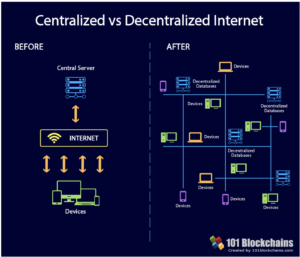
As such, a blockchain-based web presents an attractive solution. Decentralizing protects against potential breaches, as data is distributed across several databases, rather than one central hub, as it is today.

web 3.0 blockchain

Beyond these predictions, here are a few concepts we’ve seen linked to Web 3.0 time and time again:

The Semantic Web

The semantic web seeks to improve how computers understand humans. The concept has been around for quite some time, Scientific American covered this in 2001 and the core idea is, that we’re looking at a version of the internet that pulls meaning from interactions.

The semantic web is a version of the internet that provides software programs with metadata that machines can easily interpret. For example, your browser might collect data based on your activity, which will inform future searches. Basically, your computer will start making contextual decisions when it comes to presenting information — much like a human might.

In short, this shift could transform the search process, looking at the meaning instead of pinging the right keywords.

AI will be front and center

Many people are looking toward artificial intelligence to usher in the new digital era. Web 3.0 is bound to see an increase in AI usage, allowing for the technology to start making decisions for us — whether that’s a tool that helps you at work or when you’re driving.

A lot of the speculation surrounding Web 3.0 is about how it might function as a personal assistant.

As you search the web, the browser will start to learn more about you, your interests, and eventually, you’ll need to be less specific with your search queries. For example, if you look up concepts related to digital marketing frequently, the browser may start presenting content that speaks to this niche versus promoting certain keywords that don’t relate to your request.

Cross-platform connectivity

With Web 3.0, some experts predict greater connectivity than ever. Up until now, data has been stored in a wide range of formats, making communication between those datasets something of a challenge.

When internet-connected devices are everywhere, from your kitchen to your car, to your workplace, they’ll serve you better when they can all talk with one another. While you can already say, work across devices when they’re all nearby, the next phase will be ordering items for your smart fridge from the device in your car.

Outside of the digital assistant context, this also means you can expect a seamless content experience — you can start reading a long-form article on your computer and finish it off from your phone if you decide to grab a mid-day coffee.

Parting Thoughts

Ultimately, Web 3.0 presents a secure, connected experience that eliminates a lot of the friction involved with many online processes today. Still, it’s hard to point at the place where the fantasy diverges with the reality of the future internet—and by extension, how it will impact our lives.

There’s no doubt that the internet is changing. However, like concepts like the blockchain and artificial intelligence, there’s a lot of buzz you’ll need to sift through before you can uncover the reality of the next phase.

Is blockchain the new freelancing middleman?

Here’s how blockchain could change your freelancing future.

blockchain

The rise of the freelance economy is a prime example of how technology has dramatically changed the workplace.

Until recently, freelancing was seen as something that wasn’t necessarily ideal. And it came with the assumption that remote employees were waiting out a dry spell or couldn’t participate in corporate culture.

Today, people freelance by choice. Project management apps and video conferencing have made it easy to collaborate with colleagues in faraway locales.

And online job boards — from Craigslist to GitHub and Toptal — have made it easy for users to identify and secure opportunities that work for them.

While there are plenty of remote workers connecting directly with clients, digital middlemen like Fiverr and Upwork are hosting billions of dollars of work and taking a big old cut.

And though these sites are popular, freelancing-specific platforms have a long list of problems. From competing for low-paying jobs to stalled payments, fees, and security.

But new developments in technology might change the game even further.

Where technology was the driving force behind online employment in the first place, a decentralized authority could be the thing that brings a little more fairness to the table.

We’ll explain below.

Is blockchain the new freelancing middleman?

freelance worker

Enter the blockchain

Blockchain, the distributed ledger behind Bitcoin, Ethereum, and a wide range of lesser coins, promises to make things better for freelancers and employers alike.

One of the key elements of the buzzy technology is the promise of a world without middlemen.

And where that initially applied to banking without processing fees or buying a home without a broker, decentralization could also eliminate some of the issues associated with the freelance marketplace.

For one, decentralized control allows freelancers to protect their business and have guaranteed access to earnings. Second, tokens and smart contracts provide several ways to incentivize professional behavior, without the need for supervision.

From faster payments to lower fees, there’s a compelling case for moving middleman job sites to the blockchain and ditching the platforms of freelance 1.0.

Is there an advantage to Upwork and its ilk?

A company like Upwork has accomplished something that most freelance platforms have not. They’ve created a huge platform of freelancers and have scores of satisfied users.

They act as an intermediary between freelancers and clients — collecting money from clients and holding funds in escrow until deliverables have been received and approved.

The platform pockets between 5-20% on each transaction, while all clients pay a 2.75% processing fee. The fees cover customer support and mediation costs, delivered through an on-site messaging center.

The platform markets itself as a way for freelancers to take full control over their career with steady work and clients guaranteed to pay. But users have been subject to some issues like account freezes or negative feedback from malicious clients.

High fees have also been a problem, causing many freelancers to leave the platform in favor of developing client relationships on their own. The only real benefit of using these tools is this promise of trust.

With a blockchain in place, online workers and those who seek them out won’t need to pay a fee in order to establish that layer of trust.

How would a blockchain-based freelance network work?

As it stands, there aren’t many actual blockchain freelancing platforms yet. There’s Steemit, a content creation platform that lives on the blockchain.

There’s also a couple of newcomers, Blocklancer and Ethlance (below) which provide an Upwork-like service on the blockchain.
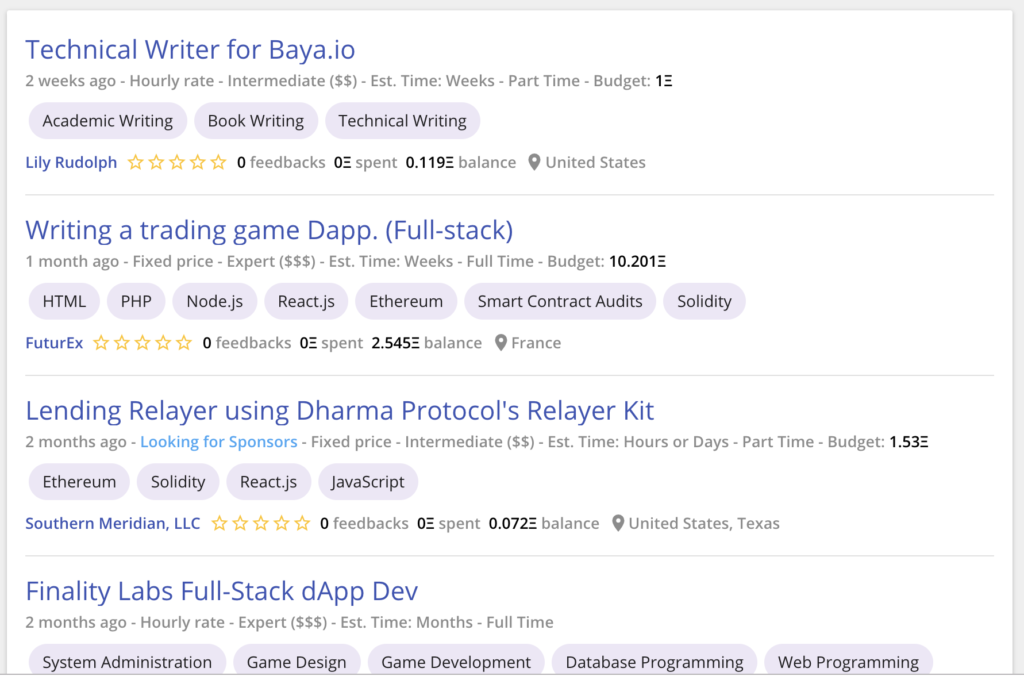
Ethlance blockchain job board

These platforms have yet to gain widespread traction as of yet. But the idea is that freelancers respond to jobs and the platform creates a smart contract once they’re hired.

In the freelance marketplace, the reason intermediaries thrive is that they offer a certain layer of protection. The smart contract, instead, keeps everyone accountable, without the associated fees.

For example, clients would pay for a service upfront and freelancers would submit their work. Funds would automatically be released, as established in the contract when the freelancer successfully turns in deliverables.

There’s no risk of doing work for a bad client, then not getting paid. Instead, you can start work after that initial deposit is recorded.

Benefits of migrating to the chain

When freelancers and clients interact directly, using a smart contract, there’s no need for the escrow process and the associated fees.

Faster payments and minimal fees are the most obvious examples, here. But, using a blockchain application also means you can tokenize anything, including your reputation.

Once on the platform, freelancers and employers alike must act responsibly to protect their reputation. If they don’t hold up their end of the bargain, it becomes public record and can hurt them down the line.

As such, a decentralized platform should lead to more accurate ratings on both sides, faster payment, and a better process for dispute resolution.

Many freelancers already find the bulk of their clients online, which means that they kick off a professional relationship without a direct relationship with a client.

A smart contract would allow freelancers to establish the terms of a project—deadlines, a certain number of edits, etc.–and link those milestones to payments.

Other benefits of going “decentralized”:

  • Cost effective—Processing fees are extremely low. Where Upwork and PayPal come with fees attached, blockchain allows you to securely transfer money with no third-party control.
  • Digital profile—Freelancers can store work samples and professional details on the blockchain, so sharing work doesn’t come with the risk of theft.
  • Secure record of transactions—Agreement between freelancers and clients are stored on a permanent record. For example, all parties can see proof or payment or that deliverables were uploaded.

What’s next?

In the end, it’s clear that our definition of work is always changing. Middleman platforms provided an easy in for new freelancers trying to find work in a post-recession landscape.

It’s hard to say whether blockchain-based job aggregators will take off. The technology is still hard for the average person to grasp. But participants on the employer and the freelancer side want better, more transparent resources.