8.5 million dollars: one of the largest robberies due to a Chrome extension

The hacking of the Trust Wallet Chrome extension, which occurred in November 2025, has exposed serious vulnerabilities in the company’s security, resulting in a theft of approximately 8.5 million dollars in assets. In a post-incident analysis, Trust Wallet revealed that the secrets of its GitHub repository were exposed, allowing the attacker to access the source code of the extension and the Chrome Web Store (CWS) API key. A million-dollar theft With full access to the CWS API thanks to the leaked key, the attacker managed to […]

The hacking of the Trust Wallet Chrome extension, which occurred in November 2025, has exposed serious vulnerabilities in the company’s security, resulting in the theft of approximately 8.5 million dollars in assets. In a post-incident analysis, Trust Wallet revealed that the secrets of its GitHub repository were exposed, allowing the attacker to access the source code of the extension and the API key for the Chrome Web Store (CWS).

A million-dollar robbery

With full access to the CWS API thanks to the leaked key, the attacker was able to upload malicious versions of the extension without going through the usual Trust Wallet review process. A malicious domain, “metrics-trustwallet[.]com”, was registered, where a trojanized version of the extension was distributed, designed to steal users’ mnemonic phrases and provide unauthorized access to their wallets.

This attack occurs in a broader context of a software supply chain incident known as Sha1-Hulud. This attack has affected multiple companies, allowing attackers to introduce malicious code through commonly used development tools. The new version of this malware, Shai-Hulud 3.0, has arrived with improvements in obfuscation and reliability, which could make its detection more difficult.

In light of this event, Trust Wallet has initiated a refund claim process for the victims, handling each case individually to protect against fraud. The company has also implemented additional monitoring capabilities and controls related to its launch processes, in order to prevent future incidents of this nature.

In a message following the attack, Trust Wallet warned about a million users of its extension to update to version 2.69, after a malicious update was made available. The recovery of stolen assets and the restoration of user trust will be essential in the coming months for the platform.

North Korea has stolen more than 2 billion dollars in cryptocurrencies

In 2025, threat actors linked to North Korea have been responsible for an alarming wave of cryptocurrency thefts totaling at least $2.02 billion, out of a global total of more than $3.4 billion stolen this year. This 51% increase compared to the previous year, in which $1.3 billion was stolen, according to Chainalysis’s report on cryptocurrency-related crime, marks the highest recorded level of thefts related to North Korea. Cryptocorea The most significant attack occurred in February, when the cryptocurrency exchange Bybit […]

In 2025, threat actors linked to North Korea have been responsible for an alarming wave of cryptocurrency thefts totaling at least $2.02 billion out of a global total of over $3.4 billion stolen this year. This 51% increase compared to the previous year, in which $1.3 billion was stolen, according to Chainalysis’s report on cryptocurrency-related crime, marks the highest recorded level of thefts related to North Korea.

Cryptocurrency

The most significant attack occurred in February when the cryptocurrency exchange Bybit suffered a breach that resulted in the loss of $1.5 billion. This compromise has been attributed to a threat group known as TraderTraitor, and is related to a machine infected with the Lumma Stealer malware. This type of operation is part of a series of attacks carried out by the acclaimed state-sponsored hacking group from North Korea, the Lazarus Group, which has also conducted significant thefts from other exchanges, such as Upbit in South Korea, from which $36 million was stolen last month.

The infiltration methods used by these actors include adopting false identities to access companies and cryptocurrency services globally, employing a scheme known as Wagemole. This approach implies that North Korean actors act as IT workers, getting employed in legitimate organizations to facilitate their cyberattacks. Research indicates that the stolen funds are laundered through services in Chinese and specialized markets, demonstrating close collaboration with illicit actors in the Asia-Pacific region.

Recently, Minh Phuong Ngoc Vong, a 40-year-old man from Maryland, was sentenced to 15 months in prison for his involvement in this scheme, which allowed North Korean nationals to use his identity to obtain jobs in U.S. government agencies. Vong managed to obtain over $970,000 in wages, while the conspirators worked remotely, facilitating the operation of the Lazarus Group.

The North Korean hackers who were about to steal thousands of cryptocurrencies thanks to a trojan

Recent investigations have uncovered a sophisticated cyberattack campaign attributed to threat actors linked to North Korea, called Contagious Interview. This campaign focuses on software developers working on Windows, Linux, and macOS operating systems, and is particularly aimed at those involved in cryptocurrency and Web3 projects. The cybersecurity firm ESET has identified this group, known as DeceptiveDevelopment, which uses a series of tools and tactics to infiltrate companies and steal sensitive information. An intangible threat Among the tools used is a Trojan called AkdoorTea, which is distributed via scripts […]

Recent investigations have uncovered a sophisticated cyberattack campaign attributed to threat actors linked to North Korea, called Contagious Interview. This campaign targets software developers working on Windows, Linux, and macOS operating systems, particularly those involved in cryptocurrency and Web3 projects. The cybersecurity firm ESET has identified this group, known as DeceptiveDevelopment, which employs a range of tools and tactics to infiltrate companies and steal sensitive information.

An Intangible Threat

Among the tools used is a Trojan called AkdoorTea, which is distributed via Windows batch scripts and resembles another implant known as NukeSped. The campaign has been designed to lure victims with attractive job offers on platforms like LinkedIn and Upwork. Victims are instructed to complete programming exercises that, unbeknownst to them, install malware on their systems.

Criminals have adopted a clever approach by impersonating recruiters, presenting well-paid jobs, and once the target expresses interest, they lead them to interact with fake sites that simulate a video assessment, but actually serve to facilitate the installation of malware. In this process, various malware variants have been identified, such as BeaverTail and InvisibleFerret, designed to steal information and manage cryptocurrencies.

Additionally, there are indications that the Contagious Interview campaign is related to other fraudulent initiatives by North Korean IT workers, which have been ongoing since 2017. Reports suggest that these actors often combine identity theft with digital tools, classifying them as a hybrid threat that merges traditional criminal operations and cybercrime.

Software developers are advised to be alert to suspicious job offers and to verify the legitimacy of any communication received regarding potential job opportunities.

How to trade cryptocurrencies on Binance Exchange

Become a master of cryptocurrency with Binance Exchange!

Our team is always looking for things we think our readers will value. If we make a content partnership like the one featured in this article, then we may receive compensation for publishing.
 

After a year-long downturn, cryptocurrencies are having a resurgent 2019, increasing in popularity, usability, and value.

As CoinDesk reported in early June, Bitcoin’s 2019 increases are predicated on actual transaction growth, and, collectively, cryptocurrencies surged nearly 150% this year as institutional and individual investors come together to push their prices higher.

In 2019, the crypto rally is outperforming many traditional investment vehicles, including stocks, bonds, gold, and oil.

In many ways, it’s representative of crypto’s first decade, offering both volatility and high rewards for willing investors.

The renewed interest in cryptocurrencies is bringing a surge of new users to prominent crypto exchanges like Binance, which boasts the biggest crypto exchange activity by volume, and it’s one that offers more than a hundred digital currencies on its platform.

Comprised of an incubation lab, research programs, charity projects, and its popular cryptocurrency exchange, Binance is helping lead the charge for higher levels of crypto adoption.

That’s becoming increasingly apparent this year.

In a May 22nd tweet, Binance CEO Changpeng Zhao, CZ, noted the exchange’s increased trading volumes, explaining, “We are seeing much higher order volumes (number of orders) than Dec 2017/Janu 2018 (the peak).”

We are seeing much higher order volumes (number of orders) than Dec 2017/Jan 2018 (the peak).

Trade (not order) volume in USD is 1/3 of the peak, but BTC price is 1/3 and ETH price is only 1/5 of the last peak, most other main alt prices are even lower. https://t.co/e9M20gqnm0

— CZ Binance (@cz_binance) May 22, 2019

Consequently, now is the time to take a look at Binance and to understand the functionality that makes it so popular.

Understanding Binance exchange

Initially founded by CZ in Hong Kong in 2017, Binance has quickly become one of the most lauded and well-recognized exchanges by crypto community members.

Binance is known for its competitive rates and expansive token offerings, and it’s often the go-to platform for both new and experienced crypto traders alike.

The exchange charges a flat fee of 0.1%, and users receive a discount when they use Binance’s native BNB token to make purchases on the exchange. Originally, the BNB token was an ERC-20 token hosted on Ethereum. However, with the launch of Binance Chain, the token is available and exchangeable directly with the platform.

Crypto traders can engage with several markets including BNB, BTC, ETH, and Stablecoins, which are presented in an aesthetically-appealing and easy-to-understand format.

In July, Binance introduced margin trading, a risky trading strategy that allows users to invest borrowed funds in crypto assets. Before users can engage in these trades, Binance provides a risk reminder, ensuring that investors are well-versed in this functionality before participating.

How to use Binance

Binance is defined by a combination of simplicity, and the startup process is incredibly simple and secure. It’s one reason that the amateur and experienced traders prioritize it over other exchanges.

Step #1: Create an account

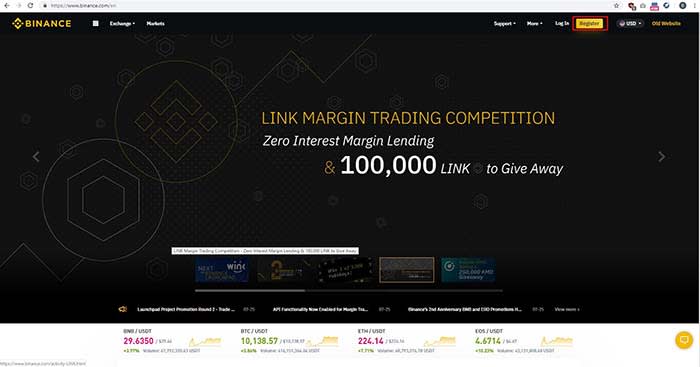
Binance requires users to create an account, and it offers different verification levels with corresponding features for each level.

For example, level 1 does not require account verification, but it limits withdraws to 2 BTC a day. For users looking for higher withdraw levels, they can complete a level 2 verification, which includes an uploaded photo ID that is approved by the platform. Level 2 users can withdraw as many as 100 BTC per day.

Users will need to schedule a verification meeting, so anyone looking for immediate level 2 access will need to plan ahead when creating an account.

Binance

With an emphasis on security, Binance encourages users to enable two-factor authentication to protect their digital assets.

Step #2: Deposit / Buy

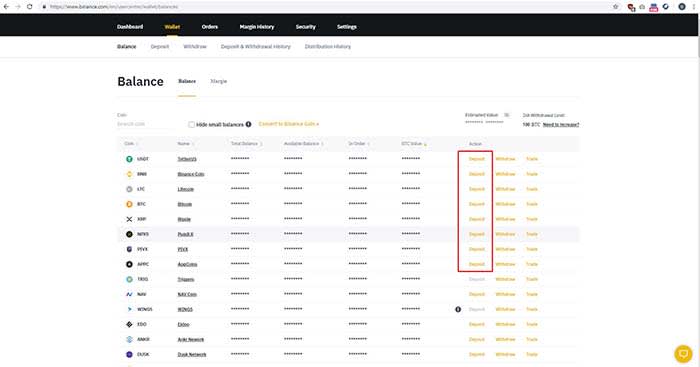
After creating an account, users can transfer cryptocurrencies into their accounts.

To fund an account, click “Funds” > “Deposits / Withdraws” > “Deposit.” After choosing “Deposit,” users are provided with a Binance wallet address where they send the tokens.

Once funds are deposited, users can begin trading on Binance, although some tokens take longer than others to settle.

For those looking to purchase crypto assets with a credit card, Binance announced a partnership with Simplex that allows users to do just that.

Binance

Step #3: Trade

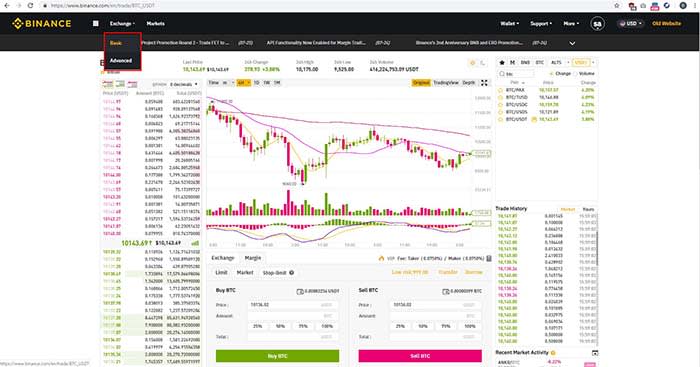
Once an account is funded, Binance users can immediately begin trading. The platform offers a basic and advanced trading screen. First time traders will benefit from the ease-of-use of the basic format while more experienced investors will find value in the more meticulous metrics provided in the advanced screen.

Choose a trading pair by selecting digital tokens on the right side of the screen. Clicking on a digital token provides charts and metrics on the left side of the screen. When you’re ready to place an order, you can choose between timing the market with a “Limit” order, order buying immediately via a Market order. When you choose one of the options, click on the “Buy” or “Sell” buttons at the bottom of the screen to execute a trade.

Users can choose to buy a unique portion of a token, to spend a specific amount on a token, or they can allocate a percentage of their buying power to buy a token.

Binance

Conclusion

As cryptocurrencies continue to grow in popularity and value, new users are presented with a deluge of exchange options that can often be as complicated as the platforms themselves.

In contrast, Binance offers a simple value proposition as it combines powerful investing tools with a secure interface that can allow anyone to participate in this burgeoning ecosystem. By balancing this dichotomy, Binance stands out as a platform that isn’t just indelibly popular but as one that is undoubtedly capable of bringing crypto to the masses.

Ransomware scams hold cities hostage

Two cities in Florida have been forced to pay a small fortune to regain access to their files!

a hacker for bitcoin

Ransomware stole all the headlines in 2016 as the particularly nasty malware variant began rearing its ugly head around the world. As if viruses and malware weren’t already bad enough, ransomware added to the misery by holding all the data stored on a particular device hostage. Later, hackers then demanded ransom for its safe return. Yep, 2016 was the year we all had to start worrying about being blackmailed whenever we were on the internet.

Things seemed to quiet down after the original big scores had come and gone, but the threat has always lingered. It was big organizations that were always the most vulnerable. Think hospitals and schools and you’ll have a good idea about what the early victims were like. Unfortunately, ransomware is back in the headlines as it seems another type of major organization is susceptible to ransomware attack: cities.

Florida cities held hostage

It is easy to think of ransomware being some Hollywood type event from something like Netflix’s “Black Mirror.” We do something embarrassing online (or in the episode “Shut Up and Dance,” illegal and morally deplorable) and then the hacker uses that against us to force us to pay money or do something else illegal.

In reality, ransomware is much more benign. There is little worth in targeting individuals with ransomware as A) we don’t have much money and B) most of us don’t have much on our hard drive we’d pay to get back.

Black Mirror ransomware attack
In Black Mirror an individual was targeted by ransomware. This does happen in real life, but it is more usual for large organizations to fall victim to ransomware attacks.

This is why larger systems like schools, hospitals, or now even cities make better targets for ransomware hackers. By blocking access to data on large systems immediately, the hackers put immense pressure on the organization. If a hospital can’t access its admin system, people could die. A school can’t run properly when its systems are down. A city won’t know who is who until it can check its databases.

This final reason is why officials in Lake City, Fla. have just joined officials from Riviera Beach, Florida in handing over a small fortune in Bitcoin to an unknown hacker or group of hackers. They paid $500,000 and $600,000 respectively. The Lake City computer systems were down for two weeks before the officials buckled. While they were down, citizens were unable to make municipal payments online and city employees couldn’t access their email accounts.

If Bitcoin ransoms don’t sound like something taxpayer money should pay for, fear not. According to the Lake City mayor, the city is covered by insurance, which will pay all but $10,000 of the $500,000 ransom.  If you don’t think the city should bow to the will of criminals, you should spare a second to think about Baltimore. Recently, the mayor of Baltimore refused to pay a ransom of around $76,000 and estimates suggest the stance cost the taxpayer around $18 million.

Wrapping up

Ransomware is here now and the cities we live in all have a target on their backs. Welcome to 2019, people. This just got real.

How Firefox can help block cryptomining attacks

Is your computer constantly overheating? There might be a cryptominer hijacking your computing power.

Sometimes while you’re working on your computer, you wonder why the device is running so hot. It could be all that you’re doing is surfing Facebook, or getting something done for work, but your device feels like it could fry an egg, and the fan sounds like a helicopter propeller. This could be a sign that someone is hijacking your device to cryptomine.

Seriously, we’re not kidding.

About 2,000 power-stealing attacks happen every minute. Programs that steal your computing power are making attackers millions of dollars while your phone’s data usage bill climbs higher and higher. Basically, cryptominers are making money while you front the bill.
Luckily, Firefox has the tools for the job to help keep you safe from these attacks. If you’re not a Firefox user, this protection might just change your mind.

How Firefox can help block cryptomining

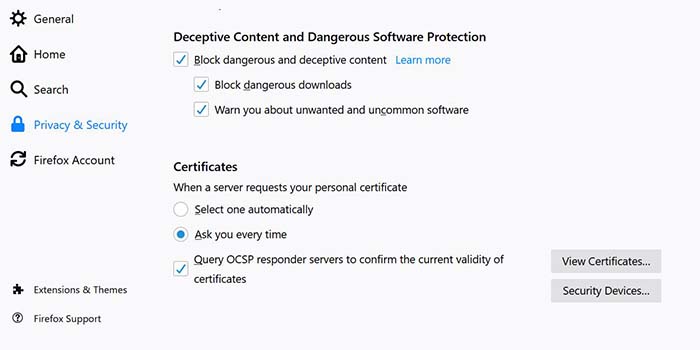
Firefox has partnered with the privacy company Disconnect. Together, they created a list of domains often used by cryptomining scripts. Firefox has given you the chance to block them. Simply select “Privacy and Security” from their menu. From there, scroll down and check the corresponding boxes.

Firefox block

Why you need to block cryptominers

Along with your ever increasing electricity and data bills, there are several reasons why you want to block cryptominers. By hijacking your device, they are rapidly draining your battery. Not only that, if it causes your device to overheat, it can do irreparable damage.

This activity could also pose a threat to the planet. Environmental researchers are concerned about the amount of resources being used up by cryptominers.

Protect yourself now

The bad guys are always working to take advantage of any gaps in your security. Downloading Firefox today can help prevent cryptominers from using your computer to make themselves rich.

Softonic is proud to partner with Mozilla. When you download from us, we may earn a commission.

China cracks down on Bitcoin mining

Will this radically change the industry or is this just a sign of things to come?

China BitcoinChina’s economic planning agency announced that they are looking to ban Bitcoin mining. They announced it in a report (written in Mandarin) that you can see here.  Click below if you need a translation app.

Google Translate Download now ►
8

According to an article from Reuters, China’s National Development and Reform Commission is seeking public opinions on a revised list of industries it wants to encourage, restrict or eliminate.

Of the new entries to that list, cryptocurrency mining was included. According to the NDRC, Bitcoin was hazardous to the country in several ways. It did not abide by regulations, was unsafe, wasted resources, and polluted the environment.

Bitcoin mining requires an incredible amount of electricity. As many of these mining operations are secret and unregulated, the electricity is often stolen.

The public has until May 7 to submit their opinion on whether or not Bitcoin will be eliminated. After that, Bitcoin’s fate is China will be decided.

China’s battle with Bitcoin farms

China is home to about 70% of the world’s Bitcoin mining operations, known as “farms.” To put in perspective how much China has dominated this market, the next closest is India who operates about 4% of the world’s farms.

Last year, Chinese police officers seized about 600 mining computers. To help combat issues with electricity consumption, the Chinese government also called for Bitcoin miners to exit the industry. As a result, more than half a million Bitcoin miners are out of business. 

What happens next?

Bitcoin taxBitcoin mining operations started off small when they began popping up in China in 2015. As a result, they flew under the government’s radar. However, as Bitcoin value rose so did the government’s attention toward Bitcoin. 

Most likely, China is not going to try to eliminate its Bitcoin industry altogether. As Bitcoin values haven’t suffered a major loss either, it seems like most everyone agrees.

The Chinese government likely realizes that their actions won’t stop some people from mining Bitcoin. However, that doesn’t mean that the country won’t do more to regulate the industry. By doing so, the country can tax it and the environment can be protected. 

Bitcoin has been around for about a decade, but people have only paid close attention in the last few years. In that time, the industry has exploded and has gone through rapid changes. 

Is the blockchain buzz dying down?

Does blockchain have a future or was it a flash in the pan?

Over the past few years, the blockchain has been receiving a whole lot of buzz. Just yesterday, the technology was on the verge of disrupting everything from banking to supply chains, as well as solving transparency issues and serving unbanked populations.

And then came the ICO explosion and the ridiculous coins that came with them. Every company wanted to ICO, but that turned out to be a poor strategy for long-term growth.

Excitement turned to hype, and now, this great vision for the future seems to have fewer cheerleaders.

As Axios reports, the blockchain buzz has largely turned out to be well, buzz.

So, post-crypto fever dream, what’s next for the chain? Here’s what experts are saying.

What is the future of blockchain?

blockchain

Some say it’s just baby technology — it’ll grow up

Blockchain expert and co-author of the book, “The Blockchain Revolution: How The Technology Behind Bitcoin is Changing Money,” Don Tapscott says the community is still in early days. Tapscott believes that the technology can change our world down the road, but we’re not quite there yet.

Eventually, with greater understanding of how the technology works and clear-cut regulations governing its use, we may see a shift. But for now, not enough people actually “get” how it works or how to regulate the technology.

This piece in the Harvard Business Review brings up a similar sentiment — stating that in order for blockchain to change the world, the world needs to change first.

However, as it stands, we don’t have the framework to support the infrastructure needed to bring the decentralized platform into the mainstream.

Blockchain is an expensive, complex project that must be carried out on a global scale. As it stands, the companies leading the blockchain charge are facing something of an energy crisis.

So, it’s no surprise that some changes need to take place before it becomes a reality for regular folks.

We’ve also hinged a lot of hopes and dreams on the blockchain

Controversial Bitcoin developer Jimmy Song says we’ve been holding up blockchain as this beacon of hope. And wrongly so.

Song’s beef with blockchain stems from the idea that the technology has been touted as the answer to all of our technological problems, where in many cases, those problems may well be better addressed with a different approach.

Martha Bennett, an analyst at Forrester, echoes a similar sentiment. Bennett says there’s a real risk that we’ll experience a “blockchain winter,” in the absence of “miracles” and tech-related investments will start to dry up.

And, yeah. We get it.

Some of blockchain’s most vocal proponents have thrown around claims that the technology can fix everything from inequality to inefficiencies.

According to Marie Wieck, general manager for blockchain at IBM, blockchain is as “transformative” as the internet was for communication. And while IBM has been one of the loudest voices pushing this message of change, they’ve put the technology to work in a number of practical applications. However, IBM actually is leveraging the technology in a way that helps businesses like Maersk and Walmart gain more insights into their supply chains.

The idea of “no middleman” can get complicated

The absence of the middleman is the main selling point, as transactions have the potential to be done faster and cheaper than ever.

But when the record-keeper of highly sensitive data and large sums of digital cash is no one, there leaves the question of — should there be a caretaker? While adding a caretaker kind of defeats the purpose, existing blockchain users sometimes have trouble accessing permissions.

Blockchain technology has only been around for about a decade. As such, there are many vulnerabilities that we don’t yet understand.

Ultimately, the blockchain likely isn’t going away anytime soon. We’ll be interested in seeing how it evolves, and what innovations will have a lasting impact after the novelty coins go away and talk of change begins to shift into something more practical.

For now, it’s safe to say, most of us won’t be using blockchain to its fullest potential for a long time. However, let’s hope that blockchain winter isn’t on the horizon and innovators stay in the game.

Lolli pays you Bitcoin for everyday online shopping

You’re already shopping online. Why not get free Bitcoin for it?

bitcoin

These days, everyone is after ways to earn Bitcoin — and everyone is shopping online. So why not link the two? That’s what startup Lolli is doing. The company launched a new platform that allows you to earn free Bitcoin while you shop.

Lolli brings Bitcoin to everyday online shopping

Getting everyone involved in Bitcoin

Bitcoin is the most well-known cryptocurrency, and it’s getting a lot of attention from those in the finance industry. Stock traders are interested in it, but what about everyday people? Bitcoin has opportunities to help everyone to achieve the same benefits, but the currency isn’t as readily available in the mainstream right now. Lolli can change that.

How does Lolli work?

In short, Lolli is a rewards-like platform similar to the many others out there. When you use the app, you earn Bitcoin when you make a purchase through a wide range of retailers. At this time, there are over 500 participating companies involved.

If you are interested, all you have to do is download the browser extension. The process is easy, and it takes only a minute to download from the company’s site. This is also the place to check out the list of retailers participating in the service. (Wal-mart, Seat Geek, VRBO, Barnes & Noble, Sam’s Club, and CVS are some of the heavy hitters.) The company currently offers the service just for Chrome and Safari users. However, Lolli plans to offer more browser support in the future.

Then what happens?

When you activate Lolli and shop, you can earn as much as 30 percent back in Bitcoin rewards. The tool automatically alerts users when they are shopping on one of the approved and partner websites. Once the transaction is complete, you earn your sweet, sweet Bitcoin.

For those who want a Bitcoin version of a cash-back app, Lolli is the way to go.