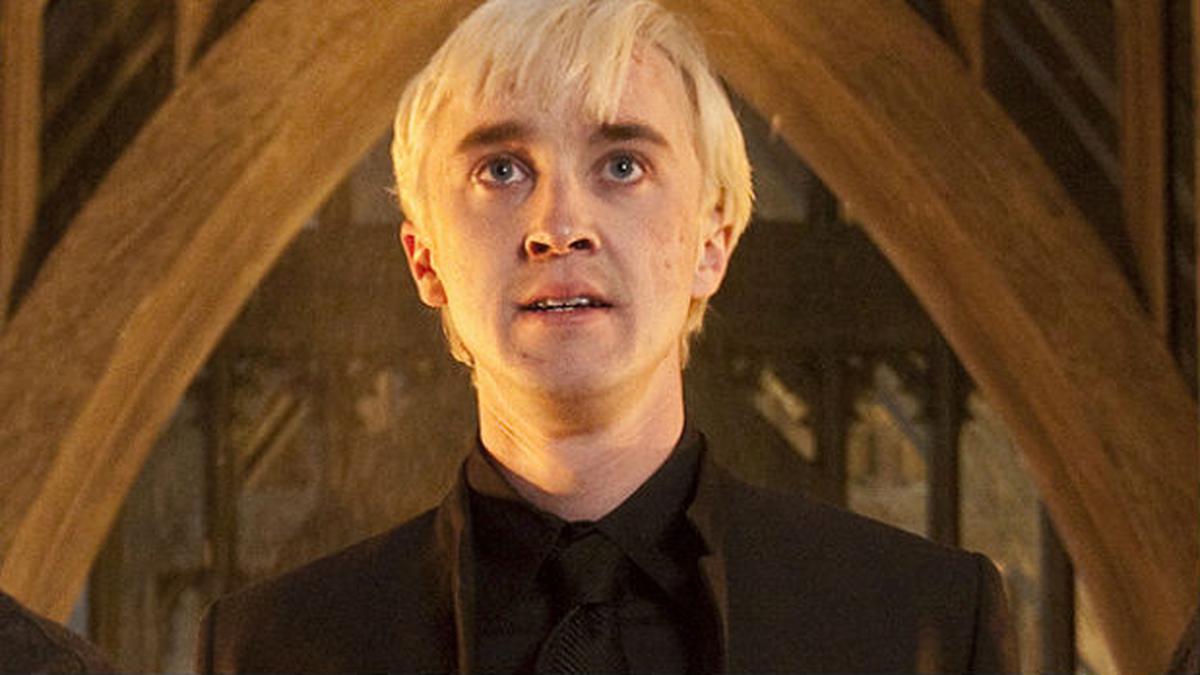
Tom Felton, known for his iconic role as Draco Malfoy in the Harry Potter saga, is back making appearances on the small screen playing a recurring role in the third season of the series The Flash, which has excited his fans. However, his most recent film project, Altered, has received a very different reception. An absolute critical failure The film, directed by Timo Vuorensola, known for his work on Iron Sky, hit theaters in the United States a couple of weeks ago, but has gone almost unnoticed among the public. The reviews have been harsh, […]
Tom Felton, known for his iconic role as Draco Malfoy in the Harry Potter saga,returns to make appearances on the small screen playing a recurring role in the third season of the series The Flash, which has excited his fans. However, his most recent film project, Altered, has received a very different reception.
An absolute critical failure
The film, directed by Timo Vuorensola, known for his work on Iron Sky, hit theaters in the United States a couple of weeks ago, but has gone almost unnoticed among the audience. The reviews have been harsh, with an average of just 3.8/10 on IMDb, highlighting the low-quality CGI effects and a narrative that many have labeled as low-budget science fiction. Viewers have pointed out aspects such as the lack of emotional depth and questionable political opinions as negative points of the production.
Altered presents an alternative world where genetic enhancements are common, forcing those who cannot use them to live in hiding. The plot revolves around the struggle of a few brave individuals to balance a society that seems to inhabit a dystopian horizon. Despite having an intriguing premise of superheroes in a cyberpunk setting, expectations have been disappointed by the destructive criticism the film receives. “Be clear about what you are exposing yourself to,” warns a reviewer on Rotten Tomatoes, highlighting that the trailer is a true reflection of the film’s quality.
As Altered continues its journey, no release date has been announced in Spain. Fans of Tom Felton and the science fiction genre will have to wait to see if the film manages to capture the audience’s attention upon its international release.
The Star Wars franchise is preparing for a monumental event in 2027, when the 50th anniversary of the premiere of Star Wars will be celebrated, known at its original release simply as Star Wars, without the subtitle A New Hope. This anniversary brings the news that 4K restored versions of the original trilogy are being made, which are expected to hit theaters in IMAX format. The restored versions of the original films in 4K finally According to previously announced information on StarWars.com and rumors that have circulated, these restored versions seem to include the […]
The Star Wars franchise is preparing for a monumental event in 2027, when the 50th anniversary of the release of Star Wars will be celebrated, known at its original launch simply as Star Wars, without the subtitle A New Hope. This anniversary brings the news that 4K restored versions of the original trilogy are being made, which are expected to hit theaters in IMAX format.
The restored versions of the original movies in 4K finally
According to information previously announced on StarWars.com and rumors that have circulated, these restored versions seem to include the original screenings of the films released in 1977. This is a point of great interest for many fans, as they have expressed their desire to see the trilogy in the way it was originally conceived, unlike the well-known special editions that were released in 1997 and 2004, which included notable alterations and updated effects.
The special editions of Star Wars have been a subject of controversy, particularly the one from 1997, which introduced significant changes, such as the famous scene where Han Solo encounters Jabba the Hutt, altered with the rudimentary CGI effects of the time. This, along with the modification of scenes and the debate over who shot first in the iconic confrontation with Greedo, has left many fans asking for a version that is truer to the original cinema experience.
Currently, fans who wish to relive the classic in its authentic format find the 2004 DVD edition versions available on Disney+. However, rumors about a restoration true to the original experience suggest that the future could offer a new perspective on the saga that has endured for five decades, allowing new generations and old fans to reconnect with the magic of Star Wars as it was first seen on the big screen.
They’re the amazing artists behind Hollywood’s greatest hits. Why are they treated so badly?
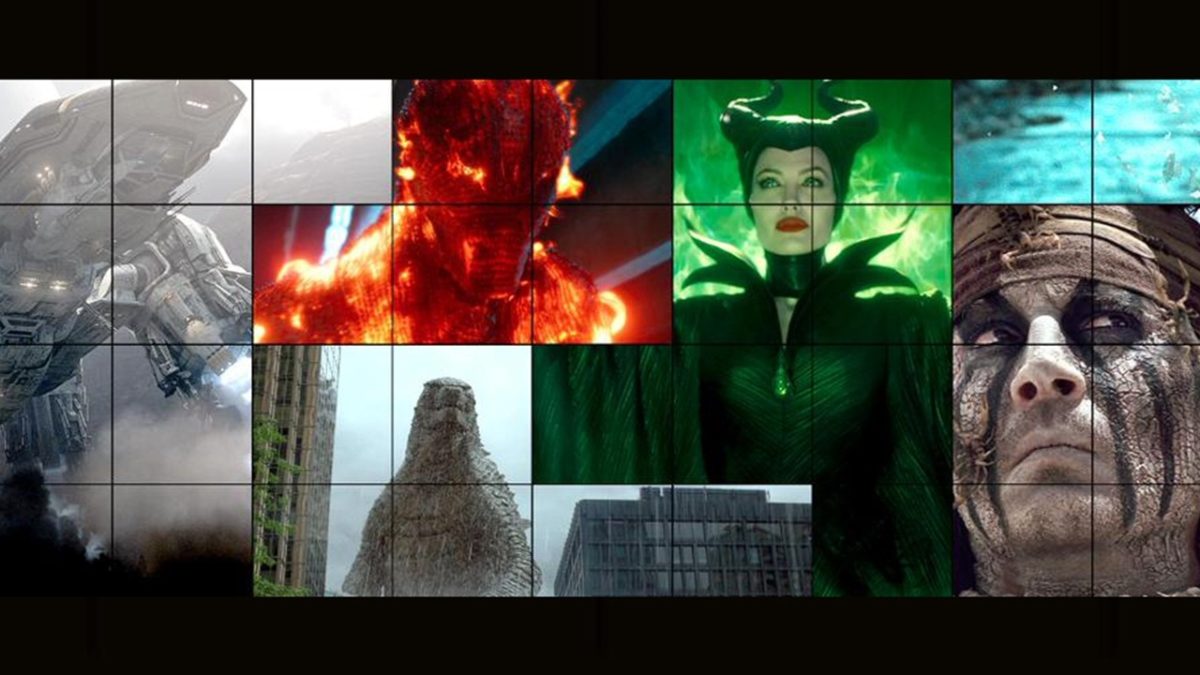
Visual effects artists (VFX artists) are now more essential than ever in Hollywood. Right now the box office is being dominated by “Avengers: Endgame” and “Detective Pikachu,” with both movies requiring extensive use of visual effects. If you’ve ever sat around during the credits of a Marvel movie waiting for the post-credits scene, you may have noticed that the VFX section has the most names under it by far. What exactly do those people do? And what are their lives like?
The different kinds of VFX artists
Thanos (Josh Brolin) battles Tony Stark (RDJ) on Titan in “Avengers: Infinity War”
As you might expect, there’re very few general VFX artists in the movie industry. Every frame of a CGI-heavy movie has hundreds of different factors that go into it, requiring a large team of specialized VFX artists. Here are just a few of them:
Rotoscoping
Rotoscoping is a technique where animation is drawn over live-action footage to create fluid, realistic animation, sometimes combining it with live-action characters. This technique has been in place since the earliest days of animation, and it is the technique Walt Disney and his team used to create the revolutionary animation of “Snow White and the Seven Dwarfs.”
In many of today’s blockbuster films, live-action characters must interact seamlessly with CGI characters, usually in front of a green screen or a partially-built set. In the picture above, Iron Man fights against Thanos on the planet Titan. Since Iron Man’s suit is damaged, parts of Tony Stark’s exposed suitless body are in frame for most of the scene. Rotoscope artists must painstakingly go over every frame of the scene, drawing the Iron Man suit partially over Robert Downey Jr’s body. They must also make sure RDJ fits seamlessly into the mostly-CGI scene by composing objects and scenery realistically behind him.
New MCU secrets shared by Marvel Studios president Kevin Feige
Modelers use computer programs to shape 3D objects and characters in a process extremely similar to sculpting. To realistically sculpt, modelers often pay close attention to real-life reference photos and concept art, though sometimes modelers even sculpt their objects from scratch.
Depending on the object or creature, the model is passed off to various other artists upon completion. Texture artists add realistic surfaces to the objects, making sure the texture reflects whatever the object is supposed to be (ex adding wrinkles and pores for skin, or adding rust and paint to a metallic spaceship). For creatures that require realistic fur, such as the fuzzy Detective Pikachu, groomers are in charge of creating the look of the fur and tuning how it behaves in various situations (such as blowing in the wind, getting wet, or getting dirty).
5 best looking and worst looking Pokémon in Detective Pikachu
After a person or creature is sculpted by a modeler, it is the job of riggers to make it so that creature can move realistically (or stylistically). Riggers add digital skeletons to the creature models, giving it a defined and realistic set of parameters on how it can move. Highly detailed creatures, like Legendary Pictures’ Godzilla, also feature a complex underlying system of muscles and skin that give weight and heft to the creature’s movement. A complex understanding of anatomy is essential to a rigger’s job.
Excited for King of the Monsters? Here’s a brief guide to Godzilla
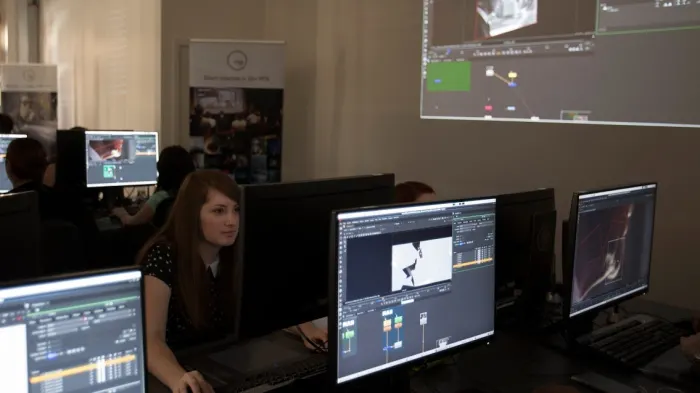
Tracking is an understated but vitally important job for VFX artists. Basically, a tracker’s job is to track the position and movement of the camera in order to make sure both live-action and digital objects move realistically within a heavily digitized scene. If objects aren’t properly kept track of, they will appear to “float” in a scene, completely destroying the illusion that it is actually there. A tracker must make sure it appears that it appears as if a real camera was filming a shot where everything inside it is real. If CGI and live-action objects combine in the shot to look realistic as the camera moves, the illusion is created that the film crew is filming something that is actually there, no matter how CGI-heavy the scene is.
Despite being responsible for dazzling audiences with beautiful digital effects and iconic characters, VFX artists live a harsh life. Digital effects are a relatively new field of work in the movie industry compared to other jobs, so efforts to regulate or unionize VFX jobs are few and far in-between.
As a result, VFX artists must endure an incredibly volatile job market, with job stability being incredibly low. VFX artists frequently work in contract positions, sometimes for a decade or more. In addition to denying them access to benefits such as healthcare, this leads to uncertainty for VFX artists as to whether they will be let go at the end of each project. In many projects, from indie darlings to summer blockbusters, payment is often delayed for months.
The turnover rate is high, and despite the runaway success of VFX heavy films, VFX studios are folding left and right. Companies like Matte Digital (Titanic, Independence Day) and Fuel VFX (Iron Man 2, Prometheus) have gone bankrupt in the last several years. Even acclaimed VFX studio Rhythm and Hues, responsible for the excellent Oscar-winning VFX of “Life of Pi,” went bankrupt in 2013. At the same Oscars ceremony where they won the award for “Life of Pi,” Rhythm and Hues workers had their mics cut when trying to describe poor working conditions for VFX workers.
Even if one actually makes it into the VFX industry with a stable job, there are still plenty of hurdles to deal with. Hours are never consistent, as they can be scaled back by half or a quarter at a moment’s notice. Even worse, some studios employ unpaid overtime in order to meet incredibly strict deadlines set by film studios. It’s not uncommon for VFX artists to work 12-15 hours a day, with several additional hours added during crunch time post-production. VFX artists say it’s extremely difficult to have a family, as in addition to the long hours, VFX artists are relocated (often across entire countries) constantly to meet the needs of different studios and productions.
Though the work is described as satisfying by many VFX workers, it can be an incredibly tedious task. For just one shot, VFX artists have described being asked to rework the frame over a thousand times by the film’s director, a process that takes hundreds of hours.
It’s sad to see that as VFX-heavy movies sweep the box office, the digital artists responsible are treated worse than ever. Hopefully, unionization efforts can help these talented people get the treatment and recognition they deserve.