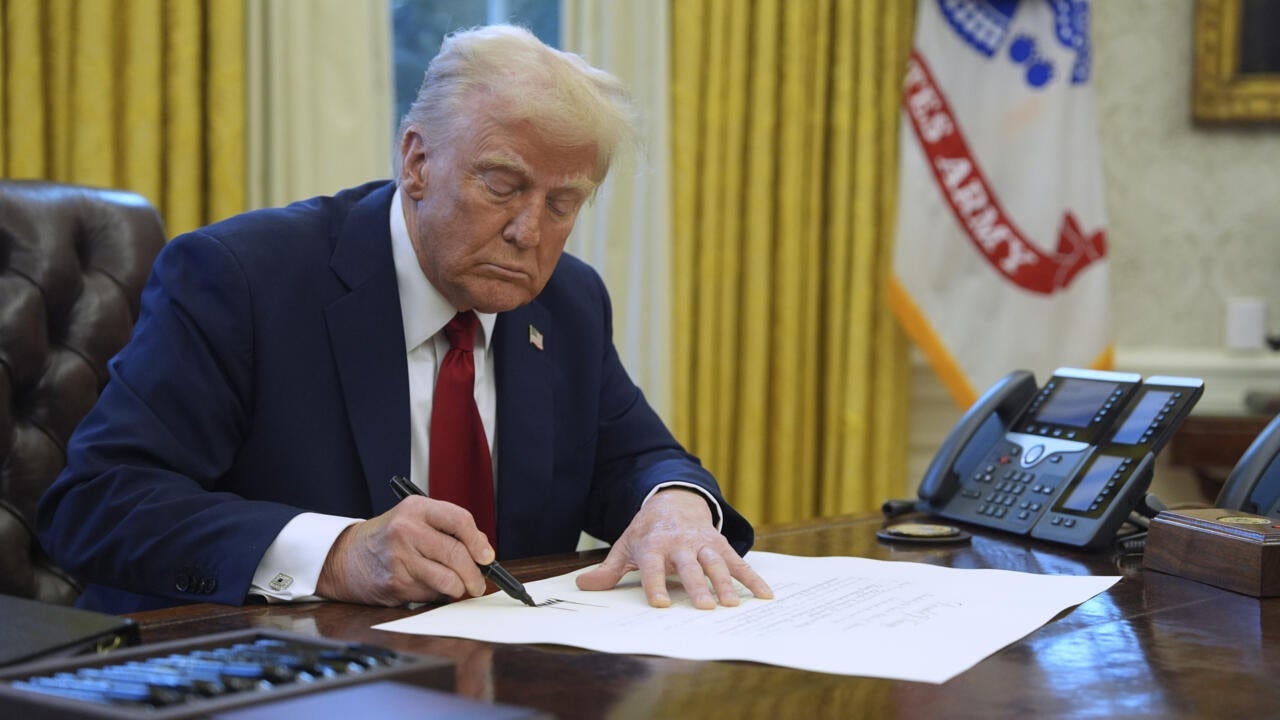
In a new controversy that mixes the world of entertainment with politics, Donald Trump has criticized George Clooney after recent statements from the actor, who referred to him as a big fool. Clooney’s words arise in the context of an interview where he reflected on Trump and his rise to power, commenting that he always considered him a joker before his foray into politics. Something that has been going on for a long time Trump’s response, published on his Truth Social platform, was forceful. In his message, he expressed: Good news! Clooney is now a French citizen, which means that […]
In a new controversy that mixes the world of entertainment with politics, Donald Trump has criticized George Clooney following recent statements from the actor, who referred to him as a big fool. Clooney’s words come in the context of an interview where he reflected on Trump and his rise to power, commenting that he always considered him a joker before his foray into politics.
Something that has been coming for a long time
Trump’s response, published on his Truth Social platform, was forceful. In his message, he expressed: Good news! Clooney is now a French citizen, which means he can set aside his disparaging comments to focus on enjoying French culture. This reaction from Trump seems to imply that Clooney’s recent acquisition of French citizenship is an issue that has caught his attention, once again showing the intersection between their personalities and international politics.
Clooney, known for his career as an actor and director, has maintained critical stances against Trump since before he took office, making disparaging comments that have drawn media attention. The tension between both figures highlights not only their disparity in political opinions but also the role that artists play in the public sphere. These statements are expected to continue generating debates about the influence of celebrities in politics and vice versa.
This incident is just the latest in a series of public confrontations between actors and political figures, revealing how popular culture and the political sphere often intertwine in surprising ways. While Trump addresses his supporters, Clooney seems to be enjoying his new life in France, a change of scenery that may represent a new stage in his career and personal life.
Congresswoman Joyce Beatty, ex officio member of the Kennedy Center board, filed a lawsuit in federal court in Washington, D.C., aiming to force the removal of Donald Trump’s name from the renamed artistic institution. The legal action was filed on Monday and seeks a judicial declaration to validate this request. Beatty, a Democratic representative from Ohio, argues that the use of Trump’s name at the Kennedy Center is inappropriate and does not reflect the values of art and culture that the institution promotes. The lawsuit notes that the Kennedy Center, founded in 1971, is […]
Congresswoman Joyce Beatty, ex officio member of the Kennedy Center board, filed a lawsuit in federal court in Washington, D.C., aiming to force the removal of Donald Trump’s name from the renamed artistic institution. The legal action was filed on Monday and seeks a judicial declaration to validate this request.
Beatty, a Democratic representative from Ohio, argues that the use of Trump’s name at the Kennedy Center is inappropriate and does not reflect the values of art and culture that the institution promotes.
The lawsuit states that the Kennedy Center, founded in 1971, is a monument to freedom of expression and diversity, and argues that the name of Trump contradicts those principles.
The members of the Kennedy Center board have been notified about the lawsuit, and they are expected to speak out in the coming days. This action takes place in a tense political context, where Trump’s policies and actions continue to generate controversy.
Beatty has been an outspoken critic of the former president and has advocated for inclusive and respectful representation within American culture.
The lawsuit not only seeks to force a name change but also invites a broader debate about the relationship between art, politics, and the figure of Donald Trump in the contemporary narrative of the United States.
While Beatty has expressed confidence that the court will support his request, the legal process may face significant challenges. More information is expected from the lawyers on both sides in the coming weeks.
The Kennedy Center Honors ceremony, broadcast by CBS and held earlier this month, marked a historic moment by featuring former President Donald Trump as the master of ceremonies. However, on the night of the event, Trump focused on the ceremony and not on the legal controversies surrounding it, including the implications of his association with the restructuring of the cultural center, which his allies have dubbed Trump Kennedy Center. Trump vs. Colbert Legal experts have pointed out that this renaming is not only unusual but could be considered illegal, which has sparked a debate […]
The Kennedy Center Honors ceremony, broadcast by CBS and held earlier this month, marked a historic moment by featuring former President Donald Trump as the master of ceremonies. However, on the night of the event, Trump focused on the ceremony and not on the legal controversies surrounding it, including the implications of his association with the restructuring of the cultural center, which his allies have dubbed the Trump Kennedy Center.
Trump against Colbert
Legal experts have pointed out that this renaming is not only unusual but could also be considered illegal, which has sparked a debate about the legitimacy of these actions. Despite the criticism and accusations of violating established norms, Trump and his allies have defended the decision as an act of pride and recognition for his administration.
During the ceremony, Trump not only celebrated the contribution of artists and creators in the cultural field, but also used the event as a platform to highlight his role in American history. However, his focus quickly shifted from the potential legal repercussions to the festivities and the honors for the honorees. In fact, he ended up criticizing Stephen Colbert and claiming that CBS should end the show now, before what was stipulated in his contract. This tactic has been criticized by some analysts who see it as an attempt to divert attention from his current legal troubles.
The Kennedy Center Honors is traditionally a prestigious event aimed at highlighting contributions to American art and culture. This year, however, it has been embroiled in controversies that have called the event’s accountability into question. As Trump continues his rhetoric about the renaming, attention is expected to focus on the potential legal measures that could arise from this decision.
Netflix has decided to cancel its series Reclutas (Boots) after a single season, despite receiving praise from both critics and audiences. The series, created by Andy Parker and based on the memoirs of Greg Cope White, follows the story of Cameron, a young gay man who joins the United States Marines in 1990, a time when being homosexual was illegal in the armed forces. The good audience ratings and the conversations that Netflix had held with Sony, the show’s producer, pointed to the possibility of a renewal. What it says […]
Netflix has decided to cancel its series Reclutas (Boots) after a single season, despite receiving praise from both critics and audiences. The series, created by Andy Parker and based on the memoirs of Greg Cope White, follows the story of Cameron, a young gay man who joins the United States Marines in 1990, a time when being homosexual was illegal in the armed forces. The good audience ratings and the conversations that Netflix had held with Sony, the producer of the series, pointed to the possibility of a renewal.
Whatever the blonde says
However, the cancellation has surprised many, as the contracts for the cast had been extended before the final decision was announced. The controversy surrounding Recruit has not been absent; the Pentagon press secretary, in a statement to Entertainment Weekly, describes the series as “woke garbage,” which has sparked criticism from the audience and the military sector.
The series managed to capture the audience’s attention with its emotional approach to themes of identity and belonging in a context marked by discrimination and stigma. However, Netflix’s decision underscores a reality of the contemporary television landscape: critical acclaim and viewing metrics do not always guarantee a show’s continuation. In recent years, we have seen numerous cases where popular and well-rated productions have been canceled, raising questions about the renewal criteria of streaming platforms.
Despite its short life, Recruits has generated an important dialogue about LGBTQ+ representation in the media and the complexity of individual experiences within institutional structures. With its cancellation, the conversation remains open about how diverse stories find their place in an increasingly competitive market.
The world of cinema is in mourning after the tragic death of Rob Reiner, renowned director and actor, who was found dead in Hollywood. His passing has sparked a wave of sadness and concern in the artistic community, where Reiner was an influential figure, known for his work in cinematic classics such as When Harry Met Sally and The Princess Bride. Many colleagues and admirers have expressed their condolences on social media, recalling the depth of his impact on film. Trump, enough already However, the news has been overshadowed by a controversy involving […]
The world of cinema is in mourning following the tragic death of Rob Reiner, renowned director and actor, who was found dead in Hollywood. His passing has sparked a wave of sadness and concern in the artistic community, where Reiner was an influential figure, known for his work in cinematic classics such as When Harry Met Sally and The Princess Bride. Many colleagues and admirers have expressed their condolences on social media, recalling the depth of his impact on film.
Trump, enough already
However, the news has been overshadowed by a controversy involving Donald Trump. The former president, on his Truth Social platform, commented on Reiner’s death, referring to him as “a tortured and fighter”. Surprisingly, Trump used the occasion to lash out at the director, suggesting that Reiner was responsible for his own death. Such comments have not only generated criticism in the Hollywood community but also among his supporters, who believe it is inappropriate to try to politicize such a tragic event.
Trump’s message, which alluded to Reiner’s challenging and “fighting” nature, sparked a wave of negative reactions, with many arguing that the former president took advantage of the tragedy to criticize someone who was a dissenting voice in his political career. The tension between public figures and expressions of condolence has intensified in the digital age, where the use of social media is central to communication. Trump’s comments seem to reflect this new normal, where every event is seen as an opportunity for political confrontation.
Meanwhile, the entertainment community comes together in a moment of reflection on Rob Reiner’s legacy and his contribution to cinema, putting aside the controversies that have arisen. His work will endure, regardless of the polarities that mark the current context.
In a significant shift in its production strategy, Apple is reportedly considering collaborating with Intel again for the manufacturing of the M series chips, specifically the M5, M6, and M7 models, for the year 2027. This potential partnership marks a return to the company that Apple left behind in 2020 when it adopted its line of Apple Silicon chips, based on ARM architecture, and represents a more diversified approach to its supply chain. Embracing Intel so that Trump doesn’t get angry According to analyst Ming-Chi Kuo, the inclusion of Intel as a second manufacturer would allow Apple […]
In a significant shift in its production strategy, Apple is reportedly considering collaborating with Intel again for the manufacturing of the M series chips, specifically the M5, M6, and M7 models, for the year 2027. This potential partnership marks a return to the company that Apple left behind in 2020 when it adopted its Apple Silicon chip line, based on ARM architecture, and represents a more diversified approach to its supply chain.
According to analyst Ming-Chi Kuo, the inclusion of Intel as a second manufacturer would allow Apple to mitigate supply risks that had arisen from its almost total dependence on TSMC. This strategy could incorporate the production of lower-end chips, such as those used in MacBook Air and iPad Air, which represents a lower production cost and less complexity by delegating manufacturing to a partner like Intel. However, high-end chips will continue to be manufactured by TSMC, aligning with Apple’s advanced technological needs and critical timelines.
This movement is not just a corporate issue; it responds to external pressures, especially from the U.S. government, to increase domestic production. The possibility of manufacturing these chips in the United States aligns with policies aimed at strengthening the domestic supply and creating local jobs in the technology sector.
Despite these modifications in the production chain, end users would not notice significant differences. The chips would still be designed by Apple and would maintain the same architecture and performance as those manufactured by TSMC. Thus, Apple seems to be balancing its need for continuous innovation with a pragmatic approach that ensures stability in its supply chain and the production of its devices.
Donald Trump has confirmed his intention to continue with the lawsuit against the BBC for the alleged editing of the video of his speech on January 6, aired during the insurrection at the Capitol. The controversy arose after it was revealed that the British network altered the recording, which led Trump to feel that his image and message had been distorted. In an interview on the show “The Ingraham Angle,” Trump expressed his frustration with the media coverage and commented, “Well, I guess I have to do it” in reference to the legal action he plans to take. A lawsuit […]
Donald Trump has confirmed his intention to continue with the lawsuit against the BBC for the alleged editing of the video of his speech on January 6, broadcast during the insurrection at the Capitol.
The controversy arose after it was revealed that the British network altered the recording, which led Trump to feel that his image and message had been distorted.
In an interview on the program “The Ingraham Angle,” Trump expressed his frustration with the media coverage and commented: “Well, I guess I have to do it” in reference to the legal action he plans to take.
🚨 JUST IN: President Trump CONFIRMS his intention to sue BBC for $1 BILLION after they deceptively edited his J6 speech
“They DEFRAUDED the public! And they’ve admitted it!”
A lawsuit that could jeopardize the international news network
The former president argued that the editing of the video is not only misleading but also represents an attack on his right to free expression. The BBC, for its part, has not made detailed comments on the situation, beyond reaffirming its commitment to truthfulness and clarifying that its editing was an attempt at context rather than a malicious one. However, this incident has reignited tensions between Trump and the media, a recurring theme in his political career.
Trump has been critical of various media platforms, accusing them of misinformation and bias. The lawsuit, if it goes ahead, could not only affect the reputation of the BBC but also raise questions about press freedom and the responsibility of the media when reporting historical facts.
🔴 NEW: The senior BBC executive who dismissed concerns over Panorama’s doctored Donald Trump speech has been placed in charge of the news division
Legal observers suggest that the resolution of this case could set a precedent in the relationship between politicians and the media, by defining how far allegations of defamation and manipulation can go.
Meanwhile, the case continues to attract media attention and could become a focal point in the context of the upcoming 2024 presidential campaign, where Trump seeks to reaffirm his support base and the public perception of his controversial figure.
The cinema of the 80s is remembered with a lot of affection, and it’s no wonder. Some of the most iconic adventure and action movies in film history are from that era. The level of creativity that was present at the time and the directors and screenwriters involved were enviable, leading to unique gems that are still remembered today. And in many cases, they were overwhelming box office successes. That was the success of one of the most remembered trilogies in history, which is still celebrated today: Back to the Future. Conceived by Robert Zemeckis […]
The cinema of the 80s is remembered with great affection, and for good reason. Some of the most iconic adventure and action movies in film history are from that era. The level of creativity that was present at the time, along with the directors and screenwriters involved, was enviable, leading to unique gems that are still remembered today. And in many cases, they were overwhelming box office successes. That was the success of one of the most memorable trilogies in history, which is still celebrated today: Back to the Future.
Conceived by Robert Zemeckis and Bob Gale and produced by Steven Spielberg, this is a franchise that started from a very simple premise. What would happen if a young person traveled to the past and met their parents at the moment they met and fell in love? What kind of disasters could it cause if they made the slightest mistake?
A movie that invented what is now a cliché
While today this story is a cliché for all kinds of series, books, and movies, it is so because of the first installment of this film franchise. Marty McFly was the original rebellious and impulsive teenager who travels through time in a retrofuturistic car driven by the eccentric ideas of a mad scientist friend of his, leading him to a wildly crazy adventure. That will only become more and more outrageous with each new installment of the franchise. But now we will get to that.
The first of the movies, Back to the Future, kept it simple. Set in 1985, the protagonist Marty McFly travels 30 years into the past, to 1955, testing the time machine that his friend and somewhat eccentric scientist Doc has built in a DeLorean. The result disrupts his parents’ relationship, almost causing him to never be born, and ultimately, he manages to return to his time without compromising either his relationship or that of his parents or the space-time continuum.
Tremendously clever and wacky for its time, heavily inspired by the television series The Twilight Zone and Superman’s time travel comics, the film was a tremendous success among critics and audiences. With a budget of 20 million dollars, it managed to make almost 390 million at the box office, not counting everything it has made on television and home formats, being surprisingly praised by most critics of the time as a clever, intelligent youth film that represents a very smart twist on science fiction stories thanks to its humor and narrative, even if its beginning is too slow and overly expository.
Winning numerous awards and being nominated for five Oscars, although it wouldn’t win any, it was the big surprise of 1985. And to no one’s surprise, the sequels arrived.
The Aftermath of the Great Success
It took four years to make their second installment, but they did it. Bringing back all the people involved in the original movie except Crispin Glover, who played Marty McFly’s father but was considered too problematic to work with, the movie promised the same, but with a different twist. This time they wouldn’t travel to the past, but to the future. But Marty, who apparently learned nothing from the first movie, gets into trouble and brings back an object from the future that completely changes the future. Because, what is the present if not the past of the future?
With trips to the future, to the past, and a direct confrontation against his great nemesis since the first movie, the bully Biff, the film is built on the premise of its predecessor, making it bigger, with more consequences, and in a way, visionary. After all, it’s about a millionaire seizing power in the US and ruining everything. But his vision is only half-true: in 1989, the year the movie was released, Donald Trump was already a very important figure in American society and had declared his intention to run for president of the US. And if this movie serves as president, the idea was not exciting even then.
On the other hand, the movie was a success again. With a budget of 40 million, it grossed just over 332 million dollars and the critics expressed a healthy enthusiasm once more. Although some critics saw the film as entertaining escapism that lacked the imagination of the previous one and the awards did not shine in the same way as in the previous one.
A beloved third movie
Just a year later and following the final scene of this second film, the third and final movie of the franchise was released: Back to the Future III. With Doc self-exiling to the past, specifically to the year 1885, Marty will have to go to his rescue when he receives a message that something is very wrong and his old friend needs his help. This is resolved in a film with all the tropes of the western, tremendously clever, and which serves as a perfect conclusion to the emotional core of this outstanding trilogy of films.
Costing another 40 million dollars, this time they raised only 245 million, if we can say only when talking about those figures. And the criticism was, surprisingly, much more positive than regarding the second one. Although the ambition of the second installment was much greater, with a more convoluted plot and trying to embellish everything with many superficially deep themes, the much purer and more direct intentions of this sequel to make a fun movie, focusing on the characters and their relationships and how it uses western tropes, captivated the critics. And not without very good reasons.
After the trilogy, the franchise was closed without any further attempts to revive it. Not in the cinema. It has had television series, video games, pinball, biographies of its actors, and everything imaginable in terms of merchandising, but no one has ever proposed a fourth movie. And it’s better this way. Because now you can watch this excellent trilogy on Netflix that, moreover, doesn’t need to become a tetralogy for us to remember how good it is.
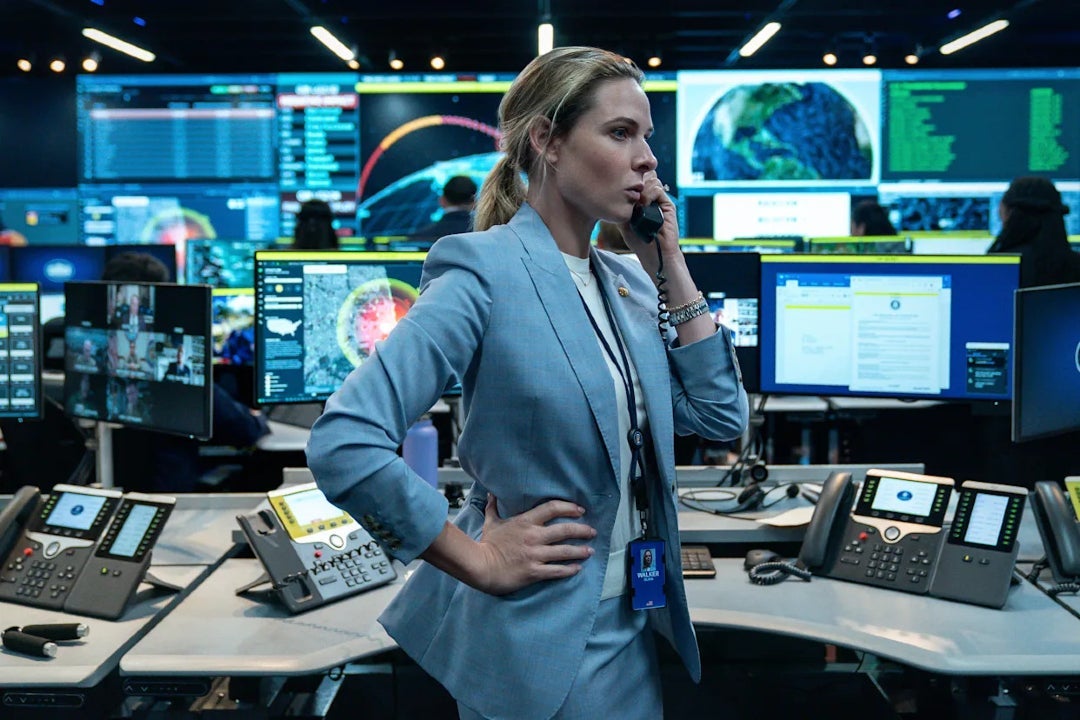
Filmmaker Kathryn Bigelow has captured the attention of Netflix and the Pentagon this weekend with her new movie A House of Dynamite, which addresses a chilling scenario: an imminent nuclear attack on the United States, particularly focused on Chicago. The film, which lasts almost two hours, offers a disturbing reflection on the reactivity of institutions in the face of an extreme crisis. The 18 most tense minutes in the history of the country Bigelow, known for her work in tense action films, has conducted a meticulous exercise in documentation, relying on military experts and the reality of the […]
Filmmaker Kathryn Bigelow has captured the attention of Netflix and the Pentagon this weekend with her new film A House of Dynamite, which addresses a chilling scenario: an imminent nuclear attack on the United States, particularly focused on Chicago. The film, which lasts almost two hours, offers a disturbing reflection on the reactivity of institutions in the face of an extreme crisis.
The 18 most tense minutes in the country’s history
Bigelow, known for her work in tense and action-packed films, has conducted a meticulous documentation exercise, relying on military experts and the reality of response processes to a nuclear attack. The narrative unfolds through episodic segments that showcase the different perspectives of the 18 minutes leading up to the impact, highlighting the urgency in the response from the Pentagon and the United States Strategic Command (STRATCOM), which would have only 15 minutes to update the president on the situation.
In one of the key scenes, it is mentioned that the odds of successfully intercepting a missile are 60%, compared to the 55% reported in real tests. This type of detail resonates deeply, as the film seeks to portray the reality of how such a crisis would be handled in bureaucratic terms, where the decision to counterattack or surrender ultimately falls on one person: the President of the United States.
The film also addresses the normalization of alerts about nuclear threats, reminding us that during the Trump administration, there were at least 15 alert calls regarding North Korea, many of which were false alarms. In this context, A House of Dynamite is not only a fierce work of fiction but also a commentary on the functioning of the system surrounding the nuclear threat, emphasizing that the true antagonist may be “the system we have built.”
Recently, the U.S. government has used images from the famous video game Halo to promote its deportation efforts, which has sparked a wave of online criticism. This controversy began when the Department of Homeland Security (DHS) published an image related to Halo with the phrase “Destroy the Flood,” in an attempt to dehumanize immigrants by comparing them to harmful alien life forms. A very, very unpleasant advertisement The use of this type of language and symbolism in government propaganda has been considered by many as a dangerously unserious lack, evoking comparisons to moments […]
Recently, the U.S. government has used images from the famous video game Halo to promote its deportation efforts, which has sparked a wave of online criticism. This controversy began when the Department of Homeland Security (DHS) published an image related to Halo with the phrase “Destroy the Flood”, in an attempt to dehumanize immigrants by comparing them to harmful alien life forms.
A very, very unpleasant announcement
The use of this type of language and symbolism in government propaganda has been considered by many as a dangerously unserious lack, evoking comparisons to dark moments in history, where groups of people have been dehumanized to justify violence and oppression. Despite the attention it has generated, Microsoft, the company behind Halo, has not yet issued a response regarding this, something that recalls past situations where companies like Nintendo have remained silent in the face of the use of their intellectual property in questionable contexts.
On the other hand, GameStop, which recently retweeted the DHS message, has shown a willingness to support this anti-immigrant propaganda, which has sparked more reactions in discussion forums. While conversations about these posts are banned on the Halo Discord, the debate has been allowed in the community subreddit, reflecting a desire among fans to discuss the use of their favorite franchise in such a controversial context.
Some online voices have criticized the superficiality of this tactic by the Trump administration, comparing its approach on social media to the behavior of a “17-year-old teenager.” This episode highlights the tensions between entertainment, politics, and social responsibility in the digital age.