Xbox has given the best conference of the Summer Game Fest, presenting an interesting lineup of games for its near future, but that doesn’t seem to be enough to regain the faith of its fans. Or of gamers in general. Being the third party in contention for two generations now, they are having very serious problems positioning themselves as serious competition against Sony and Nintendo, even with the missteps of the latter, and it seems that even their successes are more reactions than anything else. A business with serious problems Matthew Ball has spoken with Chris Dring, head of […]
Xbox has given the best conference of the Summer Game Fest, presenting an interesting lineup of games for its near future, but that doesn’t seem to be enough to regain the faith of its fans. Or of gamers in general. Being the third player in the game for two generations now, they are having very serious problems positioning themselves as serious competition against Sony and Nintendo, even with their missteps, and it seems that even their successes are more reactions than anything else.
A business with serious problems
Matthew Ball has spoken with Chris Dring, head of the specialized video game newsletter The Game Business, about the situation that Xbox is currently facing. Highlighting some of the challenges and issues the brand is experiencing. The first of these is that, both in Spain and the US, there is no stock of Xbox Series. This is something Ball has addressed without hesitation.
“I can definitively say that the demand for our console exceeds the supply. We are bringing it to as many stores as possible, and we are producing it as quickly as we can. There is a serious limitation on how fast we can do this.” Although this does not translate into the number of console sales, which remains far lower than those of Sony and Nintendo, it seems to also be related to the issue of rising component prices, which is forcing them to ‘rethink everything we can about Helix’, their next console.
All of this reveals a contradictory picture of Xbox. Although Ball constantly tries to assert that Xbox is better than ever and in a winning position, all it conveys is that the company is constantly reacting to questionable decisions they themselves have made in the past. Without an apparent clear roadmap, which includes the inability to define which games will be exclusive to Xbox and which will not and why, the brand’s fans remain marked by the uncertainty of a company that, although it claims to be more transparent now, still is not at all.
The third season of Euphoria has been an absolute flop. Disdained by critics and vilified by viewers, it seems to have only pleased a small group of fans. But that doesn’t mean it has been a failure in all areas. Hate also sells, and that seems to be the case, because Euphoria has ended up with 8.7 million views between HBO and HBO Max in just three days. A series with good numbers While HBO does not provide general audience data, we do know that the first episode of the season garnered 8.5 million views […]
The third season of Euphoria has been an absolute flop. Disdained by critics and vilified by viewers, it seems to have only pleased a small group of fans. But that doesn’t mean it has been a failure in all areas. Hate also sells, and that seems to be the case, because Euphoria has ended up with 8.7 million views between HBO and HBO Max in just three days.
A series with good numbers
Although HBO does not provide general audience data, we do know that the first episode of the season garnered 8.5 million views in its first three days and that this was a 44% increase compared to the premiere of the second season. This represents a significant improvement over its previous numbers.
In any case, that doesn’t mean they are great numbers. By comparison, The Pitt reached 9.7 million views in its finale in the first three days since its airing. Although with a particularity. The figures for The Pitt measure only viewers within the US, while those for Euphoria measure viewers from around the world, which leaves a somewhat less enthusiastic situation for what was, until now, HBO’s darling.
While there is no news about a fourth season of Euphoria, HBO keeps the door open to the possibility. Although the end of the third season felt like a conclusion for the series, it wouldn’t be the first time that, after such a closure, a series returns with a new season. So it will be interesting to see what conclusions the network executives draw from the numbers of Euphoria. And from the lack of enthusiasm from critics and a significant portion of the fans.
The Iran war has been one of the most controversial and divisive wars in recent history. If it can even be called divisive when it seems that no one wanted it to happen. Terrible for the economy and world politics, that will not stop Hollywood from turning it into a spectacle. And doing so with the director most in love with the American militaristic machinery: Michael Bay. A director in love with the army According to Deadline, Bay is working on a movie about the Iran war. An adaptation of a book by Michael Zuckoff, announced to be published in 2027, narrates minute by […]
The Iran war has been one of the most controversial and divisive wars in recent history. If it can even be called divisive when it seems that no one wanted it to happen. Terrible for the global economy and politics, that will not stop Hollywood from turning it into a spectacle. And doing it with the director most enamored with the U.S. military machinery: Michael Bay.
A director in love with the army
According to Deadline, Bay is working on a film about the Iran war. Based on a book by Michael Zuckoff, set to be published in 2027, it narrates minute by minute the story of two soldiers whose F-15E Strike Eagle was attacked by the Iranian army. Surviving in the Zagros mountains until they could be rescued by their comrades, they had to fight against a hostile army in an epic tale that is likely to be tremendously exaggerated.
Bay himself has confirmed to Deadline what tone we can expect. “I have had a fantastic relationship over my 30-year career with the Department of Defense and the incredible members of the US military,” he stated about his historical relationship with the military. He affirmed that the film “is about all those who answered the call in one of the most complex, dangerous, and intricate operations in modern history. It celebrates the heroism and unwavering dedication of our members.”
While there is no release date of any kind, it is expected to arrive sometime between 2027 and 2028. And given Bay’s statements and his history, we can assume it will be a great pyrotechnic spectacle and a whitewashing of the Iran war. Whether this is what society needs or not is something we leave for each reader to decide.
GameStop is no longer what it used to be. It’s not just that the prices they offer do not correspond to the reality of the video game market, but in general, it seems that they are only talked about to discuss controversies. But it’s for good reason. It seems they are always getting involved in a new one. This year had not been the case yet, but their CEO, Ryan Cohen, has decided to change that, with what is probably the most outlandish idea of the year: to buy eBay. And today we are going to tell you all about this odyssey. A seamless plan Last 3 […]
GameStop is no longer what it used to be. It’s not just that the prices they offer do not correspond to the reality of the video game market, but in general, it seems that they are only talked about to discuss controversies. But it’s for good reason. It seems they are always getting involved in a new one. This year had not been the case yet, but their CEO, Ryan Cohen, has decided to change that, with what is probably the most outlandish idea of the year: to buy eBay. And today we are going to tell you all about this odyssey.
A seamless plan
On May 3rd, the CEO of GameStop, the already mentioned Ryan Cohen, made a striking public promise. He promised that he was going to buy eBay. Putting on the table $56 billion, the market valuation of the company, his intention was to acquire the famous online store to create a new company capable of competing in volume and importance with Amazon. A very eye-catching goal that caught the attention of everyone. Not for his interest in buying eBay, but for how he intended to do it.
His explanation was simple. GameStop already owns 5% of eBay’s shares. His idea was to invest $28 billion in cash, of which $20 billion would come from TD Bank, the eleventh largest bank in the US, with which they would buy the board’s stakes. Then, they would issue another billion in shares and thus control 70% of the company.
The problem is that none of this makes sense. To begin with, GameStop’s valuation is at $12 billion, so investing $8 billion is illogical. How TD Bank or any other bank would invest more than double what the interested company itself invests and under what conditions is something that also remained unclear and, moreover, does not make sense on paper. And how they were going to get the shares sold to them and take control of the board of directors was also not clear at any point.
So, Cohen decided to do the most logical thing in these cases: go on television to explain himself. In a regrettable spectacle lasting almost thirty minutes where the CEO of GameStop seemed not to be in his right mind, he was constantly dodging all the questions from the host and his collaborators, not clarifying any of the doubts. Leaving any kind of plausibility about the possibility of the purchase up in the air.
eBay says no
All of this culminated with eBay issuing a statement on April 12. In it, they stated that “we have considered your proposal to be neither credible nor attractive.” Not stopping there and wanting to confirm their thoughts on the matter, they emphasized that “the board, with the help of independent advisors, has studied your proposal and has determined to reject it”. Cutting off any possibility of this purchase taking place.
But to be realistic, this purchase has never been able to take place. There was no material evidence that they had the means to make it, no matter how much hypothetical interest existed. So, why did they do this? It’s hard to know. But it doesn’t seem like they are going to stop here.
Because in fact, the odyssey is not over yet. Cohen has expressed his desire, after eBay’s outright refusal, that “the eBay shareholders themselves deserve the opportunity to evaluate them.” Stating that it is irresponsible to dismiss a proposal of 125 dollars per share, “I don’t want to make hasty decisions because we are dealing with people who make a lot of money and are not owners of the business, but we will do whatever it takes to present this proposal to the true owners of the company”. Therefore, it seems he still has an ace up his sleeve. Or something to gain by continuing with this.
What is the reason for all this? No one is clear about it. Some people want to see in this movement an attempt by GameStop to increase the value of its shares, but, in reality, its shares fell in the market after the announcement of the purchase of eBay. Others have wanted to see an attempt to become relevant at a time when it is becoming an increasingly irrelevant company. But the only thing certain is that GameStop is not going to buy eBay. Not for now. It also doesn’t seem like they will stop trying even though they lack the credibility or the means for this small fish to eat this big whale.
In 1984, Alexey Pajitnov, a young Soviet developer, never imagined that his simple puzzle, inspired by one of his favorite games, would change the landscape of video games forever. Tetris, as he named it, would not only become a global phenomenon but would also catapult him to fame and wealth. Over the years, Pajitnov has continued to create new gaming experiences, highlighting recent titles like Tetris 99 and Tetris Effect, which reimagine the classic gameplay of his original creation. A most singular man After emigrating to the United States in the 90s, […]
In 1984, Alexey Pajitnov, a young Soviet developer, never imagined that his simple puzzle, inspired by one of his favorite games, would change the landscape of video games forever. Tetris, as he named it, would not only become a global phenomenon but also catapult him to fame and wealth. Over the years, Pajitnov has continued to create new gaming experiences, highlighting recent titles like Tetris 99 and Tetris Effect, which reimagine the classic gameplay of his original creation.
A Most Unique Man
After emigrating to the United States in the 90s, Pajitnov founded The Tetris Company, taking charge of managing the rights to the iconic brand. Although his masterpiece has always been Tetris, Pajitnov has shown his passion for video game design with several projects, although none reached the same level of success. Among them are Welltris, which introduced three-dimensional elements to the classic Tetris, and Hatris, a game where players must match hats falling from the sky.
At Microsoft, where he worked for several years, his game Hexic stands out, released alongside the Xbox 360 in 2005, which is considered one of his greatest achievements at the company. Despite his semi-official retirement in 2010, Pajitnov has left an indelible mark on the video game industry, although his personal life has been marked by tragedies, such as the death of his son in 2017.
Recently, Pajitnov was in Spain to receive an award at the OXO Video Game Museum, reaffirming his impact on the industry. As the world of video games continues to adapt, fans hope that Pajitnov’s legacy and creativity will continue to inspire future generations of developers and players.
The world of video games is at the crossroads between the faithful representation of historical facts and militarized propaganda. Call of Duty, for years a symbol of war epic, has been criticized for its propagandistic approach to the narratives of U.S. military actions in various conflicts, presenting the country as the indisputable hero. In this context, Fourteen Years of Flames emerges, a Chinese video game that seeks to offer an alternative perspective, focusing on the Second Sino-Japanese War, a conflict in which an estimated 21.3 million Chinese died between 1937 and 1945, which some historians […]
The world of video games is at the crossroads between the faithful representation of historical facts and militarized propaganda. Call of Duty, for years a symbol of war epic, has been criticized for its propagandistic approach to the narratives of U.S. military actions in various conflicts, presenting the country as the indisputable hero. In this context, Fourteen Years of Flames emerges, a Chinese video game that seeks to offer an alternative perspective, focusing on the Second Sino-Japanese War, a conflict in which an estimated 21.3 million Chinese died between 1937 and 1945, which some historians refer to as the “Asian Holocaust.”
A Deeply Anti-Japanese Game
Developed by Fenghuo Studio, Fourteen Years of Flames resembles a Chinese Call of Duty, focusing on a narrative first-person shooter (FPS) with cinematic ambition. However, unlike Activision’s installments, which tackle more well-known conflicts, this title allows players to explore a lesser-known chapter of history, the atrocities suffered by the Chinese population during the Japanese invasion.
The game serves a dual purpose: it not only seeks to entertain but also to educate, promoting historical awareness about the calamities of conflict. Players embody seven key characters throughout 16 real historical events, exploring from the rural areas of the northeast to Chongqing, one of the most bombed capitals of World War II.
With a representation of weapons, equipment, and scenarios so true to history that a 1:1 model is used, the game seeks to accurately reflect war. Although its narrative is based on characters that did not exist, they are inspired by real stories, thus allowing for a more balanced account. Although Fourteen Years of Flames does not yet have a release date or translations into other languages, it stands out as a unique proposal in the field of video games, challenging conventional narratives and digging into a historical wound that is still open for China.
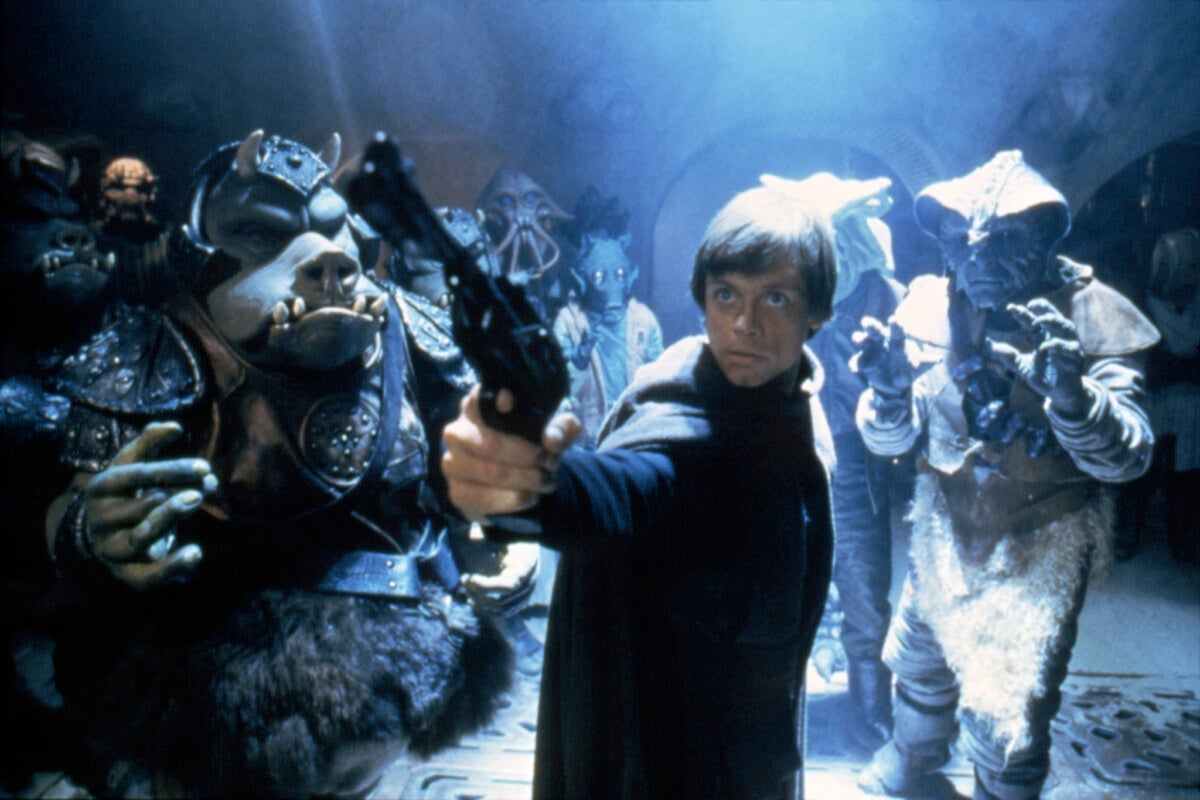
In a recent account about the production of the iconic first Star Wars movie, Mark Hamill revealed that some dialogues were improvised, which contributed to the authenticity and charisma of certain memorable scenes. Hamill stands out as the perfect example of how improvisation can make a difference in character development and cinematic storytelling, highlighting, for example, his comment about the clumsiness of the Stormtroopers. Not one of the actor’s brightest ideas One of the most curious moments that Hamill shared was his decision to include his personal phone number […]
In a recent account about the production of the iconic first Star Wars film, Mark Hamill revealed that some dialogues were improvised, which contributed to the authenticity and charisma of certain memorable scenes. Hamill stands out as the perfect example of how improvisation can make a difference in character development and cinematic storytelling, highlighting, for instance, his comment about the clumsiness of the Stormtroopers.
Not one of the actor’s brightest ideas
One of the most curious moments that Hamill shared was his decision to include his personal phone number from 1977 in one of the movie’s dialogues. This peculiarity is presented in the scene where Han Solo must recite the code necessary for the droid R2-D2 to open the trash compactor door, a moment that has become emblematic for fans. The number, 326-3827, has captured the audience’s imagination, although the novelization of the movie mentions a variation: 366117891.
The importance of the code not only dates back to a key moment in the plot, but it has also generated renewed interest among fans of the saga, who are investigating the details of this number and its possible relevance in the context of the time. Area codes in the U.S. make this small curiosity take on an even more fascinating hue, raising questions about the actor’s life back then.
In addition, the cross-references between Star Wars and other franchises are highlighted, underscoring the undeniable influence and cultural impact that the saga has had over the years. This phenomenon has not only left a mark on the world of cinema but has also fueled multiple fandoms, extending its legacy beyond the very, very distant galaxy.
A new chapter in the long and dark history of the CIA program known as MK Ultra is taking shape, as an 81-year-old Canadian victim, Lana Ponting, joins a class action lawsuit seeking to hold accountable the institutions involved in these mind control experiments. Between 1953 and 1973, the program used various techniques, including the administration of drugs like LSD and the use of electroshocks, on patients in psychiatric hospitals, who were treated as guinea pigs without their knowledge or consent. A class action lawsuit that demonstrates the horrors of the 50s […]
A new chapter in the long and dark history of the CIA program known as MK Ultra is taking shape, as an 81-year-old Canadian victim, Lana Ponting, joins a class-action lawsuit seeking to hold accountable the institutions involved in these mind control experiments. Between 1953 and 1973, the program used various techniques, including the administration of drugs like LSD and the use of electroshocks, on patients in psychiatric hospitals, who were treated as guinea pigs without their knowledge or consent.
A class action lawsuit that demonstrates the horrors of the 50s
Ponting, in her adolescence, was admitted to the Allan Memorial Institute in Montreal under a court order. Her problems began when her rebelliousness and desire to escape her family environment led her to the hospital. However, what was thought to be treatment turned into something much more alarming, with procedures that have left indelible marks on her mental health. Years later, after reviewing her medical history, Ponting discovered that her nightmares and memory gaps were a direct result of the experiments she was subjected to.
Despite the scandal surrounding MK Ultra coming to light in the 1970s, with declassified reports that brought the matter before the U.S. Congress, many victims, including Ponting, have not received adequate compensation. Although in 1988 the United States compensated some individuals, the institutions involved did not take responsibility for their actions, leaving hundreds of victims without justice.
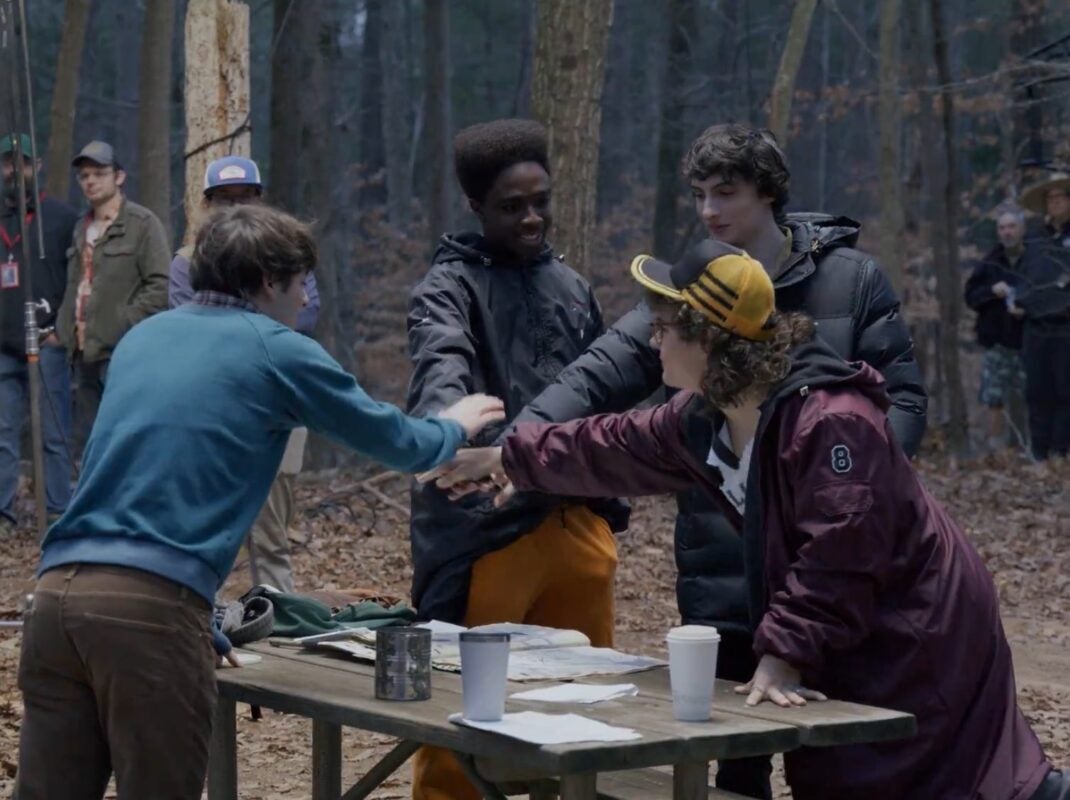
The current class action lawsuit seeks to rekindle public interest in these past abuses, with the aim of clarifying the legal responsibilities of universities, hospitals, and prisons that allowed these experiments. This effort is expected to not only provide closure to the victims but also prevent such atrocities from happening again in the future. Or not outside of fiction, like in Stranger Things.
China is gradually gaining the interest of the Western public. Although they have been producing excellent audiovisual productions for some time, especially in film and television, it has only been in the last few years that their cinema has begun to be considered commercially viable outside their borders. A similar situation has occurred with their video games, which have only recently started to take off among audiences outside of Asia. The latest case of a game that has taken off and is beginning to dominate the Western market is a game that could not be more […]
China is gradually gaining the interest of the Western public. Although they have been producing excellent audiovisual productions for some time, especially in film and television, it has only been in the last few years that their cinema has started to be considered commercially viable outside their borders. A similar trend has occurred with their video games, which have only recently begun to take off among audiences outside of Asia.
The latest case of a game that has taken the world by storm and is starting to dominate the Western market is a game that couldn’t be more Chinese in everything it does. And its name is Where Winds Meet.
A game with a Chinese flavor, but a Western style
This open-world action RPG offers us something very different from what we are used to in this type of games: to live our own wuxia story. What is wuxia? They are the chivalric tales of wandering heroes who roam throughout China, resolving troubles wherever they find them, using martial arts and spectacular moves that defy the logic and physics of reality. Something that the game has captured perfectly.
Positioning ourselves in the period of the Five Dynasties and Ten Kingdoms, which lasted from 907 to 960 and was a time of tremendous political and social instability for China, our duty will be to act as a gentleman throughout its vast world. Righting wrongs and ensuring we build a reputation as a martial artist across the country.
And it won’t be because we don’t have space to cover and things to do. With 20 squares of map and the ability to specialize in multiple martial arts, weapon uses, as well as numerous mystical arts, the game offers us many ways to create our own legend. And many people are already doing it.
Although the game was officially released on November 14 in Europe and the US, the game has been available on PC since December 27 in China. With three million downloads in the first four days of its release, Where Winds Meet became one of the most important games of this year from the very beginning.
Something that has only grown since its launch in the West. Appearing on PlayStation, Steam, and Epic, within 40 minutes of its release there were 500,000 players just counting Europe and the US, with more than two million during its first 24 hours. Reaching a peak of 190,000 simultaneous players on Steam, it has become the seventh best-selling game in Steam history, the fifth most played, and the second most viewed on its launch day.
The reasons are that the game, besides being visually stunning and offering us radical freedom and a style different from the typical action RPG, is that it is free-to-play. We don’t have to pay for anything to play, making its monetization extremely friendly for the standards of this type of game.
That’s why, if you love games like The Witcher 3 and are even a little intrigued by the wuxia aesthetic, you shouldn’t miss Where Winds Meet. Because few games are going to take the world by storm the way this one is, and besides, it won’t even cost you any money to see if the hype was justified or not.
The Chinese market is becoming increasingly important for Hollywood. Although it may not seem like it, for a movie to succeed explosively, it needs to perform well in that market. That is why movies are increasingly being adapted to the tastes and criteria of the Asian market. Although it is not necessary to reach the Chinese market for a movie to be a success, nor is it the goal of most movies, blockbusters are increasingly trying to succeed in that market. Something in which The Kingdom of the Planet of the Apes is no exception. Tenth […]
The Chinese market is becoming increasingly important for Hollywood. Although it may not seem like it, for a movie to succeed explosively, it needs to perform well in that market. That’s why movies are increasingly being adapted to the tastes and criteria of the Asian market. Although it is not necessary to reach the Chinese market for a movie to be a success, nor is it the goal of most films, blockbusters are increasingly trying to succeed in that market. Something that is no exception is The Kingdom of the Planet of the Apes.
Tenth film in the Planet of the Apes franchise and the fourth in the series after the reboot, the film directed by Wes Ball is a 145-minute odyssey that cost around 160 million dollars and managed to gross 400 million dollars at the box office. Partly thanks to the Chinese market.
Projecting $50-55 million in the US for its debut weekend, it ended up making just over $58 million. Similarly, it was expected to make between $80-90 million outside the US, but it ended up making $129 million. Among them, $6.4 million came from Mexico, $7.1 million from France, and $11.4 million from the second largest market in the world: China. Demonstrating the crucial importance it has in these big-budget films.
Even so, the movie was a success thanks to its domestic and global success. Although it performed well in China, which greatly boosted its numbers, its triumph was largely because it performed radically better than analysts around the world expected. Something that was also reflected in the reviews, receiving an 80% on Rotten Tomatoes, with 323 positive reviews. Even if on Metacritic, where scores tend to be much harsher, it barely reached a 66 out of 100.
Being the fourth installment of the franchise, one would expect it to have performed considerably worse than the previous ones. And although it made 100 million less than the previous film, War for the Planet of the Apes, it was considered a complete success. And why did it work? Mainly, because the movie knows how to maintain a perfect balance between continuing the story of the previous films and being completely understandable without having seen them. By elegantly maintaining that precarious balance for its two and a half hours, it manages to keep the attention of viewers looking for intense and bombastic entertainment, allowing them to enjoy a blockbuster that clearly shows where its budget is: in the special effects.
The reason for success: following the story and the visuals
Because the other great differentiating factor of the film is the great spectacle it offers. With highly crafted special effects and absolutely spectacular CGI, it has been compared in quality to Avatar, the film by James Cameron. This translated into numerous award nominations and, very notably, a nomination for the Oscars for Best Visual Effects in 2024, which Dune: Part Two would ultimately win.
Now the kingdom of the planet of the apes arrives on HBO Max so we can enjoy it in the comfort of our homes to relive the tremendous show it represents. And while it’s not the same as watching it in the cinema, it is surely still a spectacle worth seeing.