Movistar Plus+ has surprised its users by announcing the arrival of a new Korean series, The Pyramid Game, scheduled to premiere on July 29. This announcement comes unexpectedly, as the series was not part of the list of new releases published on June 26, making it a pleasant surprise. Outside of its initial plans, The Pyramid Game takes place in a brutal survival game at a girls’ school in South Korea, where bullying and extreme violence among the students set the tone. Specialists have compared […]
Movistar Plus+ has surprised its users by announcing the arrival of a new Korean series, The Pyramid Game, scheduled to premiere on July 29. This announcement comes unexpectedly, as the series was not part of the list of new releases published on June 26, making it a pleasant surprise.
Out of their initial plans
The pyramid game takes place in a brutal survival game in a girls’ school in South Korea, where bullying and extreme violence among students set the tone. Specialists have compared the series to the phenomenon Squid Game, although with a slightly different approach, as it features fewer deaths but a high level of psychological and physical violence. This adverse context is the backdrop that defines the social dynamics at Baekyeon Institute, where students face a ranking system that determines their social position and the treatment they receive from their peers.
The plot follows Seong Su-ji, a new student who must decide whether to submit to the system or rebel against it, thus offering a critique of the toxicity of relationships in educational environments. The series consists of 10 episodes, each 50 minutes long, available simultaneously from its premiere.
The protagonist is played by Bona (Kim Jiyeon), a member of the popular K-Pop group WJSN (Cosmic Girls). Although the group is on hiatus, her acting career has taken off, with appearances in various series and wide recognition in the industry. Alongside Bona, other emerging talents like Shin Seul-ki and Kang Na-eon enrich the cast.
With this new title, Movistar Plus+ aims to captivate the audience on an intense journey through the dark corners of student life in South Korea, offering a raw and often disturbing look at the dynamics of power and survival among teenagers.
Everything related to Star Wars is an immediate success, as long as you don’t touch the jedis. That is an extremely dangerous minefield that is better left untouched. No one wants a twist on what is already known, and even expanding what is already known is often met with skepticism by some fans who are quite aggressive about their franchise. Especially if it includes talking about jedis who were women or non-Caucasian. This is something that one of the most interesting Star Wars series experienced firsthand […]
Everything related to Star Wars is an immediate success, as long as you don’t touch the jedis. That is a tremendously dangerous minefield that is best left alone. No one wants to see a twist on what is already known, and even expanding what is already known is often met with skepticism by some fans who are quite aggressive about their franchise. Especially if it includes talking about jedis who were women or non-Caucasian.
This is something that one of the most interesting Star Wars series in recent years experienced firsthand. Star Wars: The Acolyte wanted to do something different, looking into one of the richest and most vibrant eras of the Star Wars universe, with an impressive cast, but fans hated it. Why? That is a good question, because it doesn’t seem to be that the series was bad at all.
Jedis when being a Jedi was not yet strange
Set at the end of the High Republic era, approximately 100 years before The Phantom Menace, the series takes place in a time of peace. There is relative stability in the galaxy and the Jedi are still at their peak, although all of that is about to change.
The series begins with Osha, a former padawan who abandoned her training as a Jedi due to an internal turmoil regarding her connection to the Force, who reunites with her Jedi master, named Sol, to investigate a series of terrible crimes. Something that will lead them to discover a terrible truth: the Sith order, which was thought to have disappeared from the galaxy, is still standing. And it has a deep connection with both of them.
From here on, the series is a remarkable blend of detective story, kung-fu, and a classic Star Wars movie. Resulting in a very fresh and different mix that makes it much more interesting than most works derived from the franchise.
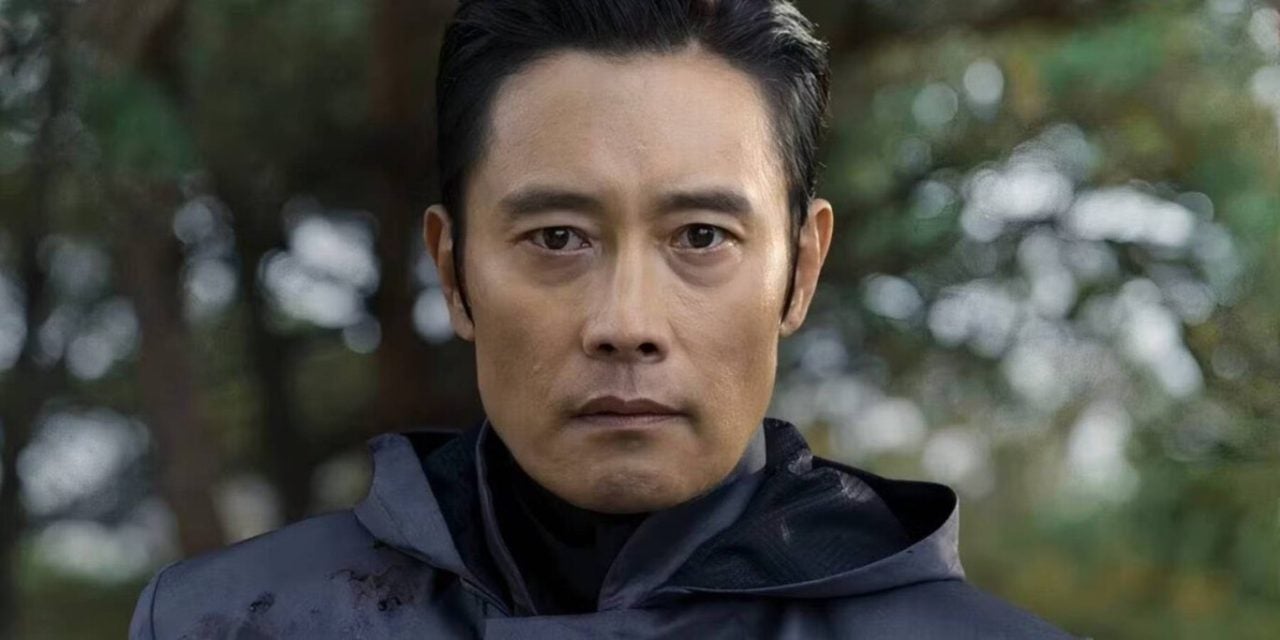
Another reason why it is interesting is because of its casting. With particularly rich characters and vivid interactions, it particularly highlights Master Sol played by Lee Jung-jae, known in the West for his role as Seong Gi-hun in Squid Game. Thus demonstrating his versatility by excellently portraying not only a completely different role from the one we know him for, but also doing so in a language that is not his own.
A review bombing for woke
However, as we have said, the reception of the series was less than positive. There were legitimate criticisms, with many people who genuinely did not like it for various reasons. This happens even with the best series. But there was also a group of people who felt offended by certain aspects of the series that should not be problematic for anyone at all: that its main actors, who were also the most prominent jedi, were women and people of color.
The lead actress, Amandla Stenberg, is of African descent. The lead actor, Lee Jung-jae, is Korean. Adding to that the fact that they are jedis ignited the fuse for many fans who saw it as an attack, considering the series as woke, even calling it The Wokelyte, initiating a process of review bombing and harassment where they tried by all means to bury the series. This resulted in the perception and reception of the series, after its first few weeks, being absolutely terrible.
Something that contrasts with its original reception. During its first five days, it achieved 11.1 million views, becoming the most-watched series on Disney+ in 2024 so far. Critics also reached a favorable consensus about the series. And only after the start of the review bombing with accusations of being a woke series did the idea begin to spread that it was bad or a failure of some kind.
A series that deserves another chance
Cancelled in August 2024, it seems unlikely that we will see a new season of The Acolyte. Being yet another victim of the cultural wars initiated by far-right individuals, too sensitive for a multicultural and inclusive reality.
That doesn’t change the fact that it is still possible to see the first and only season of the series. A unique series within the Star Wars universe, both for its tone and the era it visits, which, while it may not be to everyone’s taste, certainly deserved a chance. Because whether people like it or not, The Acolyte had many virtues that make it worth revisiting.
Squid Game is an anti-capitalist marvel that prepares us for the problems of a modern society with class differences. Of course, Netflix was going to turn it into a competition… And to produce more seasons, until it stops being profitable. The streamer has announced that it has renewed its unscripted version, Squid Game: The Challenge, for a third season, a move that comes ahead of the premiere of the second season of this popular show. This decision underscores the ongoing interest and massive audience that Squid Game has generated since its debut, […]
The Squid Game is an anti-capitalist marvel that prepares us for the problems of a modern society with class differences. Of course, Netflix was going to turn it into a competition… And to release more seasons until it stops being profitable. The streamer has announced that it has renewed its unscripted version, Squid Game: The Challenge, for a third season, a move that comes ahead of the premiere of the second season of this popular show. This decision underscores the ongoing interest and massive audience that Squid Game has generated since its debut, solidifying it as one of the most relevant productions on the streaming platform.
Green light (the one for money)
The Squid Game: The Challenge, which reimagines the successful Korean drama in a reality competition format, has proven to be a resounding success, keeping viewers hooked with its mix of tension and entertainment. The early renewal suggests that Netflix trusts in this format’s ability to attract an audience eager for new content, thus reflecting a broader trend within the entertainment industry towards diversifying its offerings.
In addition to Squid Game, Netflix has been increasing its investment in reality programs, seeking to expand its catalog to meet the growing demand for unscripted formats. This approach aligns with the public’s interest in content that offers a more interactive and authentic experience compared to the traditional narratives of fiction series.
With the global popularity of Squid Game still palpable, the return of Squid Game: The Challenge promises to capture the attention of its fans around the world, while Netflix reinforces its diversification strategy. The combination of emotional and competitive elements in this format not only keeps the flame of the original narrative alive but also demonstrates the potential to adapt stories to different genres and styles, a crucial aspect in today’s entertainment landscape.
Netflix has announced that the second season of Sandman will also be the last, a decision that is due to performance below expectations in terms of viewership. Despite reaching an estimated 5.3 million views, the series did not manage to rank as the most-watched in any country where the platform operates, coming in second place among the most-watched English series during a specific week. The culprit: the lack of advertising and the controversies surrounding Neil Gaiman. This development follows a first cycle that had already shown modest data compared to its high […]
Netflix has announced that the second season of Sandman will also be the last, a decision that is due to performance below expectations in terms of viewership. Despite reaching an estimated 5.3 million views, the series did not manage to rank as the most-watched in any country where the platform operates, coming in second place among the most-watched English series during a specific week.
The guilty party: the lack of publicity and the controversies of Neil Gaiman
This development follows an initial cycle that had already shown discreet data compared to its high budget. Despite the criticisms and controversies surrounding Neil Gaiman, the creator of the series, Netflix decided to renew the production almost at the last minute. However, the recent low performance in viewership has made it easier to decide to cancel the show before its scheduled conclusion in July 2025.
Although season 2 has not experienced a historic drop similar to other recent productions, such as FUBAR, its performance clearly indicates the need to conclude the story conveniently. This release could be seen as a success, allowing the creators to provide a conclusion for the show’s followers. Viewership is expected to improve with the premiere of Volume 2 on July 24 and a special episode that will serve as a final farewell on July 31.
The challenges for Sandman are not limited to its audience. The growing competition with other Netflix productions, such as ‘Squid Game’ has also impacted its visibility. Some viewers may have chosen to wait until the entire season was available to start watching. As we move towards the final episodes, fans of the series will have the opportunity to enjoy a closure that, despite its early cancellation, seeks to deliver a satisfying conclusion to the story.
The third season of Squid Game has marked a new milestone for Netflix, accumulating 60.1 million views in its six episodes in just three days. This audiovisual phenomenon not only broke the record for the most views for a series premiere on the platform, but after those three days, it added another 46.3 million views, further consolidating its status as a favorite among viewers. At work, at the gym… Everywhere people are talking about Squid Game Despite the unsettling adventures of the Korean series may have […]
The third season of Squid Game has set a new milestone for Netflix, accumulating 60.1 million views across its six episodes in just three days. This audiovisual phenomenon not only broke the record for the most views during a series premiere on the platform, but after those three days, it added another 46.3 million views, further solidifying its status as a favorite among viewers.
At work, at the gym… Everywhere people are talking about Squid Game
Despite the unsettling adventures of the Korean series coming to an end, its influence continues to expand. Squid Game has proven to be more than just a simple series, becoming a benchmark in popular culture and generating conversations on social media and other digital spaces. The cult it has forged has kept the audience interested in its characters and complex plots, as evidenced by the viewing numbers that continue to rise.
This amazing performance not only reflects the appeal of the series but also Netflix’s ability to capture the audience’s attention with original and novel content. As the audience data for Squid Game becomes available, the question arises about what the future of the franchise will be. Fans and critics speculate about possible spin-offs or new seasons, given the undeniable success it has achieved. Likewise, this could open the door to other South Korean productions on the platform, following the path set by this unforgettable series.
The cultural relevance and achievements of Squid Gameare a clear indication of how global entertainment has transformed, transcending linguistic and geographical barriers, and creating a resonance that can influence future creative projects both inside and outside of South Korea.
The most-watched series in Netflix history, ‘Squid Game’, has come to an end with the premiere of its third and final season. However, although the original series concludes, it has been confirmed that there will be a spin-off set in the United States, which has raised a series of questions about the evolution of this unsettling narrative that has captivated millions. The significant evolution of this and other characters The character of the Leader, played by Lee Byung-hun, has undergone significant development throughout the series. Initially presented as a mysterious villain, the […]
The most-watched series in Netflix history, ‘Squid Game’, has come to an end with the premiere of its third and final season. However, although the original series concludes, it has been confirmed that there will be a spin-off set in the United States, which has raised a series of questions about the evolution of this unsettling narrative that has captivated millions.
The great evolution of this and other characters
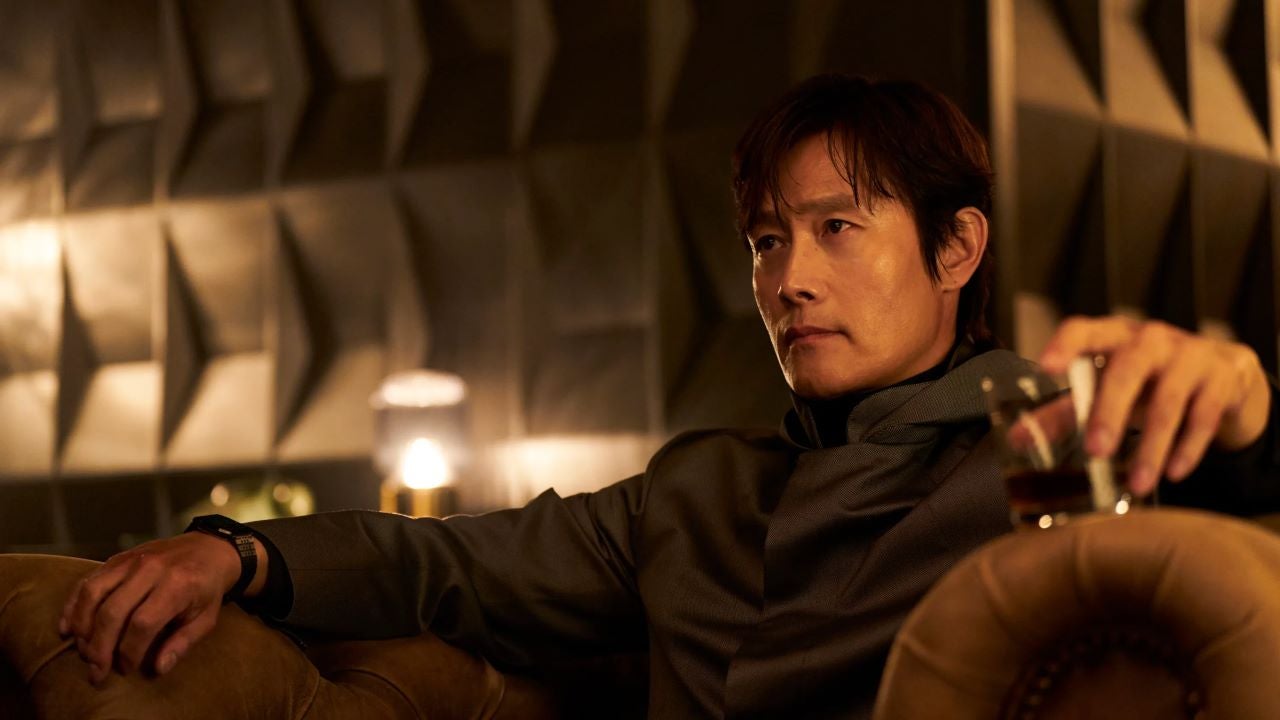
The character of the Leader, played by Lee Byung-hun, has undergone significant development throughout the series. Initially presented as a mysterious villain, the Leader transforms into a more complex figure who faces an ethical dilemma, influenced by Gi-hun, the protagonist who returns to the contest with the intention of boycotting it. This interaction leads the Leader to question his devotion to the system he oversees, suggesting a possible redemption, albeit faint.
Lee Byung-hun has shared his thoughts on the script, stating that the final scenes left him confused as they seemed so different from the general impression of the ending. As the Leader delves into his internal conflicts, new dimensions of his personality are explored, including sadness and cynicism, while the nature of the games remains dark and destructive.
The conclusion of the series raises debates about the future of the franchise, and has sparked criticism for the decision to create a spin-off. Many are wondering if this expansion will maintain the impact and original message that made ‘Squid Game’ a global phenomenon. With the promise of a new American context, there is uncertainty about how this story will unfold and whether it will manage to capture the essence that resonated with the audience.
Initially, Squid Game was created as filler for Netflix. A simple extra for September that would wrap around series like Midnight Mass, season 3 of Sex Education, or the movie Kate. However, all eyes were fixed, for months and almost permanently, on a Korean series in the Battle Royale style that had its own tone, unique setting, and practically forced viewers to binge-watch the episodes like candy. It should have ended there, in 2021. However, four years later, Netflix wants to milk the cow dry… showing that it hasn’t understood in […]
Initially, Squid Game was created as filler for Netflix. A simple extra for September that would wrap around series like Midnight Mass, season 3 of Sex Education, or the movie Kate. However, all eyes were fixed, for months and almost permanently, on a Korean series in the Battle Royale style that had its own tone, unique setting, and practically forced viewers to binge-watch the episodes like popcorn. It should have ended there, in 2021. However, four years later, Netflix wants to milk the cow dry… demonstrating that it has not understood its own series at all.
The Squid Franchise
The premise of Squid Game was simple yet powerful, and it surprised in an ultra-capitalist service like Netflix: a socio-political commentary on class struggle, to what extent the powerful are willing to play with the most humble people for their own amusement and how, individually, if you want to reach the top from nothing, you won’t do it without getting your hands dirty with blood. The result was 9 fantastic episodes that ended with a small cliffhanger just in case luck struck.
It sounded, and in what a way. The streamer soon confirmed that there would be one more season (divided into two parts) and rushed to prepare his reality show, the exact proof that he had understood absolutely nothing of the cruelty of the original script, confusing it with a macabre Humor Amarillo or a Grand Prix filled with blood. Along the way, in the reality show, they showed people who needed the money ($4.56 million, the third largest prize given in a program of this type, only behind Beast Games and Factor X), commodifying misery and becoming, probably without realizing it, everything that Squid Game criticized.
Of course, and seeing that it continued to yield dividends, they didn’t stop there and created a video game where players could compete against each other and that could be downloaded for free from the Netflix app. The latest we have heard is that the one and only David Fincher will direct the American version of Squid Game, because we need to stretch the gum as much as it can give before it breaks. The director is interesting, for sure, and I’m sure he will find a curious angle, but beyond the money… Is there no one within the company who sees why continuing with the franchise is a terrible idea?
Red franchise, green franchise
We know, because it has been said actively and passively, that there will not be a season 4 of Squid Game and that, in fact, its creator directed the last two looking for the amounts of money that he did not earn making the first one, almost reluctantly (frankly, it shows). But the viewer numbers continue to be counted in millions, so, obviously, one must dive in headfirst.
Hwang Dong-hyuk, the person who created the idea and the series itself, has also given ideas for future spin-offs, although, frankly, they don’t sound that interesting. As he stated to Entertainment Weekly, “I have the idea for a spin-off during the three years between season 1 and 2, when Gi-hun is looking for the recruiters. There are three years and maybe it could show what they were doing during that period, not in the game area, but their life outside”. The non-game of the non-squid.
It is surprising that an anti-capitalist series has been ultra-capitalized, but I suppose it is a sign of the times. A success cannot just stay there; it must be expanded in one way or another until it runs out and becomes more of a chore than anything else. What happens with a series like Stranger Things – which will happen – is the symbol of the times. But what happens with Squid Game is, directly, having a diamond in hand, making a plastic copy and trying to convince the rest of the world that it is still valuable. But it is hard not to see that, like in the story of the emperor, Netflix is naked and no one has dared to tell them.
The South Korean series ‘Squid Game’, which has become the most-watched in Netflix history, is about to take an additional step in its popularity with the announcement of a spin-off titled ‘Squid Game: America’. This project comes after the confirmation that the third season of the original series will be the last, although fans can expect more content in the same universe. Too much Squid Game? Filming for the spin-off is scheduled to begin in December 2025 in Los Angeles, with a release date that could be set between […]
The South Korean series ‘Squid Game’, which has become the most-watched in Netflix history, is about to take an additional step in its popularity with the announcement of a spin-off titled ‘Squid Game: America’. This project comes after the confirmation that the third season of the original series will be the last, although fans can expect more content in the same universe.
Too much squid game?
The filming of the spin-off is scheduled to begin in December 2025 in Los Angeles, with a release date that could be set between late 2026 and 2027. The third season of the original series has left hints suggesting the direction the new installment will take, highlighting the presence of Cate Blanchett, who made a cameo in the mother series. However, it has not yet been confirmed whether her participation will be recurring in the new project.
The renowned director David Fincher has been linked to the project, although his role as director of any episode has not been officially confirmed. Meanwhile, Dennis Kelly, known for his work on ‘Utopia’, will be responsible for writing the series, with the collaboration of producers who worked on the original series, including Hwang Dong-hyuk, the creator of ‘Squid Game’.
Additionally, Netflix has made the decision to order a second edition of ‘Squid Game: The Challenge’ even before the premiere of the first, highlighting the platform’s confidence in the franchise. Although Hwang has ruled out a fourth season, he has left the door open for the possibility of additional spin-offs within the universe he created. With all this, the interest in ‘Squid Game: America’ promises to be a phenomenon as more details about the project unfold.
The successful Netflix series, Squid Game, has reached its conclusion after three seasons, leaving an indelible mark on pop culture and sparking a debate about its impactful narrative. The South Korean production, which explores themes of social inequality and the struggle for survival, has captured the attention of global audiences since its premiere. With its ending, fans reflect on the complexities of the plot and the message that has resonated throughout the series. A similarity with which it wants to tell something One of the most interesting points that has emerged with the […]
The successful Netflix series, Squid Game, has reached its conclusion after three seasons, leaving an indelible mark on pop culture and sparking a debate about its impactful narrative. The South Korean production, which explores themes of social inequality and the struggle for survival, has captured the attention of global audiences since its premiere. With its ending, fans reflect on the complexities of the plot and the message that has resonated throughout the series.
A resemblance with a story to tell
One of the most interesting points that has emerged with the conclusion of the third season is the acknowledgment by Hwang Dong-hyuk, the creator of the series, about the similarities between the masked VIPs in Squid Game and figures from the real world, particularly Elon Musk. This comment comes in a context where the series presents wealthy and powerful characters who enjoy the suffering of others, a parallel that resonates today given Musk’s influence and status in the tech industry and beyond.
Hwang explained that, although the antagonists of the series are not directly based on Musk, his figure serves as a reflection of certain aspects of the contemporary elite that Squid Game critiques. This connection has sparked intense debate among viewers and critics, who have questioned to what extent the series is a mirror of today’s society, where the differences in power and wealth become more evident.
The conclusion of Squid Game not only marks the end of a captivating story but also invites reflection on the dynamics of power in the modern world. Fans are eager to see how the series will influence future projects in television and film, although rumors about possible spin-offs or sequels have begun to circulate, leaving the door open for more explorations of this unsettling universe.
Season 3 of ‘Squid Game’ is now available on Netflix, and many fans were hoping for a definitive resolution to this popular series. However, creator Hwang Dong-hyuk has admitted that such an ending is not part of the narrative, as otherwise our fans would be sad. In his recent statements, Dong-hyuk has emphasized his intention to keep the audience’s curiosity alive, leaving several questions unanswered. The squidverse expands It has been revealed that the ending of the Korean version of the series focuses on the sacrifice of the character played by Lee Jung-jae, […]
Season 3 of ‘Squid Game’ is now available on Netflix, and many fans were hoping for a definitive resolution to this popular series. However, creator Hwang Dong-hyuk has admitted that such an ending is not part of the narrative, as otherwise our fans would be sad. In his recent statements, Dong-hyuk has emphasized his intention to keep the audience’s curiosity alive, leaving several questions unanswered.
The squidverse expands
It has been revealed that the ending of the Korean version of the series focuses on the sacrifice of the character played by Lee Jung-jae, a twist that guarantees intense emotions and deep reflections on human nature, even in desperate contexts. Dong-hyuk has broken down these aspects in multiple interviews, revealing details about the final scene that leaves a significant mark on viewers.
In addition, there are rumors pointing to actress Cate Blanchett as a possible recruiter in the upcoming spin-off titled ‘Squid Game: America’, which is set to be filmed in Los Angeles. This new production will also feature the participation of David Fincher, which would generate high expectations among fans of the original series.
Netflix, which does not want to let its successful franchise die, has plans for a fourth season. Although it has not been officially confirmed, it is speculated that the platform has encouraged Dong-hyuk to offer a more ambitious and enriching ending to continue expanding this bloody and captivating universe.
With the narrative already unraveled and the expectations surrounding future projects, ‘Squid Game’ remains a focal point in the global entertainment sphere. Rumors, theories, and expectations will continue to fuel the conversation among fans and critics alike.