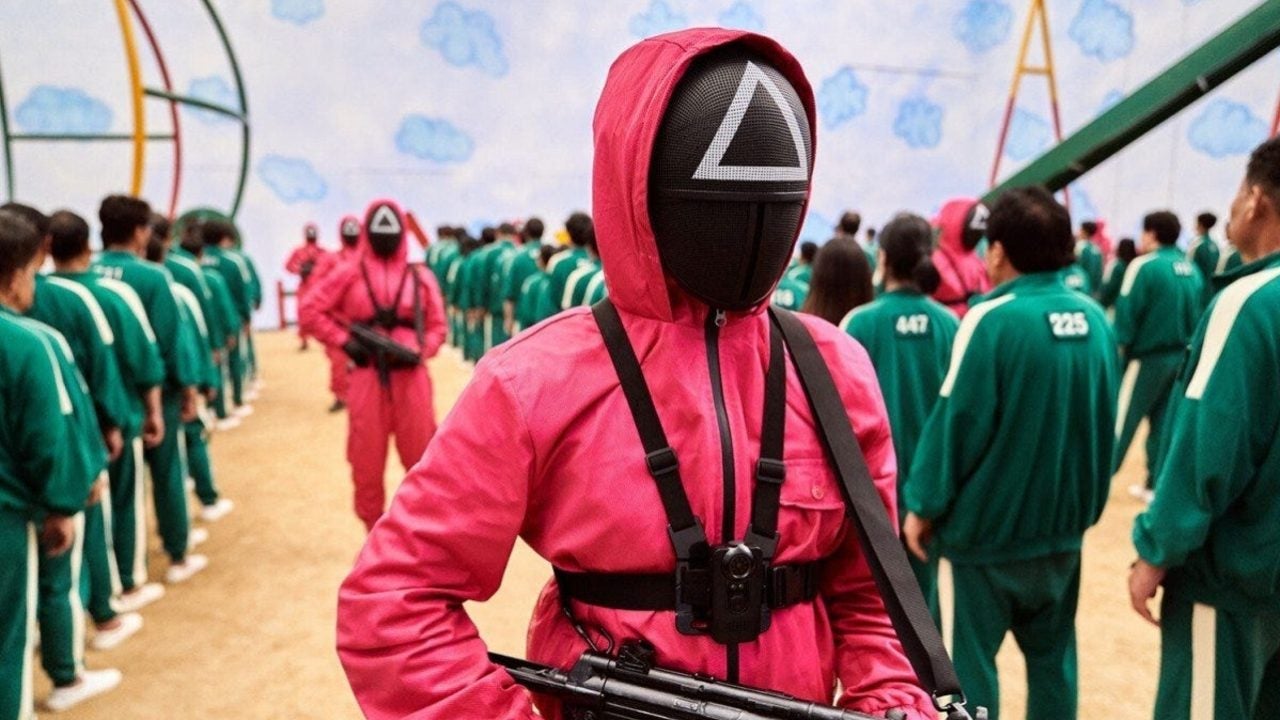
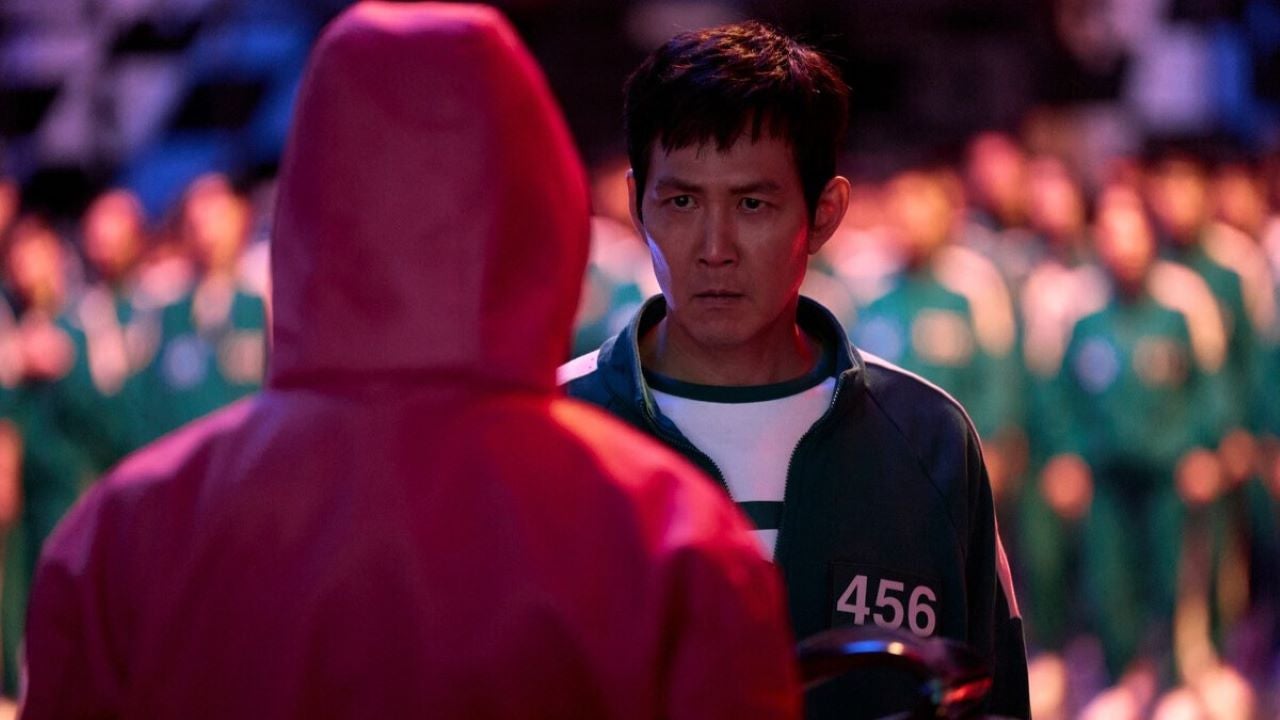
Netflix continues to expand the universe of ‘Squid Game’ with the launch of a new challenge titled ‘Squid Game: The VIP Challenge’. This format, inspired by the successful suspense series, will take a group of eight celebrities to compete in challenges that evoke the intense and dramatic narrative of the original show. The series has captured the attention of millions around the world, and this new adaptation promises to be just as captivating. A better ending for the contestants than in the series Among the confirmed VIPs participating is the famous singer Mel B, a member of the […]
Netflix continues to expand the universe of ‘Squid Game’ with the launch of a new challenge titled ‘Squid Game: The VIP Challenge’. This format, inspired by the successful suspense series, will take a group of eight celebrities to compete in challenges that evoke the intense and dramatic narrative of the original show. The series has captured the attention of millions around the world, and this new adaptation promises to be just as captivating.
A better ending for the contestants than in the series
Among the confirmed VIPs participating are the famous singer Mel B, a member of the Spice Girls, actor Dylan Efron, who gained popularity on the show ‘The Traitors’, NBA player Tristan Thompson, and Kim Zolciak-Biermann, star of ‘The Real Housewives of Atlanta’. These celebrities will set aside their luxurious lifestyles while competing for prizes, taking viewers on a journey filled with tension and surprises.
The format of the challenge resembles that of ‘Squid Game’, presenting tests of wit and endurance that challenge not only the physical ability of the participants but also their cunning. Although the exact format and specific tests have not yet been revealed, it is anticipated that each episode will feature a mix of dramatized challenges and unexpected moments that will keep the audience on the edge of their seats.
With its unique blend of entertainment and reality, ‘Squid Game: The VIP Challenge’ could become a cultural phenomenon similar to its predecessor. With a star-studded cast like this, Netflix aims to attract both fans of ‘Squid Game’ and an audience more interested in simply watching celebrities face challenges.
In a year marked by highly anticipated season finales, 2025 has established itself as a significant period for streaming series. According to data presented by Nielsen during the Artey Awards, the most popular productions were Stranger Things and Squid Game, which dominated the lists of the most-watched series on streaming platforms. The strangest game, Stranger Things, stood out as the most-watched original title, achieving an impressive 39.54 in Nielsen’s audience metrics. This performance reinforces the series’ status as a cultural phenomenon that has captured attention […]
In a year marked by highly anticipated season finales, 2025 has established itself as a significant period for streaming series. According to data presented by Nielsen during the Artey Awards, the most popular productions were Stranger Things and Squid Game, which dominated the lists of the most-watched series on streaming platforms.
The Strangest Game
Stranger Things stood out as the most-watched original title, reaching an impressive 39.54 in Nielsen’s audience metrics. This performance reinforces the series’ status as a cultural phenomenon that has captured the attention of a global audience. The handcrafted nostalgia of the 80s, combined with complex storytelling and endearing characters, has contributed to its lasting success, especially in its final round.
On the other hand, Squid Game, which was released in 2021 but maintained its relevance, also held a prominent place in the rankings. The South Korean series not only made an impact with its provocative narrative but also with its shocking twists and social critique. The continuity of its popularity demonstrates the growing interest in international productions in the digital entertainment landscape.
Nielsen’s rankings, which reflect audience and consumption trends on streaming platforms, show an evolution in viewer habits. As more content platforms emerge, the competition for audience attention intensifies. In this context, both Stranger Things and Squid Game have managed to remain relevant, establishing benchmarks in terms of viewership and audience engagement.
As 2025 progresses, the streaming industry continues to explore new narratives and ways to engage the audience, leaving fans eager about which emerging series might follow in the footsteps of these entertainment titans.
I remember perfectly the first time I heard about Squid Game: I was on vacation in Marrakech when, suddenly, all of Twitter started talking non-stop about a new Korean series. A phenomenon that hadn’t been seen on Netflix since Stranger Things and Money Heist, a craziness like few others… That, in addition, had something very much in its favor: it was a good series. Hwang Dong-hyuk, its creator, became one of the most important faces in the audiovisual industry in the country while his series accumulated viewing hours. Currently, in fact, its season 1 still holds the record […]
I remember perfectly the first time I heard about Squid Game: I was on vacation in Marrakech when suddenly, all of Twitter started talking non-stop about a new Korean series. A phenomenon that hadn’t been seen on Netflix since Stranger Things and Money Heist, a craziness like few others… That, in addition, had something very much in its favor: it was a good series. Hwang Dong-hyuk, its creator, became one of the most important faces in audiovisual media in the country while his series accumulated viewing hours. Currently, in fact, its season 1 still holds the record for non-English language series with 265 million views, and its subsequent seasons are following closely behind. But… what if it had been called something else? Would it have meant the same brutal success?
Give it another title. Worse, please
Originally, Dong-hyuk had thought of Squid Game as a movie that was born from his own misery: his whole family was constantly paying debts and continuously mortgaging themselves, and in fact, he lived in a Korean café where manga could be read. There he discovered survival-style comics and thought it could be his own life, after all: a fable of the most disgusting and overwhelming oppressive capitalism. What’s the problem? No one, absolutely no one, wanted to buy it because they found it grotesque and incomprehensible, so he left it at the bottom of the drawer until, suddenly, Netflix knocked on his door.
But of course, Netflix didn’t come empty-handed, and instead of respecting his original idea, they asked him to change it and turn it into a television series. And of course, what would you have done? Dong-hyuk added plots and characters, modified the structure, and finally had a perfect script to present to a Netflix that, despite everything, was not convinced about the idea of Squid Game: it was such a Korean title that probably no one would understand it in the rest of the world. Instead, they suggested calling it Round 6. Would it have had the same success?
Fortunately, the director insisted that his original title was its essence (and, after all, it should be seen as something total and not keep people waiting for the hypothetical sixth round) and, so that Netflix wouldn’t interfere, he proposed the entire visual campaign, showing how it helped to create curiosity among viewers. It took a while, though: when the series was originally announced on Netflix’s blog, it was done under the title Round Six.
For Minyoung Kim, a Korean executive at Netflix, stated that at that time they tended to underestimate the audience’s curiosity. “Trying to make it easy, we could have made a big mistake. I’m glad that director Hwang made us return to Squid Game, it sparks curiosity and captures the story very well.” Interestingly, the title proposed by Netflix survived… But only in Brazil! And the reason is quite curious.
It turns out that “squid” in Portuguese is “lula”, so the series would be called Jogo da Lula, which could sound like a clear reference to the president (then former president) Lula da Silva, who was going to run for election the following year. To avoid problems, they preferred that it simply be called Round 6. Even if it was apart from the rest of the world, it was also an unprecedented success, proving that perhaps what mattered was never the title, but what it was about.
Netflix has lost some of its most iconic series, such as Stranger Things and Squid Game, and currently, Wednesday stands as its main television attraction. Despite a notable drop in viewership in its second season, the series created by Alfred Gough and Miles Millar has been renewed for a third installment, which promises to delve deeper into the world of Nevermore and explore the characters more thoroughly. A season focused more on family According to the creators, Gough and Millar, the upcoming season will focus not only on character development but also on the […]
Netflix has lost some of its most iconic series, such as Stranger Things and Squid Game, and currently, Wednesday stands as its main television attraction. Despite a notable drop in viewership in its second season, the series created by Alfred Gough and Miles Millar has been renewed for a third installment, which promises to delve deeper into the world of Nevermore and explore the characters more thoroughly.
A season focused more on family
According to the creators, Gough and Millar, the upcoming season will focus not only on character development but also on the family dynamics of the Addams family. Jenna Ortega, who plays Wednesday, has expressed her desire for the relationship between her character and Morticia to be explored, suggesting that it would be enriching to see the women come together instead of being in conflict.
Although an official release date has not been announced, it is estimated that we will have to wait at least until 2027 to see the new episodes, as filming is set to begin in February 2026 in Ireland. Hunter Doohan, who is also part of the cast, confirmed that filming will last between seven and eight months, which would make an early release impossible.
Among the most exciting news is the casting of Eva Green, who will play Ophelia, Morticia’s sister. This character does not seem to have good intentions towards Wednesday, which could lead to new family conflicts. In addition, several familiar characters will return, including Jenna Ortega, Catherine Zeta-Jones, and Luis Guzmán, among others.
For the moment, the only promotional material available is a poster for season 3 released along with the confirmation of its renewal. As time goes by, more details about the plot and the cast are expected to be revealed, which will keep fans on the edge of their seats.
Hwang Dong-hyuk, known for being the creator of the acclaimed series Squid Game, is taking a new step in his career by launching an original series for Netflix titled The Dealer. This series, commissioned by the streaming platform and produced under Dong-hyuk’s Firstman Studio, promises to take viewers into a world full of drama and crime. A series based on gambling and life at stake, The Dealer focuses on the life of Geonhwa, a brilliant casino dealer whose life takes an unexpected turn when her wedding plans […]
Hwang Dong-hyuk, known for being the creator of the acclaimed series Squid Game, is taking a new step in his career by launching an original series for Netflix titled The Dealer. This series, commissioned by the streaming platform and produced under Dong-hyuk’s Firstman Studio, promises to take viewers into a world full of drama and crime.
A series based on gambling and life at stake
The Dealer focuses on the life of Geonhwa, a brilliant casino dealer whose life takes an unexpected turn when her wedding plans fall apart. This drastic change forces her to unleash a series of events that will lead her to confront a dangerous and competitive environment. Through this narrative, Dong-hyuk will bring his distinctive approach to exploring human struggles and moral dilemmas, themes that resonated deeply in his previous work, Squid Game.
The production of The Dealer presents a new opportunity for Dong-hyuk to explore Korean culture and the world of gambling, offering a unique look at the skills and challenges faced by those operating in this environment. Moreover, the series aims to capture the interest not only of Dong-hyuk’s followers but also of a global audience that has grown significantly after the overwhelming success of his previous work.
The Dealer is expected to bring an exciting mix of action and emotional tension, characteristics that have become synonymous with Dong-hyuk’s style. Although more details about the cast and release date are still unknown, the series has undoubtedly begun to generate expectations among film and television lovers. In this regard, it is rumored that the series could offer unexpected twists that will keep viewers on the edge of their seats.
After the acclaimed series ‘Squid Game’, Hwang Dong-hyuk returns to Netflix with his new project titled ‘The Dealer’, a series that explores the world of gambling and real estate fraud. Netflix has greenlit this exciting project, which promises intriguing character development and plots, features that have brought Dong-hyuk to worldwide fame. It is very difficult to surpass the success of his previous series ‘The Dealer’ follows the story of Geonhwa, a skilled casino dealer whose marriage plans are thwarted after becoming a victim of a fraudulent real estate scheme. […]
After the acclaimed series ‘Squid Game’, Hwang Dong-hyuk returns to Netflix with his new project titled ‘The Dealer’, a series that explores the world of gambling and real estate fraud. Netflix has greenlit this exciting project, which promises an intriguing development of characters and plots, features that have brought Dong-hyuk to worldwide fame.
Very complicated to surpass the success of his previous series
‘The Dealer’ follows the story of Geonhwa, a skilled casino dealer whose marriage plans are thwarted after she becomes a victim of a fraudulent real estate scheme. The narrative offers a glimpse into how Geonhwa, forced to return to a universe she had tried to escape, uses her hidden skills to regain control of her life in an increasingly dangerous environment. This tale of redemption and skill is presented with a fresh perspective, written by screenwriters Ohnooy and Lee Tae-young.
In the main role of Geonhwa, we find Jung So-min, who is surrounded by a talented cast that includes Ryoo Seung-bum, Lee Soo-hyuk, and Ryu Kyung-soo.
Additionally, ‘The Dealer’ marks the directorial debut of Choi Young-hwan, a renowned cinematographer who has worked on successful productions such as ‘The Great Heist’ and ‘Escape to Mogadishu’. Although there is speculation about the possible involvement of Dong-hyuk as a director in some episodes, Netflix has not confirmed this information.
For now, we must wait for more details about the release date of ‘The Dealer’, which has not yet been announced by the streaming platform. In the meantime, anticipation grows to see how Dong-hyuk’s vision translates into this new project.
The new season of Stranger Things, which has arrived on Netflix with great anticipation, has achieved 59.6 million views in its first five days of release, making it the best historical debut for an English-language series on the platform. This success coincides with the Thanksgiving weekend in the United States, a time that usually sees an increase in content consumption. The Squid Game surpasses it Despite this impressive debut, Stranger Things 5 has fallen just 500,000 views short of breaking the record of the South Korean phenomenon […]
The new season of Stranger Things, which has arrived on Netflix with great anticipation, has achieved 59.6 million views in its first five days of release, making it the best historical premiere for an English-language series on the platform. This success coincides with the Thanksgiving weekend in the United States, a time that typically sees an increase in content consumption.
The Squid Game surpasses it
Despite this impressive debut, Stranger Things 5 has fallen just 500,000 views short of breaking the record set by the South Korean phenomenon Squid Game, which reached 60.1 million views in just three days. Similarly, season 2 of ‘Squid Game’ surpasses the fifth installment of Stranger Things with 68 million views in four days. However, it is important to highlight that the Duffer brothers’ series has managed to surpass its own previous production, the fourth season, which had 22 million views in its first three days.
With the excitement still palpable, fans of the series have much to look forward to, as four episodes are still set to premiere, which will be released between December 25 and the end of the year. This additional release could significantly contribute to increasing the total audience and solidifying its place in the historical top 10 of Netflix.
According to projections, if the promotion remains strong and interest continues, Stranger Things 5 could challenge existing records, including the unbreakable record of 265.2 million views of the first season of Squid Game. The only question left to answer is: what is the limit of this phenomenon that has conquered millions?
The second season of Squid Game: The Challenge will premiere on November 4 on Netflix, and it promises to be more intense than ever. This time, 456 new contestants will enter the competition, facing challenges that will require their utmost capacity in strategy, alliance formation, and endurance. Red light, green light With a monumental prize of 4.56 million dollars at stake, participants will not only test their physical and mental skills but will also have to be clever in their approach. The plot reveals a fundamental twist in the dynamics of the game: contestants will compete […]
The second season of Squid Game: The Challenge will premiere on November 4 on Netflix, and it promises to be more intense than ever. This time, 456 new contestants will enter the competition, facing challenges that will require their utmost ability in strategy, alliance formation, and endurance.
Red light, green light
With a monumental prize of 4.56 million dollars at stake, participants will not only test their physical and mental skills but will also have to be clever in their approach. The plot reveals a fundamental twist in the dynamics of the game: contestants will compete for themselves and not based on friendship. This individual approach suggests an environment of intense competition where alliances may be fleeting and betrayal a key factor.
The central premise of Squid Game: The Challenge reflects an evolution from the first installment, where emotional ties may have influenced the players’ decisions. This time, contestants will have to prioritize their own interests, which could lead to a more adversarial game and, likely, a more exciting experience for the audience. The clear message in the latest trailer resonates with the moral ambiguity that characterizes the saga: survival driven by radical competition.
As the release date approaches, anticipation intensifies among fans of the production. The elements of strategy and excitement continue to be fundamental pillars of the series, promising that the second season will be a television event not to be missed. With its renewed focus and the magnitude of the prize, Squid Game: The Challenge is shaping up to be a show that will captivate both new viewers and fans of the original series.
Hwang Dong-hyuk, the creator of the acclaimed series Squid Game, has made a significant investment of 3 million dollars through his studio Firstman Studio in TwelveLabs, a technology company focused on entertainment. This startup, co-founded by Jae Lee and Soyoung Lee, is located in San Francisco and aims to revolutionize the way video metadata is managed in the industry. TwelveLabs’ AI game has positioned itself as a key ally for studios, creators, and streaming platforms by offering an innovative system that allows for indexing and enriching metadata […]
Hwang Dong-hyuk, the creator of the acclaimed series Squid Game, has made a significant investment of 3 million dollars through his studio Firstman Studio in TwelveLabs, a technology company focused on entertainment. This startup, co-founded by Jae Lee and Soyoung Lee, is located in San Francisco and aims to revolutionize the way video metadata is managed in the industry.
The AI Game
TwelveLabs has positioned itself as a key ally for studios, creators, and streaming platforms by offering an innovative system that allows for indexing and enriching video metadata at the scene level. This feature is crucial for editors and content creators, as it optimizes the search and retrieval of specific clips, thereby improving efficiency in video editing and production.
With the growing interest in the use of artificial intelligence in the production and distribution of audiovisual content, Hwang Dong-hyuk’s investment highlights an emerging trend where content creators are seeking technological solutions that facilitate their work and enhance their creativity. TwelveLabs’ partnership with various industry players suggests that the company is well-positioned to become a significant player in the future of digital entertainment.
Hwang, known for his innovative approach and impactful narratives, seems to be exploring how technology can complement his creative vision, which could lead to new storytelling formats and interactive experiences for the audience. As artificial intelligence continues to evolve, the role of investments like this could be crucial for the transformation of the media landscape.
The premium video on demand streaming sector in South Korea has experienced a remarkable boom, reaching revenues of $1.1 billion during the first half of 2025. This growth reflects the increasing popularity of streaming platforms in an increasingly competitive market, posing constant challenges and innovations for content providers. The game of watching (it all) According to the report by the research firm ampd, which is owned by Media Partners Asia, the number of subscribers in this segment reached 24.5 million, showing an increase of 1.5 million in six […]
The premium video on demand sector in South Korea has experienced a remarkable boom, reaching revenues of $1.1 billion during the first half of 2025. This growth reflects the growing popularity of streaming platforms in an increasingly competitive market, posing constant challenges and innovations for content providers.
The game of seeing(it all)
According to the report by the research firm ampd, which is owned by Media Partners Asia, the number of subscribers in this segment reached 24.5 million, showing an increase of 1.5 million in six months. This trend indicates a rise in the adoption of paid services, suggesting that consumers are willing to invest in quality content, despite the variety of free options available.
The growth in the subscriber base can also be attributed to the strategy of major platforms, which have intensified their efforts in exclusive and local content, in addition to expanding their libraries. Popular series and original productions have proven to be especially appealing to viewers, consolidating their preference for streaming offerings over traditional television.
As the months go by, the sector is expected to continue evolving, driven by technological innovation and changes in consumption habits. The competition among the various market players will remain intense, which could lead to further news about mergers, acquisitions, and new strategic alliances. According to some rumors, these competitive dynamics could reshape the landscape of streaming platforms in South Korea, but for now, the data reveals a booming industry.