NASA can’t believe it: a galaxy without stars.

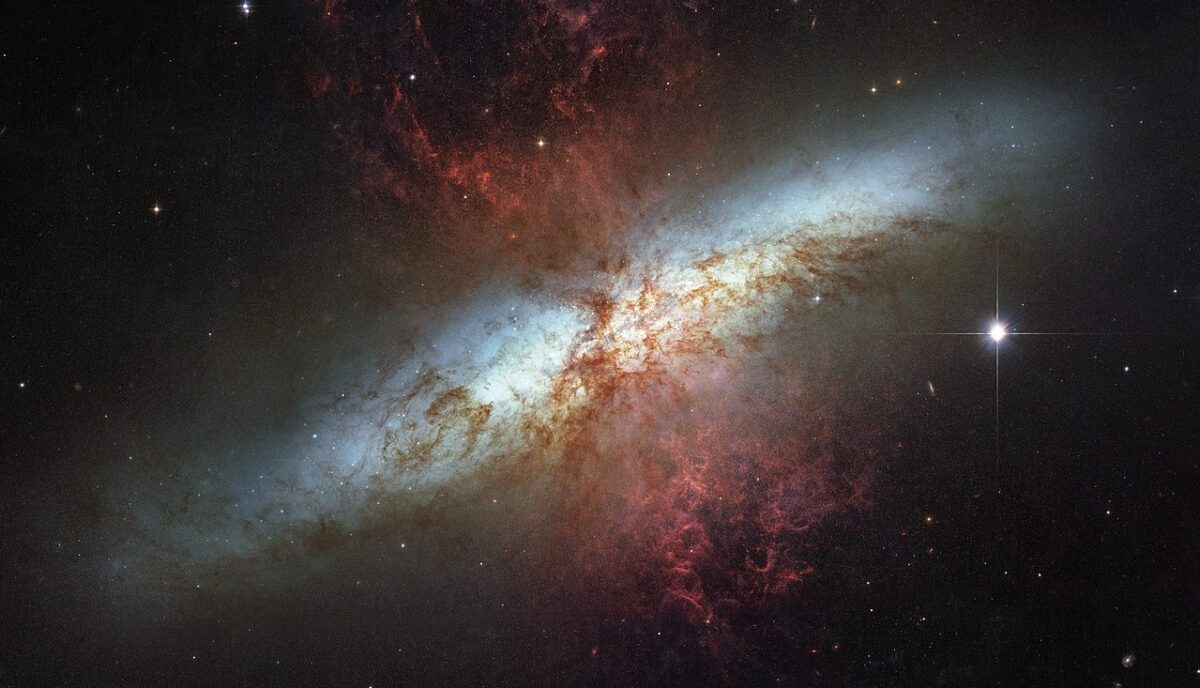
Astronomers have accidentally discovered an entire galaxy that appears to have a lot of gas but no visible stars. How is that possible?

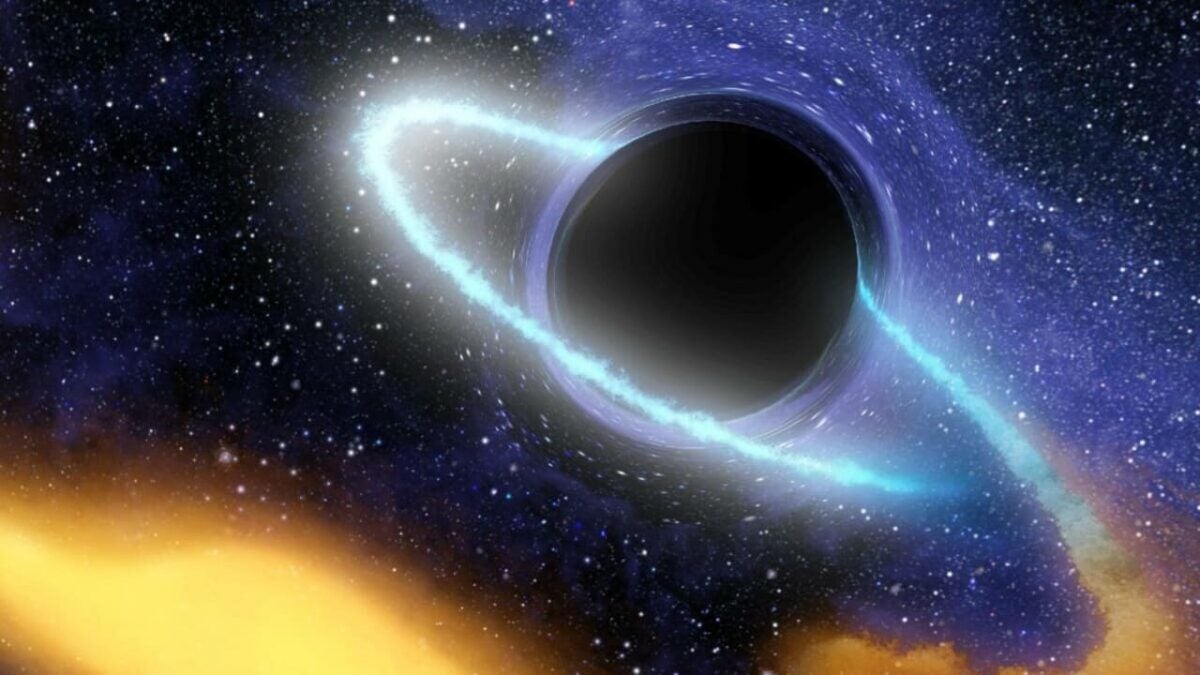
The unsettling empty object, called J0613+52, is located 270 million light-years away and, at the very least, appears to be a low surface brightness galaxy (LSB). By the way, did you know that galaxies are more eco-friendly than you?

NASA App DOWNLOAD

As its name suggests, a LSB is much less bright than other bright objects that populate the night sky because the gases it contains are so scattered that few stars are formed.

This discovery could provide a rare, possibly never-before-seen insight that challenges our understanding of how stars and galaxies form.

A puzzling discovery

However, this classification maintains that a galaxy of this type would have at least some stars, and J0613+52, with apparently none, could be something even rarer and elusive: a dark and primordial galaxy.

“This could be our first discovery of a nearby galaxy formed by primordial gas,” says Karen O’Neil, a scientist at the Green Bank Observatory, in a statement about the research.

O’Neil and his team stumbled upon the object thanks to a fortuitous error made while studying the LSBs. Basically, they realized that there was a discrepancy in the data between two telescopes they were using, which led them to double-check where they were looking.

“The [Green Bank Telescope] was accidentally pointing to the wrong coordinates and found this object,” said O’Neil.

They not only discovered that the galaxy lacked stars despite being rich in gas – they believe it contains between one and two billion solar masses of hydrogen – but it was also extremely isolated.

“It is too far away from other galaxies for them to contribute to triggering star formation through any encounter,” explained O’Neil. “J0613+52 appears to be undisturbed and underdeveloped.”

That last part, the “unaltered and underdeveloped” one, is key. It suggests that, throughout the billions of years of its existence, the “dark” galaxy has remained stable to an unprecedented degree, without significant gravitational interactions that would cause the clustering of gas to form stars, and without nearby galaxies interfering with its almost perfect balance.

In other words, it is an incredibly well-preserved relic from the early years of the cosmos, so perfect that it almost defies comprehension.

NASA App DOWNLOAD

Future observations will have to confirm these findings. As Big Think points out, astronomers will be looking for heavy metals that indicate the presence of stars.

If none is found, it will be strong evidence in favor of J0613+52 being the dark galaxy that has eluded detection for so long.
The reign of SpaceX… in danger: goal to conquer the stars

With Vulcan, ULA seeks a larger share of the commercial market. It has already sold more than 70 Vulcan launches, including 38 to Amazon…

For the past decade, space matters seem to be exclusive to SpaceX, Elon Musk’s rocket company, and NASA itself. But nothing could be further from the truth in 2024: there is a lot of competition and it is coming on strong.

NASA App DOWNLOAD

A new American rocket took off on Monday from a launch pad in Cape Canaveral (Florida) and, for the first time in over 50 years, an American spacecraft will head towards the surface of the Moon.

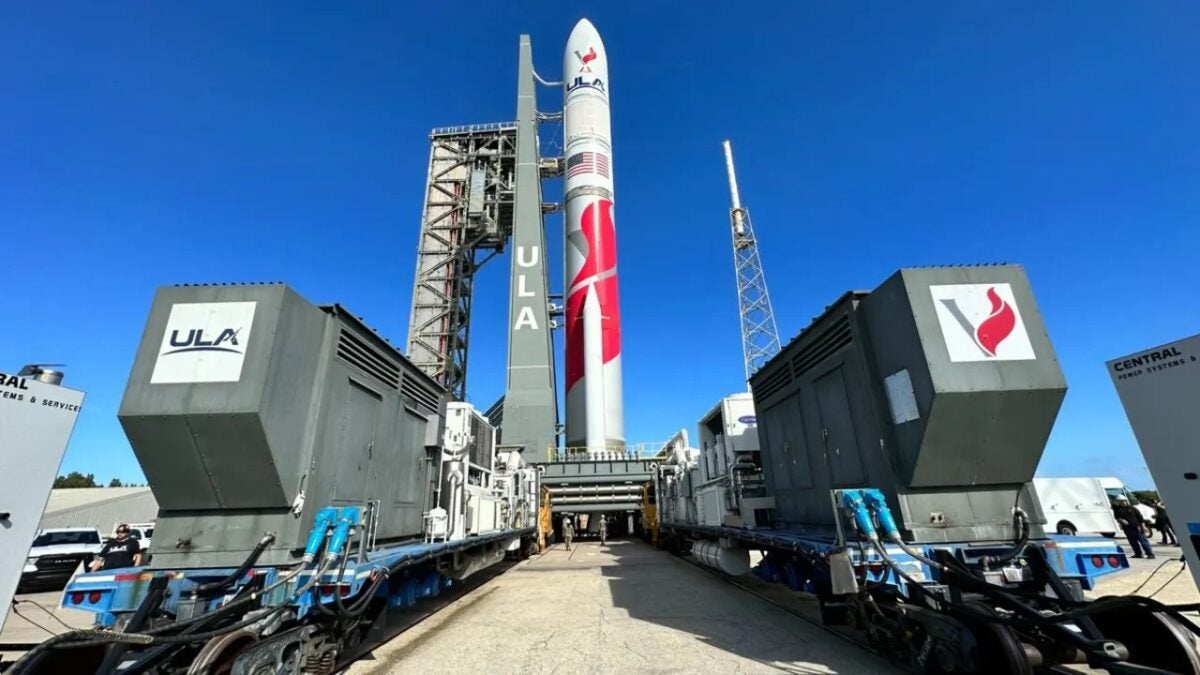
The rocket is called Vulcan and was built by the company United Launch Alliance. This is what you need to know about its first flight, a flight that challenges SpaceX’s supremacy.

What is the lunar mission heading to orbit about?

Astrobotic Technology, from Pittsburgh, will send Peregrine, a robotic spacecraft that will land on Sinus Viscositatis, an enigmatic region on the far side of the Moon.

NASA will pay Astrobotic $108 million to carry five experiments as part of the agency’s Commercial Lunar Payload Services (CLPS) program. The goal of the program is to reduce the cost of sending objects to the lunar surface.

What is the Vulcan rocket and why is it important?

The Vulcan rocket, built by United Launch Alliance, a joint venture of Boeing and Lockheed Martin, will replace the company’s two current rockets, the Atlas V and the Delta IV.

Since its creation in 2006, the main activity of United Launch Alliance has been the launch of high-secret military payloads for the United States Government. Their rockets were expensive – too expensive for most commercial customers – but very reliable.

With Vulcan, ULA seeks a greater share of the commercial market. It has already sold more than 70 Vulcan launches, including 38 to Amazon while building the Kuiper Project, a constellation of internet communication satellites.

The United States Space Force would like to see two successful launches of Vulcan before putting any of their payloads on board. Monday’s launch is the first certification launch.

NASA App DOWNLOAD

The second one could take place in April. In it, Dream Chaser, an unmanned spacecraft built by Sierra Space from Louisville (Colorado), would be launched on a cargo delivery mission to the International Space Station.

If these flights are successful, four more Vulcan launches this year would put payloads into orbit for the Space Force.

Halley’s comet returns to Earth

Around 1705, the British scientist Edmond Halley observed three comets with surprisingly similar orbits, seen in 1531, 1607, and 1682.

For many, Halley’s comet is like that older aunt who comes to visit us once in a lifetime. You have affection for her, despite not seeing her in decades. For humanity, Halley’s comet is a magical phenomenon that has accompanied us since we populated the Earth.

NASA App DOWNLOAD

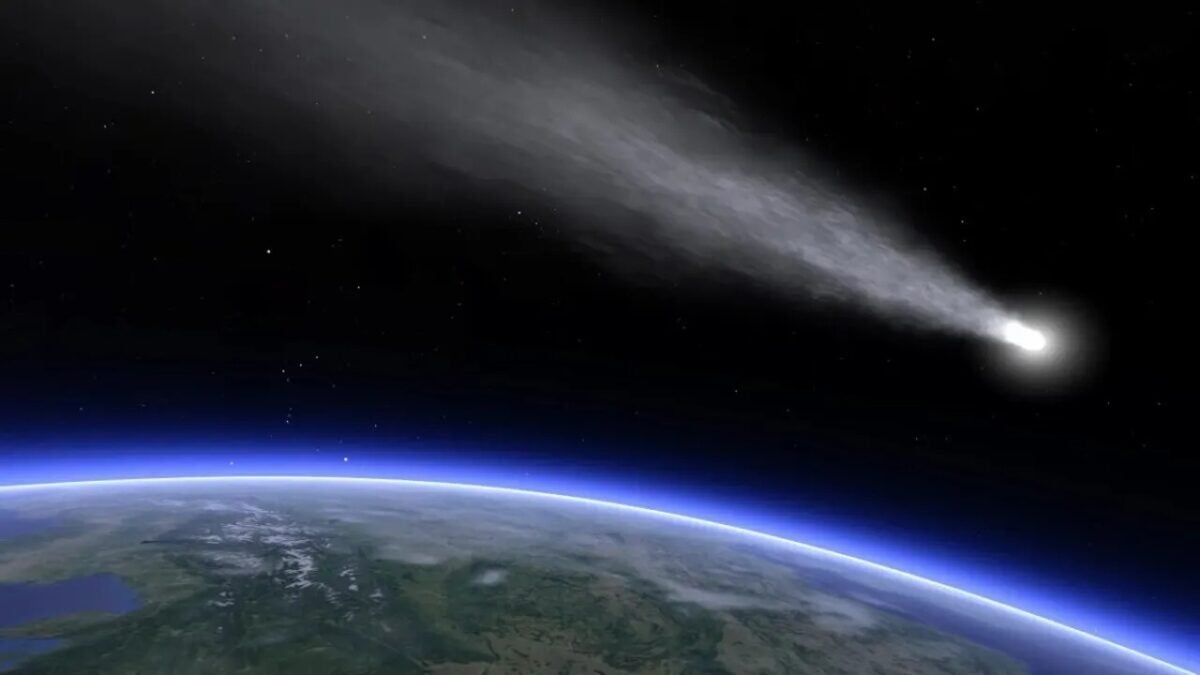
One of the most famous comets is heading back to Earth. On December 9, 2023, Halley’s comet reached its aphelion – its farthest point from the Sun – and turned towards our planet for its next appearance in the 2060s.

And if you’re worried that the comet will crash into us, there’s nothing to worry about, there are no options. It’s not even close to colliding with Earth.

History and Fun Facts about Halley’s Comet

Like all the comets we know, it is made of dusty ice, part of which burns to create a majestic tail as the body approaches the Sun.

Currently, the comet is located further than Neptune, at just over 5.000 billion kilometers from the Sun, so far away that it is out of sight even from our largest telescopes, and it has been like this since 2003. Halley’s comet will pass by our planet again on July 29, 2061, coinciding with its 76-year cycle.

So, why is there so much talk about this space rock, among the millions that exist in the solar system, and why has it fascinated humans so intensely throughout history?

In reality, people have been observing it for generations, with sightings recorded since 240 BC. For most of human history, we didn’t know what to call this mysterious visitor from outer space.

As expected, something so unknown and unpredictable (at that time) was greatly feared and considered a bad omen or the omen of a disruptive change. The comet supposedly announced the defeat of Attila the Hun in 451 and the widespread conquest of the Ottoman Empire in 1456.

Genghis Khan even took the comet as a sign to lead his armies in 1222, dramatically expanding his territory and fathering many children along the way, so many, in fact, that 1 in every 200 men may be his descendant.

Around 1705, the British scientist Edmond Halley observed three comets with surprisingly similar orbits, seen in 1531, 1607, and 1682. He came to the conclusion that they were actually the same comet, which passed by every 76 years, and predicted that it would appear in 1758.

Although he did not live to see it, his prediction came true, changing our perspective of the cosmos. Despite the identification and explanation of the comet as a regular part of the cosmos, the appearance of Halley in 1910 caused widespread panic.

NASA App DOWNLOAD

An astronomer pointed out that the Earth would encounter the gaseous tail of the comet, filled with toxic cyanogen gas.

In the 2060s, there probably won’t be panic about this comet. For most of us, it will undoubtedly be a cosmic event that happens once in a lifetime (or twice, if you’re lucky) and is worth appreciating.

This probe has been taking the temperature of the sun for 30 years

As long as we can maintain orientation towards the Sun, everything is fine. But if there is a mishap and we lose orientation, something bad could happen…

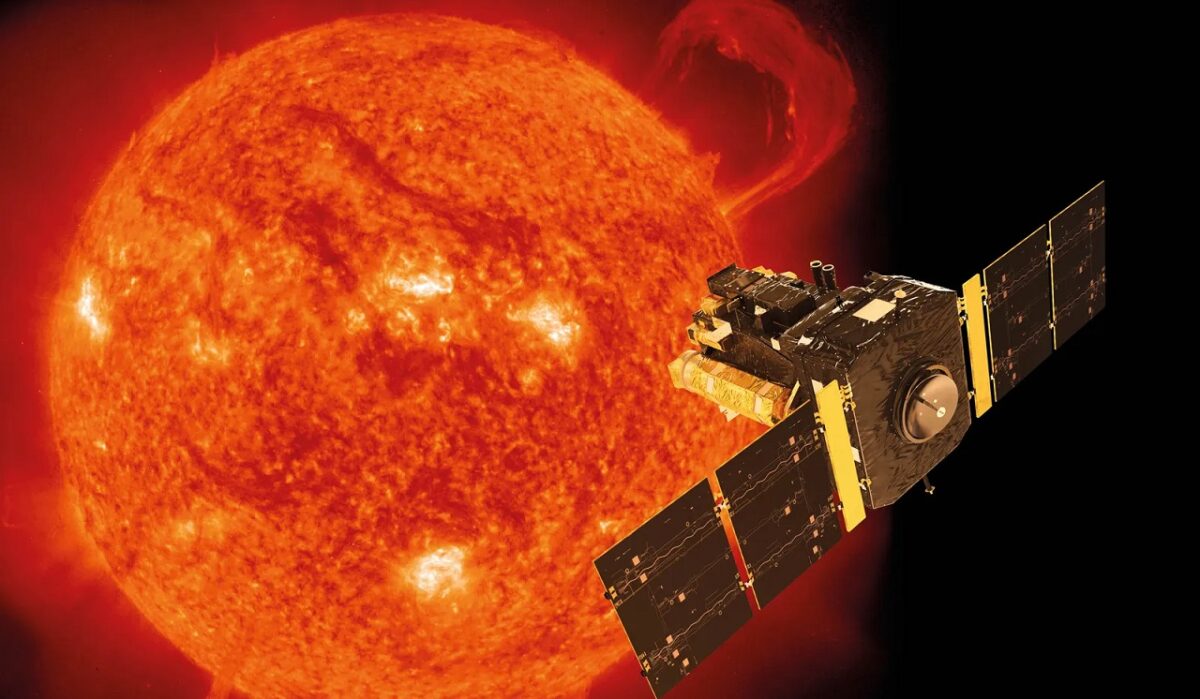
SOHO, a joint mission of ESA and NASA, continues to operate after almost thirty years since its launch as an essential part of the space infrastructure. It is one of our key weather tools.

NASA App DOWNLOAD

The director of the SOHO mission, Luis Sánchez Duarte, describes the spacecraft as something far from perfect or innovative, as it has been dedicated to the study of the Sun for three decades.

“It has its peculiarities,” explained to the media The Register. “Today it has some weak points. For example, the battery. As long as we can maintain orientation towards the Sun, everything is fine. But if there is an accident and we lose orientation, something bad can happen.”

A probe that plays with death… and with science

That being said, aside from some downgrades and a few near-death experiences, the spaceship continues to function admirably.

“SOHO has gone from being the spearhead of physical research to being a surveillance tool,” says Sánchez. Its main application is space weather prediction, which is what keeps the spacecraft operational.

The National Oceanic and Atmospheric Administration (NOAA) of the United States uses SOHO data to monitor solar activity. “The main operational requirement we have is to have LASCO data in a more or less continuous manner, with gaps not exceeding four hours”.

From this data, predictions can be made and alerts can be issued. Although monitoring space weather was not the main objective when SOHO was launched in the 90s, the spacecraft’s data on solar phenomena have kept it operational and will keep it in flight until a replacement is finally launched.

There is a real fleet of spacecraft observing the Sun. NASA’s Solar Dynamics Observatory (SDO) was launched in 2010, the agency’s Parker Solar Probe flew through the Sun’s corona in 2021, and Sánchez’s Solar Orbiter was launched in 2020.

However, in the absence of a spacecraft capable of doing what SOHO can do, it persists. SOHO orbits slowly around the Lagrange point L1, from where it monitors solar eruptions, etc. Although there are other spacecraft in the region, LASCO is what makes SOHO unique.

The NOAA has plans for another spacecraft – the Space Weather Follow On Lagrange 1 (SWFO-L1) mission – which will also feature a Coronagraph, but according to Sánchez, it is unlikely to be launched before May 2025.

SOHO is in the fortunate position of having enough fuel for decades. It only uses its propulsion for momentum management, which happens approximately once every three months.

However, even though the fuel levels may be fine, Sánchez is concerned about the condition of the solar panels. The rate of degradation of the energy produced decreases by slightly less than 1% per year. Initially, this degradation was not worrisome, however, the spacecraft has exceeded all reasonable expectations of lifespan.

NASA App DOWNLOAD

At some point, SOHO will not have enough power to keep its instruments running, although current predictions indicate that this point will occur in the next decade.

As a reminder, the expected lifespan of SOHO was two years, with enough consumables on board for another four years. Engineers have managed to extend it to 28 years.

Elon Musk's great enemy is the sun: he has lost more than 200 satellites in just two months

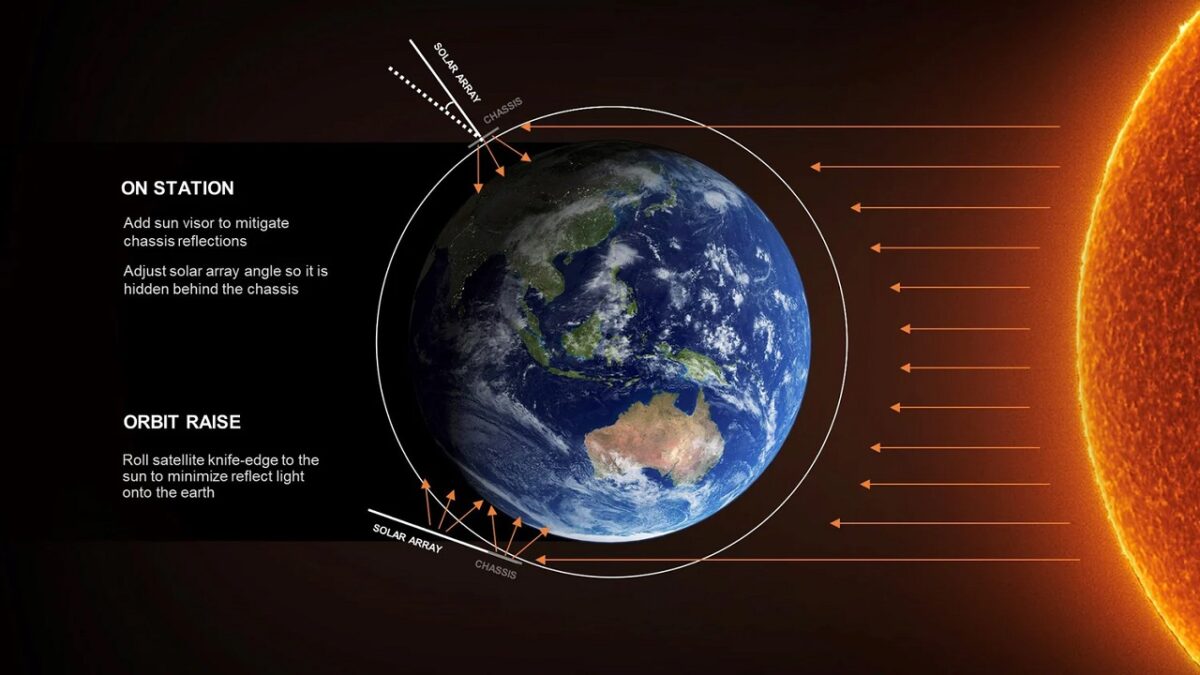
As of July 15, 353 Starlink satellites had burned up in the atmosphere, and this number increased by more than 200, to 568 satellites, in the latest readings.

Elon Musk has many companies. One of them is called Starlink and its goal is to fill the sky with satellites that provide internet to the citizens of the world. Along the way he is leaving a low orbit of space junk, but that’s another topic.

starlink DOWNLOAD

Let’s get down to business, SpaceX’s Starlink constellation of internet satellites has lost more than two hundred satellites in low Earth orbit (LEO) since July, according to data from a satellite tracking website.

This is the first time Starlink has lost a significant number of satellites in a short period of time, and these losses are usually influenced by solar flares that cause orbit changes and damage or destroy the spacecraft.

The nature of the satellites, i.e. their model, is unclear, and if they are the newer Starlink satellites that SpaceX regularly launches, the company will have to perform at least nine Falcon 9 launches to make up for the lost satellites.

The largest constellation of satellites on our planet

Since being a subsidiary of SpaceX, Starlink has rapidly built the world’s largest constellation of LEO Internet satellites and the world’s largest constellation of satellites by rapidly launching them via the Falcon 9 rocket.

However, satellite upgrades and Falcon 9 limitations have reduced the number of satellites the company can launch. Recent launches have launched about 22 satellites per liftoff, down nearly a third from the 60 satellites SpaceX was launching during the early days of Starlink.

The new satellites are second-generation satellites and SpaceX received launch authorization from the FCC less than a year ago. They are more powerful and therefore larger and heavier than the previous ones, limiting the Falcon 9’s ability to accommodate a large number of satellites in a single payload fairing.

The dangers facing the space fleet

Satellites in orbit or in space have to face various hazards that can damage them or put them out of service. SpaceX faced one of them in February 2022, when a solar flare damaged at least 40 of the satellites.

SpaceX confirmed that the heat from the solar flare increased the atmospheric density and prevented the satellites from maintaining their trajectory.

However, the company may have to accelerate its launches if the data from the satellite tracking website satellitemap.space is accurate. This website records the total number of Starlink satellites launched, the number of operational satellites, inactive satellites and burned satellites.

It shows that, as of July 15, 353 Starlink satellites had burned up in the atmosphere, and this number increased by more than 200, to 568 satellites, in the latest readings.

By way of comparison, only 248 satellites had burned earlier this year, so the number destroyed in the last two months is higher than in the first seven months of the year.

A few weeks after the Starlink satellites fell victim to a solar flare, SpaceX shared in considerable detail the measures it takes to ensure the sustainability of the satellites.

He noted that the satellites have functions such as “ducking,” which allows them to retract solar panels in the event of a collision. SpaceX added that the satellites’ low orbit reduces their chances of contaminating the Earth’s orbit, as they burn up in the atmosphere rather than just orbiting the Earth for years before losing altitude due to gravity.

SpaceX regularly submits updates on the health of its constellation to the FCC, but does so semi-annually, so it is unlikely that data from satellites that have burned up since July will be available soon.

Its soon-to-be rival Kuiper, a subsidiary of Amazon, wants to launch its experimental satellites soon, hence Elon Musk wants to make sure he has the first satellite internet position by 2030, just at the beginning of a new decade.

starlink DOWNLOAD

Scientific Marvel: Black Holes’ Astonishing Travel Speed Leaves Experts Stunned

The world of physics has just discovered something truly incredible: black holes travel much faster than previously thought: so much so that our beliefs…

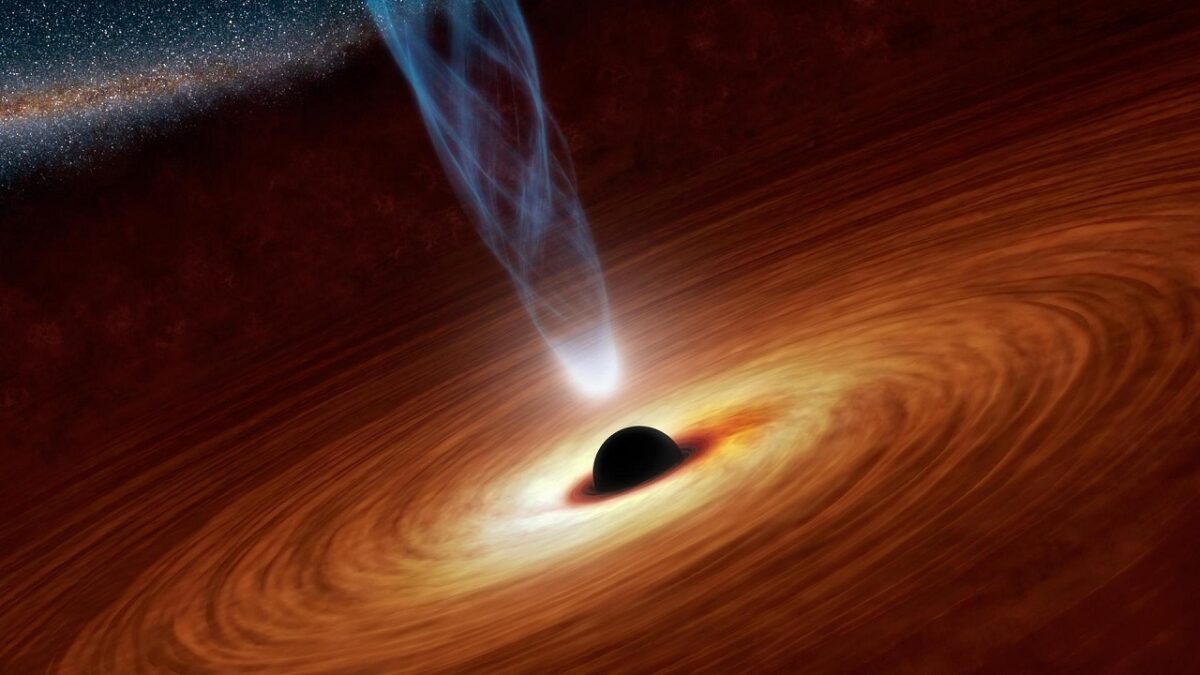
Black holes could be hurtling through the Universe at astonishing speeds: almost 10% of the speed of light. This is totally fascinating and novel for our physicists.

NASA App DOWNLOAD

According to simulations of collisions between these extreme objects, this is the maximum speed that black holes can reach after an energetic collision. Here is everything you need to know about black holes to understand the article.

This is a much higher velocity than previous calculations, suggesting that although we still have much to learn about how black holes collide, we are getting closer and closer to understanding these violent events and their aftermath.

“We have been able to provide an accurate estimate of the final recoil resulting from the high-energy collision of two black holes. Extrapolation to extreme spins has led us to estimate the value below 10 percent of the speed of light,” write researchers James Healy and Carlos Lousto of the Rochester Institute of Technology.

How a black hole can go almost as fast as light

When two black holes merge, the final product does not necessarily end up sitting in the original galactic orbital position like the binary. The collision, depending on its energy, may produce a recoil that “propels” the final black hole – the product of the original two – into a new trajectory and velocity.

This occurs when the gravitational energy is unevenly distributed and more is emitted in one direction, as a result of unequal masses, spins or both in the black hole pair before merger.

Previous estimates placed the maximum speed that this effect could reach at about 5,000 kilometers per second with respect to its point of origin.

To date, a high-speed black hole has been detected that scientists believe was the product of a recoil kick. It travels at about 1,542 kilometers per second. But defining the limitations of the process may help astronomers figure out how often it occurs.

This is crucial information for black hole science. For example, we have detected black holes that are more massive than theory suggests they should be.

A high number of moving black holes after a collision could explain this. A higher number of moving black holes increases the chances of collision, which could result in black holes more massive than the mass limit of the collapsed core.

Healy and Lousto used a supercomputer to perform 1,381 full numerical simulations of collisions between two black holes of equal mass with opposite spins pointing along their orbital plane.

This is how they obtained their maximum speed: 28,562 kilometers per second. That is, more than 100 million kilometers per hour. The escape velocity for an object speeding through the Milky Way from the solar neighborhood is 497 kilometers per second.

The fastest object ever built by humans is the Parker Solar Probe, which reached 163 kilometers per second in 2021.

Fortunately, the exact scenario used by the researchers is quite unlikely to occur; but discovering the extreme limitations sets the stage for future studies.

A study a few years ago found that there could be hundreds of black holes pushed by a recoil kick whizzing around the Milky Way even as you read these words.

If they travel a little slower, the idea seems a little less intimidating. Luckily for everyone, they’re not likely to crash into us, so you can go about your normal life and go shopping for bread this morning.

NASA App DOWNLOAD

Some of the links added in the article are part of affiliate campaigns and may represent benefits for Softonic.

Astonishing Observations: James Webb Telescope’s Startling Encounter with Dark Stars

Dark stars would be much larger than normal stars, would have the mass of 10 million suns and emit the brightness of 10,000…

The James Webb Space Telescope has already made some astonishing discoveries in its first year of scientific operations, but if confirmed, there is one discovery that would be the most significant of all time.

NASA App DOWNLOAD

A team of astrophysicists proposes that three bright objects detected by Webb in the distant universe could be the first candidates for “dark stars,” hypothetical celestial objects fueled by the annihilation of dark matter.

The unprecedented power of the James Webb allows astronomers to look further into space and further back in time than any previous telescope, but in doing so, it continues to discover things that disrupt our understanding of the cosmos.

A mass of 10 million suns and the brightness of 10,000

In a new study, astrophysicists propose an alternative: perhaps some of the objects we see in the early universe are not galaxies, but “dark stars.”

More than an oxymoron or a cult science fiction film from the 70s, a dark star is a hypothetical object that does not shine through nuclear fusion like regular stars, but generates heat from dark matter particles annihilating each other at its core.

If they exist, dark stars would be much larger than normal stars, with the mass of 10 million suns, and would emit the brightness of 10 billion suns, though not in visible light but in infrared.

They would also be 10,000 times wider, which means that if the Sun were a dark star, it would fill the entire solar system, with its outer surface located somewhere near the orbit of Pluto.

Models suggest that dark stars should be possible in the early universe, and in fact, they could help explain the mystery of why there seem to be so many large galaxies in the early universe.

Once the “fuel” of dark matter in their cores is depleted, the regular matter that makes up the majority of the star collapses into a black hole, which could potentially serve as the seed for supermassive black holes.

This could accelerate the process of galaxy formation. Other “too early” galaxies could simply be dark stars, as they would appear similar from this distance.

Of course, as fascinating as the idea is, this study is extremely speculative. Not only do we not know if dark stars exist, but we also don’t know if there is dark matter to power them.

Even in that case, dark matter would have to exist in a specific form among several proposed forms it could take. Occam’s razor is not on our side.

NASA App DOWNLOAD

Some of the links added in the article are part of affiliate campaigns and may represent benefits for Softonic.

Ready for Liftoff: Space Tourism Opens Doors to Adventurous Travelers

The experience, which will take off and land at Spaceport America in New Mexico, will last only about 70 minutes. For that you have to pay half a million.

The launch window for Galactic 02 mission opens on Thursday, August 10, and the mission will be livestreamed by the company.

Twitter DOWNLOAD

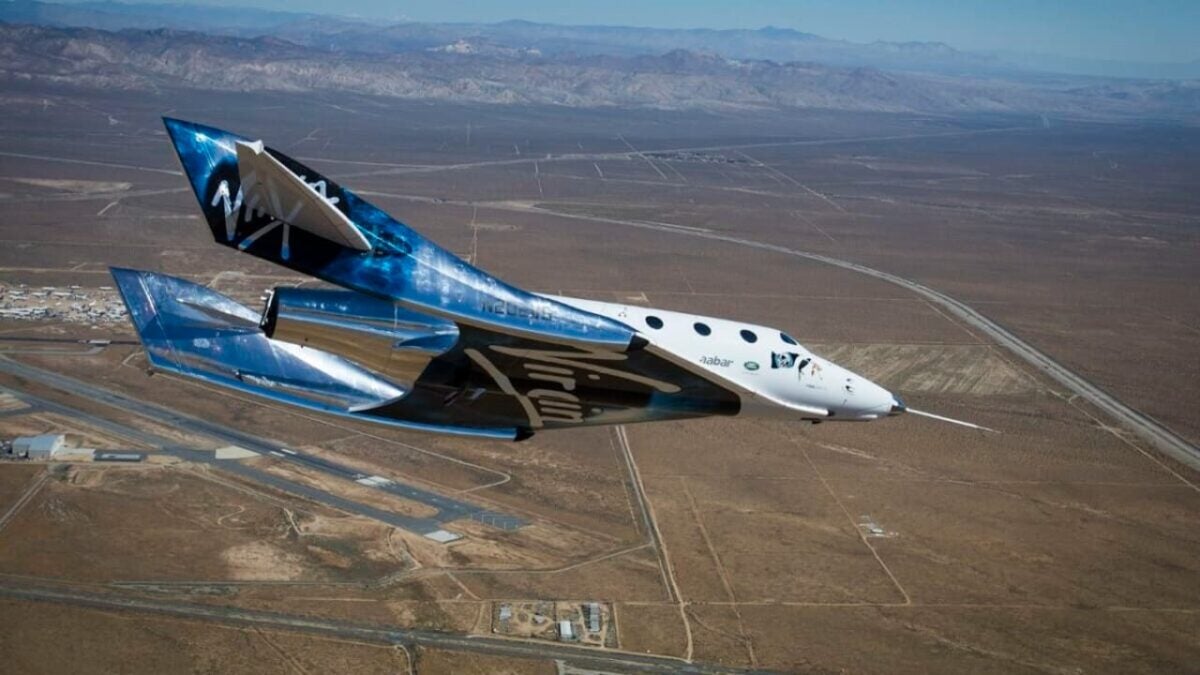
This mission will take its first three paying civilians on a rocket-powered plane to a point about eight times higher than a traditional passenger aircraft, where they will enjoy moments of weightlessness and breathtaking views of Earth.

The experience, which will take off and land at Spaceport America in New Mexico, will last only about 70 minutes.

A flight that will take you to the Kármán line

The flight manifest details of Galactic 02, including the names of the crew and pilots, will be announced closer to the flight date, according to the company.

The mission follows last month’s inaugural commercial flight, which involved two Italian Air Force pilots and an official from the National Research Council of Italy.

The customers will fly aboard the VSS Unity, which is carried to an altitude of around 50,000 feet by another aircraft, the VMS Eve.

The Eve then releases the Unity, which immediately ignites its rocket engine, propelling it to a maximum altitude of about 282,000 feet (86 km), roughly 5 miles from the Kármán line, widely considered as the boundary of space.

Virgin Galactic is eager to start offering regular trips to the hundreds of people who have already paid a significant amount for the journey of a lifetime. It began selling seats years ago for $250,000 per person, but in 2021, it increased the price to a staggering $450,000.

After trailing behind its rival Blue Origin in the race to launch a commercial service, Virgin Galactic seems to be on a winning streak now.

Blue Origin had to suspend its service last year after its suborbital rocket exploded during an unmanned flight in West Texas. The crewless capsule safely ejected and landed, demonstrating the effectiveness of the vehicle’s safety procedure. Blue Origin hopes to resume crewed flights in the coming months.

Critics argue that these tourist services cause unnecessary pollution and are ultimately a playground for the super-rich.

Supporters, however, claim that commercial flights provide research opportunities in microgravity to more organizations and businesses while also serving to inspire young engineers.

Twitter DOWNLOAD

Some of the links added in the article are part of affiliate campaigns and may represent benefits for Softonic.

Witness the Power of NASA’s Brutal Supersonic Experimental Aircraft

A supersonic flight between New York and Los Angeles could be reduced to about 2 hours and 30 minutes or even less. Even faster than the Concorde…

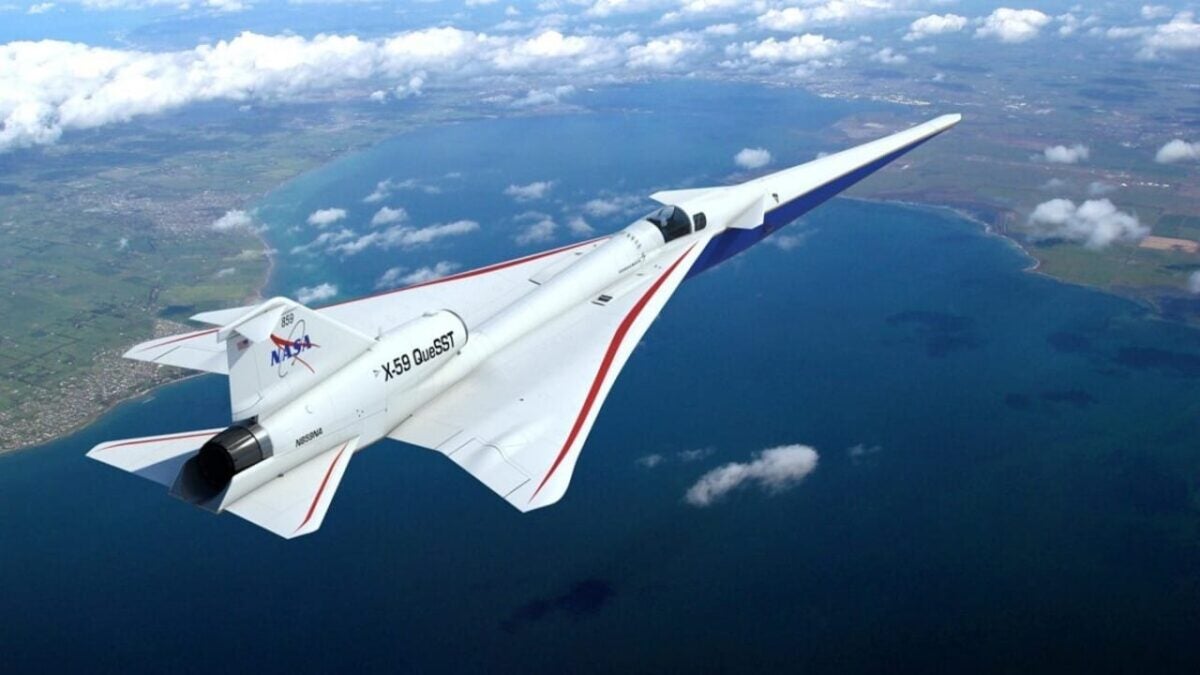
The experimental aircraft X-59 Quiet SuperSonic Technology (QueSST) by NASA is one of the great promises of aviation. It is about to take flight, and this is everything we know so far.

NASA App DOWNLOAD

As its name suggests, the aircraft is testing technology that dampens the sonic boom sound produced when an aircraft breaks the sound barrier.

The X-59 is designed to reduce the sudden noise to a quieter “sonic thump,” which could pave the way for supersonic passenger flights over the continental United States, which have been restricted due to noise pollution regulations.

Lockheed Martin/Martin Tice

An aircraft that can change everything

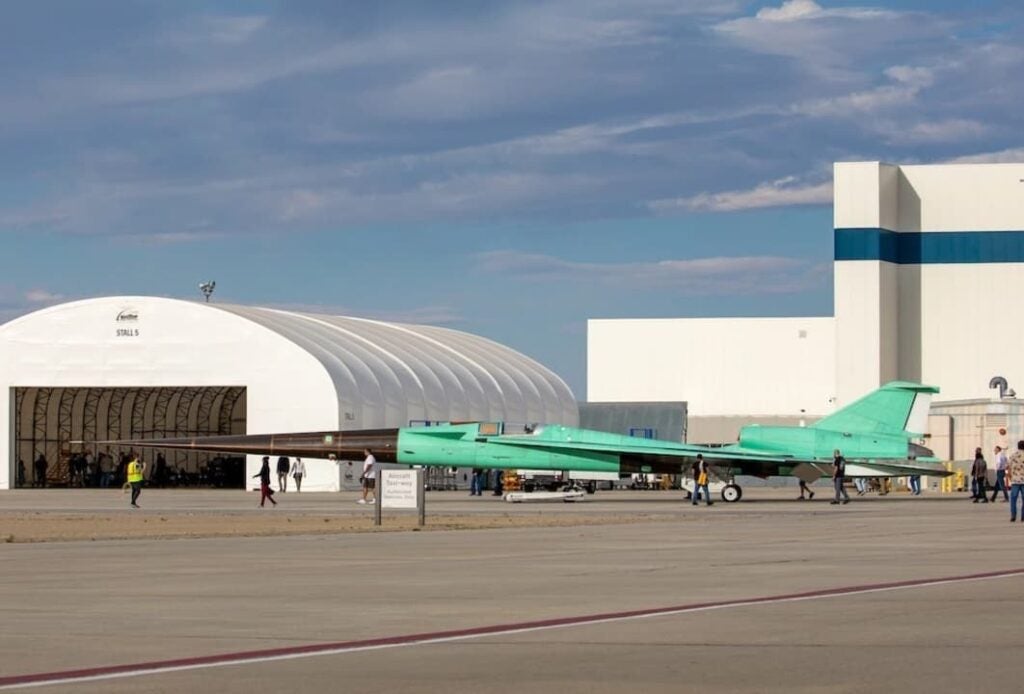
NASA recently shared a couple of images showcasing the X-59 on what is known as the “flight line,” the area between the hangar and the runway, at Lockheed Martin Skunk Works in Palmdale, California.

“The move from its construction site to the flight line is one of many milestones that prepare the X-59 for its first flight and subsequent flights,” NASA said this week, adding that the team will now conduct a series of critical ground tests to ensure the aircraft is ready for its inaugural flight.

One of these tests will involve flying the X-59 at supersonic speeds over a series of communities to observe how residents respond to the sonic boom generated during its high-speed flight.

Following this, NASA will share its findings with U.S. and international regulatory agencies, potentially opening up the possibility of commercial supersonic flights over land.

History of NASA’s supersonic aircraft

The X-59, which began development in 2016, is designed to fly at 55,000 feet (16,765 meters) with a cruising speed of Mach 1.42 (1,508 km/h), which is twice the speed of a conventional passenger aircraft.

At this speed, flight times between destinations will be dramatically reduced. The fastest flight between New York and London conducted by the Concorde – the supersonic passenger aircraft operated by British Airways and Air France until its retirement in 2003 – took only 2 hours and 53 minutes.

This means that a supersonic flight between New York and Los Angeles, which currently takes about 5 hours and 30 minutes, could be reduced to around 2 hours and 30 minutes or even less.

The Concorde flew between the United States and Europe, a route that was only permitted because the airports – Washington Dulles and JFK in New York – were located on the East Coast, which meant that the supersonic boom occurred over the Atlantic Ocean.

The X-59 could create a series of new and faster routes. Will it be manufactured in Albacete?

NASA App DOWNLOAD

Some of the links added in the article are part of affiliate campaigns and may represent benefits for Softonic.

NASA’s groundbreaking discovery shatters long-held beliefs about the impossible in space

Astronomers discover an exoplanet the size of Earth, with one side in perpetual darkness, which is covered in volcanoes…

Space is fascinating. Within it, we have all sorts of planets, celestial bodies, stars, red giants, black holes… That’s why we continue to launch telescopes into the depths of the cosmos to uncover all its secrets.

NASA App DOWNLOAD

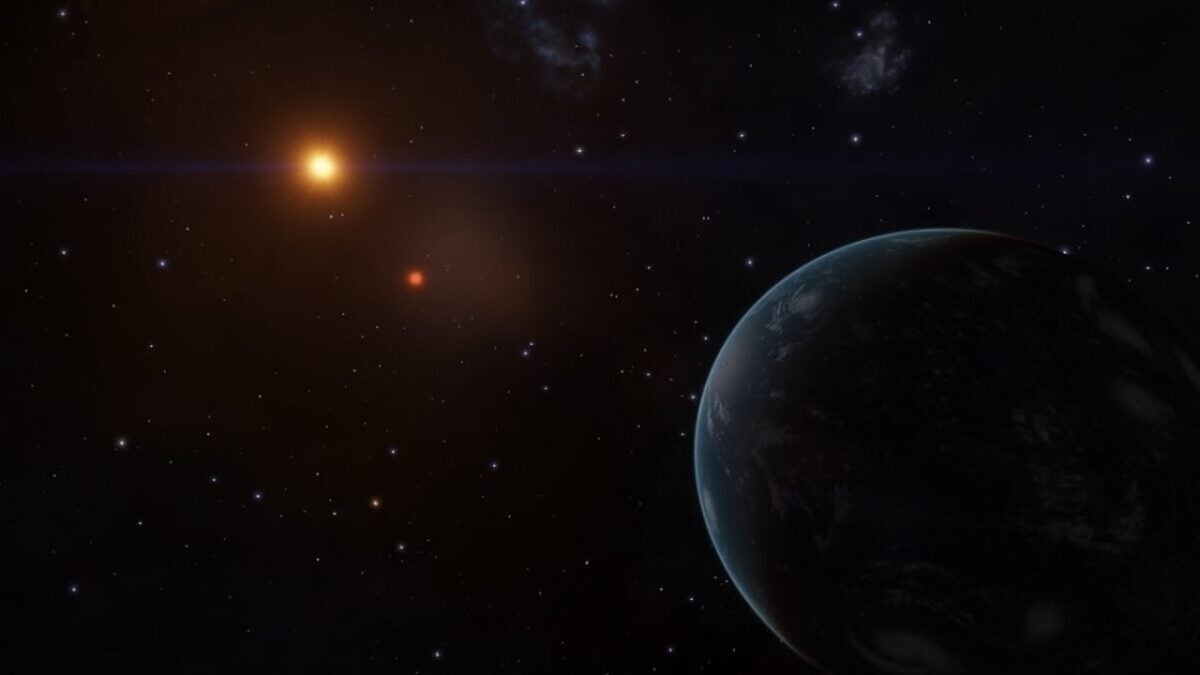
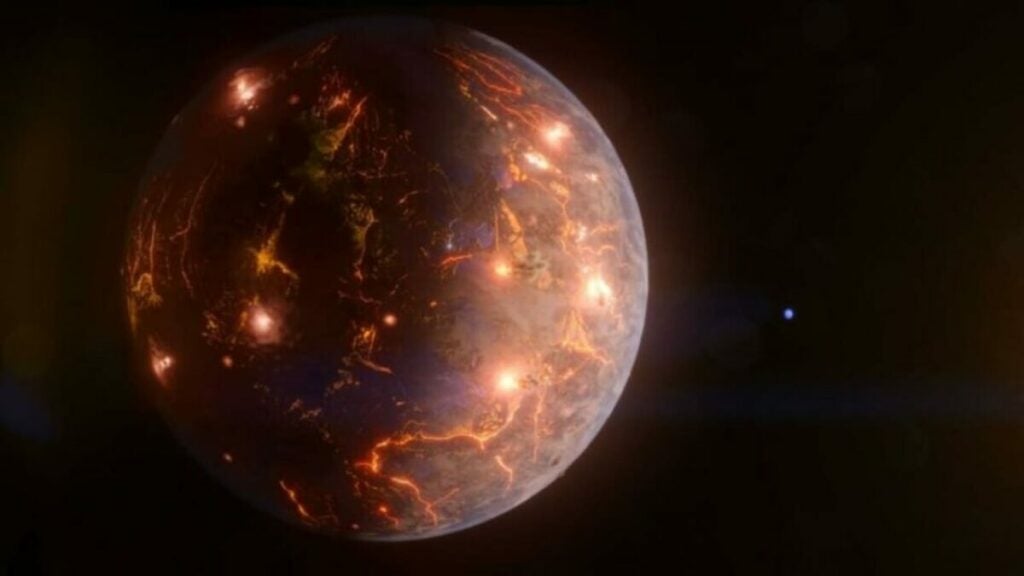
Today, astronomers from NASA have made an incredible discovery in space. They have found a planet the size of Earth that orbits a star beyond our solar system, and it is likely to be covered in volcanoes, according to researchers.

Technically, this planet is an exoplanet, meaning it is located outside of our solar system. In the scientific paper that details the discovery, the researchers have given it the nickname LP 791-18 d.

The planet was discovered while the researchers were studying a small star that was already known to host two larger planets. These two bodies were first discovered in June 2019 using NASA’s Transiting Exoplanet Survey Satellite (TESS).

86 light years from Earth

The planet is located in the Milky Way, about 86 light-years away from our solar system. A light-year is the distance that light travels in one year. Observations by the researchers suggest that the planet is rugged and rocky, with constant volcanic eruptions occurring on its surface.

The scientists did not directly observe the volcanoes, but they used observations of how the planet interacts with one of the other larger planets that orbit the same faint star.

The larger planet exerts a strong gravitational pull, which can cause the smaller, newly discovered planet to squeeze and flex, heating up its interior and triggering volcanic activity on the surface. By the way, an asteroid is heading towards Earth.

Observations show that the smaller planet undergoes deformation as it orbits around the star. The motion is comparable to that of Io, a moon of Jupiter, which is the most volcanically active body in our solar system.

The planet, which is tidally locked, could also potentially host water, according to the researchers. One side of the planet is too hot, but the other remains in perpetual darkness, which, according to scientists, could plausibly allow for water condensation.

According to the research team, the planet may also sustain an atmosphere, although the type of atmosphere it is capable of hosting will vary depending on its formation history.

One of the larger planets near LP 791-18 d has been approved for further study with the James Webb Space Telescope, NASA reported.

NASA’S GODDARD SPACE FLIGHT CENTER/CHRIS SMITH (KRBWYLE)
NASA App DOWNLOAD

Some of the links added in the article are part of affiliate campaigns and may represent benefits for Softonic.