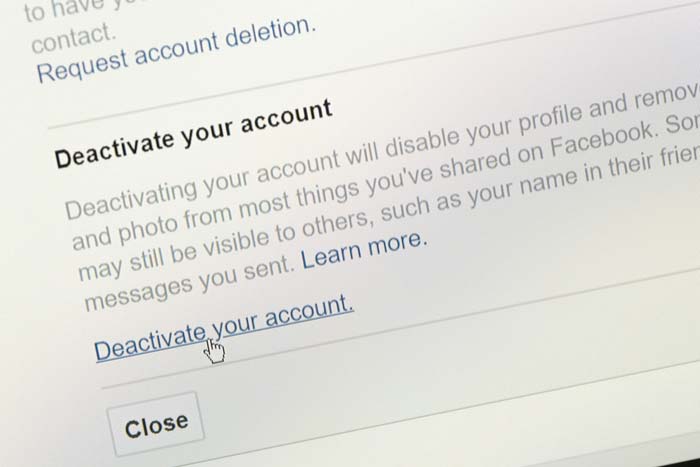
Warning: Android apps collect your data without permission

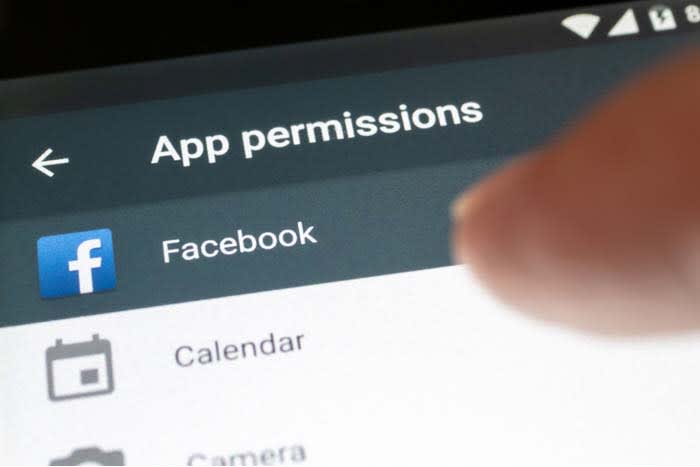
Android apps have the ability to collect your data through hidden channels.

Privacy

After you tell an app that it does not have permission to collect any of your data, you expect that to be the end of the story.

However, a recent article from CNN says that these apps continue to collect your information even after you told them to stop. According to the article, there are thousands of apps have the ability to still collect data through hidden channels on your phone. About 60 apps were discovered to be doing this. This is potentially affecting millions of Android users. 

This was uncovered by researchers from the nonprofit research center International Computer Science Institute. They reported the issue to Google who compensated them for their work and said that the issue will be fixed in a future update.

Although the issue is concerning, apps that are taking data may not be doing so maliciously or intentionally. In some cases, apps that have permission to collect data and then stored it on the phone’s SD card. From there, apps without permission were able to access the data.

Wrapping up

Although we do not know whether or not apps were collecting data with malicious intent, this is still a major privacy concern. Although the iPhone isn’t faring much better these days, it’s within your best interest to make sure you update your phone to avoid having your data stolen.

Google Chrome has 11,000 cookies skimming your data

Chrome is sending your personal data to businesses and advertisers.

Stealing data

Switching browsers has never sounded better.

According to the Washington Post, more than 11,000 tracker cookies were found in Google Chrome. These tracker cookies were making profiles for companies and marketers to help advertise products to you. Interestingly enough, the writer discovered that all of them were blocked when he browsed with Firefox. 

How does Google track my data?

If you’re logged into Chrome, these tracker cookies are stealing and sending your personal data. However, even if you aren’t logged in, Google is still working to take your info. 

If you have an Android, Google is sending your location data whenever you make a search. Even if you have your location settings turned off, Google will send coordinates instead.

If you are logged into Gmail, Google will track your data just the same as if you’re logged into Chrome.

7
Chrome is a young, fast browser that can browse any web page. It supports all major technologies and standards such as HTML5 and Flash.

How to block and kill tracker-cookies on Chrome

Chrome tracking

If you are looking to clear out the tracker cookies Google has on you while you’re browsing the internet and block sites from tracking you, there is a way. However, please note that this will sign you out of most websites, so make sure that you remember your passwords!

On your desktop browser

  1. Open Chrome
  2. Click on the three vertical dots in the top right
  3. Go to Settings
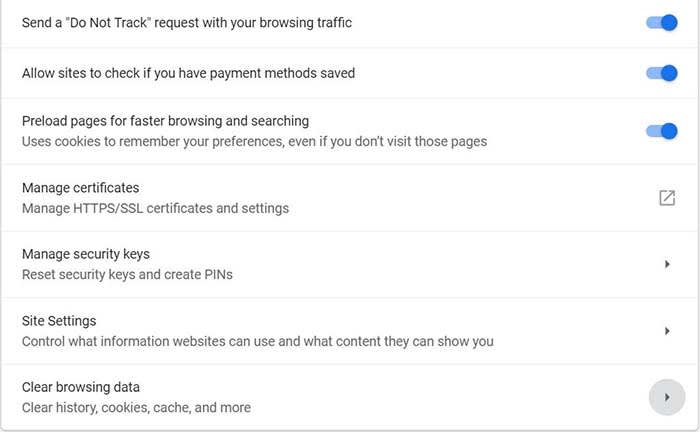
  4. Click Advanced to reveal Privacy and Security
  5. Enable the option to send a “Do to track” request with your browsing traffic
  6. Scroll down further to the option to clear browsing data
  7. Choose how long you want to clear cookie data
  8. Select the option to clear cookies and other site data
  9. That’s it, you’re all done

On mobile

Chrome mobile

  1. Open the Chrome app
  2. Click the three horizontal dots at the bottom right corner
  3. Click settings
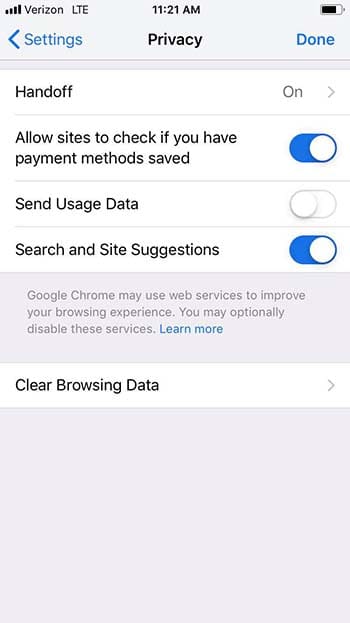
  4. Click privacy
  5. Select the option to not send usage data
  6. Go to Clear Browsing Data
  7. Make sure Cookies, Site Data is selected
  8. Click Clear Browsing Data
  9. You’re all set

Please note that not all websites will stop collecting data on you despite you requesting that they do not track your data. 

“Many websites will still collect and use your browsing data – for example, to improve security, to provide content, services, ads, and recommendations on their websites, and to generate reporting statistics,” according to Google.

What should I do?

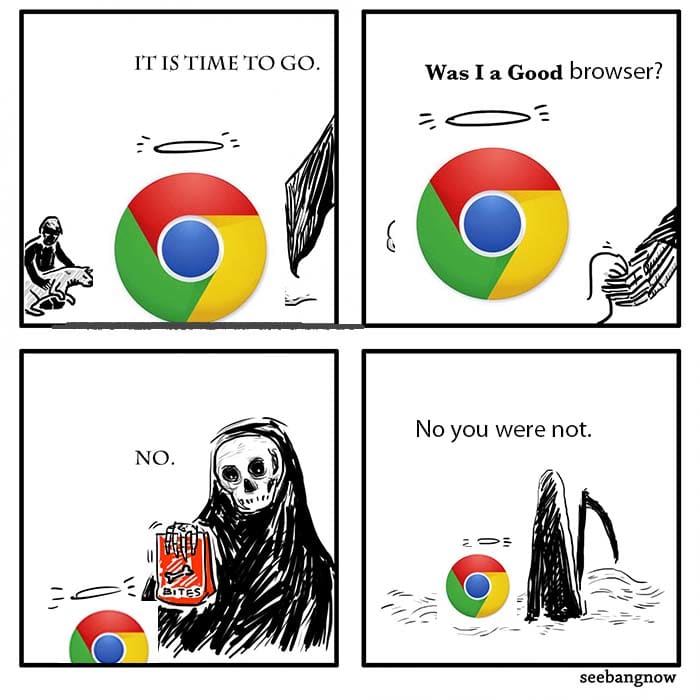
Chrome comic

This isn’t the first piece of despairing new info about Chrome to come out lately. Google recently announced that ad blockers essentially won’t work on Chrome unless you pay. 

That said, we strongly recommend choosing another browser if you want to keep your personal data safe.

The Brave browser has built-in ad blocking. You can also use your favorite Chrome extensions.

Enjoy private, secure and fast browsing with Brave.

Firefox has a whole host of tools that help keep you safe on the internet. From blocking cryptomining attacks to stopping invasive ads, there is no better time to start browsing with Firefox.

Chrome may have the largest market share, but they’re starting to flex that power in scary ways. It’s best to get familiar with a new browser now before something drastic happens that makes you regret hanging on too long.

Zuckerberg knew about Facebook’s privacy issues and did nothing to stop them

In 2012, Facebook knew about an app that could steal millions of users’ data and did nothing to fix the problem.

Mark Zuck

Emails show that Facebook CEO Mark Zuckerberg had prior knowledge of Facebook’s privacy issues, according to a report from the Wall Street Journal.

One of the emails from April 2012 is deeply concerning. It shows Zuckerberg and Facebook insiders learning about a third-party app that took data from tens of millions of Facebook users while ignoring Facebook privacy policies.

The app was eventually suspended, but sources told the WSJ that this did not cause Facebook to look into their privacy issues.

Keep in mind that this was six years before millions of users had their data compromised in the Cambridge Analytica Scandal. It was also long before we knew about other apps that were stealing our data without our knowledge. 

To clarify, none of the emails appear to show Zuckerberg deliberately disobeying Facebook policy. However, they do show a huge lack of responsibility and respect for Facebook users. 

The emails were discovered by a probe from the Federal Trade Commission and were later reported by the WSJ.

Our take

Recently, Zuckerberg has been pushing privacy for Facebook. He wants to add more tools so users can be protected on Facebook, Messenger, WhatsApp, and Instagram.

Although some were inclined to believe him, this news suggests that Zuckerberg is only doing so because Facebook was caught with its pants down.

Your privacy and personal data should be your top concern when you’re on social media, and Facebook’s users deserve to be on a platform where the company has the same concern.

Airport charging stations could give your phone malware

Think twice before charging your device in public.

Airport charging station

By 2019, you probably know it’s not safe to hop on the internet without a safety net in place: Anti-malware protection, a firewall, a solid VPN, and a secure password manager. We create quintillions of bytes of data every day, and it’s easy to make an innocent mistake that puts it at risk. Now that innocent mistake can include plugging your phone into a charger at an airport.

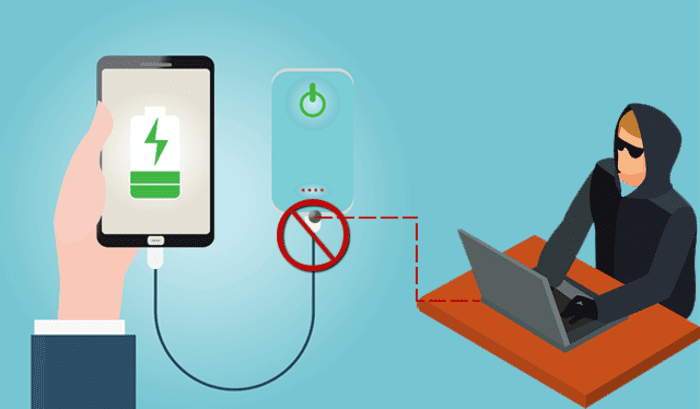
It’s no secret that public Wi-Fi can be sketchy at best, and while it’s convenient to charge your phone at the nearest port, it’s not necessarily safe. Free public phone chargers can be used to secretly install malware on your device, malware that can eat up your data in a process called “juice jacking.”

What’s juice jacking?

It sounds like tinfoil hat propaganda, but in reality, it’s an underrated but serious security threat. ‘Juice jacking’ was coined back in 2011, and refers to a hack attempt that uses public charging terminals to install malware on your device. It does so covertly via USB charging port, and it copies your phone’s data, pictures, and email into someone else’s hands.

juice jacking
Hackers can use public USB charging terminals to copy your personal data

“All they really need to do is load malware on the USB port,” explains IBM cybersecurity expert Charles Henderson. It’s unlikely you’ll even know it’s happened until it’s too late. “There’s really no way to tell,” says Henderson. “You really have to be extremely technologically savvy to detect such an attack.”

3 easy solutions to stay safe in airports

1. Use a portable charger

The best thing you can do is avoid airport charging terminals altogether. These days it’s not too hard to get your hands on a cheap, reliable portable charger. It’s a safe, convenient way to keep your phone charged and ready to go without putting your data at risk with a public outlet.

2. Use an electrical outlet instead

It should also be noted juice jacking can’t be done unless it’s via USB, so as long as you opt for an electrical outlet instead you’ll be safe.

3. Turn off your phone first

Lastly, if you’re in a situation where you’ve got no choice but to charge with a public USB port, completely powering off the device beforehand will prevent the download and transfer of your data.

Luckily, preventing your phone from being juice jacked is pretty easy. Just remember that any time you use public charging stations or Wi-Fi, your online activity could be at risk. Follow these easy steps, and stay informed!

BlueKeep security issue threatens nearly one million Windows users

If you’re running an older version of Windows, your data could be at risk.

Microsoft

There’s a reason people update to new versions of Windows: Old versions don’t get updated, and that makes them more susceptible to issues, both internal and external. While not every Windows update is a move forward, transitioning to a newer OS is almost always a smart step. Google is making the same assertion, too: If you haven’t upgraded to Windows 8 or 10, now’s a very good time; anything older is now putting you at risk.

Windows 10 Download
7
Update to a safer OS

The BlueKeep vulnerability

Just like old browsers are full of holes for malware to enter, an old OS can start becoming fallible as new threats emerge and evolve. Technically known as CVE-2019-0708, BlueKeep is a remote code execution vulnerability that exists in Remote Desktop Services. It’s when an unauthenticated attacker connects to a target system using RDP, and then starts sending requests. A successful hack attempt could then start to inflict arbitrary code on the targeted system, installing programs, deleting data, or creating new accounts that still mimic your user rights. It’s a nasty pre-authentication vulnerability in older Windows Operating Systems, and therefore doesn’t require any user interaction before it latches on.

Which OS is at risk?

Anything less than Windows 8. So if you’re running 7, 2008 R2, Vista, Server 2008, or XP, BlueKeep leaves your computer open to infection. How many people are running these old versions of Windows? Almost a million, Microsoft discovered in a recent report. Frighteningly, that’s not even including the computers on corporate networks. Errata Security predicts that anyone using an older OS probably has a month or two before BlueKeep worms its way in.

How to tell if you’re already infected

If you’re running an older OS, now’s the time to upgrade. In the meantime Errata Security’s Rob Graham has put together binaries on Github to scan for BlueKeep. If you think your PC might be infected, go to the link in his tweet and run the scan:

Hopefully, both your computer and network have not been compromised, but trust us – you don’t want to procrastinate on things like this. Get Windows 8 or 10 today and stay secure!

Your iPhone is probably packed with thousands of trackers sending private data

A report shows that trackers guzzled 1.5 gigabytes worth of data over a month.

Phone data

The Washington Post tested an ordinary iPhone and found it had more than 5,400 trackers that were sending private data without the owner’s awareness.

This data included email addresses, phone numbers, and location data. 

In the story, the writer, Geoffrey Palmer, conducts an experiment to see how much data his iPhone is sending while he sleeps. It turns out that even though he isn’t actively using his phone, apps are sending data to entities like marketing companies and research firms in the background.

Over the course of a month, these trackers would have guzzled 1.5 gigabytes of data. 

How serious is this problem?

Believe it or not, a lot of apps do have legitimate reasons for sending your data. For example, GrubHub needs to know where you are if you want food delivered.

According to an article from 9to5Mac, many credit card and banking apps regularly use data to send signals to help detect fraudulent activity. In cases like these, you absolutely need these apps to send data.

Finally, many free apps are only free because of ads. In order to show you these ads, these apps need to send and receive data. If there are no ads, there are no free apps.

Alternatively, there are instances where apps are problematically sending your data.

Although there are legitimate reasons as to why an app would send personal information, Palmer did raise a good point.

“The problem is, the more places personal data flies, the harder it becomes to hold companies accountable for bad behavior — including inevitable breaches,” Palmer wrote.

What can Apple do to help?

App permission

If you’ve ever downloaded a new app on your iPhone, you’ve probably seen the message asking for your permission to allow the app to access your data.

This is routine for apps you download on iPhone as Apple wants/needs to be transparent. However, the transparency stops here as it often doesn’t tell you what the app is doing in the background. 

Most apps don’t tell you what companies are collecting your data and how they are keeping it safe. This opens the door for concern as you have no idea whether or not the data that has already been collected is safe.

Palmer suggests that Apple should be more accountable about what apps are doing with your personal data.

“Apple could require apps to label when they’re using third-party trackers,” Palmer wrote. “If I opened the DoorDash app and saw nine tracker notices, it might make me think twice about using it.”

DoorDash Download now ►
7

Should I be worried?

If you’re concerned about what apps are doing in the background, we would recommend downloading Datally. Unfortunately, that’s only available for Android phones.

9

Through Datally, you can disable apps that run in the background, and you can whitelist apps that you want to have unrestricted access.

As to whether or not you should be worried about your phone sending data, the answer is kinda. 

Apps send data in the background all the time. Heck, it seems like we write a story about Facebook acting irresponsibly with personal data once a week. Oh look, there’s another one!

There are plenty of reasons why you should throw your phone out the window and go off the grid altogether. However, if you pay close attention to what you are downloading and the permissions you give it, you can keep your data safe. Use common sense and best practices to protect your privacy, and you can keep yourself protected.

Facebook braces for users who will erase their data

Facebook is letting users clear their data history, but how will this affect the ad experience?

Facebook ads

Before launching its new “clear history” feature, Facebook is prepping advertisers for the change.

Earlier this year, Facebook announced they were adding a “clear history” feature. The feature would show Facebook users what apps and websites were sending data to Facebook. You could then clear the data from your account, and then delete all the information currently collected. 
Facebook said in a blog post that there are four key takeaways for advertisers as they unroll the clear history tool:

  • Giving people transparency and control is good for businesses
  • We’re showing people how advertisers use our tools
  • This feature may impact targeting
  • Measurement will remain intact
7

Giving people transparency and control is good for businesses

Uninstall facebook

This point was more of an explanation as to why they are doing it. Facebook and the apps under its umbrella: Instagram, WhatsApp, and Messenger are all free for users. 

This is only possible because of advertisers. Facebook did not flat-out say that they were unethically collecting user data for more targeting advertisers. However, they did say that the company can provide advertising options while also protecting users’ privacy. 

Facebook has been under fire for how they’ve been collecting user data. Trust us, we’ve been covering it:

Along with the bad publicity, many users have been deleting Facebook. According to a report for the Pew Research Center, 44% of young American Facebook users deleted the app. Basically, Facebook has realized that they can’t advertise to users if there are no users.

Showing people how advertisers use Facebook’s tools

Facebook biz

This one is a bit self-explanatory. Facebook has data on its users; now, they want users to know what advertisers are doing with it.

Here’s where the problem lies: Facebook hasn’t given us the resources that show 100% clarity of what is happening with our data.

According to Facebook’s data policy, they collect data “including information about your interests, actions, and connections – to select and personalize ads, offers, and other sponsored content.”

You can also select your advertising preferences with Facebook.

However, this doesn’t cover everything by a long shot. Recently, it was discovered that Facebook was using user data as a leveraging point to gain advertisers.

In one case, Facebook gave Amazon extensive user data information. This was because Amazon was spending money on Facebook advertising.

This feature may impact targeting

Facebook is clarifying that if a user disconnects their data, their data can no longer be used for targeted ads. Basically, many advertising strategies are going to have to change as a result.

Facebook was recently charged by HUD for discriminating users with how they targeted ads. Basically, companies could refuse to advertise to users due to their race, gender, and sexuality.

Measurement will remain intact

For its advertisers, Facebook has tools for measuring how ads are performing. 

However, these tools will NOT give businesses access to personal data (not that it ever did) Basically, this is a feature that will not be changing, and Facebook wants advertisers to know that.

What should you take away?

Facebook has been in a lot of hot water over how it has handled user data and privacy. In fact, they may be fined up to $5 billion by the Federal Trade Commission over privacy issues.

With scandals, fines, and people leaving Facebook in droves, Facebook is finally making some changes. They are also making sure that their advertisers know it is coming.

Is this going to solve all of our problems with Facebook collecting our data? As history shows, probably not. However, this does look like a step in the right direction.

Google saves your information, here’s how to delete it automatically

You can now automatically delete all the data that Google stores about you.

Google data

Google can sometimes be creepy.

From autocompleting to something you looked up months ago, to knowing your location data, Google can feel like a crazy ex who isn’t getting the memo.

Luckily, Google has unveiled a new feature that will automatically delete all of the data it has on you after a certain period of time.

Here’s how to do it:

How to get Google to delete all the information it has on you

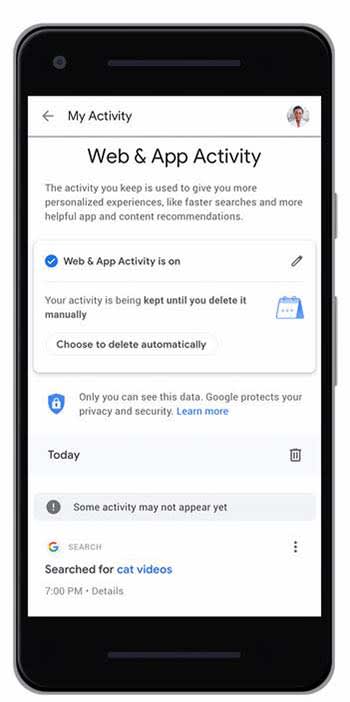
Step 1: Log in on myaccount.google.com

=Step 2: Click on “Data & Personalization” on the left side.

Step 3: Select “Web & App Activity”

Web activity main

Step 4: Click “Manage Activity”

Web Activity duration

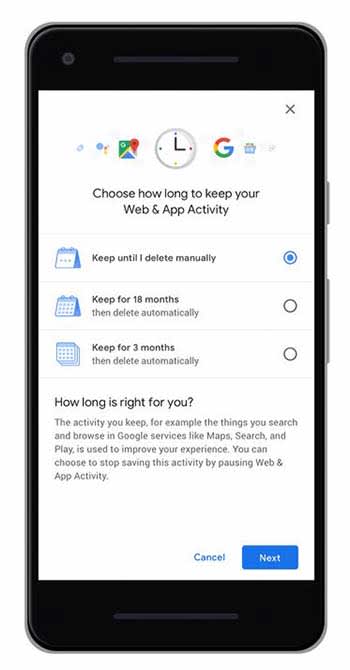
Step 5: Click on the option to “Choose to delete automatically”

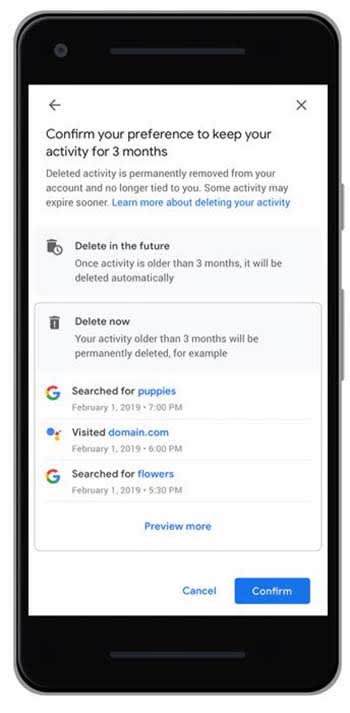
Web activity confirm

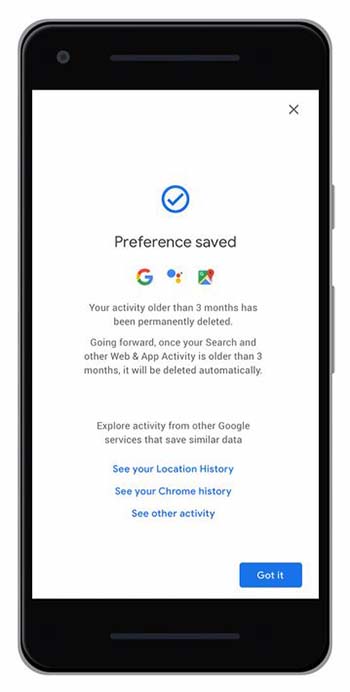
Step 6: Select the time frame you want to delete, and save your preferences

Web activity all set

Should I do this?

The choice is yours.

Google can be more personalized if it has some of your personal data.

“Data makes Google services more helpful and relevant, but how we use this information is an individual choice that belongs to you,” according to the Google safety page. “We keep you informed about what data we collect, how it’s used, and why. And we build powerful data controls into your Google Account, so you can choose the privacy settings that are right for you.”

Google has an option to delete all the data it has on you from a specific day. Essentially, if you looked up something on Google that you don’t want it to remember, you can have it deleted.
This new tool is the quickest and easiest way to have your data automatically deleted. If companies having access to your personal data is a concern of yours, this is your answer.
Facebook cracks down on personality quizzes

Personality quizzes may be leaving Facebook in an attempt to protect our data.

Facebook quizzes

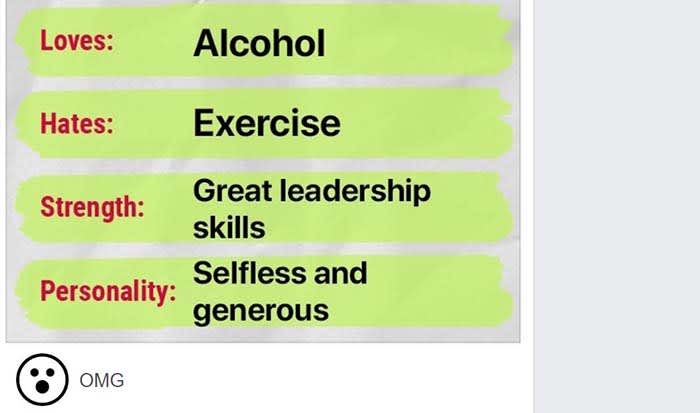
We’ve all seen them: personality quizzes on Facebook. They’re all pretty much the same. Your balding, overweight Facebook friend posts quiz results stating that if they were a superhero, they would be Wolverine.

7

Although these can be fun from time to time, we wouldn’t miss them if they bit the dust.

Facebook recently updated its platform policies. The update says that apps with minimal utility, such as personality quizzes, “may not be permitted on the platform.”

According to a company spokesperson, personality quizzes and other apps will heavily be scrutinized

“The update also clarifies that apps may not ask for data that doesn’t enrich the in-app, user experience,” wrote Director of Product Management at Facebook Eddie O’Neil in a blog post.

What does this have to do with the Cambridge Analytica Scandal?

massive password and email leak

The Cambridge Analytica Scandal occurred a few years ago when millions of Facebook users’ data was stolen. The stolen data fell into the hands of political campaigns.

At the heart of the scandal was a quiz.

A quiz was created using the Facebook app “thisisyourdigitallife.” The quiz collected data from about 87 million users. The people who took the quiz allowed the quiz to collect their data, but they didn’t know that it was going to go to aid politicians. As a result of the scandal, Facebook ended up deleting several hundred data-stealing apps. 

Where do personality quizzes fit into this?

Facebook personality Quiz

Believe it or not, personality quizzes can reveal details about your password and security questions. Quizzes can ask questions that ask for things like the name of your first pet, or who you saw at your first rock concert. Both of these are common security questions that can lead to someone logging into your account.

Facebook has also said it is revoking expired permissions for apps. Apps that haven’t used or accessed  permissions from Facebook users during the last 90 days “may be considered expired.”

Is this going to make a difference?

Mark Zuckerberg

Facebook has undergone a great deal of scrutiny over the past few years. The U.S. Department of Housing and Urban Development recently charged Facebook with discrimination. This, paired with the Cambridge Analytica Scandal and other data-stealing scandals, has made users cautious of Facebook.

Along with users deleting their account altogether, about 40% of users have taken a break from the social media juggernaut.

We can’t say for certain whether or not this move will remove personality quizzes altogether. We also don’t know if it will put a decisive dent in the war against data theft. This is a step in the right direction. Only time will tell if that step is a tip-toe or a leap.

Leaked docs: Zuckerberg leveraged Facebook user data

A new leak shows that Facebook cherry-picked partners, advertisers for who got our personal data.

Mark Zuckerberg

News about Facebook selling our personal data is nothing new. However, this time we got a little more insight about the backdoor dealings with our data. 

Facebook Download now ►
7

Leaked documents show that Mark Zuckerberg, along with his board and management team, used Facebook user data as a bargaining chip with its business partners.

The documents were shared with NBC News, Computer Weekly, and Germany’s Süddeutsche Zeitung newspaper.

Private information included info about your friends, photos, and relationship data. 

In one case, Facebook gave Amazon extensive user data information. This was because Amazon was spending money on Facebook advertising, according to an article from NBC. 

Is this anything new?

Companies share data about you with other companies. That’s nothing new. The issue is that there isn’t another company like Facebook that knows this much about you or one that has the ability to profit from your data this much. 

These leaked documents showed that Facebook was monetizing user data through third-party methods. These methods include direct payment, advertising spending, and data-sharing arrangements.

The data wasn’t sold to just anyone. According to the documents, the company instead dished it out to app developers considered to be “friends” of Zuckerberg, or Facebook advertisers.

Facebook has a lot of data on you. Even if you permanently delete your profile, some information will remain on Facebook for up to 90 days after you delete your account. Even then, some traces of your Facebook presence will still be detectable, according to the Facebook Help Center.

Why is this dangerous?

Last year, you might have heard of the Cambridge Analytica scandal. 

A political data firm hired by the Trump campaign took data from millions of Facebook users. This was done without their knowledge. Although Facebook suspended Cambridge Analytica from its platform, it insisted what the firm did was not a data breach. Furthermore, Facebook claimed that users opted to have their data taken.

Facebook took action against Cambridge Analytica after the deed was already done. Whether or not you’re a fan of Trump, the facts show that this Facebook deal helped his election. If our personal data can alter election outcomes, then selling it can be dangerous.

What should I do?

Deactivate your Facebook account

After the Cambridge Analytica scandal, users left Facebook in droves. After this scandal, we wouldn’t be surprised if those numbers grew.

Facebook needs to hold itself accountable. Unfortunately, as long as the company keeps making money, they may not change without government oversight.

HUD recently charged Facebook with discrimination. We are still waiting to see how that unfolds. Hopefully, this and the current scandal will inspire Facebook to make some changes. Until then, it might be time for us to join the millions of people who have already decided to leave Facebook. 

And if Facebook is selling your data, you might as well do it, too.