The phenomenon unleashed by Star Wars almost five decades ago has left an indelible mark on the film industry, inspiring countless productions to emulate its success. As George Lucas’s space epic hit theaters, studios began to launch similar projects in an attempt to capture part of the impressive box office of the galactic saga. Among the most remembered copies, although mostly forgotten, is The Humanoid, a low-budget Italian production that hit theaters in 1979. An Italian film with tremendous charm, The Humanoid has become […]
The phenomenon unleashed by Star Wars nearly five decades ago has left an indelible mark on the film industry, inspiring countless productions to emulate its success. As George Lucas’s epic space saga hit theaters, studios began to launch similar projects in an attempt to capture some of the impressive box office of the galactic saga. Among the most remembered copies, although mostly forgotten, is The Humanoid, a low-budget Italian production that hit theaters in 1979.
An Italian movie with tremendous charm
The Humanoid has become a paradigmatic example of how the film industry has resorted to the strategy of imitation following the success of Star Wars. From its outset, the film copies distinctive elements such as the introductory text that precedes the story, which refers to the iconic opening of the original saga. Although it introduces its own narrative, with elements like a nuclear war and a dangerous substance called Kappatron, the visual similarities are undeniable, especially in the design of sets and costumes.
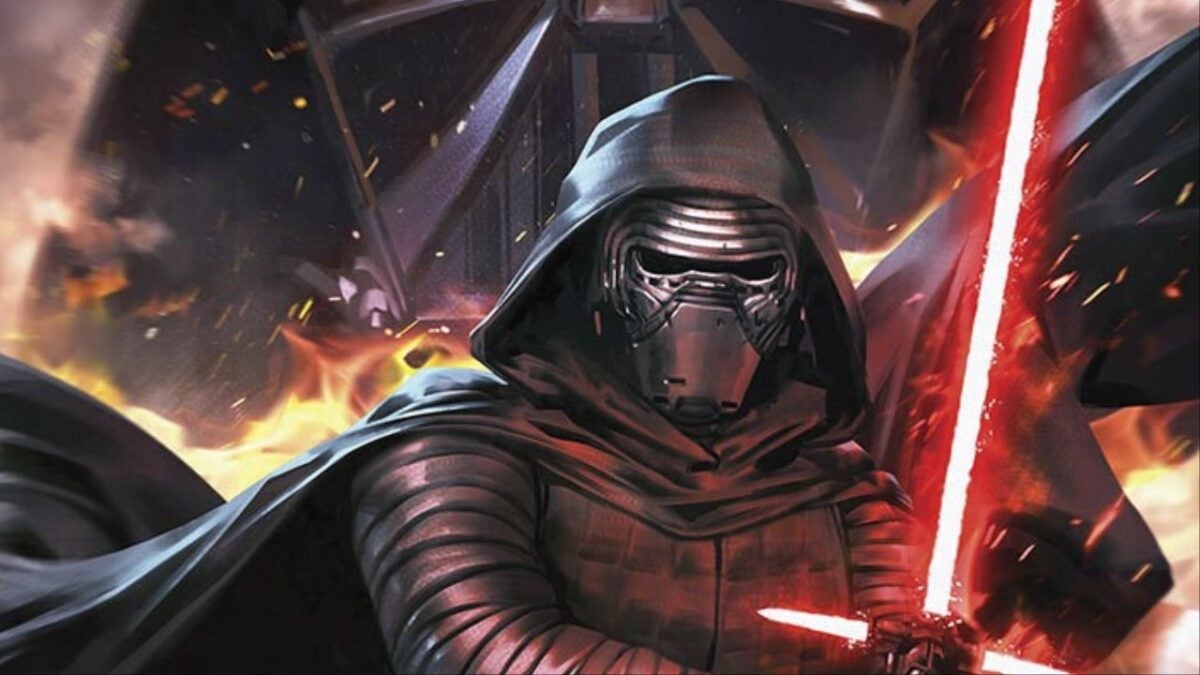
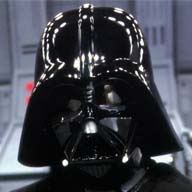
The main villain, Lord Graal, is a clear nod to Darth Vader, presenting himself with black armor and a distinctive triangular-shaped helmet that evokes the aesthetics of a star destroyer. In fact, the director himself, Aldo Lado, chose the pseudonym Gerge B. Lewis, an inadvertent homage to Lucas, highlighting the influence that Star Wars had.
Over time, The Humanoid has been relegated to oblivion, just like other science fiction films from that era, such as Star Crash. These productions tried to capitalize on the fame of Star Wars, but most did not manage to transcend beyond their relative release, serving as testimonies to the industry’s tendency to replicate successful formulas. Nowadays, very few remember these works, but the impact of Star Wars continues to resonate in contemporary cinema.
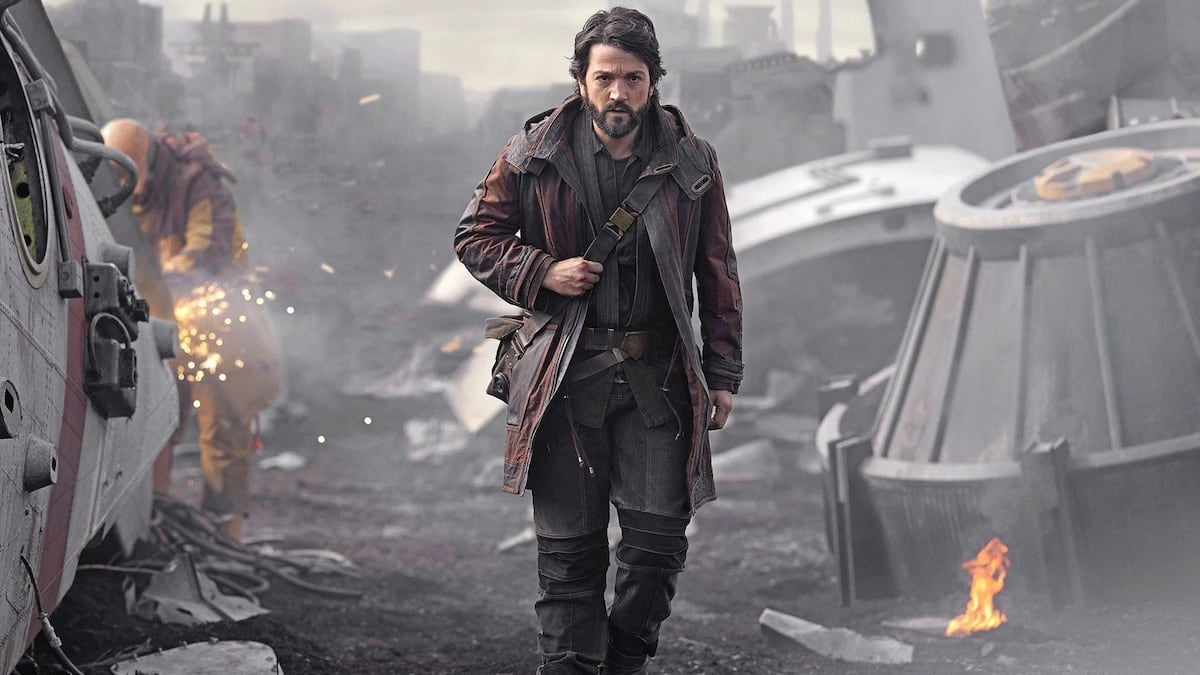
The series Andor, a prequel to the acclaimed film Rogue One: A Star Wars Story, has captured the attention of fans of the universe created by George Lucas, especially in its second season, which is about to conclude. This new chapter in the story of Cassian Andor, played by Diego Luna, focuses on his struggle against the Empire, just before the events of Rogue One, at a key moment in the construction of the Death Star. Some characters do not appear because they have nothing to contribute Despite the expectations of the followers, iconic characters […]
The series Andor, a prequel to the acclaimed film Rogue One: A Star Wars Story, has captured the attention of fans of the universe created by George Lucas, especially in its second season, which is about to conclude. This new chapter in the story of Cassian Andor, played by Diego Luna, focuses on his struggle against the Empire, just before the events of Rogue One, at a crucial moment in the construction of the Death Star.
Some characters do not appear because they have nothing to contribute
Despite the expectations of fans, iconic characters like Luke Skywalker’s father and Emperor Palpatine have not made appearances in the series, which has raised numerous questions among fans. In a recent interview with The Rolling Stone, Andor creator Tony Gilroy addressed why the Emperor does not appear, explaining that his presence would be “too heavy” for the narrative of the series. “He was too important a character for me. I thought about it at one point, but it was too heavy a task,” Gilroy commented, suggesting that including Palpatine would complicate the story in a way that would not be beneficial for the development of Andor.
The second season of Andor, which is nearing its end, will culminate with the release of its last three episodes on Disney+ on May 14. In these episodes, viewers will be able to see characters like Stellan Skarsgard, Genevieve O’Reilly, and Ben Mendelsohn again, who have added depth and nuance to the protagonist’s story.
Despite the notable absences, the series has been praised for its narrative approach and character development, establishing itself as one of the best additions to the Star Wars canon. With the final season in sight, fans are eager to see how Cassian Andor’s journey will culminate before his decisive participation in Rogue One.
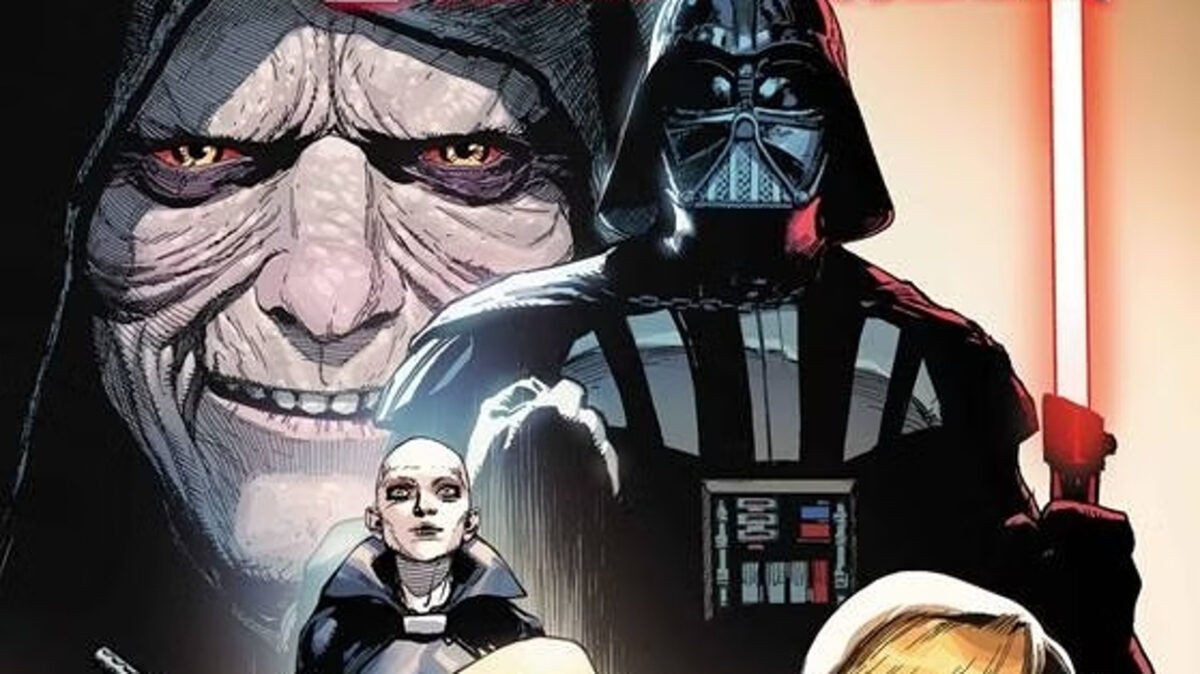
The latest issue of Legacy of Vader, the comic series published by Marvel, has left many Star Wars fans puzzled and disappointed after revealing that Darth Vader did not kill Watto, a character closely linked to his past. This outcome contradicts what some fans were expecting after the previews hinted at a brutal act of revenge by the feared Sith Lord against the junk dealer from Tatooine. A change in the character’s story that doesn’t make much sense When it was announced that Vader could bring Watto back to the arena of his childhood to settle […]
The latest issue of Legacy of Vader, the comic series published by Marvel, has left many Star Wars fans puzzled and disappointed after revealing that Darth Vader did not kill Watto, a character closely linked to his past. This outcome contradicts what some fans were expecting after the teasers that hinted at a brutal act of revenge by the feared Sith Lord against the junk dealer from Tatooine.
A change in the character’s history that doesn’t make much sense
When it was announced that Vader could return Watto to the arena of his childhood to settle scores, many saw it as an opportunity to explore a darker facet of the character. However, the truth, according to Vaneé, a former servant of Vader, is that the Sith was never responsible for Watto’s death, leaving the narrative in a state of uncertainty that has confused his followers. Vaneé argues that Vader had different priorities that did not lead him to confront his old enemy.
This revelation has generated conflicting emotions among the fanbase, who often already face the difficulty of keeping up with the vast and complicated continuity of the Star Wars universe. With each new development that challenges previously established stories and mythology, the feeling of confusion is exacerbated. As highlighted in reports from media outlets like Newsweek, many followers feel deceived by this change in the canon.
Despite the current turmoil, fans can take comfort in having access to the entire Star Wars saga through Disney+, allowing them to relive the classic stories while new tales continue to expand this universe. Meanwhile, it remains to be seen what other surprises may arise in the future of this extensive franchise.
Durante los últimos cinco años han llenado los huecos entre ‘El imperio contraataca’ y el episodio VI, y ahora ha llegado el momento de volver a empezar.
After the unexpected success of the first Star Wars movie, George Lucas turned to marketing to keep making money. And, of course, he allowed people who knew nothing about his franchise to release all kinds of material, from novels to comics. This is how the legendary Marvel series was born, in which a green rabbit and a galactic Don Quixote ended up together, which now, of course, is not canon. Years have passed and now everything is canon, everything is valid… and everything is ending.
Both ‘Star Wars’ and ‘Darth Vader’, the regular comic series published by Marvel (although this time, with respect for the original and a team of people supervising them), will end with issue 50 as they approach the events of ‘Return of the Jedi’. For the past five years, they’ve filled the gaps between ‘The Empire Strikes Back’ and episode VI, and now it’s time to start over.
Because in ‘Star Wars’ nothing begins or ends, nothing grows or diminishes, nothing appears or disappears. Not really, at least. Perhaps new number 1’s will begin to fill the void between ‘Return of the Jedi’ and the next in the saga, ‘The Force Awakens’. For obvious reasons, however, it will be without Darth Vader in its parallel collection. Do not fear, padawans, there is still a long way to go before the Force stops being felt in the universe…
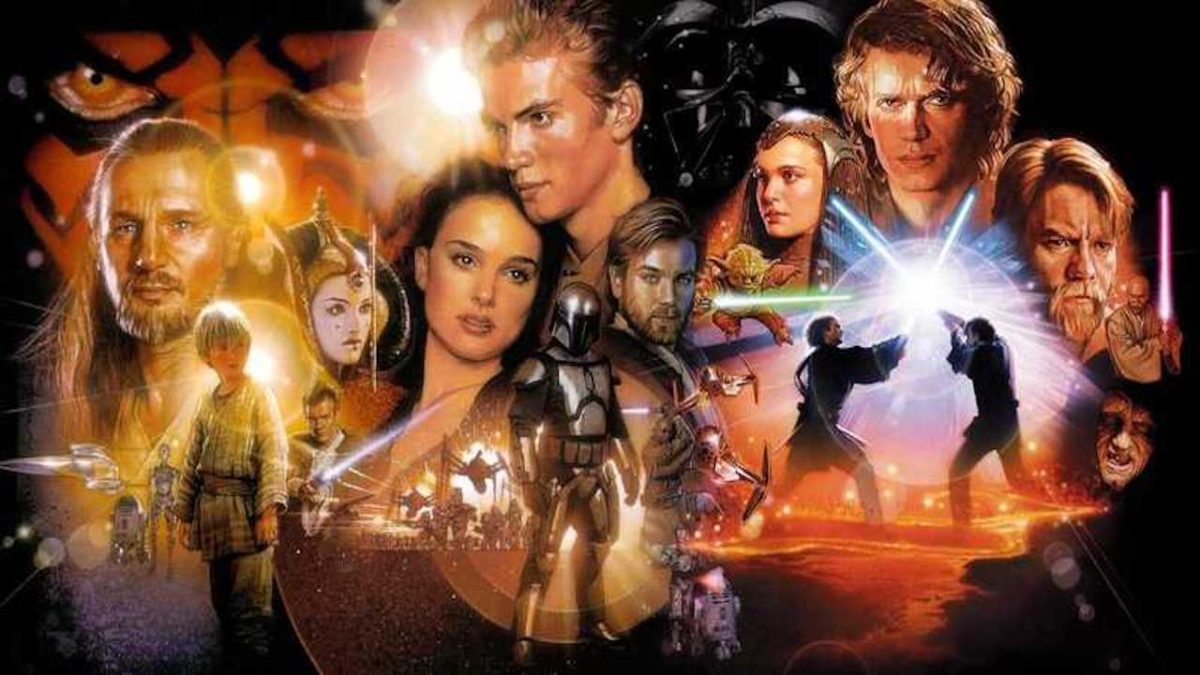
From Pod Racing to Lightsaber duels, there was a lot to love about the Star Wars prequels!
At best, most people have… mixed opinions about the Star Wars prequel trilogy. Admittedly, there’s a lot to dislike: cheesy acting, writing that left a lot to be desired, and of course, Jar Jar Binks.
That said, the prequels added quite a lot of depth and richness to the Star Wars universe, and had their fair share of undeniably iconic moments and characters. Love them or hate them, here are the 10 best moments of the Star Wars prequels.
The 10 best moments of the Star Wars prequel trilogy
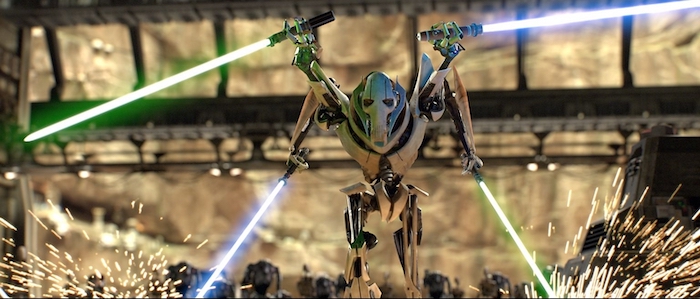
10. All General Grievous scenes
Image courtesy Lucasfilm
First appearing in Episode III, General Grievous is the intimidating leader of the Separatist Droid army. Grievous is a masterclass in character design: despite having comparatively little screentime, he still left an indelible mark in the minds of every Star Wars fan. From his deadly looking exoskeleton to his gravelly, vaguely Russian accent, Grievous is admittedly a pretty cool villain. The coolest part? He’s got four arms, which he uses to wield the captured lightsabers of the Jedi he’s killed.
This makes for some creative and heart-pounding fight choreography that upgrades Grievous from a run-of-the-mill villain to a formidable foe.
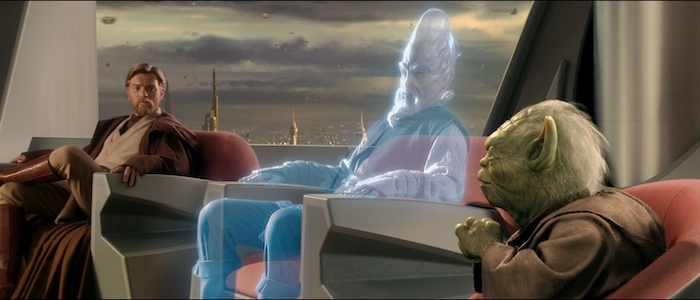
Until the prequels, all any Star Wars fan really knew about the Jedi Order was gleaned from the stories and hints about them from the original trilogy. The prequels showed fans the Jedi up close and personal, detailing exactly how the Order functioned.
This included never-before-seen Jedi, the tenets of the Order itself, and a look inside the Jedi Temple on Coruscant. One of the best parts of this up-close look at the Jedi was getting to see the Jedi Council in session: the wisest and most powerful members of the Jedi Order, putting their heads together in a spectacular council chamber to decide the fate of the galaxy.
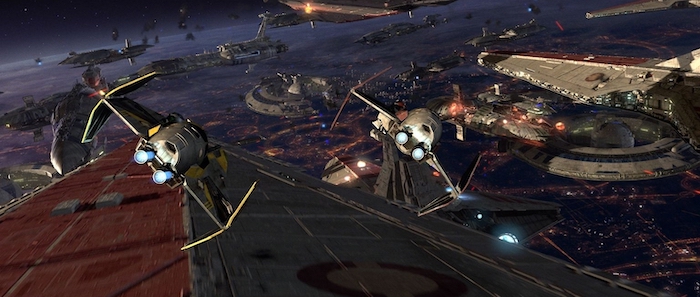
8. The Coruscant space battle
Image courtesy Lucasfilm
Episode III gave Star Wars fans one heck of a space battle. The movie opens with a tense dogfight above Coruscant, with massive capital ships and tenacious fighters going at it on an epic scale.
VFX technology made battles like this possible on a scale that would have been impossible for the original trilogy. This allowed George Lucas to finally realize the grand scope of his vision for the Star Wars universe.
The battle is quite a spectacle to behold, and also includes some clever hints at where the space technology of the original trilogy came from: the fighters and capital ships have a definite resemblance to TIE fighters, X-Wings, and Star Destroyers.
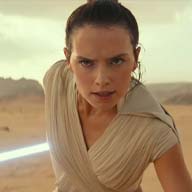
Frame-by-frame breakdown of the Star Wars Episode IX trailer
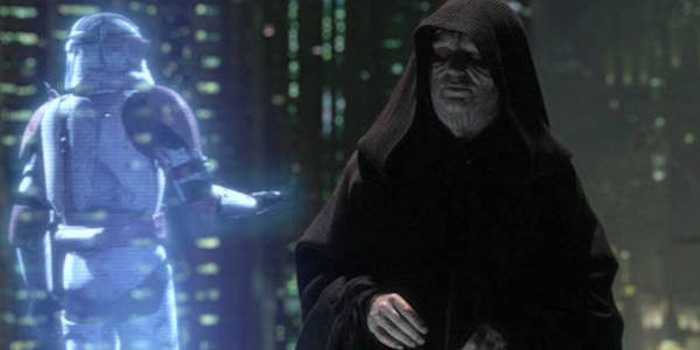
One of the prequel trilogy’s most spine-chilling moments comes in the form of Order 66. This hidden command is given to the Clone Army by Emperor Palpatine himself, causing them to turn on their Jedi Masters. Even though viewers already know the Jedi are all but wiped out by the time of the original trilogy, it’s still goosebump-inducing seeing it actually happen.
The sequence takes the form of a montage showing the Jedi that fans have come to know and love over the course of several movies brutally murdered by the troopers they know and trust. The Order 66 sequence is essentially an opportunity for fans to watch the rise of the Empire in real time.
6. Battle of Geonosis
Image courtesy Lucasfilm
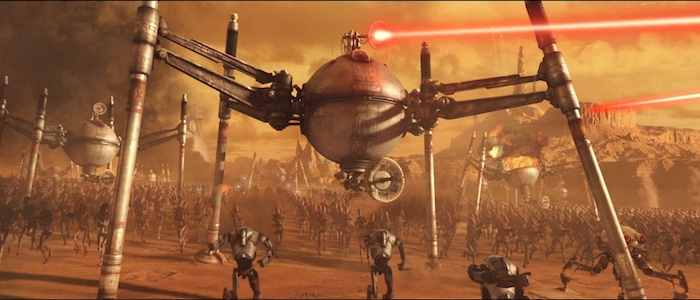
The massive land battle on Geonosis is not only an epic battle sequence but also a groundbreaking showcase of visual effects technology.
Pretty much all of the sequence is digitally created, and yet it still holds up against a lot of modern CG. From the dynamic lighting to the sheer number of soldiers on the field to the destruction of the fleeing capital ships, it’s easily one of the best parts of Episode II.
5. Yoda
Image courtesy Lucasfilm
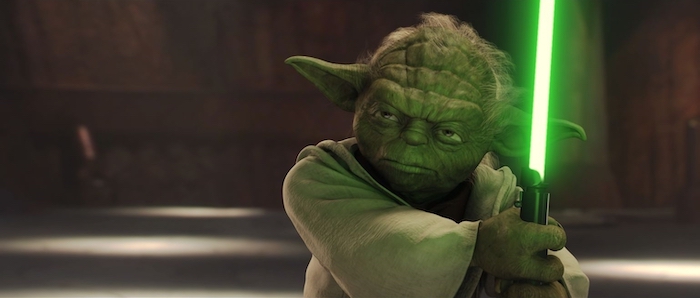
By the time fans meet Yoda in the original trilogy, he’s already reached his twilight years. Yoda in his prime is a far cry from the somewhat absent-minded, doddering mentor of Luke Skywalker. Yoda is a formidable fighter and the infinitely wise leader of the Jedi Order.
Whether pondering events from the council chamber or taking on opponents with his lightsaber, getting to see Yoda at the height of his powers is truly awesome to behold.
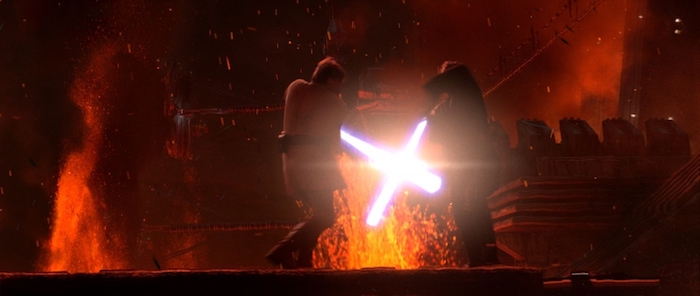
From the fiery backdrop to John Williams’ score to the mind-numbingly fast fight choreography, the duel between Anakin and Obi-Wan on Mustafar is cited by fans far and wide as one of the best moments of the prequels. This duel is essentially the moment that the prequels were leading up to: Anakin’s final descent to the dark side and his rise to power as Darth Vader.
Watching Obi-Wan land the final blow on his old friend and former Padawan and witnessing the horrific burn scars that lead to Anakin being encased in Darth Vader’s armor are probably some of the most heartwrenching moments of the Star Wars series.
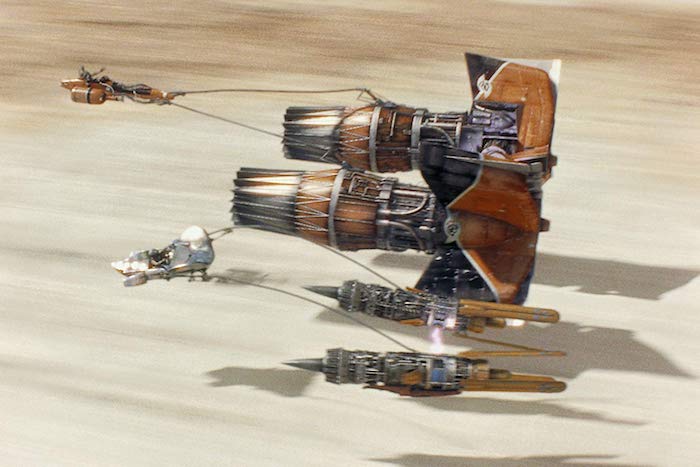
3. Pod Racing
Image courtesy Lucasfilm
Young Anakin got his start as a Pod Racer on Tatooine. This unique sport is dangerous, high-stakes, and infinitely entertaining to watch. Like a lot of the prequel trilogy’s visual effects, the Pod Racing sequences still stand up against modern movies.
It’s also undeniable that the fanbase loved Pod Racing just as much as Anakin did. It has since spawned several video-game adaptations and has become a central fixture in the Star Wars universe.
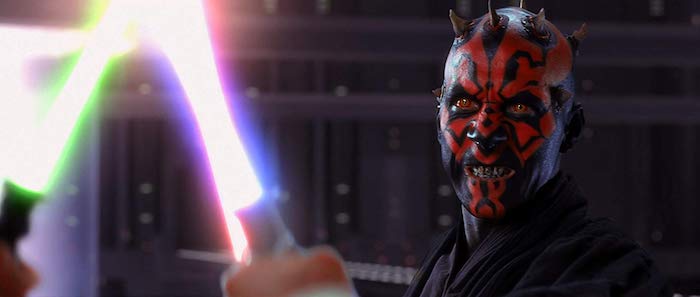
What’s not to like about Darth Maul? Though he’s a man of few words, this Sith assassin is known for his trademark double-bladed lightsaber and terrifying facial features that were inspired by the Devil himself.
Even after his (apparent) end in Episode I, Maul has since returned in several Star Wars spin-offs and most recently in a cameo role for “Solo: A Star Wars Story.” We wouldn’t be at all displeased if we got to see more of Maul in the future.
1. Palpatine
Image courtesy Lucasfilm
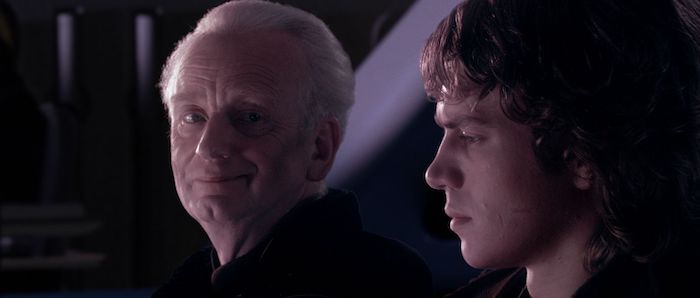
Before he was the cloaked embodiment of evil and head of the Galactic Empire, Palpatine was a seemingly mild-mannered Senator from Naboo. Seeing Palpatine’s origins played to perfection by Ian McDiarmid is an absolute delight, and fleshes out the character of Darth Sidious as more than just a villainous caricature.
Of particular note is a moment he shares with Anakin at the opera, telling him the Sith legend of Darth Plagueis. It becomes painfully easy to see how Palpatine was able to sway Anakin to the dark side and solidifies his status as one of the most sinister characters of all time.
Wrapping up
It is undeniable that the Star Wars prequels had their fair share of missteps, but they also had their fair share of iconic moments as well. If you’re ready to give the prequels a second chance, check out Softonic’s Where2Watch site to start streaming right now.