Access keys are revolutionizing digital access

In the ongoing evolution of cybersecurity, passkeys are emerging as a convenient solution for accessing accounts without the need for traditional passwords. This system uses cryptography to authenticate the user, allowing unlocking through biometric methods such as fingerprint or facial recognition, as well as PINs. Thus, it eliminates one of the biggest inconveniences of today’s digital life: the need to remember multiple passwords. Change is coming One of the main benefits of passkeys is their resistance to phishing. Unlike passwords that can be stolen through […]

In the continuous evolution of cybersecurity, passkeys are emerging as a convenient solution for accessing accounts without the need for traditional passwords. This system uses cryptography to authenticate the user, allowing unlocking through biometric methods such as fingerprint or facial recognition, as well as PINs. Thus, it eliminates one of the biggest inconveniences of today’s digital life: the need to remember multiple passwords.

Change is Coming

One of the main benefits of passkeys is their resistance to phishing. Unlike passwords that can be stolen through fake websites, passkeys do not allow this type of attack, significantly increasing security during login. Leading tech companies like Apple, Google, and Microsoft are backing this new standard, which is presented as a collective philosophy rather than just a commercial product.

In addition to improving security, passkeys promise to enhance the user experience by eliminating additional steps, such as verification via SMS or difficult-to-remember codes. However, concerns related to device loss persist, although it has been established that the recovery of passkeys can be linked to cloud synchronization or between devices.

Despite its advantages, the widespread adoption of passkeys faces obstacles. Not all users are ready for this transition, especially on platforms that still use traditional passwords or operate with hybrid systems. This is particularly relevant in shared environments, such as family or work devices, where managing access securely remains a challenge.

From a business perspective, passkeys are attractive due to their ability to reduce account theft and issues related to forgotten passwords. As more organizations adopt this technology, we could be witnessing the twilight of passwords as we know them. Maintaining a sensible backup method will be key in this new digital security landscape.
Google Ads will eliminate parked domains in 2026

Google Ads has announced that it will eliminate parked domains as an advertising option within the Search Partner Network starting February 10, 2026. This decision marks a significant change in the company’s advertising strategy, reflecting a trend towards improving the quality of the advertising spaces available in its network. Parked domains The company defined a parked domain as a web address that has been acquired but has not been sufficiently developed. Generally, these pages contain little or no content, as they are usually in […]

Google Ads has announced that it will remove parked domains as an advertising option within the Search Partner Network starting February 10, 2026. This decision marks a significant shift in the company’s advertising strategy, reflecting a trend towards improving the quality of the advertising spaces available in its network.

Parked domains parked

The company defined a parked domain as a web address that has been acquired but has not been sufficiently developed. Generally, these pages contain little or no content, as they are often under development or waiting for a new owner. Due to this lack of content, Google has chosen to remove this category as part of its effort to ensure that ads are displayed on more relevant and content-rich platforms.

In addition to the removal of the AFD as an advertising surface, the option to include these domains in the content suitability settings of advertising accounts will also be removed. This means that advertisers will no longer have the ability to select parked domains as part of their advertising strategy, which could have implications for those who have traditionally relied on this type of space for their campaigns.

It is important to note that, a year ago, Google had already announced that it would stop placing Google Ads on parked domains by default, which indicated a gradual move towards eliminating this practice. This change suggests a willingness from Google to focus on providing more effective and valuable experiences for both advertisers and users.

This development has sparked conversations in various forums and platforms, where many users are questioning the implications of this policy on the future of digital advertising. Some analysts may consider that this decision could redefine online advertising strategies, given the extensive use that has been made of parked domains in the past.

Las claves de acceso están revolucionando el acceso digital

En la evolución continua de la ciberseguridad, los passkeys están emergiendo como una solución conveniente para el acceso a cuentas sin la necesidad de contraseñas tradicionales. Este sistema utiliza criptografía para autenticar al usuario, permitiendo el desbloqueo a través de métodos biométricos como la huella dactilar o el reconocimiento facial, así como PINs. Así, se elimina uno de los mayores inconvenientes de la vida digital actual: la necesidad de recordar múltiples contraseñas.

El cambio está llegando

Uno de los principales beneficios de los passkeys es su resistencia al phishing. A diferencia de las contraseñas que pueden ser robadas a través de sitios web falsos, los passkeys no permiten este tipo de ataque, lo que incrementa significativamente la seguridad en el inicio de sesión. Compañías tecnológicas líderes como Apple, Google y Microsoft están respaldando este nuevo estándar, que se presenta como una filosofía colectiva en lugar de un simple producto comercial.

Además de mejorar la seguridad, los passkeys prometen facilitar la experiencia de los usuarios al eliminar pasos adicionales, como la verificación mediante SMS o códigos difíciles de recordar. Sin embargo, persisten preocupaciones relacionadas con la pérdida de dispositivos, aunque se ha establecido que la recuperación de passkeys puede vincularse con la sincronización en la nube o entre dispositivos.

A pesar de sus ventajas, la adopción generalizada de passkeys enfrenta obstáculos. No todos los usuarios están listos para esta transición, especialmente en plataformas que siguen utilizando contraseñas tradicionales o que operan con sistemas híbridos. Esto es especialmente relevante en entornos compartidos, como dispositivos familiares o laborales, donde gestionar el acceso de manera segura sigue siendo un reto.

Desde una perspectiva empresarial, los passkeys son atractivos debido a su capacidad para reducir el robo de cuentas y los problemas relacionados con contraseñas olvidadas. A medida que más organizaciones adopten esta tecnología, podríamos estar ante el ocaso de las contraseñas como las conocemos. Mantener un método de respaldo sensato será clave en este nuevo panorama de seguridad digital.

North Korea is already using Gemini to hack computers around the world

A group of North Korean hackers known as UNC2970 has begun using Google’s Gemini artificial intelligence model to carry out reconnaissance activities and cyberattacks. This behavior has been documented in a report from the Google Threat Intelligence Group (GTIG), which highlights a concerning crossover between professional research and malicious activities in the field of cybersecurity. AI is fine, man According to reports, UNC2970 has focused on companies in the cybersecurity and defense sector, using open-source intelligence (OSINT) to profile high-value targets and prepare specific phishing campaigns. […]

A North Korean hacker group known as UNC2970 has begun using Google’s Gemini artificial intelligence model to carry out reconnaissance and cyberattack activities. This behavior has been documented in a report from the Google Threat Intelligence Group (GTIG), which highlights a concerning intersection between professional research and malicious activities in the field of cybersecurity.

AI is fine, man

According to reports, UNC2970 has focused on companies in the cybersecurity and defense sector, resorting to open-source intelligence (OSINT) to profile high-value targets and prepare specific phishing campaigns. The group uses Gemini to map technical roles and their salaries, creating profiles that facilitate the design of targeted attacks.

Researchers have identified new types of malware that use Gemini, such as HONESTCUE, a framework that allows attackers to generate additional functionality code, and COINBAIT, a phishing kit designed to masquerade as a cryptocurrency exchange, aimed at collecting credentials. HONESTCUE, for its part, operates by using the Gemini API to receive source code in C#, which is executed in memory, leaving few traces on the target system.

Additionally, ClickFix campaigns have been detected that use AI-generated instructions to solve common computer problems, but ultimately distribute malware designed to steal information. Experts warn that assuming keeping the model weights private is enough for protection is a serious mistake; gathering information through queries can result in the replication of the model’s original behavior.

Google has taken steps to disrupt these attacks and has highlighted the growing risk posed by hacker groups that use tools like Gemini to accelerate the phases of the cyber attack cycle. As technology advances, so do the tactics of those looking to exploit it.

Google and OpenAI adopt AI-based advertising

This month, Google and OpenAI have taken a significant step by launching new AI-driven advertising offerings, after years of resistance. This decision responds to the growing pressure to monetize their platforms, driven by rising operational costs and the need to remain competitive in a rapidly evolving market. As AI platforms are forced to adopt advertising business models, it is expected that other players in the sector will follow the same path. The monetization of AI Despite the fear that advertising may drive users away, […]

This month, Google and OpenAI have taken a significant step by launching new AI-driven advertising offerings, after years of resistance. This decision responds to the growing pressure to monetize their platforms, driven by rising operational costs and the need to remain competitive in a rapidly evolving market. As AI platforms are forced to adopt advertising business models, it is expected that other players in the sector will follow suit.

Monetization of AI

Despite the fear that advertising may drive users away, Google and OpenAI have chosen to integrate paid advertising into their strategies. It is estimated that in the next four years, approximately 40 million people in the United States will become users of generative AI, which will directly influence the advertising strategies of companies. Thus, despite previous doubts, monetization becomes an urgent necessity for these platforms.

Experts indicate that, although brands and retailers rush to integrate AI-based advertising into their paid search strategies, it will be the organic optimization teams that are likely to see the most immediate returns. This shift in focus on monetization comes with projections that major artificial intelligence companies will increase their capital expenditures to over $375 billion by 2025, emphasizing that monetization is no longer an option, but a necessity.

The reasons behind the slow pace of selling advertising are due to concerns about how it could affect the growing user base. However, economic pressure may push more AI platforms to reconsider their monetization strategy in the near future.

Google will compensate for purchases made on the Play Store during these years

Google has committed to compensating users who made purchases on its Google Play platform between 2016 and 2023 as part of an antitrust settlement. This agreement, which totals 599 million euros, will allocate 539 million euros for compensation to those affected. However, users must meet certain requirements to qualify. The requirements To receive compensation, users must have made at least one purchase on Google Play during the mentioned period and have a legal address in the United States. It does not matter where they currently reside or their origin […]

Google has committed to compensate users who made purchases on its Google Play platform between 2016 and 2023 as part of an antitrust settlement. This agreement, which totals 599 million euros, will allocate 539 million euros for compensation to those affected. However, users will need to meet certain requirements to qualify.

The requirements

To receive the compensation, users must have made at least one purchase on Google Play during the mentioned period and have a legal address in the United States. The current place of residence or the origin of the purchase does not matter; the key is the U.S. address during the time of activity on the platform. The company has started sending notifications about the process as of December 2, 2025, informing many users of the steps to follow without the need to complete complicated forms.

Payments will be made automatically through platforms like PayPal or Venmo, using the email address or phone number linked to the Google Play account. Amounts will range from 1.71 euros to 3.77 euros per user, although this range could slightly increase depending on each user’s spending history in the store.

It is important to keep in mind two key dates in the process: February 19, 2026, will be the deadline for users to opt out of the agreement or raise objections, while the final hearing to approve the agreement is scheduled for April 30, 2026. In addition to the compensations, the pact will also require Google to implement changes in the distribution policies and payment methods of its store, thus promoting greater competition in the market.

Range Media Partners partners with Google to adapt the novel The Good Bride

Range Media Partners has announced a partnership with Google’s 100 Zeros production to adapt Jen Marie Wiggins’ novel The Good Bride for television. This collaboration marks an important step for the 2024 novel, which has already generated expectations within the entertainment world. The Eye of the Hurricane The story of The Good Bride is set a year after a devastating hurricane, a context that promises to explore the emotional depths and challenges of the characters trying to rebuild their lives amidst the ruins. The focus on the aftermath of a disaster […]

Range Media Partners has announced a partnership with Google’s 100 Zeros production to adapt the novel The Good Bride by Jen Marie Wiggins for television. This collaboration marks an important step for the 2024 novel, which has already generated excitement within the entertainment world.

The Eye of the Hurricane

The story of The Good Bride is set one year after a devastating hurricane, a context that promises to explore the emotional depths and challenges of the characters trying to rebuild their lives amidst the ruins. The focus on the aftermath of a natural disaster could offer a rich and relevant narrative, addressing themes of resilience and community, elements that have resonated strongly with the audience in times of crisis.

Station 26 will also join Range Media Partners and Google on this project, suggesting a robust and potentially ambitious production. Details about the cast or release date have not yet been announced, but the involvement of these three renowned entities suggests that a high-caliber creative team is being formed to bring the novel to life on the small screen.

With the growing popularity of novel adaptations in television format, the anticipation surrounding The Good Bride reflects the trend of seeking stories that emotionally connect with the audience while offering opportunities for deep visual exploration. As more details about this adaptation are revealed, fans of the original work and new viewers will be watching closely for this exciting development within the realm of dramatic series.

If you fear the dark web, stop trusting Google

Google has announced that it will end its dark web reporting tool in February 2026, less than two years after its launch in March 2023. The feature was designed to help users monitor if their personal information appeared on the dark web, an area of the internet where stolen data is often traded. If you appear on the dark web, tough luck According to the company, scans to detect new breaches on the dark web will be suspended on January 15, 2026, and the tool will cease to exist on the 16th of […]

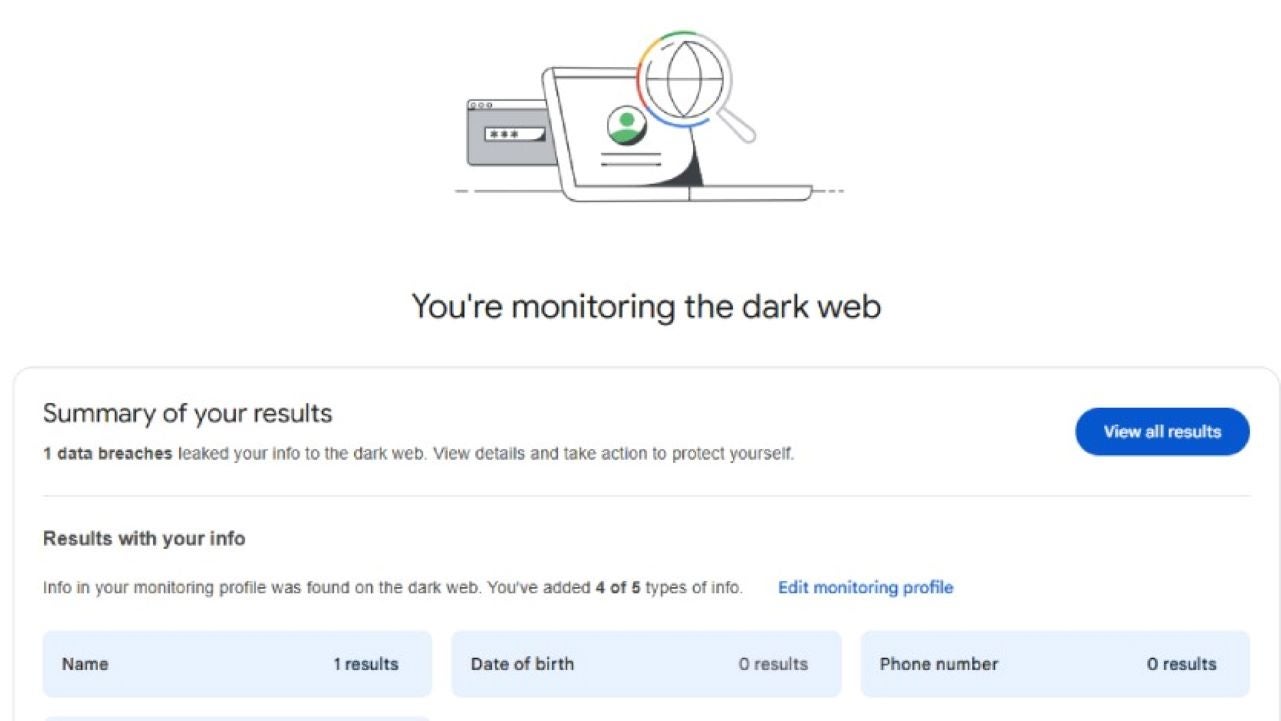
Google has announced that it will discontinue its dark web reporting tool in February 2026, less than two years after its launch in March 2023. The feature was designed to help users monitor if their personal information appeared on the dark web, an area of the internet where stolen data is often traded.

If you go out on the dark web, bad luck

According to the company, scans to detect new breaches on the dark web will be suspended on January 15, 2026, and the tool will cease to exist on February 16 of that same year. The decision is based on the feedback received, which indicated that, although the tool provided general information, it did not offer useful and clear steps for users to protect their personal information.

Google has expressed its intention to redirect its efforts towards developing tools that provide more specific and useful steps for online security. As part of this closure, the company promises to delete all data related to the dark web reporting tool once it is retired, although users have the option to delete their monitoring profile before the closure date.

Initially, the tool helped combat online identity fraud by allowing scans of personal data such as names, addresses, emails, phone numbers, and Social Security numbers. In July 2024, Google expanded this functionality to include all account holders, not just Google One subscribers.

Likewise, the company advises users to strengthen the privacy and security of their accounts by creating phishing-resistant passwords and applying multifactor authentication (MFA) methods. Additionally, they are suggested to remove their personal information from Google search results through the “Results about you” tool.

Disney has just sued Google for copyright. The blame, of course, is on AI

In a recent development that could mark a milestone at the intersection of technology and copyright, Disney has announced a strategic partnership with OpenAI. This collaboration suggests that the Mickey Mouse company may be seeking significant advancements in the field of artificial intelligence, possibly to enhance its content and operations. However, this news comes in a context of controversy, as Disney has accused Google of infringing copyright on a massive scale, using artificial intelligence models and services. Illegal and Artificial The lawsuit filed by Disney alleges that Google […]

In a recent development that could mark a milestone at the intersection of technology and copyright, Disney has announced a strategic partnership with OpenAI. This collaboration suggests that the Mickey Mouse company may be seeking significant advancements in the field of artificial intelligence, possibly to enhance its content and operations. However, this news comes in a context of controversy, as Disney has accused Google of massive copyright infringement, using artificial intelligence models and services.

Illegal and Artificial

The lawsuit filed by Disney alleges that Google has been marketing and distributing infringing images and videos, taking advantage of artificial intelligence tools. According to the details provided, Disney’s lawyers sent a cease and desist letter to the tech company, demanding that it immediately stop the alleged infringement. The seriousness of the accusations could lead to significant legal repercussions for Google if it is proven that its AI models have violated copyright laws.

The case raises crucial questions about the use of artificial intelligence in the creation and distribution of digital content. Could Disney be looking to the future with its partnership with OpenAI while taking strong action against copyright infringements in the digital age? As technology advances, the legal and ethical implications of artificial intelligence continue to evolve, and this confrontation between two industry giants is likely to have a lasting impact on the entertainment landscape.

This scenario highlights the need for a deeper dialogue about how emerging technologies are being used and what responsibilities companies have in this new digital ecosystem. The story is still unfolding and could have broader implications for the future of content creation.