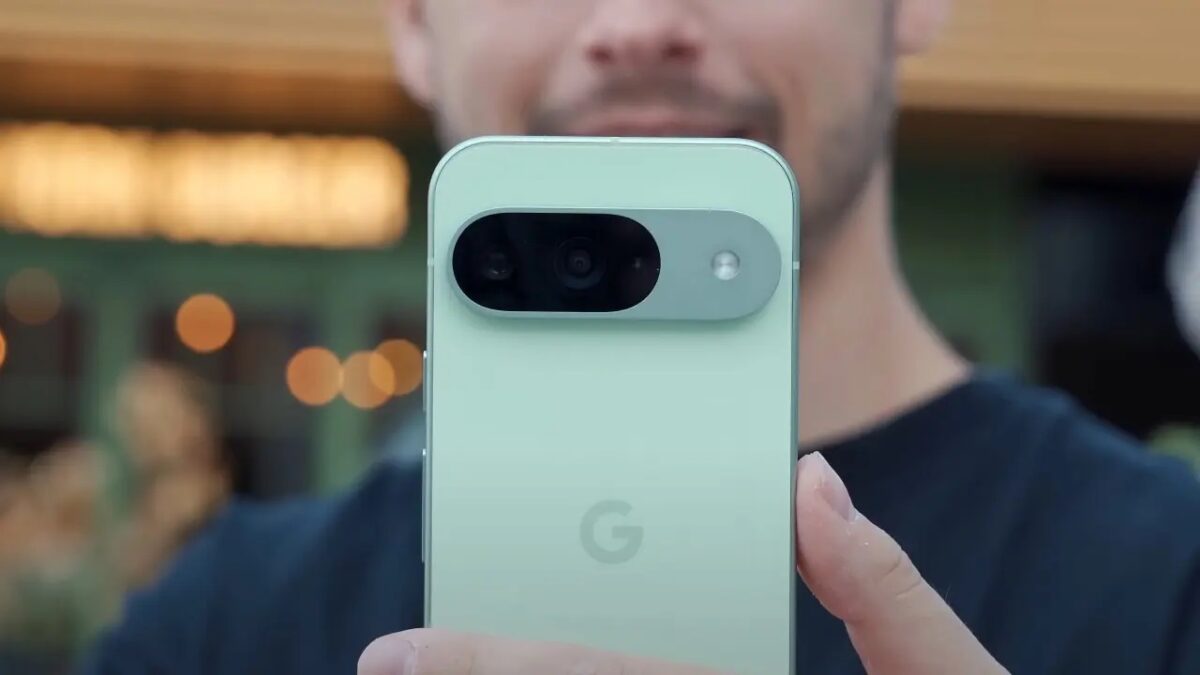
If you have a Google Pixel, the best thing is to update the software this May

The May 2025 security update for Google Pixel devices has begun rolling out since May 6, and includes a critical patch for a zero-day vulnerability known as CVE-2025-27363. According to the Android security bulletin, there are indications that this exploit may be under limited and targeted exploitation, highlighting the importance of updating devices as soon as possible to avoid potential threats. The May 2025 security patch for Google Pixel is released with 28 updates and fixes The May patch also includes a total of 28 […]

The May 2025 security update for Google Pixel devices has started rolling out since May 6, and includes a critical patch for a zero-day vulnerability known as CVE-2025-27363.

According to the Android security bulletin, there are indications that this exploit may be under limited and targeted exploitation, highlighting the importance of updating devices as soon as possible to avoid potential threats.

The May 2025 security patch for Google Pixel is released with 28 updates and fixes

The May patch also includes a total of 28 security updates and three specific bug fixes affecting Google Pixel 6 devices and newer models. Google strongly recommends that all users install this update as soon as it becomes available, emphasizing that the security of devices could be at risk if not updated in time.

A notable aspect of the update is the increase in the bootloader that implements anti-rollback measures. This means that, after installing this update, users will not be able to revert their devices to previous versions of Android 15, which is an action aimed at mitigating previous vulnerabilities. This move seems to be a direct response to the zero-day exploits addressed in the latest updates.

Google Pixel device owners should check for the availability of this patch through the Settings app, by navigating to System > Software update > System update and pressing “Check for update.” The rollout of the patch may vary depending on the device model and carrier, so some users may not see it immediately.

Improvements in security are crucial today, and this update seems to be a significant step towards protecting Pixel users from emerging threats. More details about the nature of the vulnerability are expected to be revealed in the coming weeks.

Mark Zuckerberg throws a tremendous jab at Tim Cook… at the expense of Sundar Pichai

During the Stripe Sessions 2025 conference, Meta’s CEO, Mark Zuckerberg, took the opportunity to position Apple as an adversary and Google as an ally. In a conversation with Stripe’s CEO, John Collison, about the recent court ruling in the U.S. that forces Apple to relax its rules in the App Store, Zuckerberg made an ironic comment: “Tim has had a bad week. I don’t want to add more, but I appreciate Sundar.” Zuckerberg criticizes Apple and praises Google at the Stripe Sessions 2025. This exchange highlights the tensions that exist […]

During the Stripe Sessions 2025 conference, Meta’s CEO, Mark Zuckerberg, took the opportunity to position Apple as an adversary and Google as an ally.

In a conversation with Stripe’s CEO, John Collison, about the recent court ruling in the U.S. that forces Apple to relax its rules in the App Store, Zuckerberg made an ironic comment: “Tim has had a bad week. I don’t want to add more, but I appreciate Sundar.”

Zuckerberg criticizes Apple and praises Google at the Stripe Sessions 2025

This exchange highlights the tensions that exist in the field of application platforms. Although both Apple and Google have faced criticism for their market policies, Epic Games’ frustration also extends to Google due to its anti-direction restrictions and a series of ongoing antitrust battles. However, Zuckerberg seems to be seizing the moment to emphasize a notable shift in the dynamics between these companies.

The recent situation benefits Stripe, which is seeing an increase in its popularity among developers who prefer its payment processing solutions, especially after Apple is forced to allow out-of-app purchases without commissions. This could drastically change the way developers interact with their platforms.

On the other hand, Zuckerberg has shared a troubling perspective on artificial intelligence, suggesting that it could be the answer to problems of isolation and lack of friendships. Meta’s vision, which includes holograms and artificial intelligence friends, has sparked criticism, as many suggest that the real solution lies in reconnecting with lost friends and fostering genuine human interactions in public places.

As a popular comment on social media points out, instead of relying on technology to fill the void of social relationships, it is advisable to go out, explore new places, and enjoy life outside of screens.

Google is no longer what it used to be: working for them is no longer the dream of every engineer

Professionals from Generation Z are moving away from companies like Google, which used to be seen as the ideal work model. Gone are the days when the company’s work culture attracted millennials, now considered less desirable due to recent reforms and cuts. Over the past year, Google has carried out massive layoffs in key units like Android, Chrome, and Pixel, further weakening its corporate image. Is Google losing its shine? Workers, frustrated by the changes The shift in work culture is palpable. Among the pressure of the […]

Professionals from Generation Z are moving away from companies like Google, which used to be seen as the ideal work model.

The time when the company’s work culture attracted millennials is behind us, now considered less desirable due to recent reforms and cuts.

Over the past year, Google has carried out mass layoffs in key units such as Android, Chrome, and Pixel, further weakening its corporate image.

Is Google Losing Its Shine? Workers Frustrated by Changes

The change in work culture is palpable. Amid the pressure of layoffs and internal restructuring, the company has begun to withdraw attractive benefits, such as free meals and work flexibility, which, according to experts, has diminished its appeal as a workplace.

In addition, new policies have been introduced that require employees to work up to 60 hours a week, under the threat of dismissal for those who do not meet the new performance criteria.

Recently, Google has modified its performance evaluation system, emphasizing that “high performance is more important than ever.” This strategy seems to be a way of additional pressure to keep employees focused and productive amid job uncertainty.

The layoffs and the new work culture have caused frustration among employees, who feel they are losing the opportunity to develop within one of the most influential companies in the world.

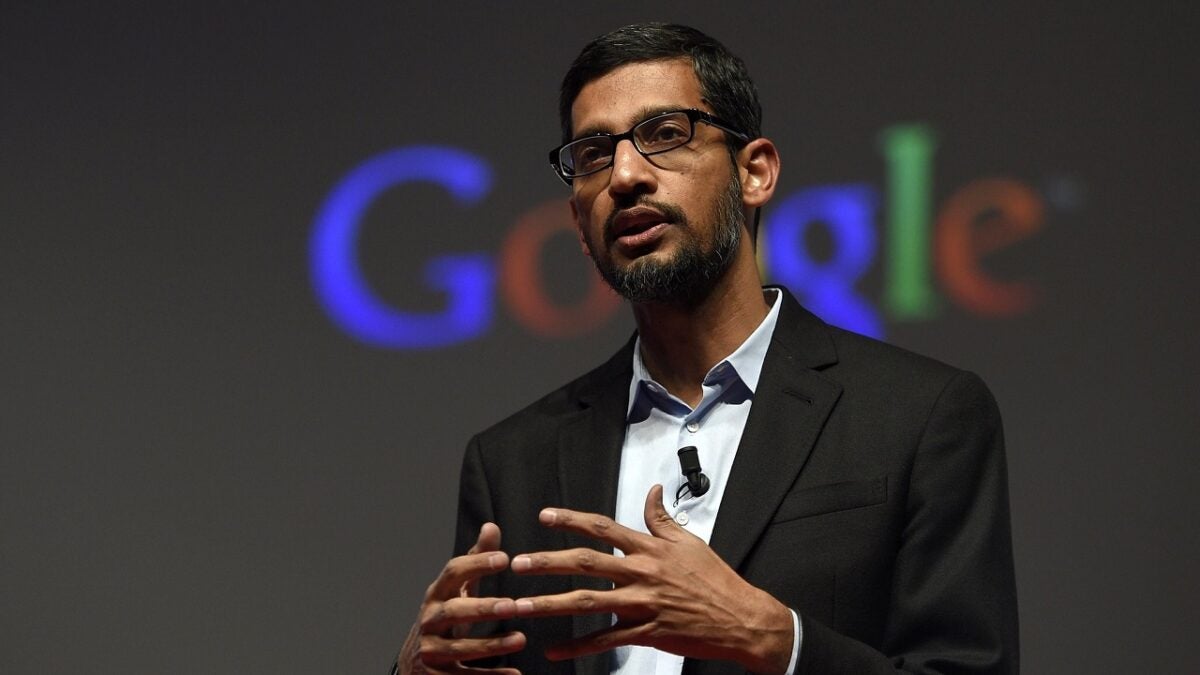
On the other hand, while the company faces growing dissatisfaction among its employees, top executives, including CEO Sundar Pichai, have seen significant increases in their compensation.

With investments in personal security also on the rise, the discrepancy between the measures taken towards upper management and the cuts affecting frontline employees is becoming increasingly evident. These factors are creating a shift in the perception of what it meant to work at Google.

Google wants you to talk to three people at once with its new update

Google has released a significant update for its Google Voice app, improving the calling experience for both personal and business users. The update, which began rolling out on May 1, introduces two main features: support for three-way calls and a revamped user interface to facilitate call management. The new three-way calling functionality allows users to initiate a call with one person and then add a third participant. This third caller is placed on hold before being merged into a conference call, allowing for a […]

Google has released a significant update for its Google Voice application, enhancing the calling experience for both personal and business users.

The update, which began to be rolled out on May 1, introduces two main features: support for three-way calls and a revamped user interface to facilitate call management.

The new three-way calling feature allows users to initiate a call with one person and then add a third participant. This third call is placed on hold before merging into a conference call, enabling smoother communication among all participants.

An improved interface to make your life easier

The interface has been restructured to make call management options more visible, such as the “Add” and “Merge” buttons, which now occupy a prominent place at the top of the options screen during a call.

Users will be able to easily access a list of suggested contacts by pressing the “Add” button, and the “Merge” option will be automatically enabled once the third participant has been added. This approach not only improves usability but also optimizes the conferencing experience, which has been highly requested by users.

However, it is important to highlight that the three-way calling feature will initially be available only to specific Google Workspace customers, who have Voice Starter, Voice Standard, and Voice Premier subscriptions, as well as to Standard SIP Link and Premier SIP Link customers. The interface updates, for their part, will reach all Google Voice users within approximately 15 days.

Additionally, a previous update in February introduced the “call delegation” feature, which allows users to transfer calls to others or confirm the transfer, thus expanding the functionality of the application in business environments. These improvements are part of an ongoing effort by Google to revitalize the overall experience of its voice application.

Will the anticipated Google Pixel 10 have a display that takes care of all of us?

Google is in the midst of developing the Pixel 10 smartphones, following its usual release schedule. However, what stands out the most is the special attention the company is paying to the screens of these devices, focusing on identifying how their panels affect users sensitive to pulse-width modulation (PWM). Pulse-width modulation is a technique used in OLED screens that causes flickering to enhance visual quality and brightness perception. Google is focusing on screen sensitivity in the upcoming […]

Google is in full development of the Pixel 10 smartphones, following its usual release schedule.

However, what stands out the most is the special attention that the company is paying to the screens of these devices, focusing on identifying how their panels affect users sensitive to pulse-width modulation (PWM).

Pulse width modulation is a technique used in OLED screens that causes flickering to enhance visual quality and brightness perception.

Google focuses on screen sensitivity in upcoming Pixel 10 smartphones

Although this is technically beneficial, it can trigger headaches and other symptoms in people who are sensitive to this type of flicker. So far, Pixel phones have stood out for having lower PWM rates compared to other high-end smartphones, suggesting the need for a flicker reduction option.

According to information provided to Android Central, Google is “aware and investigating” this issue and has promised updates later this year.

While there are no guarantees that the improvements will be implemented in the Pixel 10, it is reasonable to speculate that the next generation of devices could benefit from these innovations. It is rumored that the Pixel 10 could improve the PWM rate to 240 Hz or even 480 Hz, following in the footsteps of competitors like Samsung, Honor, and OnePlus.

For users who suffer from sensitivity to blinking, it could be crucial for Google to integrate an accessibility mode that reduces blinking, a feature that has already been adopted by other brands in the industry.

Although there are still no specific details about the announcement date of the Pixel 10 smartphones, Google’s attention to PWM sensitivity is a positive step in the right direction, not only for those who are susceptible to these issues but for all users in general.

Google Photos Introduces Exciting Ultra HDR Effect for Photo Enhancements

In an exciting update for photography enthusiasts, Google Photos has introduced the ability to enhance images with its new Ultra HDR effect.

This feature can be applied not only to newly taken photos but also to those previously uploaded, allowing users to revamp their photo libraries with enhanced vibrancy and saturation.

The rollout of the Ultra HDR functionality has begun, with select Google Photos users already experiencing the enhancement.

Google Photos Introduces Exciting Ultra HDR Effect for Photo Enhancements

However, it remains unclear if the feature will be limited to high-end Android devices or if it will eventually expand to a broader range of smartphones. As of now, users eager to try this feature may need to exercise patience as it becomes more widely available.

The Ultra HDR mode promises significant improvements in the color palette of standard images. Users can look forward to a more vibrant and saturated look, which should elevate the overall quality of their photos. Importantly, this new effect is backward compatible, meaning that even users without HDR display capabilities will still enjoy enhanced images, albeit with traditional color ranges.

Previously spotted in development as early as September 2024, the Ultra HDR feature has finally made its way into version 7.24.0.747539053 of the Google Photos app.

Users can find the capability within the Adjust section of the editing tools, where a slider will enable them to control the intensity of the HDR effect. This will replace the existing HDR Effect option, making for a more streamlined editing experience.

While there’s no confirmed timeline for a full rollout to all users, the quick deployment to some suggests that the feature could become widely accessible sooner rather than later. As excited users await this update, they can preview the Ultra HDR effect on GitHub—just ensure that you’re using an HDR-compatible device to fully appreciate its capabilities.

Google asks Trump to reverse the order to sell Google Chrome

Google is urging officials from the U.S. Department of Justice, under the Trump administration, to abandon their crusade against the company, a crusade that involved forcing them to sell their Chrome browser. And they claim it is for national security. According to sources close to the discussions, representatives from Alphabet Inc. met with the government last week to advocate for a less aggressive approach while awaiting a court resolution on what a judge has described as an illegal monopoly in online search. The Biden administration, in November, asked Google […]

Google is urging officials from the United States Department of Justice, under the Trump administration, to abandon their crusade against the company, a crusade that involved forcing them to sell their Chrome browser. And they claim it is for national security.

Google Chrome DOWNLOAD

According to sources close to the discussions, representatives of Alphabet Inc. met last week with the government to advocate for a less aggressive approach while awaiting a court ruling on what a judge has described as illegal monopoly in online search.

The Biden administration in November asked Google to sell its Chrome browser and adopt other changes to its business structure, including ending exclusivity payments to companies like Apple.

Google does not want to get rid of its golden goose

Despite Google’s previous opposition to this plan, recent discussions may reflect its current strategy in the case that is progressing under the Trump administration.

Peter Schottenfels, spokesperson for Google, stated that the company is concerned about how the current proposals from the Department of Justice could harm the U.S. economy and national security.

This argument is not new for Google, which has expressed similar concerns in response to antitrust pressure from regulators and lawmakers.

District Judge Amit Mehta, who has been asked to make decisions regarding Google’s future practices in hearings scheduled for next month, will review the latest proposals from both parties.

Among the demands of the Department of Justice is the sale of the Chrome browser and the restriction of investments in artificial intelligence companies, which has raised concerns in the tech sector.

Google Chrome DOWNLOAD

With the recent nomination of Gail Slater to lead the antitrust division of the Department of Justice, key decisions are expected to be made in the coming weeks regarding the direction of the case and the potential implications for Google and the tech landscape in the United States.