OpenAI has begun to introduce advertising in the conversations of the free version of ChatGPT, which radically transforms the perception of this space, which many users considered neutral and private. The inclusion of ads has generated concern among users, who may feel that their interactive experience has become more commercial and less personal. This change could result in a decrease in loyalty to the service, as some users might opt for platforms that offer a smoother experience, such as Google’s Gemini. Ads, a barrier for many millions of users Gemini has achieved a […]
OpenAI has begun to introduce advertising in the conversations of the free version of ChatGPT, which radically transforms the perception of this space, which many users considered neutral and private.
The inclusion of advertisements has raised concerns among users, who may feel that their interactive experience has become more commercial and less personal.
This change could result in a decrease in loyalty towards the service, as some users may opt for platforms that offer a smoother experience, such as Google’s Gemini.
Gemini has achieved remarkable growth, reaching 750 million monthly users. This figure highlights the effectiveness of Google’s approach, which integrates Gemini naturally into its products, facilitating its adoption and daily use.
Users looking for alternatives to ChatGPT might find Gemini an attractive option, as this service currently does not display ads, positioning it as a less intrusive digital assistant.
Despite the fact that OpenAI’s business model seeks to diversify its income through advertising, the introduction of ads in ChatGPT alters the emotional dynamics of the service.
The user experience can be disrupted by interruptions in conversations due to advertising messages, which represents a significant change in their daily interaction with the tool. As these small annoyances accumulate, the perception of the product can change drastically.
In a digital environment flooded with advertising, many users who were initially drawn to the clean experience of ChatGPT may reconsider their options. If Google continues its growth trend through the accessibility of Gemini, it could attract a considerable number of users seeking a more satisfying and less ad-laden experience.
A recent analysis of predictions about the near future emphasizes a significant transformation in interaction with artificial intelligence (AI) by 2026. AI assistants, such as ChatGPT, Gemini, Perplexity, and Claude, agree that the trend towards more autonomous interactions will gain momentum, where users will choose to approve automatic actions instead of initiating manual commands. ChatGPT points out that administrative tasks, such as drafting responses and organizing calendars, will be handled by AI by default, leaving users responsible for approving or modifying such actions. The rise of autonomous AI: a […]
A recent analysis of predictions about the near future emphasizes a significant transformation in interaction with artificial intelligence (AI) by 2026.
AI assistants, such as ChatGPT, Gemini, Perplexity, and Claude, agree that the trend towards more autonomous interactions will gain strength, where users will choose to approve automatic actions instead of initiating manual commands.
ChatGPT indicates that administrative tasks, such as drafting responses and organizing calendars, will be handled by AI by default, leaving users responsible for approving or modifying these actions.
¿Cómo será la economía mundial en 2026? La incertidumbre complica cada vez más las previsiones económicas, pero los ojos están puestos en Trump, Ucrania y la IA. Europa se la juega entre Francia y Alemania https://t.co/DtD1yQbT7w
The Rise of Autonomous AI: A Look at the Year 2026
This change promises a work environment where mid-level roles will continue to decline, giving way to a greater proportion of employees with multiple “fractional” roles instead of fixed jobs, which will help mitigate layoffs in a constantly evolving market.
It is also noteworthy that Generation Z will drive the adoption of a four-day workweek, prioritizing flexibility and the pursuit of more meaningful work. The four attendees agreed in anticipating that anonymous content will lose relevance, with a growing focus on known voices and authors in a digital context saturated with AI-generated content.
— CIDOB (Barcelona Centre for International Affairs) (@CidobBarcelona) January 2, 2026
The use of Small Language Models (SLMs), which operate locally on devices, is emerging as a key solution to protect data privacy. In the context of increasing instability in global supply chains, the emergence of local community exchange networks is anticipated, an innovative response to emerging challenges.
The landscape emerging for 2026 is characterized by a balance between the integration of AI into everyday life and a quest for more authentic and disconnected experiences, suggesting that the near future presents both opportunities and challenges in the labor and social spheres.
South Korea has taken a significant step in its ambition to become one of the leading nations in the field of artificial intelligence (AI) by presenting its hyperscale model, A.X K1, developed by SK Telecom. This model has 519 billion parameters, although in practical use it activates only 33 billion, allowing it to maintain a high level of accuracy while optimizing resource consumption. The architecture of the A.X K1, known as “mixture of experts,” dynamically selects the necessary parameters for each task, improving the efficiency and applicability of the model
South Korea has taken a significant step in its ambition to become one of the leading nations in the field of artificial intelligence (AI) by presenting its hyperscale model, A.X K1, developed by SK Telecom.
This model has 519 billion parameters, although in practical use it activates only 33 billion, allowing it to maintain a high level of accuracy while optimizing resource consumption.
The architecture of A.X K1, known as “mixture of experts,” dynamically selects the necessary parameters for each task, which improves the efficiency and applicability of the model.
Korea’s first 500B param scale AI model, A.X K1.
Launched by SK Telecom.
This is a national-level move into the top tier of hyperscale AI,
The program is tied to Korea’s government Sovereign AI Foundation Model effort and a consortium spanning SK Telecom, universities, and AI… pic.twitter.com/Wk45FdYcdE
An AI to Compete with China and the American Giant
This approach also allows the model to transfer knowledge to smaller and specialized versions, making it suitable for devices with limited resources. This feature is crucial for expanding access to AI in various fields, from education to robotics.
SK Telecom aims for its A.X K1 to be the foundation of an “AI for everyone,” through collaborations with universities and associations. Its open-source nature will allow others to develop applications in diverse sectors such as video games and multilingual search services.
Corea del Sur acaba de encender A.X K1. "Una IA para todos" que mete al país en la carrera de China y EEUU https://t.co/XY6FHbP729
This is part of a broader strategy to establish a robust AI ecosystem in the country.
The rise of AI has begun to significantly affect the economy of various sectors, including difficulties in the RAM market, as world powers compete for leadership in this technology.
Tae Yoon Kim, one of the leaders in the development of the A.X K1, has stated that the goal is to establish South Korea as one of the top three nations in artificial intelligence, in a race that involves powers like the United States and China.
OpenAI is advancing in the integration of ads within ChatGPT, seeking to create a new form of digital advertising that responds to user interests, using historical conversation data. According to sources, the company is considering various strategies to incorporate these ads into the chatbot’s responses, which includes sponsored content or ads that appear on the side while interacting with the platform. Despite OpenAI being in a phase of reevaluation following the recent alert from CEO Sam Altman about competition with Google Gemini, the implementation of ads in ChatGPT is still in […]
OpenAI is advancing in the integration of ads within ChatGPT, seeking to create a new form of digital advertising that responds to users’ interests, using historical conversation data.
According to sources, the company is considering various strategies to incorporate these ads into the chatbot’s responses, which includes sponsored content or ads that appear on the side while interacting with the platform.
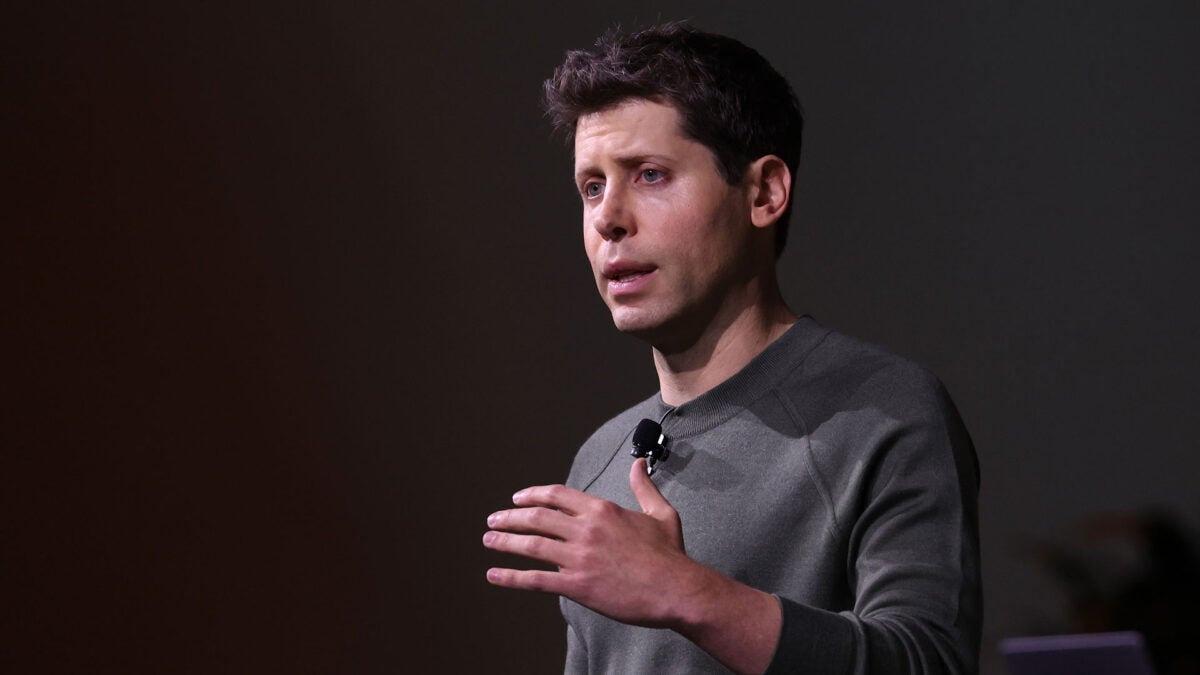
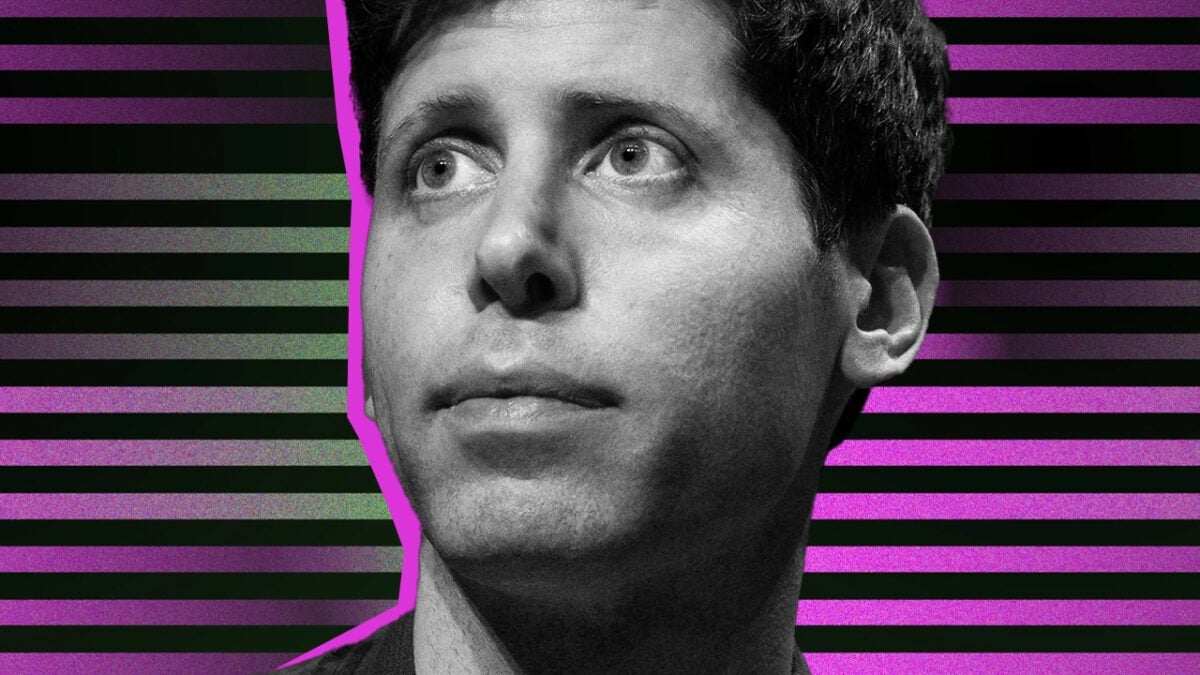
Despite OpenAI being in a phase of reevaluation following the recent alert from CEO Sam Altman about the competition with Google Gemini, the implementation of ads in ChatGPT remains on the agenda.
The future of ChatGPT includes ads as it competes with Google Gemini
OpenAI is testing ads inside ChatGPT responses. This will fail, and not for the reasons people think.
Users tolerate ads to access content they want. But AI's entire value proposition is removing friction.
Ads reintroduce the exact friction users paid to escape.
Altman has emphasized the need to improve the personalization, speed, and reliability of the chatbot, which has led the company to pause other projects. However, the creation of advertisements seems to be an ongoing priority.
Currently, ChatGPT generates revenue through subscriptions, API access, and enterprise solutions, although OpenAI has not yet managed to be profitable since its founding in 2015.
The company is projected to start generating revenue from non-paying users by 2026, with an estimated 2 dollars per year per user that could increase to 15 dollars by 2030.
🚨 Breaking: ChatGPT may soon show ads inside conversations as OpenAI weighs new monetization ideas.
This could impact the free user experience if it moves forward.
In comparison, Google’s advertising division generated $237.8 billion in revenue in 2023, suggesting that OpenAI may be following a business model similar to that of the tech giant.
However, the possible implementation of ads in ChatGPT has raised concerns about privacy, as the platform has access to a significant amount of information about its users, leading to questions about how monetization will be balanced with the delivery of organic and relevant results.
Microsoft has integrated its artificial intelligence assistant, Copilot, into several of its products, including Windows 11, Word, Outlook, and Edge. However, this integration has generated divisions among users. Despite Windows 11 having approximately 700 million users, many still prefer Windows 10, citing issues such as the requirement for TPM 2.0 hardware and the perception that Windows 11 is an overloaded operating system. The numbers are revealing: only around 33 million active users are using Copilot, which represents just 2.5% of all Windows 10 and 11 users
Despite the fact that Windows 11 has approximately 700 million users, many still prefer Windows 10, citing issues such as the requirement for TPM 2.0 hardware and the perception that Windows 11 is an overloaded operating system.
The numbers are revealing: only about 33 million active users are using Copilot, which represents just 2.5% of all Windows 10 and 11 users.
Copilot wasn't asked for by users, but by shareholders – and quite frankly, it shows. https://t.co/Cf3wDKtBpr
An AI that nobody uses and that costs Microsoft billions
This figure is remarkably low compared to ChatGPT, which has hundreds of millions of weekly users, raising questions about the effectiveness and real utility of Copilot.
This is compounded by criticism from former Microsoft employees, who have questioned the direction in which Copilot is being developed and the company’s focus on its integration into Windows.
Despite this resistance, Microsoft seems committed to keeping Copilot at a central place within its ecosystem, which has generated frustration among some users.
Microsoft warns Windows 11's upcoming AI upgrade has security and performance implications.
Microsoft says Agentic Workspace in Windows 11 will not only have access to some personal folders, but also your apps.
The outlook is not encouraging for Copilot. With the competition from Google’s Gemini AI, it is clear that even AI enthusiasts tend to prefer solutions that are not strictly tied to Windows.
In this context, rumors could arise about a reevaluation of Microsoft’s strategy, suggesting that a return to simplicity in Windows design could be considered, instead of addressing the growing demand for AI integration.
Artificial intelligence (AI) is revolutionizing the advertising industry, offering new opportunities in processes such as ideation, content creation, market research, campaign optimization, and tracking ad visibility. This transformation is being driven by both technology giants and emerging startups that develop tools based on generative artificial intelligence (genAI). The current environment presents a significant challenge for advertising agencies, which are forced to demonstrate their value in an increasingly automated market. Advertising and AI: doomed to understand each other With the arrival of […]
Artificial intelligence (AI) is revolutionizing the advertising industry, offering new opportunities in processes such as ideation, content creation, market research, campaign optimization, and tracking ad visibility.
This transformation is being driven by both technology giants and emerging startups that are developing tools based on generative artificial intelligence (genAI).
The current environment presents a significant challenge for advertising agencies, which are forced to demonstrate their value in an increasingly automated market.
"Cine"
Porque la IA ya reemplaza a los actores y locaciones: este comercial de Ariel es el primero en ser producido 100% con inteligencia artificial en Argentina, y lo único real es que te saca las manchas. pic.twitter.com/zUQn3PKXb9
— Tendencias en Argentina (@porqueTTarg) June 6, 2025
Advertising and AI: doomed to understand each other
With the arrival of comprehensive solutions for ad deployment, platforms are facilitating an approach where companies only need to define their objectives and budgets, while technology takes care of the rest.
Mark Zuckerberg, CEO of Meta, has indicated that this is the fundamental purpose of these analytics suites, which range from asset creation to automated budgeting.
However, these genAI tools pose a considerable risk to agencies, potentially discouraging brands from collaborating and investing in traditional advertising services.
These ads look like they’re from Nike, KFC, and Coca-Cola…
Despite this, the industry is not doomed; agencies still possess crucial resources that go beyond simple content creation. Those that manage to thrive in the AI era will be those that offer an effective value proposition, highlighting their expertise, human oversight, and efficient distribution strategies.
It is expected that artificial intelligence will be the most significant disruptor of the advertising agency model in the near future, requiring rapid evolution to survive in this new reality.
Agencies must adapt and find ways to add value that maintain their relevance in an increasingly automated and artificial intelligence-driven market.
Google has launched an internal initiative called “TorchTPU” aimed at making its Tensor Processing Units (TPUs) fully compatible with PyTorch, a development that could challenge NVIDIA’s monopoly in the field of artificial intelligence. NVIDIA has dominated the market thanks to its popular CUDA software platform, which only works with its own chips, creating significant barriers for other manufacturers and developers. This situation has led to the fact that, despite having superior hardware, other competitors cannot match NVIDIA’s success due to the lack of compatible software. Can NVIDIA fall […]
NVIDIA has dominated the market thanks to its popular CUDA software platform, which only works with its own chips, creating significant barriers for other manufacturers and developers.
This situation has led to the fact that, despite having superior hardware, other competitors cannot match NVIDIA’s success due to the lack of compatible software.
Google’s TPUs, which were previously optimized for Jax, the company’s own platform, will now seek to align with the industry standard, which has been established by PyTorch thanks to CUDA.
To accelerate this process, Google has established a partnership with Meta, the company behind PyTorch. This collaboration is notable given that Meta has also become dependent on NVIDIA and is interested in finding alternatives that reduce its own operating costs.
Since 2022, Google has started offering its TPUs to the public, turning them into a significant source of income, as well as a viable option for companies dedicated to artificial intelligence, such as Anthropic.
Through this opening, Google is transforming its TPUs from an internal resource into a competitive commercial offering, allowing customers greater choice and flexibility in their AI solutions.
This movement marks a collective attempt by several companies, including competitors like Huawei and Chinese manufacturers, to develop alternative ecosystems to CUDA and put an end to NVIDIA’s dominance in the market.
In this context, it becomes evident that the combination of software and hardware is crucial for success in the field of artificial intelligence, and the struggle for competitiveness is far from over.
Hannah Wong, Director of Communications at OpenAI, has announced that she will leave the company at the end of January 2025, after nearly five years in the role. Wong joined OpenAI in 2021, coming from Apple, when the company was still a small research lab. Her leadership has been crucial during a period of significant growth and interest in OpenAI, especially following the launch of ChatGPT. Under her direction, the communications team expanded from about eight to more than 50 employees across various regions, including the United States, Europe, and Asia. Hannah Wong announces her departure from […]
Hannah Wong, Director of Communications at OpenAI, has announced that she will leave the company at the end of January 2025, after nearly five years in the position.
Wong joined OpenAI in 2021, coming from Apple, when the company was still a small research lab. His leadership has been crucial during a period of significant growth and interest in OpenAI, especially following the launch of ChatGPT.
Under her leadership, the communications team expanded from about eight to more than 50 employees across various regions, including the United States, Europe, and Asia.
Hannah Wong told staff she is moving on to her “next chapter.” The company will be running an executive search to find a replacement, according to a memo. https://t.co/zLoz6H0Llq
Hannah Wong announces her departure from OpenAI after nearly five years
Wong has commented that his decision has been personal, allowing him to take a step back to dedicate time to his family before taking on his next professional challenge.
In the meantime, Lindsey Held Bolton, Vice President of Communications, will take over the leadership of the communications team, while Kate Rouch, Director of Marketing, will be responsible for the search for the next Director of Communications.
The departure of Wong was announced in the same week that OpenAI confirmed that George Osborne, former Chancellor of the United Kingdom, will be the new Head of OpenAI for Countries. Osborne will play a key role collaborating with governments to modernize systems and facilitate the integration of artificial intelligence into public services.
Hannah Wong ha comunicado al personal que pasa a su "siguiente capítulo". La empresa iniciará una búsqueda de ejecutivos para encontrar un sustituto. https://t.co/zwa6M5IZ6J
In addition, OpenAI is involved in several significant projects, such as the Stargate Project, valued at 500 billion dollars, the launch of Sora 2, and the update of GPT-5.2.
Possible restructurings within the company have also been mentioned ahead of a rumored initial public offering (IPO). Sam Altman and Fidji Simo, leaders of OpenAI, have acknowledged Wong’s impact on the public perception of the company, highlighting his significant legacy in communicating OpenAI’s mission and achievements.
During the holiday season, the risk of falling for scams increases significantly. With the hustle of buying gifts, purchasing insurance for new tech devices, and making donations, scammers see an opportunity to try to deceive the unwary. These scams can be surprisingly well disguised, and it is essential to stay alert. A useful tool that users can employ to detect potential fraud is chatbots like ChatGPT and Gemini. If you receive a suspicious email, text message, or order confirmation, you can input this information into a chatbot. These tools are designed to identify common warning signs, such as […]
These scams can be surprisingly well disguised, and it is essential to stay alert. A useful tool that users can employ to detect potential frauds are chatbots like ChatGPT and Gemini.
If you receive a suspicious email, text message, or order confirmation, you can enter this information into a chatbot. These tools are designed to identify common warning signs, such as urgent language, requests for keys and unusual payment methods, as well as grammatical errors and unreliable email addresses.
Scammers don’t expect us to use AI to stop them
Additionally, chatbots can translate complicated messages and highlight truths or issues that suggest they are not real. This aspect is especially useful in tech scams, where scammers often complicate information to confuse victims. Similarly, if you receive an offer that seems too good to be true, you can use ChatGPT to assess its legitimacy, whether they are investment opportunities or unexpected refunds.
If you have already fallen for a scam, ChatGPT can assist you in drafting a response that does not compromise sensitive information and discourages the scammers. Achieving the right tone in the response can be a challenge, but this tool can help you increase your security in such situations.
British mobile operator 02 created an AI voice bot called “Daisy” to combat phone scammers.
Daisy is an “elderly grandmother” that isn’t very good with technology. She’s a bit hard of hearing and goes on random tangets ahout knitting and food recipes.
For those who wish to get ahead, ChatGPT can also provide information about the most common scams during the holiday season, warning about tricks such as fake delivery messages, fake retail sites, and gift card-related fraud. Staying informed is key to protecting oneself and enjoying the festive season without setbacks.
You just have to describe to ChatGPT what you want to edit or how you want to do it, and the applications Photoshop, Acrobat, and Express will do it for you… or they will show you the tool you need to do it. It’s that simple. Upload a photo to ChatGPT, request the changes you want, and wait for the AI to do it for you. Adobe has launched today Adobe Photoshop, Adobe Express, and Adobe Acrobat for ChatGPT, bringing its creative and productivity applications to the 800 million users of the OpenAI platform. Adobe’s applications for ChatGPT are based on the innovation of […]
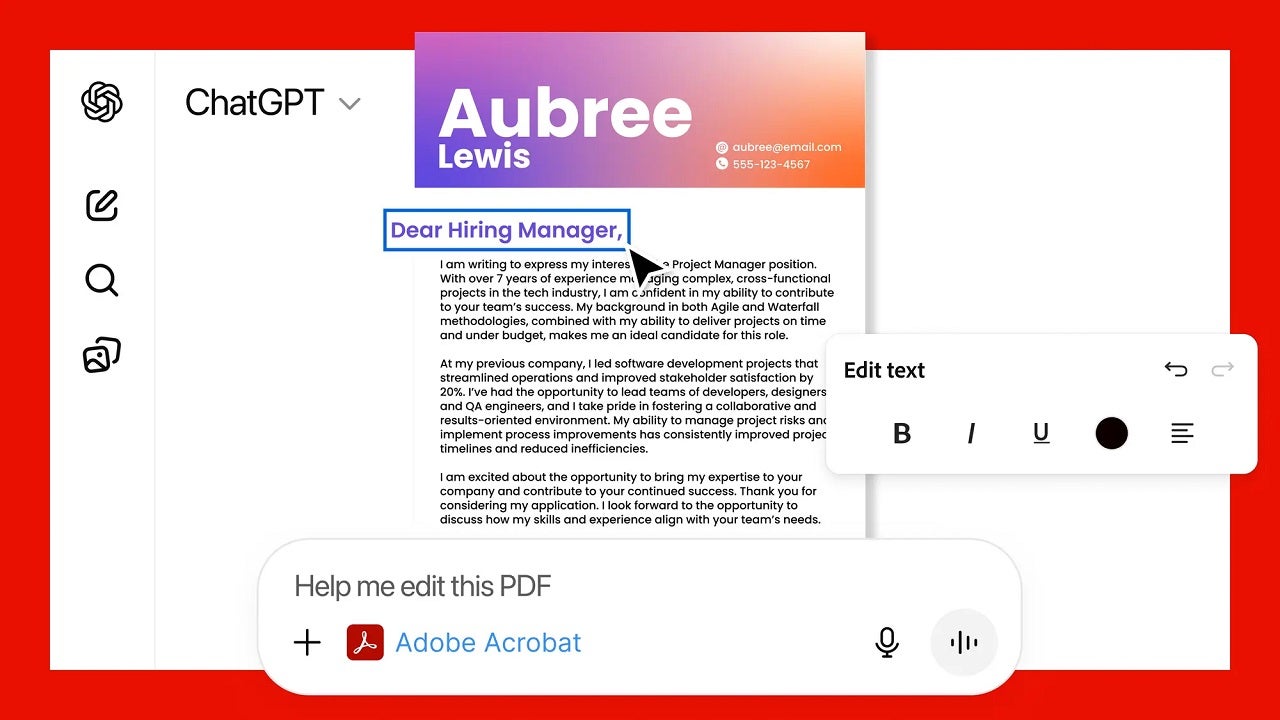
You just have to describe to ChatGPT what you want to edit or how you aim to do it, and the applications Photoshop, Acrobat, and Express will do it for you. Or they will show you the tool you need to do it. It’s that simple. Upload a photo to ChatGPT, ask for the changes you want, and wait for the AI to do it for you.
Adobe’s applications for ChatGPT are based on the company’s innovation in agency artificial intelligence, allowing everyone to easily enhance their vacation photos, design event invitations, and create polished and professional documents. Simply by describing what they want to achieve in their words. The idea is that everyone can edit, even without knowledge.
“We are excited to incorporate Photoshop, Adobe Express, and Acrobat directly into ChatGPT, combining our creative innovations with the ease of ChatGPT to make creativity accessible to everyone,” says David Wadhwani, president of digital media at Adobe. “Now, hundreds of millions of people can edit with Photoshop simply by using their words directly on a platform that is already part of their daily lives.”
What does Adobe’s arrival at ChatGPT mean for users?
Adobe applications are free to use and can be activated by typing the name of the application along with an uploaded file in the chatbot and a conversational instruction, such as “Adobe Photoshop, help me blur the background of this image.”
To make things easier, ChatGPT users will not have to specify the name of the application again during the same conversation to make additional changes. Depending on the instructions, Adobe applications may offer a selection of results to choose from or provide a user interface element that the user can manually control, such as Photoshop sliders to adjust contrast and brightness.
What can we do in Adobe through ChatGPT?
That said, the ChatGPT applications do not offer all the features of Adobe’s desktop software.
In Adobe’s words, the Photoshop application can edit specific sections of images, apply creative effects, and adjust image settings such as brightness, contrast, and exposure.
Acrobat in ChatGPT can edit existing PDF files, compress and convert other documents to PDF format, extract text or tables, and merge multiple files.
The Adobe Express application, for its part, allows ChatGPT users to generate and edit designs, such as posters, invitations, and graphics for social media.
Everything in the design can be edited without leaving ChatGPT, from replacing text or images to modifying colors and animating specific sections. And if ChatGPT users want more detailed control over a project they have started in the chatbot, they can open those photos, PDF files, and designs directly in Adobe’s native applications to continue where they left off.
Full compatibility with PC, macOS, Android, and iOS
This follows OpenAI’s launch of application integrations for ChatGPT in October.
This is also the last step in Adobe’s plan to implement agent-based AI solutions that allow the use of its creative applications in a more conversational way, removing some skill barriers needed for photo editing and design.