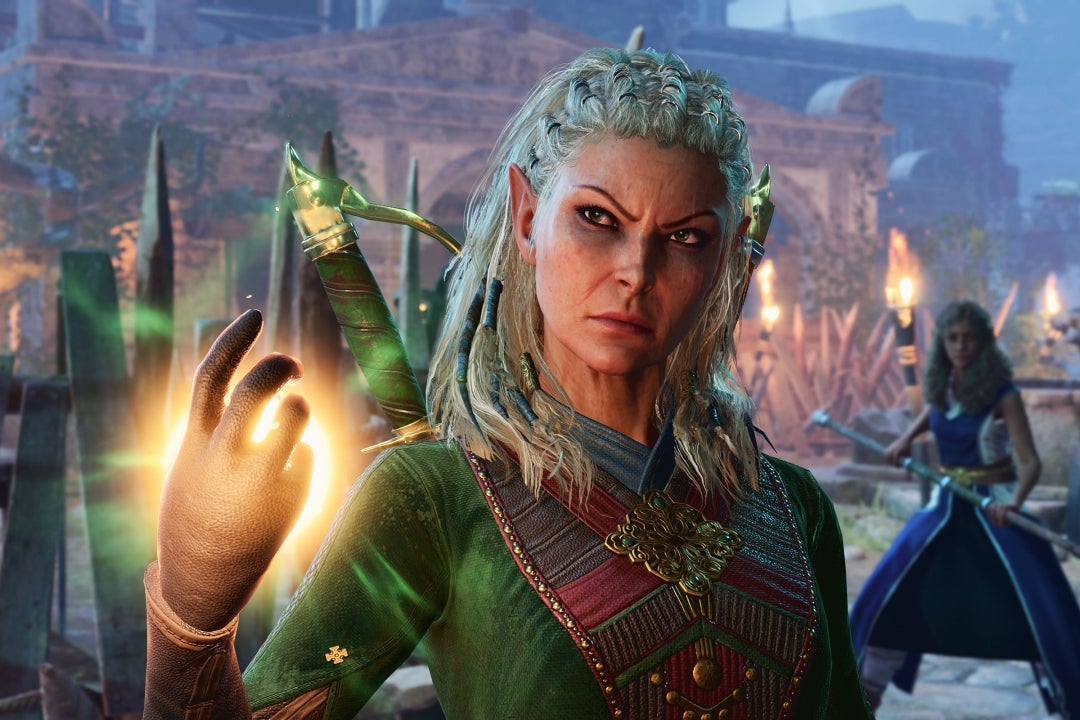
Dungeons & Dragons is a franchise with decades behind it. Today being synonymous with role-playing games, few franchises have more prestige and renown associated with them. That’s why it’s not surprising that Hasbro and its subsidiary, Wizards of the Coast, want to exploit it by focusing on its potential for video games. But it seems that their biggest bet to date is not going to see the light of day. According to information from Jason Schreier at Bloomberg, the game has been canceled. A tremendously ambitious game without a public name, we already had quite a bit of information about what the game was going to be. […]
Dungeons & Dragons is a franchise with decades behind it. Today, being synonymous with role-playing games, few franchises have more prestige and renown associated with them. That is why it is not surprising that Hasbro and its subsidiary, Wizards of the Coast, want to exploit it by focusing on its potential for video games. But it seems that their biggest bet to date will not see the light of day. According to information from Jason Schreier at Bloomberg, the game has been canceled.
A tremendously ambitious game
Without a public name, we already had quite a bit of information about what the game was going to be. An AAA action game for a single player developed by Unreal Engine 5 by a newly created studio under the umbrella of Hasbro called Giant Skull, led by Stig Asmussen, director of God of War 3 and Star Wars Jedi: Survivor and Fallen Order. Something they aimed to compete not only against the classic Dungeons & Dragons games, which have always had a medium budget, but to venture into high-budget games. Looking to go head-to-head against titans like EA or Square Enix.
Now the game has been canceled, according to statements from the company itself to Bloomberg. “We have decided not to move forward with an early concept of Giant Skull, but we have great respect for Stig Asmussen and his team, and we value our relationship,” a representative from Hasbro stated.
In any case, this is not the only recent editorial move by Hasbro. A closure of the internal studio Atomic Arcade also occurred in parallel, which was working on a Snake Eyes game, a character from the popular G.I. Joe toy franchise. Although it is not officially canceled, the game does not seem likely to see the light of day. And while they claim to still be interested in publishing video games, with their anticipated Warlock on the horizon, these cancellations raise suspicions that something is going wrong at Hasbro.
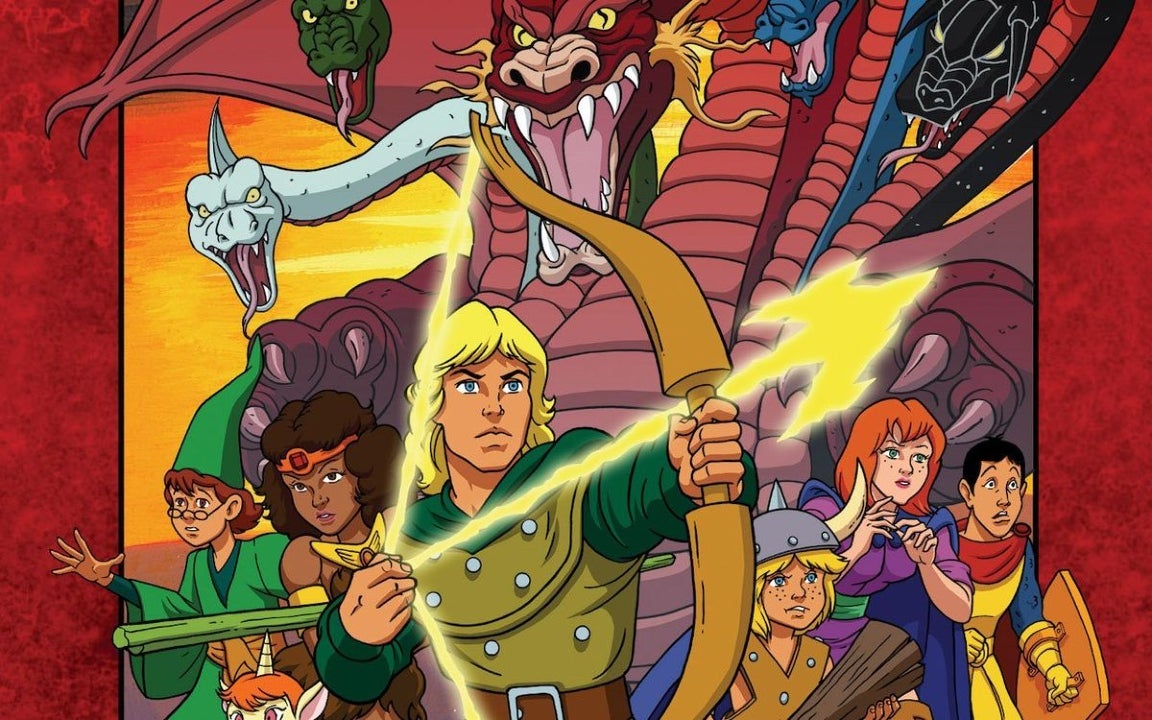
Wizards of the Coast, the company behind Dungeons & Dragons, is reviving nostalgia for fans by uploading episodes of the old D&D cartoon from the 80s. This nostalgic project takes place every Friday, where two to three episodes are presented in blocks, and to date, they have released 11 out of a total of 27 episodes. The series was co-produced by Marvel Productions and animated by Toei Animation, which aligns it with other classics of the era like Spider-Man and The Transformers. The return of a legendary series Despite its retro appeal, the […]
Wizards of the Coast, the company behind Dungeons & Dragons, is reviving nostalgia for fans by uploading episodes of the old D&D cartoon from the 80s. This nostalgic project materializes every Friday, where two to three episodes are presented in blocks, and to date, they have released 11 out of a total of 27 episodes. The series was co-produced by Marvel Productions and animated by Toei Animation, aligning it with other classics of the era like Spider-Man and The Transformers.
The return of a legendary series
Despite its retro appeal, the sound and animation quality of the cartoon is considered low, which adds a sense of humor and authenticity to the viewing experience. With iconic voices like Peter Cullen, who brings the villain Venger to life, and Frank Welker, who voices both Tiamat and the unicorn Uni, the show also allows D&D fans to discover references to various creatures from their beloved Monster Manual, such as dragons and frost giants. This mix of pop culture elements and the unique narrative of the episodes contributes to a peculiar entertainment experience, even in somewhat controversial moments, such as when Venger attempts to alter the course of history during World War II.
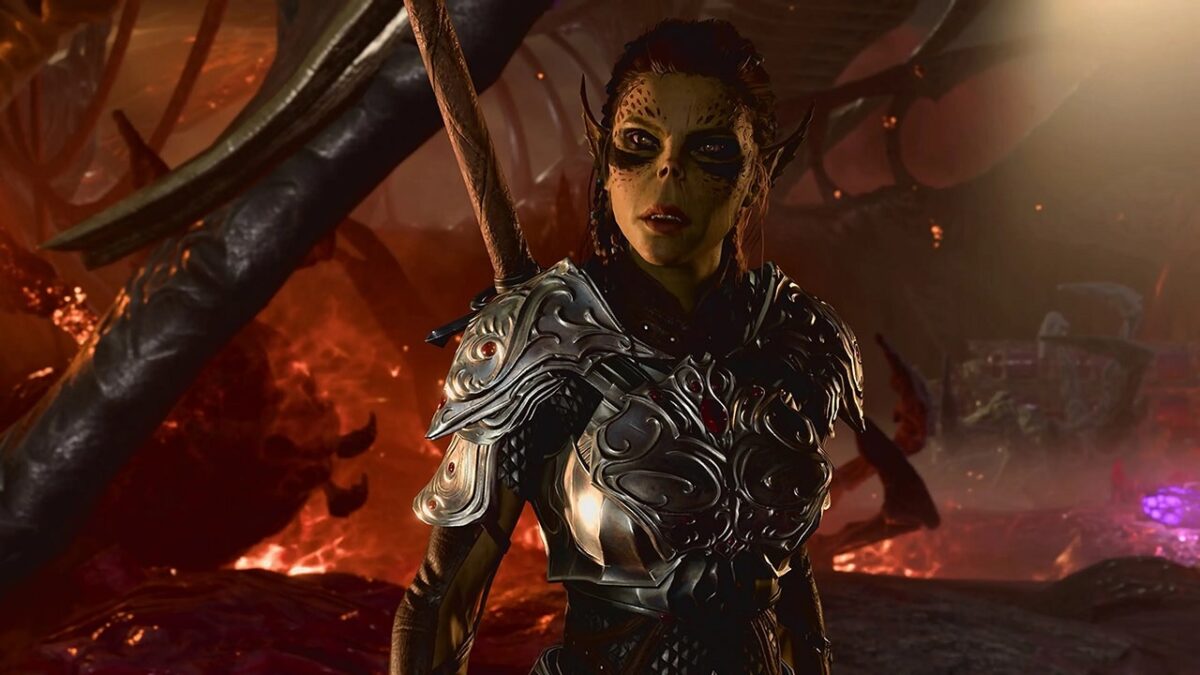
On the other hand, the phenomenon of Baldur’s Gate 3 continues to capture the attention of players. Recently, there has been in-depth discussion about its gameplay modes, romance options, and endings, which highlights the relevance of the title in the current video game trend. Additionally, it has become a point of discussion in various weekly and monthly newsletters, covering topics from technology to pop culture, satisfying the curiosity of fans and inviting them to join the conversation in the vast universe of D&D and beyond.
The anticipated television series based on Baldur’s Gate 3, the acclaimed video game released in 2023, has begun to take shape. This new project, which will not involve the participation of Larian Studios, responsible for the development of the video game, promises to maintain the essence and rules of the Dungeons & Dragons universe, essential for the narrative of the video game. Chris Perkins, a veteran game architect who has dedicated nearly 30 years to Dungeons & Dragons, has joined as a consultant, which generates positive expectations about the series’ fidelity to the original material. Wizards of the Coast is putting all its […]
The highly anticipated television series based on Baldur’s Gate 3, the acclaimed video game released in 2023, has begun to take shape.This new project, which will not involve the participation of Larian Studios, responsible for the development of the video game, promises to maintain the essence and rules of the Dungeons & Dragons universe, essential for the narrative of the video game.
Chris Perkins, a veteran game architect who has dedicated nearly 30 years to Dungeons & Dragons, has joined as a consultant, generating positive expectations about the series’ fidelity to the original material.
Wizards of the Coast puts all its weight behind production
The creative team will be led by Craig Mazin, known for his work on the successful series The Last of Us, who will take on the role of showrunner. With this collaboration, it is expected that the series will perfectly encapsulate the interpretation of the world and the rules of D&D that Baldur’s Gate 3 has popularized among players.
The Baldur’s Gate franchise, which dates back to the late 90s, has experienced a resurgence in popularity thanks to the latest installment, which takes place in the vast and rich world of the Forgotten Realms.
In the current context, it is rumored that the series will be closely aligned with the aesthetics and narrative of Baldur’s Gate 3, suggesting that fans of the franchise will be able to enjoy an adaptation that respects and celebrates the rich legacy of Dungeons & Dragons and its immense impact on the video game genre.
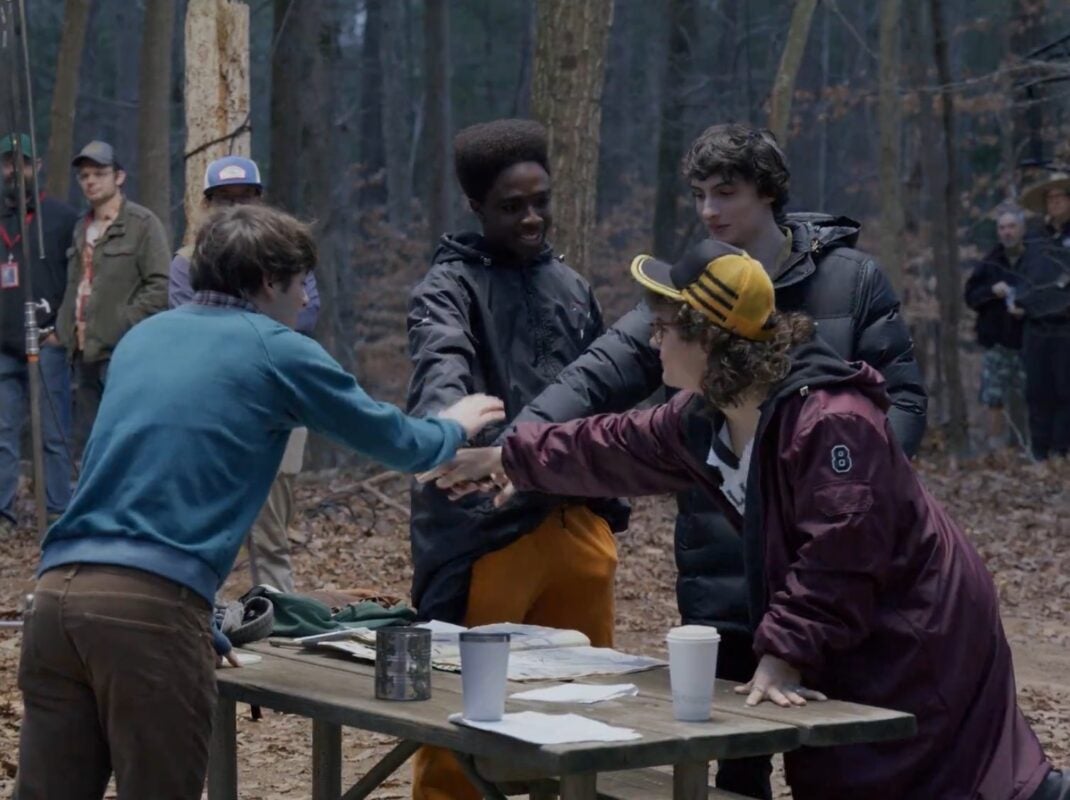
Josh Sawyer, design director at Obsidian Entertainment and known for his work on titles like Fallout: New Vegas, has openly criticized the inaccuracies in the representation of the role-playing game Dungeons & Dragons in the series Stranger Things. Through a clip from the fifth season shared on BlueSky, Sawyer reacted to Finn Wolfhard’s statement, who plays Mike Wheeler, about the abilities of the Cleric class from 1st edition AD&D, exclaiming “BULLSHIT!” at the obvious errors. A very lazy execution In his comments, Sawyer emphasized that the creators of Stranger Things, […]
Josh Sawyer, design director at Obsidian Entertainment and known for his work on titles like Fallout: New Vegas, has openly criticized the inaccuracies in the representation of the role-playing game Dungeons & Dragons in the series Stranger Things. Through a clip from the fifth season shared on BlueSky, Sawyer reacted to the statement made by Finn Wolfhard, who plays Mike Wheeler, about the abilities of the Cleric class from the 1st edition of AD&D, exclaiming “BULLSHIT!” in response to the obvious errors.
A very lazy execution
In his comments, Sawyer emphasized that the creators of Stranger Things, the Duffer brothers, are ten years younger than him and have admitted to having a greater affinity for Magic: The Gathering than for D&D. This possible lack of familiarity may have influenced the inaccuracies of the series. However, although the discrepancies are not a “crime,” according to Sawyer, they represent a disconnection from the authentic experience of D&D during the time period in which the series is set.
Additionally, Sawyer has pointed out that some errors in the fifth season are not only incorrect for the 1st edition of AD&D, but also turn out to be correct for the 5th edition, suggesting that the writers may have consulted materials from this more recent edition. “It is less plausible that the young people are making mistakes or applying house rules. Most likely, the writers consulted materials from the 5th edition,” he explained.
Despite the fact that certain mistakes can be considered part of the game and creative freedom, Sawyer sees these discrepancies as a missed opportunity in a series that is based on a historical context. As he himself points out, “old players will notice these things”. Since Stranger Things is a period piece, it is essential for its authenticity that the representation of the role-playing game is truthful and accurate.
It took almost 50 years for Dungeons & Dragons, the most famous role-playing game of all time, to have an adaptation that lived up to it: Honor Among Thieves was fun, adventurous, playful, and unique, while still embracing the medieval fantasy with magic and giant swords that players are used to. However, getting here has involved a universe of bad adaptations, misunderstood versions, iconic (but failed) cartoons, and people who consider themselves fans but definitely do not understand the game. One of these people was Courtney Solomon, an old-school role-player […]
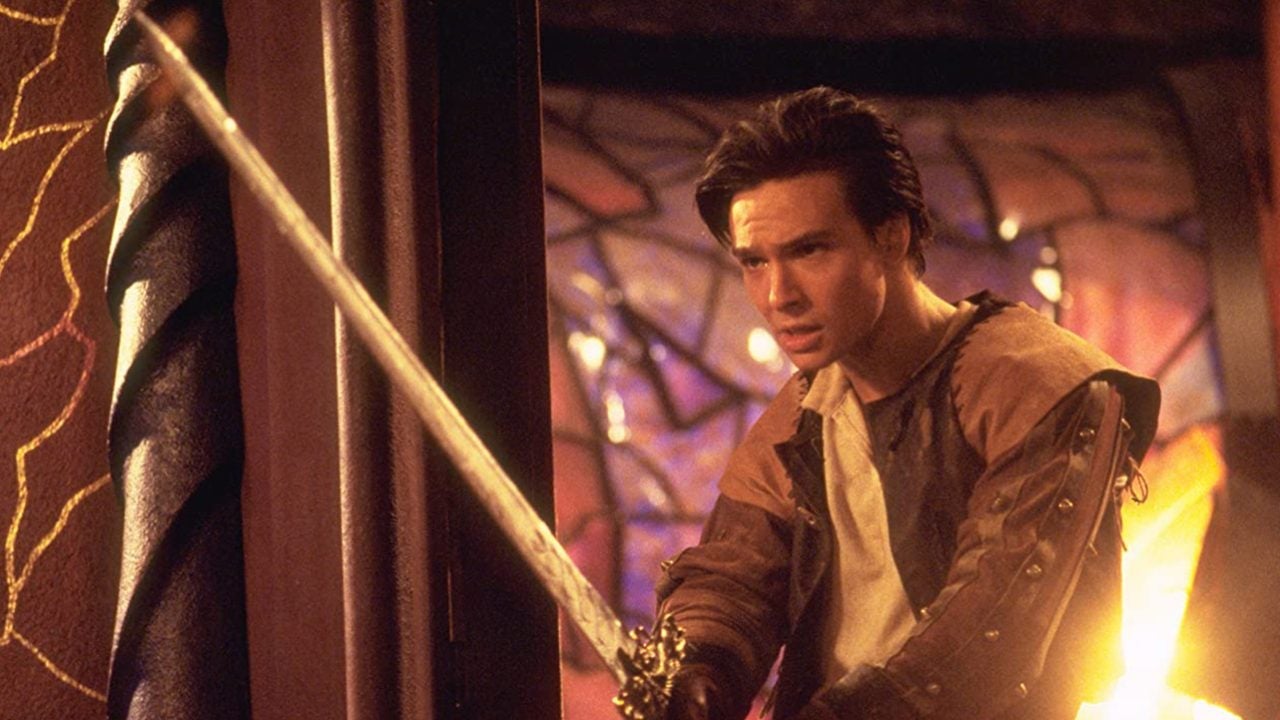
It took almost 50 years for Dungeons & Dragons, the most famous role-playing game of all time, to have an adaptation that lived up to its legacy: Honor Among Thieves was fun, adventurous, playful, and unique, while still embracing the medieval fantasy with magic and giant swords that players are accustomed to. However, getting to this point has involved a universe of bad adaptations, misunderstood versions, iconic (but failed) cartoons, and people who consider themselves fans but definitely do not understand the game. One of these people was Courtney Solomon, an old-school gamer who wanted to make the definitive movie. It did not turn out well.
A hellish world
In the early 2000s, Dungeons & Dragons was practically forgotten, beyond the groups that continued to gather to roll dice for hours. Just fifteen years earlier, the animated series from the mid-80s helped make all the kids want to try it (and, by extension, learn math), but the fear of the unknown caused by the Satanic Panic buried all its chances of becoming something mainstream, settling for being an unavoidable piece for all pop culture enthusiasts that had forever transformed the way stories are told. I wish everyone could say something remotely similar.
But then came Courtney Solomon, a 21-year-old who started his own company in 1992, Sweetpea Entertainment, to buy the rights to the franchise and make his dream project: an adventure on par with those he created with his friends. Solomon believed he had experience, after all: his mother was a production coordinator on television series, which apparently gave him credibility, so he only had to travel around the world looking for funding for his masterpiece. Considering that the parent company had been receiving sighs and rejections from all kinds of film producers for a decade, they wished him good luck, sold him the rights (after a long pitch), and went on their way.
Solomon was not going to settle for less than a 100 million dollar movie directed by Francis Ford Coppola, James Cameron, or Renny Harlin, who at one time or another were attached to the project. The original script featured a rogue as the protagonist and included up to 14 monsters in a final battle filled with special effects. In fact, in 1995 they even secured a final director, Stan Winston, a special effects expert from movies like Jurassic Park, Aliens, Predator, or Edward Scissorhands. Big words. So, if everything was tied up and well tied… can anyone tell me what the hell happened?
The usual in Hollywood: several fantasy movies crashed at the box office at the same time, and the producers stopped trusting Dungeons & Dragons, gradually pulling their money from the production. The movie became a television series for a time, and later a direct-to-video film that, far from the 100 million dollars Solomon wanted, managed to get a budget of 3.5 million. And thank you. Solomon himself, in light of his failure, appointed himself as director and shot a test scene in Los Angeles so powerful that it managed to raise investor interest again to 35 million. With this, something more than decent could have been made! Spoiler: he rolled the dice and got a failure.
The result was a solemn bad movie that barely has anything in common with the original game. Fans ended up angry with Solomon, Wizards of the Coast didn’t know where to hide and at the box office, it barely made 33 million amidst the fury of film critics. To everyone’s surprise, it was enough to produce two more direct-to-video movies in 2005 and 2012, without Solomon in sight (only as a producer). The director would end up becoming a name in Hollywood’s low-budget cinema thanks to his production work on films like The Strangers. Hey, no one knew how to get a lot out of very little like he did. He just needed to make it interesting!
As we all now know, thanks to the rise of Twitch and shows like Critical Role, Dungeons & Dragons returned to popular culture in the honored place it deserved from the beginning. And no one ever spoke of this abomination again. Happy ending for everyone.
The long-awaited new Monster Manual for Dungeons & Dragons is now upon us, completing the renewal of the three core rulebooks —the Player’s Handbook, the Dungeon Master’s Guide, and this one— with which Wizards of the Coast celebrates both the 50th anniversary of the game and a revitalization of the fifth edition. A manual with more monsters than ever Originally published on February 18, 2025, in English, the Monster Manual arrives packed with new features and improvements that promise to enrich role-playing campaigns. Its ambition: to be the largest bestiary ever seen for D&D, with more […]
The highly anticipated new Monster Manual for Dungeons & Dragons is now here, completing the overhaul of the three core rulebooks —the Player’s Handbook, the Dungeon Master’s Guide, and this one— with which Wizards of the Coast celebrates both the 50th anniversary of the game and a revitalization of the fifth edition.
A manual with more monsters than ever
Originally published on February 18, 2025, in English, the Monster Manual arrives packed with new features and improvements that promise to enrich role-playing campaigns. Its ambition: to be the largest bestiary ever seen for D&D, with over 500 creatures, of which about 75 are completely new. In addition, it showcases more than 300 unpublished illustrations, including redesigned versions of classics like metallic and chromatic dragons, to provide visual spectacularity to the manual.
One of the most notable innovations relates to the statistical sheets of the monsters, which have been redesigned to facilitate their consultation and use during the games. This includes better organization by type of creature, variants of popular beasts, and a smoother experience for game masters.
With all this, the new Monster Manual not only serves as a catalog of creatures but also as a tool for narrative design, visual evocation, and optimized mechanics. It provides veterans with new threats and challenges, and gives beginners better access to the chilling imagery that is an essential part of Dungeons & Dragons. In short: a key piece for what many perceive as an intermediate version —sometimes referred to as 5.5— that updates without breaking the foundations of the system.
D&D has fans across the globe, from those who played the first pen and paper editions to those who follow the many comics, movies, video games and board games that arose from this iconic fantasy setting. D&D Beyond is a brand-new era for the game, a digital toolset which allows players to read all about the setting, make characters and plan games entirely on the web or on devices. All the elements of the hard copy books are there, but now you can edit on the fly as if building a character for a computer game.
2023 has been a year of celebrations for Dungeons & Dragons fans thanks to the unexpected success of Baldur’s Gate 3, a video game that has captivated critics and players, becoming a strong contender for the GOTY award at The Game Awards 2023 and selling millions of copies. Meanwhile, the movie D&D: Honor Among Thieves, while well-received on streaming platforms, failed to capture the desired attention in theaters, leading to considerable debate about its commercial performance. The movie is fine, but Hugh Grant, one of the film’s protagonists, […]
2023 has been a year of celebrations for Dungeons & Dragons fans thanks to the unexpected success of Baldur’s Gate 3, a video game that has captivated critics and players, becoming a strong contender for the GOTY award at The Game Awards 2023 and selling millions of copies. Meanwhile, the movie D&D: Honor Among Thieves, while well-received on streaming platforms, failed to capture the desired attention in theaters, leading to considerable debate around its commercial performance.
The movie is good, but
Hugh Grant, one of the stars of the film, has expressed his bewilderment over the box office failure, suggesting that a prior market study could have provided insights into public interest. “It’s a mystery why no one did a market study before giving the green light. Basically, people thought: ‘I don’t want to see a movie about this game,'” Grant commented in a recent interview with Vanity Fair, highlighting the disconnect between the film and its potential audience.
Reflections on the launch strategy suggest that Paramount Pictures may have considered delaying the film’s release to take advantage of the popularity streak of Baldur’s Gate 3, a title that has dominated conversations in the gaming world. However, despite the disappointing financial performance, the studio has not ruled out the possibility of developing a sequel to D&D: Honor Among Thieves.
Grant, referring to the effort and quality of the production, urged the audience to give the movie a chance, of which he is proud. “It’s a very good movie,” he stated. With the film’s release still available on digital platforms, Dungeons & Dragons fans have the opportunity to decide for themselves the value of this film adaptation.
In a landscape saturated with large productions featuring ultra-realistic graphics and infinite open worlds, a proposal emerges that strays from the conventional: The Secret of Weepstone. This new dungeon exploration RPG, developed by Talesworth Game Studio and published by DreadXP, stands out for its hand-drawn black and white artistic style, a tribute to classic role-playing games from the 70s and 80s. Many traps and sacrifices lie ahead The Secret of Weepstone is scheduled to be released in 2026 and is set in the desolate village of Weepstone, an ancient village that […]
In a landscape saturated with large productions featuring ultra-realistic graphics and infinite open worlds, a proposal emerges that strays from the conventional: The Secret of Weepstone. This new dungeon exploration RPG, developed by Talesworth Game Studio and published by DreadXP, stands out for its hand-drawn black and white artistic style, a tribute to classic role-playing games from the 70s and 80s.
Many traps and sacrifices ahead
The Secret of Weepstone is scheduled to be released in 2026 and is set in the desolate village of Weepstone, an ancient hamlet that has fallen into decay under the shadow of an abandoned castle. The dark narrative of the game revolves around a heterogeneous group of characters who must face dungeons filled with traps, mythological creatures, and dark secrets on their path to the truth.
The gameplay combines elements of dungeon crawling and dice rolls, offering a tactical experience where players manage a group of up to eight characters. Each encounter is crucial, as decisions and rolls can change the fate of the group. Players will need to equip their adventurers with weapons, magical items, and other resources to overcome a variety of challenges, from clever puzzles to fierce battles against enemies inspired by mythology and classic horror.
Moreover, death plays a central role in the game, granting deadly favors that influence the narrative and progression, adding a layer of complexity and excitement to the adventure. With this approach, The Secret of Weepstone promises to revive the spirit of classic Dungeons & Dragons campaigns, offering a fresh and visually striking experience that genre lovers won’t want to miss.
With this release, DreadXP positions itself as one of the most interesting independent game publishers in the market, consolidating its commitment to innovative proposals in the video game industry.
Wizards of the Coast has confirmed that it is working on a sequel to Baldur’s Gate 3, but clearly, this new installment will not be related to the game developed by Larian Studios. Instead, the new project will be developed by Giant Skull, a studio led by Stig Asmussen, known for his work at Respawn Entertainment. Asmussen and his team are focused on creating a distinct action game, rather than continuing the Baldur’s Gate saga. Larian is doing its own thing John Hight, president of Wizards of the Coast, expressed his enthusiasm by stating that Baldur’s Gate is […]
Wizards of the Coast has confirmed that it is working on a sequel to Baldur’s Gate 3, but clearly, this new installment will not be related to the game developed by Larian Studios. Instead, the new project will be developed by Giant Skull, a studio led by Stig Asmussen, known for his work at Respawn Entertainment. Asmussen and his team are focused on creating a distinct action game, rather than continuing the Baldur’s Gate saga.
Larian is up to their things
John Hight, president of Wizards of the Coast, expressed his enthusiasm by stating that Baldur’s Gate is an incredible title and that it is natural to continue its legacy. However, the new game is designed to appeal to both Dungeons & Dragons players and fans of action games like God of War and the Jedi franchises. “We are trying to provide an experience that not only resonates with Dungeons & Dragons fans but is also accessible to action lovers,” Hight said.
Wizards of the Coast is in no rush to release this sequel and is planning several other Dungeons & Dragons titles for the next five years. According to Eugene Evans from Hasbro, the company is willing to take its time to find the right partner to continue the legacy of Baldur’s Gate. Meanwhile, Larian Studios, which achieved great success with Baldur’s Gate 3, is working on a completely different project called Excalibur, and will not return to Dungeons & Dragons in the short term. Swen Vincke, CEO of Larian, commented that while they considered developing Baldur’s Gate 4, they did not want to “repeat” what had already been done.
If trilogies are so famous, it is because of The Lord of the Rings. No trilogy has had such an impact and has shaped a genre so radically. Thinking of fantasy without thinking of Tolkien’s work in general, and The Lord of the Rings in particular, is impossible. Without The Lord of the Rings, we wouldn’t have Dungeons & Dragons, nor 99% of contemporary fantasy stories. This demonstrates the power of its legacy: it created, by itself, what the genre is today. That makes […]
If trilogies are so famous, it’s because of The Lord of the Rings. No trilogy has had such an impact and has shaped a genre so radically. Thinking of fantasy without thinking of Tolkien’s work in general, and The Lord of the Rings in particular, is impossible. Without The Lord of the Rings, we wouldn’t have Dungeons & Dragons, nor 99% of contemporary fantasy stories. This demonstrates the power of its legacy: it created, by itself, what the genre is today.
This makes its importance crucial. And there are always people willing to bring back the trilogy in one way or another. Something that happened with particularly resounding success at the turn of the century when New Line Cinema decided to make the most epic and beloved trilogy of films in the history of cinema.
The film trilogy of The Lord of the Rings by Peter Jackson does not have the cultural impact that the novels had, because that is impossible, but they were a mass phenomenon. Everyone went to the cinema to see them, and it was a financial, critical, and awards success without absolutely any precedent. Something that made the absolute failure of its subsequent continuations even more surprising, something we are going to review today. Because we know you are eager to have an excuse to watch the movies again.
The Lord of the Rings trilogy premiered in 2001. Filmed simultaneously between October 11, 1999, and December 22, 2000, in New Zealand, it had a then-disproportionate budget of 281 million dollars, equivalent to about 530 million dollars when considering inflation. The three films were released in quick succession: The Fellowship of the Ring would premiere in 2001, The Two Towers in 2002, and The Return of the King in 2003. An exceptional fact, given that films are usually not shot simultaneously. But in this case, it helped to cement their success.
Upon their release with little waiting time, the films managed to capture the audience’s attention and the enthusiasm did not wane. Maintaining the interest of critics, the public, and the academy throughout the entire trilogy. Something that became evident through the numbers.
The Fellowship of the Ring grossed $887.8 million, The Two Towers reached $938.5 million, and The Return of the King made it to $1.1 billion. An exceptional fact, as it is normal for movie series to tend to earn less money with each new installment. But the rapid release of new installments, along with their quality, attracted more people to each new premiere, resulting in increased revenues.
What were the reasons for its success? Generally, it has been considered that fidelity to the novels, the strength of its direction, its enormous production values, and the quality of its performances are the main factors that captivated the general public. Although the fidelity to the novels was questioned at the beginning for not adapting certain parts of The Fellowship of the Ring, leaving out characters like Tom Bombadil, which later versions of the film showed were better off that way.
It swept even more in the houses
In fact, the movie was an even greater success in home formats. With numerous editions on DVD and Blu-ray, the three movies would have extended versions that would first be released in home format, but later would also be shown in theaters. This would extend the total runtime of the trilogy from 558 minutes to 683.
There are conflicting opinions about which of the two versions is better. According to some, the purest way to watch the movies is the extended versions, because they leave nothing out. According to others, the original versions are better because everything that was originally cut was for a reason, and it is noticeable in the excessively slow pace of the extended versions. A debate that still continues today among fans of the movie trilogy.
There was no doubt that they were masterpieces. Both critics and the academy agreed. With an average of over 90% on Rotten Tomatoes and a 9 on Metacritic, it is a tremendously respected trilogy. But nominated for 30 Academy Awards, with The Return of the King being the big winner, taking home 11 of them, including Best Director, Best Picture, and Best Adapted Screenplay, it demonstrates why they were an absolute cultural milestone. One that we have not experienced again and that, probably, we will never experience again: there was an absolute consensus on the quality of these films, and no one would have dared to question it.
A hobbit who couldn’t
That’s why everyone was eagerly awaiting the next from Peter Jackson and what would come from the Tolkien universe. Which was disappointing. Making several films in between, he released the Hobbit film trilogy between 2012 and 2014, resulting in a notable box office success, but a tremendous critical and awards fiasco. With the audience turning their backs shortly after.
What happened? To begin with, The Hobbit is a tale, not a trilogy of novels. The treatment as a trilogy of films made no sense. Furthermore, the excessive use of CGI, questionable direction, and performances that left much to be desired made it everything that the Lord of the Rings trilogy was not. It felt cheap, shabby, and not epic. Like one of those low-budget fantasy films where, instead of with enthusiasm, they try to disguise all the things where they lack imagination or money with second-rate effects.
After this, The Lord of the Rings spent several years dozing. It has had its ups and downs, with various series and movies, but nothing has achieved the success and significance of the original trilogy of The Lord of the Rings films. They are now returning to HBO Max so you can watch them in the comfort of your home, remembering something important: we are living through a historic event for culture, and we knew it. Because it was impossible not to know, when we were going to watch the trilogy of The Lord of the Rings films, that this was our Star Wars. And that only happens once per generation. If it happens at all.