
Best job searching apps for iOS and Android

Finding a job can be tough, but these apps can make it easier.

Job hunting

You can’t always make it to your laptop for a deep job-hunting sesh. Maybe you’re always scanning for greener pastures or you’re hoping to book some interviews when you’re on the clock (no judgment).

Don’t limit yourself to sites alone. Just like everything else, job-hunting can be done on the go.

Best job-hunting apps

LinkedIn Job Search

If you’re hunting for a job, you probably already have a LinkedIn profile.

And while the main social site is great for making connections that could lead to a job opportunity, LinkedIn’s Job Search allows you to cut to the chase.

You can choose to browse through opportunities, easily using your profile as a resume when you apply. Filter by job title, industry, pay, or company — and make your move.

If you prefer to take a passive approach, you can let LinkedIn know and they’ll recommend opportunities that fit your goals and skill set. What’s more, the site knows that job-hunting can be a sensitive matter when it comes to your boss. They’ll keep your hunt on the DL — no problem.

LinkedIn Job Search Download now ►
7

Facebook Jobs

facebook find a job

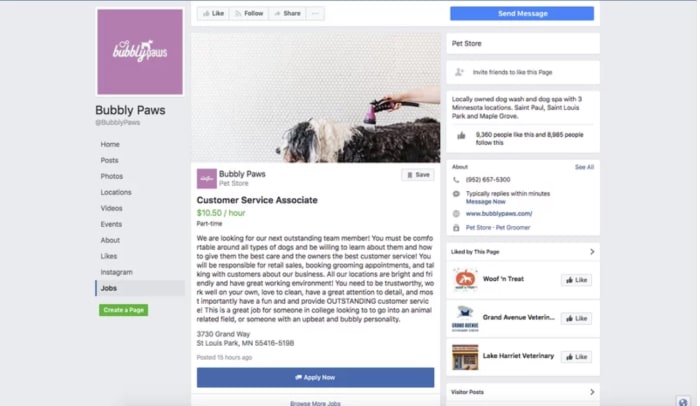
Thought Facebook was all fun and fake news? Think again! Good old FB is home to a massive job board, perfect for finding a whole host of open opportunities. You can find the Jobs section within your Facebook app — no need to download a separate application.

When a posting fits the bill, you can tap the “Apply Now” button and you’ll be redirected to the employer’s Facebook page. Then hit the button again and the application will fill in your details based on what you’ve included in your public profile. If you’re more of a private browser, you can introduce yourself in 1,000 characters instead.

Facebook Download now ►
7

Job Search Switch

switch app

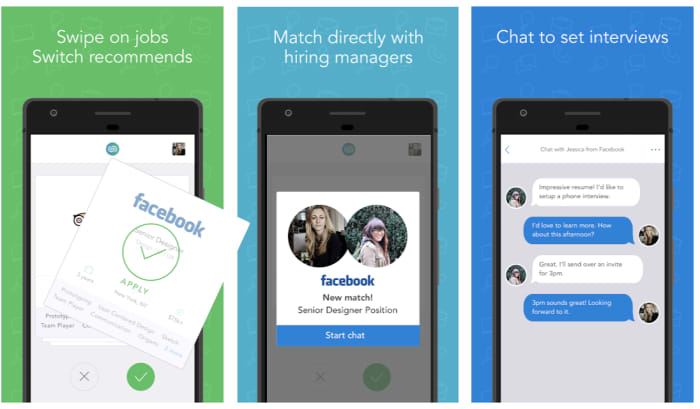
Job Search Switch, uh, switches up the job-hunting process. It’s an anonymous app that matches you with hiring managers based on credentials alone. Like Bumble and Tinder, you’ll swipe to indicate your interest in a particular opportunity.

What’s cool about this app is that your identity is revealed only when you match with an employer, which stands to make things interesting.

The only downside is that the app is relatively new. So, you’re not going to have access to the same pool of potential matches as you might on something like Indeed. Sometimes, that might not be such a bad thing. The fewer people who know about a tool, the less competition you’ll have to measure up against.

Job Search Switch Download now ►
7

Glassdoor

glassdoor job app

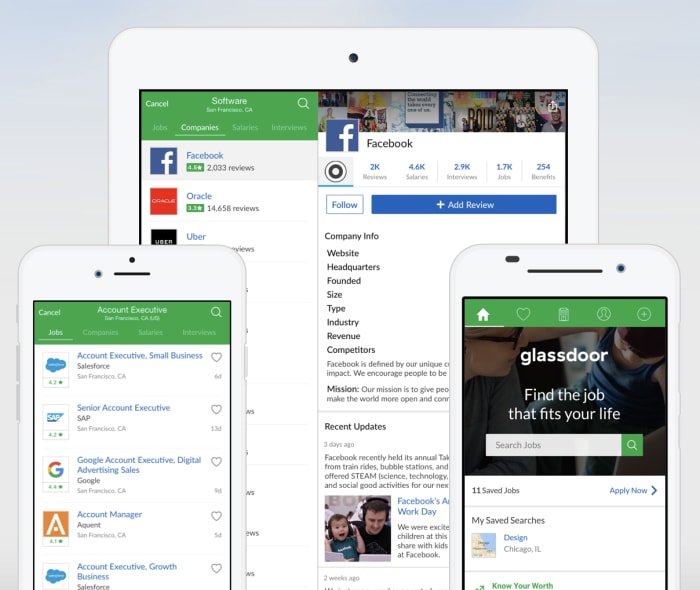
Glassdoor is one of the biggest players in the job-hunting and salary information game. The mobile app brings all the same opportunities to your phone as you’ll find on the computer. It makes it super easy to look at potential opportunities and conducting some background research beforehand.

We should warn you — Glassdoor mobile can be a little overwhelming. The app will ask you to complete applications on your phone. Unfortunately, this can be a real pain. Still, you can save jobs and look at salaries. There’s also the added joy/time waster that is reading the bad reviews former employees anonymously post.

Glassdoor Download now ►
7

Hirewire

Hirewire app

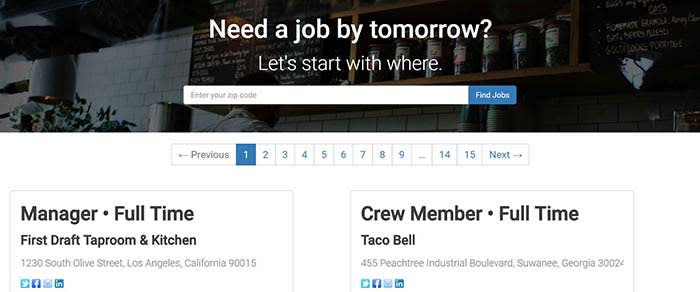
Hirewire is another interesting option for people who need to lock down a job in a crunch.

You’ll download the app, input your info, and record a video interview. Hiring managers in need of staff can use the app to book interviews and get you hired within 24 hours.

The jobs you’ll find on the app tend to fall into the serving or retail categories, which makes sense given the short time frame. If this is the kind of thing you’re after, Hirewire may be a good bet.  LinkedIn, Glassdoor, and Indeed tend to work best for people with more “office” experience, which you won’t need on Hirewire.

Hirewire Download now ►
7

Good & Co

Good & Co cultural fit

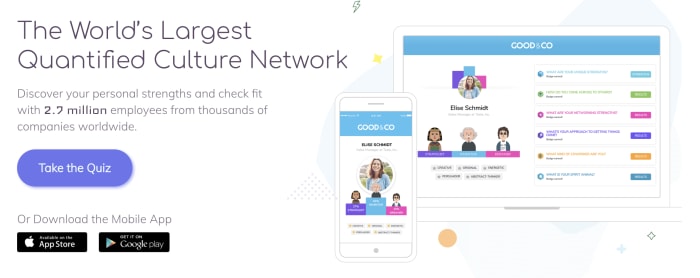
Good & Co presents another novel approach to the job hunt. The app aims to help you find a job that’s a good fit before you waste your time in interviews. This app will have you take a few personality tests that highlight your strengths, your work style, and how you’d fit in with other people.

Good & Co doesn’t allow you to apply to jobs directly, but they’ll highlight open roles and direct you to the right place to fill out an application. Naturally, this might not be the most practical approach, but anyone who loves a good personality test is bound to enjoy themselves.


Good & Co Download now ►
7

6 LinkedIn mistakes screwing up your job search

A great LinkedIn profile can be the difference between a great career and a lame job. Don’t make these mistakes!

LinkedIn

A LinkedIn profile sometimes seems like this thing we have to have, if only for show.

Many of us are guilty of it ourselves. We sign up for a LinkedIn profile and assume it’s a “set and forget it” solution.

You put up that one photo of yourself looking semi-professional and bam — you’re ready to make some sweet connections with thought leaders and go-getters. But you might be making some mistakes that are wrecking your job prospects. Read on, dear job seeker.

6 LinkedIn mistakes screwing up your job search

1. No picture or unprofessional picture

Oh, man. One of the biggest mistakes you can make is failing to put up a decent picture. Opting out of uploading a photo makes you seem like a weirdo, a faker, or someone who just doesn’t care.

An unprofessional profile pic is just cringe-y. By all means, avoid from including your boyfriend, cat, or baby in your LinkedIn pic — it’s all about you.

Don’t overthink the picture. The biggest thing is, you’re wearing clothing that looks clean — at least somewhat professional — i.e., no superhero shirts or bikini tops.

Employers want to see that you look alert — eyes open, standing up straight — and smiling. Your picture serves as a way to communicate that you look well, normal.

A couple of examples that are LinkedIn-approved:

example profile pic

profile picture for linkedin

Additionally, a profile picture comes in handy when you meet people in person or other corners of the web.

People tend to look you up after that networking event or after you’ve sent an email. A bad pic or no pic makes it harder to find you, and could lead to a missed connection.

2. Your recommendations suck

Recommendations are the easiest way to demonstrate credibility — and allow you to squeeze in a few brags without tooting your own horn.

You don’t need a ton of recommendations to make a positive impression. Quality over quantity cannot be emphasized enough here. Still, recruiters might think something is wrong with you if there aren’t any recommendations at all.

But, this area is all about quality. Someone looking at your profile might see a boring recommendation that says “easy to work with, team player.” But that could be about anyone.

By contrast, something like “Sarah has a real knack for rallying people together and getting them to share ideas. She doesn’t hesitate to help others and always has some out-of-the-box solution on hand.”

If you don’t have any recommendations, offer to trade with a few trusted colleagues (or former colleagues) who can describe in detail what you bring to the table.

It’s uncomfortable to ask people for recommendations. Sometimes you’re lucky enough to receive one without calling in a favor, but mostly, you have to ask nicely.

3. Boring descriptions are getting in the way

LinkedIn is like a dating profile for jobs. You want to put your best self forward, but that “best self” should still resemble who you are when you’re out in the world.

So, get those stale, meaningless buzzwords out of your head. You know, “detail-oriented,” “multitasker” (we all know that’s a lie), “hard worker” — highlight unique areas where you excel.

The experience section should offer more information than just the company you’ve worked for and your job title.

Job titles mean different things at different companies. For instance, a marketing manager at one company might be a generalist with few responsibilities whereas someone with the same title elsewhere might oversee a whole department and have a highly sought-after skill set.

Now, we’re not saying you should spit out every duty related to your job. LinkedIn offers limited space, after all. Instead, focus on a few bullet points that demonstrate your capabilities. Leave “proficient in Microsoft Office” out of the mix.

4. You have a terrible headline

Many people don’t know that you can change your headline with minimal effort. Generally, if you leave it alone, LinkedIn defaults to whatever you have listed as your current position.

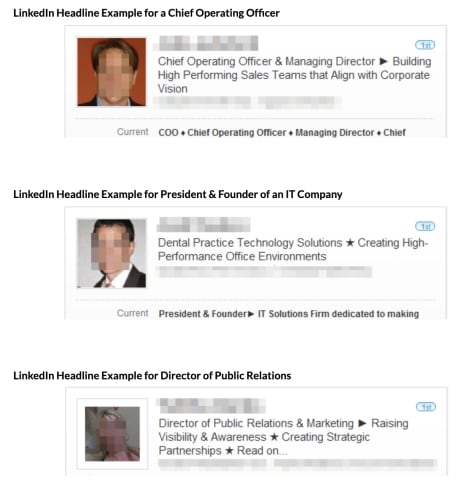
Your LinkedIn headline (right under your name) is the lead-in to your brand. It’s less about sharing your job title verbatim, more about giving recruiters the short answer to “what you’re all about.”

We’ve all seen those people in our feeds with weird, vague descriptions  —  either a mishmash of industry jargon or an overly long sentence.

Be specific — tell people exactly what you do. Industry focus, what you’re known for — i.e., Marketing Professional: Social Media Specialist and Content Expert.

LinkedIn good headline examples

5. You’re not using keywords

Keywords aren’t limited to optimizing blog posts. They’re a handy tool for making sure that recruiters can find you — and more importantly — that they’ve got an “in” with the types of jobs you’re looking for.

With keywords, you’re at the mercy of the algorithm — however, you still need to make sure that people can read your profile. Using a bunch of buzzy terms like “design thinking,” “marketing/sales/etc. guru/wizard/sorceress” gives the reader a word salad they didn’t ask for.

What’s more, Google and LinkedIn’s algorithms might punish you if they feel you’re engaging in keyword stuffing — or trying to game the system with too many keywords.

Still, you should use industry terms that correspond with your skills, experience, and location.

LinkedIn published a keyword guide that can help you kickstart the research process if you’re unsure where to begin.

6. You’re lurking around the platform

Sharing a status update might not seem like an important part of your online strategy. But it’s vital for helping you appear engaged and active.

This is where you can share your accomplishments — promotions, published articles, new business ventures. It’s also a great place for users to let their network know that they’re seeking new opportunities as well.

You don’t have to post your status every day, just a few times a month so that people can see you — and keep you top of mind.

The second part of this is — don’t lurk. LinkedIn is great for joining groups relevant to your industry. Participating in these conversations — in an authentic way — allows you to connect with a network of other people in entertainment, finance, startups, and may pave the way for job openings down the road.

2019 Ultimate Guide to Resume Apps 

It’s safe to say that the internet has changed almost everything about jobs. Interviewing for jobs, identifying opportunities, and doing your job.

The whole cycle has been disrupted.

This is all well-documented — we live in a world where preparing for an interview means knowing how to impress an algorithm.

What hasn’t gotten a lot of attention is how to upgrade the stodgy old resume.

Sure, social media and digital portfolios have taken over many traditional CV duties, you still need to have a solid resume on hand.

Just because you’ve been hoping it might fade away along with fax machines and stamps (just us?), you still need to put some effort into creating a memorable, professional one-pager.

To help you out, we’ve pulled together a list of apps that make the formatting, editing, and polishing process relatively painless.

Best resume apps for 2019

Cake Resume

Cake Resume example

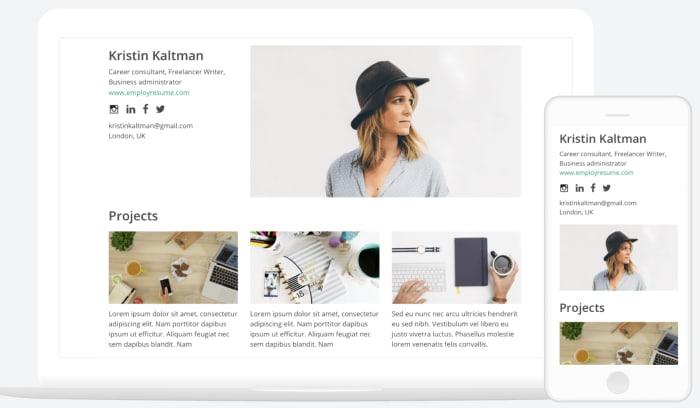
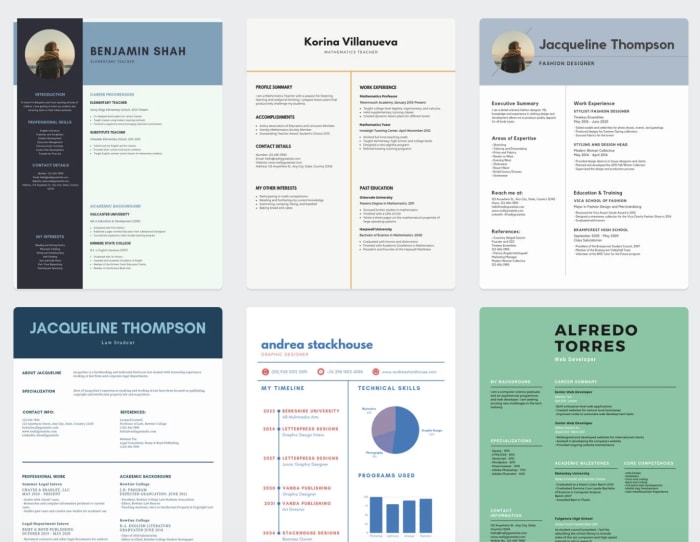
Cake Resume is a drag-and-drop-style resume editor that allows you to customize your design without being held back by the confines of a pre-designed template.

The result is a slick-looking resume that looks more like a well-designed website. How it works is, you’ll fill in each field: name and intro, experience, education, etc., plus photos, links to projects, or anything else that makes sense to include.

From there you can customize the layout — move things around, add, delete, resize — however you please.

If you’re not sure where to start, Cake Resume offers tons of examples of resume creations organized by industry. Because real people create them, some examples look better than others. Still, you’re bound to get some ideas for how you can present yourself.

Though the process is pretty easy, some users might feel a little overwhelmed, if they don’t have any design experience.

The process is similar to a landing page builder — so marketers and designers should be able to get the hang of Cake Resume right out of the gate. For everyone else, the site does come with tutorials that can help you out.

Canva

canva resume templates

Canva isn’t just for creating logos and custom graphics; you can also use the web app to make your resume pop. Resume designs span a range of styles — some colorful and artsy, others minimal, and many, somewhat traditional. Sort through the template selection by choosing a categoryand finding the one you like best.

Choose from literally thousands of templates — adjust fonts, colors, and make it your own by adding photos, icons, and illustrations from Canva’s library.

Change the font and color, update the details, resize the various elements, and move things around.

Playing around with the tool — those who stand to get the most out of it will change nothing but the details. For a more personalized approach, you will need a bit of design savvy, as it’s easy to mess up the individual elements.

Canva is free if you stick to the tool’s free design elements, plus a dollar per graphic if you add in premium graphics.

10

Visme

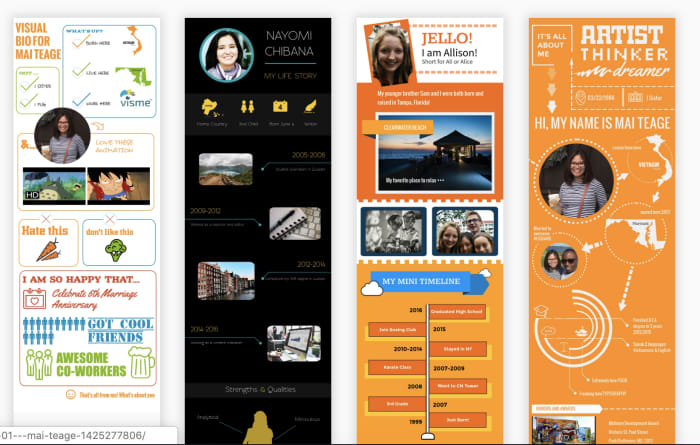
Visme does offer fewer templates and graphics than Canva, which means that you can’t customize your CV to the same extent. But, it also makes things easier on people without a design background.

Right away, we were impressed with Visme’s aesthetic. They’ve got a more defined look than Canva—which sources designs from professionals around the world.

Where Visme brings something fresh to the table is the infographic resume templates. These might not be right for every industry, but they do stand to help you stand out in a sea of white paper.

We should mention, that the resume section isn’t clear upfront. The site is used for creating graphics spanning slide shows and social media designs to infographics.

CV Engineer

CV Engineer mobile app for resumes

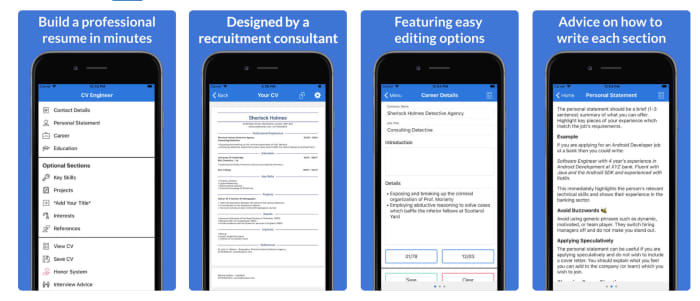
CV Engineer allows you to put together a resume from your phone. While you won’t get the same visual components as Visme or Canva, the app makes it easy to organize your details in a clear, concise way that employers are sure to appreciate.

You’ll get started by filling out each section (skills, references, education, interests, and experience) and CV Engineer chimes in with little tidbits of advice, as you move through the process.

Once you’ve filled everything out, CV Engineer pulls everything together, and from there, you can save your final copy to your Google Drive.

The app is free, but you can tip the developer later on — you know, if the resume lands you a job.

CV Engineer - Free Resume Builder CV Template Download Free
8

Vizualize.me

Visualize me visual resume

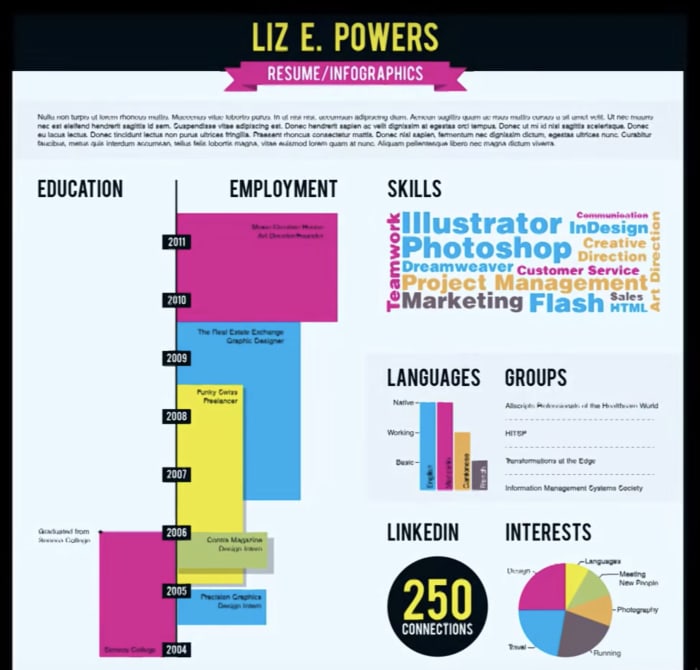
Vizualize.me is an infographics maker with a mission to give the traditional resume a much-needed makeover. The app instead takes your LinkedIn details and compiles your professional achievements into a simple, yet visually engaging graphic.

While the tool is in beta, it already has some pretty rad features. Compile your experience in the form of a colorful timeline, add skills by way of bubble charts, and compile your “stats” as a pictogram — in case you’re wondering “stats” might be how many LinkedIn connections you have or deals you’ve wo n— you know, those little brags.

CVOne

CV One Video Resume

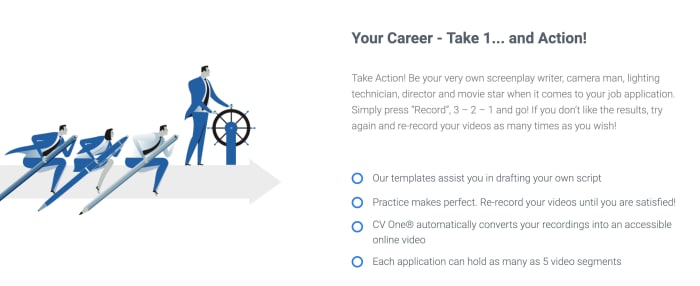
CVOne is a video resume builder that comes with a scrolling teleprompter you can use, so you don’t forget your lines.

While the tool is free, you are forced to share your CV by way of branded URL, which might be a deal breaker for someone trying to put their most professional foot forward. Still, what we liked about this option is, it’s an easy solution for creating a video in a pinch.

We’ve come across job postings that ask for a video — and admittedly, the prospect is a little daunting for those who don’t make a lot of videos in their personal or professional lives.

Microsoft Word

Word for Resume Templates

Okay, you’re probably thinking — wait, my resume is already in a Word doc, this isn’t new information.

Fair assumption, but hear us out.

Word isn’t the most exciting option on the block, but they do offer several good looking templates, and chances are, you already know your way around the platform. Resume options are free (if you have an account) and designed by Moo — you know, the business card folks.

There are also some super simple options for those who prefer to stick to the old school approach —important details, easy to read.

Microsoft Word Download Free
8

Trending jobs in 2019

Discover which careers are booming this year.

Digital transformation is well underway.

Machine learning, chatbots, blockchain applications have all become part of the work landscape, all while stirring up fears of our pending irrelevance.

Obviously, healthcare tops the charts in most cases — surgeons, nurses, dentists, and orthodontists are always in high demand — so we opted to leave them out of our list of jobs on the rise.

In 2019, in-demand jobs are fairly diverse, but have something in common — many emphasize the human side of an automation strategy. As LinkedIn found in 2018, you don’t necessarily need to be in a highly technical role to see success. Sales, marketing, and communications professionals have a promising outlook, too.

Skills like leadership, project and product management and roles with a strategic component are sought after by employers. And of course — hard skills in the STEM purview are needed to develop and maintain this new wave of tech.

Here, we’ll look at some of the top jobs in 2019 — and likely beyond.

Trending jobs for 2019

data scientist

Data scientist

A data scientist is a person who gathers, processes, and analyzes data. With the hordes of data coming in thanks to advancing data collection methods, humans skilled in breaking these massive sets into usable insights are major assets for companies.

Database administrator

Database administrators are becoming increasingly in demand, as companies start using more software solutions that include AI and machine learning components. The ability to maintain clean, secure databases will be essential for ensuring software can be leveraged to meet an organization’s goals.

Product Manager

A product manager knows how to make a product sell. They work with multiple teams, as well as members of the public to make sure that products are at their best before going to market.

Product managers conduct market research, determine specifications, set pricing, and develop marketing strategies. While this isn’t a highly technical role, product managers often work in tech companies and will do well if they can “speak the language.”

Machine learning engineer

machine learning

Machine learning engineers are programmers with advanced knowledge in the areas of AI and machine learning. They work to develop AI technology and work with complex algorithms and datasets to train systems. As more companies invest in these technologies, engineers can expect to have their pick of opportunities.

Statistician

Statisticians are in demand, with growth expected to rise by 34% through 2024. Statisticians collect and analyze data, looking for patterns that explain human behavior or uncover insights that address a range of public and private sector concerns. Today’s businesses basically run on these massive datasets, so those with a firm grasp on statistics are a major asset to any company.

Sales director

Sales professionals will still be in demand this year, and likely moving forward. Recruiters have long been having trouble filling sales positions with skilled workers who can keep pace with change.

That change can be attributed to CRMs and other analytics tools that are now industry standards. There’s also a shift in buyer demographics, as millennials take on the lion’s share of B2B purchasing decisions.

Still, technology, combined with the ability to read the room and connect with others makes a good salesperson hard to replace with a machine.

Marketing Managers

Marketing managers stand to stick around for the long haul, though their role may change in the coming years. As it stands, your average marketing manager is in charge of marketing campaigns, branding, social media, and content strategy.

Successful marketing managers should also be project managers, critical thinkers, and have the ability to monitor ad performance and other metrics. As marketing tech advances, this role may begin to evolve into a more analytic, decision-making focused role.

And, moving forward, privacy concerns and a crowded social media market may make marketing more challenging. Those who can roll with the punches–and get around new rules and shifting algorithms will likely see success.

Financial Manager

financial planner

Financial managers are looking at a bright future, too. Because of the aging Boomer population, there is a huge demand for good financial advice. Financial managers help clients plan for short and longterm goals, like retirement, college funds, and buying a home. They also break down tax laws, investments, and monetary rules and regulations.

Job seekers — what to expect

Flexibility, improvisation, and a willingness to learn are all important qualities in a job candidate.

While the top tech jobs often require specialized education, tech-savvy marketers, managers, and writers all have transferrable skills required to supplement AI and machine learning applications.

Improve your prospects by earning certifications — in marketing or project management, as well as coding and software-specific training.  The point is, change is the only constant.

Cold pitching 101: How to find actually prospective clients

Looking to sell your skills? Here’s how to open the door to new opportunities.

If you’ve dabbled in freelance writing — or freelance anything — you’ve seen post after post touting the power of cold pitching. It’s reportedly the best way to find high-quality clients and grow your business to new heights.

Unfortunately, a lot of the content out there is super promotional. And much of it involves successful bloggers selling their expertise to those with less experience or savvy in the space.

So what’s the story with cold pitching? The concept is as straightforward as it sounds — you’re reaching out to strangers to sell a service.

The thing we found more challenging was the research process. Where are people finding these lists of prospects, in the first place?

Here, we’ll look at some tips for compiling a list of your own prospects.

How to find new work opportunities

networking

What is cold pitching?

Cold pitching is the process of reaching out to a targeted list of strangers to convince them to give your company a shot. In most cases, you’ll do this via email — though you could try using the good old-fashioned phone.

Basically, you’re sending a company/person a personalized email after doing some research on your own. This means you’re qualifying leads on your own.

Pitches should be as concise as possible. Nobody likes to field a cold email, after all.

Why you should cold pitch

For one, being a freelancer means that you generally don’t have the luxury of taking home a reliable, bi-weekly paycheck. Your earnings depend on how much you work and how much clients are willing to pay for your service.

Among the biggest challenges for independent workers is locking down a steady stream of paying gigs that provide a predictable income.

So there’s this constant need to be prospecting, even when you’ve got enough on your plate. You can apply for jobs through job boards, go to networking events, or ask existing clients for referrals.

Cold pitching, however, offers some distinct benefits over the usual channels, and here’s why:

Easy-to-measure results

When you’re emailing cold leads, it’s easy to see which pitches get results. You have a record of sent messages that you can review to see how many conversions you’re getting compared to what was sent.

It’s easy

Well, sort of. Cold pitching requires that you write customized, well-researched emails to strangers, so it’s not this mindless effort. But, once you’ve got your list of leads, you’ll have a quick way to reach out to prospective clients — even just a few each day.

Freelancers can get busy, but keeping up the business development part of their job means they’ll be less likely to experience work droughts down the line.

Contracts are on your terms

Because you’re sending the email, you’re in the position of power.

While you are at the mercy of collecting enough yeses to pay your rent, those who sign on are agreeing to the terms you put out there.

One of the key reasons that freelancers tend to like this method is, it’s an effective alternative job board.

There’s nothing wrong with job boards, per se. But, the process of applying for multiple jobs and hoping the rates work out to more than $0.0008 per word can leave you feeling like your fate is in someone else’s hands.

How to identify the right clients

scouting clients

First of all, you should only approach clients that you can imagine yourself working with.

If you’re a writer with experience in writing about technology, your ideal clients might be software companies, cybersecurity firms, or web apps. You won’t want to approach roofing companies or fashion brands, otherwise, it looks like you’re sending mass emails with little thought as to where they land.

Niche matters, too. Stay in your lane. A generalist might have the right skill set, but they risk falling into the “jack-of-all-trades” category. Instead, you narrow your area of expertise.

As you start hunting for leads, you’ll want to ask yourself a few questions as you comb through each lead:

  • What can you offer this client?
  • Why will you be a good fit?
  • Does the subject matter interest you?

Where does one find these companies in the first place?

Okay, there are a few different ways you can start conducting your research. We’ll start with platforms. While the sites we’ve listed here are job boards, they’re actually a great place to conduct research.

Now, we’re not suggesting that you apply for the jobs. Rather, you can head over to a site like AngelList or LinkedIn and filter by company type. AngelList also allows you to email people directly through the platform, bypassing the actual job application part.

Some ideas:

Alternatively, you might want to Google startups within your niche. Startups need help getting the word out about their brand and may not have the budget for a full-time writer.

Tread carefully, though. Sometimes, it’s hard to work with new companies as their status changes from one day to the next.

  • Quora — Create an account that highlights your business. When someone posts a question you can help with, you can swoop in to help.
  • Social media — Twitter and Facebook both have decent search functions. Look for trending topics within your niche and reach out to companies that might be a fit.
  • Groups — LinkedIn and Facebook groups are another good resource for collecting leads. Facebook’s platform has a group for anything — local business owners to industry-specific offerings like digital marketing or tech startups. Joining groups means you’ll be able to make new connections and identify companies to reach out to outside of the platform.

Make a spreadsheet of the companies you find during your research. Create tabs for email addresses, status, notes, and anything else that might inform your messaging.

Find the decision maker

Going in cold usually means you’ll be reaching out to a company, not an individual. Chances are, the director of marketing won’t post their business email on the company website, but doing some research before sending an email to “Dear First Name” is a good idea.

Do some research on the company page and social media accounts to see if you can identify who is in charge of marketing, social media, or whatever your area of specialty is.

Be sure to address this person by name in the email — even if it’s just going to “help@company.com.”

How to get people to read your message

composing email

  • Make it personal — skip the template; cold pitching is already, well, cold. Instead, make it obvious that you’ve done some research. And skip the spammy salutations. No one reads an email addressed to “Sir/Madam.”
  • Create a great subject line — Spend some time coming up with creative subject lines. A good subject line makes the suggestion that there’s something worthwhile in the email. A bad one means you’ll get marked as spam. Check out Hubspot’s tips for some inspiration.
  • Include social proof, if possible — share links to your best work, endorsements, awards, or positive reviews from happy clients.

Don’t forget the follow-up

People often forget to respond to emails, especially when they’re not urgent. In general, you want to give prospects about a full week to respond.

Send a short, low-pressure reminder after the seven day (ish) mark. The second email should basically say, “I sent you an email and wanted to follow up to see if you’ve had time to consider the offer.”

Make sure you attach the previous email so they can easily access the information you sent the first time around. And if you don’t get a response, move on. There’s no use in trying to pressure someone into becoming a client.

How to succeed with a robot coworker

Learn how can you stay employable once robots start taking jobs.

robot coworker

We might be on the verge of a robot revolution, but employers are increasingly looking for people who excel at, well, being human.

Sure, robots can do a lot of things better than we can: data entry, stocking shelves, even hard skills like coding or debugging.

But, bots lack the nuance, out of the box thinking, and creativity that humans do so well.

According to LinkedIn data, soft skills are high in demand.  And while things like cloud computing, coding, and cybersecurity top the list, communication, collaboration, and creative problem-solving stand to be the differentiating factors of industry 4.0.

Why the emphasis on the softer stuff?

The simple answer is, humans should focus on improving the skills that artificial intelligence will have trouble replacing.

AI is set to transform most “doing” jobs into “thinking” and “feeling” jobs. Experts say jobs composed of linear, repetitive tasks will be the first to go. These jobs include customer service, retail, fast food, accounting, manual labor, and more.

The World Economic Forum estimates that 65% of our children will end up in jobs that don’t exist today. Which certainly makes it a challenge to develop the training methods that set the youth of today up for success.

It seems the consensus is, young people should develop a skill set that they can transfer to multiple occupations. So, it’s going to be increasingly important that we move toward a culture that values lifelong learning, and that we treat people skills and creativity — intangibles — as top priorities, not “nice to have” qualities.

Here are some of the timeless skills you should start polishing now. You know, before the robots come for your job.

Skills to focus on for our robot-human future

Empathy

empathy

Empathy is the ability to understand another person’s thoughts and feelings. It means you can place yourself in their shoes and that you consider others’ concerns.

This quality, often considered a personality trait, has significant impacts on productivity, engagement, and loyalty.

When you feel that you’re stuck with people who don’t care about you, teamwork suffers, there’s a lack of trust and culture of resentment. And in the future workplace, humans are going to have to band together and feel comfortable with throwing out new ideas — even if they might not work.

Improving your empathy has a lot to with taking a step back and thinking about how others might react to your words or actions. Ask questions and avoid making assumptions.

When you consistently approach coworker interactions with kindness and respect, the workplace becomes more compassionate.

Leadership

leadership

A good leader is someone who can motivate, inspire, and empower others. Leaders are assertive and likable, someone we can all look up to. But, many people believe leaders are born that way.

It’s true that traits like agreeableness and emotional intelligence come more naturally to some people. But, there are ways anyone can level up their leadership skills.

Recognizing and acknowledging others’ accomplishments, focusing on collaboration over competition, and maintaining a positive attitude, are things you can work on without enrolling in an MBA program.

Still, aspiring leaders may want to look into more formal training. Classes in organizational or project management are solid choices, particularly if you don’t have experience in a management role.

Before you sign up for a college class, though, check with your company to see if they offer tuition reimbursement or access to training programs.

Flexibility

flexibility

Adaptability and the willingness to learn something new on the fly are critical in an era where tech is evolving at a breakneck pace.

Cognitive flexibility is the ability to switch between one concept to another, or shift between ideas. It’s also a marker of what Harvard Business Review refers to as a growth mindset.

HBR reports that some people lean toward a belief that skills and interests are inherent — so someone might naturally be good at sports or is born with above-average intelligence. This is called a fixed mindset.

By contrast, a growth mindset stands to become a valued asset in a changing workplace.

One way to level up your flexibility is to think about yourself as this sort of package of skills. For example, you’re a project manager today, but you’re also an excellent communicator. You’ve got good writing skills, and you’re able to bring out the best results in your team by delegating.

These skills that you might use in your project management role today can help you in any position–whether that’s allocating robot labor to specific tasks or transitioning into a role that requires more writing and editing.

It’s that readiness to accept change and understand how your knowledge can apply to different areas that will serve as a backbone for reinvention.

Active listening

active listening

Listening should mean more than waiting for your next chance to talk. It’s a potent tool that can help you solve problems and build better relationships.

Active listening may come more naturally to someone who is genuinely curious about other people. Try to frame listening as a chance to learn something new or understand a different point of view.

Make an effort to understand where someone is coming from and why. This requires a great deal of focus, and you’ll need to get used to putting your phone down and looking at the person who is speaking—this indicates that you are treating someone with respect.

Listen to the words and pay attention to facial expressions and body language.

After someone finishes talking, let them know you understood what they said by reiterating the key points and asking for clarification on anything that didn’t make sense.

Final thoughts

People fear technology because they believe it destroys work. But that’s been the case for every significant shift we’ve faced as a population. Social media managers, app developers, and so on, didn’t exist until recently.

Skills like conversation, empathy, and problem-solving have always had value. But, up to this point, they haven’t been emphasized during the career training process. It might be time that changes.

Why skill acquisition is your best bet for career success

If you want a better job, here’s where to start.

level up your skills

Fear is a powerful emotion, especially when it comes to our jobs and our future — what will happen to us if we get left behind?

Sure, you’ve heard it all before — AI stands to put us all out of work. We’re being replaced by the latest batch of tech-savvy new grads. Or, we’re digitally transforming, pivoting to video, you get the idea.

It’s a common fear, someday becoming irrelevant. But, that’s not to say we should sit back and wait for obsolescence.

Handwringing over the robot revolution won’t help us stay competitive in a changing landscape, but a commitment to skill acquisition and development will.

Here are a few ways — both big and small for getting ahead of the curve.

Why skill acquisition is your best bet for career success

First of all, do you know where change is taking place?

Whether you’re a victim of an organizational pivot or freaking out over digital transformation, you know you need to learn some new skills, it’s just hard to know where to begin.

Learning new, relevant skills is the best way to bulk up your earning potential and provide more value to your employer or clients.

Start looking at the skills companies are starting to phase out. How much time do you spend on clerical work or manual data entry?

You should also take stock of who you currently work with and how you can bring more value to the table. What skills could turn you into an expert or allow you to sell multiple services?

For example, if you’re social media marketer that works with a lot of tech companies, you may want to take some online courses in things like web development or cloud computing.

This doesn’t necessarily mean that this is the career path for you — however, you’ll be more of an asset to your clients if you gain a deeper understanding of their space.

Spend time focusing on emerging skills

coding

There are a million learning channels out there and topics on the verge of becoming the next set of must-have skills. According to this CIO piece, web development stands to be in high demand for the foreseeable future, so that could be a good bet. Other hot areas include data science, machine learning and AI, and digital marketing.

One way to do this is to start tracking the skills that the top companies in your industry are hiring for. Make a list of the qualifications that keep coming up.

The other way to kickstart the research process is by reaching out to people on LinkedIn that work in your industry or have your dream job. The point isn’t to awkwardly ask for jobs, rather, to find out how these high achievers put their winning skill set together.

And we get it, it may be pretty intimidating to ask people for help. But, in many cases, people are happy to connect and provide some advice. If they’re not — they’ll probably just ignore you anyway, so it’s not really the end of the world.

What if you don’t have any time?

Yeah. You’re probably already working full-time. Which, unfortunately, is somewhat at odds with the ability to pick up and learn a new skill.

A few years back, researchers from the University of Pennsylvania and the University of Washington teamed up with Coursera to conduct a longitudinal study looking at the outcomes from online learning courses.

Encouragingly, they found many online learners from all over the world found that investing some time in MOOCs (massive open online courses) paid off in one way or another. For example, some users were able to demand higher wages, while others marked success by feeling better equipped to do their job.

Now, there were some caveats in the findings. For example, online learners from a less educated, less affluent backgrounds reported more tangible career benefits than those with more privileged situations. And older learners saw greater benefits than younger learners.

What we’re gathering from this is groups that had to make up more of a “difference” so to speak, benefitted most. Still, any new skill you can apply in the wild is valuable, no matter what socioeconomic bracket you’re in.

Level up in small ways during your free time

We get it – you’re short on time. You don’t have the budget to squeeze in a few sessions at the local university.

However, there are countless ways to keep up with the changing workplace environment, without much commitment at all.

Webinars, online tutorials, and courses are all available within a few clicks. There are podcasts, industry publications, blogs to check out — even making a commitment to read more makes a difference.

There’s also a ton of certifications offered through sites like Hubspot or Google, which provide instruction through a series of video lessons and an exam afterward.

Look for synchronous experiences

Again, there’s Coursera, Lynda, and others – all designed to help you improve your skills from coding to brushing up on your marketing savvy. But, most of these models are asynchronous, meaning they’re largely self-directed. The point is two-fold — the companies offering these courses can do so on a massive scale. And digital learners can make it work for their busy schedules. A real win-win, right?

Well, not so much.

You’ve got to be a self-starter to a high degree if you want to reap the benefits, and for most of us, it’s hard to muster the energy to complete these free courses.

Synchronous learning experiences, though rarer on the web, offer some social interaction and accountability built-into the online experience.

While these might be harder to find in the form of a free MOOC, consider looking at universities that offer online courses. Look at your local institutions; many offer certificate programs and courses for professional adults.

Because you’d be paying for the experience, you’ll find more of a hands-on approach, even if you’re taking classes online. Group chats, projects, and forums can make all the difference and can anchor you to the class a bit more.

Or look for a skills boot camp

Skills boot camps aren’t free either, but they’re cheaper than getting a certificate or a degree in many cases and serve as a way to teach people things like how to code.

Though Wired predicted the coding boot camp bubble would burst back in 2016, professionals can still get a lot of bang for their buck (and their time) by enrolling in a program.

Take, for example, General Assembly, which offers a variety of skills boot camps both online and in several cities. Or Datacamp, Byte Academy, among others, that offer programs in coding, as well as data science, project management, marketing, and more. These programs provide a way for late-career workers to gain in-demand skills and can lay the groundwork for a career change.

What’s more, according to data from Indeed, over 70% of employers think that boot camp graduates are just as capable as their degree-holding counterparts.

Final Thoughts

Professional development does take time, but it’s the price you must pay to avoid getting left behind in an era where chatbots reign supreme and automation is accessible to just about anyone with access to a SaaS subscription.

If now isn’t the right time for a boot camp, do some extra reading and catch all of those digital marketing certificates offered free on the web.

This is what happens when you lie on your resume

Discover why a little white lie could derail your career.

Lying on your resume is one of those things that most of us have done at some point. And we get it, sometimes it feels like the only way to lock down the job of your dreams. Or… just a job in general.

But, a quick Google on the matter quickly reveals that lying is bad news for job hunters — as it can cost them an opportunity or come back to haunt them down the road.

Exaggerating on your resume might not be illegal, but it’s not part of your recipe for success.

Here’s why you shouldn’t fudge your credentials—at least not too much.

What happens when you lie on your resume?

Why lying is a bad idea

Okay, the main reason you shouldn’t lie on your resume doesn’t have to do with morals.

Rather, it’s likely to catch up to you at one point or another. Many employers go through great lengths to check out their candidates during the initial screening process.

For one, online background checks can reveal a lot about a person — from criminal records to college degrees, work experience, and salary. And, of course, hiring managers are expecting an exact match to come back.

Will multiple meetings happen before you get hired? Is an algorithm involved at any stage?

We ask these questions together, as even if you “check out” on paper, a body language analysis might come into play.

For example, interviewers might ask a series of behavioral questions—which are detailed questions along the line of, “Can you think of a time when you did XYZ to boost revenue?”

These questions require a certain depth, and if you’re not prepared for the line of questioning, an interviewer might think you’re not honest.

Algorithms — which are increasingly coming up in the screening process — will scan for eye movements, fidgeting, and other indications that an interviewer isn’t being completely honest.

Finally, some recruiters opt to secretly collect references by secretly contacting people who worked with you in the past.

The idea is to get around the possibility that you’ve asked your friend to pose as your former boss or coached a colleague to talk up your positive attributes and none of your weaknesses.

In any case, there are plenty of opportunities to get caught before the hiring process kicks into high gear.

What counts as a lie?

lying

A lie isn’t necessarily an all-out falsehood. Omissions, too, can be just as dishonest.

Things like altered employment dates, as well as embellished reasons for leaving your previous position, are technically lies, as they prevent the employer from understanding your role and performance.

Again, there’s nothing morally wrong with lying about why you want a job or couldn’t stay in your old one. However, if you’re lying about how you feel, you risk landing in a position that doesn’t work for you.

And then there’s the tangible stuff. Employers can verify where you went to school or issue a skills assessment to see if you really know all those languages.

Obviously, if your social media accounts reference your work history, or there’s a Google-able trail of your experience, hiring managers can easily spot a faker.

On top of that, it’s very easy for hiring managers to contact your past employer, to do some fact checking or run a formal background check before making an offer.

That said, even if your references check out and your social media is pristine, your body language can betray you.

Interviewers can pick up on specific cues like looking at the ground or touching your face that indicates you’re not telling the truth.

Big lies spell big trouble

The bigger the lie, the higher the chance that your attempt to level up will come back to haunt you.

Lies like swapping out your state school credentials for something more Ivy League or saying you have a master’s degree when you’re a few credits shy of a bachelor’s tend to be among the worst lies according to a survey by the resume company Hloom.

Another study found that the majority of hiring managers revealed that if they found out that a candidate was lying, they’d remove them from consideration.

The thing is, even if you make it through the hiring rounds, the story isn’t over. You might be forced to lie more to coworkers or employers to keep up the facade.

There have been several instances of high profile executives who were publicly fired after resume lies came to light.

And, that kind of big deal lie makes it onto your permanent record. Take, for example, the Walmart exec forced to resign, 20 years after lying about graduating from college. Or the Notre Dame football coach whose lies caught up to him just five days into the job.

In some cases, lying might not only tarnish your reputation but land you in jail. Earlier this year, New York made it illegal for nannies to lie about their credentials.

What about the small stuff, then?

According to a CareerBuilder survey, 75% of employer respondents have caught a lie on a resume.

The survey found that the most common lies on a resume included relatively small offenses — inflated responsibilities, embellished skillsets, employment dates, job titles, and academic degrees earned.

Everyone wants to sell the best version of themselves.

Saying you’ve taught yourself how to code or edit videos is fine, just don’t lie about earning a degree or certificate when you haven’t.

And, we should mention if you are a few skills shy of meeting the requirements, apply anyway and make the case for why you deserve to be there.