The globally known yellow family from Springfield will return to the big screen with The Simpsons Movie 2, scheduled to premiere on July 23, 2027, just before the start of its 39th season. This surprising news has been announced by Fox on its social media, marking a new milestone for the long-running series that already has nearly 800 episodes to its credit. A new movie to fulfill its promise It is worth noting that the release date was originally reserved by Disney for a Marvel movie, which will eventually be replaced by the sequel to the iconic series […]
The globally known yellow family from Springfield will return to the big screen with The Simpsons Movie 2, scheduled to premiere on July 23, 2027, just before the start of its 39th season. This surprising news has been announced by Fox on its social media, marking a new milestone for the long-running series that already has nearly 800 episodes to its name.
A new movie to fulfill its promise
It is worth noting that the release date was originally reserved by Disney for a Marvel movie, which will eventually be replaced by the sequel to the iconic animated series. This move suggests a renewed confidence in the brand The Simpsons, despite the criticisms that have arisen regarding the length and quality of its recent episodes.
Although the plot of the sequel has not yet been revealed, it has been mentioned that the promotional poster features Homer Simpson, the central character of the series since its inception. However, fans are wondering if this new adventure could also mean goodbye for some of the historic voice actors. There is speculation that Julie Kavner, who voices Marge, may be considering retirement, especially at 75 years old and after facing voice issues from her decades of work on the series.
The series has evolved over the years and has faced questions about its current relevance. As it accumulates additional seasons, the debate arises over whether The Simpsons should close its cycle, a context that adds pressure on the writers to capture the magic of the first movie from 2007, which was a huge success. The sequel will require an experienced team of writers to reach new heights and satisfy both critics and fans. However, until then, fans will have to wait two years to see what adventures await the Simpson family. D’oh!
For a series to be on the air for more than 25 years and accumulate over 150 episodes, it must have something special. It can’t just be that it had three or four good seasons: it must have something even today that makes its fans keep coming back and even casual viewers remain interested in it. It must have magic. Character. A special interest. Because nothing survives that long without knowing how to renew itself and maintain a minimum level of quality. And certainly, that is the case with Futurama. Premiered in 1999 on the Fox network, this sitcom follows Philip J. Fry, […]
For a series to be on air for more than 25 years and accumulate over 150 episodes, it must have something special. It can’t just be that it had three or four good seasons: it must have something even today that makes its fans keep coming back and even casual viewers remain interested in it. It must have magic. Character. A special interest. Because nothing survives that long without knowing how to renew itself and maintain a minimum level of quality. And certainly, that is the case with Futurama.
Premiering in 1999 on the Fox network, this sitcom follows Philip J. Fry, a good-for-nothing from the 20th century, who is cryogenically frozen on New Year’s Eve of 1999 to wake up on December 31, 2999. After an exemplary first episode that would not remotely prepare us for what was to come, he would end up working at Planet Express, an interstellar package delivery company along with Bender, an alcoholic robot, and Leela, a mutant with one eye.
The series originated in the minds of Matt Groening and David X. Cohen. The former, creator of The Simpsons, needs no introduction. Cohen, for his part, was a writer for Beavis and Butt-Head and The Simpsons, being the co-creator of the series along with Groening. A detail that many fans tend to overlook.
With four absolutely stellar seasons, the series came to an end with a bittersweet tone: it seemed there was still much to tell, and fans believed so. After a series of films of uneven quality, the series was rescued with three more seasons on Comedy Central in 2008 after a five-year hiatus, two of which were split into two parts. Although Futurama still had appeal, it was no longer the same: from the fifth to the seventh season, or from the fifth to the ninth season depending on whom you ask, the series no longer had the same charm. Suffering from The Simpsons Syndrome. It continues and continues, but it doesn’t seem to really be able to reach the level of its original seasons.
Unless something changed in 2023. After another break, this time of ten years, the series returned with Hulu. And as in the case of The Simpsons with its last three or four seasons, something had changed. It still doesn’t live up to its original seasons, but it feels fresh again and much more focused. With a sharper humor, less focused on topics with an expiration date in our society in a poor copy of South Park, and concentrating on character development. Something that the newly released thirteenth season, or tenth depending on how you look at it, is no exception.
Knowing how to adapt to the present
Focusing more on character development, what happened in previous seasons and creating a more evident continuity, like in the early seasons, do not abandon self-contained episodes or those with a specific theme, but they are better integrated. Giving them a greater sense of cohesion.
With more weight on secondary characters that normally haven’t had it, like Doctor Zoidberg, and focusing on what has been the epicenter of the Futurama narrative for almost two decades, the romance between Leela and Fry, the season may suffer from having all its episodes released at once. Futurama, like The Simpsons, benefits from watching episodes multiple times and savoring them, rather than watching episodes in rapid succession without meaning. That said, the possibility of rewatching the episodes a second or third time is always there, something that seems to particularly benefit this new season.
Because there must be something about water when it is blessed. Something that Futurama is no exception to. That’s why this thirteenth season wants to show that the series created by Groening and Cohen is still in as good shape as ever, even if it doesn’t reach the heights of its original seasons. A level that, surely, is impossible to reach again.
The iconic animated series The Simpsons has proven to be a gold mine not only for its creators and main actors but also for those who, despite having appeared briefly, have managed to benefit enormously. A notable example is actress Jenniffer Tilly, who made a cameo playing herself in an episode of season 24 titled Goodbye, Abie, goodbye. Despite her limited participation, Tilly has revealed that her annual earnings related to the series range between 6 and 9 million dollars, thanks to a divorce settlement with Sam Simon, one of […]
The iconic animated series The Simpsons has proven to be a goldmine not only for its creators and main actors but also for those who, despite having appeared briefly, have managed to benefit enormously. A notable example is actress Jenniffer Tilly, who made a cameo playing herself in an episode of season 24 titled Goodbye, Abie, goodbye. Despite her limited participation, Tilly has revealed that her annual earnings related to the series range between 6 and 9 million dollars, thanks to a divorce settlement with Sam Simon, one of the co-creators of the series.
A highly profitable agreement
Sam Simon, who left the project in its early seasons, had a financial agreement that guaranteed him between 20 and 30 million a year, income that continued to benefit his heirs after his death in 2015. This financial scheme was designed so that Simon could obtain a considerable share of the income derived from merchandising and copyright, which also includes Tilly due to her divorce agreement, which grants her 30% of the net income from the series.
For a series with the longevity and popularity of The Simpsons, the monetary compensations received by its main contributors are understandable. Although Tilly’s role was smaller and later compared to other actors, her participation has proven to be extremely lucrative, allowing her to accumulate significant earnings over time. This fact underscores the lasting impact that the series has had on popular culture and on the finances of those involved, whether in an episode or since the very creation of the program.
Thus, Jenniffer Tilly stands out as a particular example of how, through financial agreements and royalties, the cultural phenomenon that is The Simpsons has ensured a stable financial future not only for its original creators but also for its occasional collaborators.
The Simpsons, one of the most iconic and longest-running television series in the West, continues to be a reference in popular culture. Since its debut in 1989, the misadventures of the yellow family have captured the imagination of millions around the world. While many fans argue that the quality of the series has declined since its early seasons, recent statements from creator Matt Groening suggest that the show will remain on the air for a good while. Multiply by zero! In an interview at the San Diego Comic-Con, Groening stated that the series has no […]
The Simpsons, one of the most iconic and longest-running television series in the West, continues to be a reference in popular culture. Since its debut in 1989, the misadventures of the yellow family have captured the imagination of millions around the world. While many fans argue that the quality of the series has declined since its early seasons, recent statements from creator Matt Groening suggest that the show will remain on the air for a good while.
Multiply by zero!
In an interview at the San Diego Comic-Con, Groening stated that the series does not have a defined ending and will continue as long as one of the main voice actors is active. “No, there is no end in sight. We will keep going. We will keep going until someone dies”, he commented. This statement, although somewhat grim, reflects the longevity and continuity that Groening envisions for one of the longest-running shows in television history.
Groening emphasized that as long as one of the cast’s pillars is present, the series will have the ability to produce future content without issues. According to the animator, “The Simpsons predict that there will be dancing in the streets. Except that President Vance will ban dancing“, reinforcing the idea that the series will continue to address socially and politically relevant themes, just as it has traditionally done.
Although there have been criticisms regarding the quality of the most recent episodes, The Simpsons continues to demonstrate its profitability, maintaining a large audience every weekend. With a loyal fan base and countless episodes already aired, it is clear that the most famous family on television is not ready to say goodbye.
Matt Groening, the creator of The Simpsons, recently reflected on the history of the iconic series during his appearance at the Annecy Festival, the most important animation event in the world. Groening began his television adventure with no prior experience, relying on his work with the comic strip Life in Hell. In the beginning, he thought that the segment he was commissioned for The Tracey Ullman Show would be fleeting and little remembered. However, the success of Bart Simpson was unexpected, leading to the production of a series that now has nearly 800 episodes to […]
Matt Groening, the creator of The Simpsons, recently reflected on the history of the iconic series during his appearance at the Annecy Festival, the most important animation event in the world. Groening began his television adventure with no prior experience, relying on his work with the comic strip Life in Hell. In the beginning, he thought that the segment he was commissioned for The Tracey Ullman Show would be fleeting and little remembered. However, the success of Bart Simpson was unexpected, leading to the production of a series that now has nearly 800 episodes over 36 years.
It is reflected in the character of Milhouse
In his talk, Groening shared details about the creation of the characters, revealing that many of their names are tributes to his own family, such as Homer and Margaret, his parents, and Lisa and Maggie, his sisters. The creator even made a humorous comment about his own role in the series, stating: “I am Milhouse,” in a joke about his identification with the character.
As the series continues its journey, with four more seasons secured on Fox, Groening has found new motivation in surprising himself and the audience. “We don’t think about being responsible. Our main motivation is to surprise ourselves,” he explained. In this vein, he made predictions that mix humor and satire, such as that the Statue of Liberty would be returned to France when the word “freedom” is forgotten in America, or that electric cars will use a source of energy driven by hatred towards Elon Musk.
In addition, he gave advice to the younger animators present: creativity and the ability to surprise should be the foundation on which the animation of the future is built. Groening, on the verge of turning 71, continues to set the standard with his innovative vision of animation.
After 9/11, American television became so paranoid that they ended up banning the episode in which Homer Simpson went to the Twin Towers to urinate from being re-aired in the continuous reruns of The Simpsons… For a whopping 15 years! Luckily, it can now be enjoyed just as it was originally aired. And not all television episodes have had the same fate, because streamers do as they please trying to avoid, by any means, a lawsuit for political incorrectness. Are you coming to watch the most banned episodes […]
After 9/11, American television became so paranoid that they ended up banning the episode in which Homer Simpson went to the Twin Towers to urinate from being re-aired in the continuous reruns of The Simpsons… For a whopping 15 years! Fortunately, you can now enjoy it just as it was originally aired. And not all TV episodes have had the same fate, because streamers do as they please trying to avoid, by any means, a lawsuit for political incorrectness. Are you coming to see the most banned episodes of television? I warn you: there are series that you wouldn’t expect at all.
It’s always sunny in Philadelphia
This is one you were expecting, of course: the gang from Paddy’s are the most disgusting, despicable, and evil characters to ever grace a sitcom, and over their 170 episodes, they’ve had time to do everything, from mocking the disabled to killing without any shame. So, which episode has been removed and why?
Well, in reality, there have been five: America’s Next Top Paddy’s Billboard Model Contest (season 4), Dee Reynolds: Shaping America’s Youth (season 6), The Gang Recycles Their Trash (season 8), The Gang Makes Lethal Weapon 6 (season 9), and Dee Day (season 14). What’s the reason? In all of them, they paint their faces in one way or another, and it is believed that they are offending other races by doing blackface (or yellowface, or whatever applies). The reality is quite different: precisely because they are a group of despicable people, they cannot help but do things like that. Anyway, a mistake they will have to correct sooner or later.
The Simpsons
Yes, the yellow family from Springfield has also gotten into trouble. Once the issue with The City of New York vs. Homer Simpson was resolved, in 2019 one of the great classics of the series stopped airing in reruns (and, therefore, also on Disney+): Daddy, Crazy for Tying. Or, as many know it, “the Michael Jackson episode.” In it, a man who believes he is the singer ends up moving in with the family… And the voice was provided by Jackson himself under a pseudonym!
The problem is that in 2019 the documentary Leaving Neverland was released, which provided evidence of the child sexual abuse by the King of Pop, and Disney did not feel comfortable having the episode with his voice available, so instead of putting up a sign at the beginning or letting people draw their own conclusions, they removed it completely. Al Jean, the showrunner of the series, even said that he believed Jackson had used the episode to get closer to children, so for now it remains in limbo (unless you have the original DVDs, of course).
Community
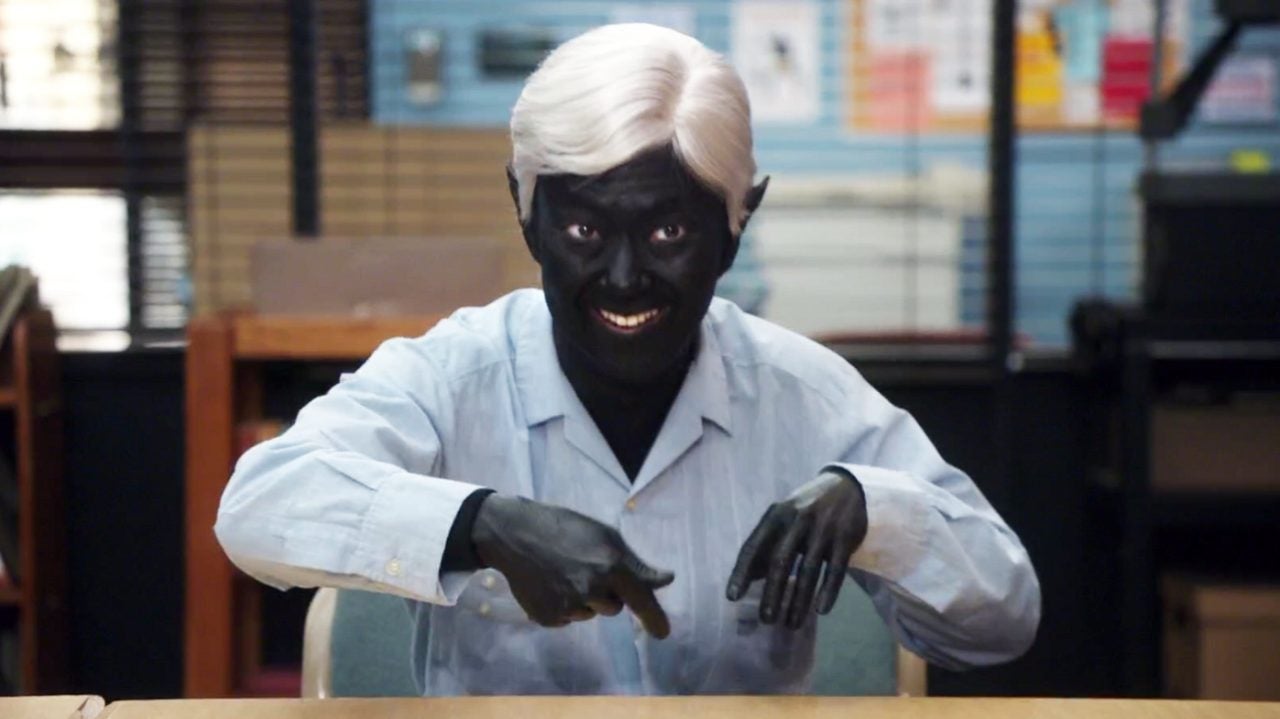
“Six seasons and a movie!”. If you say this phrase to any TV series fan, they will immediately know what you are referring to: Community, the craziest sitcom of the century, which explored narrative in a new way every week. A western mixed with paintball, a musical episode, a whole episode in claymation… And, as could be expected, a tribute to Dungeons & Dragons. Yes, the one that is completely removed from all platforms.
And throughout the episode, Professor Chang painted his face black indicating that he was a dark elf, one of the races available in the role-playing game. However, due to everyone’s fear of the public’s reaction, it was banned on all platforms. It’s a shame because it’s one of the best episodes of the series. It seems they only got a 1 in charisma.
South Park
We might have finished earlier by breaking down the non-banned episodes of South Park, but two that were censored almost from their own airing stand out: Cartoon Wars, an epic saga in which Cartman fights to ban Family Guy (paradoxically) before they air a joke about Muhammad, fearing the problems it will bring later. Kyle, for his part, thinks it is freedom of expression and cannot be stopped just like that.
In the end, they air it in fiction but, making a double turn in reality, Cartoon Network did not dare to air the joke itself, prohibiting an episode of South Park about freedom of expression and prohibitions. Incredible, right? Well, even more incredible is that this episode is going to be banned on streaming along with other classics like The Simpsons already did, Pip, or Trapped in the Closet. Banning South Park. What a sight to see.
Bluey
Yes, you read that right: Bluey, the children’s series about two girls playing with their parents, has also been banned on Disney+. And not just with small edits – which, all things considered, are normal when adapting an Australian series for a mainstream audience – but by removing an entire episode, Dad Baby, in which they play that Bandit, the father, has just been born, showing the process of giving birth. The miracle of life, yes, but not for this series, apparently.
The good news is that it’s fully available on YouTube, and you can check if it was really worth all the fuss (spoiler: it wasn’t). At the time, Disney+ also banned the episode Family Meeting, which is basically a constant fart joke (fabulously executed, to be fair), but they eventually decided to restore it as is. Is no one going to think of the children?
The Muppet Show
He is 50 years old, who can The Muppet Show harm? Well, we don’t know exactly, but on Disney+ the episodes presented by Brooke Shields (without any explanation) and writer Chris Langham have also been removed… after it was discovered in 2007 that he was a pedophile. You don’t want Kermit and company to get too friendly with someone like that, after all.
There was a time when mobile games were something else. Phones didn’t have the power to handle spectacular graphics, let alone create adventures that would be the envy of next-generation consoles. Those were simpler times, but just as addictive. Times when great games, still remembered today, reached levels of general popularity never seen before. And among these games was, of course, The Simpsons: Tapped Out. Unfortunately, remembering it today brings bad news. Because The Simpsons: Tapped Out will close its doors on January 24, 2025. It will be removed from the […]
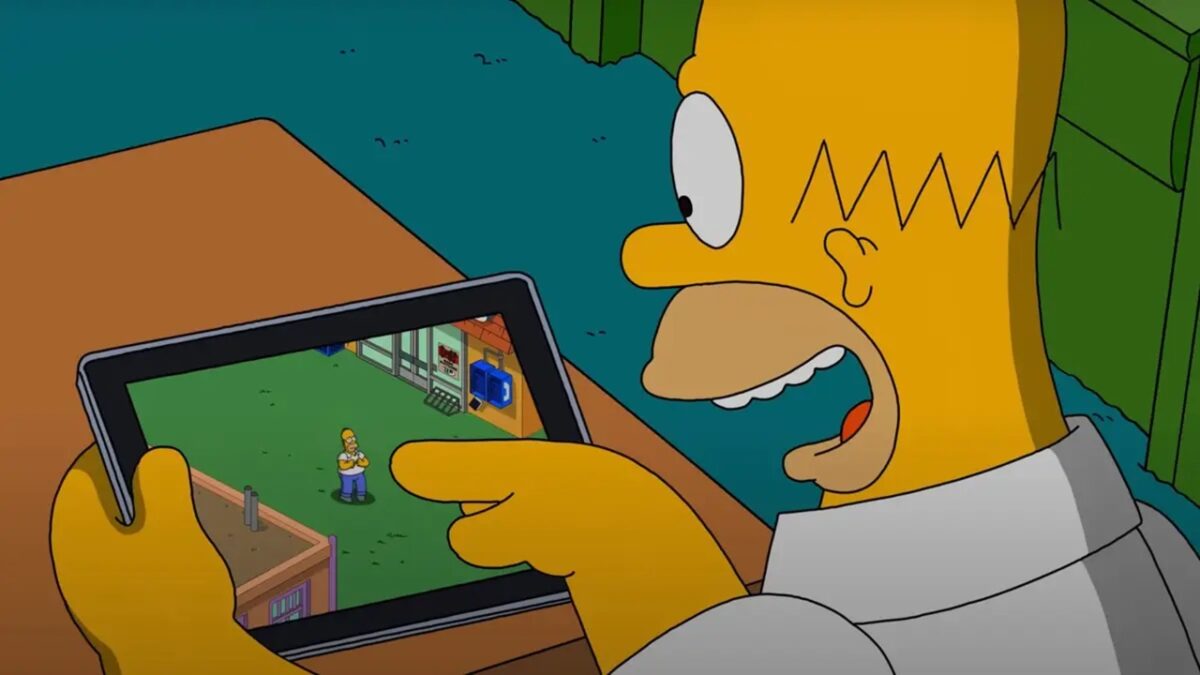
There was a time when mobile games were something else. Phones did not have the power to handle spectacular graphics, much less to create adventures that would be the envy of next-generation consoles. They were simpler times, but just as addictive. Times when great games, still remembered today, reached levels of general popularity never seen before. And among these games was, of course, The Simpsons: Tapped Out.
Unfortunately, remembering it today brings bad news. The Simpsons: Tapped Out will close its doors on January 24, 2025. Being removed from the App Store on October 31, all in-game purchases are already completely disabled, and the game is now set to expire.
For those who don’t know, The Simpsons: Tapped Out is a game developed by EA Mobile and Gracie Films for Android and iOS that was released on March 1, 2012. Its premise was simple. Due to a catastrophe caused by Homer, the city of Springfield has been completely devastated. Now it is our duty to rebuild the city, controlling the characters from the franchise, and fulfilling a series of objectives, always with the humor and voice acting of the legendary series by Matt Groening.
Having accumulated 831 characters and 1,463 different missions, with 308 updates, The Simpsons: Tapped Out has been one of EA Mobile’s most popular and successful games for 12 years. It has demonstrated not only the longevity of The Simpsons, but also the traction they still have among the audience. The series has generated quite a few imitators, including the popular, although never as successful, Family Guy Quest for Stuff and Futurama Worlds of Tomorrow.
If you played back then, there’s still time to re-download The Simpsons: Tapped Out and be able to say that they closed Springfield with you inside. And if you are still playing, know that we honor you, comrade, as only a true Springfieldian can be honored.
The Simpsons: Tapped Out is an arcade game where you can create your own version of The Simpsons' Springfield, complete with all the classic characters from the popular cartoon.
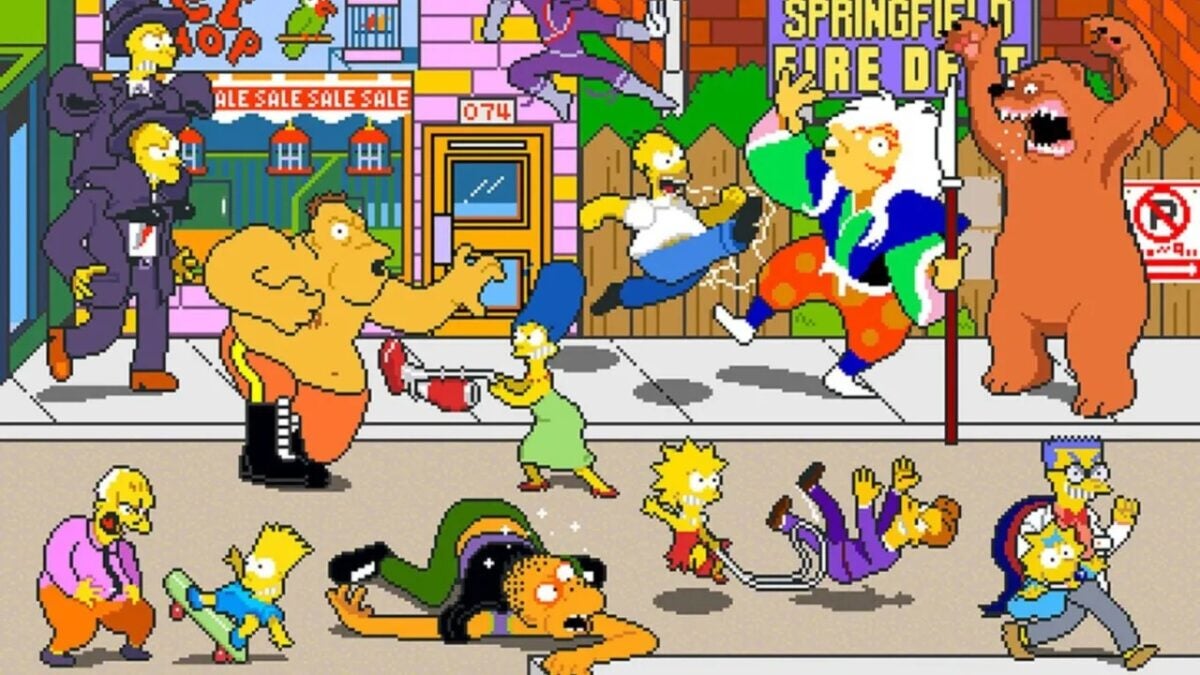
On March 4, 1991, the first game based on the series arrived in arcades across the United States, a beat’em’up that would reach Spain much later.
On December 17, 1989, ‘The Simpsons’ premiered on FOX, the series based on a series of short films that were aired as segments on the Tracey Ullman Show. A year and a half later, on March 4, 1991, the first game based on the series arrived in arcades across the United States, a beat’em’up that would arrive much later in Spain and that took the basic elements of the series to invent everything else. And yet, it is a great and hilarious classic. Why?
It can’t be said that the yellow family has had good luck with video games: either the proposals were ramshackle and absurd (‘The Simpsons Wrestling’) or they could have been starring any other character (‘Bart vs the Space Mutants’). But their first beat’em’up could only have been starred by them, each one with their specific power. Absurd? Yes. But with presence and personality. And that, whether you like it or not, sells a lot.
For some reason, the thing started with Smithers stealing a gigantic diamond for Mr. Burns and kidnapping Maggie after she used it as a pacifier. Eight screens with bosses that had nothing to do with the series, something that was completely normal: in its season 1, Springfield was still very small and had a long way to go before being filled with hundreds of supporting characters.
But even though it has nothing to do with the series itself, the fact that each character has their own power, it was a primitive multiplayer and the phrases of each one of them were respected, it already gave enough connection with the series to be able to focus on a ‘Street of Rage’ in the style of Matt Groeningthat was made with love and went beyond functionality. Proof of this is that being reissued in the different Stores has been a success. Great games never go out of style.
But above all, ‘The Simpsons’ was a fun game. Fun in a completely different way from the TV series, less ironic but more mischievous, without making friends along the way. Designs that could appear in the series, foolproof gameplay and adorable characters did the rest. And until ‘Hit and Run’ they didn’t have anything up to par again. But that’s another story.
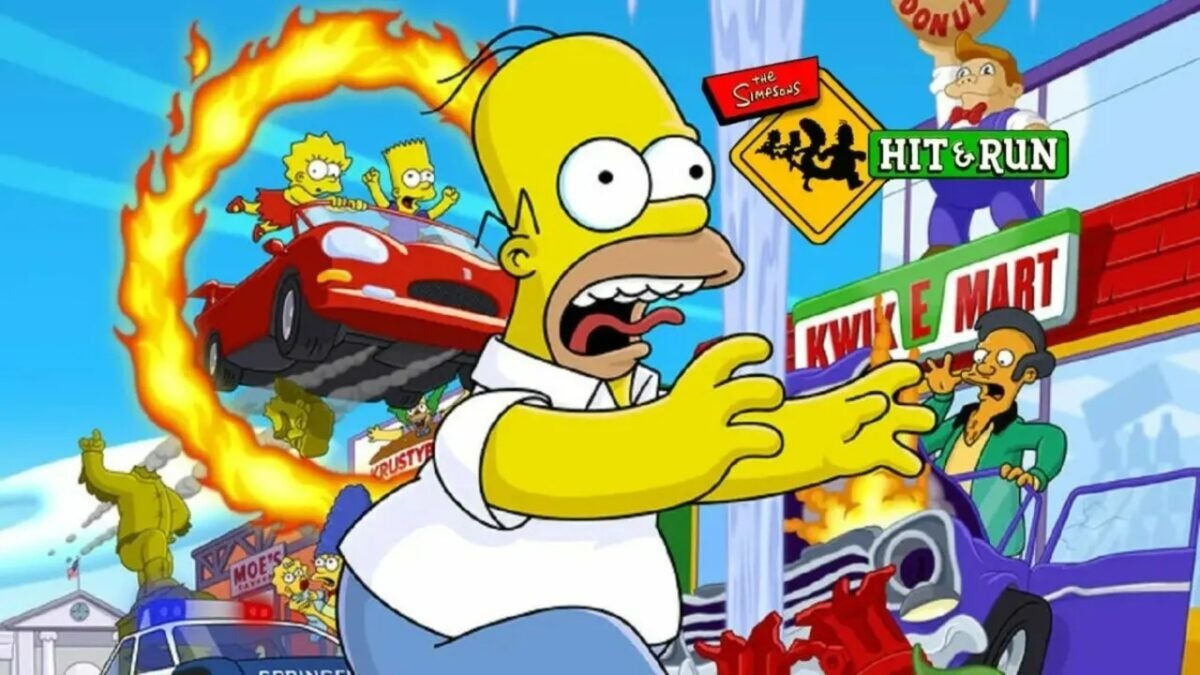
The 2003 game had it all: funny dialogues, an open world with the possibility of exploring the entirety of Springfield, a good bunch of missions and sub-missions, a very successful parody of GTA III and, of course, the original voices of the family
When ‘The Simpsons‘ were at their peak on television, curiously they didn’t fare well in the world of video games, flooded with senseless platformers, fighting games (like the awful ‘The Simpsons Wrestling’), or even skateboarding. Paradoxically, while the series was declining in a disastrous 15th season, the PS2 released one of the best licensed games in history: ‘The Simpsons: Hit & Run’.
The 2003 game had it all: funny dialogues, an open world allowing players to roam all of Springfield, a bunch of missions and sub-missions, a spot-on parody of ‘GTA III’, and of course, the original voices of the family. It’s a fantastic title, remembered and even yearned for (especially considering the future of the franchise on consoles), it did very well in sales, and renewed interest in a franchise that was starting to show signs of fatigue. So, why was there no sequel? Moreover, why can’t we play an official remake now?
“I have no idea. We made a deal for five games for less money than Vivendi paid for the first,” say the developers. But for some strange reason, they were never able to continue with their vision for the sequel. They even started its development! At Radical Entertainment, they believed everything was set, even planning to have ships, planes, and vans that could grab things with their hook, assuming that ‘Hit & Run‘ had become a franchise that still had a lot to offer.
In fact, in this initial stage, they even had fifteen different stories they could have pursued, everyone was excited and pitching ideas… And then, it all just stopped. “We all were saying, ‘Well, of course, we’re going to keep doing this. The stars are aligned, we’re going to keep going down this path.’ And then it was like, ‘Eh, I guess not’.” Multiply yourselves by zero.
The audience and developers want a remake or a sequel, especially since the series hasn’t released an original console game since 2007 (except for the commendable ‘The Simpsons Game’). With the upcoming release of ‘GTA VI‘… why not give another chance to the ‘GTA’ for those of us who grew up watching Homer eat donuts?
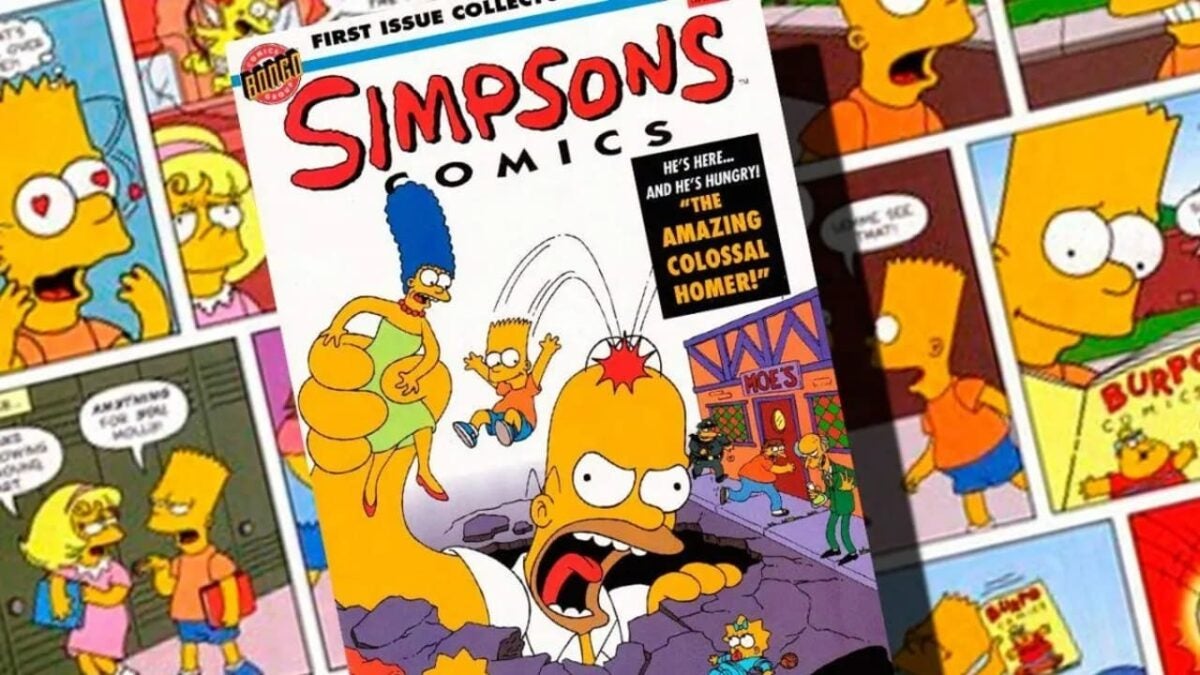
Groening noticed that there were not enough comedy comics on shelves overcrowded by superheroes, and decided to open the door to anyone who had talent and wanted to change the rules of the game: Bongo Comics was born.
In 1993, ‘The Simpsons‘ was in its prime (which would last until 1998, with the end of season 9). In the middle of Bartmania, Matt Groening and his team didn’t know how to grow the franchise beyond the usual merchandising. A movie? Video games controlled by them? Or better yet: Why not comic books? At the time, Groening noticed that there weren’t enough comedy comics on shelves overpopulated by superheroes, and decided to open the door to anyone who had talent and wanted to change the rules of the game: Bongo Comics was born.
Comfortable comic book reader in CBR and CBZ formats
Oingo-Bongo
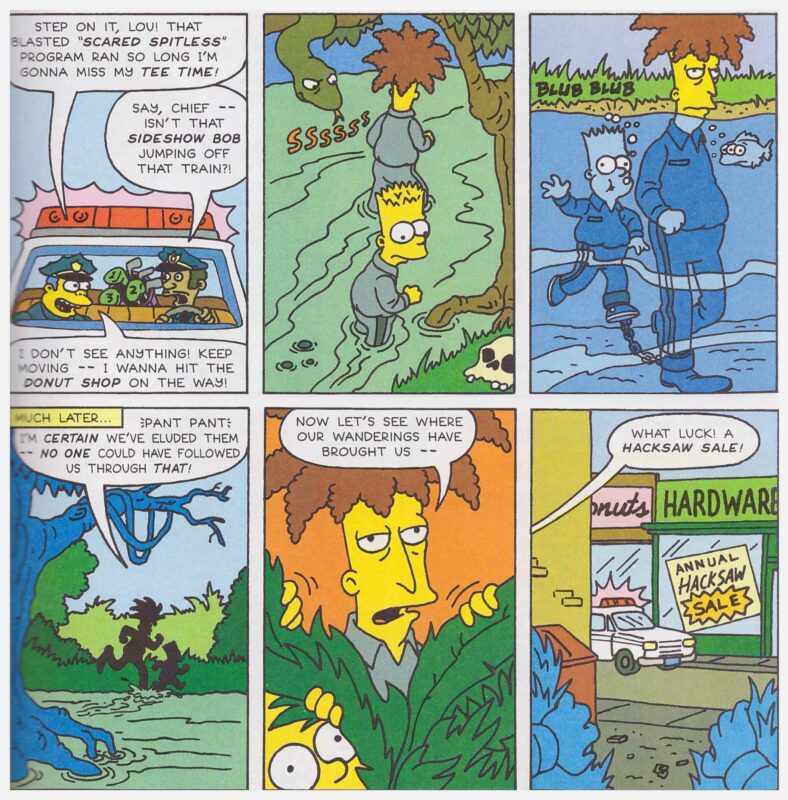
The truth is that Bongo Comics, beyond a couple of limited series (‘Mylo Xyloto’, created by Coldplay, and ‘Roswell, little green man’, which was nominated for four Eisner awards) only published comics related to ‘The Simpsons’, ‘Futurama’ and, to a lesser extent, ‘SpongeBob’. In total, ‘Simpson Comics’ had 245 issues, each with its own particular style, expanding on the stories of the series and getting carried away. For example, there was an issue in which Mr. Croquet, Homer’s head that served as a detergent logo, ended up with the manga, and another narrating the family’s reunion with Spider-Pig.
The problem came with overproduction: in addition to ‘Simpson Comics’ so many series were published that it was impossible to keep up. ‘Bartman’, ‘The Treehouse of Terror’ (fabulous, by the way), ‘Bart Simpson Comics’, ‘Futurama Comics’, ‘Simpson Classics’, ‘Simpsons Super-Spectacular’, ‘Simpsons Illustrated’… Even Ralph Wiggum, Milhouse, the guy in the comic store or Professor Frink had their own title. It couldn’t go on for long.
There were magnificent comics during this time, mind you: all the Halloween specials, where they had different guest stars, were a joy, and Bartman’s parodies were very well channeled, but, although the comics still kept their DNA intact, the fame of the series began to decline along with the quality of their scripts and, little by little, ‘The Simpsons’ was running out of that redoubt of humor in comic book stores that Groening was looking for.
Bongo Comics went out of business in 2018 after publishing things like a crossover between ‘Futurama‘ and ‘The Simpsons’ that was much better than what we would later see on TV and a story about Chief Wiggum. Would it have survived if they had opened up to other kinds of comics or was Bongo doomed before it started? In any case, it’s a shame. It only remains to tell the American readers who doomed it to multiply by zero. There is no other way.