AMC has confirmed the development of a new television series inspired by the movie Point Break, which will be set 30 years after the original film. This new project will revolve around a team of robbers related to the famous gang known as the Ex-Presidents, whom fans remember as the charismatic antagonists of the 1991 movie. A cult classic for good reasons, Point Break, directed by Kathryn Bigelow and starring Keanu Reeves and Patrick Swayze, did not have great success upon its release, but over the years it has gained a […]
AMC has confirmed the development of a new television series inspired by the movie Point Break, which will be set 30 years after the original film. This new project will revolve around a team of robbers connected to the famous gang known as the Ex-Presidents, whom fans remember as the charismatic antagonists of the 1991 film.
A cult classic for good reasons
Point Break, directed by Kathryn Bigelow and starring Keanu Reeves and Patrick Swayze, did not achieve great success upon its release, but over the years it has gained a cult status, celebrated for its combination of intense action, chemistry between the actors, and its innovative direction. The film has become a classic of action cinema, leaving an indelible mark on popular culture.
Keanu Reeves, who gained notoriety with his role as an undercover FBI agent, has continued his career in the action genre, becoming a symbol with franchises like Matrix and John Wick. He is currently working on the fifth installment of John Wick, although it seems he is taking a well-deserved break from the screen. There are rumors that Reeves might make a cameo in the new series, which could increase his appeal among viewers. However, this twist could be risky, given the tragic ending of his character in the original film.
It is worth remembering that a decade ago a remake of Point Break was made that was poorly received, and fans hope that this new series will adhere more to the spirit of the original film. Although details are still scarce, expectations are growing as more is learned about this project that seeks to revive the excitement and philosophy behind Point Break.
On February 2, 1979, tragedy struck an apartment on the seventh floor of 445 Fountain Avenue in New York. A 4-year-old boy who had just gone to the movies with his family to see Superman (the version with Christopher Reeve, of course) jumped out of the window believing he had the same powers and could fly. In fact, he had been jumping off tables and chairs trying to do it ever since, until his ambition went much further. Across the country (and, they say, around the world) thousands of children and […]
On February 2, 1979, tragedy struck an apartment on the seventh floor of 445 Fountain Avenue in New York. A 4-year-old boy who had just gone to the movies with his family to see Superman (the version with Christopher Reeve, of course) jumped out of the window believing he had the same powers and could fly. In fact, he had been jumping off tables and chairs trying to do so until his ambition went much further. Across the country (and, they say, around the world), thousands of children and adults believed too much in the idea that a man could fly, and the result was a media campaign against the superhero. Sadly, as we know now, he is not the first nor will he be the last case of people believing everything they see on a screen.
Learning C1 of Na’vi
Recently, we learned that a woman with mental health issues had to be hospitalized after her Internet-connected refrigerator displayed an advertisement for the series Pluribus with the text “We’re sorry to have upset you, Carol”. What was the woman’s name? Of course, it was Carol. Not knowing what was happening, she collapsed, as could be expected. It shouldn’t surprise anyone: it’s not new that cinema and television can exacerbate or even create mental disorders. At this point, it should be taken for granted.
In 1998, the premiere of The Truman Show, in which Jim Carrey was the star of an involuntary reality show, caused hundreds of cases of what has come to be called “the Truman illusion,” a syndrome that makes people believe they are being filmed 24/7, following the reality fever. The level reached was such that one of the patients traveled to New York to verify that 9/11 was real and not just a plot twist in their own reality. As Andrew Niccol, the director of the film, stated, you know you’ve made it when a syndrome is named after you.
The following year, madness broke out with Matrix, the movie in which Neo (Keanu Reeves) had to choose between a world created by machines or reality, fighting against them. The film not only created a multitude of philosophical treaties and theories but also, hundreds of people who firmly believed they were living in Matrix. And, although over the years we may think we are much smarter and believe we have left behind all these syndromes caused by fiction, the reality is quite different.
The last one is perhaps the most striking: people who experience depression after watching Avatar. Seeing the incredible places that James Cameron showcases in his films, the journeys mounted on winged creatures, the love for nature and the love for community, many have wanted to leave everything behind to go to Pandora with the Na’vi, even learning the language to imagine a world beyond. Upon leaving the cinema and comparing the gray reality of the city with the open and free spaces of Pandora, many found solace only by rewatching the movie as many times as they could. Yes, that is happening. Really.
In an episode of the wonderful series How To With John Wilson, the filmmaker approached a group of people who were trying to learn Na’vi and spoke openly about their lives before and after Avatar. And instead of laughing at them, what he does is understand them, give them a shoulder to cry on, show the support network they have built among themselves with James Cameron as an excuse. Because, deep down, don’t we all want to feel a little more connected, even if it’s with a ridiculous hobby as an excuse? In a society that seems to need fiction more than ever, we cannot expect anyone to fall into the idealization of it. It is simply the course of time.
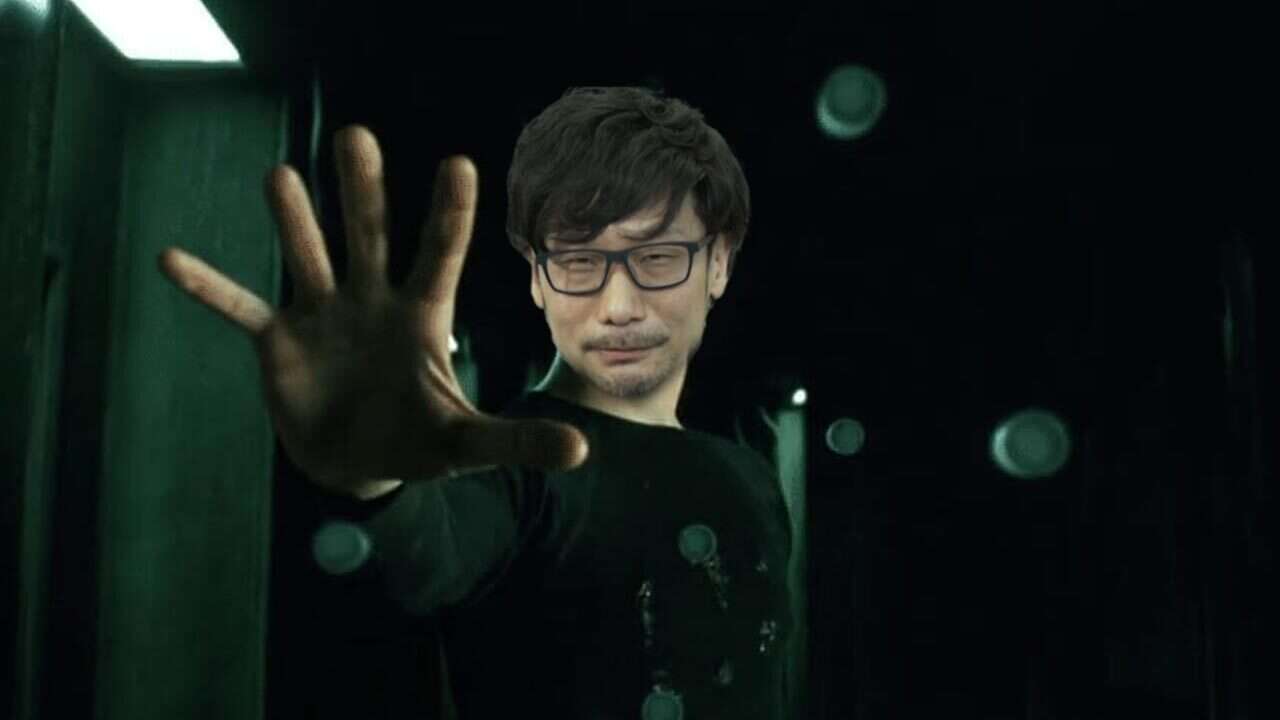
Hideo Kojima has shared his surprise after learning, through social media, that the Wachowski sisters had proposed in 1999 the creation of a video game based on The Matrix while he was working at Konami. On his X account, Kojima stated that he was unaware of this conversation, expressing that in 26 years he had never been mentioned this offer. According to his statements, at that time he and the Wachowskis were mutual fans and had exchanged emails, although he was not present at the meeting where the project was discussed. Stopping a bullet, Kojima commented that, in […]
Hideo Kojima has shared his surprise after learning, through social media, that the Wachowski sisters proposed in 1999 the creation of a video game based on The Matrix while he was working at Konami. On his X account, Kojima stated that he was not aware of this conversation, expressing that in 26 years this offer had never been mentioned to him. According to his statements, at that time he and the Wachowskis were mutual fans and had exchanged emails, although he was not present at the meeting where the project was discussed.
Stopping a bullet
Kojima commented that, at the time the development of the video game was proposed, he was immersed in the creation of Metal Gear Solid 2, which would have made it difficult for him to attend to another proposal. “If someone had informed me, it might have been possible to make it work”, he added. The meeting in question involved the then CEO of Konami Digital Entertainment, Kazumi Kitaue, and although Kojima recalls having met the Wachowskis several times, he did not attend the meeting where the possible adaptation of the video game was discussed.
Although the collaboration did not materialize, several video game adaptations have been developed in the universe of The Matrix. In 2021, Epic Games released a technical demo of Unreal Engine 5 set in this cyberpunk world, reflecting the ongoing interest in the franchise. Additionally, it has been confirmed that a fifth Matrix film is in development, with Drew Goddard as the screenwriter and director, although without the participation of the Wachowskis.
In summary, the revelation about the Wachowskis’ initial offer and the lack of information regarding it for over two decades has sparked renewed interest in the legacy of The Matrix and its potential in the realm of video games.
Disney has not given many big surprises to Star Wars fans in the last couple of years. Although there have been some successful series, there have also been some missteps and some unfortunate boycotts. Star Wars fans are not going to go hungry, but it is true that without big movies, it seems they do not have as many high-quality things as they did four or five years ago. Except that the second season of the best anthology series that Disney has ever given us is premiering: Star Wars: Visions. The premise of this anthology series is to offer a different perspective on […]
Disney has not given many big surprises to Star Wars fans in the last couple of years. While there have been some successful series, there have also been some missteps and some unfortunate boycotts. Star Wars fans are not going to go hungry, but it is true that without big movies, it seems they don’t have as many high-quality things as they did four or five years ago. Except that the second season of the best anthology series that Disney has ever given us is premiering: Star Wars: Visions.
The premise of this anthology series is to offer a different perspective on the Star Wars universe. Exploring every corner of the universe, each episode is directed by a different Japanese anime studio, bringing its own drawing and animation style to the Star Wars universe. Giving a fresh and bold tone to the whole.
A Very Japanese Star Wars
The interesting thing about Star Wars: Visions, moreover, is that it is not limited to being Star Wars, Japan. It really takes advantage of giving them a freedom that we generally do not see in the franchise, constrained by decades of stories. With much more diversity of characters, places, and tones, it is possible to find something here for everyone, partly also because anime has a different style than what we are used to in Star Wars. Even if the change between episodes can be very radical from one to another.
In fairness, it cannot be said that Star Wars: Visions invented this kind of anthology. Matrix had already published an anthology of animated shorts, called Animatrix, which told stories from the franchise’s universe through that medium. This is something that Star Wars: Visions has clearly drawn inspiration from.
But that is no kind of demerit. On the contrary. It is knowing how to learn from the best to create something equally extraordinary. And in fact, this third season promises to offer us some episodes of very high quality, based on the studios involved. The Ninth Jedi: Child of Hope is produced by Production IG, the continuation of the excellent The Ninth Jedi. Trigger, now known for Cyberpunk: Edgerunner, is in charge of the episode The Smuggler. And the studio behind JoJo’s Bizarre Adventure closes the anthology with Black. Demonstrating that there is immense quality here.
With the premiere scheduled for October 29 on Disney+, the series promises nine stories that will keep us on the edge of our seats and wanting to know even more about the Star Wars universe. And if you haven’t seen the previous two seasons of Star Wars: Visions, you should, because it might be the best that Star Wars has offered us in the last 20 years.
The sequel to the iconic 1999 film, Matrix, known as Matrix Reloaded, is remembered for one of the most impressive chase sequences ever filmed. In this memorable scene, Trinity and Morpheus are chased by the Twins along a highway built specifically for the production, which stretched over two kilometers in the abandoned Alameda Naval Air Station, in Alameda County, California. A scene that was not exactly cheap or easy The creation of this highway was not an easy task; the production invested 2.5 million dollars in its construction, surrounding it […]
The sequel to the iconic 1999 film, Matrix, known as Matrix Reloaded, is remembered for one of the most impressive chase sequences ever filmed. In this memorable scene, Trinity and Morpheus are chased by the Twins along a highway built specifically for the production, which stretched over two kilometers in the abandoned Alameda Naval Station, in Alameda County, California.
A scene that was not exactly cheap or easy
The creation of this highway was not an easy task; the production invested 2.5 million dollars in its construction, surrounding it with six-meter-high walls to ensure that no element from the outside world filtered into the scene. The road had three lanes in each direction, designed to provide ample space for the spectacular stunts and explosions showcased in the sequence.
In an innovative move, General Motors donated 300 vehicles to be used in the filming, all of which were destroyed during the shoot, demonstrating the producers’ commitment to realism and excessive action. The filming of this intense chase took almost three months, and although most of the scenes were shot on the mentioned highway, some shots were also made in Oakland, California.
Once the filming was completed, the highway was dismantled, but the location where it was built can currently be viewed through Google Maps. The sequence is not only a testament to the creative vision of the Wachowski sisters, but also a milestone in action cinematography that still resonates in popular culture.
As Matrix continues to be relevant, technology and advancements in special effects keep fueling rumors about possible new installments, leading us to questions about what other futuristic projects we can expect from this legendary franchise.
No one expected it since it is not a premiere, but the movie ‘Infinite’, starring Mark Wahlberg, has achieved notable success on the streaming platform Netflix, currently reaching number 2 worldwide and becoming the most viewed in 27 countries. This science fiction film, which was originally scheduled for a theatrical release in 2021, was ultimately released directly for streaming due to concerns about the public’s reluctance to return to theaters during the pandemic. One must always give second chances At the time, ‘Infinite’ was the subject […]
No one expected it since it’s not a premiere, but the movie ‘Infinite’, starring Mark Wahlberg, has achieved remarkable success on the streaming platform Netflix, currently reaching number 2 worldwide and becoming the most viewed in 27 countries. This science fiction film, which was originally scheduled for a theatrical release in 2021, was ultimately released directly for streaming due to concerns about the public’s reluctance to return to theaters during the pandemic.
There is always a need to give second chances
At the time, ‘Infinite’ was the subject of controversy and disappointment, as it received an overwhelming negative reception from critics, with a mere 17% positive ratings on Rotten Tomatoes. Many critics unfavorably compared it to the iconic ‘Matrix’ saga, which heightened the negative expectations regarding the project directed by Antoine Fuqua. The story follows Evan McCauley, a man diagnosed with schizophrenia who discovers abilities and memories from past lives, but finds himself on the brink of emotional collapse.
Despite the controversy and uproar surrounding its initial release, ‘Infinite’ has found a sort of rebirth on Netflix. The film had previously been on the platform, but its recent return has once again captured the public’s attention. This phenomenon highlights how older catalog content can be reactivated and generate renewed interest in the streaming realm.
Industry analysts are closely watching the performance of ‘Infinite’ in this new phase, raising questions about the possibility of other titles that failed to connect during their original release receiving a second chance in the streaming ecosystem. However, the uproar generated by its negative critical reception remains a shadow over its current success.
Akira, released in 1988, is considered a masterpiece that has laid the foundations of modern anime and has profoundly influenced numerous works in film and pop culture, from Ghost in the Shell to The Matrix. However, Warner Bros.’ attempts to adapt this iconic story into a live-action format have failed after more than 20 years of efforts, a sign of the challenge of maintaining the essence of such a complex and culturally specific narrative. One failed attempt after another Over the years, several directors, including Stephen Norrington and Jordan Peele, have approached […]
Akira, released in 1988, is considered a masterpiece that has laid the foundations of modern anime and has profoundly influenced numerous works in film and pop culture, from Ghost in the Shell to The Matrix. However, Warner Bros.’ attempts to adapt this iconic story into a live-action format have failed after more than 20 years of efforts, a sign of the challenge of maintaining the essence of such a complex and culturally specific narrative.
One failed attempt after another
Over the years, several directors, including Stephen Norrington and Jordan Peele, have taken on the challenging task of adapting Akira, but each attempt has resulted in a lack of a unified vision, making it difficult to create a clear and coherent approach. This lack of direction translates into the difficulty of capturing the social context of post-nuclear Japan, which is crucial for understanding the work.
Akira reflects a Japan marked by atomic trauma, institutional distrust, and technological anxiety. Attempts to change Tokyo to New York or to Eurocentrize the characters have been considered acts of cultural appropriation, provoking resistance from fans. The essence of Akira, which addresses the fear of power and dehumanization, seems unattainable in contemporary Hollywood, where concerns and values are radically different.
Despite having assigned director Taika Waititi in the last attempt, the project was suspended again, which has led Warner Bros. to finally relinquish the adaptation rights to Kodansha. The question remains whether an adaptation that honors the original material will ever be achieved. Stories like this highlight the profound influence of Akira and the difficulty of reinventing a work that has already impacted entire generations.