
Science confirms the internet is changing our brains

See how the internet is changing you.

internet brain

Your parents memorized all kinds of stuff. Important dates. Addresses. Multiple phone numbers. They could draw you a map anywhere in your hometown, complete with street names.

Now?

Now, at least a third of Europeans say they don’t even know their partner’s phone number. You know, the person you kiss and touch body parts with? Why don’t you know their number?

The internet is changing the way our brains work, and an international team of researchers is discovering just how. The team studied our attention spans, our memories, and the social impacts of a life lived online. Here’s what they found.

Fractured focus

distracted driver

“The key findings of this report are that high levels of internet use could indeed impact on many functions of the brain. For example, the limitless stream of prompts and notifications from the Internet encourages us towards constantly holding a divided attention – which then, in turn, may decrease our capacity for maintaining concentration on a single task,” said Dr. Joseph Firth.

Just try sitting down to dinner and leaving your phone in another room. Doesn’t it feel like you’re floating adrift like Sandra Bullock in “Gravity?” A part of our brain is always occupied with the world online. It is hard to concentrate on one thing, isn’t it?

Maybe you think you’ll fare better if you focus on a game. Think again. The report notes that after just six weeks of engaging in an online role-playing game, participants had significant reductions in a brain region associated with impulse control and decision making.

Okay, but maybe all this information juggling is helping us become better multitaskers? Wrong again. Heavy media multi-taskers performed worse in task‐switching tests than those who spent less time plugged in. Those who spend the most time plugged in have less grey matter to help maintain goals in face of distraction. Basically, we’re all just Pavlov’s dogs, waiting for our phones to tell us what to do.

Why remember anything?

confusion

“Given we now have most of the world’s factual information literally at our fingertips, this appears to have the potential to begin changing the ways in which we store, and even value, facts, and knowledge in society, and in the brain,” Dr. Firth says.

Although we can learn anything, we’re not really banking that knowledge. People who get information online aren’t storing it for the long term. Why would you? Google will still be there tomorrow.

For kids growing up in the internet age, they have no memory of a time when the answers to, well, every question weren’t readily available. And if you grow up with split attention and a kneejerk need to reach out to the internet for answers, that is a radical departure for the human species. The World Health Organization recommends that children between the ages of 2-5 shouldn’t get more than one hour of screen time per day.

Who needs friends?

Perhaps the scariest finding relates to our society as a whole. Since we can find the answers to everything online, humans are beginning to see things like books, friends, and community as “redundant.” Why ask Grandpa to teach you how to build a desk when you can trust the YouTube algorithm to provide the best process without mid-tutorial digressions about growing up on the farm?

Professor Jerome Sarris said, “I believe that this, along with the increasing #Instagramification of society, has the ability to alter both the structure and functioning of the brain, while potentially also altering our social fabric.”

How to regain your brain

meditation

Worried about how the web is boggin’ down your noggin? Sarris recommends the following steps:

  • Mindfulness and focus practice
  • Reduce online multitasking
  • Pull back on “checking” apps and messages all the time
  • Dial back your internet use at night
  • Do more activities with other humans IRL

What will the future hold?

In the report’s conclusion, they note, “For better or for worse, we are already conducting a mass‐scale experiment of extensive internet usage across the global population.” That’s right, guinea pigs. Although we don’t know the long-term effects of being plugged in, we’re plugged in anyway. And while there are many benefits to a connected world, we won’t know how we’ll be impacted over the long haul until the long haul is over.

You can read the full report here.

The addictive psychology behind clicker games (and how they’ll destroy us all)

These games are designed to waste your time. Here’s why you’ll fall for it.

Cookie Clicker

Cookie Clicker is an enigma. It is a game so basic that it barely qualifies as a form of entertainment. It appeals to every human being’s basic sense of action equalling reward, hitting the player with a series of dopamine rushes that compounds into itself.

Cookie Clicker is a free browser game that offers the player a simple goal: get as many cookies as possible. As the player clicks the giant cookie to gain more of the baked goods, they spend their cookies on buildings and upgrades that grant more cookies. If that sounds stupid and inane, it is, yet Cookie Clicker has gained a massive dedicated following.

In this article, we’re going to look at how the game design of clicker games exploits human psychology and how the genre itself is a brilliant satire (and exploitation) of the late capitalist digital hellscape we live in.

Inside the psychology of clicker games

Skinner’s Box o’ Fun

Skinner's box
We’re like, all just rats in a box maaaaan.

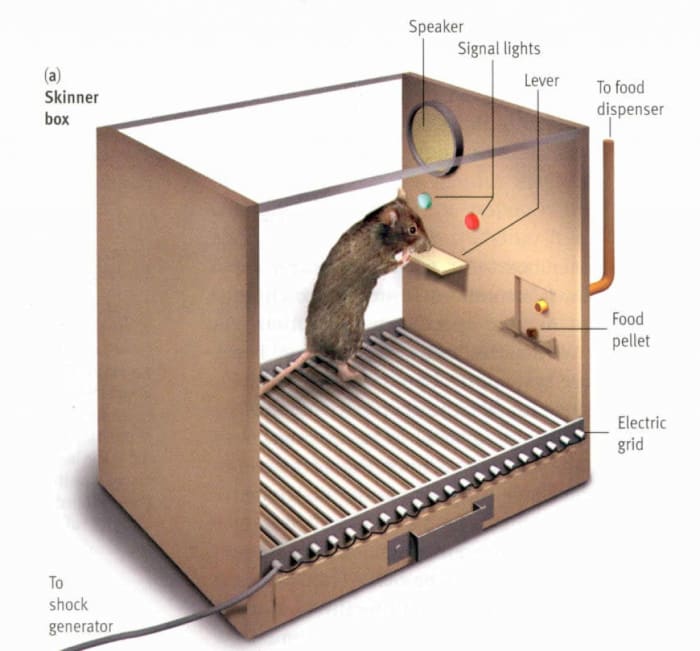
To understand why the appeal for clicker games exists in the first place, we need to go back to high school psychology and look at the Skinner box. Created by B.F. Skinner, the famous experiment had a rat placed in a box with a lever and a food dispenser. Whenever the rat pressed the lever, it would be rewarded with some sort of stimuli (which was usually food). The rat would quickly learn that by performing the repetitive and unstimulating action of pressing a lever, it would be rewarded. By pairing a formerly neutral stimulus (pressing a lever) with a rewarding stimulus (receiving food) the rats had been classically conditioned.

Though a gamer’s brain is slightly bigger than a rat’s, clicker games affect them in much the same way. Clicking a cookie is not an inherently stimulating action at all, yet it makes a number go up, and human beings LOVE big numbers. While the number of virtual cookies you have has no inherent actual value, players will nonetheless feel a rush of dopamine as if they have accomplished something tangible and real. The rat, at least, received a piece of food, prolonging its life and achieving a basic biological goal.

In clicker games, the player barely has any agency. The player quickly is able to purchase upgrades that generate cookies on their own, requiring no input from the player. By requiring no input or thought, clicker games somehow both require less effort than a rat pushing a lever and less reward than a small pellet of food.

Are we being too harsh on the genre? If clicker games are such a mindless waste of time, what about other games? To that, we say that clicker games take the increasing amount of addictive game design decisions made over the years and build the game completely around them.

Video games vs dopamine buttons

gaming addiction
At what point does a game go from fun to work?

It wouldn’t be fair to blame the existence of mindless clicker games on their developers; they were simply following gaming trends. As the gaming market has shifted from the single payment model to the DLC/microtransaction model, game developers are more focused on getting gamers hooked on their product than getting them to buy it in the first place.

Modern game design places more value on extrinsic awards than on intrinsic ones. To demonstrate what we mean, think of a raid in World of Warcraft. An example of an extrinsic reward would be gaining valuable loot after beating a difficult raid in WoW, while the intrinsic reward is a fond memory of camaraderie and satisfaction after working together with a group of friends for months to accomplish a goal. Designing a game based on extrinsic rewards is not inherently a bad thing, but clicker games take this basic design philosophy to the extreme.

The emergence of achievements and loot boxes have shown that gamers favor extrinsic rewards over some sort of internal satisfaction. Do you think shooters like Fortnite or Call of Duty would be as popular as they are without the constant stream of unlockable skins and items that come with playing? In today’s market, solid gameplay simply isn’t enough to keep a player hooked.

So what happens when you strip a game of all of its pesky gameplay and leave it with just a progression system? Clicker games. Gamers have been so conditioned to seek validation for their gameplay through extrinsic rewards that they’re willing to completely avoid gameplay as long as they get a cheap dopamine rush.

Clicker games take this gameplay-less formula to its logical conclusion by rewarding players for not actually playing the game. In clicker games, you get far more cookies (or whatever currency you’re trying to hoard) by simply letting the game run than by clicking or directly managing your game. The amount of effort required is less than minimal as you can go to bed and wake up with millions of new cookies, granting yourself a dopamine rush for doing exactly zilch. While it can be hard to predict gaming trends, I doubt anyone knew that some gamers would prefer games that you don’t play at all.

Why classical conditioning will destroy us all

hypnotize
Cookie cookie cookie, can’t you see, sometimes your words just hypnotize me

Clicker games are the unholy lovechild of video games and classical conditioning. They are, however, themselves of a symptom of modern digital design and not the source of the infection. Nearly every modern piece of digital technology is designed using classical conditioning to keep you as hooked as possible. 

For example, when Facebook creates a big red notification whenever someone likes your photo, they are classically conditioning you to associate social status with likes. Much like clicker games, Facebook provides joy in increments (likes instead of cookies in this case), quantifying something that makes you happy. Like a clicker game, eventually the high of a certain number will fade, and you’ll require more likes to feel the same amount of satisfaction. This creates an endless feedback loop that resembles addiction, showing symptoms of withdrawal and tolerance.

Companies try and keep you hooked to their platforms because it generates them more money, so they push the classical conditioning as far as it can get. At the risk of sounding like some sort of tech-averse boomer or pseudo-intellectual 14-year-old, yes, you are being conditioned. But so is everyone who occupies a digital space, so you shouldn’t feel guilty about it. The most important thing you can do is be aware of it.

Whether it be about video games or social media, always be mindful of classical conditioning. If you ever feel like you’re just going through the motions instead of getting some sort of genuine enjoyment out of these products you should take a break or quit entirely. Studies have shown that people who find themselves addicted to social media or video games are unhappier on average. It’s possible to enjoy these things in moderation and be a perfectly happy, healthy person. All that’s required is a degree of self-awareness and the ability to distinguish between cheap, artificial dopamine rushes and genuine joy.

That said, you’re perfectly welcome to spend hours clicking a cookie just to see a number increase. Skinner and his rats are having a hearty laugh at your expense.

Complete guide to self-improvement

Get smarter, healthier, more productive, and more in shape with our complete guide to self-improvement.

Ever wonder what the difference is between the people who reach their goals and those who merely dream? Those who hit their targets prepared themselves to do so. Here at Softonic, we’re focused on bringing you the best advice and digital tools to achieve any goal. Take a look at the stories we’ve assembled and consider how they can help you start building your tomorrow today!

Improve your mind

learning

Reaching your potential

Mental health

self esteem

Learning

learning

Staying balanced

meditation

Improve your body

exercise

Exercise

Food

vegetables

As we continue publishing articles to make your life better, we’ll add them to this page, so be sure to bookmark it and check back whenever you need a boost.

How to respond to (and learn from) constructive criticism

Accepting criticism is a key part of advancing your life. Here’s how to do it without losing your cool.

Whoever said feedback was a gift never experienced the racing heartbeat, hurt feelings, and sense of embarrassment that comes with a cryptic, “we should talk.”

If you struggle to deal with feedback gracefully, know that you’re far from alone. None of us like to have our flaws pointed out, but the fact is, others can provide some valuable perspectives on our shortcomings.

Being sensitive to criticism can hold you back. Avoiding confrontation can damage relationships with colleagues and stand in the way of professional growth.

How to handle criticism

criticism

What is constructive criticism vs. just plain criticism?

Criticism is a term that refers to an evaluation or judgement — and it could be good or bad.

Constructive criticism is used to help people grow and improve. It’s thoughtful feedback that presents some form of actionable advice.

By contrast, criticism is not constructive if the main point made is “you suck” with no feedback on why that is and how to improve.

Naturally, if you’re dealing with negativity at work in the form of personal attacks, it’s best to shut it down, ignore it, or report your problem to HR or your boss.

Controlling your reaction

If you’ve ever tried to hide your feelings, you know that it’s not easy. Try not to take things personally.

Do not blurt out the first reaction that comes after hearing something critical. Take a breath and process what’s going on here. That initial impulse to be defensive is not going to serve you well.

Right off the bat, your first instinct might be to explain your actions or shut down the conversation.

In this initial moment, take a few seconds to remind yourself that feedback is a powerful tool. This is a chance to improve your skills, better your relationships, and get on the same page with the person giving the feedback.

That less-than-stellar performance review doesn’t reflect on your personality. Instead, it’s an opportunity to learn about your weaknesses.

On the spot, controlling your feelings is a bit more difficult. If you’re feeling overwhelmed, consider asking the person giving the feedback if they have time to chat about it later.

This will allow you to take a walk, listen to music, and calm down a bit. You may also want to write down your stresses, and reflect.

Listen closely

negative review

When it comes time to have that hard conversation, approach the situation with an open mind. If a colleague says you were too aggressive in a meeting, consider how your actions made them feel — what did you say or do that rubbed them the wrong way? Do you get excited about sharing your own ideas and cut others’ off mid-sentence? Maybe you’ve been inadvertently dismissive.

Whether you agree or not, your critic might have a point. We have to exist in this world with others, and it makes things easier when we bring up the things we don’t like.

If you can see things from the other person’s point of view, you can better understand why they brought this issue up. So, if you’re blowing past deadlines you don’t consider important, your boss might call you out on your time management skills. Or, assume you don’t take your job seriously. You might think these deadlines are arbitrary, or an extra step.

Let them go over how your actions impact their ability to finish their work. Your boss might say that you need to turn a client proposal early because it allows them to review milestones and assign tasks to others. Then, it’s understandable that operating on your own timeframe can cause your boss to stress.

The point is, when we understand why something is important to someone else, it can inform how we set our priorities.

Ask questions

You might find yourself in a situation where you receive vague feedback that doesn’t seem to have a clear solution attached.

Often, the person tasked with giving the feedback isn’t stoked about the situation, either. Your manager might not be comfortable with this aspect of their role, and instead, try to deliver news as gently as possible.

In this case, ask questions and get specifics. Sure, it’s counterintuitive to stay in this moment for longer than necessary, but the more details you can dig up, the better.

Ask questions like “do you have any suggestions for how I can improve?” “What would you add or change about X?”

When you make a point of asking for advice, you show that you’re flexible and willing to learn, even when it’s hard.

Responding the right way

working

Responding is the hardest part for a lot of us.

For one, even the most productive forms of criticism can leave us feeling hurt, humiliated, or downright defensive. And, if you’re prone to tears, then your focus may be on trying to make it out of a situation without crying in front of a boss or colleague.

If you don’t agree with the criticism, take a deep breath and say something like, “from my end, it seems like XX…”. Or, “I’m sorry, I didn’t realize I came across that way, __ is what I really meant.” This gives you a chance to explain your decisions and emphasize the subjective nature of our work and interactions with others.

If the critic has some valid points, try to respond positively. Set aside your ego and make it clear that you hear what they’re saying, and that you’ll use that feedback in the future.

Focus on being solutions-based

Building on the importance of responding to feedback gracefully, talking about your feelings too much misses the point.

Instead, come up with a game plan for enacting change. Are there tools you can use to become a better time manager? Do you need to work on being a better listener? Responding to emails faster? Whatever it is, come up with some steps for improvement.

That said if someone is being cruel or calling you out in front of a group of colleagues, that crosses a line. It’s perfectly acceptable to say, “hey, next time can you bring this up in private?” Or, “I’d rather not have you CC the whole team about this issue.”

7 ways to stay inspired when you are your own boss

Do you work alone? If so, these tips can keep you creative, balanced, and happy.

Working for yourself might seem like the ultimate dream. You make your own hours, wear sweatpants if you want to, and don’t live life dreading pointless meetings.

Your business, your rules.

But, being a model employee and running a tight ship isn’t always easy. It’s hard to stay inspired, motivated, creative, when it’s day-in, day-out, cranking out work on your own.

Below, we’ve compiled a list of seven ways to stay inspired when you work for yourself.

How to stay motivated when you work for yourself

1. Make time for reading

reading

Adding reading to a never-ending pile of to-dos may sound counterintuitive. Where is that time for leisure reading supposed to come from anyway?

Even 45 minutes or an hour spent reading a good book can do a world of good.

For one, if you’ve ever spent days on end writing a ton of content, you know that you’ll start to sink into the habit of using the same words over and over. Reading works in a different style than your own can help you pick up some new ways to communicate an idea — even if you’re not aware of it.

Reading business books or self-help books can be great sources of inspiration, but don’t discount the power of a good pleasure read.

Emory University’s Center for Neuropolicy published in a 2013 study that found reading changes the brain not only during the activity but afterward, as well. The study found that reading promoted heightened connectivity in the temporal cortex, an area associated with our ability to process language.

In turn, reading can serve as inspiration, no matter the genre or relation to your day-to-day work.

We should mention though, the way we read on the web — scanning in an F formation — your Apple news habit doesn’t offer the same benefits as reading an old-fashioned book.

2. Spend time looking at the big picture

Focusing on the zoomed out view can help you keep your head in the game. Revisiting your mission is super important. Long term, you should look at two things: what do you want to create with your business? And, second, how far do you want your reach to extend?

It’s easy to lose sight of primary goal when you’re caught up in the weeds invoicing, editing, or putting together spreadsheets.

3. Write down goals—and review them frequently

goals

Writing down smaller goals is a basic concept. But this is different than making your to-do list.

Instead, write down goals, along with a progress report or the steps that need to be completed.

The point is, do whatever it takes to keep your big picture items in view, documenting your progress, and making plans for your business in the long run.

4. Become a mentor

Spending a lot of time working alone can make you a bit self-absorbed.

Taking some time to help someone who is just getting started in their career can renew some of the passion that gets lost in the day to day shuffle — between to-do list items, calls, and demanding clients.

Whether you choose to hire an assistant, get an intern, or spend time with someone who needs a little extra help — this relationship can be mutually beneficial.

For them — they’re benefitting from your knowledge and experience. On your end, you’ll have access to a fresh perspective. You’d be surprised; rattling off ideas and listening to what the new blood has to say can be a powerful motivator.

5. Delegate or outsource to save time

delegating

Knowing when to delegate is a skill that all bosses need to nail. It’s essential for time management and allows you to focus on the stuff that matters.

You may have started out doing everything yourself, but you can’t be a master of everything, right?

Instead, you need to realize that growing your own business means taking the time to hire an assistant for your social media accounts. Or outsourcing a graphic design job for your new website.

By all means, do the things you love, but know that getting qualified help allows you to take your vision to the next level.

One reason that people don’t delegate as much as they should is, it’s hard to write a job description and create a system for deadlines, deliverables, and standards. As such, you should start by taking a day to create your own SOPs and writing them out — for each job type.

Things to do before hiring a helper:
  1. ID tasks and associated deliverables
  2. Who do you need to delegate tasks to? How many different people do you need to find?
  3. Where will you find people? Some roles may be filled by gig workers, while others may be better suited to a real-deal employee.
  4. Management plan — from communication to deliverables ownership, to payments, write out all of the specifics, according to each role that needs to be filled.
  5. Set a schedule for status meetings and updates. Communication is critical, and regular check-ins mean you have the chance to make corrections if your designer/developer/freelance writer/social media guru isn’t entirely on the same page.

6. Brainstorm/network/talk with others

When we ditch the old 9-5, we miss out on the positives of working in an office setting too. As much as it’s nice to do your own thing, there’s a lot of creativity that comes from working with other people or you know, just chatting.

With the rise of social media and all of these business tools that have made it easier to work from anywhere, we lose something in the process. Make a point of grabbing lunch with a friend, attending local Meetups or networking events, or reaching out to contacts in your industry.

7. Find a schedule that works

schedule

Some say the secret to success is waking up early. Others get their best work done in the dead of night after everyone has long been asleep.

Whatever your chronotype, your preferences, and so on — it’s essential that you find a schedule that works for you and your brain.

Set the start of the day and the end of the day at the same time and stick to it Monday through Friday.

You’ll start to understand the times of day when you’re most productive and from there, can structure your daily tasks according to that schedule. Second, working the same hours every day makes it easier to set boundaries with your friends and family, as well as your clients.

While freelancers and entrepreneurs don’t always have the luxury of on time and off time, working during the same hours each day also prevents that inevitable work-life bleed.

Wrapping up

Inspiration comes in part by being smart with how you spend your time. For example, if you fail to delegate the tasks that are boring or hard or just not your thing, you’re sapping your mental energy before you get to the “good stuff.”

Instead, making time for networking and mentoring means you’re exposing yourself to new people and perspectives, which can help you break out of a rut. Or listening to podcasts you enjoy, reading a few chapters of a book before you go to bed each night, or even taking on a new hobby — these things get your brain working in ways that don’t immediately seem related to your work.

In the end, these habits listed above work together to save you time and help you avoid burnout.

Learning to say no

Have trouble saying “no”? Here’s how to get better at rejecting requests.

People pleasing isn’t a trait worth celebrating.

Many of us have trouble saying no — and that tendency doesn’t represent niceness, so much as a reputation as a pushover or someone who can be taken advantage of.

If you haven’t learned to say no, chances are, your emotional health might suffer in the long run. When you’re always going out of your way to make others happy, you’re not giving yourself a chance to be at your best.

And, you’ll be up to your gills in extra work and extra social activities you’d just as soon skip out on.

How to say no to people

how to say no

Why is saying no so hard?

Saying no seems like such a small thing. But, boy, can it be tough to employ those two tiny letters in certain moments.

We live in a culture that values a great big yes. The reason is, we’re social creatures. Humans thrive when we give and we get — and as we’ve evolved from being hunter-gatherers and traders, asking people for favors and doing them in return is what reciprocity means in a modern world.

One theory is, saying yes (even when we really don’t want to) is a means of putting off discomfort. Psychology Today says the difficulty stems from our desire to be accepted by our peer group.

We worry that if we don’t lend a hand or do a favor, we’ll be punished by the people we care about. At work, this translates to a fear of missing out on opportunities or not being seen as a team player.

Yeses lead to burn out

Jonathan Becher wrote an article for Forbes about the power of saying no. It’s essentially a roundup of quotes, but it’s a good source of inspiration for those who feel trapped in a cycle of saying yes. A favorite quip comes from Steve Jobs — focusing is about saying no.

If you feel overcommitted, it’s important to know yourself well enough to figure out what’s going to push you over the edge. Remember that no doesn’t need to be nasty — it’s about self-preservation.

Learn to figure out if someone is taking advantage of you

Sometimes people need help, others are trying to take advantage of you. It’s important to know the difference. Master manipulators might use flattery to get you to do something they don’t want to do; “you’re so good at X thing, can you help me with X project?”

These people will attempt to pressure you into taking on a project without any regard to your schedule or whether or not this is something you want to do.

If you encounter this kind of behavior, it’s important to remember you have a choice. Be firm and get out of the conversation as fast as possible.

saying no to extra work

Preparing for a “no”

While it sounds a little silly, it might be worth doing a little assertive role play at home. Here are a couple of ideas that might help you get more comfortable with the word, “no.”

Keep some stock phrases on hand
  • I appreciate your asking me, but no thanks.
  • Thanks for thinking of me, but I have too much on my plate right now.
  • No, thanks!
  • I’m booked solid, wish I could help
  • Sorry, I can’t.
  • I’d rather not, thanks.
  • I think I’ll pass.
Practice at home

Psych Central has a few good tips for saying no, some of which include practicing at home. The article mentions practicing in front of a mirror and reciting your predetermined phrases.

They also recommend talking back to commercials — saying no “I won’t ask my doctor about trying a new drug.” etc. It sounds silly, but the idea is, you’ll start feeling more confident as you hear yourself talking back more often.

Don’t add too many details to your response

If you want to say no, do it. But, there’s no need to tell this long-winded story about why you can’t. Otherwise, it feels like a lie. Keep it simple and use phrases like “I appreciate you asking me for help, but I just don’t have the capacity right now.” Or, “sorry, that day doesn’t work for me.” Be firm and strong in your response.

You’re not asking the other person for permission to get out of the situation at hand — the choice is yours.

Sleep on it before coming up with an answer

Few requests demand an on-the-spot answer. Keep that in mind before an enthusiastic “Yes, I’d love to” crosses your lips. Often something seems okay in the moment, only to turn into dread just as you’ve got a chance to think about what this new commitment actually entails.

Give yourself a chance to think about the request by saying something like “let me think about it” or “I’ll get back to you tomorrow.” This allows you to weigh the request against your existing schedule. You’ll need to check your calendar anyway to ensure you’re not overbooked.

With these tips, we hope you’ll learn how to assert yourself, protect your boundaries, and have healthier relationships. Good luck!

How to break a bad habit

Here’s a simple plan for changing your life.

quitting smoking

Bad habits interfere with our lives in a number of ways. They prevent you from accomplishing goals and they might annoy your friends, family, and colleagues.

We all have at least a few. Let’s be real here. Maybe you’re a smoker, a stress eater, or an extreme procrastinator.

To change these habits, you might resolve to change them. But change is easier to talk about than actually put into action. And, often, we revert back to old ways.

That got us wondering, what is it that makes an old habit die hard? And, what does it take to actually change for good?

Here, we’ll dive a little deeper into our capacity for change and whether there’s hope for us yet.

How to change a bad habit

What makes a habit?

There’s something called the habit loop. It’s the three stages that make up a habit: cue, routine, reward.

Bad habits and good habits are reinforced by this system that is inherently built into our psyche. So, with something like smoking, the cue might be boredom, which prompts you to go outside and smoke to get away from your desk. The reward comes from that little break and in the form of satisfying the nicotine craving.


Breaking a habit, means you need to set up a new loop. So — with the smoking example, it might mean purchasing nicotine gum and replacing the daily break with a short walk instead of your usual break. If it’s junk food, it may be a matter of replacing your go-to snacks with an alternative rich in protein vs. sugar.

Some say it takes three weeks to get set in your new ways, but it’s typically longer. We’re talking 60+ days. So, if you’re changing your diet or quitting smoking, you’re staring down a period of discomfort before the change feels natural.

Beyond that long adjustment, we all risk the occasional slip-up. Things like traveling, group dining situations or parties, and stress can all trigger a setback, so sticking to your goal requires some coping skills in addition to playing into the loop.

What about procrastination?

procrastination

Diets, smoking, and exercise-related habits are easier to wrap your head around than trying to change things like productivity habits.

Something like procrastination is an emotional reaction, so changing that behavior requires some internal work of your own.

You’ll need to identify why you put off certain tasks. Is it because it’s hard? Are you afraid you’ll fail? Do you hate the task for some reason?

Fighting your inclination to avoid what’s hard means neutralizing negative thinking. If destructive thoughts pop into your head when you think about a project, you need to change the language. For example, saying “I can’t do this” could be replaced with “If other people can learn X, then I can, too.”

Avoid feeling overwhelmed by breaking the task into smaller bits — even write yourself instructions if that helps.

Author James Clear recommends avoiding goals as your primary motivator. While that seems counterintuitive, it makes a lot of sense. Change is more about committing to a new system rather than getting from point A to point B.

The goal mindset can cause us to look toward that milestone — which might not be sustainable, as it presents an end-date.

So, how much can we really change?

This is an interesting thing to think about. Because there are certain things about us — think personality traits or our sleep chronotypes, that tend to stick with us even as we try to fight them.

A night owl can get up early — and develop that routine, but it never feels 100% natural. Or, an introvert can practice public speaking and load up their social calendar, but those choices might not be in line with that person’s preferences.

But, we’re not fully set in stone. Research has shown that we change a lot during our teen years and in our twenties but changes slow down as we get older.

Our personalities aren’t fixed. But the“Big Five Traits” tend to stabilize when we don’t make an effort to change.  As a point of reference, they are: openness, conscientiousness, extraversion, agreeableness, and neuroticism — sometimes known as OCEAN.

According to Psychology Today, it’s possible to change parts of your personality. The thing is, the person needs to commit to that change and stick with new routines for the long term.

The study cited took place over 16 weeks, and researchers agreed that the short period was likely not enough time to change in any meaningful way. Still, the main takeaway is largely positive — showing promise that we can, little by little, turn into a better person.