
Best mindfulness and meditation apps

These apps are all designed to help have greater control over your mental health and wellbeing.

When you’re stuck inside life can feel it’s getting on top of you. The days start melding into one and it gets harder to recognize when one ends, and another begins. This means if you’re going to be inside for a prolonged period of time you need to protect your mental health and stay on top of your mindfulness.

Fortunately, there is a slew of apps available for Android smartphones and tablets, and Apple iPhones and iPads that can help you manage meditation sessions and teach you mindfulness techniques. You can add these apps to your smartphone and then you’re good to go. Performing just one meditation session a day will help you remain calm and grounded in even the most adverse of situations. If you think one a day is too much, don’t worry. Many of these apps offer adjustable schedules and can work around the pressures your day-to-day life puts on you. Download any of the best meditation apps today and start looking after yourself.

Meditation and mindfulness apps

These meditation and mindfulness apps will help you maintain your mental health even during stressful and difficult times.

Aura
Aura app

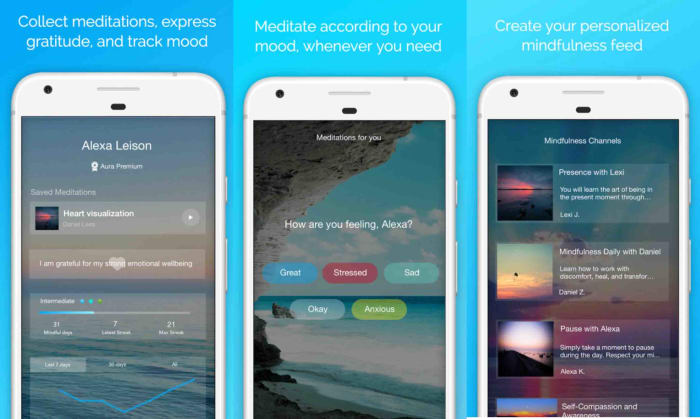
Aura is a mindfulness meditation app that is more like your own personal mindfulness and meditation guru. The app was created by prominent therapists, self-help gurus, and meditation teachers and offers users daily micro-meditations that can help level your mind. What’s great about these micro-meditations is that they only last 3 minutes each, meaning you can add some mental health-boosting meditation practices into your day no matter how busy you are.

Other great features in the Aura app include a mood and emotions journal, a thankfulness and gratitude journal, and extra daily meditation challenges and games. These challenges build up your skills day after day helping you learn and develop your meditation techniques further. Another cool Aura feature is the relaxing sounds playlist that includes lots of soothing tracks taken from the outdoors and other general sounds of nature.

8

Calm

calm

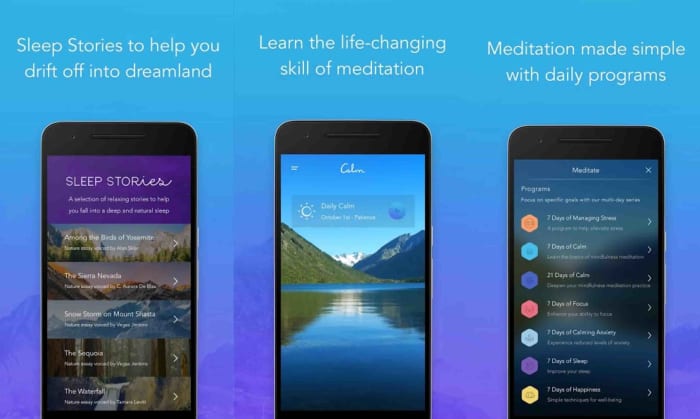
Calm is a great app that will introduce revolutionary calming techniques and exercises, and simple habits that will help destress and relax at even the worst of times. If you ever suffer anxiety or mild panic attacks, this award-winning app will help you develop the tools you need to regain control whenever you feel like things are getting away from you. The breathing techniques alone will help you a lot once you’ve mastered them.

Calm also has a special children’s section called Calm Kids, which focuses on specialized calming techniques and meditations for children aged 3-17. There’s also a very cool sleep-related section of the app where you access soothing Sleep Stories read aloud by a large number of famous celebrities known for their soothing voices. Even if you’re not looking for better sleep, having Matthew McConaughey read to you at night isn’t a bad thing.

8

Headspace

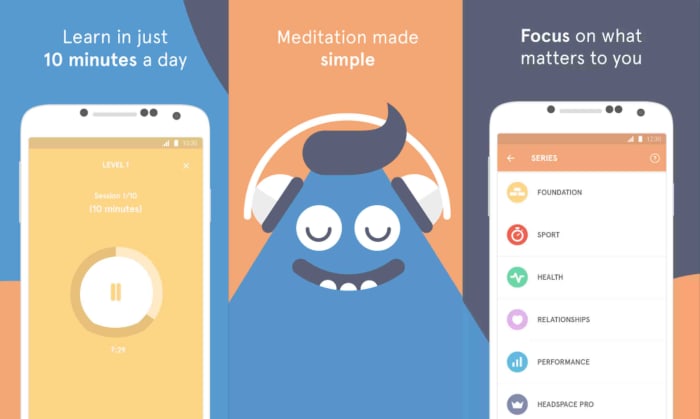
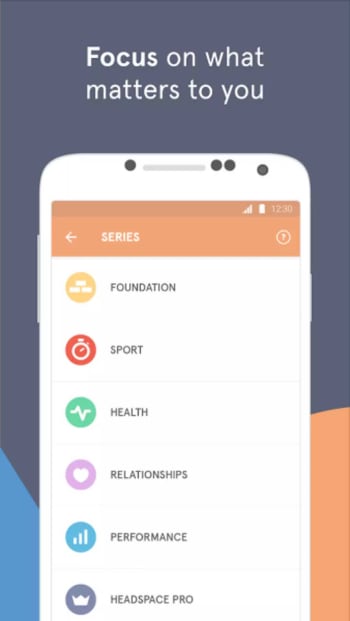
Headspace is an app that has been helping you train yourself on how to live a healthier life. With a healthier body and mind comes a happier existence and that idea sits at the heart of Headspace. Like many of the apps in today’s list, Headspace does have a free version of its services that include special exercises and techniques that can help you get a solid grip on the basics of meditation. This makes Headspace an excellent first step for anybody hoping to work on their mental health who isn’t quite ready to splash out on expensive subscription services.

As well as guided meditation, Headspace also includes soothing sleep music tracks and relaxing nature sounds that can quickly add an air of serenity into your day. Headspace works best by analyzing a few answers you give to certain questions and then building you your own personalized mindfulness routine.

Headspace Download now
10

Simply Being

Simply Being is another excellent app for somebody new to the meditation and mindfulness space, who wants to try things out without committing to an expensive plan. It offers a great way in, giving users solid voice-guided meditations and courses that will help you maintain calmness and tranquillity in your daily life.

What’s also great about this very popular app is that offers meditations that are as short as five minutes, so there are no excuses for not being able to these very helpful routines into your routine. Sessions can go up to 30 minutes long too, giving you control over how much of your day you can give to your mental wellbeing. There are also soothing audio tracks for you too here and although the layout is a little rudimentary, everything here works smoothly and effectively. This is a very well-reviewed app for a reason.

Simply Being Download now
9

The Mindfulness app

mindfulness app

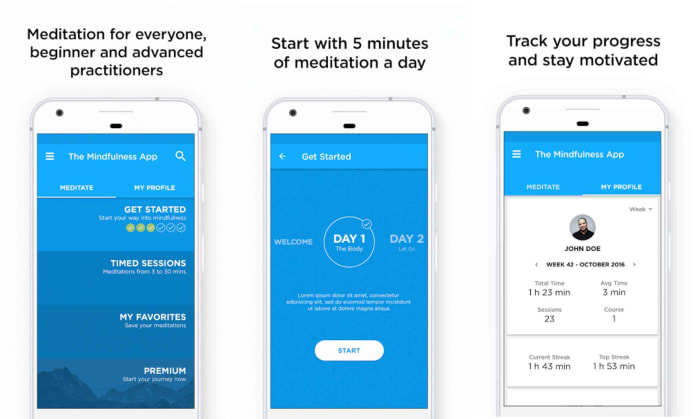
The name of our final app today says it all really. The Mindfulness App was developed by two Yoga specialists who were looking to help as many of the general public experience the benefits that can come with developing and maintain general mindfulness practices in day-to-day life. Again, this app also offers 3-minute micro-meditations making these benefits truly accessible to even the busiest of people.

The app also has soothing audio tracks and guided meditations. What’s great about this app is that it allows you to deactivate the narrator’s voice on certain meditation tracks, if you’re comfortable enough to it on your own. The Mindfulness App is another great option for anybody new to this stuff and offers a solid path of development for all rookies to follow.

The Mindfulness app Download now
8
Wrapping up

There you have five mindfulness apps that will help you exert more control over your mental health, even if you’re stuck in the house for long periods of time. Don’t worry about trying more than one of these apps. The key here is to go with what works best for you. It’s you’re body and your mind, so you’re the one in control here. Good luck with this. Namaste.


Best apps for living a healthy lifestyle

These are all the best apps you can download that will help you live a healthy lifestyle.

Healthy living has evolved into some sort of modern-day religion. You have healthy living gurus and lifestyle coaches all out there trying to help you live your best life. You then have all manner of different diets and exercise plans you can follow and a whole host of books, videos, guides, and tutorials out there trying to help you fine-tune the decisions you make on a daily basis in search of a healthy lifestyle that will make you feel better and live longer. We now have a new pillar that supports us in our quest to live a healthy lifestyle, the trusty mobile app.

That’s right, apps are now fantastic tools for helping us stay healthy in many different ways. There are now apps for tracking what we eat and recommending healthy meal plans, recording our activity and promoting suitable exercises to boost our bodies and even apps that track lots of different biometric health data giving us greater insight into how our bodies are working than we’ve ever had before.

Best health apps

MyFitnessPal

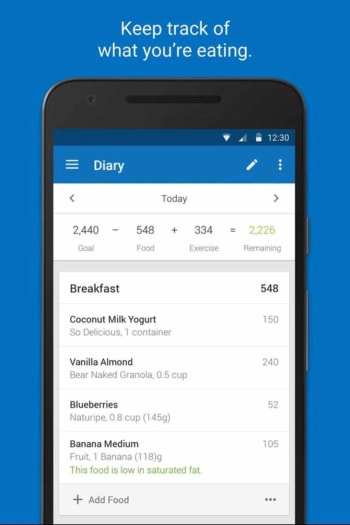
The first app we’re featuring today is a fantastic food tracking app that will help with weight loss. MyFitnessPal has a huge database of known foods and tries to make logging what you eat easier than ever. All foods in the database have nutritional information attached and there are literally millions of different foods and dishes here, with even common restaurant meals also in the list and ready for you to track. What’s also great about MyFitnessPal is that it will offer you macro-nutrient guidelines based on the individual nutritional needs of your diet. If you’re looking to eat more carbs or protein, for example, then MyFitnessPal will analyze the foods you’re eating and let you know whether you need to eat more or less of any particular foods.

MyFitnessPal Download now
8

Home Workout

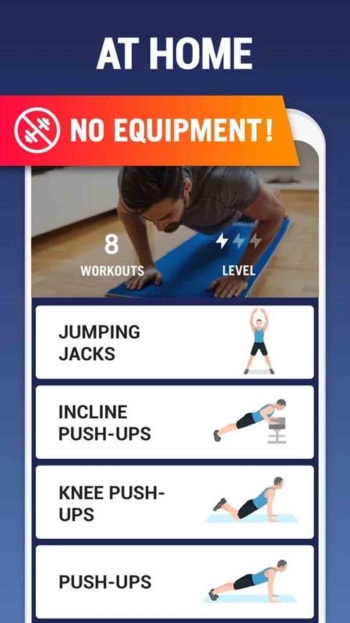
So, you’re tracking your calorie and macro-nutrient intake using MyFitnessPal and now you want to add fitness goals to your daily routine. For this, there is no better app for Apple iPhones or Android smartphones than Home Workout, which makes it easy to start working out at home without the need for any specialist equipment at all. This app is like having your own personal trainer.

home workout

Once you’ve downloaded Home Workout you won’t need a gym membership or your own weights or home equipment. The app will give you routines including weight training and strength training. You’ll also get warm-up routines and cool-down stretches as well a wide range of analytics tools including tracking charts and graphs, and drink reminders and period trackers if you want to go that far.

Home Workout Download now
8

Headspace

Now that you have your diet taken care of and a decent home workout routine set up the next step should be taking care of your mental health and well-being. This is what the app Headspace is about, helping you stay calm and relaxed and maintaining strong mental health. Eating well and regular exercise will help you stay on top of your mental health, but Headspace will help you take control of it.

Headspace, which is available for iOS and Android phones offers guided meditation sessions, help with sleep patterns, and many different ways to try and deal with stress and anxiety. There’s also access to emergency stress releasing sessions for people dealing with intense levels of stress or personal distress. There’s a free version of headspace but a lot of the features remain behind a monthly subscription.

Headspace Download now
7

Lumosity

Another great app to keep you feeling sharp and clear-minded is Lumosity. This free app sends you daily brain games and puzzles designed to both test your mental dexterity and expands it. Lumosity offers great quizzes, puzzles, and teasers that will require critical thinking, memory, and deep problem-solving skills to solve. This app is like a gym routine for your brain. It will get your synapses firing and keep your mental dexterity fresh and ready for a challenge.

Lumosity Download now
8

Runtastic

Runtastic has been one of the best apps for tracking runs for quite some time now. As well as the regular run tracking app, Runtastic has also expanded to track many other types of activities such as bodyweight training and daily steps. Runtastic offers you stats and graphs on your performance and progression and also works seamlessly with other wearable devices like Android smartwatches and even shoe trackers. As well as the free version, which you can sync with other fitness apps such as Google Fit or MyFitnessPal, Runtastic also has a premium plan that you can pay monthly or annually.

Runtastic Download now
8

Sweatcoin

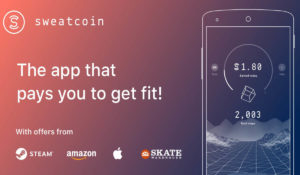
This app offers a unique spin on getting yourself active. Sweatcoins are a type of crypto coin that you generate when walking. You download the app onto your iPhone or Android smartphone and then allow it to track your steps. For every 1,000 steps, you take you’ll generate 0.95 Sweatcoins, which puts you on just over nine coins a day if you average 10,000 steps. This app should be seen as a novelty, however, rather than a genuine fitness app as the average item, you can get with your Sweatcoins costs 20,000 coins, which will take you around six years to collect, going on the average step rate outlined above.

10

Sleep Cycle

sleep cycle

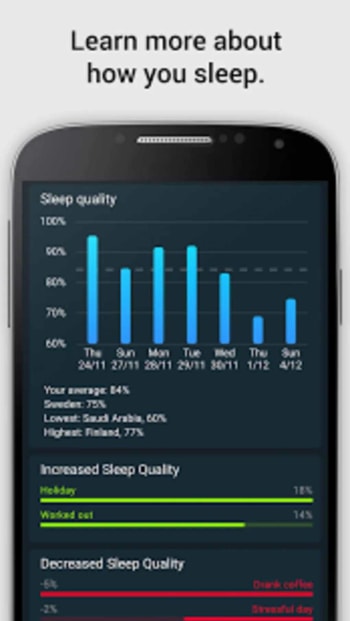
The final app in our list of healthy living apps is designed to help you get the best night’s sleep possible. Sleep Cycle tracks how deeply you sleep at night and is also able to track your heart rate through the night as you sleep. Another cool feature of the Sleep Cycle app is that it will wake you up during light patches of sleep. Basically, as the app tracks how deeply you’re sleeping, you’ll be able to set a period of time when it will assess your sleep patterns and then wake you when you’re in your lightest sleeping phase. This way you’ll feel fresh when you wake up because you won’t feel like you’ve been disturbed from a deep sleep.

Sleep Cycle Download now
8

Game to Grow fights mental illness with Dungeons & Dragons

Discover how role-playing games are helping kids fight mental illness.

When you’re a kid, it’s hard to save the world. You’ve got grades to keep up, sports teams and school plays to try out for, friends to make, and parents to please. It’s even harder to save the world when you’re a teenager with depression, social anxiety, or Autism. Saving the world is only possible if you can first save yourself, and a company called Game to Grow is helping kids do both.

Dungeons and Dragons party
Rebecca might be shy, but her level 9 paladin can inspire her allies through the darkness.

Founded in 2017, Game to Grow is a non-profit organization that uses tabletop gaming to improve people’s lives – specifically Dungeons & Dragons.

What makes DnD such a good choice right off the bat is that it’s a role-playing game. If you can immerse yourself in a fantasy world and invest in the zany exploits of your character, suddenly you’re not a little boy who had a bad day at school, or a teenager who just had a fight with her parents. Movies, books, and video games are all escapist fun, but tabletop gaming does two things that no other medium can match:

First, the heart and soul of the character is up to you. Dungeons & Dragons goes much deeper than vicariously living through a Marvel hero, or poking and prodding a character creation menu in a video game. There’s no Mass Effect dialogue wheel in DnD; you say whatever you want. There are no invisible walls either; you can go where you want.

Victims of depression often describe themselves as feeling trapped, like their course is set and they have no control over their own lives. Dungeons and Dragons puts you in the shoes of an altogether different character, charting an altogether different path. With that agency comes a rare liberation – what you do matters, and more importantly who you are matters!

Dungeons and Dragons
Take a stand against mental illness

Second, and just as important, is that with tabletop gaming you’re with a group. You’re sharing space, making conversation, and working together to complete an objective. It’s a hands-on experience that gently nudges players towards a collaborative effort and achieving something that they could not do alone.

A DM (who serves as the game’s moderator) sets the stage and it’s up to you how you want your character to tackle the obstacles. These obstacles could be clearing a dungeon or slaying a monster, but could just as easily be negotiating with townspeople, attending a costume ball, or interfering with kingdom politics. Maybe you’re afraid to embark on such a daunting task … but your character isn’t!

The mission

No matter what the quest of the week happens to be, Game to Grow has a bigger mission they’re weaving into the plot: Targeting your own personal issues, and empowering you to conquer them.

“Part of what we do is we say you are yourself and that is OK,” says company founder Adam Davis. “You can participate and we can celebrate your uniqueness and your unique skill set.” He and co-founder Adam Johns have been using this formula for over eight years. Today they see over 50 kids a week, many of whom are on the Autism spectrum, and the result is a system that’s just as – if not more – effective than official therapy or psychiatry.

Adam Johns considers the company “agnostic to diagnosis,” explaining that “even when kids report that they’re doing fine, a lot of times that’s because they’ve never had an opportunity to know what it is to have a friend and know what it is to feel connected. When they come to our groups they build that connectedness, they build that opportunity for relationship with other kids.”

Game to Grow Adam Davis Adam Johns
The Game to Grow founders have been teaching kids to fight the good fight for almost a decade

Game to Grow has since expanded the company, training teachers, librarians, community leaders, and even therapists in their methodology.

“We know we’re never gonna run groups across the world,” admits Adam Johns. “Instead, we’d rather train other people to get their own group started.” Kids or parents who fear the social stigma of therapy are more willing to say “I’m going to DnD tonight” over “I’m seeing my therapist.” As such, Game to Grow has a 94% retention rate, and kids are excited to come back for the next adventure.

“We see kids that are burned out on therapy,” says Johns, “but they come to our group, week after week. It’s the one thing they don’t want to miss.”

Dungeons and Dragons tabletop gaming
Friends who slay dragons together stay together

It’s awesome to see tabletop gaming being used as a medium to help people overcome their anxiety, and we hope to see that same creative initiative catch on and become more mainstream in today’s society, one dungeon at a time!

How to stay positive when social media brings you down

Depressed on social media? You’re not alone. Here’s how to stay afloat.

Wedding selfie

The rise of social media means we’re more connected than ever before. And with the constant connectivity comes a whole lot of worry. Between cyberbullying and the welfare of our latest batch of teens, to the unknown effects of hours spent scrolling through a stranger’s Instagram, there’s a lot to chew on.

Facebook executives have admitted that the platform might come with some adverse effects. And, there’s no shortage of think-pieces covering the effects of filtered influencers and their effect on our self-image.

Some studies have looked at social media use in connection with depression, low self-esteem, and anxiety. Others have found notable positives associated with connecting through these digital channels.

Here, we’ll look at the root of the negativity as well as some ways you can make sure you’re approaching your social feeds in a healthy way.

Comparisons make for bad friends

Social media can make us feel socially isolated because we’re comparing our reality to the curated highlights from other peoples’ lives. You don’t know how long it took to get that selfie, just-so, so try not to sweat it.

As we scroll through our feeds, we tend to pass judgments on both ourselves and others, in an attempt to understand how we rank against our peers. While there’s a biological reason for envy — it’s a motivator, it’s easy to get consumed with these negative feelings.

This study looked at how we compare upwards and downwards to determine if we’re better or worse than our friends. Generally speaking, we only feel bad when making upward comparisons, but downward ones can be toxic, too.

How to fight the envy?

Well, it’s important to take a step back and remember that most of this content isn’t real.

How to have a healthy relationship with social media

There are, of course, some positive things about social networking. People naturally crave socialization, and social media can provide a way for people with social anxiety or less-developed social skills to make connections in a “safe” space.

Additionally, teens in marginalized groups can find support online. LGBT teens and those struggling with depression often find support through social channels they don’t get at school.

So, how does one seek out the good stuff, only? Well, there are a few things you can do.

Limit your usage

The more time people spend on social media at a time, the more likely you’ll feel isolated. Check in here and there, but make sure you’re not spending hours at a time scrolling and scrolling.

Additionally, it’s smart to quit the habit of checking your accounts first thing in the AM.

Pay attention to your loved ones IRL

There’s no doubt that talking to a friend with their phone out is frustrating. Make an effort to stop doing this and ask your partner and friends to do the same.

Try using different platforms

Facebook and Instagram rely heavily on these curated images. Make connections online through other channels. Reddit, for example, allows you to have discussions sans photos.

Or, Amino—a niche social network that prizes anonymity. This app is lesser known, but users post anonymously about their shared interests.

Unfollow those who don’t make you happy

social media addiction

We’ve all seen examples of bad “friends.” There are the people who can’t stop bragging about their perfect lives or their globe-trotting lifestyle. The downers who complain about their jobs or vague updates about how “a certain person” did them wrong. Then there’s the political stuff, offensive jokes, the list goes on.

Whatever the case, if you don’t want to see it, you don’t have to. Curation is going to be the secret ingredient for happiness. Unfollow the people that suck the joy out of the experience and simply mute those you “can’t” unfollow without hurting some feelings.

On your end, keep things positive

As you can imagine, negative remarks, sadness, aggression, and so on, don’t make friends online. That’s not to say that you need to be fake, it’s just that these platforms aren’t exactly the place for airing out every grievance that passes through your mind. Keep your dirty laundry to yourself and vent to a trusted friend, family member, or therapist.

Researchers from the University of Missouri found that Facebook use was linked to depression when it triggered envy.  

That same study found when people used FB solely to connect with people, the social network had a positive impact on their wellbeing. Take that as an incentive to quit stalking your ex’s new mate.

Beyond steering clear of broadcasting your negative vibes, make sure you fact-check any links to articles. And, avoid posting inflammatory political content.

Follow the same values you use IRL

While some channels like Reddit let you post anonymously, people forget that even Facebook and Instagram posts aren’t a digital barrier to hide behind.

Instead, be the same person on the internet that you are in person. Be kind and don’t say anything you’d feel uncomfortable saying in real life.

Conclusion

Unfortunately, the jury is still out on social media and how it impacts our lives in the long-term.   There’s a lot of information out there covering the risks of social media. No matter how you slice it, using the networks affect everyone in a different way.

If you can’t help but compare yourself to others, consider taking a little Facebook vacation.

Insight Timer is the best app to manage your stress

Could one app help manage your stress forever?

Two months ago HCA Healthcare called stress the “health epidemic of the 21st century” and frankly we’re not surprised. Last year 6,700 Americans nationwide between the ages of 18 and 64 were surveyed about how stressful their lives were, and health experts were genuinely surprised at the resulting harm brought about by chronic stress and the general apathy towards doing anything to curb it.

Mental health stress kitchen breakdown

Whether you’re a college student up to your eyeballs in exams, a millennial managing multiple jobs, a homeowner struggling to balance kids on one hand and a checkbook on the other, or a company manager trying to corral employees, it’s the same old cyclical issue: Your hectic life makes you stressed, and when you approach life from a stressed mental state everything gets harder.

We’re not going to preach life advice to you; no two people are the same, and what works to simplify and organize one person might have little effect on someone else. So instead we’ll point you towards one handy app that’s worked wonders:

Insight Timer

Insight Timer is a free app for Android and iOS that lets you escape the chaos and anxiety of the world for a period of time (which you can custom set), meditate (if you’re into that kind of thing), and come back stronger and more level-headed. Insight Timer won Apps of the Year in both TIME magazine and Women’s Health, and more time is spent on it than on any other meditation app.

Insight Timer Free Download ►
9

What does the app do?

At its core, Insight Timer is a free meditation app, but it also helps novices (which most of us are) learn how to meditate to the best effect. The app features guided meditations and talks led by the world’s mindfulness experts, teachers, neuroscientists, and psychologists from Harvard, Oxford, and Stanford who will coach you in achieving inner peace. Not only that, they’ll teach you how to achieve it at home, at work, or on the go.

Office meditation
Use Insight Timer to take five minutes at work to center your thoughts and get back in the ring.

Insight Timer also has thousands of discussion groups, forums, and community features, as well as stats and milestones to help you track your progress and manage how often you take the time to use the app, and helping you to build a simple daily health habit.

Get started in minutes

Here’s how easy it is to use Insight Timer:

1. Download the app

Insight Timer is free and can be downloaded right here.

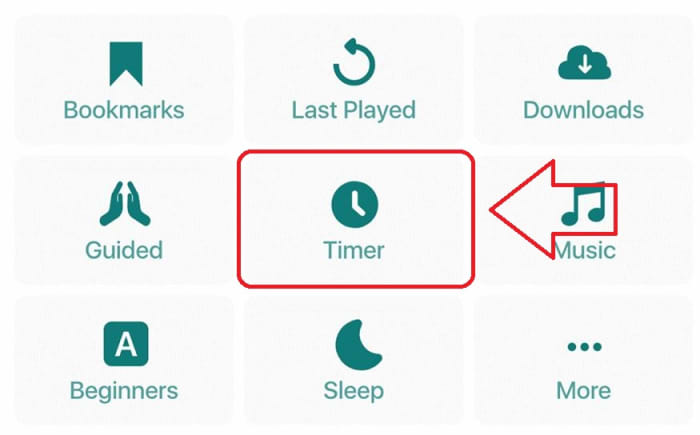
2. Select Timer

The “Timer” function is right on the app’s home page. When you’re ready to zen out, click right on it.

Insight Timer home page

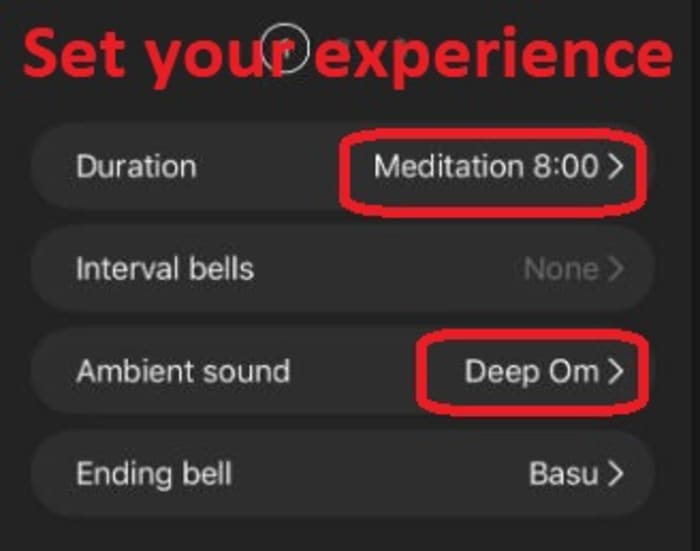
3. (Optional) Choose your settings

Under “Timer” you’re given a few simple customization options for duration and sound effects. We found that even five or 10 minutes was sufficient to clear our head and get us back in the zone. You can also choose from a variety of cool background tracks and bell sounds to play. Check out their catalog!

Insight Timer settings

4. Press “start”

Your chosen bell will ring, and your chosen background SFX will start up immediately. We recommend cranking the volume up so it really feels like you’re awash in the atmosphere. Close your eyes, get comfortable, and let the app work its magic.

How will Insight Timer help me?

Insight Timer doesn’t remove all the problems and everyday stresses of your life. Weave it into your daily life and it goes one step better: The app centers and strengthens you to face these problems with renewed energy and patience. If you let it do its job, Insight Timer is proven to reduce anxiety, calm the mind, manage stress, and even help battle insomnia (try putting it on for a few minutes while you’re trying to fall asleep)!

If any irksome, nagging responsibilities creep into your mind, acknowledge them, mentally partition them, and have the willpower not to tend to them until your timer rings. Insight Timer is like taking a deep breath before diving back into the ocean of stress.

Let us know in the comments below whether you’ll be giving Insight Timer a try. We hope it helps you experience the same rejuvenation that we found. Inhale deeply and feel the renewal!

Science confirms the internet is changing our brains

See how the internet is changing you.

internet brain

Your parents memorized all kinds of stuff. Important dates. Addresses. Multiple phone numbers. They could draw you a map anywhere in your hometown, complete with street names.

Now?

Now, at least a third of Europeans say they don’t even know their partner’s phone number. You know, the person you kiss and touch body parts with? Why don’t you know their number?

The internet is changing the way our brains work, and an international team of researchers is discovering just how. The team studied our attention spans, our memories, and the social impacts of a life lived online. Here’s what they found.

Fractured focus

distracted driver

“The key findings of this report are that high levels of internet use could indeed impact on many functions of the brain. For example, the limitless stream of prompts and notifications from the Internet encourages us towards constantly holding a divided attention – which then, in turn, may decrease our capacity for maintaining concentration on a single task,” said Dr. Joseph Firth.

Just try sitting down to dinner and leaving your phone in another room. Doesn’t it feel like you’re floating adrift like Sandra Bullock in “Gravity?” A part of our brain is always occupied with the world online. It is hard to concentrate on one thing, isn’t it?

Maybe you think you’ll fare better if you focus on a game. Think again. The report notes that after just six weeks of engaging in an online role-playing game, participants had significant reductions in a brain region associated with impulse control and decision making.

Okay, but maybe all this information juggling is helping us become better multitaskers? Wrong again. Heavy media multi-taskers performed worse in task‐switching tests than those who spent less time plugged in. Those who spend the most time plugged in have less grey matter to help maintain goals in face of distraction. Basically, we’re all just Pavlov’s dogs, waiting for our phones to tell us what to do.

Why remember anything?

confusion

“Given we now have most of the world’s factual information literally at our fingertips, this appears to have the potential to begin changing the ways in which we store, and even value, facts, and knowledge in society, and in the brain,” Dr. Firth says.

Although we can learn anything, we’re not really banking that knowledge. People who get information online aren’t storing it for the long term. Why would you? Google will still be there tomorrow.

For kids growing up in the internet age, they have no memory of a time when the answers to, well, every question weren’t readily available. And if you grow up with split attention and a kneejerk need to reach out to the internet for answers, that is a radical departure for the human species. The World Health Organization recommends that children between the ages of 2-5 shouldn’t get more than one hour of screen time per day.

Who needs friends?

Perhaps the scariest finding relates to our society as a whole. Since we can find the answers to everything online, humans are beginning to see things like books, friends, and community as “redundant.” Why ask Grandpa to teach you how to build a desk when you can trust the YouTube algorithm to provide the best process without mid-tutorial digressions about growing up on the farm?

Professor Jerome Sarris said, “I believe that this, along with the increasing #Instagramification of society, has the ability to alter both the structure and functioning of the brain, while potentially also altering our social fabric.”

How to regain your brain

meditation

Worried about how the web is boggin’ down your noggin? Sarris recommends the following steps:

  • Mindfulness and focus practice
  • Reduce online multitasking
  • Pull back on “checking” apps and messages all the time
  • Dial back your internet use at night
  • Do more activities with other humans IRL

What will the future hold?

In the report’s conclusion, they note, “For better or for worse, we are already conducting a mass‐scale experiment of extensive internet usage across the global population.” That’s right, guinea pigs. Although we don’t know the long-term effects of being plugged in, we’re plugged in anyway. And while there are many benefits to a connected world, we won’t know how we’ll be impacted over the long haul until the long haul is over.

You can read the full report here.

Take this test to see if you have a video game addiction

Do you think you are addicted to video games? This test can help you tell!

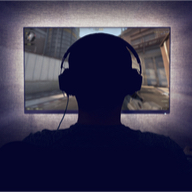
Video game addict

The next time your mom or significant other yells at you for spending too much time playing video games, you might be able to tell them you have a legit disorder.

Researches from various universities across the United Kingdom, Germany, China, and Australia have created this test to determine whether or not you have an addiction to video games. 

The test takes about 20 minutes to complete. Most questions have you rank statements from “strongly disagree” to “strongly agree.” Once completed, you have the option to see whether you have an unhealthy obsession with watching pornography online or online shopping. 

The test

The test asks questions as to why you play video games, how often you play video games, and also about your mental state. At the end, you are given a percentage total that tells you how open you are. Theoretically, the lower that score, the more likely it is that you are a gaming addict.

Our writer took the test and got the following results:

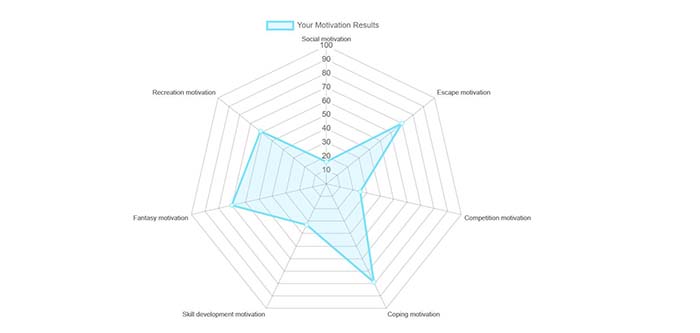
Gaming motivations

Our writer’s score (70%) was higher than 97% of others who took the test. Although the results say that you should consult a doctor or psychiatrist to determine if you truly have a behavioral disorder, the test suggests that our writer is in the clear. (Whew.)

“The self-report scale only provides you with tendencies towards Gaming Disorder in the context of your own usage and should not be seen as a final diagnosis,” according to the test.

The test shows us why we play video games. According to the results, our writer plays to escape from reality, to enjoy a fantasy experience, and as a coping mechanism for things like stress. 

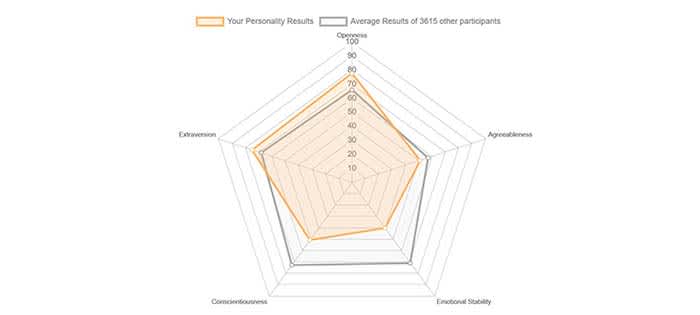
We also got to get an insight into our writer’s personality:

StabilityAlthough the test determined that we are not as emotionally stable or conscientious as the average test-taker, we are more extraverted and open.



A legit disorder

Believe it or not, the World Health Organization (WHO) actually classifies “gaming disorder” as a legitimate mental illness. Luckily, only a small percentage of gamers actually have the disorder, according to WHO. 

If you have gaming disorder, video games “take precedence over other interests and daily activities, and continuation or escalation of gaming despite the occurrence of negative consequences.”

Best online tools to help battle addictions and vices

The battle to overcome addiction is not a sprint, it’s a marathon. These apps can help you along the journey.

Addiction

Anyone struggling with addiction should know that recovery gets far easier with a good community. While personal strength and determination may work for a select few, the rest of us need buddies, time, and a good plan.

There are apps that can help you along your journey.

We should mention two things first: while addiction can be considered bad, we aren’t saying the things that cause it always are. Alcohol can be fine if you drink responsibly. We aren’t trying to make moral assertions.

Second: if you think fighting addiction with an app sounds odd, remember nothing that makes a positive difference should be considered weird!

Top accountability apps

Screen Accountability

The following two apps allow others to monitor your browser history, at your level of comfort. While intended to keep you from watching pornography, they can be used to monitor other sites as well.

accountable2you

Accountable 2 You

It’s your account, you are in charge.

Accountable2You doesn’t set restrictions on internet usage, it notifies your chosen supporters of your site views. You may be wondering, “How does it know what to send?” The answer depends on how you design the experience.

You decide who you want to notify, when to notify them, and what devices are attached to your account. You can schedule weekly reports to your supporters, and decide if serious risks will result in immediate messages. If a malicious site doesn’t trigger the warning for some reason, you can add specific URLs and keywords to the list of banned sites.

To reduce restrictions or delete A2U, you must provide a reason, which gets sent to the members of your group. This way, you can’t just delete the app and relapse without letting your supporters know.

A monthly subscription costs $7 for each individual and $12 for a family. However, an individual plan already accepts six devices.

Covenant eyes

Covenant Eyes

CovenantEyes works much the same way as Accountable2You, with a few more features. Most importantly, CovenantEyes promotes more discussion than Accountable2You, which centers on notifications. The added ability to have a conversation can help build community faster.

Not only that, but the app also provides the option to block certain websites that are a severe issue, which could be extremely useful.

The service costs $12-16 per month.

Phone Apps

Sober Time

Sober

Although the title says “Sober,” this isn’t simply an app for those struggling against a controlled substance. Enter any type of addiction and record the year, day, and hour you stopped. From there, the app keeps track of how long you’ve been “sober!”

Earn “awards” for every stage completed, from minutes, to days, to the first year. If your addiction costs money, track how much you’ve saved by going clean. Finally, edit relapses and add notes for later!

Sometimes easy is more effective.

Sober Time Download Free ►
9

HabitShare

Share

HabitShare works more like a checklist than an accountability app. You can add things you want to remember, set daily notifications, and maintain those good habits.

So, if it’s just a checklist, why did we include it? The reason is that HabitShare allows you to add friends and have them support you!

It may not be made for accountability purposes. Sometimes a mallet can do a hammer’s job just as well, right? And if you’re trying to increase your productivity at the same time, this app might be perfect.

Habitshare Download Now ►
8

Fortify

Fortify

Fortify, like Sober Grid below, works akin to a social media program, along with many aspects of the other apps.

You can read and respond to posts created by your buddies. Visit the “training” page for resources on your journey to recovery. Create a post, join a discussion, and rate how your day went. Track your progress with daily metrics, and a growing count of how long you’ve been clean.

We recommend Fortify if you want all the features! Thanks to their well-designed user interface, you can pick and choose what functions to use or avoid with relative ease.

9

Brainbuddy

BrainBuddy

BrainBuddy creates an experience for the user. Not only does it track your progress, but the app also uses information you provide to help you understand you. It determines what starts the temptation process, where you’re most at risk, and what times you’re likely to give into temptation.

Whereas many other apps allow you to create an experience, BrainBuddy itself becomes a companion that offers daily exercises meant to renovate your habits and foster a better self!

The downside? It requires a $13 monthly payment to use. Still, this makes its large number of faithful users even more impressive!

BrainBuddy Download Now ►
8

Sober Grid

Sober Grid

Sober Grid focuses specifically on alcoholics and connects users with each other based on their location. You can enter groups and immediately be placed with other like-minded users. For example, the “100 Day Challenge” team is ready to accept newcomers!

Unlike Fortify, this app sticks close to its guns. It looks to friends for mutual encouragement with a few other bells and whistles. There are “Quests” to choose from and inspirational material provided, but nothing to get in the way of establishing real connections with real people.

If you need a support group, consider finding it here!

Sober Grid Download Now ►
9

Wrapping up

If you are battling an addiction, find the treatment that works best for you. Whether it is attending meetings, or attending a rehabilitation center, learn how to best control your urges, and get on the path to recovery.

4 best apps for hiking

Ready to hit the trail? Add these great apps to your phone first!

Jump!

Although gyms are nice, nothing beats the fresh air and adventure of going on a hike. 

We may not go hiking too often because we say it’s difficult to find trails. The more reasonable explanation could be general laziness. But you know what makes it easier to be a lazy hiker?

Not knowing how to find trails!

Luckily, there are apps to help you find the best trails so you can get back out and enjoy nature!

Best apps for hiking

AllTrails

AllTrails sounds like Odin’s title “AllFather,” likely because it’s a god amongst hiking apps. (Boom, Avengers reference in a hiking app article. Nowhere is safe from the MCU!)

But seriously, this app has the best aspects of a professionally developed system. It looks good, it’s easy to use, and it compiles a large number of tools without feeling cluttered or unintuitive.

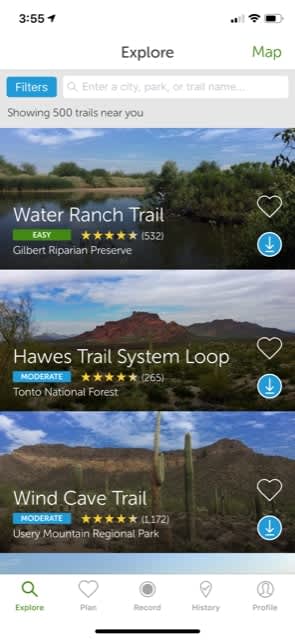
When you open the app, sign-in isn’t required immediately. AllTrails lives up to its ratings by taking you first to the hikes, based off either your current location or whatever search parameters are entered.

Locations

You can check out the ratings, discover the location, and, if you’re logged in, “favorite” a trail for later visits.

Along the bottom of the app, you can see more menu locations:

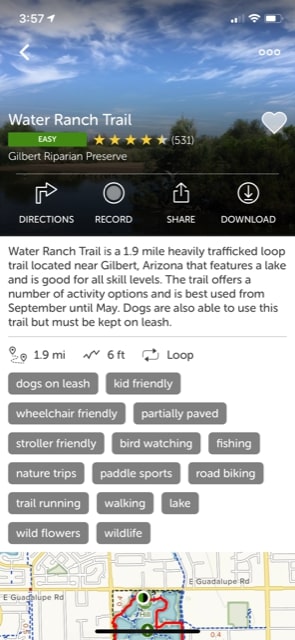
  • Plan: Once AllTrails helps you discover a new place to visit nature, they immediately give you help in setting up a trip, and a route along the trail. They list a number of aspects, the length, and whether it’s a loop, along with more information that may be useful.

Info

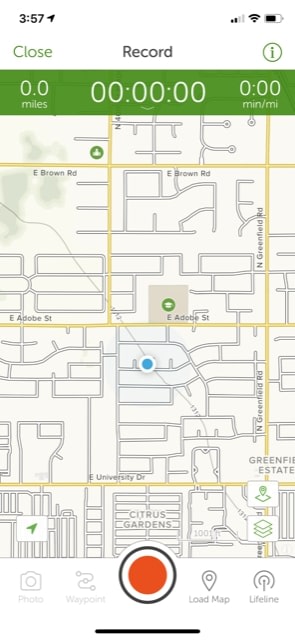
  • Record: This function will come up time and time again! Not only are recordings a great way to track your progress and see where you’ve been, but they’re also excellent tools for professional and hobbyist “trail runners.” Those are people that compete to set record times for a given hike, for you newbies.

Record

  • History and Profile: Here, you can watch your old recordings, track your stats, check out your past reviews, look at followers, and change settings. It’s pretty much what you’d expect.
AllTrails Download now ►
9

Gaia GPS

GaiaGPS

Gaia GPS also helps users find trails, with a few extra things that set it apart from other apps.

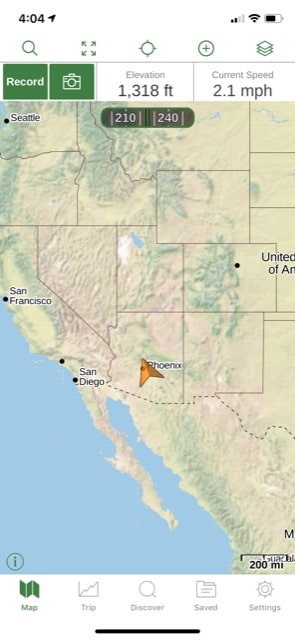
First off, staying true to their Global Positioning System roots, Gaia immediately shows exactly where you are on a world map. It shows your current elevation, speed, direction, and more.

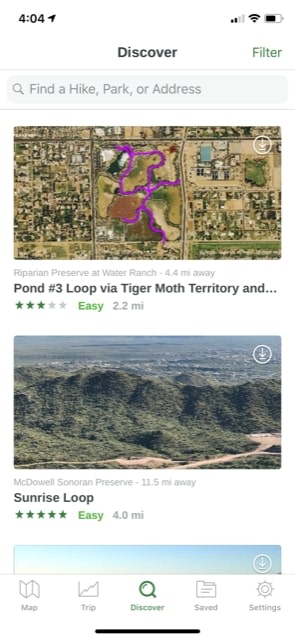
Gaia1So, if you were looking for trails to hike nearby, head to the center menu button, “Discover.” Here, you can find all the information you’re looking for and save the best hikes.
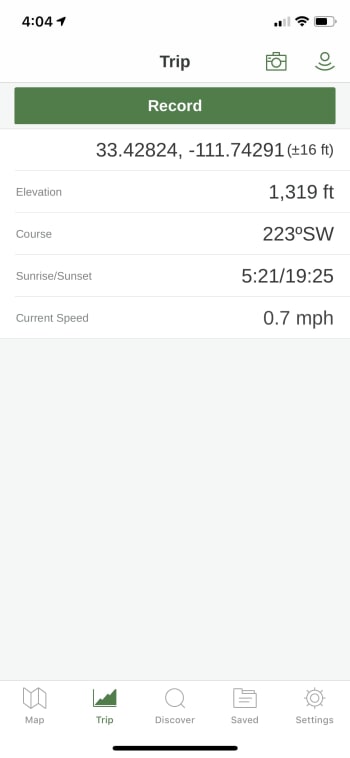
Gaia 2Finally, we’ll also mention the “Trip” function, which allows you to record your journey. This feature also gives you the ability to check elevation, speed, the time of sunrise and sunset, and more.
Gaia3

Pretty cool, right? We didn’t even realize Mesa, Arizona’s elevation was around 1,319 ft. You learn something new every day!

Gaia GPS Download now ►
8

Strava

Strava

While AllTrails and Gaia GPS focus on bringing you the best trails, Strava represents the first of our “health and wellness” hiking apps. They specifically focus on ensuring a healthy workout and provide an environment for relationships with other hikers.

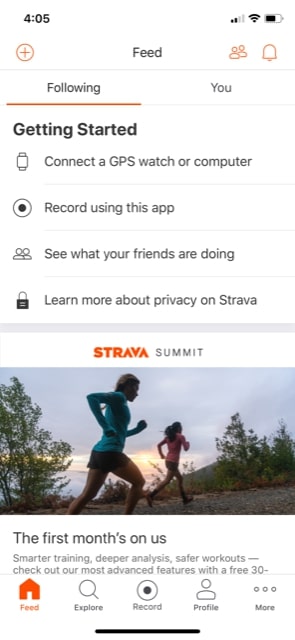
So, what does this app have that’s noteworthy? First and most importantly, the main page is a “Feed,” which will reveal information from your friends and followers, along with your own updates. At this time, we don’t have any connections, so ours looked a little bare:

Strava2

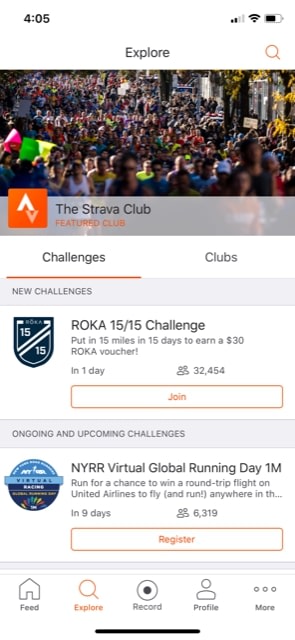
The “Explore” menu on their page has a huge list of challenges! If you’re interested in competing or simply want to join a fun competition, go here and see what’s new.

Strava1

Finally, we feel the need to mention that Strava has impressive health-tracking tools, but many of them require the “Training Pack,” part of their subscription. Keep that in mind.

8

MapMyHike

MMH

And now, Map My Hike by Under Armour!

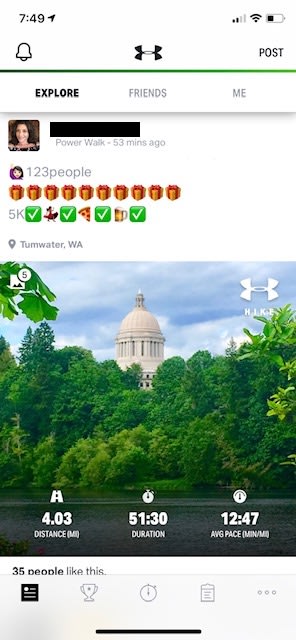
This app has the plainest and simple user-interface. Like Strava, it begins with a feed page. However, you aren’t limited to friends or your own posts, which means you can enjoy voyages anyone has taken!

MMH1Aside from the social aspect, MMH’s main focus lies in their tracking app. In the beginning, you’ll see something like the picture below. There are pretty intrusive ads, but those can be removed with a subscription.
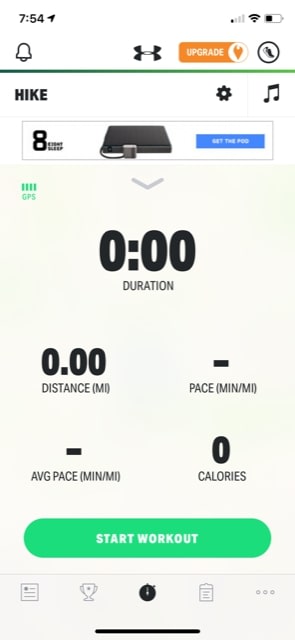
MMH2Once you’ve recorded your first adventure, you can head over to the tracking page. Once again, we appreciate that Map My Hike allows you a bit more freedom here; there are good metrics available without a subscription.
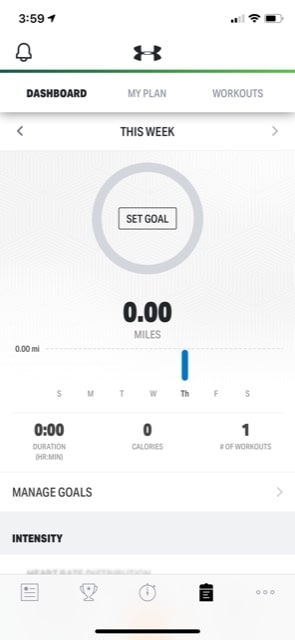
MMH3

Ah, good old zero-mile workouts.

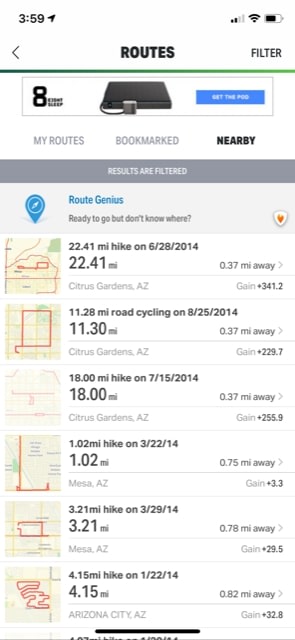
We would recommend Map My Hike in conjunction with one of the better trail discovery apps. However, there is a way to find hikes. Visit the “Settings” menu, and scroll down to “Routes.” Here, you can find user-created paths that may or may not follow an actual trail!

MMH4?!Still, these are definitely more like routes than trails. Does this make Map My Hike more of a path app than a trail app? Maybe. But if it does, we don’t mind too much. If you live in the city and don’t have time to get out in nature, there may be some excellent urban trails found here!


Map My Hike Download now ►
8

The journey of 1,000 miles…

We hope you enjoyed reading about these apps. Whether you’re outside more than inside or are currently one of our fellow couch potatoes looking to leave the house more often, these apps create a welcome sense of adventure along with the spirit of ease and sensibility.

Have a good time with it!

Facebook moderators face PTSD from graphic content

As toxic as Facebook can be for us, it is even worse for Facebook moderators.

Facebook moderator

We first heard about the lives of Facebook’s moderators last year when Motherboard published an inside look at the company’s content moderation process, policies, and challenges.

Instead of enjoying all of the tech company perks from cereal bars to craft beer and foosball,  content moderators see high instances of drug abuse, PTSD, and anxiety disorders.

Moderators often work as third-party contractors in a low-pay, high-stress environment. These people see the absolute worst sides of humanity from blood, guts, and gore to hate crimes and abuse.

Unfortunately, it doesn’t seem like much has changed since August 2018. Facebook still treats moderators like second-class citizens. Worker safety still falls by the wayside.

A stark inequality problem

inequality

A couple of months back, The Verge’s Casey Newton wrote an investigative piece of his own. He found another set of disturbing revelations about Facebook and its content moderators.

The piece primarily covered issues facing the moderation staff like exposure to violent content and conspiracy theories. However, the report also highlighted the vast difference in the work environment and compensation between typical Facebook workers and content moderators.

The average Facebook employee earns about $240,000 per year. The average person working in the company’s Phoenix-based moderation center earns $28,000.

Facebook’s latest campus, designed by architect Frank Gehry, boasts its own redwood forest and plenty of green space. It is ideal for decompressing after a stressful day on the job. Content moderators don’t have that luxury.

The psychological impact of violent content

Stressed out lady

According to Psychology Today, violent content from TV news can increase PTSD, anxiety, and depression. Reportedly, watching the news cycle after a mass tragedy can increase your chances of developing something called vicarious traumatization.

Facebook Moderators, by contrast, aren’t seeing humanity’s worst events through the filter of the cable news station. They’re on the front lines. So as one might imagine, the impact of these videos is likely much more significant.

7

The Verge report describes one instance of a woman named “Chloe” who is asked to moderate a Facebook post in front of a group of trainees.

The post in question depicts a man being stabbed to death while begging for his life. Chloe’s job in this scenario is to tell the group whether the post should be removed. Most people never have to see this type of thing, much less calmly describe the scenario to co-workers during routine training.

The recommended remedy for this vicarious traumatization is to step away from disturbing content, take a break from the news, and try to do something positive. Valid, sure, but when it’s your job to look out for this stuff, there’s no real escape. That’s a tremendous amount of stress to carry around for $28k a year.

It’s clear that Facebook knows the value of creating positive workspaces for their employees — again, see the redwood forest as a point of reference. However, it does not look like they are doing enough for their moderators.

Conspiracy theories spread

conspiracy theory

The effects of graphic content can have a huge impact on the well-being of the people who work inside the moderation centers. However, Newton found another disturbing trend that has some wider negative implications for society.

Apparently, reviewing conspiracy theory posts spreads the information contagion. Basically, those flat-earthers might be doing even more harm than they realize.

The article mentions a moderator who says he “no longer believes 9/11 was a terrorist attack.” Another walks the floor talking about the flat earth theory.

Who should deal with content moderation, anyway?

Facebook on pc, mobile

Moderators are taking action. Two former moderators have joined a lawsuit against the company, citing that symptoms of PTSD were brought on by reviewing violent images on the job.

As it stands, Facebook says that about 38% of the hate speech they detect is done using AI. The company has plans to improve its AI moderation effort, but there’s a long way to go. Still, there needs to be a human moderator to make sure nothing heinous slips through the cracks.

Unfortunately, protecting the rest of us from Facebook’s horrors comes at the expense of a safe workplace and a healthy mind.