Tomonobu Itagaki, a renowned Japanese video game creator, passed away at the age of 58. His death was announced through a heartfelt message on his Facebook account, where he expressed his pride in having fought until the end, lamenting that he could not offer new games to his followers. “I am filled with sadness for not having been able to provide new works to all my fans. I’m sorry,” he said in a message that resonated with the struggle of his life and career. Tomonobu Itagaki is a video game legend, famous for his contributions to video game culture, he was responsible […]
Tomonobu Itagaki, a renowned Japanese video game creator, passed away at the age of 58. His death was announced through a heartfelt message on his Facebook account, where he expressed his pride in having fought until the end, lamenting not being able to offer new games to his followers. “I am filled with sadness for not being able to provide new works to all my fans. I’m sorry,” he said in a message that resonated with the struggle of his life and career.
Tomonobu Itagaki is a video game legend
Itagaki, famous for his contributions to video game culture, was responsible for iconic franchises like Dead or Alive and Ninja Gaiden, which helped define the action genre and the aesthetics of the early 2000s. His provocative style made him a controversial figure, but undeniably influential in the industry. Throughout his career, he stood out for his ability to challenge his competitors, establishing a friendship and rivalry with Katsuhiro Harada, creator of Tekken. Harada expressed his sadness and surprise at Itagaki’s departure, recalling shared moments and the hope for a reunion.
Despite his success at Team Ninja, Itagaki drifted away from glory after leaving the company. His last major project, Devil’s Third, for Wii U, did not achieve the expected success and was a significant blow to his career. Subsequently, Itagaki founded Valhalla Games and worked on several projects, including an NFT-based game titled Warrior, of which there is not much information available.
The departure of Tomonobu Itagaki marks the twilight of a star in the world of video games. However, his legacy will endure, as titles like Ninja Gaiden and Dead or Alive continue to be celebrated by fans. His legacy will be honored by reviving and enjoying his masterpieces. Rest in peace, Master Itagaki.
At the end of the 2000s, Nintendo was at the peak of its success: the Wii had sold more than any other home console in its history, it had won the battle against PS3 and Xbox 360, and, on top of that, the famous “Wiimote” had been copied by all its competitors. As if that weren’t enough, the DS had become the second best-selling console of all time (only behind the PS2). Everything was going well, everything was in order. The next step was simply to continue the success. Wii… U? The first trailer for WiiU, released at E3 2011, did not […]
At the end of the 2000s, Nintendo was riding high: the Wii had sold more than any other home console in its history, it had won the war against PS3 and Xbox 360, and, on top of that, the famous “Wiimote” had been copied by all its competitors. As if that weren’t enough, the DS had become the second best-selling console of all time (only behind the PS2). Everything was going well, everything was in order. The next step was simply to continue the success.
Wii… ¿U?
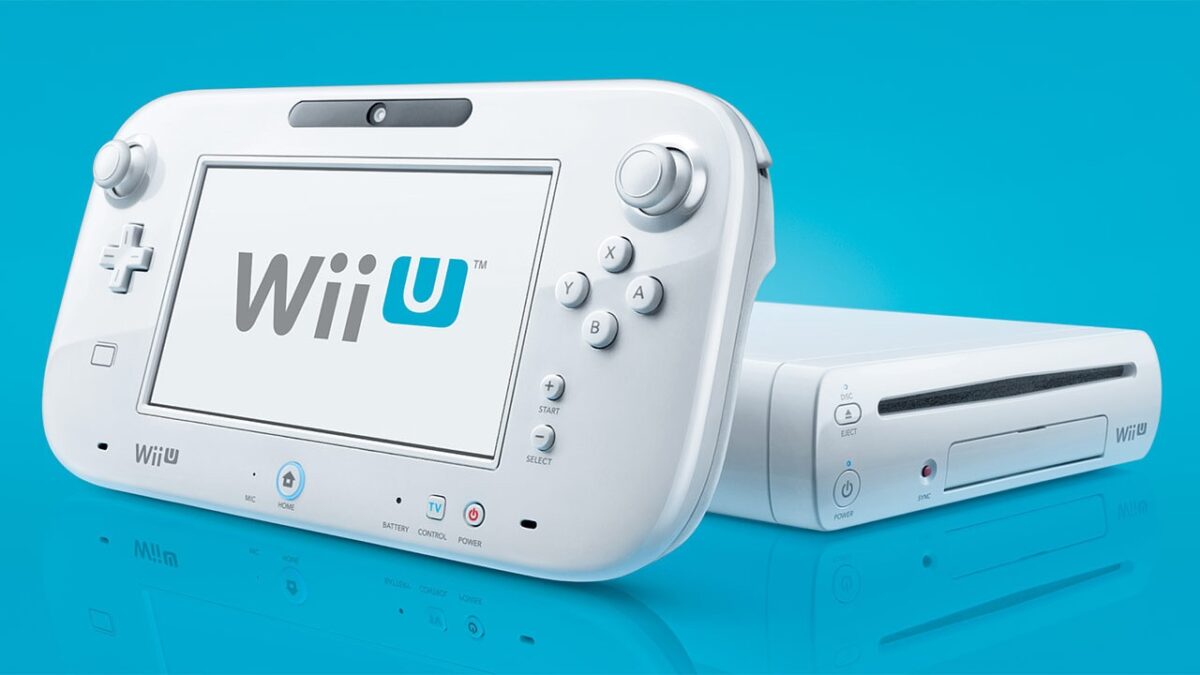
The first trailer for WiiU, released at E3 2011, made no sense: more than a new console, the public perceived it as an accessory for the Wii in the form of a tablet that mainly served to allow other people to use the television and apparently draw on the console. You couldn’t take it on trips, it wasn’t useful for many things, no one saw a real utility in it, and it was hard to understand why, if the graphics didn’t make a giant leap, we had to get a WiiU.
Its slogan was “How u will play next,” which frankly sounded like the first idea that the marketing team came up with: using “u” as “you” and hoping that people would remember the jingle. The phrase, along with the new controller, filled the streets of New York, video game stores, and online ads. Everyone knew that the WiiU was coming. The question was whether, after seeing a marketing campaign that focused on the supposed “new way to play” instead of the games themselves, anyone was really that interested. And what the hell, take a look: the ads were terrible.
The result, as we now know, was disastrous: the console barely sold 13 and a half million units throughout its lifespan, just a bit more than the PS Vita and Game Gear, but by a hair. Fortunately, four years after its launch, they came out with another surprise: Nintendo Switch, a kind of improved WiiU where the marketing actually worked. Instead of focusing on the things you could do with it at home, it focused on being able to take it in your pocket, play with your friends in the park, take it on trips… It was the same concept, but much, much better. And it was a hit. Oh boy, was it a hit. After 152 million consoles sold, there was only one question left: What next?
Switch 2: The Revenge!
The strategy was the same as with WiiU: if something improves, don’t break it. Switch 2 is basically the first one but with improved controls, better graphics, a next-generation touchscreen, and, above all, a showcase of games, games, and more games. WiiU tried to win over Nintendo fans with a New Super Mario Bros, which at the time already looked outdated, and with versions that had the same graphics as Wii Fit and Wii Sports, in addition to a strange Reversi game. But the presentation of Switch 2 already hinted at a new Mario Kart with up to 24 players, a Donkey Kong where you can break everything in your path, a new Kirby, iconic third-party games, and even the arrival (finally!) of Silksong.
Nintendo has taken a decade and a bit, but it has understood that the key to selling its consoles is not selling experiences with its controller, but with its exclusive games. After all, why would you want a Nintendo console if not to enjoy its franchises, which you can’t find on PC or anywhere else? Moreover, in this case, it is so confident in its potential success that, despite having a slogan (“All together, anytime, anywhere”), in most places all it has needed is the Switch logo and a “2”. Those who know, know.
In marketing, sometimes less is more: if in the Switch 2 trailer they had been showing families and families happily playing Super Mario Odyssey or Splatoon 3, probably no one would have bought the console. Why would they, if it’s exactly the same? Instead, and being a much smaller innovation than WiiU, the public has perceived it as a must-have, something you have to own: the console that dominates the living room, but now with controllers that connect magnetically! With the successor to the Wii, they tried too hard to be liked. With the Switch, they have shown confidence (almost arrogance) and flexed their muscles. And the public, having been cured of fright, has had to agree with them.
Nintendo has announced the release of dedicated versions of the acclaimed titles The Legend of Zelda: Breath of the Wild and Tears of the Kingdom for its upcoming console, the Switch 2. These editions will allow players to purchase an upgrade package that will enhance game technology and unlock access to a new mobile app, Zelda Notes. An important change: weapons can be repaired. One of the most discussed features in these titles has been the weapon degradation system, which has generated divided opinions among fans. The new app introduces the possibility of repairing weapons, […]
Nintendo has announced the release of dedicated versions of the acclaimed titles The Legend of Zelda: Breath of the Wild and Tears of the Kingdom for its upcoming console, the Switch 2. These editions will allow players to purchase an upgrade package that will enhance game technology and unlock access to a new mobile app, Zelda Notes.
An important change: weapons will be able to be repaired
One of the most discussed features in these titles has been the weapon degradation system, which has generated divided opinions among fans. The new app introduces the possibility of repairing weapons, which could alter the balance of the game, although this functionality will be limited to once every 24 hours. This decision has sparked a wide debate, as degradation forced players to explore and experiment within the vast world of Hyrule.
In addition, the Zelda Notes app will offer a variety of new features. These include achievements, a GPS map that will guide players to hidden secrets, and the option to share creations within Tears of the Kingdom. For some, this brings back memories of the Wii U experience, where a second screen was used to complement the game.
With these initiatives, Nintendo aims not only to revitalize its catalog but also to attract new players and maintain interest in its most iconic franchise. The company has also clarified that physical copies of games for Switch 2 will include both the original version and the next-generation update on the same cartridge, thus addressing the existing confusion among consumers.
In conclusion, the future of Zelda on the Switch 2 could transform the gaming experience through new dynamics and technologies. However, the real impact of these innovations remains to be seen and will be a topic of discussion among the gaming community.
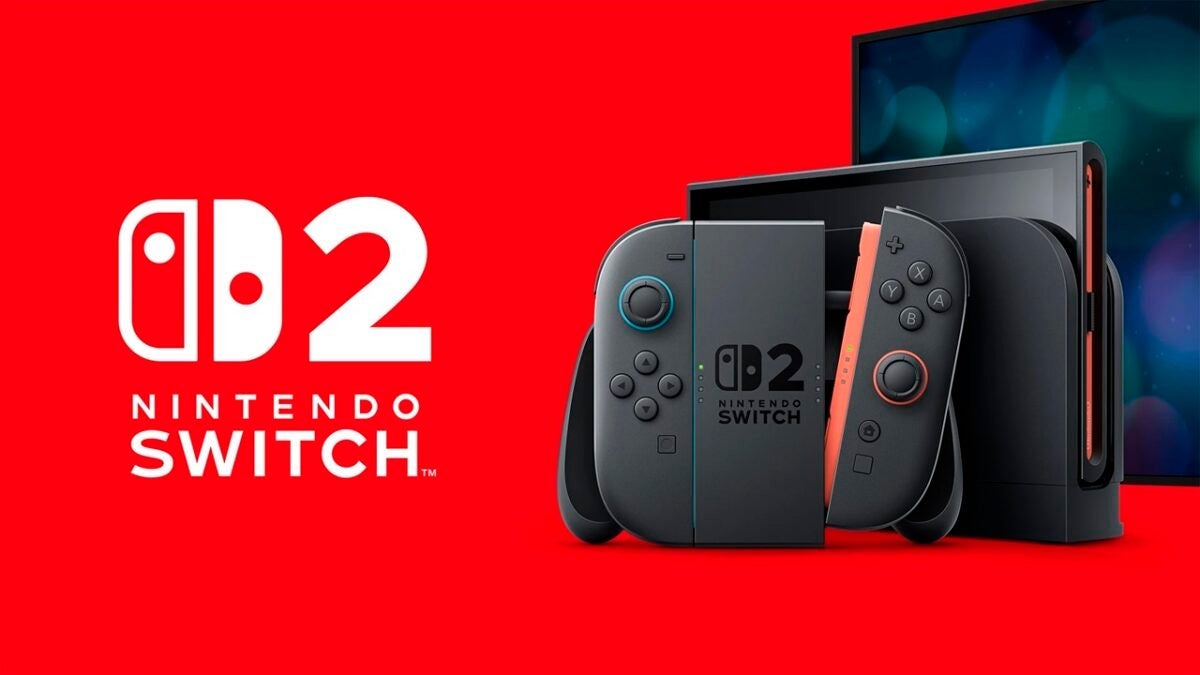
The Nintendo Switch 2 has generated great anticipation among video game fans, thanks to its notable technical improvements and an appealing lineup of releases. This new console is presented as a direct evolution of the original Switch and promises to offer players an innovative experience. Among the most anticipated titles are Mario Kart World and a new installment of the iconic Donkey Kong, which has kept interest in the market. A much better name, regardless of what they say at Nintendo Unlike the rumors that were circulating about alternative names like Super Nintendo […]
The Nintendo Switch 2 has generated great anticipation among video game enthusiasts, thanks to its notable technical improvements and an appealing lineup of releases. This new console is presented as a direct evolution of the original Switch and promises to offer players an innovative experience. Among the most anticipated titles are Mario Kart World and a new installment of the iconic Donkey Kong, which has kept interest in the market high.
A much better name, no matter what they say at Nintendo
Unlike the rumors that circulated about alternative names like Super Nintendo Switch, Nintendo has decided to go with the name Nintendo Switch 2. This choice reflects the intention to emphasize that this is a completely new console capable of running the games of its predecessor. Kouichi Kawamoto, producer at Nintendo, and Takuhiro Dohta, project director, explained that the name was the result of an intense creative process, where clarity and effective communication to consumers were prioritized.
The name Switch 2 aims to avoid similar confusions to those experienced with the Wii U, a product that many users did not properly identify as a new console. “We wanted a name that simply communicated that if you are considering buying a Switch, the Nintendo Switch 2 is the most modern option,” the executives commented. This approach aligns with Nintendo’s desire for players to focus on the gaming experience rather than technical specifications.
The launch of the Nintendo Switch 2 is scheduled for June 5, which has raised some concerns regarding the prices of its games. Fans are eagerly awaiting more details about the availability and cost of the titles that will accompany this promising console, while continuing to speculate about its impact on the video game market.
Nintendo goes at its own pace. That’s why it shouldn’t surprise anyone that it took until January 16th to present its next console. Even if we had known about its existence for months. Or if practically everything about it had been leaked weeks ago. For Nintendo to change its plans once they have been considered, something potentially catastrophic must occur, and that is a problem, both for the company and its fans. Why? Because we are in a situation where the announcement of Switch 2 doesn’t feel sufficient. And […]
Nintendo goes at its own pace. That’s why it shouldn’t surprise anyone that it took until last January 16 to present its next console. Even if it had been months since we knew of its existence. Or weeks since practically everything about it had been leaked. For Nintendo to change its plans once they have been considered, something potentially catastrophic must occur, and that is a problem, both for the company and its fans.
Why? Because we are in a situation where the announcement of Switch 2 doesn’t feel sufficient. And not precisely because of the leaks. But to delve into that topic, let’s break down everything we know for sure and what we can infer. Because although the announcement was brief, there is quite a bit to discuss.
About the things we know for sure about the successor to the current Nintendo console, we have its name, size, and appearance. Named Nintendo Switch 2, it is notably larger than the current console, but still has the same layout: a portable console that connects to a dock, with controllers that can be detached from the screen. Now with what seem to be improved systems of everything we already have in the Nintendo Switch, it appears to be an enhanced version of the current console.
All of this is not a bad thing. Many people have rushed to say that the lack of innovation is a problem, that it is a demonstration of a Nintendo in decline, but it is not true. Nintendo and innovation are not two words that always go hand in hand. Throughout its history, Nintendo has had more iterative consoles than groundbreaking ones, and this is just another example of the former. Is it the first time they release a console with a 2 in the name? That is true. But they also have the resounding failure of the Wii U and the lesser failure of the Nintendo 3DS fresh in their memory: it’s normal that they want to play it safe after the success of the Switch.
That doesn’t take away from the fact that the announcement was excessively conservative. By presenting the console as they have, they leave us with more questions than answers. Saying that we will know more on April 2, in two and a half months, is not an answer. And meanwhile, many doubts remain.
A large part of the audience has been left dissatisfied. As have the shareholders. And we are not surprised. We have neither seen the console in operation nor do we know how much more powerful or different it is compared to the Switch and, officially, we don’t even know about new games. So, really, this announcement has been just to present us with the image of the console, not even the existence of the console. A move that is not what Nintendo needed right now.
Some things we suspect, but are not confirmed, about the console
On the positive side, it is true that there are a few elements inferred from this presentation that give us hope. The joycons moving vertically suggest that they can function as mice, a functionality that fits with their new hardware. Similarly, the images of Mario Kart shown in the trailer do not correspond to Mario Kart 8, which suggests the existence of a new Mario Kart on the horizon. A great idea considering the sales of the previous game in the franchise.
The problem is that none of this is confirmed. They are mere speculations. Worse yet, is Mario Kart the game you want to showcase a console with?
Mario Kart is a game that doesn’t stand out for its graphics or gameplay. It sells a lot, is enjoyed in many homes, but it is not a game that will demonstrate the console’s capabilities, unlike a Mario or a Zelda, to stick to games that sell in absolutely staggering numbers. And that’s the problem. It’s not clear who this announcement is aimed at. Because it’s constructed as if it were directed at a casual audience, but those who are truly interested are the fans: those who need details, not just vague hints.
Can Switch 2 Fail?
This creates a problem in the hands of Nintendo. They have two and a half months ahead with a trailer that excites as it is a new console, but nothing more. They have not given us reasons to eagerly await the presentation of their games or the release of the console beyond the hype they were already feeding us with. And that is a problem that can backfire on them: people may end up disappointed by receiving much less than they expected after so much anticipation.
To reverse this situation, Nintendo has little room for maneuver. Not when it is a company known for not having any flexibility when it comes to making changes. With their Direct scheduled for April 2nd, their only possibility is, ironically, to be flexible.
They need to give us more information. Communicate better. We need to know about games, console features, release date, and price. It’s not necessary to know everything, but we do need to know some of these aspects. The longer they withhold this information, the more amazing it must be so that we don’t feel tremendously disappointed when they present it. A console much more expensive than the original, a distant release date, mediocre features, or a launch with few or uninteresting games, given the current climate, could lead to the console’s death before its birth. And that will be self-inflicted by Nintendo itself.
Nintendo’s Crossroads: Only They Know Their Plans
Of course, there is a possibility that the console will have excellent features, numerous and prodigious launch games, a nearby release date, and a very affordable price. In that case, Nintendo has nothing to worry about. But if not, and in the business world, you never have the perfect product under ideal circumstances, they need to do one thing: ensure they don’t burn out their audience.
Knowing whether Switch 2 will be a success or not is impossible today. What is possible is to gauge people’s reactions. And what is seen is that the enthusiasm is also tinged with some disappointment and bitterness. Nintendo cannot afford that. If they are going to continue with their plans and if those plans involve keeping us in the dark for months as they have suggested, they run a very real risk of their audience turning their backs on them. Something that not even a great success like Switch can save you from. As Wii already demonstrated.
That is why everything is now in the hands of Nintendo. And whether the console ultimately fails or succeeds will largely depend on their marketing plans in the coming months. In addition to the flexibility they demonstrate.
Consoles don’t last forever. Errors happen, parts wear out, and with use they can stop working. Normally there is nothing that cannot be solved. All consoles are made so that, by replacing the parts, they can work again unless there are catastrophic mishaps. Another issue is that the parts continue to exist. If not, just ask Nintendo.
According to Nintendo, since July 3rd, they no longer have available parts to repair damaged Wii U consoles. This means that they will no longer be able to offer the repair service as they did before, since they literally lack the necessary elements to ensure that they can return your console to you in optimal conditions.
This confirms the more or less definitive end of Nintendo’s previous console. A failure that only managed to sell 13 million consoles. In comparison, Switch has sold 141 million consoles and, while it is true that it is on track to become the best-selling console in history and is already the second, that does not mean that the numbers of its predecessor were not extremely poor. Something that has not prevented them from maintaining its maintenance for many years since it left the market.
There are still a few survivors left, without access to the online options but witnessing, in a fascinating way, the gradual destruction of an already silent world, feeling like the last survivors standing. And now, ‘Pokémon’ has lost the last of them.
Nintendo knew that their fans were tough, but perhaps not as much as they have shown by shutting down the online servers of games like ‘Splatoon‘, ‘Mario Kart 7’ or ‘Pokémon X/Y’. There are still a few survivors, without access to online options but attending, in a fascinating way, the gradual destruction of an already silent world, feeling like the last survivors standing. And now, ‘Pokémon’ has lost its last one.
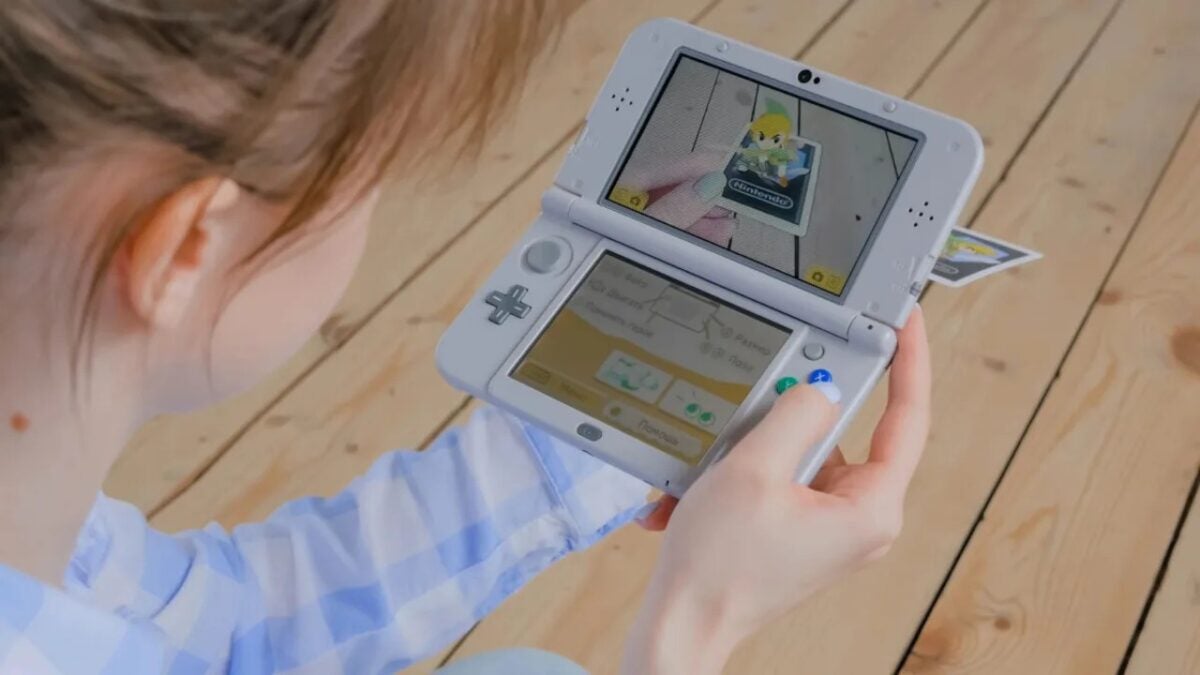
After the closure of the 3DS and Wii U servers, there was only one person willing to never turn off her console: Amanda. And she has lasted quite a while: specifically, 28 days, 23 hours, and 30 minutes before giving in to the evidence and finally turning off her handheld console. At least she didn’t leave without sending a message to all those who were still supporting her.
“I just want to thank everyone who cheered me on throughout the last month while I resisted being online. I never thought I would end up being the last player of Pokémon on Nintendo Network, but it happened”. And yes, it’s true: the audience was supporting her: even in the moments when she feared damaging her Nintendo 3DS she kept it on. Until the end.
However, everything comes to an end, and before going back into anonymity, he has taken the opportunity to make it clear that this is “the end of an era”, bidding farewell to the last player of ‘Mario Kart 7’ who can no longer find anyone to race with. Now it’s official. It has been almost a month, but Nintendo Network for 3DS is completely dead. The Wii U still has a little more time, but sooner or later it will also fall. It is the fate of destiny.
All except Nintendo, which has decided to don the Grinch costume and dedicate its efforts to removing online functions, four months ahead of schedule, from Wii U and 3DS. A tear in honor of the fallen heroes
Normally, video game companies put on Santa Claus’ hat and dedicate themselves, during the last week of December, to spreading love to all their followers. Well, all except Nintendo, who has decided to dress up as the Grinch and dedicate their efforts to removing online features, four months ahead of time, from Wii U and 3DS. A tear in honor of the fallen heroes.
If you are one of those who still played ‘Mario Kart 7’ online (it was a huge hit back in the day), I’m afraid it’s time to switch to the next version on Switch, because, despite Nintendo announcing that they were going to shut down the servers in April 2024, everything seems to indicate that they have done it during this Christmas with premeditation and treachery.
There are alternatives, of course: Pretendo, for example, is an open-source application designed as a replacement for Nintendo Network so that both platforms can continue to function online, and it is the one that has sounded the alarm. Several Wii U and 3DS games can no longer connect to the network, which leads to the belief that it is the beginning of a slow but sure plan to remove the services of both consoles.
To be honest, Nintendo already warned that interrupting services earlier than expected was something that could happen if “something happens that makes it more difficult to continue offering them”. Some of the most affected famous games have been ‘Super Smash Bros 3DS’, ‘Pokémon UltraSun and UltraMoon’, ‘Zelda: Tri Force Heroes’ or ‘Animal Crossing: New Leaf’. Quite something.
It’s the law of life, on the other hand: it should be noted that the Wii U has not been manufactured since 2017 and the 3DS since 2020. Despite everything, the Pokémon Bank and the possibility of downloading previously purchased games and applications will continue after the debacle… at least for now. Rest in peace, 3DS and Wii U online.