The Pokémon Company has announced the date for the highly anticipated mobile release of Pokémon Champions. This Pokémon game focused on the competitive side of Pokémon battles was launched last April on Nintendo Switch, promising to be the new focal point of competitive play, as it will be where the official Pokémon tournaments will be held from now on, starting this year. Pokémon Champions comes with new features for everyone. The Pokémon Company has already confirmed some important things regarding this version. To begin with, we will be able to share our progress between our console and our mobile […]
The Pokémon Company has already confirmed some important things regarding this version. To start, we will be able to share our progress between our console and our mobile by linking a Nintendo account to both.
Additionally, players who log into the game after the mobile game launch and before September 2 will receive a special reward: a Raichu and the mega stones to mega evolve it: a Raichunita X and a Raichunita Y, to mega evolve into Mega Raichu X and Mega Raichu Y respectively.
Although the game has caused some division within the community due to the relative scarcity of items and Pokémon, its reception has been positive. Less positive has been the glaring absence of new features over the months, likely due to the delay in the release of the mobile version. This is why players hope that, with the launch of this version for mobile devices, the game will start to evolve more quickly.
Pokémon Champions will be released for iOS and Android mobile devices on June 17. It is already available on Nintendo Switch. And if you like Pokémon, especially combat, and if you have any interest in competitive play, you shouldn’t miss this unique game.
Square Enix has held a special stream to celebrate the 40th anniversary of the beloved JRPG franchise Dragon Quest. In it, Yosuke Saito, the game’s producer, and Yuji Horii, the creator of the saga, presented the new installment of the franchise: Dragon Quest XII. With one particularity. They announced that they had to reboot the project and that it will now be called Dragon Quest XII: Beyond Dreams. A project full of problems Dragon Quest XII, technically, had already been announced. Five years ago it was presented under the name of Dragon Quest XII: The Flames of Fate with a, […]
Square Enix has held a special stream to celebrate the 40th anniversary of the beloved JRPG franchise Dragon Quest. In it, Yosuke Saito, the game’s producer, Yuji Horii, the creator of the saga, presented the new installment of the franchise: Dragon Quest XII. With a particularity. They announced that they had to reboot the project and that it will now be called Dragon Quest XII: Beyond Dreams.
A project full of problems
Dragon Quest XII was technically already announced. Five years ago it was presented under the name Dragon Quest XII: The Flames of Fate with a, literally, flaming logo, and no further information. Now, due to a series of problems that have led them to restart the project, it returns in this new incarnation.
Although the information we have is still very scarce, we have been left with a small conceptual teaser trailer of the game that shows us the protagonists. Including the designs by Akira Toriyama, who passed away in 2024, and whose last works created during his lifetime had technically already been shown, both for video games and for manga. Horii has stated that he will clarify how this is possible in the future, emphasizing that the music is by Koichi Sugiyama, the composer since the first installment of the saga, who passed away in 2021.
Without a release date or confirmed platforms, it seems we will still have to wait a long time to see the new installment of Dragon Quest. At the same event, they also announced Dragon Quest Monsters: The Withered World, a new installment of the Dragon Quest subfranchise —a mix of Dragon Quest and Pokémon—, with nothing more than a logo and stating that it will be coming soon to Nintendo Switch, Nintendo Switch 2, PlayStation 5, Xbox Series X|S, and PC.
Pokémon Wind and Pokémon Wave are two of the most anticipated games. Their presentation has caused a huge stir and fans can’t wait to get more details about the game, something that The Pokémon Company is aware of. This is why they are revealing everything in drips. This time, letting us hear for the first time the main song of the game along with a behind-the-scenes video of its recording. The video allows us not only to listen to the complete song in an impressive orchestral version performed by the NHK Symphony Orchestra, but also to hear […]
Pokémon Wind and Pokémon Wave are two of the most anticipated games. Their presentation has caused a huge stir and fans can’t wait to get more details about the game, something that The Pokémon Company is aware of. This is why they are dropping everything in drips. This time, letting us hear for the first time the main song of the game complete with a behind-the-scenes video of its recording.
The video allows us not only to listen to the complete song in an impressive orchestral version performed by the NHK Symphony Orchestra, but also to hear a complete version of it for the first time. Something that will delight fans who have not yet been able to hear it in full. Until now. This suggests that The Pokémon Company is already ready to start revealing some details about the game.
A game with few details (for now)
Pokémon Wind and Pokémon Wave will be released in 2027 exclusively for Nintendo Switch 2. Beyond that, we know that the game is set in a tropical region made up of numerous waters, which will have underwater areas that we will need to explore and will have, as usual, three starter Pokémon. Their names are Bowl, a grass type; Pombon, a fire type; and Gecqua, a water type.
To learn more details, we will still have to wait. But we can do so by listening to this wonderful symphonic version of its main theme. Something that will surely make the wait feel shorter.
Pokémon Horizons, the anime series that has charted a new course for the franchise, delves into a new arc titled ‘Wonder Voyage’, which promises to expand the boundaries of Pokémon storytelling by integrating elements from other popular games like Pokémon GO, Unite, and the successful Pokémon Pokopia. This new chapter, set to arrive on May 22, 2026, marks a milestone by leaving behind Ash as the protagonist, indicating a significant evolution in the franchise’s narrative. Capitalizing on the success of Pokopia, ‘Wonder Voyage’ is chronologically set after the events of Laqua and […]
Pokémon Horizons, the anime series that has charted a new course for the franchise, delves into a new arc titled ‘Wonder Voyage’, which promises to expand the boundaries of Pokémon storytelling by integrating elements from other popular games like Pokémon GO, Unite, and the successful Pokémon Pokopia. This new chapter, set to arrive on May 22, 2026, marks a milestone by leaving behind Ash as the protagonist, indicating a significant evolution in the franchise’s narrative.
Taking Advantage of Pokopia’s Success
‘Wonder Voyage’ is set chronologically after the events of Laqua and features the main group of characters coming together to investigate a mysterious ailment affecting several Pokémon. This premise allows for the exploration of new locations and gameplay mechanics, which, along with the inclusion of legendary characters from the Paldea region such as Koraidon, Miraidon, and Ogerpon, opens up a range of narrative possibilities that extend beyond the main saga.
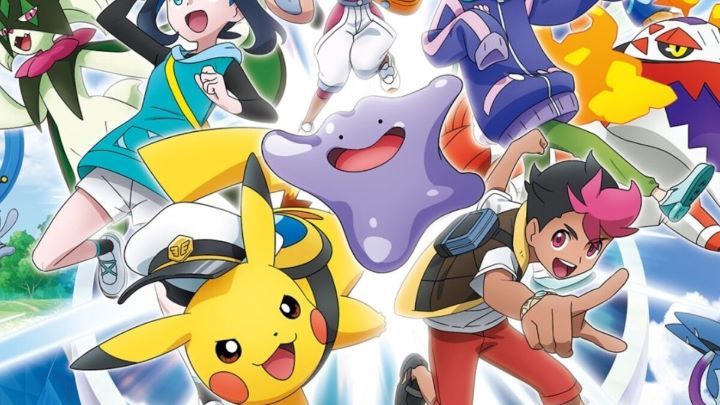
The first promotional poster for the series has revealed not only the inclusion of new characters, such as one alongside a Ditto, but also the confirmation of references to other games like Legends Z-A, suggesting that Mega Evolution could play a significant role in this new stage. This synergy with other titles within the Pokémon universe promises to introduce fresh dynamics that could enrich the viewer’s experience.
Additionally, it is expected that ‘Wonder Voyage’ will be available on the Netflix platform at some point in 2026 or 2027, thus continuing the close relationship between the series and the streaming platform. This ambitious step forward reflects the franchise’s commitment to evolve and adapt to fans’ preferences, always keeping the essence of Pokémon alive.
The development of the game Pickmos by PocketGame has sparked significant controversy in the gaming community. Despite the legal conflict that Palworld faces with Pokémon, which could have discouraged other developers from venturing into the monster hunting and collecting genre, Pickmos has emerged as an influential yet controversial competitor. Since its announcement, the title has been criticized for its apparent plagiarism of the designs from Palworld and the iconic Nintendo saga. Is it true that it looks very similar? Initially known as Pickmon, the studio decided to change the name […]
The development of the game Pickmos by PocketGame has sparked significant controversy in the gaming community. Despite the legal conflict that Palworld faces with Pokémon, which could have discouraged other developers from venturing into the monster hunting and collecting genre, Pickmos has emerged as an influential yet controversial competitor. Since its announcement, the title has been criticized for its apparent plagiarism of the designs from Palworld and the iconic Nintendo saga.
Is it going to be true that it looks very similar?
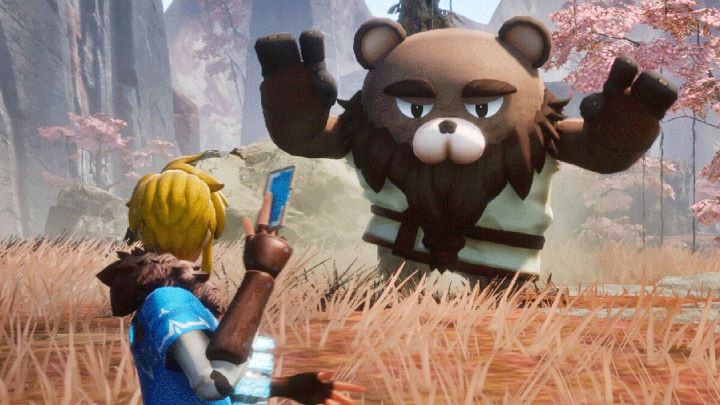
Initially known as Pickmon, the studio decided to change the name to Pickmos in an attempt to distance itself from plagiarism accusations. However, this change was not enough to calm the community, which has pointed out that many of the designs of the Pickmon that players can capture bear a striking resemblance to creatures like Charizard, Raichu, and Lucario. The similarity in game concepts has raised serious concerns, leading to a temporary removal of the game from the Steam platform.
In response to growing public pressure and criticism, Networkgo, the publisher of the project, announced that it would take control of the development of Pickmos to conduct thorough oversight. However, it was clarified that this change would not affect the leadership of PocketGame, as both parties will collaborate to improve the final product and address the problematic elements that have caused controversy.
Currently, Pickmos does not have a release date and its future is uncertain. Without a clear consensus among the parties involved, the project faces the risk of being definitively canceled, leaving the community without a tangible hope that the game will return to Steam in the near future. Given the current context, it can be anticipated that the next steps in development will be crucial for the game’s fate.
Pokémon is a franchise that has been dominating for years. It has everything to do so. Tremendously charismatic characters, a company with the financial and logistical muscle to carry it forward, and a fandom willing to forgive the missteps that are never so loud as to be a problem. At The Pokémon Company, they have what Disney, Sanrio, and practically no one else has: a franchise of eternal success and the intelligence to know how to exploit it. That is not the only reason for Pokémon’s popularity. Another is that its video games are good in a very peculiar way. They are accessible and enjoyable […]
Pokémon is a franchise that has been dominating for years. It has everything to do so. Tremendously charismatic characters, a company with the financial and logistical muscle to carry it forward, and a fandom willing to forgive the missteps that are never so loud as to be a problem. At The Pokémon Company, they have what Disney, Sanrio, and practically no one else has: a franchise of eternal success and the intelligence to know how to exploit it.
That is not the only reason for the popularity of Pokémon. Another is that its video games are good in a very peculiar way. They are accessible and enjoyable for casual and child audiences, for whom they are designed, but they are also deep enough for a whole competitive scene to emerge around them. One that is sanctioned by The Pokémon Company itself. Something they have wanted to exploit more deeply with Pokémon Champions.
Pokémon Champions shows that competitive play is for everyone
Launched on April 8 on Nintendo Switch and Nintendo Switch 2, with a mobile version announced for a later time this year, Pokémon Champions aims to be the centerpiece of competitive Pokémon gaming. This is evident from the moment we start the game.
Here there is barely any story. We don’t capture Pokémon, but rather obtain them through a kind of gacha system or transfer them from other Pokémon titles. We can’t even deeply customize our main character. The central part of the game is combat. With ranked, friendly, and tournament modes, everything revolves around battles, and after a series of tutorials to teach us the absolute basics of the game, we are given a choice of a Pokémon, provided with five others that align with it, and thrown into the arena to fight.
Pokémon Champions feels like it wants to convince players that competitive play is for everyone. And it succeeds. Because while it makes some concessions along the way to achieve this, what it does, to this day, adds more than it takes away from the game and its future possibilities.
If Pokémon’s competitive scene had two problems, they were, first, that it was completely inaccessible for newcomers, and second, that being connected to the main franchise games, they had to adhere to the rules and systems designed primarily for a casual experience. With Champions, specifically focused on providing a competitive game centered on combat, they have managed to address both issues. How? By doing something tremendously unpopular that has cost them a lot of criticism, somewhat unfairly: drastically cutting content.
In Pokémon Champions, there are 187 Pokémon and only mega evolutions as combat mechanics, of which there are 59. Items, a little over 100. Considering that there are currently 1,025 Pokémon, mega evolutions, Z-moves, Dynamax, Teracristalization, and moves +, in addition to a little over 300 items, many players have felt disappointed by the tremendous scarcity compared to what has been available so far. Especially because the next competitive season will already be played in Pokémon Champions.
But this change is positive. With fewer Pokémon and fewer items, it is easier to deal with for players who are entering competitive play for the first time, allowing for a simpler learning process. It also allows Pokémon Company to create tighter metas, where they delicately control the power level they want to achieve at any given moment, being able to combine different battle mechanics or items if they want to add an extra level of complexity at any given time. Giving them greater flexibility in shaping the competitive scene, and opening the possibility for a richer and more varied meta, thanks to that constraint. Because sometimes, less is more.
The problem of being free-to-play
That said, not everything is good. It is true that the absence of many key items and the focus on most items being mega-evolution stones, with most items being berries of one kind or another, makes item-based strategies excessively poor. This is something they should correct by adding in future updates, if not the most popular items from the competitive scene, then at least a dozen items that would make this strategic layer of the game richer and more complex.
The issue of monetization is more problematic. Because while it is not a problem now, it is easy to see how it could become one.
Pokémon Champions is very generous. Almost too generous. But that’s the trick. All free-to-play games start off being very generous only to end up not being so, and it’s easy to see how this can turn into a money pit. To begin with, the monthly battle passes, which mainly correspond to cosmetics, already represent a more than generous expense for anyone who wants to complete them monthly.
But, who wants to play completely free-to-play? They can, in theory. There is only one in-game currency and two types of different tickets, which are obtained through paid subscriptions, which, as we mentioned, have been distributed generously so far. And even more generously if you pay the 8 euros for the starter pack that gives a small advantage in that sense, but which is in no way necessary.
The problem is that the game has a subscription. For 50 euros annually, or 5 euros monthly, it offers great advantages in in-game currency and tickets. Although it remains to be seen whether it will really be necessary to keep up with the game’s updates, that is not the only subscription we will need. If we want to import our Pokémon from other installments of the franchise, we will have to bring them from Pokémon Home, a free app where we can store our Pokémon. As long as there are no more than 30.
Here is the trap that will surely end up costing money to its players. The Pokémon from Pokémon Home are not transferred to Pokémon Champions, but rather lent: they can be used in Champions, but they remain in Home. They take up space in both Home and Champions. This means that if we bring our previously optimized Pokémon from other games to save money, we will be testing the limits of our Home account. And if we exceed it, we will have to pay a monthly or annual subscription that, while not very expensive, is another subscription to add to the one for Champions. Or if we wanted to play free-to-play, one that we have to pay for, at least.
That is the big problem with the game. You can already see where they want to take our money. The most expensive thing by far is catching Pokémon, as obtaining Pokémon permanently is really costly, but bringing them from Home requires a permanent space that may lead us to have to pay a subscription, whether we want to or not. And that could very well end up being exactly what kills the game: The Pokémon Company’s need to get our money.
What Mario Kart World started and Donkey Kong Bananza smoothed out, Pokopia is taking advantage of: just when we thought Switch 2 was going to enter a dangerous valley without games before the inevitable Mario or Zelda, Pokémon has shown that it can revitalize anything: What was missing from Animal Crossing? Exactly: Pokémons. That, and an absolutely gigantic island where everything from Pikachus to Timburs come to greet your human Ditto protagonist. And if you think that’s a strange concept, you haven’t seen anything yet. Join us as we review the 5 weirdest games in the history of the franchise! After […]
What Mario Kart World started and Donkey Kong Bananza smoothed out, Pokopia is taking advantage of: just when we thought Switch 2 was going to enter a dangerous valley without games before the inevitable Mario or Zelda, Pokémon has shown that it can revitalize anything: What was missing from Animal Crossing? Exactly: Pokémons. That, and an absolutely gigantic island where everything from Pikachus to Timburs come to greet your human Ditto protagonist. And if you think that’s a strange concept, you haven’t seen anything yet. Review with us the 5 weirdest games in the history of the franchise! After this, Pokémon Red is going to feel small.
Pokémon: Catch The Numbers!
Did you think that all Pokémon games were released for Nintendo? You are very mistaken! Sega released three games from the saga on its educational console Pico, including an educational title to learn Hiragana and Katakana, another mini-games title (Pico for Everyone Pokémon Loud Battle!), and finally, the one that concerns us. Catch The Numbers! was never released outside Japan and was based on the anime: Team Rocket has stolen all the Pokémon from Ash, Misty, and Brock except Pikachu and Togepi, and the player must solve various math problems to recover them. Just what you wanted when playing Pokémon: a square root!
Magikarp Jump
With the arrival of mobile phones and apps, Nintendo was not quite sure what to do with one of its flagship franchises. Thus, after the unexpected success of Pokémon Go, it tried to replicate that with Magikarp Jump, which had notably less appeal. In the game, players had to train Magikarp to compete in various jumping contests, improving its height by training it and making it eat berries. In the end, it did not evolve into Gyarados and, honestly, no one cared too much about this strange spin-off. What can we do.
Pokémon Smile
Half game, half app for kids to brush their teeth, Pokémon Smile had a relative success when it was released in the middle of the pandemic, in June 2020. Using augmented reality, children (and not so children) can brush their teeth in front of the camera and start defeating the bacteria that kept the captured Pokémon in their teeth. By rescuing it, the player has the option to catch it and level it up. For what? Who knows, because there are no tooth brushing battles or anything like that. It was so popular that they ended up releasing another spin-off to learn self-care, Pokémon Sleep. Let’s see when we get a Pokémon Pay My Taxes.
Pokémon Café ReMix
If there are cat cafés, why shouldn’t there be Pokémon cafés? In this case, you will have a café that you have set up alongside Eevee, where Pokémon come in to ask for their daily meal. Your job will be to prepare it for them, but more in a puzzle style than in Overcooked, fortunately. Little by little, you will be able to get more creatures and even level them up, potentially having true legendary customers. Very cute, very cozy… And it continues to receive updates to this day. A poke-caffeinated, please?
The Thieves and the 1000 Pokémon
Probably even the biggest Pokémon fans raised an eyebrow thinking “What the hell is this?”. However, it is something that existed for Nintendo 3DS, which Japanese users could download for free and served as advertising for the seventeenth movie in the saga. The game consisted of simply choosing a stage to play, selecting the Pokémon that would play it, and putting them through a few mini-games where, normally, you would lose one or several of your creatures. It had 16 levels and 4 additional extras, because here, for being free and simple, nothing is done halfway. You either get them all or none at all, come on.
Pokémon never stops being successful. No matter how many complaints it gathers, with its fans showing dissatisfaction with the current state of the franchise, they continue to buy the games in droves. And it makes sense. It is such a large franchise that, besides the fact that most of the people who complain still buy the game, its target audience still has plenty of reasons to buy it. Because its target audience is a child and family audience, not the long-time player who has been playing Pokémon all their life and would like the franchise to evolve with them. Even if, from time to time, in Pokémon […]
Pokémon never stops being successful. No matter how many complaints it receives, with its fans expressing dissatisfaction with the current state of the franchise, they continue to buy the games in droves. And it makes sense. It is such a large franchise that, in addition to the fact that most of the people who complain still buy the game, its target audience still has plenty of reasons to buy it. Because its target audience is a child and family audience, not the long-time player who has been playing Pokémon their whole life and would like the franchise to evolve with them. Even if, from time to time, Pokémon Company decides to do some things that are more aimed at that audience.
For the 30th anniversary, the great Pokémon game is not going to be a game from the main franchise. But that’s not a bad thing. And it’s not because it has allowed them to create a huge, shiny game whose main audience is a bit different from the usual: it still targets children, but it also makes some concessions for a general audience. Because Pokopia is not just the game that inaugurates and celebrates the 30 years of Pokémon, but one of the best games in the franchise in a long time.
A game with charm and a lot of grit
Pokopia puts us in a simple premise: we are a ditto that struggles to transform into other Pokémon, but has the particularity of being able to transform into human beings. When for some reason the entire Kanto region has been devastated and all humans have disappeared, we take on the form of our trainer and begin to recruit the help of other Pokémon to rebuild the region.
From here on, the premise is something between Animal Crossing and Minecraft. Animal Crossing because we will have to befriend other Pokémon to gain their abilities to perform all kinds of tasks, thus allowing us to progress in the game. Minecraft because the reconstruction will require the collection and construction of all kinds of infrastructures, allowing us to be as extensive or minimal as we wish. If we want to do just enough to move on to the next objective, we can, but if we want to expand infinitely, the game will allow us to do so as much as we desire.
In that sense, the game is less Animal Crossing or Minecraft, although they are familiar examples for most of the audience, than another excellent title that flew under the radar at the time. Dragon Quest Builders.
In that one, we also had to rebuild towns, but with the particularity that it was also a Dragon Quest. While during the day we gathered resources and built our defenses, at night we fought against monsters to level up and deal with a great threat to move on to the next stage. And while there is no leveling up or combat in Pokopia, the tactility and the premise of that desolate world to be rebuilt are the same, demonstrating a family resemblance that will make it tremendously enjoyable for those who already enjoyed the Square Enix game.
Especially because the game is much more than it seems. With hundreds of Pokémon and dozens of hours ahead, although it may seem like a simple and relatively small game, it has enough content to keep us glued to the screen for much longer than it might seem. This was already hinted at when the developers, Omega Force, confirmed that they had gathered the largest team in their history to make this game. And we’re not talking about a small indie studio: Omega Force makes the Dynasty Warriors, thus demonstrating their tremendous versatility.
With an exclusive launch for Nintendo Switch 2, with a digital and physical version only in game keycard, this is one of those games that justifies a console. Releasing on March 5, 2026, it promises to be the big celebration game for Pokémon, although not the only one. Even if, for the next generation, we will still have to wait until 2027.
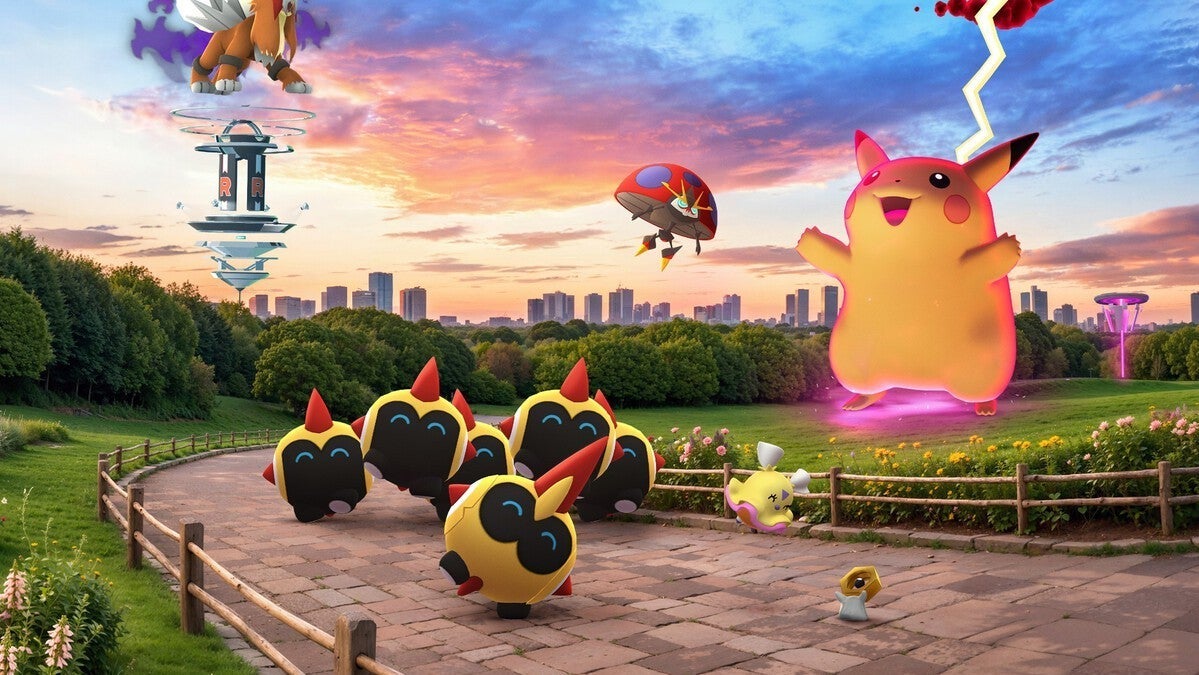
This weekend, the Pokémon GO: Global Tour event will take place, marking the grand finale of the Valuable Paths season, one of the highlights of the year for trainers around the world. With its conclusion, players will have very little downtime, as the new season, called Memories in Motion, will begin on March 3 and run until June 2. Not a moment of pause for trainers. The new season will kick off with the special research task Flashes and Diamonds, which will allow all the […]
This weekend, the Pokémon GO Tour: Global event will take place, marking the grand finale of the Valuable Paths season, one of the highlights of the year for trainers around the world. With its conclusion, players will have very little downtime, as the new season, called Memories in Motion, will begin on March 3 and run until June 2.
Not a moment of pause for the coaches
The new season will kick off with the special research task Sparks and Diamonds, which will allow all players who log in during this period to receive and complete it at their own pace. Those who finish this mission will receive another task that will guarantee an encounter with the mythical Pokémon Volcanion, an opportunity that should not be missed.
The GO Pass will also be back, offering missions and rewards, including Deluxe versions for those who want to earn additional prizes. Additionally, dates have been confirmed for the upcoming Community Days, which will take place on March 14, April 11, May 9, and March 16, with Scorbunny being the star of the first one. These events will provide increases in the likelihood of capturing shiny Pokémon, both in raids and from eggs.
The Memories in Motion season will bring significant changes to Pokémon locations and their appearance in the wild. This includes a boost in the likelihood of encountering shiny Pokémon, giving a new vibe to the hunt. Additionally, weekly events will be refreshed, ensuring there is always something interesting to do.
Finally, Niantic has decided to move weekend events to Saturdays, which will free trainers from having to purchase tickets to participate in them. This decision aims to make the player experience more accessible and appealing.
The upcoming week is key for Pokémon and Nintendo fans, as Pokémon Day will be celebrated on February 27, coinciding with the 30th anniversary of the franchise. This event not only promises to bring exciting news about the franchise but will also feature a special Pokémon Presents, where multiple significant announcements are anticipated. The curiosity of everyone about Pokopia Apart from Pokémon Presents, on February 24, Nintendo will hold a Treehouse: Live event. During this presentation, players will be able to enjoy new gameplay of two highly anticipated titles: ‘Super Mario Bros […]
The upcoming week is key for Pokémon and Nintendo fans, as Pokémon Day will be celebrated on February 27, coinciding with the 30th anniversary of the saga.
This event promises not only exciting news about the franchise but will also feature a special Pokémon Presents, where multiple significant announcements are anticipated.
Everyone’s Curiosity About Pokopia
Aside from the Pokémon Presents, on February 24, Nintendo will hold a Treehouse: Live event. During this presentation, players will be able to enjoy new gameplay from two highly anticipated titles: ‘Super Mario Bros Wonder—Nintendo Switch 2 Edition’ and ‘Pokémon Pokopia.’
The latter is presented as a fusion between the worlds of Animal Crossing and Minecraft, which has sparked the interest of many. Details about this new game will be revealed at the event, which will last nearly 80 minutes and can be followed live on Nintendo’s YouTube channel.
The Treehouse will also include news about ‘Super Mario Bros. Wonder’, such as new minigames and new levels with bosses, raising players’ expectations. In addition, the return of ‘Pokémon Fire Red’ and ‘Leaf Green’, which will be released on February 27 for Nintendo Switch adds even more excitement to the anniversary celebrations.
With so many exciting announcements on the horizon, the gaming community is gearing up for a week full of news and what that entails: opening the wallet.