Zuckerberg's excessive ambition for AI: he will invest 62 billion euros in 2025

Zuckerberg is betting everything on AI. Meta, the parent company of Facebook, has announced its intention to invest 62 billion euros in 2025 to expand its artificial intelligence (AI) infrastructure. This decision aims to strengthen its position in a competitive market where rivals like OpenAI and Google are also making multi-billion investments, with Microsoft planning to spend nearly 80 billion euros and Amazon more than 70 billion euros in the same area. With this investment, Meta plans to build data centers exceeding 2 gigawatts, large enough to supply a significant part of Manhattan. The company also […]

Zuckerberg is betting everything on AI. Meta, the parent company of Facebook, has announced its intention to invest 62 billion euros in 2025 to expand its artificial intelligence (AI) infrastructure. This decision aims to strengthen its position in a competitive market where rivals like OpenAI and Google are also making multi-billion investments, with Microsoft planning to spend nearly 80 billion euros and Amazon more than 70 billion euros in the same area.

Facebook DOWNLOAD

FAIcebook

With this investment, Meta plans to build data centers exceeding 2 gigawatts, large enough to supply a significant part of Manhattan. The company also aims to end the year with more than 1.3 million graphics processors and increase its information capacity by an additional gigawatt by 2025. This expansion is particularly relevant following the announcement of the Stargate initiative, in which OpenAI, SoftBank, and Oracle will invest 500 billion euros in AI infrastructure in the United States.

Mark Zuckerberg, CEO of Meta, expects the company’s AI assistant to be available to more than 1 billion people by 2025, thus surpassing the 600 million monthly active users reported last year. This ambition is supported by the development of key tools, such as its AI chatbot and Ray-Ban smart glasses. Additionally, Meta has adopted an open-source approach, allowing both consumers and businesses to use its Llama models for free.

A smartphone with Facebook’s logo is seen in front of displayed Facebook’s new rebrand logo Meta in this illustration taken October 28, 2021. REUTERS/Dado Ruvic/Illustration

The announcement of the investment has received a positive response in the market; Meta’s shares grew by 1% following the revelation, suggesting a favorable perception of its strategies in the AI field. However, it is important to remember that, despite these initiatives, Meta has faced criticism and challenges recently, especially in the realm of virtual reality, an area that Zuckerberg had strongly bet on.

Facebook DOWNLOAD

Zuckerberg knew about Facebook’s privacy issues and did nothing to stop them

In 2012, Facebook knew about an app that could steal millions of users’ data and did nothing to fix the problem.

Mark Zuck

Emails show that Facebook CEO Mark Zuckerberg had prior knowledge of Facebook’s privacy issues, according to a report from the Wall Street Journal.

One of the emails from April 2012 is deeply concerning. It shows Zuckerberg and Facebook insiders learning about a third-party app that took data from tens of millions of Facebook users while ignoring Facebook privacy policies.

The app was eventually suspended, but sources told the WSJ that this did not cause Facebook to look into their privacy issues.

Keep in mind that this was six years before millions of users had their data compromised in the Cambridge Analytica Scandal. It was also long before we knew about other apps that were stealing our data without our knowledge. 

To clarify, none of the emails appear to show Zuckerberg deliberately disobeying Facebook policy. However, they do show a huge lack of responsibility and respect for Facebook users. 

The emails were discovered by a probe from the Federal Trade Commission and were later reported by the WSJ.

Our take

Recently, Zuckerberg has been pushing privacy for Facebook. He wants to add more tools so users can be protected on Facebook, Messenger, WhatsApp, and Instagram.

Although some were inclined to believe him, this news suggests that Zuckerberg is only doing so because Facebook was caught with its pants down.

Your privacy and personal data should be your top concern when you’re on social media, and Facebook’s users deserve to be on a platform where the company has the same concern.

Deepfake Zuckerberg video tests Facebook policy

Deepfake videos can heavily influence voters, but will Facebook do anything to stop them?

Zuckerberg

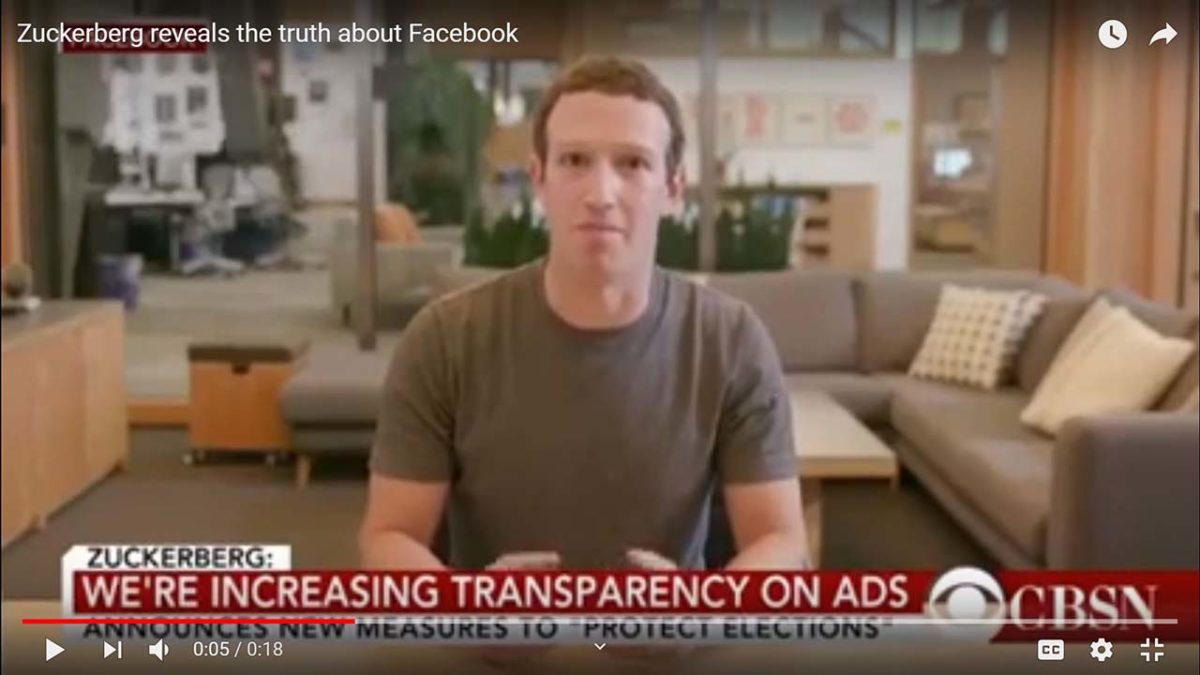
“Imagine this for a second: One man, with total control of billions of people’s stolen data, all their secrets, their lives, their futures. I owe it all to Spectre. Spectre showed me that whoever controls the data, controls the future.”

Those sinister words came from the mouth of Facebook CEO Mark Zuckerberg… or so you’d think. The video was actually a deepfake made for a much different purpose. Take a look.

How will Facebook respond?

The deepfake video was made to challenge Facebook’s policy for removing fake content. Recently, the social media giant was in hot water for not removing a manipulated video of Nancy Pelosi. 

Facebook has been trying to do more to stop the spread of fake news. They have increased their reporting tools for users so that they can work quickly to get the content flagged.

That Pelosi video had millions of views. Although Facebook eventually labeled the video as “fake,” they did not remove it from the site. However, the video got thousands of views before getting flagged. Now, Facebook is left to figure out if they will remove the video, and how long will they wait before they take action.

Many individuals, including Pelosi herself, called out Facebook for not removing that video. However, Facebook stuck by its guns.

“If it was the same video, inserting Mr. Zuckerberg for Speaker Pelosi, it would get the same treatment,” said Facebook director of public policy Neil Potts at a parliamentary hearing.

With this new deepfake video of Zuckerberg, we will see if what Potts said was true. Will Facebook let the video stay up? Or will it take a different stance when the CEO is the target?

How to spot deepfake videos

Fake news

With the next presidential election on its way, deepfake videos could potentially sway thousands of voters. Luckily, researchers from Dartmouth College are creating software that can help spot deepfake videos.

Essentially, the software analyzes hours of authentic footage of political influencers like Pelosi, Donald Trump, and Joe Biden. The software pays attention to things like how their head moves, speech patterns, and facial expressions so that it can tell if something is authentic.

According to the researchers, the software is about 95% accurate, but they are optimistic that they can get it up to 99% within the next six months. Until detection software can outpace the fake video producers, a quick trick is to look at the eyes. Deepfake-created humans almost never blink.

What’s new with Facebook’s redesign

Facebook tries to reinvent itself. Will it work?

facebook new look

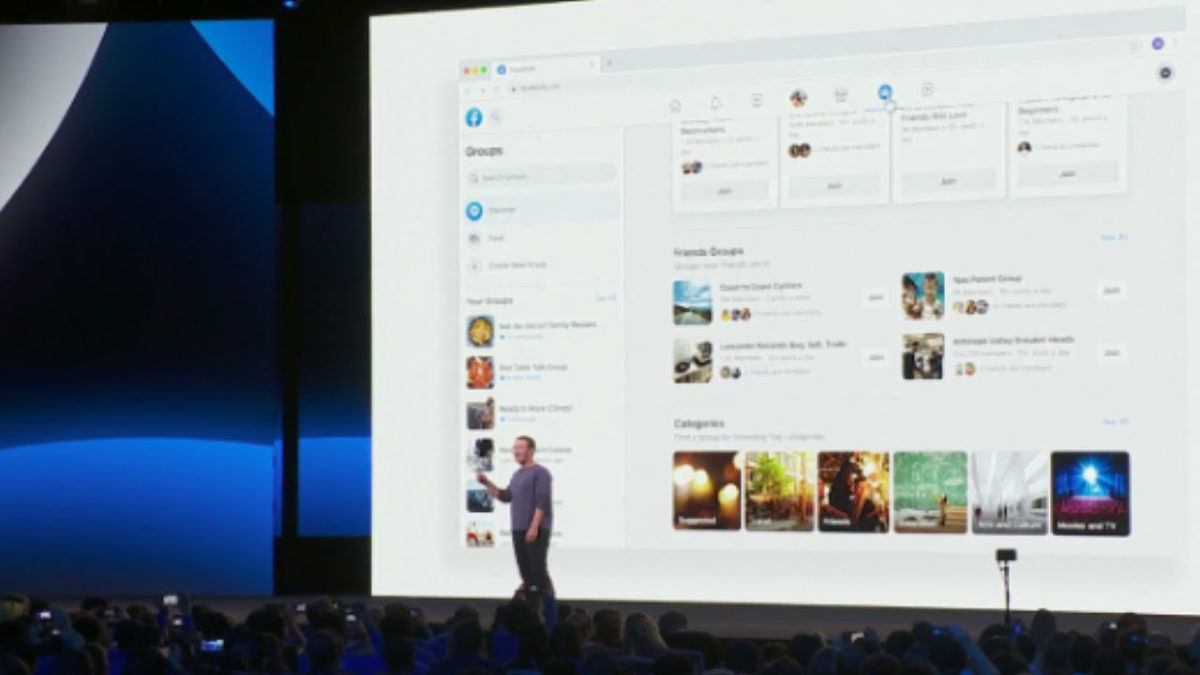
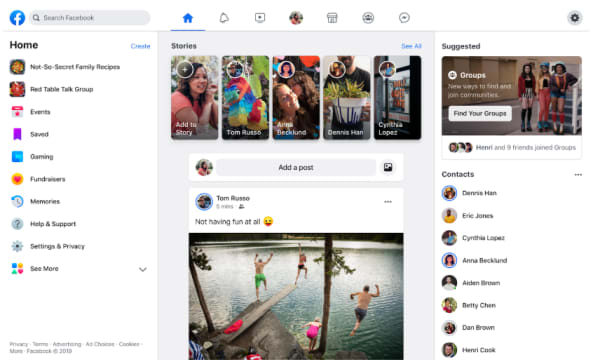
Facebook rolled out a redesign in the wake of its many recent privacy scandals. Today, it feels like Facebook is trying to wipe the slate clean with a minimalist interface and a pivot toward digital community-building.

Just last month, Facebook announced that significant changes were coming to the mobile and desktop platforms. They announced the changes would shift away from the news feed and toward the two features people still use: Events and Groups.

Watch the Zuckerberg announcement here, if you’re so inclined:

But, the gist of it is, Facebook is aiming to get more personal. The company is doing so by putting some distance between features like Groups, Messenger, and Events and the increasingly problematic newsfeed.

Here’s what’s changing:

New look, new feel
Facebook redesign

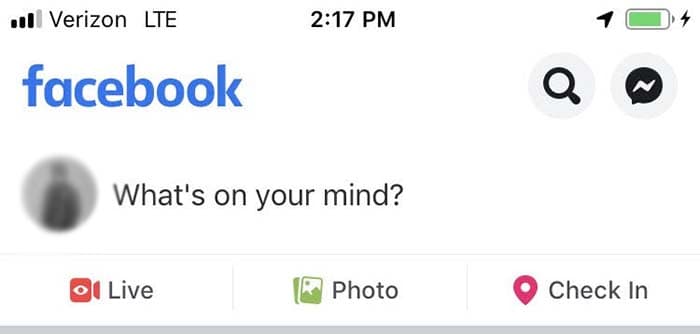
So, before we dive into the real meat of the redesign, Facebook has made some notable aesthetic changes. Instead of the big blue header at the top of the page, the site includes a lot more white space, with light gray icons for accessing your newsfeed, notifications, Messenger, and Facebook Watch.

They’ve also updated the logo, shifting gears from an F within a blue or white square to a brighter, circular icon.

7

It’s all about the groups

suggested groups

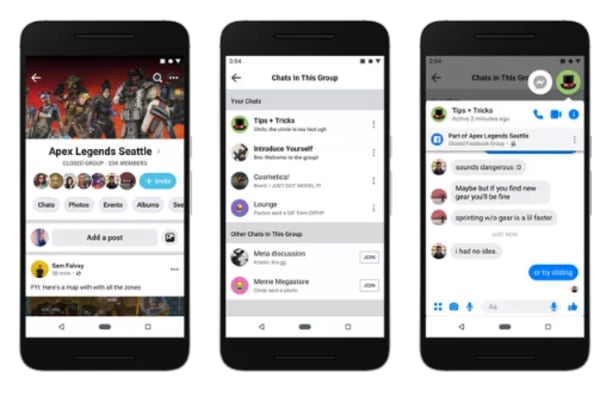
Zuckerberg is all about building communities these days. Groups represent a big part of that shift from a centralized newsfeed to a core focus on groups.

That focus on community, according to Zuckerberg, means building out both public and private groups on the platform. Increasingly, users seek private spaces where they can post content that reflects shared interests in front of an engaged audience.

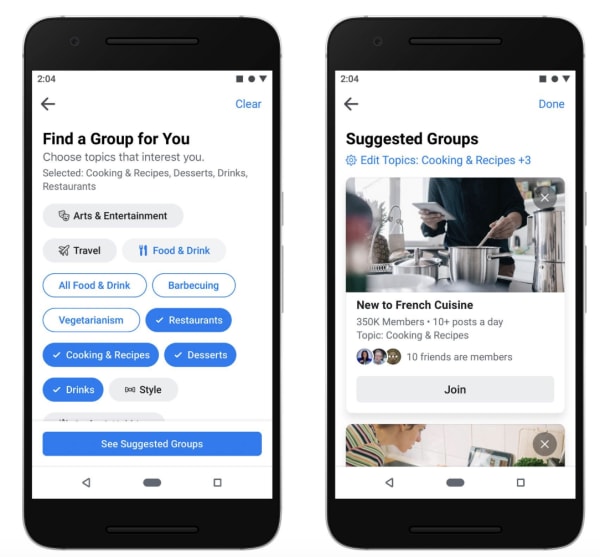
Facebook also plans on helping you expand your online circle by recommending groups based on past interests and interactions. Plus, they’ve improved the feed, making active Groups easier to find — within a personalized feed. Now, you can separate group posts from the regular newsfeed, making it easier to engage with other users.

Meet new friends
new friends on facebook

Remember when we could meet people online? Sure, dating apps are huge, and there are apps like Meetup designed to help you find a book club or a few local folks to go with you to happy hour.

7

But, the days of the chatroom are long gone — perhaps for a good reason (namely, safety).

It’s long been sort of taboo to add someone you don’t know in real life on Facebook. However, part of the redesign involves changing what’s become a digital norm.

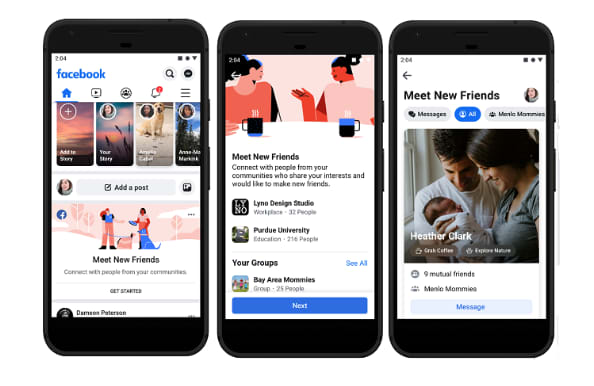
A new feature, Meet New Friends, aims to connect people with strangers who share an interest or connection. The goal is to help them meet up IRL.

Facebook Marketplace got a makeover, too
Facebook marketplace

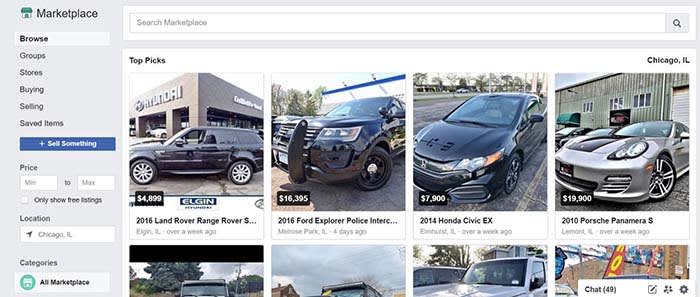
The social network’s e-commerce service, called Marketplace, also got an upgrade.

People selling goods through the platform will now be able to to take payment directly from the platform, including shipping costs.

As it stands, marketplace users have to arrange for payment outside of the platform — though they can do so inside Messenger.

Events

facebook events new look

Another area where Facebook is diving in head-first is its Events page. As is the case with groups, Facebook wants to help you find more things to do near where you live.

The new tab is now next to the Groups tab in the new menu bar layout. It offers a more detailed map view that allows you to see where the events you are interested in are located in relation to one another.

Facebook Watch is front and center

Wait, what is Facebook Watch? Don’t worry; if you’re asking that question, you’re certainly not alone. According to a Diffusion study, 50% of adult Facebook users in the U.S. had never heard about it.

Facebook Watch aims to capitalize on streaming trends — it’s trying to hitch a ride off of the success driving Netflix and YouTube. But, there aren’t any notable “hits” on the platform.

Facebook says that 75 million people now use Watch for at least one minute per day, and not necessarily all at once.

While we get why Facebook insists on making us notice Watch — it’s hard not to feel as though they’re really forcing us to pay attention.

Privacy

Privacy has been Facebook’s Achilles heel going on a few years now.

From Cambridge Analytics to the ongoing debate about the company’s data collection practices, the company has had some difficulties winning back the trust of the public.

To combat this image problem, Zuckerberg has been promoting a message centered around privacy. It runs in stark contrast to its old narrative as this digital public square.

Zuckerberg said, “Privacy gives us the freedom to be ourselves,” pointing to a shift in how we interact online these days.

In the past, the purpose of posting was to reach as many people as possible. Today, Zuckerberg says, we now crave a sense of intimacy online.

Which, in all honesty, is probably true.

Wrapping up

If the recent news about Facebook’s shareholders wanting to hire a chairman to oversee Zuckerberg is proof of anything, it’s that the company wants to change.

These new design changes to Facebook are nice, but we are hoping that the changes to the social media giant go beyond the cosmetic level.

Facebook shareholders vote to overthrow Zuckerberg (it doesn’t work)

Shareholders vote for a new Facebook chairman. Why won’t it work?

Zuckerberg

Nearly 70% of Facebook’s shareholders voted to reduce Mark Zuckerberg’s power in the company. This was revealed in a recent filing from Facebook from their shareholder meeting.

Last year, 51% of shareholders voted for an identical proposal. This year, even more Facebook stock owners are tired of how Zuckerberg has been conducting business.

Shareholders are upset with Zuckerberg over several major Facebook scandals. If you’re wondering what scandals they’re referring to, we can name a couple:

What do the shareholders want to do?

Shareholders are hoping to hire an independent chairman to hold Zuckerberg and his top team accountable.

Essentially, the shareholders are tired of Zuckerberg and his team not being held accountable. Hiring a chairman could put forward a set of checks and balances that would keep them from causing more harm to Facebook and its users.

7

Is anything going to come from this?

No.

The issue with hiring a chairman to oversee Zuckerberg is that he owns 60% of the company’s voting power. Zuckerberg and his team voted against hiring an independent chairman, so it’s not happening. Basically, no matter what the majority of shareholders propose, Zuckerberg always gets the final word.

This goes to show the importance of a chairman. Despite Zuckerberg’s majority voting power, a chairman could potentially approve or disapprove decisions made by Zuckerberg and his team. This would provide a new layer of accountability sorely needed at Facebook.

Should Zuckerberg not have as much power?

If you keep up to date with Facebook news, you’d know that there seems to be a new story about a Facebook scandal every week. Although Facebook will make a claim from time to time that they’re trying to make a change, the constant scandals speak for themselves.

To make matters worse, some scandals involved Zuckerberg’s direct actions.

Although Zuckerberg might be the founder of Facebook, his actions might continue to put the company in peril. If Facebook wants to outweigh the negative news with positive news, then they are going to need to make changes like these.