Since January 2024, five cyberattacks targeting drinking water facilities in the United Kingdom have been recorded, marking a record for any two-year period. This figure, obtained through Freedom of Information requests to the country’s water regulator, the Drinking Water Inspectorate, suggests that the actual number of attack attempts is likely higher, given that the regulator is only required to report those incidents that cause service disruptions. Although these attacks did not directly affect the supply of safe water, they have managed to disrupt critical organizations, highlighting […]
Since January 2024, five cyberattacks targeting drinking water facilities in the United Kingdom have been recorded, marking a record for any two-year period.
This figure, obtained through Freedom of Information requests to the country’s water regulator, the Drinking Water Inspectorate, suggests that the actual number of attack attempts is likely higher, as the regulator is only required to report those incidents that cause service interruptions.
Despite the fact that these attacks did not directly affect the supply of safe water, they have managed to disrupt critical organizations, highlighting the real threat that malicious hackers pose to society.
🚨 Hackers have launched 5 cyberattacks on Britain’s drinking water suppliers since 2024.
No impact on water safety, but the record number highlights rising threats to critical infrastructure.
The UK’s Cyber Resilience Bill aims to tighten defences later this year.
A particular ransomware attack that gained notoriety demanded over £3 million from Southern Water in exchange for leaked data, highlighting the risk of attacks driven by financial motivations.
The Canadian Cybersecurity Centre has warned about the activity of hacktivists who have altered systems in water, energy, and agriculture facilities. The alteration of these systems could have deadly consequences, and a simultaneous attack on several of them could paralyze daily life in the country.
Attacks have disrupted operations on five separate occasions, experts warn. https://t.co/LJXqEoUVnN
“No attack aimed at critical infrastructure should be underestimated. These incidents seek to generate media attention, disrupt public services, and potentially endanger human lives,” said Jason Shea, senior network security advisor at Optiv.
This growing concern for cybersecurity poses a challenge in the face of geopolitical instability, which exposes vulnerabilities in critical infrastructure and opens the door to minor attacks that test the country’s preparedness for a larger crisis.
Mustafa Suleyman, CEO of Microsoft AI, has sparked a valuable discussion about the role of artificial intelligence (AI) in our daily lives, stating that the pursuit of consciousness in these technologies is a fundamental mistake. During the recent AfroTech conference, Suleyman argued that asking whether AIs can achieve consciousness is a fatal confusion that distracts from their true potential. The expert emphasizes the importance of distinguishing between an AI that functions efficiently and one that is conscious. According to Suleyman, attributing emotions and consciousness to chatbots can lead to dangerous misunderstandings, where the […]
Mustafa Suleyman, CEO of Microsoft AI, has sparked a valuable discussion about the role of artificial intelligence (AI) in our daily lives, stating that the pursuit of consciousness in these technologies is a fundamental mistake.
During the recent AfroTech conference, Suleyman argued that asking whether AIs can achieve consciousness is a fatal confusion that distracts from their true potential.
The expert emphasizes the importance of distinguishing between an AI that functions efficiently and one that is conscious. According to Suleyman, attributing emotions and consciousness to chatbots can lead to dangerous misunderstandings, where users begin to treat these advanced systems as if they possess introspection and an inner life. “If you ask the wrong question,” he noted, “you end up with the wrong answer.”
📁 Mustafa Suleyman says:
“There is nothing inside. No pain, no emotions, no will or desire. It’s an illusion, a trick. The danger is believing these things are real when they’re not.” pic.twitter.com/fIco4H5GVF
Despite the rise of speculation about artificial general intelligence (AGI) and rumors that models like ChatGPT have achieved a level of self-awareness, Suleyman urges the tech community to focus on developing AI tools that are truly useful.
As he stated, it is crucial to focus the debate on how to make AI effective rather than fostering the illusion that a conscious being is being built. “There is no mechanism for subjective experience in these algorithms,” he reaffirmed.
If I wasn't already working on AI consciousness, this kind of reasoning would make me think maybe I should work on AI consciousness
The confusion about the capabilities of AI could lead to inappropriate interactions between users and these technologies. For example, the fact that someone considers a chatbot as their friend or therapist can be problematic if human suffering or feelings are assigned to these programmed systems.
Meanwhile, Suleyman advocates for providing tools that enrich the user experience, without fostering the misconception that these robotic enhancements have an internal life.
When Ghost of Tsushima was released in 2020, millions of players fell in love with Jin Sakai’s adventure. Many believed that this game, which seemed a bit of a mix of genres, would not succeed (some even said it looked like the Japanese copy of an Assassin’s Creed). To the surprise of many, the game was very well received. And in my case, I liked it so much that I thought it was impossible for a sequel to be justified. Luckily, I am dedicated to playing and analyzing games, not to deciding which video games get developed and which do not. Today I come to tell you how much I liked Ghost of […]
When Ghost of Tsushima was released in 2020, millions of players fell in love with Jin Sakai’s adventure. Many believed that this game, which seemed a bit of a mix of genres, would not succeed (some even said it looked like the Japanese copy of an Assassin’s Creed).
To the surprise of many, the game was very well received. In my case, I liked it so much that I thought it was impossible for a sequel to be justified. Fortunately, I am dedicated to playing and analyzing games, not to deciding which video games are developed and which are not.
Today I come to tell you how much I enjoyed Ghost of Yōtei, the few flaws it has, and the reasons why you should be playing it right now (or ask for it as a Christmas gift, as I’m sure you’ll find some offer in a few months).
Atsu, a tormented protagonist who grows with us
While the story itself is not innovative: Atsu’s family is murdered by a group of masked outlaws called the Six of Yōtei, and she vows to locate them and take them down one by one, the protagonist playing Atsu (Erika Ishii) delivers such a strong performance as an unflinching killer that I was completely drawn into her bloody quest for revenge.
No matter how much other characters remind her seriously of the devastating nature of revenge, she continues to destroy her enemies. It seems that she enjoys it.
The story is also told at a very comfortable pace, as it adapts to us. If we go on certain main missions, we will unlock key memories from our past life, and if we play as a vigilante across the northern plains of Japan, the story will take a break, allowing us to proceed at our own pace for a while.
That said, the story is worth it. No matter how great the open world of Yōtei is (one of the best I’ve played), which can make us lose sight of the initial goal of the game, the main story is worth playing and enjoying. It’s an epic soap opera.
Brutal gameplay, especially its battles
The battles in Ghost of Yōtei are wonderfully brutal. While you can make your way through Ezo with some basic knowledge of dodging, blocking, and striking with a katana at the right moment, the frequent fights become more exciting as you learn to use the dual katanas, the spear, the bow, and the huge ōdachi.
Key confrontations never lose their challenge, as Atsu surrounds herself with imposing generals who are twice her size, knowing that a few blows are enough to finish her off.
I play many challenging action games, but after more than 30 hours of duels and fights, I still am not powerful enough for my enemies to fall before me with barely any effort, and therefore, I do not get bored.
The constant challenges of this game encourage you to improve in each discipline to ultimately become a completely relentless assassin. Additionally, the game urges you to learn with each weapon, as enemies are not defeated equally easily with all weapons; rather, each weapon has its preferred counter (for example, to defeat spearmen, nothing beats using dual katanas).
In that sense, the game does not force you to learn, but encourages you to do so to make the experience an easier and more enjoyable journey. And I believe that is the best way to treat a player who is striving to learn your rules and adapt.
Ezo is the most beautiful place you have ever seen in your life with a controller in your hands
Together with Assassin’s Creed Shadows (also set in historical Japan and analyzed here), Ghost of Yōtei is the game with the most beautiful graphics I have ever seen.
This delivery is a tribute to the natural beauty of Japan, in the ginkgo trees and distant mountains, the spring plains and rivers teeming with fish (which you can spear for dinner).
This is a world created to be admired: you navigate with sight and sound, instead of with a screen map. The wind tells you where to go to continue the story, but I really felt free to wander, and it is in that wandering where you find incredible side stories and moments of tranquility.
It is charming that you can use the PS5 controller to grill fish on your campfire, play the shamisen, or paint strokes on the canvas; returning to Atsu’s memories in familiar places allows you to relive his life before it was ravaged by violence.
The music, which combines rhythms of the Old West and traditional Japanese instruments, reminds me that it is about 17th century Japan seen through an American lens.
Yōtei complicates things too much: there are not too many distractions, things to collect, people to recruit, or bases to build. It is simple, and I have found it very easy to enjoy. Whenever I got bored of pursuing a goal, it was easy to find something else to do.
A game worth experiencing… at least once in a lifetime
It may be a simple story at its core, but it has absorbed me more than any other game of its kind. Even after hours and hours, I still feel a spark of excitement every time Atsu draws his sword with determination at the beginning of a battle.
And finishing it feels sad, not because the ending is, but because it means it’s time to move on to another adventure and I’m sure it won’t be as much fun. Playing the role of Atsu is one of those experiences that I will remember for many years.
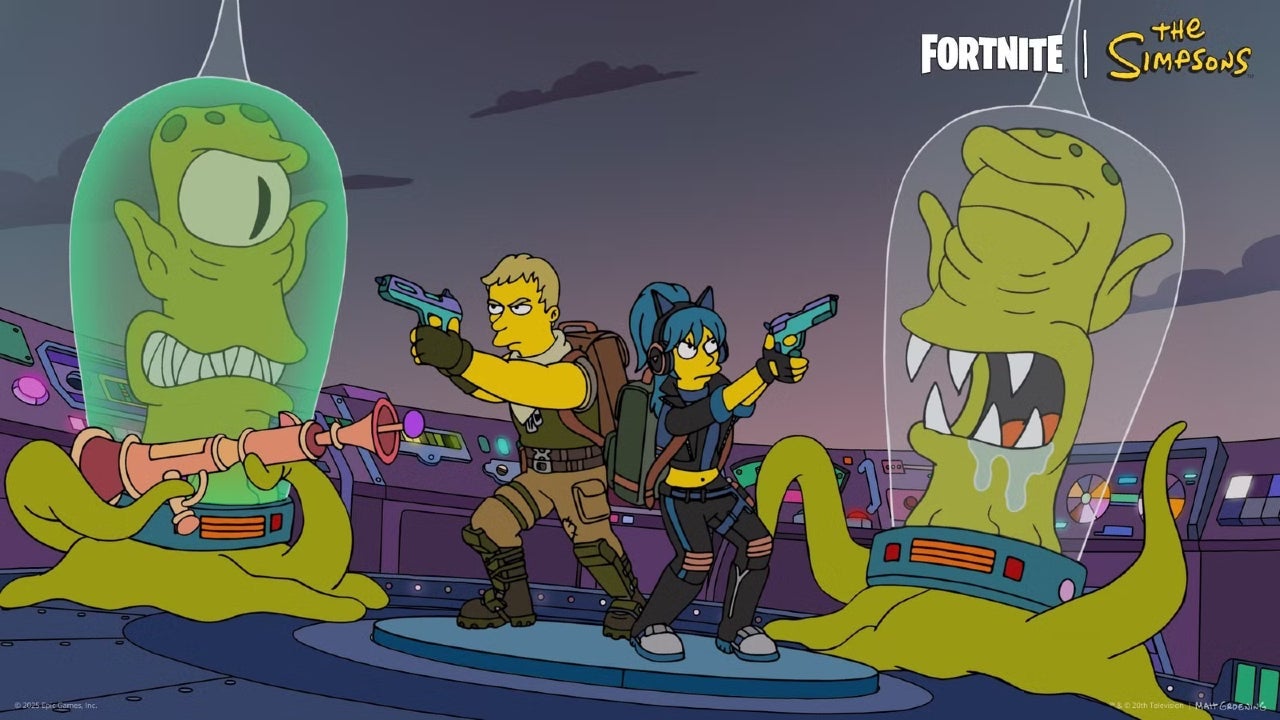
The Simpsons have released the first short of a series of four dedicated to the crossover with Fortnite, available on Disney Plus. This event coincides with the transformation of the Fortnite island into Springfield Island, where iconic locations such as Moe’s Tavern, Krusty Burger, and the Power Plant have been incorporated, offering fans the opportunity to explore a new facet of the Simpsons universe. More lore than many plots of The Simpsons The first short, titled Apocalypse D’oh, features the iconic characters Kang and Kodos facing off against some of the heroes of Fortnite, such as […]
The Simpsons have released the first short of a series of four dedicated to the crossover with Fortnite, available on Disney Plus. This event coincides with the transformation of the Fortnite island into Springfield Island, where iconic locations such as Moe’s Tavern, Krusty Burger, and the Power Plant have been incorporated, giving fans the opportunity to explore a new facet of the Simpsons universe.
More lore than many plots of The Simpsons
The first short, titled Apocalypse D’oh, features the iconic characters Kang and Kodos facing off against some of the heroes from Fortnite, such as Jonesy, Hope, and Fishstick, who, true to his name, is turned into actual fishsticks during the narrative. The story unfolds after an incident inside a wormhole involving a fragment of a Zero Point Shard, referencing previous crossover events, including those from Marvel.
These narrative shorts will be released weekly every Monday throughout November, where more details will be revealed about how The Simpsons were introduced into this world full of Battles and Victories. Additionally, the crossover includes a classic couch gag from the series, where the Fortnite character, Peely, is transformed into a banana split, adding a dose of characteristic humor.
The narrative of Apocalypse D’oh also offers meta commentary on the crossing of realities, mentioning other crossover events from Fortnite, such as collaborations with DC and Star Wars. This creative approach not only entertains but also reflects the evolving nature of entertainment through bold and original collaborations.
This crossover between The Simpsons and Fortnite reinforces the legacy of both franchises as leaders in entertainment, promising new experiences for fans of both communities. For more information about the event and other releases, you can check the season guide of The Simpsons in Fortnite.
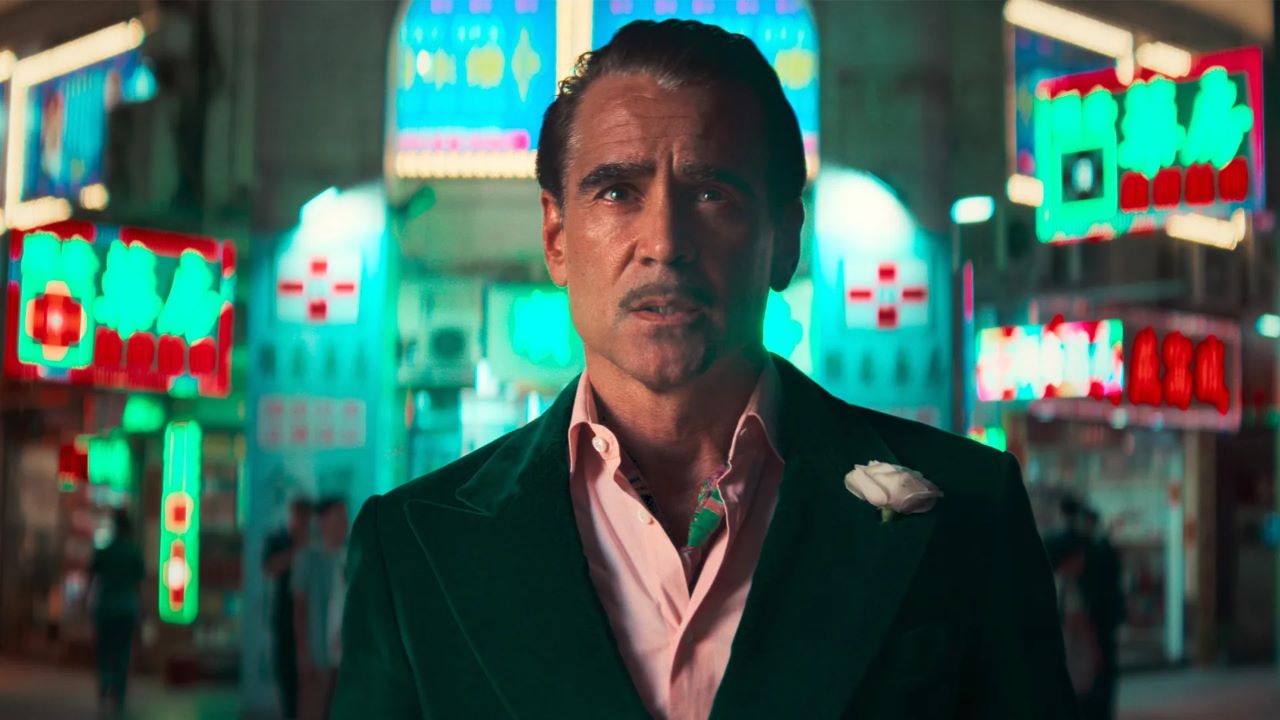
The new film by Edward Berger, Bad Luck, premiered on October 30 on Netflix and is quickly capturing the audience’s attention. Starring Colin Farrell, who plays Lord Doyle, a British gambler beset by debts, the film is a thriller that explores the complex relationship between gambling, guilt, and the quest for redemption. A Colin Farrell in a state of grace In this story, Farrell embodies a con artist who moves between extreme luxury and the despair brought on by his addiction. The dazzling casino scenes contrast with the mental deterioration and […]
The new film by Edward Berger, Bad Luck, premiered on October 30 on Netflix and is quickly capturing the audience’s attention. Starring Colin Farrell as Lord Doyle, a British gambler beset by debts, the film is a thriller that explores the complex relationship between gambling, guilt, and the quest for redemption.
A Colin Farrell in a state of grace
In this story, Farrell embodies a con artist who moves between extreme luxury and the despair brought on by his addiction. The dazzling casino scenes contrast with the mental and emotional deterioration of his character, reflecting an oppressive atmosphere similar to Berger’s proposals in All Quiet on the Western Front. This visual duality is accompanied by vibrant photography that transforms each environment into a space where splendor hides loneliness and misery.
The plot thickens when Lord Doyle meets Dao Ming, played by Fala Chen, a hotel employee who, despite their apparent differences, shares a deep connection with him. This human encounter provides a necessary counterpoint amid his struggle against chaos. Additionally, Tilda Swinton appears as Cynthia Blithe, an enigmatic woman who pursues Doyle for reasons that remain shrouded in mystery.
Through a changing rhythm, Berger establishes a narrative where Farrell’s arrogance and vulnerability intertwine, offering a remarkable performance that sustains the storyline, even in moments of dreamlike ambiguity. With Bad Luck, the director continues to explore worlds where the desire to escape confronts the harsh reality of personal failure, thus consolidating his aesthetic ambition in this intense thriller.
The reboot of Charlie’s Angels has established itself as an iconic film that blends action, humor, and feminist themes, although it is not without controversies. The movie features Natalie (Cameron Diaz), Dylan (Drew Barrymore), and Alex (Lucy Liu), three private detectives who carry out espionage missions that challenge the expectations of a conventional narrative. Since its release, it has been recognized for its bold representation of action heroines, anticipating the arrival of strong female characters in contemporary cinema. A more progressive film than it is given credit for Despite its progressive approach, […]
The reboot of Charlie’s Angels has established itself as an iconic film that blends action, humor, and feminist themes, although it is not without controversies. The film features Natalie (Cameron Diaz), Dylan (Drew Barrymore), and Alex (Lucy Liu), three private detectives who undertake espionage missions that challenge the expectations of a conventional narrative. Since its release, it has been recognized for its bold representation of action heroines, anticipating the arrival of strong female characters in contemporary cinema.
A more progressive movie than it is given credit for
Despite its progressive approach, Charlie’s Angels has been criticized for its tempting objectification and cultural appropriation. Although the film integrates moments that appeal to the male gaze, there is a self-awareness that is felt in its execution and in the friendship dynamics it portrays among the protagonists. Director Joseph McGinty Nichol described the film as “champagne cinema,” giving it a distinctive and explosive visual style that makes it stand out in its time.
Drew Barrymore, who also produced the film, played a key role in shaping its contemporary vision and in the casting selection. In her own words, she sought to update Charlie’s Angels for a new audience, highlighting her focus on friendship and female empowerment. “It was a big movie for [Sony] at that time,” Barrymore commented. “We had to make them understand how to see the world and choose the director.” This initiative helped create a film that, although it has aged with some issues, is still remembered as a cultural reference.
With its fusion of action and humor, Charlie’s Angels stands as a product of its time, reflecting the essence of the 2000s and reminding us of an era when action heroines began to conquer cinema more prominently. Despite its flaws, its legacy endures, leaving a clear mark on the film industry and especially on the action genre. And to see for yourself, you can watch the movie on Apple TV+.
La esperada lanzamiento de Arc Raiders ha generado una ola de emoción y frustración entre los jugadores. Según informes, el juego multijugador alcanzó más de 260,000 jugadores concurrentes en Steam, con un impresionante pico de 337,834 jugadores, destacándose como un notable éxito para Embark Studios, justo en su segundo lanzamiento. Sin embargo, esto … Continúa leyendo “”
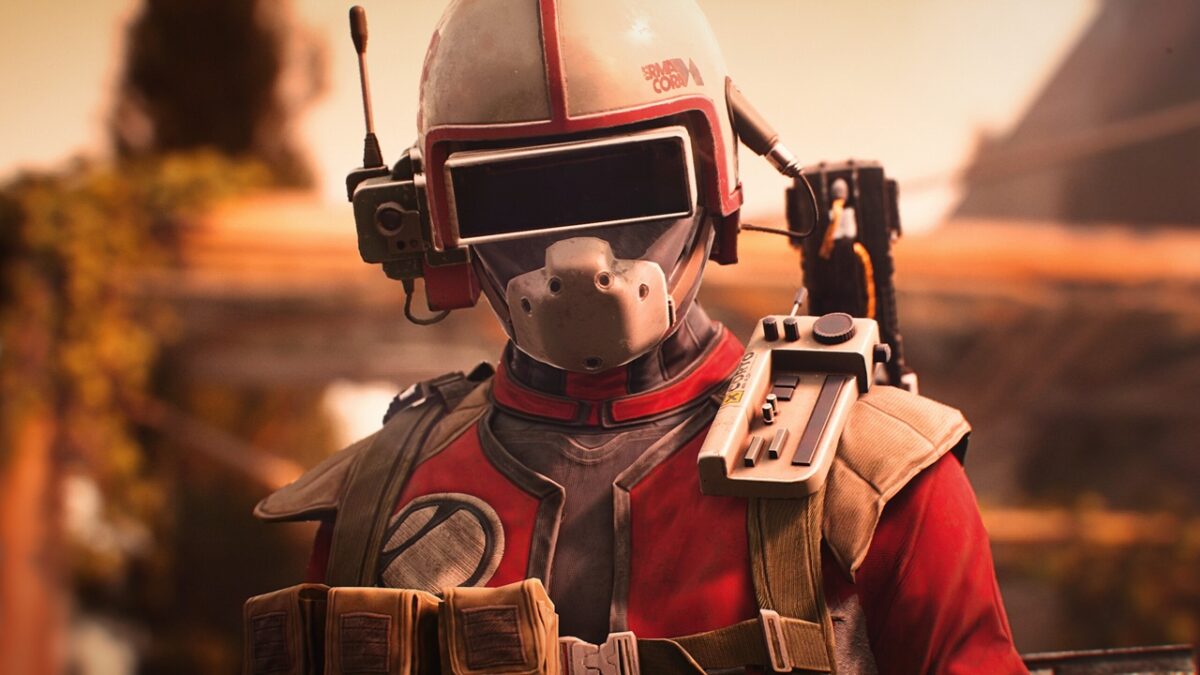
The highly anticipated launch of Arc Raiders has brought a wave of excitement and frustration among players. According to reports, the multiplayer game reached over 260,000 concurrent players on Steam, with an impressive peak of 337,834 players, standing out as a remarkable success for Embark Studios, just in its second release. However, this massive demand overwhelmed the server infrastructure, leading many enthusiasts to be locked out of the game during the first weekend.
Working against the clock to make it possible to play
El domingo 2 de noviembre, los jugadores comenzaron a reportar problemas de acceso debido a un colapso generalizado del sistema. Ante esta situación, Embark Studios ha estado trabajando arduamente en soluciones, implementando una cola de inicio de sesión como medida temporal para mitigar los problemas relacionados con la formación de grupos y el uso de canales de voz. A pesar de los desafíos, la empresa se esfuerza por mejorar la experiencia de sus usuarios, reconociendo que un lanzamiento exitoso requiere una infraestructura adecuada y preparación para picos de demanda.
Con una combinación de experiencia proveniente de antiguos desarrolladores de franquicias exitosas como Battlefield y Star Wars: Battlefront, los creadores de Arc Raiders tienen una sólida comprensión de la gestión de lanzamientos. Sin embargo, el contraste de un precio de $40 con su título anterior, The Finals, que era gratuito, puede haber generado preocupaciones adicionales sobre la capacidad de retener jugadores.
As Embark Studios works on recovery, the Arc Raiders roadmap also brings good news for fans. The arrival of a new map, Stella Montis, expanded missions, two new Arcs scheduled for November, and a Raider Deck battle pass set to launch in December are confirmed. Interested players must be patient while server issues are resolved, ensuring they will soon be able to join the battle.
More than 10.5 million individuals were affected by a significant data breach at Conduent Business Services, an incident that has highlighted the growing concern over cybersecurity in the business sector. The leak, which occurred in 2024, has underscored the magnitude of the problem, prompting a wave of criticism towards the company’s data security practices. One of the largest breaches in business history. Notifications to customers about this incident were issued in October 2025, leaving many users in a state of uncertainty regarding protection […]
More than 10.5 million individuals were affected by a significant data breach at Conduent Business Services, an incident that has highlighted the growing concern over cybersecurity in the business sector. The leak, which occurred in 2024, has underscored the magnitude of the problem, provoking a wave of criticism towards the company’s data security practices.
One of the largest gaps in business history
Notifications to customers about this incident were issued in October 2025, leaving many users in a state of uncertainty regarding the protection of their personal information. The repercussions of this breach are not only limited to the exposure of sensitive data, but also generate widespread distrust towards companies that manage critical information.
The incident has caught the attention of cybersecurity experts, who warn that the number of data breaches continues to rise. The situation underscores the urgency for companies to implement more robust security measures to prevent similar events from occurring in the future. Lax data handling practices can result not only in financial damage but also in a lasting impact on the reputation of the companies involved.
The scandal has sparked a broader debate about the responsibility of organizations towards their customers regarding cybersecurity. With a significant number of people affected, the need for stricter regulation seems to be on the agenda, prompting lawmakers to consider new laws that protect consumers’ personal information. While the current situation is alarming, it may initiate a necessary conversation about data protection in an increasingly digitalized world.
Released in 1999, Any Given Sunday has established itself as a milestone in sports cinema, marking a turning point with its bold and critical approach. Directed by Oliver Stone, known for his ability to explore themes of power and ambition, the film frantically blends action with personal drama, reflecting on the impact of capitalism on sports. A film about the values of modern society In this film, Al Pacino plays Tony D’Amato, a struggling coach trying to keep the Miami Sharks afloat, a team that longs for better times […]
Released in 1999, Any Given Sunday has established itself as a milestone in sports cinema, marking a turning point with its bold and critical approach. Directed by Oliver Stone, known for his ability to explore themes of power and ambition, the film frantically blends action with personal drama, reflecting on the impact of capitalism on sports.
A movie about the values of modern society
In this film, Al Pacino plays Tony D’Amato, a struggling coach trying to keep the Miami Sharks afloat, a team that longs for glory days in a league dominated by marketing and corruption. Cameron Diaz’s portrayal as the team owner symbolizes the new era of sports entertainment, while Jamie Foxx embodies the modern player, bringing a contemporary perspective to the central conflict of the narrative.
Stone, who has always seen sports as a reflection of war, turns the playing field into a true battlefield. Each match presents a struggle for survival not only physical but also moral, where human values are constantly compromised. The intense atmosphere is achieved through innovative cinematic techniques, with quick cuts that transform the scenes into an almost warlike experience, where the sound of cheers intertwines with explosions.
Over time, Any Sunday has been reevaluated and considered a modern classic. What was criticized at its premiere for being excessive is now celebrated as one of the most authentic and passionate representations of professional sports. Through its harsh critique of capitalism and masculinity, the film offers a deep analysis that resonates more than ever today. It is available on Movistar Plus+.
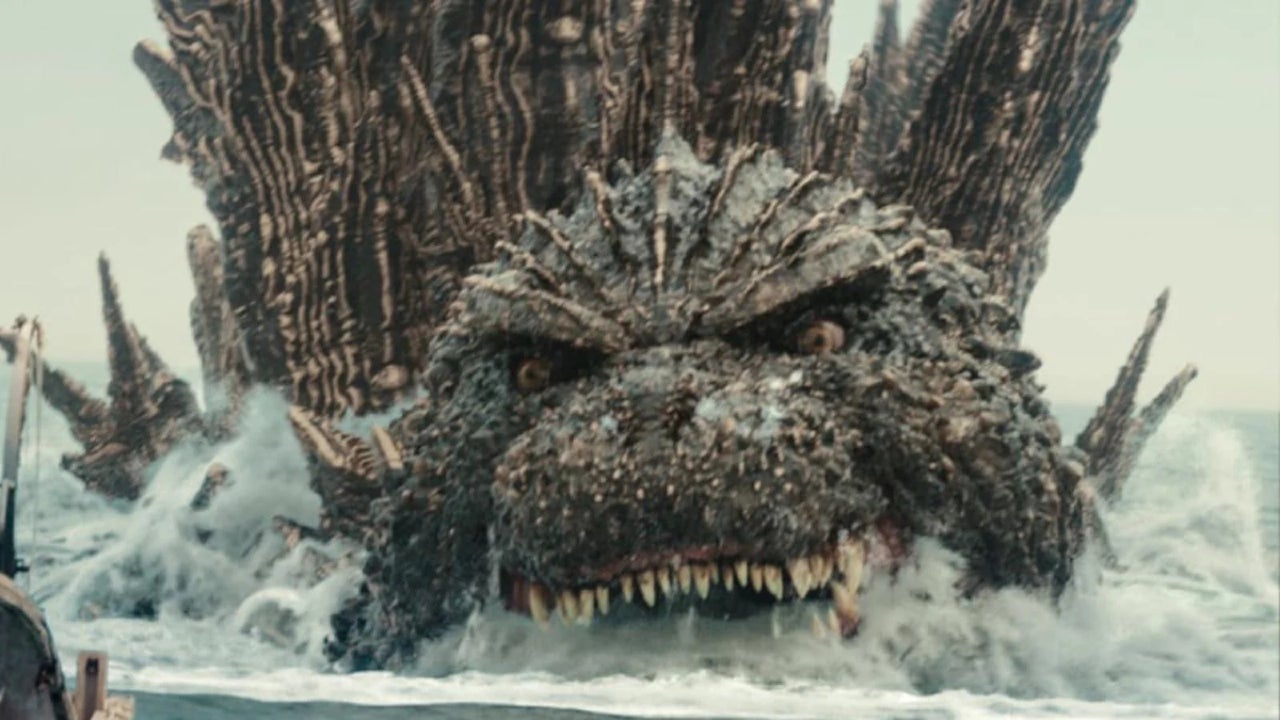
Toho has officially revealed the title of its upcoming Godzilla movie: Godzilla -0.0 (Godzilla Minus Zero). The news was announced during the annual Godzilla Fest held in Tokyo, an event that attracts fans from various generations and where updates about one of the most iconic film franchises are shared. The confirmation of this title was also published on Toho’s official Twitter account, generating great anticipation among followers. The director of Godzilla Minus One returns The direction of Godzilla -0.0 will be handled by Yamazaki Takashi, who will also be responsible for the writing […]
Toho has officially revealed the title of its upcoming Godzilla movie: Godzilla -0.0 (Godzilla Minus Zero). The news was announced during the annual Godzilla Fest held in Tokyo, an event that attracts fans from various generations and where updates about one of the most iconic film franchises are shared. The confirmation of this title was also published on Toho’s official Twitter account, generating great anticipation among followers.
The live broadcast of Godzilla Minus One returns
The direction of Godzilla -0.0 will be handled by Yamazaki Takashi, who will also be responsible for writing and supervising the visual effects. This dual role of the director is a hallmark of his career, where he has demonstrated his ability to merge intense narratives with innovative visual technology. The visual effects, which play a crucial role in the representation of the monster and its environment, will be managed by Shirogumi, known for its work in creating high-quality visual effects in various film productions.
The anticipation for Godzilla -0.0 is growing not only among fans of the saga but also in the realm of action and fantasy cinema. This is because each installment of the saga has brought something new and exciting, and this one does not seem to be the exception. Although few details about the plot have been revealed, rumors suggest that it could explore new facets of the iconic monster and its relationship with humanity, a recurring theme in various adaptations that many fans hope will be addressed in an innovative way.
As the release date approaches, Godzilla fans will be on the lookout for more updates and details about what promises to be another exciting chapter in the rich history of the King of Monsters.