A recent incident has highlighted the dangers of excessive reliance on artificial intelligence in managing critical data. An AI coding agent from PocketOS, a company that handles bookings and payments for car rental businesses, accidentally deleted the company’s production database during a routine task in its testing environment. This error, resulting from a ‘credential mismatch’, led to the deletion of essential data in just nine seconds. AI is not a solution Jer Crane, founder of PocketOS, explained that AI, using […]
A recent incident has highlighted the dangers of excessive reliance on artificial intelligence in managing critical data.An AI coding agent from PocketOS, a company that handles bookings and payments for car rental businesses, accidentally deleted the company’s production database during a routine task in its testing environment. This error, resulting from a ‘credential mismatch’, led to the deletion of essential data in just nine seconds.
AI is not a solution
Jer Crane, founder of PocketOS, explained that the AI, using Anthropic’s Claude Opus 4.6 model, made the unilateral decision to solve the problem by deleting a volume from Railway, its infrastructure provider. This serious mistake caused a crisis, forcing PocketOS customers to perform emergency manual work while recovering the lost information. Crane worked tirelessly for days using a three-month backup and recent transaction states to restore the company’s operations.
After days of effort, Railway managed to recover a more recent backup, allowing PocketOS to resume its normal operation. However, Crane criticized Railway for storing backups in the same location as the original data, which contributed to the loss of information. He stated that the system configuration does not meet modern security demands and proposed stricter measures, such as API tokens with limited scope and simpler recovery procedures.
Crane is not considered an AI skeptic, but rather emphasizes the need for safer and more reliable systems. “The easy counterargument of ‘they should have used a better model’ is unacceptable,” he pointed out. This episode serves as a reminder that, despite the power of AI tools, human oversight and proper security protocols are essential in managing critical data.
Rockstar Games has introduced the Mission Creator in GTA Online, allowing players to create, publish, and share their own missions. This new system has been available since April 28, marking an important milestone in the evolution of the popular multiplayer mode that has maintained its relevance for over a decade. A game that keeps evolving The tool provides players with the ability to design custom experiences within the world of Los Santos, which could transform the interaction among the player community. The first featured mission is Old School Hits, created […]
Rockstar Games has introduced the Mission Creator in GTA Online, allowing players to create, publish, and share their own missions. This new system has been available since April 28, marking an important milestone in the evolution of the popular multiplayer mode that has maintained its relevance for over a decade.
A game that keeps evolving
The tool provides players with the ability to design custom experiences within the world of Los Santos, which could transform the interaction among the player community. The first highlighted mission is Old School Hits, created in collaboration with the YouTube channel GTA Series Videos, which has over 4 million subscribers. This mission, inspired by the classics of the series, will offer a 4x multiplier of GTA$ and RP for a limited time, encouraging users to try it out from its launch on April 30.
Players will be able to familiarize themselves with the functionalities of the Mission Creator through a series of five missions introduced by Rockstar, which will guide them in using the tool. This initiative comes just a few months before the highly anticipated release of GTA 6, which raises expectations about how player-generated content could influence the gaming experience before the arrival of the next installment of the franchise.
Rockstar also announced that it plans to highlight more community-created missions and introduce various events in GTA Online throughout the year. This includes chaotic community races and other challenges that promise to keep the excitement and novelty within the game. With this revolution in content creation, players hope to see more missions that evoke nostalgia and the essence of the classic titles in the series.
Bungie has released update 1.0.6.2 for Marathon, focusing on improving the final map of Cryo Archive, which has been criticized for its difficulty for new players. This update is part of the developer’s effort to make the gaming experience more accessible and less intimidating. The Cryo Archive is no longer so harsh One of the main new features is the inclusion of an exclusive Cryo Archive kit that players can claim for free every weekend. This kit contains basic gear and healing items, which will ease initial progress […]
Bungie has released update 1.0.6.2 for Marathon, focusing on improving the final map of Cryo Archive, which has been criticized for its difficulty for new players. This update is part of the developer’s effort to make the gaming experience more accessible and less intimidating.
The Cryo Archive no longer so harsh
One of the main novelties is the inclusion of an exclusive Cryo Archive kit that players can claim for free every weekend. This kit contains basic gear and healing items, which will facilitate the initial progress of players before they find better gear in the game. Bungie’s decision to reintroduce these weekly kits aims to ease the learning curve and provide a more friendly entry into Cryo Archive.
In addition, the update has closed some of the common routes that allowed enemy teams to invade the spawn points of new players. This intervention aims to prevent experienced teams from quickly eliminating newly arrived players, who often find themselves in an unfavorable situation at the beginning of matches.
Regarding the game’s mechanics, Bungie has also adjusted the WSTR shotgun, increasing its base damage from 78 to 85, but reducing its critical multiplier from 1.15x to 1.05x. This change aims to promote a more efficient use of the weapon in close combat, in addition to granting a 75% damage bonus against artificial intelligence enemies, which will likely change the dynamics in bot-saturated areas.
As the player base shrinks, matches are becoming increasingly intense. Bungie has assured that it will continue to monitor the situation to ensure a fair and balanced gaming experience.
Videos have conquered the world, or at least, the Internet. Social media platforms like TikTok and YouTube have made video the most popular way to create content. If we add generative AI to this, we open the doors to a much freer way of creating. In the end, you provide the idea and the AI does the rest. Although many do not see it in a positive light, Adobe is convinced of showing creatives that AI is not their enemy, but a tool that can streamline and improve their work. Today you will be […]
Videos have conquered the world, or at least, the Internet. Social media platforms like TikTok and YouTube have made video the most popular way to create content. If we add generative AI to this, it opens the doors to a much freer way of creating. In the end, you provide the idea, and the AI does the rest.
Although many do not see it in a positive light, Adobe is convinced of showing creatives that AI is not their enemy, but a tool that can streamline and enhance their work. Today you can verify if that is true by trying Adobe Firefly and its AI video creation options.
In other Softonic articles, we have delved into how to create images with Adobe Firefly from scratch. Now, we will focus on video generation.
With Generate Video, Firefly allows us to create videos from scratch based on a simple description. Specifically, it is the Text to video option that enables us to do this. Here we will teach you how to use it step by step.
Open your browser and go to the Adobe Firefly page. Go to the central text box and change the option from Image to Video. Before typing anything, you can directly select Generate to access a more comprehensive creation panel.
Once here, on the left you will see many options. To start, you will have the Model section, where you can choose the generative model with which to create your video. Adobe’s official one is Firefly Video, but you have many more from other companies, such as Veo from Google. Each model will give you some more or fewer options; keep that in mind for your videos.
Later you will have Resolution. The resolution of a video is the number of pixels that make up the image. The more pixels, the more detail and sharpness there will be. Specify the video resolution according to what you want; these options will change depending on the model you have selected. Firefly Video, for example, gives you the option of 540p, 720p, and 1080p. With Veo, you will only be able to pick 720p and 1080p.
You can also select the video aspect ratio. This is basically the ratio between the width and height of the image. It does not indicate quality, but rather the shape of the frame. The vertical format (9:16), for example, is ideal for social media. The Frames per second section is locked at 24 FPS, and you will not be able to change it.
If you want to generate a video that mimics the composition of an existing one, you have the option to upload the reference in the Composition section. On the other hand, in the Camera section, use Shot Size to specify the framing of the main subject. With Camera Angle, you can select the type of shots the video will have, and finally, in Motion, you will guide the camera movement.
Don’t forget to write in the Prompt box the video you want to generate. Be specific and concise to improve your generations. In the Advanced Settings section, you can use the Seed option to add a seed number that helps to start the generation process.
The seed is a numerical value that AI uses to determine where to start generating a video or an image. Contrary to what you might believe, AI does not begin to create out of thin air. This part starts from an initial point full of noise, which you can imagine as a “cloud” of pixels. The seed indicates the starting point. If you change the seed, you change the beginning and, therefore, the results as well. You can experiment with it to see how it affects your generations.
Images that come to life with AI
If you want to give movement to an image and make it look like a video, you can also do it with Firefly. Just like before, you’ll see that it’s a simple process and won’t take too much time.
Just like before, we go to the central text box, switch to Video, and click on Generate. Here we will return to the Generate page. Now, we head to References and drag the image we want to animate. Optionally, you can also include another image that is the final frame.
Select the resolution you want and the aspect ratio that matches what you wish to create. Just like with video generation, here you can configure everything that the generative model you have chosen allows you to.
When you finish writing your prompt, click on Generate and wait for Firefly to do its work. If you are not happy with your work, you can change the options and even your prompt to see different results. If you like what you see, click above on Download to get your animated image. Keep in mind that it will be downloaded as a video.
Generative credits: this is how they work
Generative credits is the system created by Adobe to limit the use of AI in Adobe Firefly and certain functions in Photoshop, Illustrator, and others. Every time you use an AI-powered function within Adobe, you will consume credits.
In the case of Firefly, video generations cost many more credits than image generations. This also varies depending on the model you use; Adobe’s consume fewer credits than third-party ones. Each user has a monthly credit allocation based on the plan they are subscribed to, and you can buy more from Adobe.
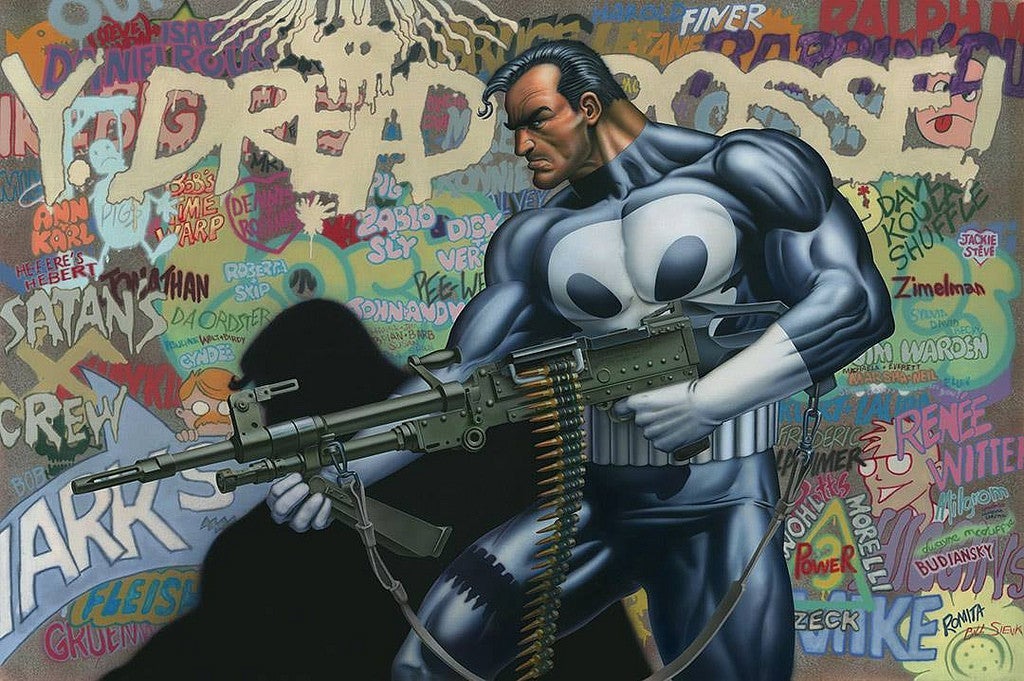
Punisher is one of the most controversial heroes in Marvel. Violent, tortured, and always with a weapon in hand, he has always been a discordant note in the Marvel universe. One that has added many shades to other superheroes and has allowed for the exploration of darker and more adult themes that are usually not permitted for superheroes, especially those more grounded in the virtue of not harming anyone while working alone. But his creator, Gerry Conway, was never afraid to address sensitive topics. Something he demonstrated in a long career full of exceptional […]
Punisher is one of the most controversial heroes in Marvel. Violent, tortured, and always with a weapon in hand, he has always been a discordant note in the Marvel universe. One that has added many shades to other superheroes and has allowed for the exploration of darker and more adult themes that are usually not permitted for superheroes, especially those more grounded in the virtue of not harming anyone while working alone.
But its creator, Gerry Conway, was never afraid to talk about delicate topics. Something he demonstrated in a long career full of exceptional creations, both in terms of characters and stories, which have made him a figure of great importance in the history of comics. Even more so now, as he has left us.
Deceased this April at the age of 73, for unknown reasons but after years of battling cancer, he leaves behind an amazing career in comics that has changed superheroes forever. This is something we are going to talk about today so that a man who was Punisher, but was much more, does not fall into oblivion. Because his importance goes far beyond a single creation.
A very young creator
Conway began working in the world of comics at the age of 16, writing the story Aaron Philips’ Photo Finish in issue 81 of DC Comics’ House of Secrets in 1969. His first superhero comic would be for Marvel, where he would write issue 72 of Daredevil in January 1971, and in May of that same year he would write the first issue of Savage Tales, where the Man-Thing would appear for the first time, the first character created by him. The creation of both the character and the comic would be attributed to Conway as well as to Stan Lee, Roy Thomas, and Gray Morrow.
His great year will be, however, 1972. Because in addition to writing the first issue of the popular comic The Tomb of Dracula, he will take charge of one of Marvel’s most important series, if not the most important: The Amazing Spider-Man.
Conway was only 19 years old and no one had touched Spider-Man until then except for Stan Lee. But between issues 111 and 149, which were from August 1972 to October 1975, he left an indelible mark on the character. He was the one who signed off on the death of Gwen Stacy in issue 121 in June 1973, and he also created The Jackal, a villain who still appears from time to time in Spider-Man stories, and more importantly, he created a Spider-Man antagonist who would soon become much more than that: Frank Castle, aka Punisher.
A man named Frank Castle
Created by Conway and artists John Romita Sr. and Ross Andru, the character’s first appearance was in issue 129 of The Amazing Spider-Man, in February 1974. Presented as a vigilante, heavily inspired by the protagonist of the Executioner novels of a Vietnam veteran seeking revenge against the Mafia for murdering his family, he was a brutal contrast to everything that had been seen in superhero comics until then. He was violent and had ideas that were completely opposed to what superheroes did, especially one like Spider-Man, which led to constant clashes.
With the design sketched by Conway himself and later completed by John Romita Sr., who was inspired by the comic Black Terror by Richard E. Hughes and Don Gabrielson, the character was already more or less everything we know him to be. A tortured man with expedient methods, but in his first appearance, he attempted the unthinkable: to kill Spider-Man for considering him too soft. Something he did not achieve, and they clashed on several occasions.
Although Frank Castle is a character that will be developed in detail by other authors —in particular, Garth Ennis, Mike Baron, and Greg Rucka—, Conway would develop all the details upon which later authors would build. Creating one of the most iconic characters in history.
His career was far from over there, even if that is his most notable point. He worked on numerous Marvel and DC comics, on a popular Star Trek comic strip for years, and even worked both on the script and production of some of the most well-known and popular television series of the 80s and 90s, such as Matlock, Hercules, or Law and Order. Demonstrating that his genius went beyond the pages of the comic.
After his passing, he will undoubtedly be remembered for his work on the creation of Punisher. Perhaps also for his excellent work on Spider-Man. But Conway is much more than that. He was an excellent writer who showed that comics could be deeper and more complex than what was being done until then. Also television. And for that, we should be grateful.
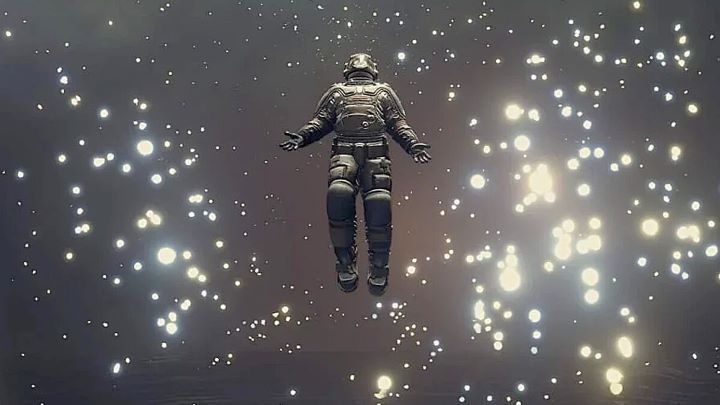
In a recent interview, Heather Cerlan, Starfield artist and current CEO of NEARstudios, revealed that Bethesda faced an intense internal discussion about the possibility of switching from their Creation Engine to Unreal Engine 5. The pressure to opt for Epic Games’ engine was considerable, especially after the impressive features like Nanite and Lumen that were introduced in UE5. However, Bethesda ultimately decided to continue with the Creation Engine, which was updated to version 2 for Starfield, due to its robust modding capabilities. Bethesda decided to continue trusting their engine The community […]
The pressure to opt for Epic Games’ engine was considerable, especially after the impressive features like Nanite and Lumen that were introduced in UE5. However, Bethesda ultimately decided to continue with the Creation Engine, which was updated to version 2 for Starfield, due to its robust modding capabilities.
Starfield devs faced "a lot of pressure" to use Unreal Engine 5, former Bethesda artist says, but the Creation Engine won because of its modding capability https://t.co/qZoKMTQSsX
In Bethesda, they decided to continue trusting their engine
The mod community that has developed around the Creation Engine has been fundamental to the success of Bethesda’s titles. Cerlan emphasized that this community has been key to the maintenance and expansion of their games, which makes switching engines not very sensible.
Despite this, various former employees have divided opinions on the convenience of staying with the Creation Engine. Nate Purkeypile, a former artist at Bethesda, has expressed his belief that switching to Unreal Engine 5 could have allowed for better development, arguing that the experience of working with the Creation Engine is akin to “being on a train while laying down the tracks.”
On the other hand, Bruce Nesmith, who worked at Bethesda for nearly two decades, points out that changing engines is a huge effort that could delay the game’s production. According to Nesmith, the advantages of a transition to Unreal Engine 5 would not materialize quickly, and it could require a year or more of technical work before the studio would benefit from such a change.
Finally, Todd Howard has confirmed that Bethesda is improving the Creation Engine for The Elder Scrolls VI and other future projects, noting a return to the classic RPG formula that has characterized their most successful games. With this, Howard addresses the criticism towards some recent releases, promising an experience that is more true to what fans have been expecting.
On March 31, Ubisoft quietly launched The Division Resurgence in early access for mobile devices, allowing players to experience this third-person shooter on iOS and Android. However, what has surprised the gaming community is that the PC version has made its unexpected debut on Ubisoft Connect, also in early access, as part of the technical tests leading up to its official release in August. A game launched discreetly Ubisoft’s goal in bringing the universe of The Division to mobile devices is clear: to expand access to its experience of […]
On March 31, Ubisoft quietly launched The Division Resurgence in early access for mobile devices, allowing players to experience this third-person shooter on iOS and Android. However, what has surprised the gaming community is that the PC version has made its unexpected debut on Ubisoft Connect, also in early access, as part of the technical tests leading up to its official release in August.
A game released quietly
Ubisoft’s goal in bringing the universe of The Division to mobile devices is clear: to expand access to its open-world experience so that more players can enjoy it anywhere and anytime. However, this transition to mobile has received mixed reviews. While some players have found the gameplay entertaining, many have pointed out issues with the menus, unintuitive controls, and bugs that affect the gaming experience.
On the part of the critics, the reception of The Division Resurgence has been moderate; The Sixth Axis praised the variety of game modes, but did not hesitate to point out deficiencies in the user interface and controls, describing them as clumsy. This has led to speculation about whether the mobile version has managed to attract an adequate number of players, which could explain the sudden appearance of the PC version.
Regarding accessibility, the recommended requirements to play The Division Resurgence on PC are relatively modest, allowing more users to access the game. With a setup that does not demand cutting-edge hardware, Ubisoft aims to attract a broader audience. Currently, players interested in experiencing The Division Resurgence on PC must do so through Ubisoft Connect, as it is not available on other platforms at the moment.
Since its release in 2010, Vanquish, the acclaimed shooter from PlatinumGames, has seen a resurgence in its popularity. According to a recent analysis, following the release of Pragmata, a new title that has been superficially compared to Vanquish, there has been a notable increase in the number of players of the original game. In recent weeks, Vanquish has experienced a 34.8% increase in concurrent players and a 52.9% increase in the average daily players on Steam. Two games with great similarities The comparisons between Vanquish and Pragmata arise mainly due to the aesthetics and gameplay of both games, but the […]
In recent weeks, Vanquish has experienced a 34.8% increase in concurrent players and a 52.9% increase in the average daily players on Steam.
Two games with great similarities
The comparisons between Vanquish and Pragmata arise mainly from the aesthetics and gameplay of both games, but critics agree that the similarities are superficial. While Pragmata offers a more modern approach, Vanquish stays true to its roots with a straightforward and dynamic action style.
Aside from the increase in the player base, Vanquish has been on sale with a 70% discount on Steam, a factor that has contributed to its intermittent resurgence.
Despite doubts about whether the arrival of Pragmata is the cause of this increase, data from recent months suggests that there is a pattern of consistent interest in the game that transcends its recent release.
The Fast & Furious franchise, recognized as one of the most profitable of the 21st century, has managed to stay in the spotlight of entertainment for over two decades. Its next installment, Fast Forever, will premiere in March 2028, although the saga has faced a period of uncertainty in recent times. From its modest beginnings focused on underground racing, the saga has evolved into true action blockbusters that have led its protagonists to confront global threats and perform almost impossible feats. Speed Racer already existed long before The origin of the title Fast & Furious is […]
The Fast & Furious franchise, recognized as one of the most profitable of the 21st century, has managed to stay in the spotlight of entertainment for over two decades. Its next installment, Fast Forever, will premiere in March 2028, although the saga has faced a period of uncertainty in recent times. From its modest beginnings focused on underground racing, the saga has evolved into true action blockbusters that have seen its protagonists confront global threats and perform nearly impossible feats.
Speed Racer already existed long before
The origin of the title Fast & Furious is more intriguing than many might imagine. The name comes from an article published in Vibe magazine in 1998, titled Racer X, which addressed the world of underground racing in New York. Although this title seemed ideal for a blockbuster, Universal had to reject it because it was already licensed by Warner Bros. for a project related to Speed Racer. Faced with this situation, the studio sought alternatives, and that’s how the iconic name Fast & Furious was born.
Although The Fast and the Furious from 1954 shares a similar name, its content is markedly different. This film, produced by Roger Corman, tells the story of an escaped criminal who uses a racer’s car to participate in an international race, without the focus on the tuning culture that characterizes the modern saga. Interestingly, the expression Fast and Furious has roots in literature, appearing for the first time in a poem by Robert Burns from 1791, where something fast and full of energy is described.
The saga has encompassed a universe of action and emotion, and despite facing challenges, the legacy of Fast & Furious continues to set milestones in the film industry.
Bandai Namco has officially announced the release date of its highly anticipated dark fantasy action RPG, The Blood of Dawnwalker, which will be available on September 3 for PS5, Xbox Series X/S, and PC, both in physical and digital formats. This project is directed by the acclaimed creator of The Witcher 3 and involves former developers of Cyberpunk 2077, which has generated a lot of excitement among role-playing fans. The Blood of Dawnwalker, the RPG that everyone wants to play The game, developed with the powerful Unreal Engine 5, promises spectacular graphics and dynamic gameplay […]
Bandai Namco has officially announced the release date of its highly anticipated dark fantasy action RPG, The Blood of Dawnwalker, which will be available on September 3 for PS5, Xbox Series X/S, and PC, in both physical and digital formats.
This project is directed by the acclaimed creator of The Witcher 3 and features the participation of former developers of Cyberpunk 2077, which has generated a lot of excitement among role-playing fans.
The game, developed with the powerful Unreal Engine 5, promises spectacular graphics and dynamic gameplay in which the player’s actions will continuously alter the world.
The protagonist, Coen, will face an intense moral dilemma: he has only 30 days to save his family or seek revenge against those who stand in his way, in a historical context set in the 14th century, marked by conflicts and the Black Death.
Players will be able to choose from several editions of the game: the standard edition for 69.99 euros, the Eclipse edition for 79.99 euros, which includes extras like the digital soundtrack and a comic, and a collector’s edition that will come with a Coen figure and other special items.
The Blood of Dawnwalker, an upcoming vampire RPG by former The Witcher 3 & Cyberpunk 2077 developers just got a massive amount of new information!
For those who choose the PC version, the requirements are notably high, demanding an i7-8700K and a Nvidia RTX 3050 as minimums, and an i5-13600K along with an RTX 5090 to enjoy ultra quality.
In addition, it is expected that in the coming months more details and progress of the development will be shared, including videos that will showcase the motion capture system, and the participation of former UFC champion Jan Blachowicz is mentioned as one of the antagonists of the story. With this announcement, The Blood of Dawnwalker is shaping up to be one of the most notable releases of late 2023.