Last Flag, the hero shooter with mechanics inspired by titles like Call of Duty and the classic “capture the flag” mode, has not met expectations since its release on April 14. Just two weeks after its launch, the game from Night Street Games, a studio co-founded by the lead singer of Imagine Dragons, has announced that it will cease development of new content due to its poor performance in the market. A game that has flopped on Steam With a peak of just 558 users and only a few dozen daily players, Last Flag has seen a decline […]
Last Flag, the hero shooter with mechanics inspired by titles like Call of Duty and the classic “capture the flag” mode, has not met expectations since its release on April 14. Just two weeks after its launch, the game from Night Street Games, a studio co-founded by the lead singer of Imagine Dragons, has announced that it will cease the development of new content due to its poor performance in the market.
A game that has flopped on Steam
With a peak of just 558 users and only a few dozen daily players, Last Flag has seen a dramatic decline in its community. Despite its efforts to attract more players, such as a free play period during weekends, the business model has not favored its acceptance. Unlike other current shooters that opt for a free-to-play format, Last Flag has a cost of 14.99 euros, which may have limited its access to a broader player base.
In a statement published on Steam, Night Street Games has acknowledged the financial difficulties that hinder the creation of additional content. However, the studio plans to release one last major update that will include custom lobbies, a new character, a new map, and cosmetic content. This version, still without a specific date, is expected for summer. However, there are no long-term expansion plans, and the studio has indicated that it will focus on keeping the game accessible for those who still want to enjoy it.
Despite the promotional efforts based on the popularity of Imagine Dragons, Last Flag has not captured the expected attention. The community now faces an uncertain future, hoping that the latest update will help keep the gaming experience alive through user engagement.
The Arcadion raid series in Final Fantasy XIV has captured the attention of the player community thanks to its wrestling theme and the presentation of its 12 encounters, each with its own unique identity. What sets this series apart is the development team’s decision to include an exclusive theme song for each of its fighters, a practice that is not always applied in other raids of the game that usually group several fights under the same musical theme. A theme that is quite sensual Michael-Christopher Koji Fox, responsible for localization and […]
The Arcadion raid series in Final Fantasy XIV has captured the attention of the player community thanks to its wrestling theme and the presentation of its 12 encounters, each with its own unique identity. What sets this series apart is the development team’s decision to include an exclusive theme song for each of its fighters, a practice that is not always applied in other raids of the game that usually group several fights under the same musical theme.
A very sensual topic
Michael-Christopher Koji Fox, responsible for localization and lyricist of the series, has conducted in-depth research on unconventional topics, such as BDSM, to create lyrics that reflect the essence of the characters. During a panel at the North American Fan Festival, he shared his creative process, illuminating the dedication and effort involved in crafting lyrics that are provocative yet respectful of the BDSM community, avoiding stereotypes.
Koji Fox mentioned that often, writing lyrics not only involves reviewing mission dialogues but also researching themes that are foreign to him. En the case of the fighter Vamp Fatale, whose song is one of the most prominent in the series, he classified her fighting style with visual elements ranging from bat wings to leather outfits. This fight, which highlights the more seductive and provocative side of the content, has particularly resonated with players.
The team’s focus on the diversity and uniqueness of each fight has added an extra layer of appeal to the game’s raids, leaving many eager to face these colorful characters and enjoy their unmistakable melodies. This series has not only been a success in terms of gameplay mechanics, but it has also enriched the musical experience of the title.
The ambitious open-world MMO PIONER, developed by GFA Games, managed to capture the attention of over 500,000 simultaneous players at its launch in December 2025. However, since then, its popularity has drastically declined, with user peaks barely reaching 1,100 currently. The ratings on Steam have fallen to almost 50% positive reviews, reflecting a growing discontent among the gaming community. A directionless company A recent survey revealed serious internal problems at the development studio. The investigation, published by Insider Gaming, points to accusations of non-payments, […]
The ambitious open-world MMO PIONER, developed by GFA Games, managed to capture the attention of more than 500,000 simultaneous players at its launch in December 2025. However, since then, its popularity has drastically decreased, with user peaks barely reaching 1,100 currently. Ratings on Steam have fallen to nearly 50% positive reviews, reflecting a growing discontent among the gaming community.
A company without direction
A recent survey revealed serious internal problems at the development studio. The research, published by Insider Gaming, points to accusations of unpaid wages, mismanagement, and a troubling lack of direction. Employees have reported prolonged delays in the payment of their salaries, in some cases for months, which has severely affected morale within the team. The organizational structure of GFA Games has been called into question, and the lack of a clear vision has led to constant restarts and redesigns of the project.
In addition, the investigation indicates that GFA Games’ accounts in Russia were frozen due to an unpaid debt amounting to 13 million rubles, complicating the company’s financial situation. Despite these challenges, the study has maintained an optimistic stance, assuring that they continue to work on new content and technical improvements. It also mentioned a possible expansion to consoles, although this option is still up in the air.
PIONER began its development a decade ago and was relaunched in 2021 under the direction of Aleksandr Nikitin, with the support of Tencent. However, performance and management issues have prevented the game from meeting the high expectations set by its ambitious marketing campaign. The community remains hopeful about the future of the game, while GFA Games faces criticism and an uncertain landscape.
Shigeru Miyamoto, the renowned creator of iconic franchises like Mario, Donkey Kong, and The Legend of Zelda, recently commented on the controversial entry in the series, Zelda 2: Adventure of Link. In statements to the Swedish magazine Superplay in 2003, Miyamoto describes this title as a “failure” because it did not meet the expectations generated after the success of the first game. According to the creator, the RPG experience adopted in Zelda 2, by differing from the original style, was the result of development by another team, noting that his original idea did not translate into a game […]
Shigeru Miyamoto, the renowned creator of iconic franchises such as Mario, Donkey Kong, and The Legend of Zelda, recently commented on the controversial entry in the series, Zelda 2: Adventure of Link. In statements to the Swedish magazine Superplay in 2003, Miyamoto describes this title as a “failure” because it did not meet the expectations generated after the success of the first game.
According to the creator, the RPG experience adopted in Zelda 2, which differs from the original style, was the result of development by another team, noting that their original idea did not translate into a successful game.
Zelda 2 does not have the approval seal of its creator
Miyamoto emphasizes that, after the lukewarm reception of Zelda 2, the development team was driven to return to the roots of the series. This return led to the creation of what he considers the true sequel: A Link to the Past. This title managed to encapsulate the spirit of the original and is, in turn, considered one of the best in the franchise.
Miyamoto mentions that A Link to the Past not only rescues the style of Zelda, but also lays the groundwork for future successes like Ocarina of Time and Breath of the Wild.
Additionally, in the context of the 40th anniversary of The Legend of Zelda, creators from other franchises, such as Monster Hunter and Pragmata, have praised the series, recognizing it as an inexhaustible source of inspiration for developers around the world.
In an environment where the evolution of video games is constant, the lessons learned from the “failure” of Zelda 2, according to Miyamoto, were fundamental for the series to recover and create titles that have left an indelible mark on the industry.
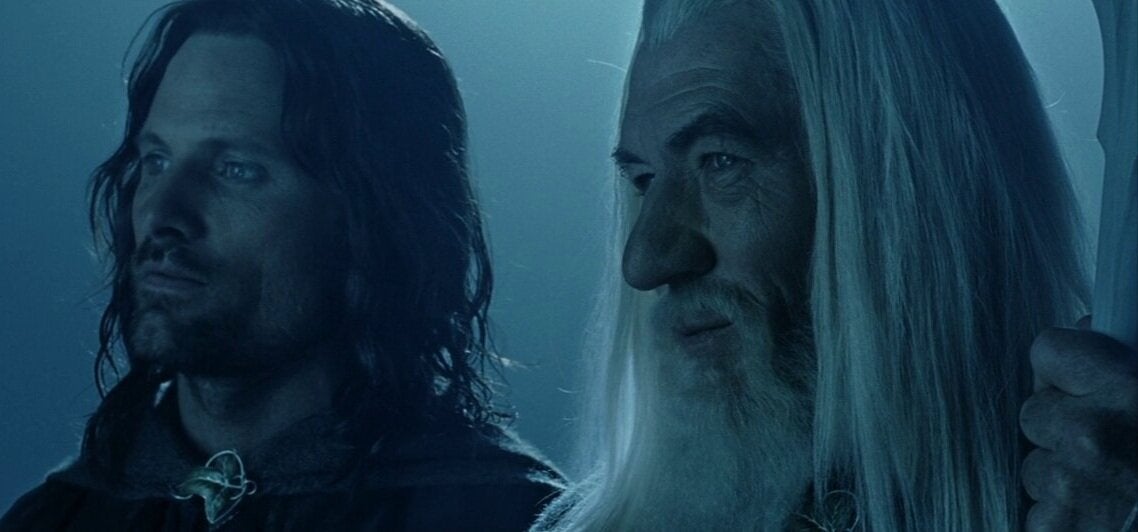
Jamie Dornan has been chosen to play Strider in the new Lord of the Rings movie titled The Hunt for Gollum. His predecessor, Viggo Mortensen, who made the role iconic in the original trilogy, will not return but has given his blessing to the new actor. The film, directed and starring Andy Serkis, follows Strider as he searches for Gollum/Sméagol before he reveals the location of the Ring to Sauron. The film is still in development The Hunt for Gollum is set in a part of the rich universe created by J.R.R. Tolkien and represents the first film of […]
The Hunt for Gollum is set in a part of the rich universe created by J.R.R. Tolkien and represents the first live-action film set in this world since The Hobbit: The Battle of the Five Armies in 2014. The story will explore the origins of Strider, a key character in the saga, highlighting his role as the leader of the Rangers of the North.
The cast also sees the return of Ian McKellen as Gandalf and Elijah Wood as Frodo, bringing a sense of continuity to the project. Additionally, new cast members have been confirmed, such as Leo Woodwall, who will play Halvard, another ranger who accompanies Strider, and Kate Winslet, who will portray a hobbit named Marigol.
The script is written by Fran Walsh and Philippa Boyens, known for their work on the previous trilogies, and the acclaimed director Peter Jackson is the producer. The film is scheduled to premiere on December 17, 2027, coinciding with the release of Avengers: Secret Wars.
This return to the cinema of the franchise promises to attract both fans of the saga and new viewers at a time when interest in the Tolkien universe continues to rise.
After years where Hollywood has massacred video game adaptations, becoming a joke within the industry. Uwe Boll turned Alone in the Dark, BloodRayne, or Far Cry into a poorly told joke, and since that moment gamers have turned their backs on cinema. But their problem wasn’t that they were bad adaptations: it was that they were bad movies that took the original saga lightly. They looked down on video games, believing that because they came from that medium they could be complete trash without any pretensions. However, over the years, games and […]
After years where Hollywood has massacred video game adaptations, becoming a joke within the industry. Uwe Boll turned Alone in the Dark, BloodRayne, or Far Cry into a poorly told joke, and since that moment gamers have turned their backs on cinema. But their problem wasn’t that they were bad adaptations: it was that they were bad movies that took the original saga lightly. They looked down on video games, believing that just because they came from that medium, they could be complete trash without any pretensions. However, over the years, games and cinema have made peace, reaching the opposite point: now, all movies are direct adaptations of games, leaving nothing to creativity or imagination. And, it seems, there is only one saga that can change that: Resident Evil.
Zach Cregger, the nemesis of gamers
Over time, Hollywood has found a way to shake hands with the video game industry: basically, doing a copy-paste with a bunch of references for the fans. Fallout, Uncharted, The Last of Us, or Super Mario Bros practically revere the original material, without any of them leaving their world open to the personality of their creators (if anything, The Last of Us with its special episodes that show alternative stories). Everyone was delighted: gamers, because it validates their tastes. Those who don’t pick up a controller, because they discover new stories. But in all this, where does auteur cinema stand? Is it not possible to tell anything new?
Zach Cregger, director of Weapons and Barbarian, is not manipulable. You cannot demand from him, in any way, to make the movie you want to see, because he is going to do what comes from his creative soul. The first trailer for Resident Evil is, in fact, the best possible news for fans of the saga: Cregger is taking it seriously, but that doesn’t mean he will return to Leon, Umbrella, the T-Virus, and that stuff. Precisely out of respect for the saga, he has decided that he wants to expand it and tell something more but without leaving aside the key elements: the keys, the weapons, the eerie atmosphere. This is not Capcom’s Resident Evil, but Cregger’s, and that’s how it should always be.
I think the same every time I see a live-action remake from Disney: What is the need to retell the same story with the same shots and in the same way? Are we so obsessed with nostalgia and so afraid of having our dreams shattered that we are doomed to see the same thing over and over again? I would appreciate it if, from time to time, an undeniable author would do whatever they wanted. Steven Spielberg directing Moana; Martin Scorsese making his version of The Rescuers; Emerald Fennell perverting Frozen. If we don’t mix, investigate, and destroy to recreate from the ruins, what do we have left? A continuous refrain of tranquility that gives us nothing but constant calm.
I don’t know if Resident Evil will be good or bad, but the trailer is certainly striking: we have already had a few adaptations that have ranged from the grotesque to the faithful, with little success. Now, finally, a steady hand has decided to do whatever it wants using only the foundations to evolve from there and, frankly, I can only support it. We should all do it, because keeping the movies we like stagnant and in an ether is a sign of laziness, little imagination, no adventure, and a desire to repeat ourselves. And that is exactly the opposite of what Resident Evil is.
Although the official narrative claims that Street Fighter has always been much more popular than any of its competitors, from Tekken to The King of Fighters, the truth is that there is one that, at least in its beginnings, overshadowed it. Mortal Kombat, with its gore, its fatalities, and its absurd violence, was not only a subject of controversy worldwide after its release in 1992, but it also sold millions of copies and gave rise to a franchise based on comics, video games, television series, movies, and, to everyone’s surprise, even a play! Put on the […]
Although the official narrative claims that Street Fighter has always been much more popular than any of its competitors, from Tekken to The King of Fighters, the truth is that there is one that, at least in its early days, overshadowed it. Mortal Kombat, with its gore, its fatalities, and its absurd violence, was not only a subject of controversy worldwide after its release in 1992, but it also sold millions of copies and spawned a franchise based on comics, video games, television series, movies, and, to everyone’s surprise, even a theater production! Put on your tuxedo and bow tie, because we are going to the premiere.
You win! Fatality!
In 1995, the world was enjoying both Mortal Kombat 3 and Street Fighter II Turbo, in the golden age of one-on-one fighting games. And since the Capcom franchise bet on cinema, in that indelible piece of pop culture called Street Fighter: The Movie, Midway was not going to fall short: they would not only release their own adaptation in August (which was, by the way, an absolute blockbuster that annihilated its competition with 122 million raised against 99), but they would also expand their audience in September by hitting the stage with Mortal Kombat: Live Tour.
“You have played it… You have seen it… Now live it!” That was the slogan of the Mortal Kombat theater production, which announced that it would feature fighters from the three games in the franchise (at that time). Because at its core, it was literally that: a martial arts show with lasers, lights, and music, where the young audience could shout at the fighters. Something like Mexican wrestling, but much less brutal and grotesque. The plot was, as you can imagine, absurd: three warriors from Earth travel to the Outworld to rescue their comrades and find an amulet that can save our planet by defeating Shao Kahn.
It had a trick, as could be expected: during the show, the actors asked the audience to buy “dragon amulets,” for sale in the theaters, to save the Earth. Apparently, many fewer were made than the actual demand, and it was a shame because at one point the fighters asked for audience interaction to join their amulets with Liu Kang’s. And if you are thinking that this pantomime possibly took place in small local theaters or shopping centers, you might be surprised to know that its first performance was, no less, at the Radio City Music Hall in New York, which has a capacity of almost 6000 people. Quite something.
Later, the group split into two (to perform in two different places at the same time) toured over 200 cities, such as Cincinnati, Anaheim, or Roanoke, with a subsequent stop in Buenos Aires itself, to bring all the unnecessary violence to Argentina. The children of the time were mesmerized. The adults, as expected, not so much. It is unknown how much money they made from this work, but one can assume it was a good chunk, given that they even released an official recording on VHS. In the midst of Kombat-mania, they were not going to miss the opportunity to make some extra cash.
Little by little, the fanaticism for Mortal Kombat faded as they released video games uncontrollably, and today we find ourselves back in 1995, with new movies of Street Fighter and Mortal Kombat. Will either of the two franchises dare to make their own theatrical version or will the fear of cringe prevent them?
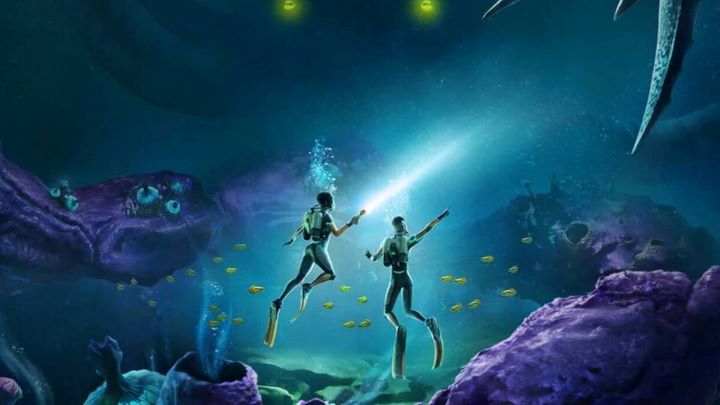
The release date for the continuation of the underwater survival saga, Subnautica 2, created by Unknown Worlds, has finally been revealed. This game, which is under development by Krafton, will be available in early access starting May 14 on Xbox Series, Steam, Epic Games Store, and the Microsoft Store. It has taken some time, but here it is. As part of this announcement, a new cinematic trailer has been released that offers a fascinating glimpse into the underwater world that players will explore. The sequel promises intense survival experiences, pitting players against fearsome creatures […]
As part of this announcement, a new cinematic trailer has been released that offers a fascinating glimpse into the underwater world that players will explore. The sequel promises intense survival experiences, pitting players against fearsome alien creatures in a cavernous and often terrifying environment.
The fundamental premise of the game remains the same as the previous title: survive while uncovering the secrets of a hostile aquatic world.
Subnautica 2 will offer players the option to choose from four pre-designed characters, in addition to the ability to modify them with various features, allowing for a customization that will enrich the gaming experience.
The cooperative multiplayer mode will also be a fundamental part of the adventure, enabling friends to join forces to explore forgotten ruins and gather crucial information about the submerged planet on which the game is set.
The arrival of the game on the mentioned platforms is just the beginning; it is expected that the content will evolve and improve over time thanks to the early access model. In addition, Unknown Worlds has a deadline until September 15 to reach a specific number of sales that could meana payment of 250 million euros, a goal that Krafton has been trying to avoid, thus creating a high-expectation environment around the title.
The future of the James Bond franchise faces increasing uncertainty as Amazon takes its time in the production of the reboot of agent 007. According to recent reports, the script by Steven Knight, known for his work on ‘Peaky Blinders’, is still not ready, as the writer is busy with other commitments. This situation has caused a significant delay in the progress of the project, leaving fans with more questions than answers about the future of the iconic character. License to delay Despite Amazon asking for patience from the followers of the […]
The future of the James Bond franchise faces increasing uncertainty as Amazon takes its time in the production of the reboot of agent 007. According to recent reports, the script by Steven Knight, known for his work on ‘Peaky Blinders’, is still not ready, as the writer is busy with other commitments.
Recent reports suggest that there is a sense of disorganization within the studio, raising doubts about its ability to handle a project of such magnitude. Additionally, the fact that Denis Villeneuve, a possible candidate to direct, is currently very busy with ‘Dune 3’, which could further delay the production of the new Bond.
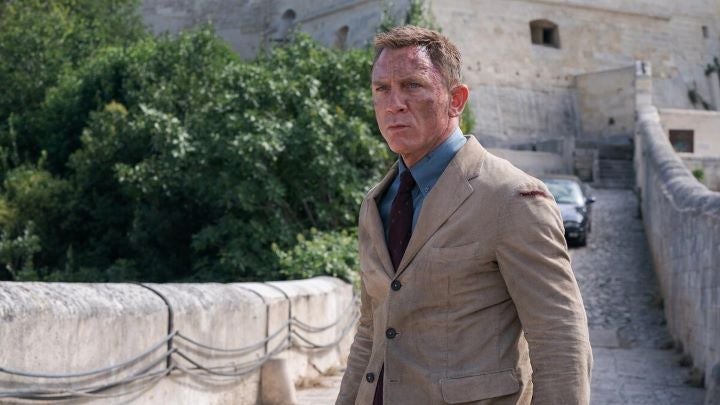
Among the actors considered to take on the role left by Daniel Craig, names such as Callum Turner, Louis Partridge, Aaron Taylor-Johnson, Jacob Elordi, and Harris Dickinson stand out. However, the lack of a defined direction has led to the perception that Amazon is groping in the dark.
As the clock ticks and interest in the franchise grows, the hesitations in the studio could result in negative consequences for what was once one of the most successful sagas in world cinema.
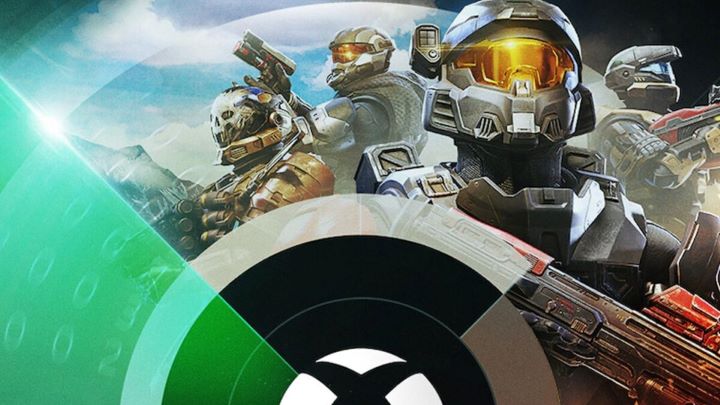
Microsoft has taken a significant step towards transparency in its operations related to Xbox, communicating more effectively with players and developers. The company has introduced Project Helix, its upcoming console, which promises to set the course for the next generation of Xbox. This ambitious project will be one of the central topics of the new event format titled Xbox Game Dev Update, which will be streamed on YouTube. The future of Microsoft The first episode of Xbox Game Dev Update is scheduled for May 7 and aims to establish a communication bridge with programmers and technicians. According to […]
Microsoft has taken a significant step towards transparency in its operations related to Xbox, communicating more effectively with players and developers.
The first episode of Xbox Game Dev Update is scheduled for May 7 and aims to establish a communication bridge with programmers and technicians. According to information shared by Microsoft, this new program will be designed to showcase highlights directly from the teams developing Xbox, providing technical context about the news and its importance in hardware and software development.
With this initiative, Microsoft aims not only to keep developers informed about updates and changes but also to strengthen the connection with Xbox fans. This will allow players to discover the mechanical side of the brand’s strategies and how these will influence video game production.
Xbox CEO Asha Sharma has highlighted a focus on transparency that involves all stakeholders in the video game industry, reinforcing the company’s commitment to improving its relationships with both creators and the gaming community.
This new event format is another effort by Microsoft to strengthen its relationship with developers, being a continuation of previous initiatives, such as Developer_Direct and Partner Preview. With Xbox Game Dev Update, Microsoft’s gaming division aims not only to inform but also to inspire trust and collaboration in a constantly evolving sector.