Two interesting new WhatsApp features have been spotted in development

Over recent months we have been tracking a whole host of new features that are in the pipeline at WhatsApp. Everything from augmentations to WhatsApp groups to a raft of new privacy control features are on the way. Today we get to bring you news of two new WhatsApp features that have been spotted. Let’s check out.

WhatsApp Download Now

The active WhatsApp beta community has discovered a brand new and never seen before feature on the WhatsApp beta for Android version 2.22.23.14, as well as a new feature on the WhatsApp beta for Desktop version 2.2241.2.

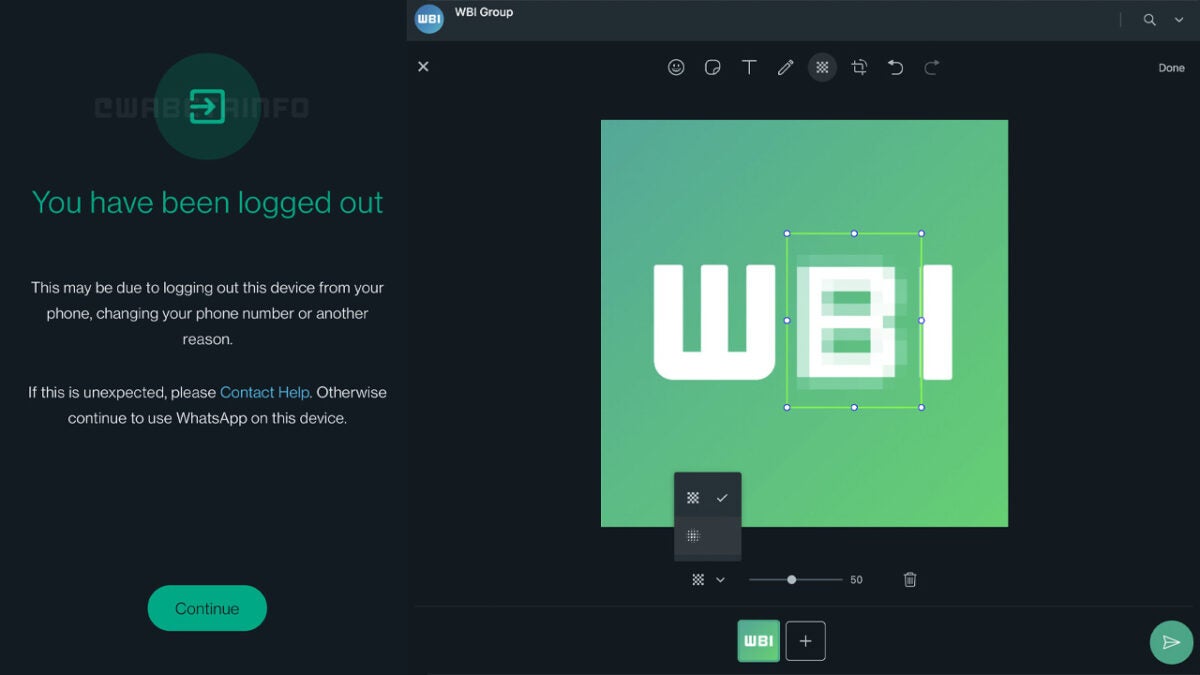
On Android, a new logged-out screen has been spotted, which may be linked to another new feature that is in development, the ability to log into your WhatsApp account on multiple devices. Up until now, there has never really been a reason to log out of WhatsApp on your device, but this could all be about to change, and WhatsApp looks like it is preparing for the evolution.

For example, if you will soon be able to log into a second device without having to scan a QR code with your primary device, you may start logging in on other people’s devices to check your messages when you don’t have your phone with you. In that scenario, it would be very important to know that you have logged out properly once you have done so.

On WhatsApp for Desktop, a new feature that allows users to blur out certain parts of images before sending them looks set to add another privacy update to the app. This feature would make it easier to send photos to friends and family even if they aspects in them that you don’t want to share, such as maybe a child’s face, your address, or maybe the license plate on your car.

These two features have rolled out to beta users on both platforms but there is still no official word from WhatsApp about them. This means we will have to wait and see when they will roll out to all users. Make sure you stick with us for all the latest WhatsApp news so that you don’t miss any updates.

Images via: WABetaInfo
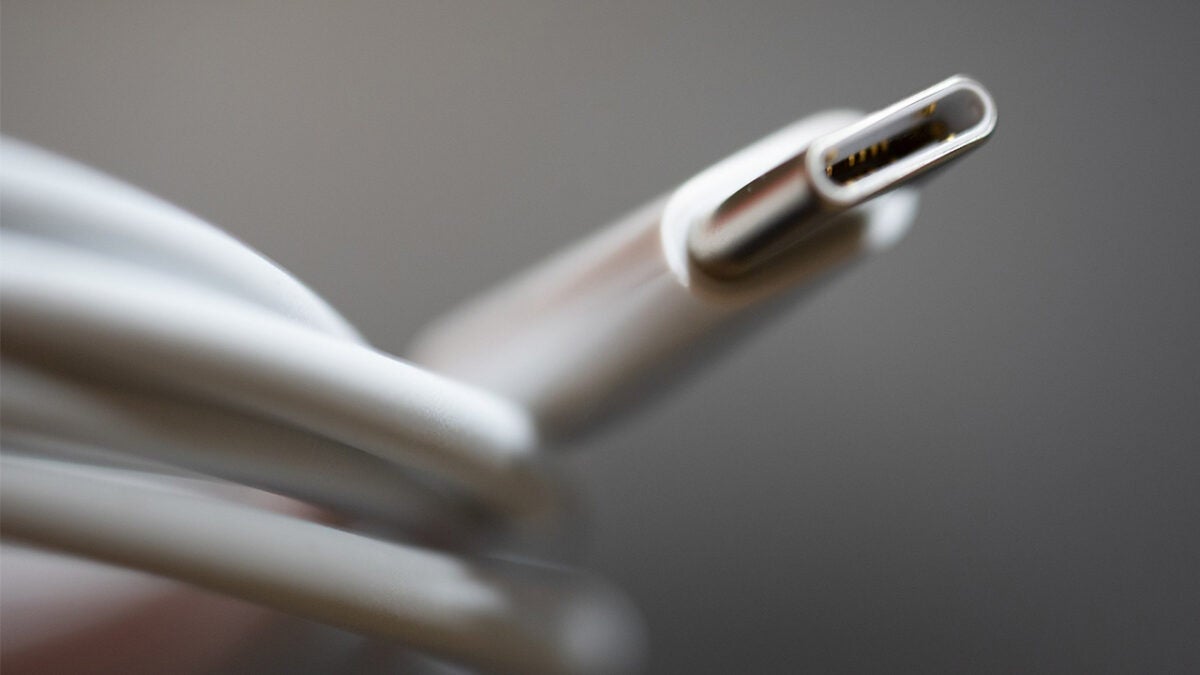
It looks like iPhone users will soon need to buy new chargers

The EU recently announced legislation that is designed to facilitate interoperability between tech devices. It legislates that all consumer technology devices in the EU need to have USB Type-C charging ports. As the EU represents such a huge market for consumer technology devices, this basically means that manufacturers everywhere have to follow this rule, unless they want to make different devices for different regions. As this new rule will mostly affect Apple and its proprietary Lightning Cable, we’ve all been waiting to hear the company’s response and it now looks like we have one.

iOS 16 Download Now

Greg Joswiak, who is Apple’s senior vice president of worldwide marketing recently gave an interview with The Wall Street Journal in which he discussed the new EU regulation.

In the interview, Joswiak stated that Apple will obviously have to comply with the new EU law and introduce USB-C charging ports into its devices such as iPhones and iPads. However, he was also very cagey about when Apple will start complying with it and he also refused to comment on where Apple will be shipping out new USB-C iPhones, leaving the door open to a future that has two distinct iPhone models that use different charging cables. You can check out the interview below:

Joswiak’s caginess means that we don’t know whether the next version of the iPhone, the iPhone 15, will have the new USB-C charging ports as it will launch before the new law comes into effect or if users will have to wait until the iPhone 16 for the universal charging ports.

However, despite Joswiak’s hesitation to be drawn into the debate about where these new iPhones will roll out, it is highly likely that Apple won’t be segmenting manufacturing and shipping out different versions of the iPhone. Apple clearly doesn’t have a problem with USB-C as all new Macbooks are rolling out with USB-C ports. As is usually the case with these big tech companies, they just don’t like being told what to do. It most likely then, is just a case of when they will roll out everywhere.

Make sure you don’t miss out on when we can expect to see USB-C iPhones rolling out by bookmarking our iPhone news page and subscribing to push notifications.

LinkedIn is making moves to solve its fake account problem

Deepfakes, AI image generators, and bots are wreaking havoc on the internet and the concept of trust. It is more difficult than ever these days to act with confidence when dealing with somebody online as their profile pictures might be fake and their words may be generated by an automated chatbot. We reported recently on how this problem has been affecting LinkedIn with fake accounts causing plenty of problems on the app. Today, however, we get to bring you news of the actions LinkedIn is taking to solve the problem.

LinkedIn Download Now

LinkedIn’s vice president of Product Management, Oscar Rodriguez has published a blog post outlining a new feature that will help the company verify users’ identities, detect fake accounts, and boost authenticity on the network.

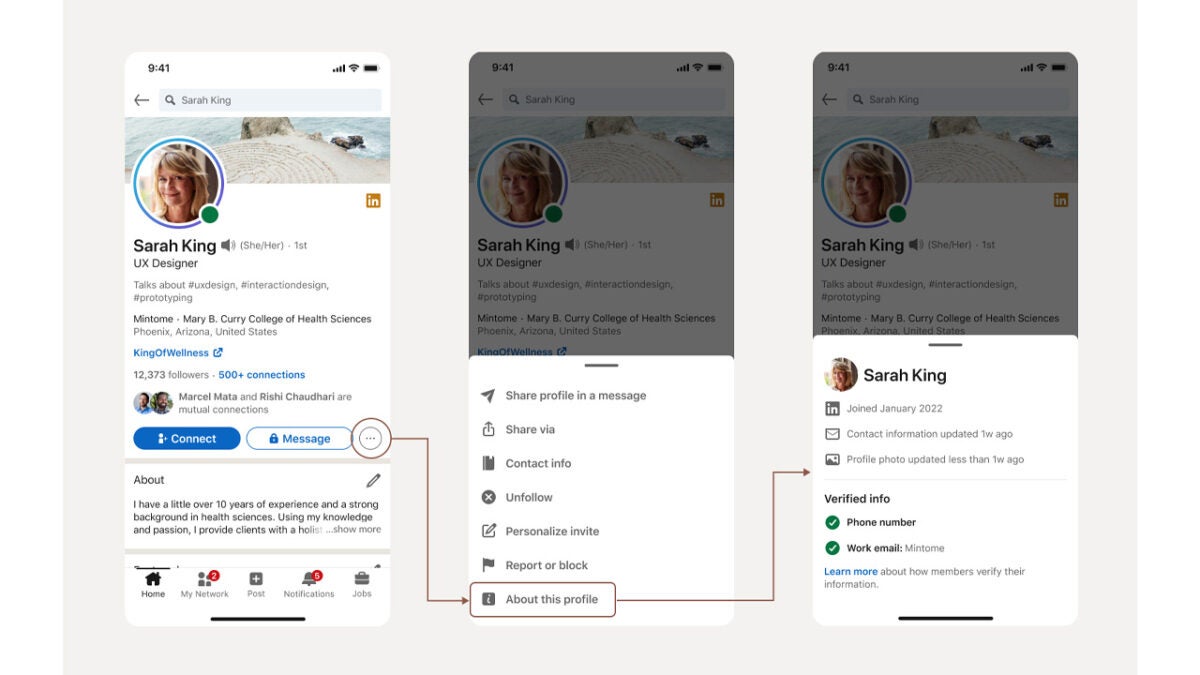
The feature includes two new verification steps that will help users confirm who they are dealing with when on LinkedIn. These verification steps include adding your phone number as well your work email account, which users will then be able to verify in a new “About this profile” tab. The new tab will also tell users you created your profile as well as the last time you activated it, so that they can tell if your account is active or not and hasn’t recently been created by scammers.

Rodriguez states in the blog post that the new feature is rolling out to certain companies, saying:

“Starting this week, you can find the “About this profile” feature on each LinkedIn member’s profile page, and soon you’ll see it in more places over the coming weeks, including when viewing invitations and messages. For work emails, our plan is to start with a limited number of companies, but you can expect to see this expand as we add additional companies over time.”

The hope is that these new features should help to stop fake accounts spreading across LinkedIn and also offer users a way to check who they are being messaged by.

In other recent LinkedIn news, scammers have been using LinkedIn Smart Links to try and share phishing scams.

More than a million users have downloaded these fake Chrome extensions

Recently we have reported on several security issues affecting the popular Google Chrome web browser. These have included fake extensions, browser-targeting malware, and spellchecker vulnerabilities, as well as security improvements such as new password-replacing technology (get all your Chrome news here). Unfortunately, today we have to bring you news of another set of fake Chrome extensions that are targeting victims with ‘malvertising’ campaigns.

Chrome Download Now

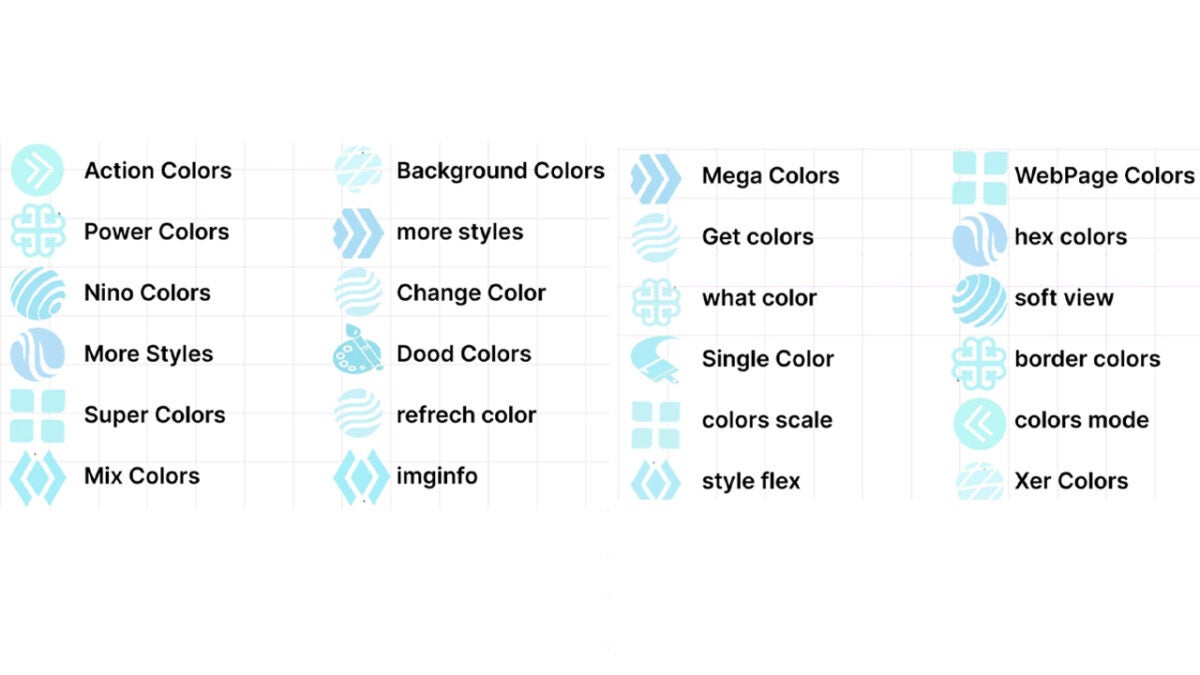
Security experts at Guardio Labs have discovered a ‘malvertising’ campaign that is using 30 fake Chrome extensions with over 1 million downloads between them. Malvertising attacks are when scammers use advertising to try and spread malware. You can the list of add-ons in the image below:

One of the extensions is pushed on users when they access certain video-downloading sites. It is pushed as a video color customization tool, to augment video downloads. It doesn’t contain any malicious code, which allows it to pass the antivirus scan that is activated by download attempts.

When the extension is live, however, it will redirect victims to a webpage that is filled with malware that can then link to it. Once the malware-ridden scripts link to the extension, they can then take over search results and fill them with affiliate links. They will also push the victims to websites that are linked to the scammers allowing them to further skim ad revenue from the victim’s web usage.

This scam doesn’t directly harm the victims beyond seriously affecting their time on the internet and bombarding them with crap. However, the major risk here is that the malicious scripts could also send users to phishing sites, which could see security login credentials stolen or even worse, credit card details leaked.

As always with these types of scams, however, you are able to exert a certain degree of power over your vulnerability by being aware of the calling signs of these types of scams. To help you keep on top of that, we have produced an anti-phishing scam infographic, which we recommend you download.

Google Chat is getting custom emojis

Google Chat is the search giant’s messaging app for its Google Workspace productivity suite. It is kind of like Google’s version of Slack, which helps facilitate communication between coworkers and colleagues while also allowing users to send personal messages too. In this regard, we can today bring you the news that will lean more toward those more personal messages, but that may end up creeping into work messages too, even if they are not appropriate. Google Chat is getting custom emojis.

Google Chat Download Now

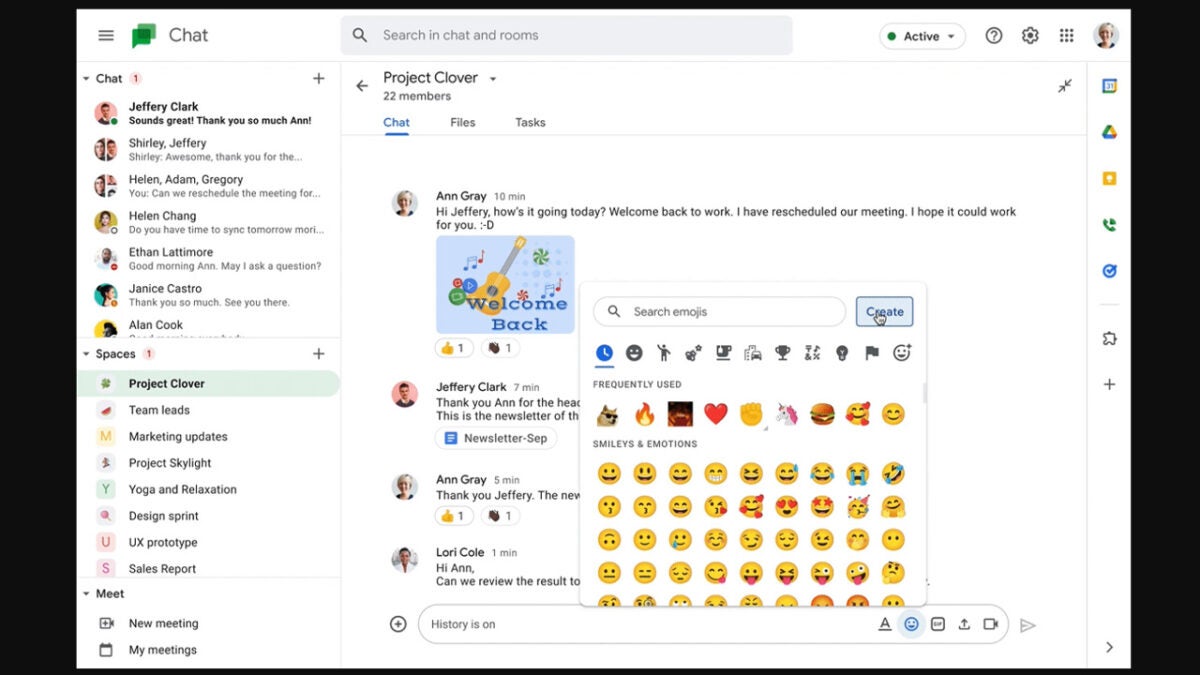
Google is giving Chat users the ability to create and send their own customized emojis. Users will be able to send these to both personal and professional colleagues, although we would advise restraint before you go sending anything too outlandish to your coworkers.

In the Google Workspace blog post announcing the move, the Google Chat team announced that it is launching this new feature, which was announced at Google Cloud Next ’22 because:

“Emojis are a great way for people to express themselves in Google Chat.”

Adding that they are:

“Excited to announce that we’re making emojis even more expressive and personalized by allowing people to create custom emojis.”

The new custom emoji feature will be available to all users in organizations that are using Google Chat, although admins will be able to set organizational guidelines and even set special “emoji managers” who can moderate all custom emojis and even delete those that do not adhere to the organization’s guidelines.

Google Chat’s custom emojis will start rolling out on October 24 and will see availability being staggered up until November 30. It will become available for Google Workspace customers as well as legacy G Suite Basic and Business customers. It will not be launching for personal Google Accounts.

In other Google Chat news, the search giant is taking extra care to protect Chat users from phishing attacks.

DALL-E images are coming to Shutterstock

AI text-to-image generators have been gaining so much attention and popularity recently and we have seen some of the bigger players in tech, such as Meta, breaking into text-to-video generators too. As debates rage about the legitimacy of the art they create and even the suitability of the images used to train these AI tools, the sector keeps advancing, which is what we are here to report on today. Artists can now access DALL-E’s ability to create images on Shutterstock. Let’s take a look at what you need to know.

DALL-E Download Now

Shutterstock has announced that it is extending a partnership it has with OpenAI, which is the organization behind DALL-E. The extended partnership will allow users to generate DALL-E content on Shutterstock based on certain criteria.

To facilitate this Shutterstock will launch a new tool called Shutterstock.ai. However, first, the company wants to take a hand in further training DALL-E with current Shutterstock images to help ensure that it is able to create images that will be more suitable for the Shutterstock library.

Describing the move, OpenAI’s CEO, Sam Altman said:

“The data we licensed from Shutterstock was critical to the training of DALL-E […] We’re excited for Shutterstock to offer DALL-E images to its customers as one of the first deployments through our API, and we look forward to future collaborations as artificial intelligence becomes an integral part of artists’ creative workflows.”

The move means that Shutterstock won’t be compensating DALL-E creators for work they are selling on Shutterstock but could possibly see them compensated for helping to train the tool.

In other recent developments related to DALL-E, did you know that you can now use the tool to expand the borders beyond the edges of famous paintings?

The Republican Party is suing Google for sending political campaign emails to spam

Your email inbox spam folder is one of the most important parts of your cybersecurity defense setup as well as being on the frontline to save you from annoying emails. Unfortunately, the Republican National Committee (RNC) thinks that Google has set Gmail’s defense settings too high as it keeps sending Republican campaign emails straight to spam. In fact, the RNC thinks that the problem is so serious, it is suing Gmail in a bid to overturn it. Let’s take a look at what is going on.

Gmail Download Now

A report from the American news outlet, Axios has highlighted the RNC’s position in a current civil case against Google, with the Republican’s claiming that Google isn’t doing enough to prevent their campaign emails from ending up in users’ spam folders.

The uproar has been caused by a new program that Google is piloting, which is designed specifically to keep campaign emails out of spam folders. Even though the program has been approved by the Federal Election Committee, the Republicans still do not believe Google is doing enough to curb what they describe as its algorithms’ tendencies to unfairly target conservative content. According to the report, the lawsuit claims that Google:

“has relegated millions of RNC emails en masse to potential donors’ and supporters’ spam folders during pivotal points in election fundraising and community building.”

However, in response, Google has said that it is not targeting content based on political affiliation, saying that:

“Gmail’s spam filters reflect users’ actions. We provide training and guidelines to campaigns, we recently launched an FEC-approved pilot for political senders, and we continue to work to maximize email deliverability while minimizing unwanted spam.”

This case raises an interesting debate about the intersection of technology and politics. Technology companies are at the heart of the connections that bind our societies and, therefore, whether wilfully or not, can exert huge influence over the governance of our interactions with each other. Specifically relating to democracy, however, the situation becomes murky when actors, be they technology companies themselves or even the political parties, try to use or push this influence to suit their own ends. We will have to wait and see how this one ends up.

In other Gmail news, you should start to see an update rolling out on iOS to help you more easily navigate the Settings menu.

Windows 11 has been taking some users’ USB Drives hostage

Windows 11 has received mixed reviews from users who have upgraded from Windows 10. There now seems to be another issue to add to the catalog of strange problems that have been afflicting the latest flagship operating system from Microsoft. Reports have been coming in that some Windows 11 devices have been preventing users from ejecting their USB devices from their machines safely. Let’s take a look at what is going on.

Windows 11 Download Now

Reporters at TechRadar have flagged a rather strange issue that is affecting the Windows 11 Task Manager on some devices. According to the reports, some users have been unable to safely eject USB drives from their devices, leaving them with the only option to remove them in an ‘unsafe’ manner.

 The reason why it is always recommended to remove USB flash drives safely is that if you remove the drive while it is still in use there is a chance you can corrupt the data it holds. It could even ‘brick’ the USB drive and make it unusable. When you hit the Eject button, Windows ends all active processes on the drive are over before giving you the OK to remove it. At least, that is what it is supposed to do, but it has proven impossible for some Windows 11 users.

Some users have been reporting that whenever they hit Eject, it fails to terminate all active processes and simply returns a message saying, “Windows can’t stop your device because a program is still using it. Close any programs that might be using the device, and then try again later.” They report that this message comes back even if the device is definitely not in use, which means that Windows 11 isn’t properly reading the portable drive. Potentially, this could be a real problem for users if they have important information stored on their devices.

No doubt Microsoft is working to alleviate this problem but, in the meantime, if it as affecting your version of Windows 11, we recommend taking extra care when using portable USB drives on your machine.

In other Windows 11 news, it is now easier than ever to run Android apps on your Windows 11 device.

YouTube is introducing a new zoom into videos feature

YouTube is now over 17 years old and there is no denying the place it holds in the modern media landscape. It has evolved into a beast of an app offering everything from music videos and silly short videos to fully featured documentaries, TV shows, and even movies. Recently, Google has been updating the YouTube app giving it a facelift and bringing in some feature tweaks and upgrades. Today, we can report on a long-awaited YouTube feature finally coming to the app, zooming in and out of content. Here’s what you need to know.

YouTube Download Now

Google has announced the introduction of a new pinch-to-zoom feature for YouTube as well as publishing a how-to guide to show users what they need to do to take advantage of the feature.

The new pinch-to-zoom YouTube feature allows users who are watching YouTube videos in full-screen mode to tap and pitch the content to zoom in and out for a better and more detailed view. Also, the feature will stay zoomed in, meaning that it will not pop back out to the regular resolution automatically, which will allow users to keep watching videos they have zoomed into without having to hold their fingers on the screen. The full instructions for the new feature, as laid out by Google are:

Pinch to zoom in on content:

In full screen mode, touch the video with two fingers.

Move your fingers away from one another, while touching the video screen.

Once you let go, the video will play at the new zoom level.

Pinch to zoom out of content:

After zooming in, touch the video with two fingers, and move your fingers towards one another to zoom out.

Once you let go, the video will play at the new zoom level.

The simple process is easy enough to get your head around, but Google has also created a quick video guide to help you learn the basics quickly and easily.

In other recent YouTube news, the video app is rolling out handy home screen widgets for iPhone users.

This fake version of WhatsApp will steal your account

WhatsApp is the most popular messaging app on the planet. We normally report on the feature updates that help keep it in that top spot but today we have to report on a fake version of WhatsApp that has been designed to try and trick users into downloading it so that it can steal their accounts. You need to avoid downloading YoWhatsApp.

WhatsApp Download Now

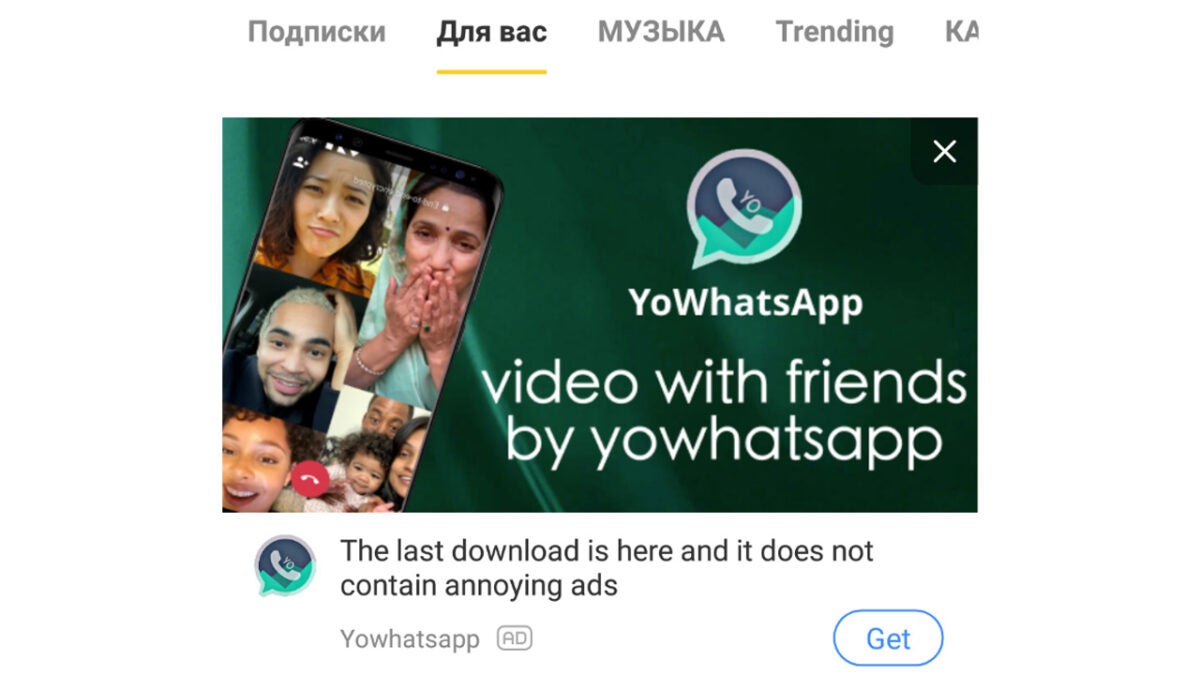
Cybersecurity researchers at Kaspersky have uncovered a fake version of WhatsApp called YoWhatsApp which is a fully functioning messaging app that offers pretty much the same functionality as the real version of WhatsApp but has been designed to steal users’ access keys for running malicious campaigns and even draining victims’ bank accounts.

These security keys are interesting features, that Kaspersky describes as being:

“… typically used in open-source utilities that allow the use of a WhatsApp account without the app. If the keys are stolen, a user of a malicious WhatsApp mod can lose control over their account.”

Furthermore, as well as potentially giving malicious actors access to their accounts and opening up vulnerabilities to further scams, the app also allows malicious actors to listen in on users’ conversations, which opens up further possibilities for stealing sensitive security information.

An interesting aspect that is raised by this security vulnerability is that it means that even users who have not downloaded the fake app can be targeted. If anybody who has your contact details saved on their device is breached, you could receive fraudulent messages from scammers asking you to click dodgy links or download infected files. This means that if you should receive any suspect messages via WhatsApp or SMS you should delete it and block the sender.

To help you spot these types of phishing scams we have created an anti-phishing infographic.