
Insight Timer is the best app to manage your stress

Could one app help manage your stress forever?

Two months ago HCA Healthcare called stress the “health epidemic of the 21st century” and frankly we’re not surprised. Last year 6,700 Americans nationwide between the ages of 18 and 64 were surveyed about how stressful their lives were, and health experts were genuinely surprised at the resulting harm brought about by chronic stress and the general apathy towards doing anything to curb it.

Mental health stress kitchen breakdown

Whether you’re a college student up to your eyeballs in exams, a millennial managing multiple jobs, a homeowner struggling to balance kids on one hand and a checkbook on the other, or a company manager trying to corral employees, it’s the same old cyclical issue: Your hectic life makes you stressed, and when you approach life from a stressed mental state everything gets harder.

We’re not going to preach life advice to you; no two people are the same, and what works to simplify and organize one person might have little effect on someone else. So instead we’ll point you towards one handy app that’s worked wonders:

Insight Timer

Insight Timer is a free app for Android and iOS that lets you escape the chaos and anxiety of the world for a period of time (which you can custom set), meditate (if you’re into that kind of thing), and come back stronger and more level-headed. Insight Timer won Apps of the Year in both TIME magazine and Women’s Health, and more time is spent on it than on any other meditation app.

Insight Timer Free Download ►
9

What does the app do?

At its core, Insight Timer is a free meditation app, but it also helps novices (which most of us are) learn how to meditate to the best effect. The app features guided meditations and talks led by the world’s mindfulness experts, teachers, neuroscientists, and psychologists from Harvard, Oxford, and Stanford who will coach you in achieving inner peace. Not only that, they’ll teach you how to achieve it at home, at work, or on the go.

Office meditation
Use Insight Timer to take five minutes at work to center your thoughts and get back in the ring.

Insight Timer also has thousands of discussion groups, forums, and community features, as well as stats and milestones to help you track your progress and manage how often you take the time to use the app, and helping you to build a simple daily health habit.

Get started in minutes

Here’s how easy it is to use Insight Timer:

1. Download the app

Insight Timer is free and can be downloaded right here.

2. Select Timer

The “Timer” function is right on the app’s home page. When you’re ready to zen out, click right on it.
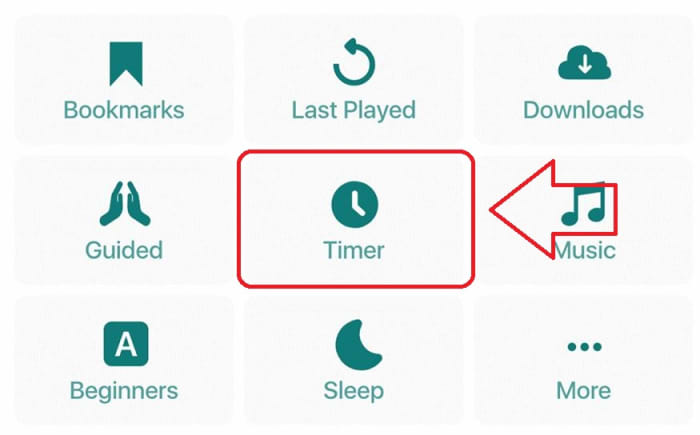
Insight Timer home page

3. (Optional) Choose your settings

Under “Timer” you’re given a few simple customization options for duration and sound effects. We found that even five or 10 minutes was sufficient to clear our head and get us back in the zone. You can also choose from a variety of cool background tracks and bell sounds to play. Check out their catalog!
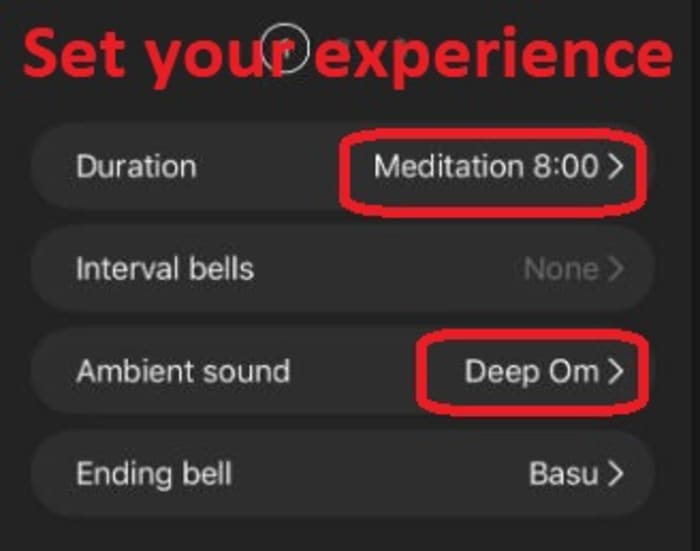
Insight Timer settings

4. Press “start”

Your chosen bell will ring, and your chosen background SFX will start up immediately. We recommend cranking the volume up so it really feels like you’re awash in the atmosphere. Close your eyes, get comfortable, and let the app work its magic.

How will Insight Timer help me?

Insight Timer doesn’t remove all the problems and everyday stresses of your life. Weave it into your daily life and it goes one step better: The app centers and strengthens you to face these problems with renewed energy and patience. If you let it do its job, Insight Timer is proven to reduce anxiety, calm the mind, manage stress, and even help battle insomnia (try putting it on for a few minutes while you’re trying to fall asleep)!

If any irksome, nagging responsibilities creep into your mind, acknowledge them, mentally partition them, and have the willpower not to tend to them until your timer rings. Insight Timer is like taking a deep breath before diving back into the ocean of stress.

Let us know in the comments below whether you’ll be giving Insight Timer a try. We hope it helps you experience the same rejuvenation that we found. Inhale deeply and feel the renewal!


8 ways to boost mindfulness at work

8 simple steps to stay mentally healthy at work.

Like other buzzwords and a lot of the concepts tangentially related to the wellness movement, it’s fair if you’ve considered writing off mindfulness as a passing trend.

Mindfulness is about paying attention to the things in your daily life.

The idea is, focusing on how you feel in certain situations will give you more control over how you respond.

As such, mindfulness is well worth exploring. And, it can get you through the frustrations, stress, and other hallmarks of your working life.

In today’s office, you’re dealing with office politics, a soundtrack of chatty coworkers, and passive-aggressive messages firing from all directions.

Here are a few mindfulness tips you can take with you, even if you have a wide open desk in the middle of an open plan.

How to boost mindfulness at work

meditation

1. Prioritize tasks in advance

Mindfulness in the office starts with thinking with intention about how your day will play out. When you start the day with no clear plan, you risk wasting time hanging out in your inbox or playing it by ear.

Instead, set an alarm 15 minutes before you leave and use that time to write down a list of priorities for the next day.

This pre-planned to-do list gives you something to get started on first thing in the AM. And, it also allows you to start being mindful of where your time goes. As time passes, you’ll learn how much you can take on each day and can plan with greater accuracy.

We also recommend writing down a big picture to-do list at the end of the week. Every Friday, list goals to address for the following week.

2. Practice your breath work

relaxing work

It’s not just for the yoga mat. Deep breathing can change the way your brain works. Controlled breathing may improve immune health and boost energy metabolism, which might play a role in fighting fatigue and avoiding the office cold.

Research published in the Journal of Neurophysiology found that deep breathing can help you access new parts of your brain.

Deep breathing can help you control your emotions, meaning you’ll be able to keep your cool in the face of those little frustrations. Think passive aggressive CCs or interrupting colleagues.

Get started by following these steps:

  1. Sit in a relaxed position — in a comfortable chair or on the floor.
  2. Try to relax your body and notice any areas of tension. Notice where you shift your weight and notice any sensations, stress, or other feelings.
  3. Tune into your breath. Notice the natural flow when you breathe in and breathe out. No need to change anything, keep it natural.
  4. Pay attention to where you feel your breath inside the body — it might be in the stomach, chest, throat, or right there in your nose. Notice whether you can sense any evidence of the last breath. Paying attention to those slight sensations is an exercise in mindfulness; you’re learning about your body a
  5. If your mind wanders (perfectly normal), try to redirect it back to the breath.
  6. Sit for about five minutes and observe your breath. Return to your breath and repeat.
  7. Relax — take a moment to acknowledge your effort (whatever that means for you) and return to work refreshed.

3.  Focus on one task at a time

We’ve said it before — and science backs it up — pretty much everyone sucks at multitasking. It’s not a strength. In a study from Ohio State University, students who multitasked felt like they were more productive, though their output suggested the opposite.

Task switching can cost you up to 40% of your productive time.

The APA says the brain wasn’t designed to perform multiple tasks at a time, and rapid switching between tasks can result in a mindfulness disaster.

Instead, take some time to slow down and take things one step at a time. Your brain might freak out at first, tempted to click over to your inbox after just a few minutes of single-tasking.

4. Address emails and small tasks ASAP

email

Now, we’re not suggesting hanging around your inbox all day. That’s a major productivity killer to be sure.

But, emails are like tasks, and when you do check them, make sure you respond right away — as they come in.

This way, those little stressors like remembering on the drive home that you forgot to email a colleague about something important won’t come up as frequently.

Same goes for tasks that take less than five minutes. Often we put off things that take minimal effort — be it a boring errand or a simple organization process. The longer it waits, the more it’ll feel like pulling teeth when you finally get down to business.

5. Write some stuff down

Mindfulness experts and enthusiasts alike will be quick to tell you to write down what you’re grateful for.

The traditional gratitude journal usually entails writing down three things that make you happy. This is all well and good, but if the gratitude journal isn’t quite your bag, frame it a little differently.

When you’re getting ready to head out, shut the computer, or whatever signifies the end of the day, write down at least one positive thing that happened during the workday. This could be something simple like: “finished follow-up calls” or “wrote the first draft.”

Or, use this space to document your goals. Even better if you can break goals up into a series of actionable steps.

Another idea is writing a “done list.” While not a straightforward representation of gratitude, a done list is a way to keep track of your accomplishments. It’s something you can look back at when you need a boost—like a “hey, I really am getting things done” reminder.

6. Start the day with meditation

meditation

Kicking off the day with 10-15 minutes of mindfulness meditation can set the tone for a day of calm. Before you head out, sit down in a quiet room, close your eyes, and breathe deeply.

Acknowledge your thoughts as they come, but refrain from judging. It’s about awareness. While meditation might not be for everyone, it’s worth giving a try. Experts and a whole range of successful people swear that the practice has made them more productive — improving clarity and calm.

7. Set mindfulness reminders

As the day wears on, your brain will start to hit a wall. Whether you’ve chowed down on a big old lunch or just feel fatigued, mindfulness can help you sharpen up the old brain.

Set timers on your phone, every hour or so. Each time the timer rings, take a mini break to do a short mindfulness exercise. Be it a five-minute meditation or a walk around the block; these little breaks will keep you from working like a zombie.

8. Make time for the outdoors

The glow of your laptop is no match for the good old sun. Make sure you pencil in some time to go outside a few times a day.

Movement can help you boost memory retention and focus. Leave your phone behind (or on airplane mode) and pay attention to the sights and sounds in your environment.

The point is, this little act of mindfulness allows you to reconnect with how you’re feeling in the moment.