Year in Review of the Most Popular / Controversial Stories

2022 was an action-packed year. From prominent political figures to Hollywood stars, everyone got in on the action. While there were a lot of positives this year (Lionel Messi winning the FIFA World Cup for the first time), there were a few news stories that made headlines for the wrong reasons. Here are some controversial stories that made the headlines in 2022.

Nord Sabotage

Four leaks were reported in September along the Nord one and two pipelines. These pipelines are located in the Baltic Sea and connect Germany and Russia.

Traces of explosives were found along the pipeline damage. This resulted in a theory that the pipelines were sabotaged. These leaks caused natural gas to leak into the Baltic, causing bubbles on the surface and raising environmental concerns.

Nord Sabotage 2022 Controversial / Popular Stories

Chris Pincher

Former UK Prime Minister Boris Johnson was already under fire for the “party gate” controversy (gatherings at No 10 even during the Corona lockdown). After this, the sexual misconduct case against Chris Pincher threw Boris into the limelight again.

These allegations rocked the foundation of UK politics and resulted in the resignations of top cabinet ministers, Sajid Javed and Rishi Sunak (Another controversy to talk about another day – whether Rishi is Indian, Pakistani, or English). This was followed by several resignations and the eventual ousting of Boris Johnson.
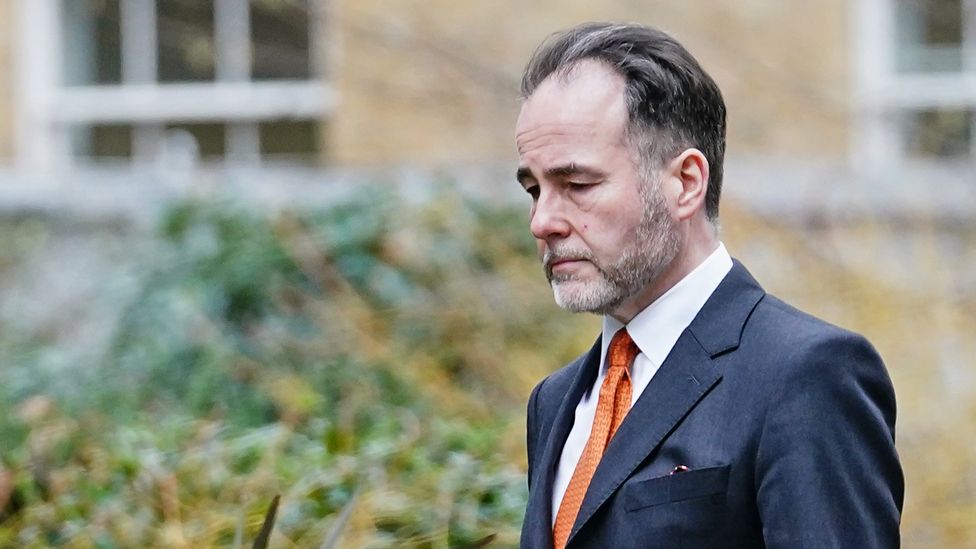
Chris Pincher 2022 Controversial / Popular Stories

Brittney Griner

American basketball star, Brittney Griner, was arrested in February in Moscow when the authorities found cannabis oil and vape canisters in her luggage. Although the WNBA star had a prescription for medical marijuana in Arizona, it is banned in Russia.

Britney was eventually released ten months later after the American government negotiated a prisoner swap deal. Russia demanded the release of the notorious arms dealer, Viktor Bout. If the deal hadn’t gone through, Brittney was to serve a prison sentence of nine years in Mordovia.

Brittney Griner 2022 Controversial / Popular Stories

Boycott Bollywood

The ‘Boycott Bollywood’ brigade gained momentum in 2022 and the latest controversy was the ‘Besharam Rang’ song from the Shah Rukh Khan and Deepika Padukone movie, Pathaan.

The controversy stemmed from the fact that Deepika Padukone wore a provocative ‘saffron-hued’ bikini in the song. Protests were seen in Madhya Pradesh and Uttar Pradesh and prominent cabinet ministers started a movement to ban the movie. Although no statement has been released by the movie makers or the actors, only time will tell if the movie is still released with the song as is.
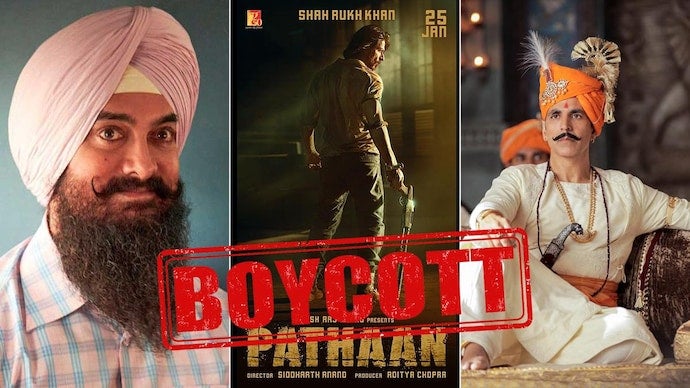
Boycott Bollywood 2022 Controversial / Popular Stories

Kashmir Files

Vivek Agnihotri’s Kashmir Files was another movie that caused controversy in 2022. The movie was based on the Kashmiri Hindu’s exodus in the 1990s. Despite its controversies, the movie attracted many audiences to the theatres. Some believed that the portrayal of the Kashmiri Pandits killings was horrific. What added to the controversy is that the ruling party BJP endorsed the movie and declared it tax-free in several states.

Kashmir Files 2022 Controversial / Popular Stories

Johnny Depp vs Amber Heard

The longest trial the media followed with a keen interest in 2022 was the Johnny Depp vs Amber Heard trial. From discussions to the prompt replies from Jonny Depp’s lawyer Camile Vasquez, this trial was nothing short of an epic drama series that made fans worldwide eager to hear the verdict.

This controversy was so popular that Discovery created a documentary featuring both sides of the story. It ended with Jonny winning the case Heard filed against him and in return won $ 2 million as compensation for the defamation. Even today, people are still eager to know what Amber heard is up to and whether Johnny Depp will return to the silver screen anytime soon.

Johnny Depp vs Amber Heard 2022 Controversial / Popular Stories

Oscar Slapgate

The Oscar is always known to attract controversies; however, this year it took the cake. Hollywood legend Will Smith slapped comedian Chris Rock after Rock made remarks about Smith’s wife’s baldness. Jada Smith has a condition called alopecia areata, causing hair loss. Rock called her GI Jane after she sported a bandana for the event.

The slap caused a lot of controversies and divided the celeb world. Smith has since been banned from the Oscars for ten years. Coincidentally Smith bagged an Oscar at this very ceremony. He later apologized for his behavior.

Oscar Slapgate 2022 Controversial / Popular Stories

Kanye West 

Kanye West didn’t shy away from the media this year whether it was his involvement with Julia Fox for barely a month or his spat with Pete Davidson over his relationship with Kanye’s ex-wife Kim Kardashian, he’s been in the news stories almost every month.

Kim complained about him not cooperating when it comes to co-parenting their kids and Kim’s sister Khloe lashed out at Kanye for his constant social media messages targeting her sister. The most recent controversy is that Kanye’s been missing and can’t be found.

Kanye West 2022 Controversial / Popular Stories

School Jobs Scam

The ruling party in West Bengal, India, the Trinamool Congress (TMC), came under fire after one of its ministers, Partha Chatterjee, was arrested on 23rd July by the ED (Enforcement Directorate).

Partha was the cabinet minister at the time and along with his aide, Arpita Mukherjee, he was running the SSC (School Service Commission) recruitment scam. As per this scam, many non-deserving candidates landed jobs at schools across the state.

School Jobs Scam 2022 Controversial / Popular Stories

Jacqueline-Sukesh Saga

Bollywood superstar Jacqueline Fernandez attracted controversy due to her allegiance with conman Sukesh Chandrashekhar. Sukesh was involved in a money laundering case worth over $2 billion. Jacqueline was also investigated as part of the money laundering case.

Jacqueline claims she was unaware of his activities; however, reports claim otherwise. She received various luxurious items are gifts from Sukesh during her association with him.

Jacqueline-Sukesh Saga 2022 Controversial / Popular Stories

The Year Of Controversy

2022 has been one hell of a year when it comes to controversies.  Whether it’s a few dirty secrets out in the open or celebs out to get each other with no filter, we’ve seen it all. With everything that went down in 2022, we can’t wait to see what 2023 has in store for us.

What happened in 2022? Remember the biggest news stories of the year

Even though 2022 felt like a better year than the preceding ones for many, it was littered with not-so-great moments. In this article, we’ll delve into details regarding the most important news events in 2022.

The Russian invasion of Ukraine

This is undoubtedly the most important event of 2022. On February 24th, Russia invaded Ukraine in a conflict that’s still ongoing. Aside from the critical situation in Ukraine, it brought issues worldwide.

As Ukraine is one of the top wheat providers, it has caused shortages of flour and other related items worldwide. The conflict also triggered a massive energy crisis in Europe, as many nations imposed restrictions on Russia which included stopping gas imports from Europe’s biggest gas provider.

Inflation

Whether this issue is related to the previous one is a matter of debate. What isn’t debatable is that inflation worldwide surged in 2022 to unexpected levels. In the USA, for instance, prices went higher than 9.1%.

This also translated to housing, since mortgage rates went through the roof in many countries around the world, disallowing people to buy homes when compared to a year before. Many struggle to pay their current rates thanks to inflation, too, which might trigger a housing collapse.

Inflation looking back at the most important news in 2022

Droughts and heatwaves

In 2022 there was a record-breaking drought in Europe, with record-high temperatures, too. This caused many rivers to become unnavigable, and decreased electricity generation from the hydroelectric plants.

This happened not only in Europe but also elsewhere. For instance, in August, factories in China had to shut down production because of the low levels in the Yangtze river basin.

High temperatures were also an issue that caused damage in many parts of the world, including melting highways and wildfires. Some meteorological services updated or developed new apps to account for all this.

Droughts and heatwaves looking back at the most important news in 2022

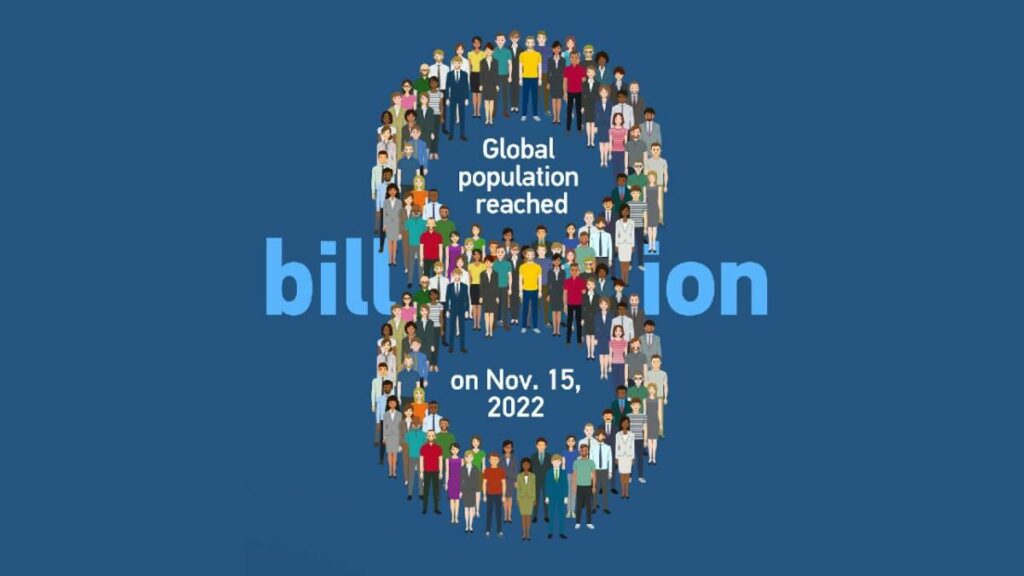
The world population reached 8 billion

Not everything was bad news: on November 15th, the world reached 8 billion people. The accolade goes to Vince Mabansag, who was born at 1 A.M. in the Philippines capital, Manila. While a newborn brings joy to everybody, some wonder about uncontrollable population growth.

However, the latest investigations predict that the population will plateau at some point during this century, even decreasing by around 2100. The key aspect to improving the state of the world wouldn’t be reducing population growth, but a better distribution of wealth throughout the world.

The world population reached 8 billion looking back at the most important news in 2022

U.S. ends right to abortion

On June 24th, the US Supreme Court decided against abortion rights in a highly-publicized case that overturned the 1973 Roe vs Wade decision. This was a major victory for pro-life groups and a major defeat for pro-abortion ones.

The court deemed the 1973 decision as “egregiously wrong from the start” and “exceptionally weak”, arguing that since the Constitution makes no reference to abortion, no such right is implicitly protected. 

U.S. ends right to abortion looking back at the most important news in 2022

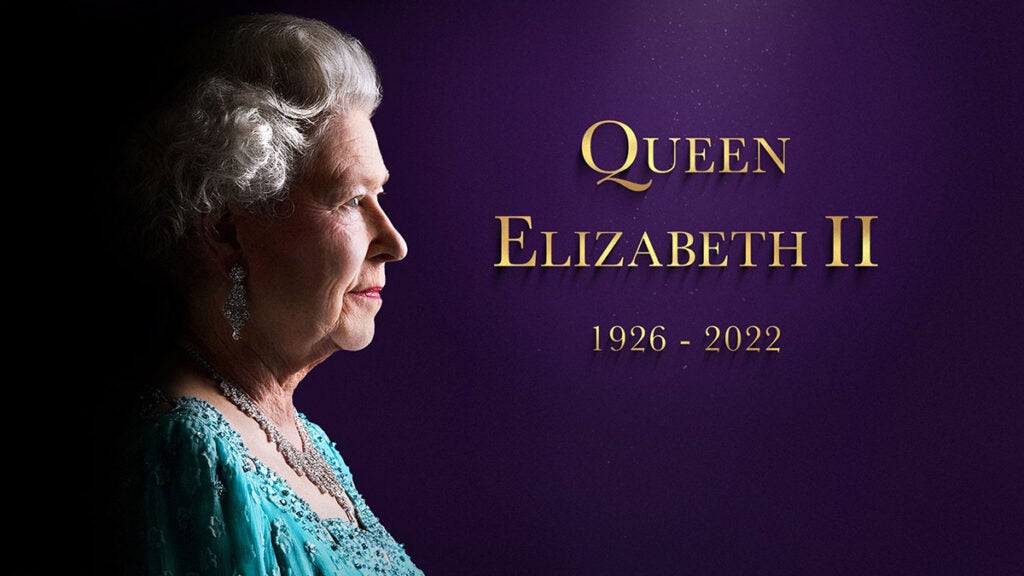
Queen Elizabeth II passed away

On September 8th, Queen Elizabeth II died at her Balmoral Castle residence in Scotland. She was 96 years old and was on the throne for 70 years. This makes her the second longest-ever reigning monarch.

She was succeeded by his son Charles, now King Charles III. With many issues in the UK, such as the impact of Brexit and a new prime minister, it’s not clear whether King Charles III will take a more political stance.

Queen Elizabeth II passed away Looking back at the most important news in 2022

Best election apps for voters (2019)

Stay ahead of the curve this election season with these great apps!

Voting Day

We’re always interested to see what happens on election day, and 2020 is shaping up to be quite an event! If you’re feeling a little behind and want to catch up on the who’s who and what’s what of the political races, we’ve got some helpful apps for you!

Our options today come in pairs: the first two are summary services that provide an overview of current candidates and delineate their stances on a list of important topics. It’s the type of information you’d be likely to find in a nonpartisan info pamphlet the day of the election.

The second two are news outlets. Why? There are surprisingly few apps for polling services, and most of the ones that do exist were created specifically for prior elections, especially 2016. If you’re looking for real-time information, these are the places to go.

Best election apps

’20 Matters

20Matters

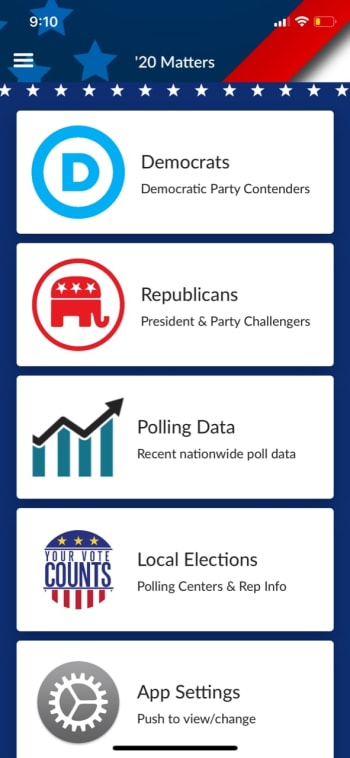
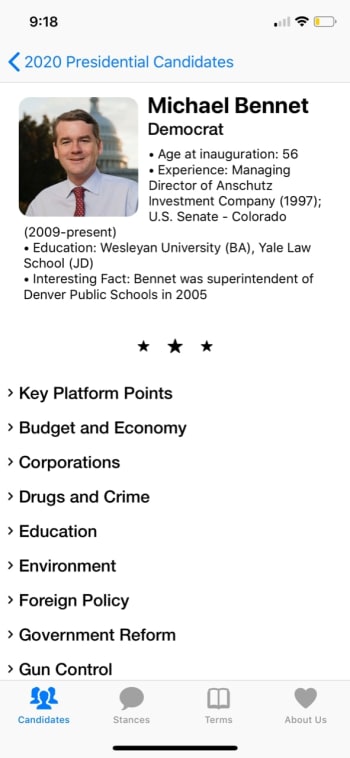
The front page of ’20 Matters has a helpful menu with links to both political parties’ contenders, recent polling data from multiple sources, information on local elections, settings for the user interface, and an “about this app” button. The latter gives information on how they gather dataIf you’re interested in knowing more, go there!

For first-timers looking to inform themselves, we recommend heading into the party lists:

20Start

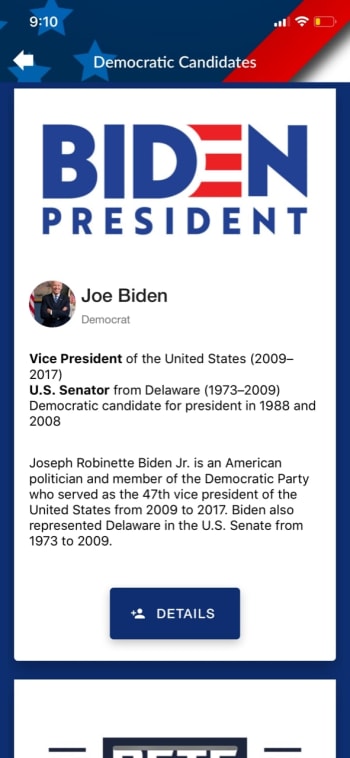
Here in the Democratic section – the first by alphabetical order – you’ll find the current candidates. You may notice they’re not in alphabetical order: the app puts the frontrunners at the top:

20Candidates

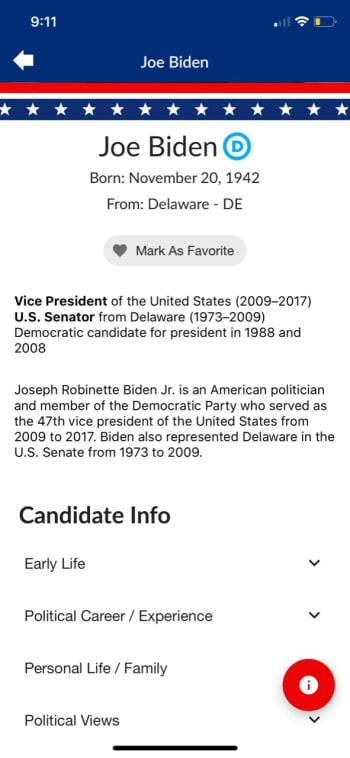
If you click on the leading profile (Joe Biden at this time), you’ll find more information about the candidate, including biographical details of their life, along with aspects of their political views and much more (campaign videos, latest tweets, recent news).

20Info

Overall review? We believe this is the best election tracking app due to its quality data and intuitive interface.

The system updates frequently so you can stay in touch with who’s still in. And, perhaps most importantly, the negative reviews on the Apple Store were related to a bug with the app’s release, not political bias accusations. At this time, it’s clean!

20 Matters Download Free ►
10

PoliTalk

PoliTalk

While it lacks a few of the amenities found in ’20 Matters, PoliTalk has good information and refreshing simplicity of design. On their main page, you’ll find all candidates (Dem, Rep, etc.) organized in alphabetical order:

PolStart

When you click a profile, the app delivers a long list of their policy stances, with a summary of the most crucial views at the top, and a link to their campaign website at the bottom (if available):

PolInfo

We strongly believe in the importance of staying informed. While PoliTalk may not have all the information found in other apps, the simplicity may be a great introduction to the 2020 political race.

PoliTalk USA Download Free ►
9

News sources

While we support the summary apps, we also recommend using them in conjunction with a news outlet for the most recent updates!

CNN

CNN

With almost five stars from 363K reviews on the Apple app store, CNN tops the charts!

The moment you step into the CNN app, they’ll have a short personalization questionnaire, where you can choose between options like “U.S.” or “World News.” From there, you can venture between their many categories:

JustCNNStuff

A few more positives about the app: their search menu works well, and the “save” ability makes it easy to bookmark articles for later reading, a feature that shouldn’t go ignored. All in all, it’s a well-rounded application.

There are many other news apps that can give you balanced, unbiased reporting. Consider NPR and Associated Press as sources that can give you just the facts without the spin. Remember, if you’re reading a news source that bangs the drum for only one side, you’re likely not getting the full picture.

It’s also worth keeping the candidates accountable by checking their statements with PolitiFact. If a candidate makes a claim, PolitiFact will cross-check their words against the truth. It may not seem like it, but the truth still matters!

After the Russian interference in 2016, we can expect an even greater disinformation campaign in 2020. It’s your civic duty to be informed on all the issues and get out to vote.

Conclusion

We get it: it’s hard to keep up with the elections. Politics can be divisive, sources need to be trustworthy, and everyday life gets in the way so easily. You’re trying to stay on top of it but work starts at 9 a.m., your cat needs to go to the vet soon, and you’re out of milk again!

These apps are quick, easy, and effective ways to keep informed on the go. Whether or not you decide to use one of them, they’re a great place to start your journey.

How to find and subscribe to digital magazines

Tired of your living room looking like a doctor’s waiting room? Ditch physical magazines for digitial!

MagsLet’s talk about magazines.

Magazines and newspapers evolved when the digital revolution took place. More users than ever get their weekly dose of information from their devices. To keep viewers interested, many of these sources changed!

Your favorite publications – perhaps People, Men’s Health, or Mountain Bike Action — are often available through online subscriptions and may even have a digital version.

Whether you still want to read a physical magazine or have moved on to your smartphone or tablet, the web has a lot to offer! We have some apps and websites where you can find new periodicals, order physical prints, or subscribe to your favorite online sources.

Magazines: Print vs. Digital

Where to find them

So, you want to know where to find magazines online, eh? Well, try out these locations. Any of them may be up your alley…

Magazines.com

Magazines!!!

Wow. That website title doesn’t mess around.

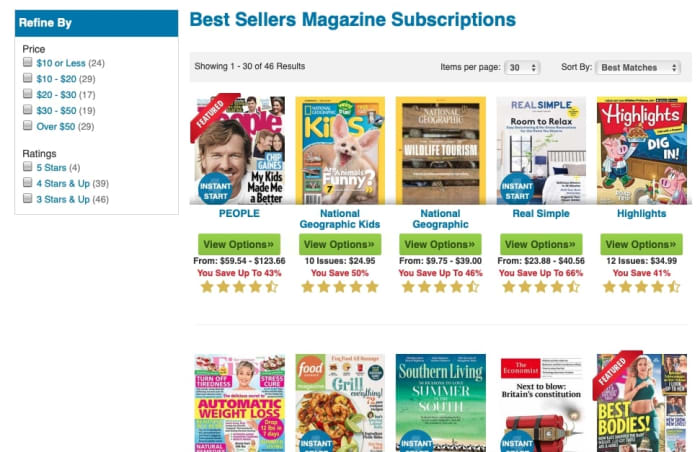
Magazines.com, as the name heavily implies, collects a large number of magazines in one place for easy searchability! You can create filters for the price and rating, all of which will help you find the best magazine for the best price. When you enter the magazine’s description, you can even discover important information, like the refund policy. Some titles allow you to cancel any time and receive a full refund for unpublished copies.

MagStuff

However, please note: this site isn’t infallible. They’re missing a few titles. For example, you won’t find one of the greatest magazines around, Popular Science (you can, however, find the related magazine, Popular Mechanics).

Apple News

Apple NewsDon’t let the title lead you astray: Apple News provides more than just news, it has some of the top digital magazines available. By purchasing a subscription, you can have all your magazines available in one queue, and new updates will be downloaded to all your connected devices.
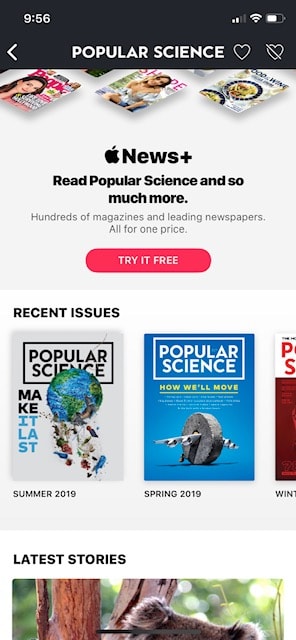
In fact, you can family share with up to six other people!

And, of course, Apple News also provides breaking updates. You can expect some of the top headlines whenever you open the app, no purchase required. And when you’re ready to find a magazine, you can use the search engine to find what you’re looking for! The app even provides a few articles so you can get a feel for the voice and content of the writers.

AppleNewsPopSci

Google News

Google NewsLike Apple News, this app brings you the top news headlines, in addition to a large bank of available digital magazine subscriptions.
Peculiar benefits to Google news? Apple doesn’t allow users to review their news and magazine app; Google, on the other hand, gives readers a platform to comment freely. If you experience an issue, you can let others know and have a better chance of receiving developer feedback.

Aside from that, both these apps provide great experiences intended for the users of different devices. Your choice will likely come down to which laptop or phone you use!

Internet Search

Browser

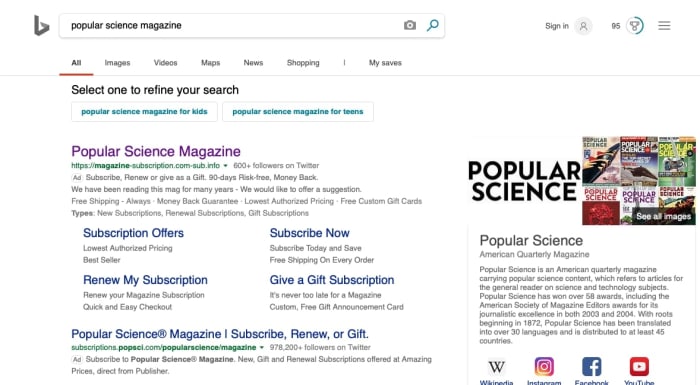
When in doubt, use a browser!  If you have a magazine in mind, search the title with “digital subscription.” You may be surprised by what you find, whether that’s an online version you didn’t know about before or an electronic magazine similar to the one you love.

Why go digital?

Digital

Sure, digital magazines lack that wonderful feeling of paper. You can’t turn the pages or unwrap them when they come in the mail. However, they have a number of great benefits to consider, which include but are not limited to:

  1. Environmental benefits. You probably saw this one coming, but still: despite the efforts of many magazine companies to create prints from recycled papers, the industry still creates considerable waste. A digital download, however, does little to no damage.
  2. Convenience. Digital copies take up zero physical space, unless you’re counting the area of your device’s storage drive (and we aren’t). Unlike a magazine, this means your entire collection of magazines past and present can go with you to work, school, the gym, home, and beyond!
  3. Connection. Many online magazines include links to sources and products that physical magazines can only mention and direct you towards. Want to know where to find those mountain bike rims? You may just be a click away.

Conclusion

Information comes faster than ever, from many different sources, but magazines managed to survive by jumping into the online realm. There are digital subscriptions, dedicated websites and apps, and powerful tools for discovering news, journals, and periodicals. Check them out!

We hope this quick intro helps you discover something new or shows the benefits of trying a digital subscription. Thanks for reading!

6 best news apps

Looking for a new news app? Here are some options!

News

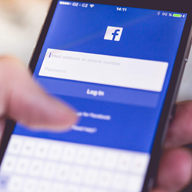
We know you already know this, but it might be time to start looking outside of Facebook for the latest headlines.

All too often, we lean on the algorithm to take care of the discovery process on our behalf.

Because it’s challenging to keep track of every news source, app, and website out there, we’ve rounded up some of our favorites.  These can help you catch up on the news from your smartphone.

Best news apps

1. Apple News/Apple News +

Apple News

Yes, it comes default with your iPhone, the latest happenings, be it climate change research or the most recent antics from some Kardashian.

Apple News is free, but the company recently rolled out the new + service. Now, if you’re using the free version, it seems like a lot of what used to be available is now part of the upgrade.

That said, if you use the app, $9.99/month gives you access to content that’s typically gated, like The Wall Street Journal or the Los Angeles Times.

For $9.99, Apple News+ isn’t a bad deal — though there are some kinks that they need to work out when it comes to creating a seamless, cohesive experience. For instance, some magazine articles are PDFs versions of the original.

We’re sure that Apple will keep improving the app, in the meantime, the “Netflix for magazines” is a pretty good deal.

Apple News + Download free ►
9

2. Pocket

Pocket

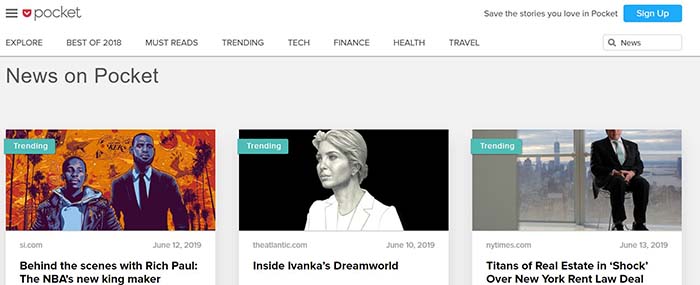
Pocket is a great app for those who like scrolling through a long list of articles and saving the ones that pique their interest for a later reading sesh.

Pocket is a distraction-free reading experience, kind of like reading a book on the Kindle. All articles are hand-picked by you, downloaded and stored to your phone. So, when you do sit down to read, you’re not bombarded with recommendations or notifications. (That said, you can see recommendations based on what you save and like if you choose.)

The app works on your phone and desktop and presents a minimal, calming interface that design lovers will appreciate. Pocket is free, with the option to upgrade. The premium account is still a pretty good deal at $44 for an annual subscription.

What makes this a different experience than some of the other platforms like Apple or Google News is that your reading list is a saved, searchable archive. You can use this to keep track of reference articles, save recipes you find online, or whatever else you’d like to file away for later use.

Best of all, Pocket works offline. Save up dozens of stories, then enjoy them all on an airplane if you like.

3. Inkl

inkl

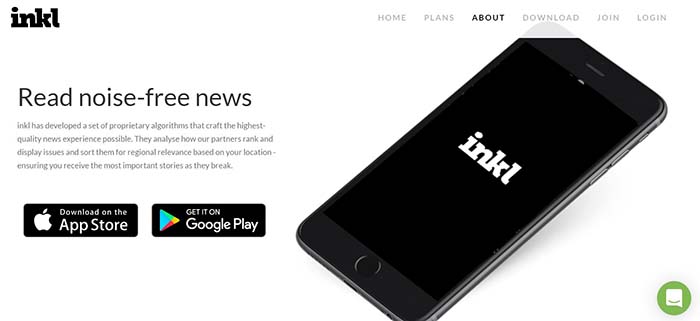
Inkl’s whole goal is to help you break the habit of clicking on junky articles and bringing high-quality content straight to your smartphone.

You can create filters based on preferences or location, but the platform prides itself on their algorithm that scans for quality over engagement. Basically, Inkl is an antidote to what’s been going on with YouTube and Facebook as of late.


Like Apple News +, you’ll pay $10 a month to use the tool, but that takes care of the paywall problem. Again, it’s actually a good deal if you’re subscribed to a few websites already.

4. NPR News

NPR

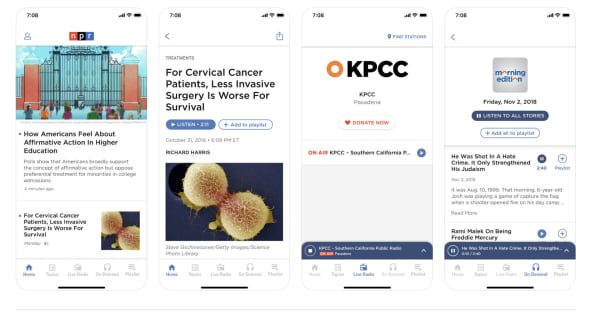
If you’re more interested in receiving your news through the airwaves, then the NPR News Radio app is a nice pick for quality news. Plus, you get access to the network’s podcasts and local stations across the country.

You can follow your favorite stations and programs, and stream them on-demand, listen to live radio, and yes, you can also read stories. NPR is always a good resource for trustworthy news, but it’s also an excellent destination for entertainment, music, and arts/culture.

7

5. Lumi News

Lumi News promises to deliver a personalized news feed based on your interests through the power of data science. How it works is, users will connect their social accounts, select topics, and publications they already like. As you interact with the platform, it will deliver more relevant content based on past habits.

Recommendations come in the form of top news sources, as well as indie blogs, audio, and video content they think you might like.

The only downside with something like this is if you click on too many BuzzFeed listicles and celebrity gossip headlines, Lumi might think those are your preferences.

What’s extra nice is that Lumi News also allows you to save stories to your phone to read them offline. So, load up when you’re connected to Wi-Fi to prevent yourself from running low on data every month, or stock up on reading materials before a flight.

Lumi News Download now ►
8

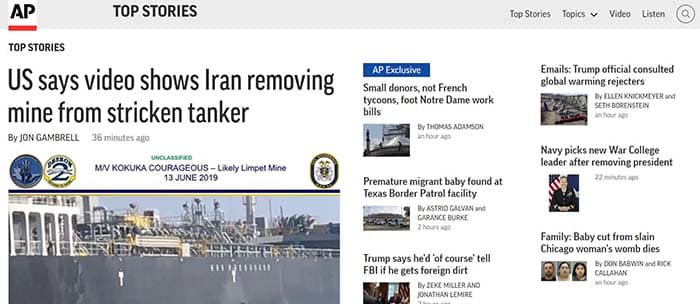
6. AP News

AP news

The Associated Press is pretty much the gold standard for actual fair and balanced news across the globe. Many news outlets share their stories and follow the AP Style when writing stories.

Unlike the options we just mentioned, AP News is not an aggregate platform. All stories come from the Associated Press’s global network of journalists, allowing readers to keep up on local news, as well as what’s happening around the world.

Users can follow topics, specific AP-affiliated newsrooms, and listen to radio news, watch videos, and scroll through galleries. AP News is similar to NPR’s app, in that the news comes from one source, but there’s a ton of content, regional networks and a long list of topics at your disposal.

Associated Press Download free ►
8

Wrapping up

When choosing whatever news you like, always look for a bias to determine whether what you are hearing is truly “fair and balanced.” Hopefully, at least one of these apps gave you the option you need to stay informed.

9 best websites for news

These sites will keep you informed with high-quality journalism.

best news sites

Much of our access to information is left in the hands of algorithms, even if we don’t get all of our news on Facebook. Sometimes, it’s hard to find articles that represent a balanced look at what’s going on in the world.

Google “best news sites,” and you’re already walking into a whole world of bias. Every website has its list of “best news sites,” some based on popularity, others out of a great commitment to quality journalism.

Below, we’ve included a roundup of some of our favorite sites, though they’ve made a list for different reasons. These sites provide a well-researched, unbiased view of current events, so you can (hopefully) piece together your own opinions on what’s going on in the world.

Longform

longform website

Longform is a website that offers a curated selection of the best writing from around the web.

They’ll post a mix of the latest news — long-form pieces from sites like the New York Times, ProPublica, Rolling Stone, the New Yorker. Plus highlights from the country’s local papers and the true crime gem, Texas Monthly.

What’s nice about this roundup is, it’s committed to a blend of current events and older stories — you might find a deep dive on a murder that happened in 1987 posted right after a Rolling Stone profile that ran in the most recent issue.

We recommend Longform for those looking to elevate their “digital loafing” experience and spend a good chunk of time reading.

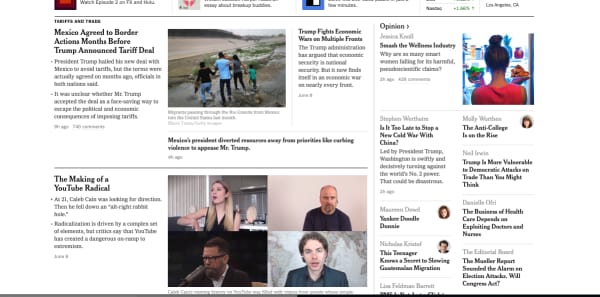
New York Times

nyt home page

The NYT is the gold standard when it comes to online news sites. The Times is known for their quality writing, progressive reporting, and commitment to journalistic ethics.

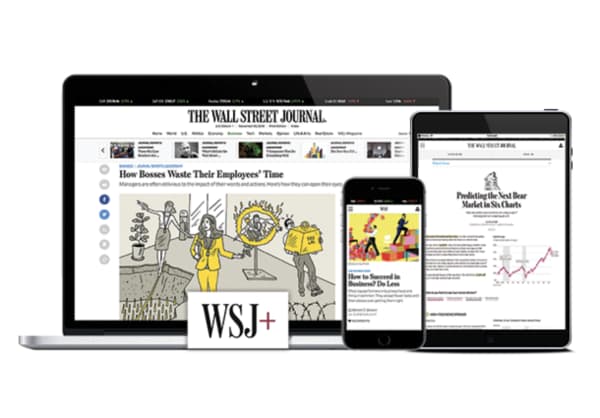
The Wall Street Journal

the wall street journal news site

The WSJ started out as a business publication, branching out into general news content after being purchased by Rupert Murdoch back in 2007.

While the Wall Street Journal is still a top source for business content in 2019, it’s a solid source of fact-based reporting and Pulitzer Prize-winning articles.

That said, the editorial section has long been known for anti-government, anti-tax stances representative of the Republican Party, but they’ve done a decent job keeping their reporting fair and balanced.

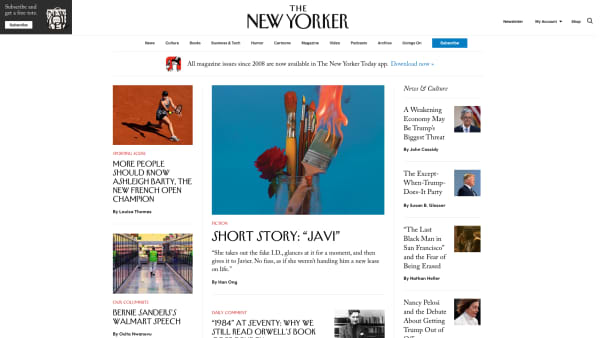
The New Yorker

new yorker website

The New Yorker is another paid subscription, and they fall slightly outside of the news-only niche, offering a mix of current events, cultural commentary, short stories, and of course, the cartoons.

Still, it’s of course, one of the best sources of writing on the web and in print — and if you’re concerned about your mounting stack of subscriptions, it’s not a bad deal — you get your first 12 weeks for $12, plus a free tote bag.

Your subscription includes access to the website’s entire archive, plus the weekly issue delivered to your mailbox.

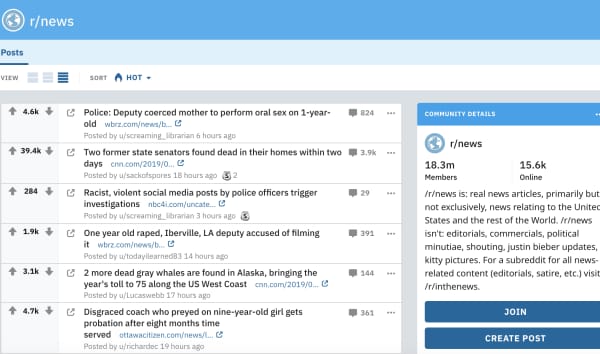
Reddit

reddit r/news

Hopefully, you’ve gotten hip to the fact that Reddit isn’t just a digital home for wayward trolls.

While it might not seem like the go-to news site, the platform allows you to add feeds like r/news to your feed, along with whatever else you like to follow. What we like about Reddit is, you can find articles from all of the big publications, alongside commentary from the average reader. The community aspect of Reddit helps push the best, most engaging stories to the top of your feed.

Medium

medium news

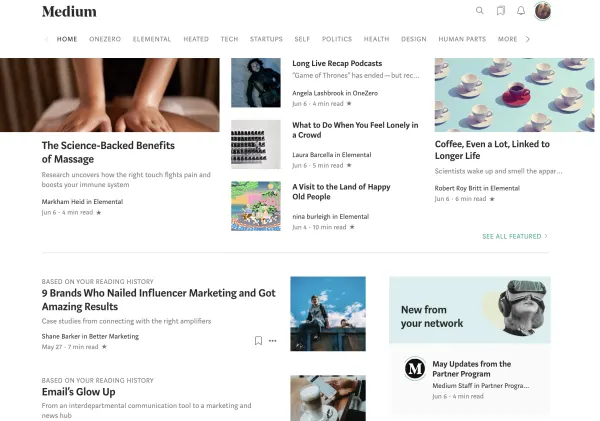
Medium is an interesting one. We’re not necessarily listing it because we’re impressed with its commitment to high-quality journalism, as anyone can post on the platform, though there’s definitely a lot of content there that meets that high standard.

What’s cool about Medium, however, is that it’s easy to find articles from people — from reputable publications, barely established start-ups, and crypto-currency pros — in other words, there are a ton of ideas on Medium that you won’t find everywhere else.

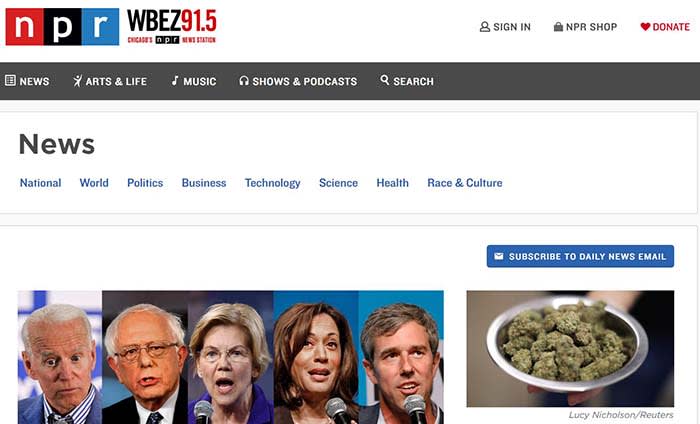
NPR

NPR website

NPR isn’t just for the airwaves; the National Public Radio service is a non-profit organization focused on presenting the facts in a fair, balanced manner.

The NPR site allows you to listen to live radio from your local station or a favorite from another state; you can listen to podcasts, get music recommendations, oh, and read the news.

News stories focus on up-to-the-moment events and give visitors the option to listen to a short news segment or read the article.

Reuters

reuters home page

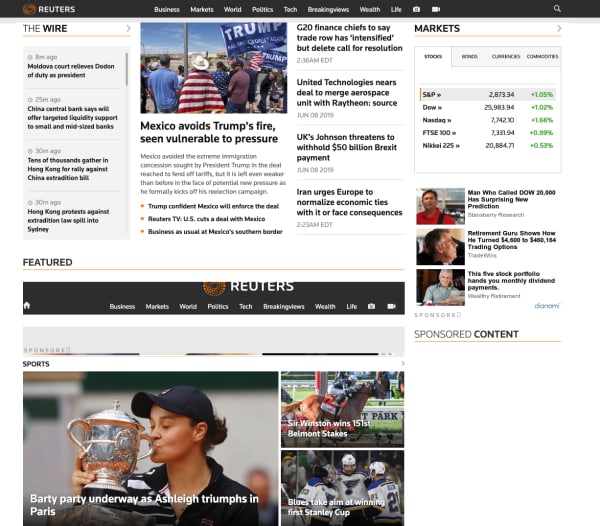
Reuters doesn’t get a lot of attention, but they’re a quality resource for unbiased reporting, the perfect place to keep up on current events without the commentary that you’ll find with many news sources.

The BBC

bbc website

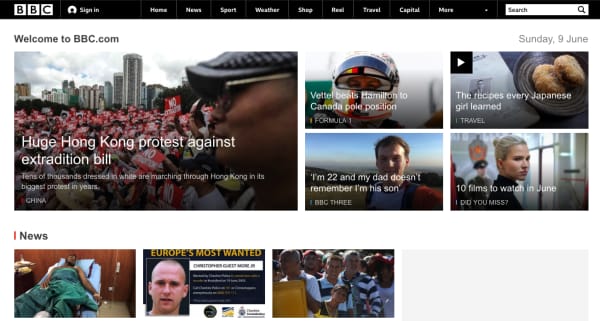
The BBC website, like Reuters, is a reliable source of global news, covering everything from Trump’s latest antics to climate change, fashion, and financial news. A well-rounded source of unbiased reporting that feels a lot like the NPR site, the BBC sticks to fact-based reporting and is guaranteed to give it to you straight.

How Facebook’s news feed works

Here’s why you see what you see in your feed.

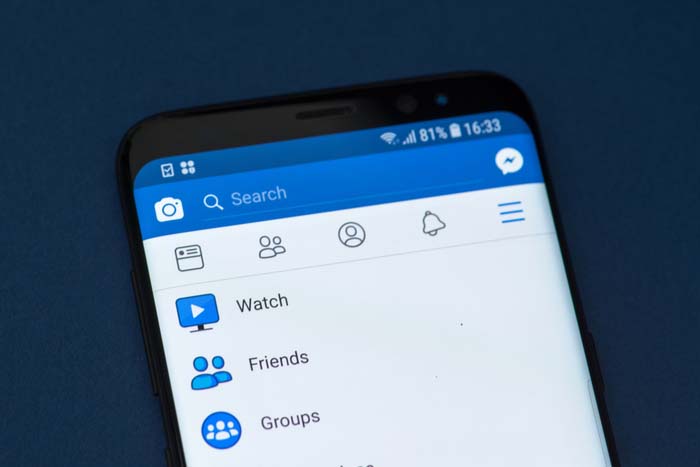
Facebook news

According to Pew Research, a majority share of adult Facebook users in the U.S. have no idea how the platform’s algorithm works — much less how the news feed operates.

Sure, the average person isn’t expected to know the ins and outs of machine learning concepts. That can be excused.

However, it’s a good idea to understand why we see certain things — and how to customize our content for a better experience.

Facebook news feed changes

Remember last year when an idealistic Mark Zuckerberg announced that his vision for Facebook was to shift the platform toward more meaningful interactions?

If you’ve had an account for the past several years, chances are your feed was clogged up with updates from people you don’t really know or care about.

Since that announcement, which was all about friends and family, Facebook has started placing more value on engagement. This means you’re supposed to see the things you care about first.

According to Facebook, the platform evaluates the posts in your feed based on three main signals.

First, they’ll look at who posted it. From there, it prioritizes posts based on how often you interact with that friend, business, or public figure’s content.

The second component is content type. Do you read more articles, “like” more photos, or prefer to watch a muted video? If the algorithm detects a preference for one type of content, they’ll prioritize posts that best match the format you typically engage with.

Interactions are the final ingredient that comes into play. The algorithm is designed to present content that other people enjoyed, assuming you’ll like it, too. So, if a lot of your friends like a particular video, it may show higher in your feed.

7

Engagement isn’t exactly indicative of quality

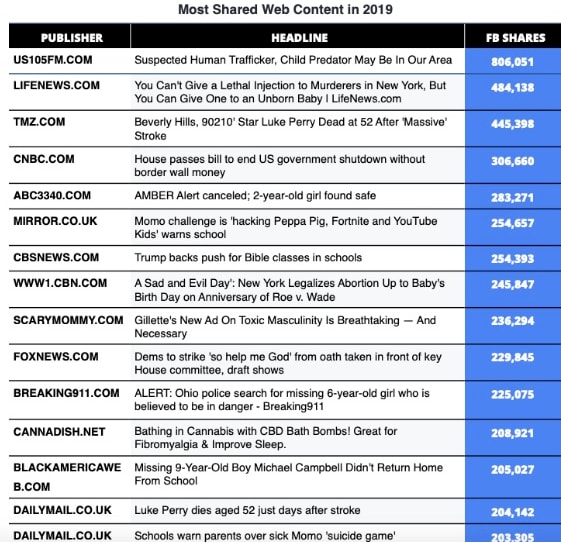
According to the social media platform Hootsuite, the latest version of the algorithm prioritizes active interactions (like shares and comments) over passive ones.

A quick look at 2019’s top posts so far reveals a preference for click bait, regardless of whether the posts are factual or not.

top shares on facebook

Facebook’s goal is to eliminate “engagement baiting” to encourage “authentic” exchanges on the platform. The problem is, people still share garbage content with their network and those posts still get shared.

Can you control your Facebook feed?

When Facebook first came on the scene, you’d see everything in the order it was posted. However, when more people joined, the social networking site began curating everyone’s feeds. It allowed them to present content with more engagement. Basically, it netted them more ad dollars.

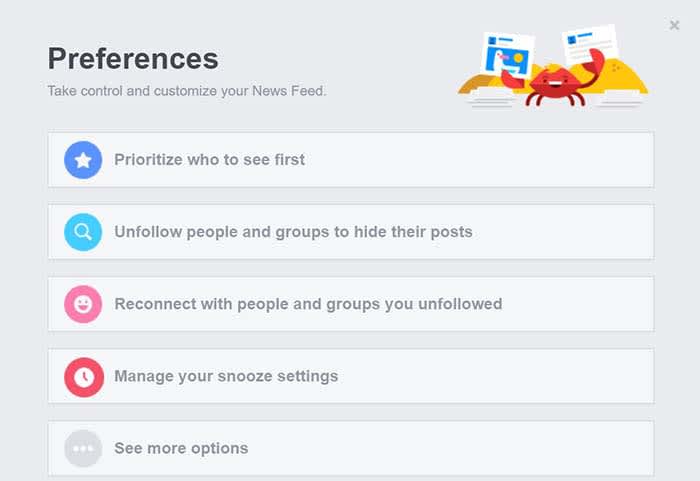
Facebook does let you make some changes to what your news feed shows first. There’s a brief walkthrough right there on the site, too.

All you’ll need to is click the down arrow on the top right corner of your Facebook page. From there, select “News Feed Preferences”, and you can choose which posts come up first.

Facebook news feed

This little trick is ideal for “unfollowing” posts from problematic family members you can’t get away with unfriending. Sorry racist Aunt Sheila, you gotta go.

FB is trying to be transparent about what you see in the feed

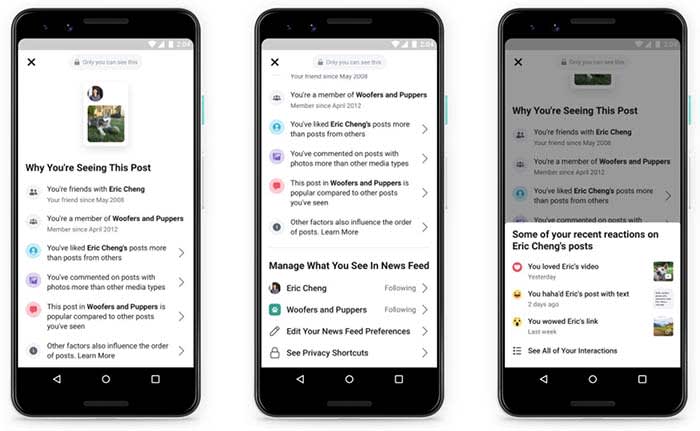
They’ve also just recently introduced a new feature called “Why am I seeing this post?” It’s designed to help people understand why they’re seeing a specific update and give you more control over your feed’s contents.

Facebook screenshots

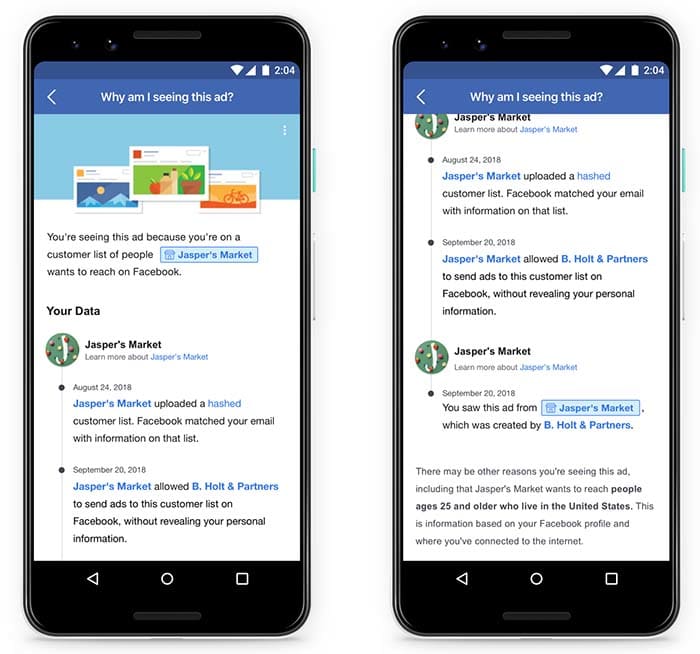
The feature’s commercial sibling, “why am I seeing this ad” also recently got a facelift of its own. Since February 28, Facebook has allowed users to see which brands uploaded their data.

Why am I seeing this ad

According to TechCrunch, Facebook was going to require advertisers to pledge that they had someone’s phone number or email address for ad targeting.

While that tool came out last June, Facebook did not implement any verification process. Instead, they opted to take businesses at their word.

Wrapping up

It’s unlikely that either of these new changes will stop the platform’s data misuse. That’s a staple of the business model, after all.

However, these changes do help those who can manage to inform themselves about the platform’s latest exploits gain a bit more control.

Should we tax Facebook to support journalism?

Big tech may be able to pay the bill to help the fight against misinformation.

Journalists in the field

The journalism advocacy group Free Press recently published a proposal calling on Congress to start taxing Silicon Valley’s biggest data harvesters. The proceeds will go to the struggling journalism industry.

The organization compares the proposed tax to a carbon tax. It would transfer wealth from those companies profiting from the spread of misinformation.

Of course, the “what should we do about journalism” question has been floating around for years. The question is whether all news should take on the publicly-funded NPR/PBS model?

Or, should big tech share advertising revenue with the news media, regardless of engagement rates?

Big tech says they plan on funding journalism projects

Facebook has pledged $300 million to help fund quality journalism, following Google’s 2018 pledge for the exact same amount.

As it stands, Facebook and Google both make billions of dollars through ads. This makes it difficult for independent publishers to generate revenue through ads themselves.

Facebook has reportedly put funds aside for media projects. For example, Facebook made a $16 million grant for journalism initiatives such as Report for America and the Pulitzer Center. Apparently, the platform has some other projects in the works involving Facebook Watch. This pays news outlets like BBC, Fox, and ABC to create programming for the social platform.

Facebook Watch

Facebook also says it’s working hard to help news outlets sell subscriptions. This certainly sounds good in theory, but how many subscriptions will people realistically shell out for?

Though this is purely anecdotal, it seems that over the past few months, there has been an uptick in paywalled content.

People might pay for a handful of their favorite publications. However, adding another series of fragmented subscription services to the mix won’t cut it.

One of Mark Zuckerberg’s Facebook blogs from 2017 discusses the need for quality journalism and civil discourse. However, the platform still seems to prioritize the viral, often low-grade content that generates ad revenue.

Big tech endowments could have a negative impact

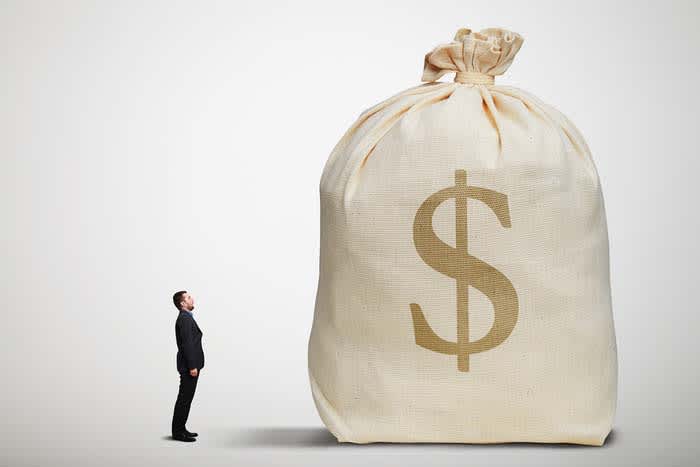
Big bag of money

There’s no doubt that the state of reporting is in crisis mode. According to a study from Nieman Labs’ site, communities that lose a local newspaper experience an increase in political polarization.

Big tech’s proposed contribution to local news outlets sounds like a potential solution. However, it might not be the best path toward balanced news.

An article from the Columbia Journalism Review has another stance. While journalism’s financial woes and big tech’s dominance are both important issues, the two shouldn’t be conflated with one another.

Yes, big tech does get the ad revenue that news outlets used to get. However, direct funding could exacerbate the spread of misinformation. Let’s face it, this has caused enough damage already.

Sure, Facebook has begun fact-checking the articles posted to the site. However, there’s still the issue that it’s in the platform’s best interest to promote the top performing content over important, unbiased news updates.

What kind of taxes does big tech pay anyway?

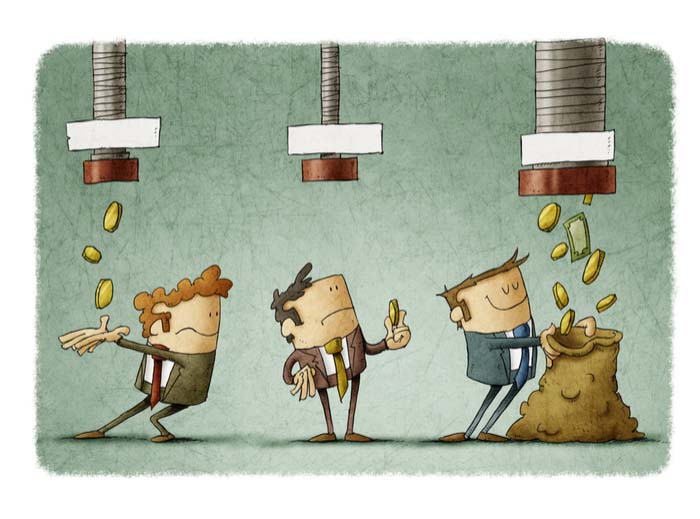
Differences in money

In the U.S., not much. Last year, Amazon paid exactly $0 in corporate taxes, while Facebook paid about 4%.

In the EU, things are a little better, but not by much. The European Commission reports that tech companies pay about 9% of their profits. Traditional companies pay roughly 23% in taxes.

Guardian reporter John Harris brings up a good point. He says that big tech has dramatically changed societies across the globe. However, big tech is doing little to offset the fallout caused by digital disruptions.

His piece also highlights the fact that the rationale behind corporate tax breaks doesn’t quite work with massive tech companies. This is because they’re not reinvesting their savings into hiring more people.

Could a Facebook tax actually happen?

Silicon Valley residents recently passed a bill that approved new taxes on tech companies to offset the massive income gap. The proceeds go toward fighting homelessness and increasing affordable housing, not journalism. At the end of the day, it’s one example of tech taking responsibility for its impact on the community.

There are similar efforts currently underway in Austria, Australia, and the United Kingdom. Austria is moving forward with a plan to tax tech giants that generate profits in the country.

BBC correspondent David Silleto says that extra cash from government tax breaks introduces its own set of political questions. Namely, will governments then have the power to control which stories get published? Will they suppress balanced information?

Obviously, there’s a lot to consider and a lot at stake. We’ve already seen the devastating impact on social media, digital advertising, and reliable news sources. Hopefully, we’ll find a solution sooner, rather than later.

Facebook considers revamping how it shares news stories

Facebook’s decision will have a monster impact on what news you see.

Mark Zuckerberg

Facebook is once again turning its attention to news. Users crave it, but the social media platform is destroying the ability for publishers to monetize their content. The potential solution? A new Facebook news tab.

What will that look like? The company has been aggressive in segmenting actual news away from users’ news feeds. In a video discussion shared on Facebook, Zuckerberg sounded like he didn’t have any plans to reintegrate news into the primary product.

“If you look at the ways that people are interacting now online, that are growing the fastest, it’s messages, it’s small groups, and it’s ephemeral stories. And these all have the property that they’re more private than these digital town square-type equivalents,” Zuckerberg said. “I think it’s clear that this is the next big thing that people want to get built.”

You can watch Zuckerberg’s discussion with Axel Springer CEO Mathias Döpfner here:

For most of human history, writers had to clear a high bar to be published. You’d need access to a printing press or the ability to impress an editor before seeing your thoughts hit the page. The internet changed all that. Now, anyone can publish anything and share it with the entire world. The algorithms behind Facebook and Google have directed audiences away from many legitimate publications. Fringe bloggers can have just as much sway as established media organizations with fact-checkers and institutional safeguards.

In 2019, free information is everywhere…

But free content isn’t always the most valuable. Investigative journalism, for example, requires a lot of time, effort, and resources. It’s not a place where a hobbyist can succeed. Some free content may simply be opinion, fabricated information, or an item created with an agenda – to sell you a product or an idea. As the standards of publishing erode, that hasn’t curbed our appetites. American adults spend an average of 10.5 hours consuming media every day. That hunger, combined with dwindling media company resources, is creating a major challenge for Facebook.

Just this week, a 177-year-old newspaper saw its staff fall below the bare minimum of people needed to field an NFL team.

Throughout Zuckerberg’s video conversation, the issue of a fair monetization system was a recurring theme. We need to pay for journalism somehow. As the advertising model continues evolving, that’s a serious problem. Digital ads pay nothing close to print ads. Ad-blocking software starves publishers even further. Perhaps something like Brave’s Basic Attention Token is the answer. Or maybe Facebook can find a way to bankroll media organizations, perhaps becoming a publisher in its own right.

One fear about a new news tab is that such a feature would actually shove news to an area where Facebook users wouldn’t even see it. Remember, Facebook’s primary goal is to keep you on Facebook, engaged with the platform. If you click away to read a story from the Cleveland Plain Dealer, the social network can’t monetize you anymore.

But until we solve the monetization problem, journalism organizations will continue to crumble, Facebook will have less content, and the threat to our democracy will grow.

News site paywalls: Are you missing out if you don’t pay?

If you can’t afford to pay for news, are you missing out?

With the well-documented rise of podcasting and a whole internet full of information, it doesn’t seem like we’re wanting for more content.

But as people have given up on their local papers and established publications increasingly gate their content, the idea of paying for digital subscriptions has left us wondering: do more paywalls reduce access to reliable news?

Internet users are accustomed to accessing content for free, so paywalls have kind of always had an uphill battle to fight. In theory, they don’t seem completely unreasonable.

Unfortunately, there’s no “right” to reliable, balanced news. And, according to the Brookings Institution putting the news online hasn’t really helped media channels make more money.

online news

Paywalls aren’t new

The paywall has been around since 1997. Pioneered by the Wall Street Journal, the initial experiment with the revenue stream was fairly successful. However, most general news outlets had concerns that paywalls would reduce readership and, thereby, digital ad revenue.

The American Press Institute found that 53% of people pay for news. The report found that people are more likely to pay for digitally native sources than for the digital version of a newspaper.

Maybe there’s an idea that if you’re going to pay for something, you want high-quality content — interesting reads like long-form pieces from the New Yorker or Wired.

Local news brings politics and breaking stories, but also high school football scores.

There are also resources like PBS and NPR, those who rely on donations to pay for quality reporting.

Higher quality niche publications charge a lot

Recently we came across an episode of the Atlantic debate podcast, Crazy/Genius entitled, “Are We Killing Local News?” The two sides looked at the viability of paywall content, and whether it could save the journalism industry.

The pro paywall guest, a former Denver Post managing editor, started a new publication that charges about $500 a year for in-depth tech sector coverage.

The idea is, they can afford to pay reporters to spend a lot of time doing investigative work and can provide news that not every free publication will be able to push out there. So those people who need to stay in-the-know can pay for a quality publication that could potentially give them a leg up in the space.

That model is a lot like professional associations which provide members with access to studies and content that not everyone can read.

There’s also Politico Pro, which has been around since 2011. It charges their subscribers a yearly fee in the mid-four-figures for in-depth coverage of topics like healthcare and energy. A subscription to the New York Times isn’t especially prohibitive — they have a number of deals— the newspaper is a dollar a week for a limited time.

But, say you pay for NYT, the Washington Post, maybe Wired, too. Add in your local paper, and your media budget for the year starts to climb.

Which begs the question, how many people lose out on quality information because they can’t or won’t pay for multiple publications?

If local news adopts this model, that means that some communities won’t hear about the things that affect them on a daily basis.

Many people may be okay with paying for content, but it definitely leaves out a wide swath of the population — and eventually, could limit access to voter information that allows lower income folks to make their voices heard.

reading news

Is it fair that we have to pay for quality knowledge?

It depends on how you frame this question.

Good content is worth paying for — those who create it are putting in a lot of work that has value.

Plus, the Media Insight Project said that four-fifths of respondents in a recent poll said they were happy with their subscriptions.
Most subscriptions are about $10 per month, a little cheaper than a Spotify account or Netflix, so it’s not this huge investment.

The issue that arises though is that lower-income people might lose access to good information.

Yes, it’s fair to gate access to certain things — especially if you view media as entertainment in the same vein as things like Audible, Hulu, Netflix, or Spotify.

But we will need to do something about the potential widening knowledge gap, as well as the rise in fake news.

As people rely more on social media for breaking news, readers lose out on accurate reporting, local issues, and scientific breakthroughs. Those who can afford industry subscriptions can access information not everyone can access.

Still, there are public radio stations like PBS and NPR that offer free news to all — maybe that’s a lifeline we should do more to nurture. Although those outlets are often targets of budget-slashing politicians, PBS costs just $1.35 per citizen per year.