AI and the media — what’s next for news of the future

Will AI help the news or destroy it?

News organizations have lost the power to define what is and isn’t news. Instead, social media channels and aggregators have called the shots, capitalizing on algorithms that directly impact the content that users see, as well as the type of content that gets created.

Marketing and advertising have been capitalizing on AI innovations for years, to the detriment of reliable news.

By contrast, few media outlets have harnessed the burgeoning technology successfully. Yet, AI offers a ton of promise for the media industry.

What stands in the way of AI adoption on a mass scale? Here’s a look at some of the challenges and emerging trends within the space.

Where are we at with AI and the news?

ai news

China rolled out their artificial intelligence news anchor a few months back. The Washington Post has been using their robot reporter for a couple years at this point. Other news organizations are using AI to help journalists analyze datasets that inform their reporting.

Then there’s the question of whether AI can write articles. The answer is, they can. However, writing is best done by a human, as it requires art, creativity, and empathy. Otherwise, you get something like this.

The best application is using robots as a resource for finding plagiarized content and errors and analyzing statistics. Or, perhaps, running a media bias fact check.

These elements come together for more accurate reporting — and let writers cover more ground in less time.

We’ve found that there actually are a lot of places where the media is taking advantage of the new technology. The problem is, like the artificial intelligence news anchor and the reporter bot, the news media has been using AI in these novelty applications.

Unfortunately, they haven’t been able to use it in the same ways that advertisers have — and are struggling to monetize.

Why is that?

One thing slowing down mass AI adoption — at least on the distribution side is the business model. TV news is funded by advertising shown during commercial breaks.

Companies that use AI for advertising or content distribution make money by selling products or through ad revenue. So, content that’s interesting gets top billing over balanced, unbiased reporting on unsexy topics like local news coverage or regulatory issues.

Some online news organizations now make money through digital subscriptions. Which, of course, is an alternative to the aggregator model which depends on behavioral targeting, clickbait, and promoting video content over the written word (customers see more ads, so more money).

News by virtual assistant

Smart speakers like Alexa, Google Home, and Cortana are giving people an easy way to get their daily updates from news organizations.

As such, several media outlets are beginning to experiment with how these digital assistants can help them deliver the news more effectively. According to Trushar Barot, of Harvard’s Nieman Lab, newsrooms predict that AI-driven interfaces could have a greater impact on how we consume information than the iPhone.

That same article then mentions that these organizations say, “they’re not technology companies.” Yet, automatically generated voice content is the next great threat to journalism.
That said, not every news organization is sitting around ignoring innovation. NPR has been working on voice AI. NPR product manager Ha-Hoa Hamano says the broadcaster’s hourly newscast is a gateway to the rest of NPR’s content, allowing them to reach the 32% of 18-34 year-olds who don’t have a radio.

Lack of industry standards for AI practices

The media have been reporting on AI since day one. Yet, using the black box algorithms responsible for promoting fake news hasn’t been part of the strategy. Responsible journalists can comment on these changes and continue to publish articles — and they should. But, it’s going to be hard to enact change if things keep going as is.

While newsrooms understand content and the process of creating quality content in a short amount of time, the next step is joining forces with sophisticated tech teams to reach a larger audience.
Google Project Soli will make every object smart

How will Google’s new tech change our lives at home and work?

The Internet of Things has already changed our everyday lives: Turning on the lights with a clap of the hands, dictating shopping lists into the air, and letting everyone live out their Sci-Fi dreams. The fantasy has always been to live in a home where all our devices can communicate with each other, and we like to imagine we’re there. Then practicality sets in and you concede that you still have to get up off the couch to pick up the sandwich that you left on the counter.

Maybe we’re too lazy.

The biggest roadblock remains: In order to reach this new technological milestone we’d have to replace our “dumb” objects with far more expensive “smart” ones – a move we’re not ready to make. That’s not even getting into the privacy issues, the inevitable security breaches, the whole nine yards. Google formed Project Soli in search for an answer.

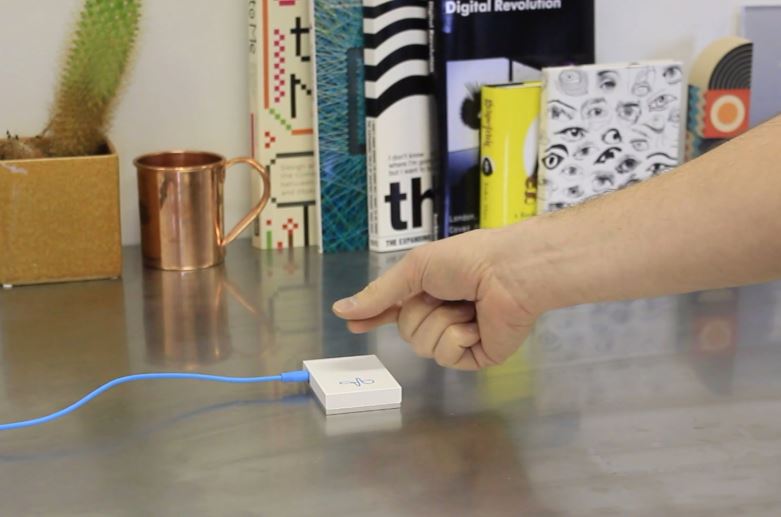
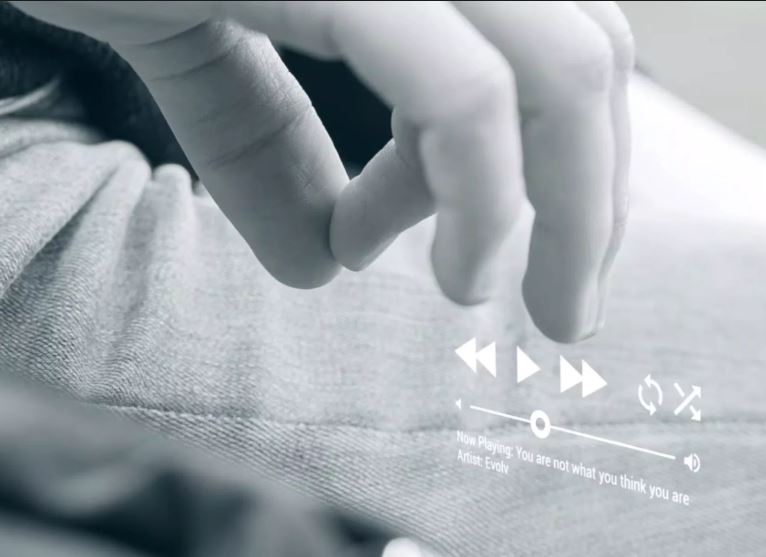
Adjust the volume by miming it.
Simple hand and finger gestures transmit unique signals to the tech.

Project Soli

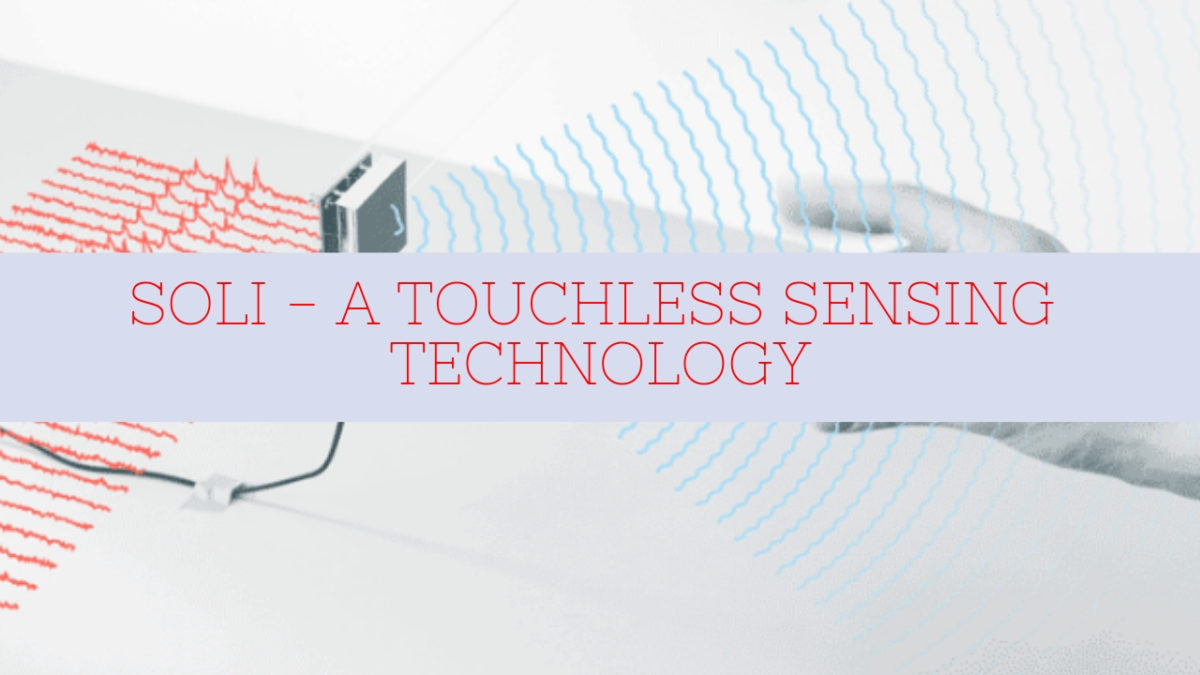
Project Soli’s focus was to use radar to accurately track hand gestures. It’s a simple idea that can now have far more interesting applications; Soli can detect the typical big motions, but it can also detect minute movements (of less than a millimeter) through obstructions and with extreme accuracy. “Radar has been used for many different things: To track cars, big objects, satellites, and planes,” says Ivan Poupyrev, the founder of Project Soli.

“We’re using the radio frequency spectrum to track micro motions of the human hand, and use that to interact with wearables, the Internet of Things, and other computing devices.”

That was four years ago.

Design Lead Carsten Schwesig says that “now we are at a point where we have the hardware where we can sense these interactions and we can put them to work.”

So how does it work?

Project Soli has designed extensive recognition software that sees gestures through radar. Certain patterns reflect human intent and the new technology can convey those intents to various devices around the house. “Imagine a button between your thumb and index finger,” says Schwesig.

How does one mime "get me a sandwich?"
If you can mime pushing a button, the sensor gets what you’re trying to convey.

“The button is not there, but pressing [as though it was] is a very clear action.” Radar can sense that action and attribute it to specific intentions. The past four years the team has taught the software to recognize a wide variety of physical signals:

How will this build a smart home?

“Soli interaction makes us realize we can interact with computers just using day-to-day objects,” explains Professor Aaron Quigley, Chair of Human Computer Interaction in the School of Computer Science at the University of St Andrews. “If I had this kind of sensor in, for instance, a regular kettle and a cup, it’s possible to detect them [with radar]. You can interact with them, and the computer will understand what you’re doing. Suddenly, every physical object in your home becomes a way to communicate with your computer.”

This could usher in a new level of digital art!
Soli recognizes gestures that make brush strokes on tablet thinner or thicker.

It’s 2019 now and radar chips are tiny, cheap, and low-powered enough to become ubiquitous in today’s market. A recent U.S. Federal Communications Commission waiver has even authorized Project Soli to utilize frequencies between 57 and 64 Ghz – higher frequencies that are commonly permitted in everyday gadgetry. This opens up even more possibilities for what Soli could do, and could mean we’re drawing excitingly close to where this powerful tech is regularly available.

Are you excited for a fully smart home, or do you think the inexorable privacy and security issues will quash any real profit from this excursion? Let us know in the comments below, and stay tuned for more news on Project Soli!

10 best mobile apps for keeping up with celebrity gossip

Want to know what’s going on with your favorite celebs? Here’s how to get the inside scoop.

It’s easy to get wrapped up in the world of celebrities. There is constant news of romance, breakups, fights, and other interests that keep the gossip interesting and fresh. While there are many ways to keep up with celebrities’ official profiles, sometimes you want a little more dirt. Here are some of the best apps to keep you up to date on your favorite celebs.

Best celebrity gossip mobile apps

10. MTV News

MTV has changed a lot over the years, but for a long time now it has been a consistent and reliable source of celebrity news. While it primarily focuses on teen idols (such as Taylor Swift and One Direction), it also reports on a much larger variety when important news happens.

MTV News Free Download
7

9. Instagram


View this post on Instagram


Got myself a fiancé just before new year. We are very happy and in love, and our cats are chuffed as well xx

A post shared by Ed Sheeran (@teddysphotos) on Jan 20, 2018 at 5:49am PST

Social media is where most celebrities go to make important life announcements. All the other sites are just compiling posts made by celebrities, but going to Instagram is going to the source itself. You’ll have to follow a few celebs to get most of the gossip, but most of them love to put their lives on display here (especially with engagement announcements).

Instagram Free Download
9

8. Twitter

Perhaps the better social media option when deciding to follow celebrities, at least for some. Twitter is just as much the source of celebrity news as Instagram, though usually Twitter tends to be more drama-filled. Even the small updates can lead to intense Twitter feuds, and the network is always keeping you up to date on what’s trending in the news.

Twitter Free Download
7

7. E! News

E! News

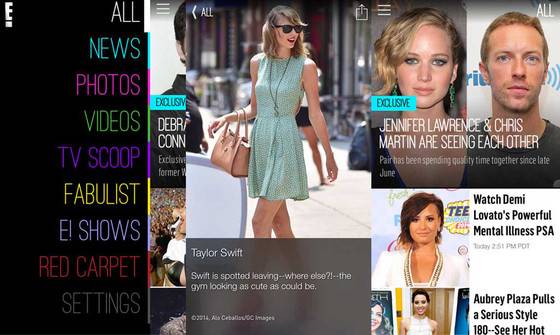
E! is a channel that has a lot of celebrity gossip within the entertainment industry. It mainly focuses on movie stars, singers, and socialites, it is also known to show a variety of trending news. The app lets you see more details of their shows, including the ever-popular “Keeping Up with the Kardashians.”

6. Apple News

Apple News

Fortunately for iPhone users, this app comes prebuilt into your mobile devices, so you already have it at the tips of your fingers. It is one of the most customizable news apps out there. You’re able to follow any news you want from virtually any reliable source you can think of. This isn’t limited to just celebrity news, as you can use this app to stay up to date on politics, sports, and any other fields of interest you might have.

5. TIME Magazine

Time Magazine

One of the most credible news sources on all subjects, Time has been a reliable source of celebrity news for a long time. Probably the most well known of these are “it” lists of “100 best” movies, music, etc. The app lets you view all of these for free, and stay up to date on any new Time information.

4. Khloé Kardashian Official

Khloe Kardashian

Nothing says celebrity gossip like the Kardashians, and Khloé’s official app keeps true to this. If you plan on “Keeping Up with the Kardashians,” then this is a great app to have on hand. It lets you see how Khloé lives, and can even bring you closer to looking like her someday (if that’s your thing).

3. TMZ

TMZ

Another popular source for celebrity news, TMZ has its own app with some of the biggest stories out there. Aside from Twitter and Instagram, TMZ is usually one of the primary sources of celebrity gossip, and their app has everything you would hope for it to have. It’s sponsored by ads, making it one of the few reliable news sources to be completely free.

2. Perez Hilton

Perez Hilton

The original celebrity gossip man himself has created a free app that works just like his site does. While somewhat of a controversial figure, Perez is always ready to give the most intimate details on celebrities, and his app is the same way. Longtime fans of his work will be sure to enjoy the familiar format.

1. People Magazine

People

People is well known for being one of the most reliable sources of celebrity news. In fact, it’s difficult to compare it to the gossip that most sites share, as they mostly only write on factual events, instead of speculation. That being said, they are one of the few news sources you still have to pay for, though their credibility can forgive this factor.

There’s actually more celebrity news apps then you may think, as our Softonic Solutions community has listed even more great apps to try. You can even suggest your own if you think a great one is missing from the list!

China unveils virtual AI news anchor

Will Anderson Cooper be replaced with a computer program?

China Unveils Virtual AI News Anchor

Don’t let the man’s sharp suit fool you into thinking he’s a human being. He’s actually a virtual news anchor who’s the product of a partnership between Xinhua News and Chinese search engine Sogou. The VR anchor has its appearance, mannerisms, and voice based on real-life anchor Zhang Zhao. Watch him/it in action:

This anchor currently exists as more of a proof-of-concept instead of a concrete plan to replace real human news anchors. Xinhua is testing the applications and benefits of a virtual anchor.

For one, being a computing program, the virtual anchor can be copied and used in multiple locations at the same time, providing info on multiple stories simultaneously.

Second, the virtual anchor utilizes artificial intelligence to sort through tons of data and relevant information, providing coherent stories quickly and efficiently as data is fed into it nonstop.

Lastly, a virtual anchor costs a news organization significantly less money over time than a human one, due to paying out wages, insurance, etc. Need to go on the air at 3 a.m. because of breaking news? You don’t have to wake up ol’ Johnny Hairdo and get him into makeup. Just press a button.

People definitely prefer a human element in their news, especially when the news is tragic. At our current level of technology, it’s highly unlikely that a virtual news anchor could accurately replicate the emotional gravitas that a human anchor would show while covering a tragic event. However, it is important to note that this virtual anchor is operating from China, which features one of the world’s most tightly controlled media censorship regimes. The media there generally lacks a human element anyway. Perhaps a virtual anchor developed in a country that places more emphasis on humanity and free information in the media would turn out differently.

The emergence of virtual anchors who report based on being force-fed massive amounts of information could have drastic implications in the modern era of fake news. In countries with state-controlled news sources like China, it would be incredibly easy to feed information to an AI news anchor, regardless of the information’s factuality. Even in countries without state-controlled media, the massive amount of misinformation and fake news that is spread through the internet, especially through social media, could potentially confuse a virtual anchor into reporting misleading, sensationalist, or downright wrong information.

What do you think about the idea of virtual news anchors? Let us know!