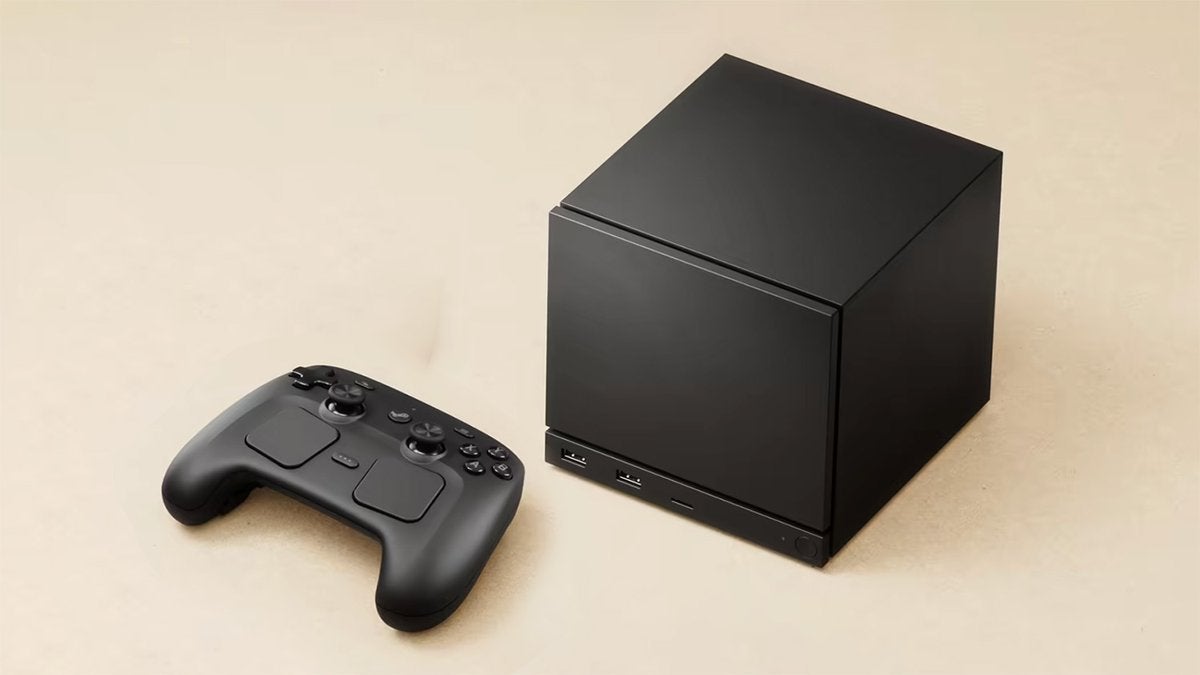
Valve has introduced a new device called Steam Machine, which promises to be an attractive alternative to building a gaming PC from scratch. This device, similar to a console, easily connects to a television, making it a convenient option for gamers looking for a living room gaming experience without the hassles of assembling a computer. The price of the Steam Machine is expected to range between $450 and $600, although it could be more expensive depending on its performance and specific features. A bargain for what it offers One of the features […]
Valve has introduced a new device called Steam Machine, which promises to be an attractive alternative to building a gaming PC from scratch. This device, similar to a console, easily connects to a television, making it a convenient option for gamers looking for a living room gaming experience without the hassles of assembling a computer. The price of the Steam Machine is expected to range between $450 and $600, although it could be more expensive depending on its performance and specific features.
A bargain for what it offers
One of the most notable features of the Steam Machine is its compact design and its ability to be controlled with a TV remote, which adds a level of convenience to its use. Additionally, it has been emphasized that the device will operate quietly, establishing a contrast with noisier consoles or active cooling systems in traditional PCs. Pierre-Loup Griffais, a programmer at Valve, noted in the podcast “Friends Per Second” that the goal is to offer a good balance between price and performance, competing with pre-built PCs in the same price range.
The analysis suggests that the average cost could be around $525, making it more affordable than a PlayStation 5, but more expensive than the Nintendo Switch 2. Although at this time the information about the Steam Machine is mainly speculative, Griffais indicated that they are working on refining the device and its value proposition. Its ability to power on with the controller and the ease of access via remote control are expected to be aspects that differentiate the Steam Machine in a market currently dominated by traditional consoles.
Beyond the rumors, Valve faces the challenge of setting a price that does not compromise the product’s viability, as the mid-range PC market offers competitive options that could make consumers hesitate when choosing between a Steam Machine and a custom PC setup.
Video games have been with us for decades. And they have been playable across different devices for decades. That doesn’t change the fact that there has always been a clear division between types of players. Console and PC players are two very different fandoms that, although they have blurred in recent times, still feel clearly differentiated. In part, because there is still a sense that console players are more numerous. That playing on consoles is more common than on computers, especially in Asia and the US. This is not entirely true. Not in Europe. […]
Video games have been with us for decades. And they have been playable across different devices for decades. That doesn’t mean there hasn’t always been a clear division between types of players. Console and PC gamers are two very different fandoms that, although they have blurred in recent times, still feel clearly differentiated. In part, because there is still a sense that console gamers are more numerous. That playing on consoles is more prevalent than on computers, especially in Asia and the USA.
This is not entirely true. Not in Europe. But it is true that, at best, there has always been a certain parity between the two, with mobile devices gaining the upper hand over both in recent years. But it seems that, in the future, the PC might come to dominate over consoles.
According to a recent GDC survey, 80% of developers are currently working on some kind of computer game. The previous year this figure was 66%. This is consistent with the interest shown in the PC as a platform for video games, which has increased from 62% in 2023 to a surprising 74% in 2024 for the developers surveyed.
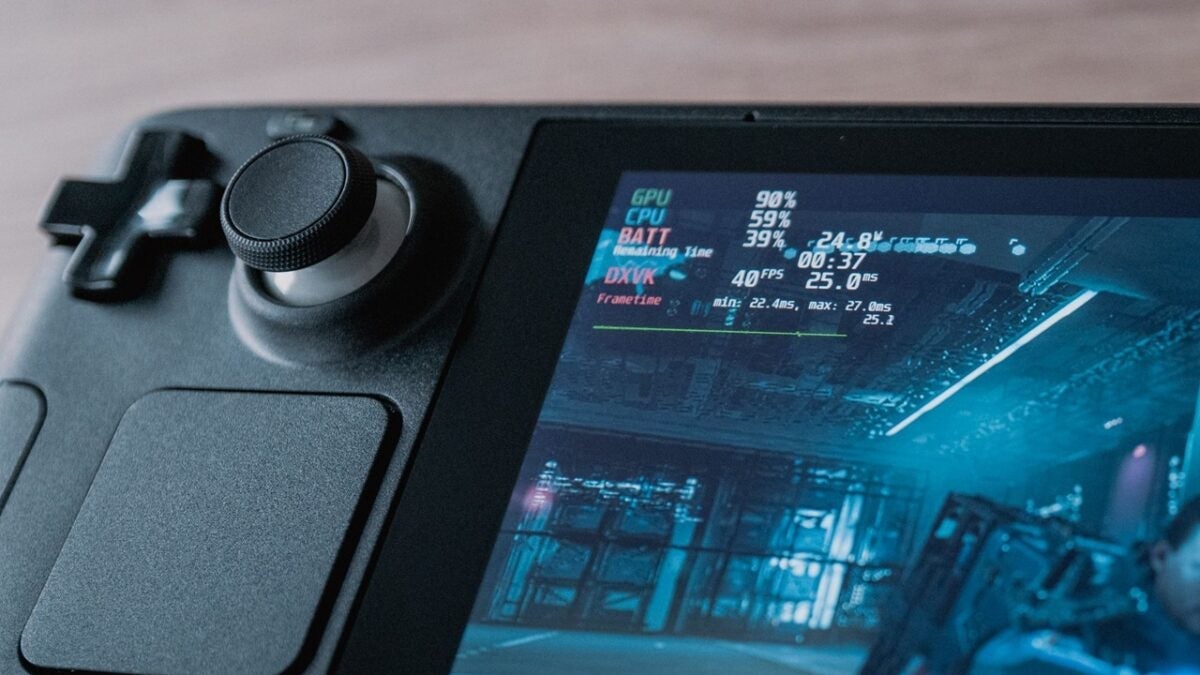
What is the reason for this interest? There are multiple reasons, but the most evident one is found in the survey itself. And that is because 44% of respondents say that one of the platforms they are interested in developing for is Steam Deck. That is the key. Valve’s hybrid console and computer has opened many doors that were previously closed. Something that developers know and want to exploit.
What has Steam Deck brought to the table? A new way to play. Following the example of the Nintendo Switch, Valve’s proposal was to create a device that allows us to play the same games as on our computer, but away from the monitor. Not necessarily outside the house, but on the sofa, bed, or armchair; a comfortable place where it’s easy to relax. And that is its success. Being portable enough to take it outside the house, but its main use is to use it indoors as a simplified computer. As if it were a console that, if we want, can behave like a computer.
That’s why Steam Deck works so well. Because it’s a Nintendo Switch, but even better. And that has made all the hardcore gamers, those who spend the most money and dedicate the most time to playing, want to have one. Or if it’s not a Steam Deck, at least a similar device like the many that have come out over time copying its idea. Opening up a previously undiscovered market niche.
Consoles are not experiencing their best moment… and that weighs
Now then, why has this niche opened up precisely now? Because of the movements of the two giants: Microsoft and Sony. Moving beyond exclusivities, there are fewer and fewer reasons to own a console. With fewer releases, more spaced out, closed environments, and moreover, that don’t even remain exclusive, the shift towards devices that are as convenient as a console, but more durable, more versatile, and where game prices vary more in favor of the players is a logical move. Especially among the more dedicated gamers.
That is why it is not surprising that, while those who were dedicated to mobile games continue to focus on them, those who had a focus more on consoles are starting to look more towards the PC. A growing market with an audience with a very marked interest in the medium.
What will happen in the future is a mystery, but it is not bold to say that this will surely increase. Consoles are becoming more restrictive and less attractive. The PC, in contrast and by its own nature, remains an open and highly interesting platform. This simplicity in form and substance that the Steam Deck has brought and that others have followed is surely the next logical step in the industry and what Microsoft and Sony will also want to follow. That’s why it shouldn’t surprise us if the industry continues to lean towards the PC, looking eagerly at its possibilities. Because its future may lie in the more open and free realm of the computer.
Scientists have developed a way to manufacture super-pure silicon chips that could pave the way for quantum computers.
Silicon is so important for electronics and computer science that it has become synonymous with technology. Hence why the most important place for technology in the United States is called Silicon Valley.
Now, scientists have created a way to manufacture super pure silicon chips that could pave the way for more stable quantum computers.
Reducing errors in silicon-28 quantum computing involves dropping the percentage of present silicon-29 (which acts as a rogue magnet, disrupting coherence). New approach takes silicon-29 from 4.5% down to 0.0002%! https://t.co/ltOT5RsORU
— Konstantinos Karagiannis (@KonstantHacker) May 7, 2024
Superpure chips will allow the creation of quantum computers
Silicon is the preferred material for electronics for several reasons. First, it is a semiconductor, which means it can conduct electricity at different levels under different conditions. Additionally, being the second most abundant element in the Earth’s crust, it is not difficult to obtain.
This has worked well for decades, fueling the incredible expansion of computers, but for more advanced systems, the purity of silicon becomes a limiting factor.
Quantum bits (qubits) that process and store information can lose their “coherence” with the slightest interference, such as a small temperature fluctuation or impurity in the silicon.
“The problem is that, while natural silicon is mostly the desirable isotope silicon-28, there is also about 4.5% of silicon-29,” explains professor David Jamieson, co-supervisor of the project. “Silicon-29 has an extra neutron in the nucleus of each atom that acts like a small magnet, destroying quantum coherence and creating computer errors.”
That’s why, for the new study, researchers from the University of Melbourne and the University of Manchester developed a way to manufacture much purer silicon.
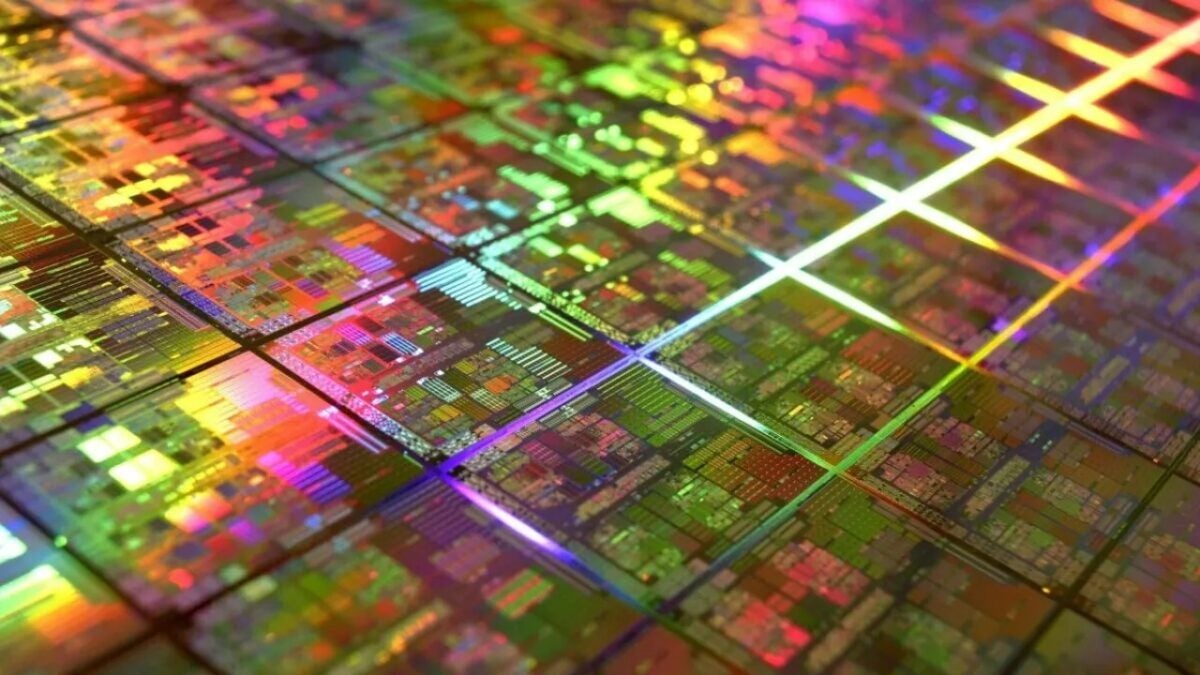
The team used a machine called an ion implanter to shoot a beam of silicon-28 at a computer chip, gradually replacing the silicon-29 impurities in the chip with the more desirable silicon-28. The end result was that the silicon-29 content was reduced from 4.5% to just 0.0002%, which is two parts per million.
“The great news is that to purify silicon to this level, we can use a standard machine (an ion implanter) that is found in any semiconductor manufacturing laboratory, adjusted to a specific configuration that we have designed,” explains Jamieson.
The more qubits a quantum computer has, the more powerful it will be, but also more vulnerable to errors. These new ultra-pure silicon chips should help quantum computers with many qubits stay stable for longer, and the team claims that the next step is to test it.
Although Asus is a company that stands out for its gaming solutions such as ROG or other laptops designed for artistic activities, this brand has always focused on the development of components and has not been bad at it. In fact, some of our favorite motherboards for both AMD and Intel configurations belong to this brand. However, no solution lasts forever, and with the next generation of Intel processors, Asus has decided to finally make the leap to an improved socket, more friendly to the latest solutions than the LGA1700 that debuted with the Intel 12 generation.
Everything new from ROG Z790
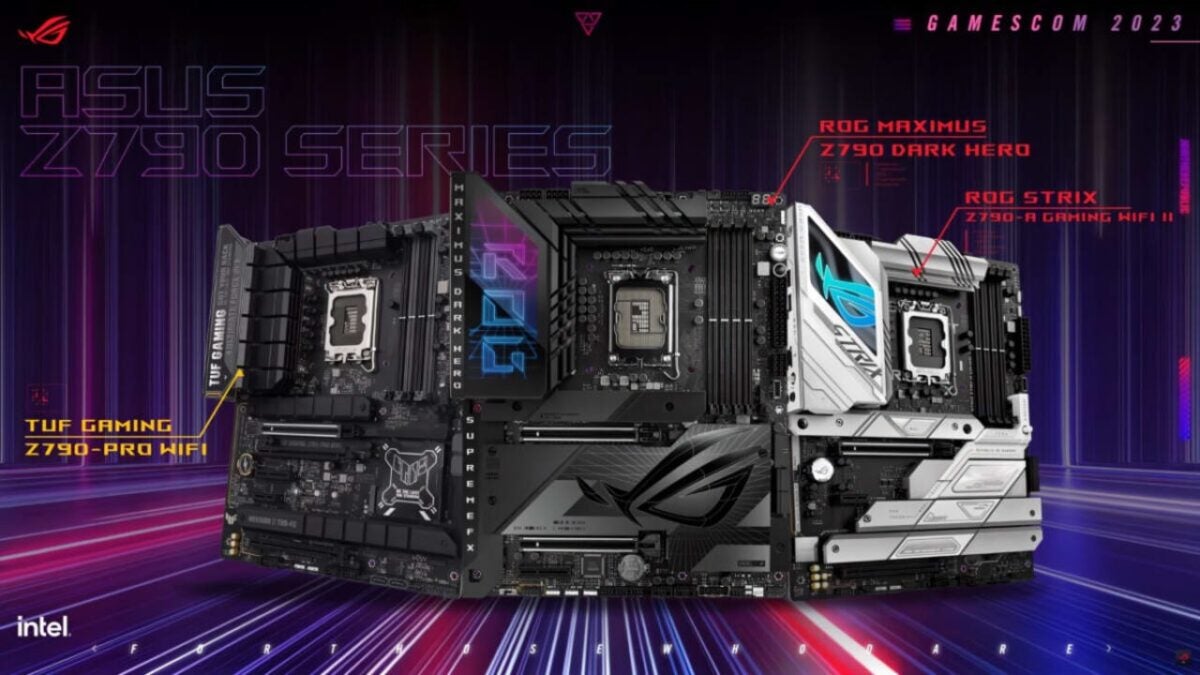
Asus is not satisfied with just improving its sockets, and of the three boards it has chosen to upgrade, the two with the highest performance are going to come up against a myriad of improvements: Asus ROG Maximus Z790 Dark Hero and Asus ROG Strix Z790-A Gaming WiFi II will see their connectivity greatly increased, as they will have WiFi 7 and Bluetooth 5. 4, plus 60-wattQuick Charge 4+ ports and some very interesting upgraded heatsinks for the SSD storage drives, so that they heat up to a lesser extent. They also expand their RAM capacity to 192 gigabytes and a few other tidbits.
The little sister, Asus TUF Gaming Z790-Pro WiFi, which by the way is also a very interesting board, has slightly more discreet improvements: it maintains the same RAM capacity, PCIe ports, SSD ports and connectivity, incorporating fast charging via USB-C of just 30 watts. However, it improves some of its connectors, such as a PCI-Express 5.0 x16 line. Although we could not expect it to reach the level of the highest range, it is true that we would have expected some major changes; however, it is an affordable board designed as a mid-budget solution that can be expanded through expansion cards.
Apart from this, Asus knows that the new processors will imply a higher power consumption, so their power supply connection has been modified and all of them will have to have a 24-pin ATX connector. The prices of these new configurations are also yet to be known, but we will surely find out very soon.
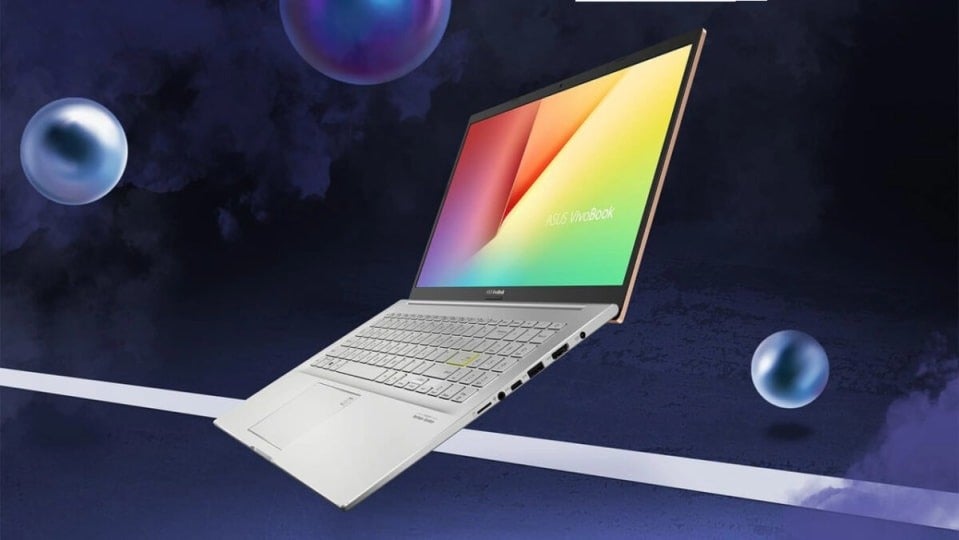
Asus is a company that never ceases to amaze us, and in 2023, they are determined not to fall behind. Their ROG solutions are among the most intriguing in gaming laptops, but they also excel in creating computers that cater to a wide range of needs, from office use to demanding creative tasks that require high performance. That’s precisely what the Asus Vivobook Pro 15 OLED offers us.
The first thing that might surprise you about this laptop is that it doesn’t look like the powerful tool it is. Unlike the brand’s flagship models, the exterior doesn’t resemble the ProArt series with its aluminum finishes; instead, it’s mostly made of plastic. It’s unusual for a device of this kind to pay so little attention to its exterior, but apart from this detail, everything about it competes in the highest leagues.
Once you power it on, the magic begins: with an simply astonishing display that reaches a brightness of 600 nits and a 120Hz refresh rate. We could say that with this, its performance is already well above that of most, but the Pantone certification ensures that we can rely on color quality that meets the highest demands of anyone with work of this nature.
I9, RTX 40XX and DDR5
But such a computer wouldn’t be anything without its core. To make the most of its display and meet expectations, the Asus Vivobook Pro 15 OLED features an Intel Core i9-13900H and an Nvidia RTX 4050 with 6 gigabytes of dedicated VRAM. It might not reach the level of an RTX 4090, but it’s more than suitable for nearly any task you might need. Furthermore, with 16 gigabytes of DDR5 RAM and a terabyte of storage (both expandable), it’s hard to believe it won’t provide solid performance for the years to come, which is always something to consider.
In real-world usage, it demonstrates that both its battery life and performance are up to par with expectations. Running Lightroom, Photoshop, or Premiere doesn’t bog it down, although there’s a slight temperature management issue during more demanding moments.
With all of this, if you’re in need of a new laptop and you’re hesitating, this is a rather compelling purchase.
Although we all have our tricks, there are always some ways to improve and guess the hidden word.
Wordle: the crossword puzzle for millennials. For a few months now, getting up, making a cup of coffee and, in the middle of the night, trying to get the Wordle of the day has been part of our routine. However, although we all have our tricks, there are always a few ways to improve and guess the hidden word. If you see the world in yellow and green letters, here’s how to improve your score.
The winning word
If you have never played Wordle, don’t worry: it is incredibly easy to do so (or any of its spin-offs, such as Heardle or Wordle in Spanish). It’s all about guessing a five-letter word: as you come up with possible solutions, the program will indicate in yellow the letters that are in another place and in green the correct ones. Find the secret word in less than seven tries and you win. As simple and addictive as that.
There are little tricks to win as quickly as possible, although it is not always possible to carry them out: try to avoid repeating letters in gray, neither yellow nor green, even if they fit, as well as yellow letters that are in the same position as in previous words. Remember two things: first, that a letter can appear twice in a word (and often does, in fact). Second, on the first try you should spend as many vowels as you can using words like “audio”, leaving only one vowel to try in the following attempts.
If you play in English (which is great for practicing the language), note that the four most common beginnings are “Tr”, “Th”, “Br” and “St”, and the four endings are “Ck”, “Ng”, “Ty” and “Ry”. No need to know much more: get ready to activate your brain better than Doctor Kawashima would, and start playing Wordle like a champ!