Chris Cook, CEO of Hasbro, has revealed the new policy for Dungeons & Dragons in a recent interview with GamesRadar. Stating that the future of the game lies in resembling video games and their business model more closely, he asserted that players must come to terms with the fact that “Dungeons & Dragons is a game as a service” and that this will be the policy they will follow from now on with the game. A man with a business model in mind While Cook does not clarify in the interview what exactly he means by thinking of Dungeons […]
While Cook does not clarify in the interview what he exactly means by thinking of Dungeons & Dragons as a game as a service, it seems he is referring exactly to this. Instead of having to wait for the release of the books, we can receive small periodic updates that keep us engaged and consuming constantly without having to wait a year and a half or two years until the book is ready. Thus articulating the game both in large seasonal events and smaller, more constant updates.
Something that fits perfectly with the two new initiatives from Wizards of the Coast, the developer of Dungeons & Dragons. On one hand, a seasonal release model focused on a particular event. On the other hand, weekly drops of new rules, different items, or digital cosmetics for your D&D Beyond account.
This aligns perfectly with both Cook’s policies and the decisions they have made for the near future of the game. When Cook took office, the first thing he did was declare his ambitions for Dungeons & Dragons to be digitized and to have a greater presence in the digital realm over the physical, emphasizing the need to give greater value to the computer and online game. Something that has only increased over time.
According to Cook, “books will always be an important part of Dungeons & Dragons,” but it seems he wants to change that process. Making books less important.And if that’s the case, and if games as a service like Fortnite and its microtransactions are any example, it is to be feared that he also wants to start charging us for things that until now he hasn’t been charging us for.
D&D has fans across the globe, from those who played the first pen and paper editions to those who follow the many comics, movies, video games and board games that arose from this iconic fantasy setting. D&D Beyond is a brand-new era for the game, a digital toolset which allows players to read all about the setting, make characters and plan games entirely on the web or on devices. All the elements of the hard copy books are there, but now you can edit on the fly as if building a character for a computer game.
The first batch of games for Game Pass has already been announced, and among the highlighted titles are Ninja Gaiden 2 Black and Ninja Gaiden 4. In total, 12 releases have been confirmed between October 8 and October 21, providing subscribers with a varied offering that includes RPGs, action and adventure games, as well as simulators. Between Ninja Gaiden and Baldur’s Gate, something is sure to convince you. The Premium plan of Game Pass is also enriched with the arrival of classic titles, such as Baldur’s Gate and Baldur’s Gate II: Enhanced Editions, which undoubtedly increase the value […]
The first batch of games for Game Pass has been announced, and among the highlighted titles are Ninja Gaiden 2 Black and Ninja Gaiden 4. In total, 12 releases have been confirmed between October 8 and October 21, providing subscribers with a varied offering that includes RPGs, action and adventure games, as well as simulators.
Between Ninja Gaiden and Baldur’s Gate, something will surely convince you
The Premium plan of Game Pass is also enriched with the arrival of classic titles, such as Baldur’s Gate and Baldur’s Gate II: Enhanced Editions, which undoubtedly increase the value of the service. Users who choose this plan will also find Eternal Strands, a new action-adventure game that promises to capture the attention of genre enthusiasts.
With a dynamic catalog, Game Pass ensures a constant rotation of titles. However, it also means that some games will say goodbye. On October 15, three titles will leave the service, giving players the opportunity to purchase them with a 20% discount before their removal. This strategy allows users to make the most of their subscription before some of their favorite gaming experiences disappear.
In addition to the lineup of new games, Game Pass is designed to provide an integrated experience that includes not only the ability to play on consoles and PCs but also in the cloud, offering greater flexibility to players. Subscribers will also be able to enjoy rewards and DLCs for popular titles like Grounded 2 and Diablo IV. As the gaming community opens new doors with these releases, anticipation grows about what surprises are in store for Halloween.
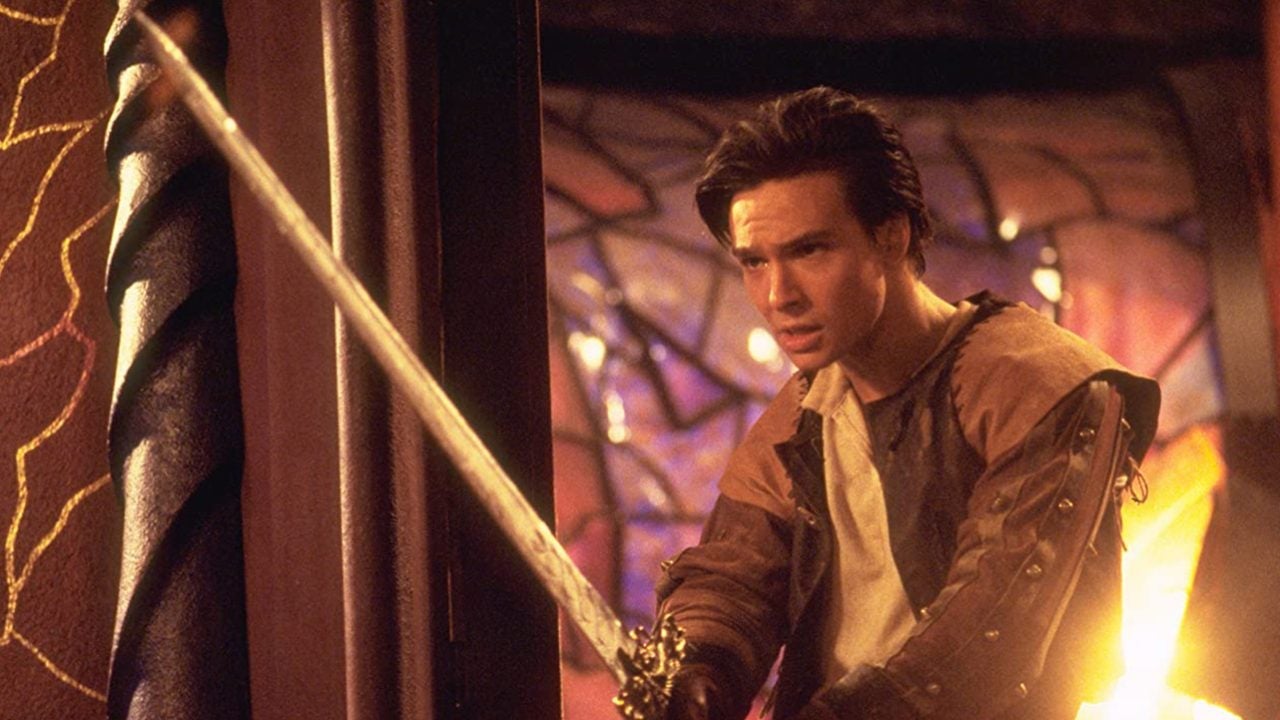
It took almost 50 years for Dungeons & Dragons, the most famous role-playing game of all time, to have an adaptation that lived up to it: Honor Among Thieves was fun, adventurous, playful, and unique, while still embracing the medieval fantasy with magic and giant swords that players are used to. However, getting here has involved a universe of bad adaptations, misunderstood versions, iconic (but failed) cartoons, and people who consider themselves fans but definitely do not understand the game. One of these people was Courtney Solomon, an old-school role-player […]
It took almost 50 years for Dungeons & Dragons, the most famous role-playing game of all time, to have an adaptation that lived up to its legacy: Honor Among Thieves was fun, adventurous, playful, and unique, while still embracing the medieval fantasy with magic and giant swords that players are accustomed to. However, getting to this point has involved a universe of bad adaptations, misunderstood versions, iconic (but failed) cartoons, and people who consider themselves fans but definitely do not understand the game. One of these people was Courtney Solomon, an old-school gamer who wanted to make the definitive movie. It did not turn out well.
A hellish world
In the early 2000s, Dungeons & Dragons was practically forgotten, beyond the groups that continued to gather to roll dice for hours. Just fifteen years earlier, the animated series from the mid-80s helped make all the kids want to try it (and, by extension, learn math), but the fear of the unknown caused by the Satanic Panic buried all its chances of becoming something mainstream, settling for being an unavoidable piece for all pop culture enthusiasts that had forever transformed the way stories are told. I wish everyone could say something remotely similar.
But then came Courtney Solomon, a 21-year-old who started his own company in 1992, Sweetpea Entertainment, to buy the rights to the franchise and make his dream project: an adventure on par with those he created with his friends. Solomon believed he had experience, after all: his mother was a production coordinator on television series, which apparently gave him credibility, so he only had to travel around the world looking for funding for his masterpiece. Considering that the parent company had been receiving sighs and rejections from all kinds of film producers for a decade, they wished him good luck, sold him the rights (after a long pitch), and went on their way.
Solomon was not going to settle for less than a 100 million dollar movie directed by Francis Ford Coppola, James Cameron, or Renny Harlin, who at one time or another were attached to the project. The original script featured a rogue as the protagonist and included up to 14 monsters in a final battle filled with special effects. In fact, in 1995 they even secured a final director, Stan Winston, a special effects expert from movies like Jurassic Park, Aliens, Predator, or Edward Scissorhands. Big words. So, if everything was tied up and well tied… can anyone tell me what the hell happened?
The usual in Hollywood: several fantasy movies crashed at the box office at the same time, and the producers stopped trusting Dungeons & Dragons, gradually pulling their money from the production. The movie became a television series for a time, and later a direct-to-video film that, far from the 100 million dollars Solomon wanted, managed to get a budget of 3.5 million. And thank you. Solomon himself, in light of his failure, appointed himself as director and shot a test scene in Los Angeles so powerful that it managed to raise investor interest again to 35 million. With this, something more than decent could have been made! Spoiler: he rolled the dice and got a failure.
The result was a solemn bad movie that barely has anything in common with the original game. Fans ended up angry with Solomon, Wizards of the Coast didn’t know where to hide and at the box office, it barely made 33 million amidst the fury of film critics. To everyone’s surprise, it was enough to produce two more direct-to-video movies in 2005 and 2012, without Solomon in sight (only as a producer). The director would end up becoming a name in Hollywood’s low-budget cinema thanks to his production work on films like The Strangers. Hey, no one knew how to get a lot out of very little like he did. He just needed to make it interesting!
As we all now know, thanks to the rise of Twitch and shows like Critical Role, Dungeons & Dragons returned to popular culture in the honored place it deserved from the beginning. And no one ever spoke of this abomination again. Happy ending for everyone.
After years of development and multiple delays, RPG fans can mark October 21 on their calendars. On this day, Vampire: The Masquerade – Bloodlines 2 will finally be released, a highly anticipated sequel that promises to pay homage to the original work by Troika Games. The date was announced during the recent video game fair Gamescom, where a new trailer was also presented and different editions of the game were confirmed. A game that has been in development for too long The title will feature three editions: the standard edition, priced at approximately 59.99 euros, and two additional editions […]
After years of development and multiple delays, RPG fans can mark October 21 on their calendars. This day will finally see the release of Vampire: The Masquerade – Bloodlines 2, a highly anticipated sequel that promises to pay homage to the original work of Troika Games. The date was announced during the recent video game fair Gamescom, where a new trailer was also presented and different editions of the game were confirmed.
A game that has been in development for too long
The title will have three editions: the standard edition, with an approximate price of 59.99 euros, and two additional editions that will include a series of extras. As part of an incentive for those who pre-order any of the editions, players will receive the Bloodlines Nostalgia Jukebox, a decorative in-game item that functions as a player for the most iconic melodies from the previous title, designed to touch the nostalgic fiber of the saga’s fans.
In this new installment, the protagonists are Phyre and Fabian, two characters with distinct play styles. Phyre focuses on action and combat, while Fabian is aimed at those who prefer puzzle-solving, thus offering a more complete and varied experience for players. This dual approach seems interesting, as it will allow players to choose how they want to tackle the game’s narrative and missions.
Vampire: The Masquerade – Bloodlines 2 not only aims to attract fans of the original title but also to draw in new players with its blend of action and role-playing elements. With the release in October, the gaming community is eager to see if the game can meet the high expectations surrounding it after its prolonged development. The wait is almost over, and all eyes are on this promising return to the world of vampires and intrigue.
Henry Cavill and Amazon have joined forces to develop a series based on the vast universe of Warhammer 40,000, a project that has been approved for production. However, the British actor has warned fans that development is not progressing at a fast pace, suggesting that patience will be needed before seeing concrete results. Is there anything that Cavill is not a super fan of? Cavill, known for his deep passion for the Warhammer 40,000 universe, has closely experienced the ups and downs of adapting iconic franchises, such as Superman and The Witcher. These experiences may influence […]
Henry Cavill and Amazon have joined forces to develop a series based on the vast universe of Warhammer 40,000, a project that has been approved for production. However, the British actor has warned fans that the development is not progressing quickly, suggesting that patience will be needed before seeing concrete results.
Is there anything Cavill is not a super fan of?
Cavill, known for his deep passion for the Warhammer 40,000 universe, has experienced the ups and downs of adapting iconic franchises, such as Superman and The Witcher. These experiences may influence his approach to this new project, ensuring that he handles the material with the care that Games Workshop fans expect. Needless to say, I am enjoying the miniatures and everything that this fascinating world entails, he mentioned during a recent talk.
The collaboration between Cavill and Amazon began to take shape in 2022 and was formalized in December with the approval for the television series. Although this partnership has generated excitement among the vast Warhammer community, the road to the screen is still uncertain and may take longer than expected before fans can enjoy the series.
Meanwhile, Cavill keeps himself busy with two other major projects: the adaptation of Voltron and the reboot of Highlander, both financed by Amazon. This demonstrates the tech giant’s confidence in his talent, despite any doubts that may arise about his current image.
On the other hand, Warhammer 40,000 fans have reasons to smile; the franchise’s universe is going through a good time in the realm of video games, with multiple recent announcements that have revitalized interest. However, the big question remains: when will we finally see the adaptation on the small screen? Only time will tell.
Role-playing games can be a bit intimidating. The idea of playing with a group of people, acting as someone else, can seem a bit strange. It can even be a bit daunting. Not to mention taking on the role of the master. The person who must tell the story, react to what the characters do, and present the challenges to overcome. It is the most difficult role, but also the most central. Without a master, there is no role-playing game. And for that reason, it requires special care and preparation. This is something that it seems Wizards of the Coast have taken […]
Role-playing games can be a bit intimidating. The idea of playing with a group of people, acting as someone else, can feel a bit strange. It can even be a bit daunting. Not to mention taking on the role of the master. The person who must tell the story, react to what the characters do, and present the challenges to overcome. It is the most difficult role, but also the most central. Without a master, there is no role-playing game. And for that reason, it requires special care and preparation.
This is something that Wizards of the Coast has taken into account. Or so it seems when one flips through the pages of their new Dungeon Master’s Guide, from Dungeons & Dragons.
We already talked about this book in a preview, and we shared the good impressions we had of it. But now those impressions have been confirmed. Now being published in English, but still having to wait until 2025 to enjoy the Spanish version, what impresses most about this book is the attention to detail. The number of illustrations, the help sheets for the master and players during the games, and the number of reference tables is overwhelming. And it is in a way that is easy to find at any time.
Anyone with experience with previous iterations of the Dungeon Master’s Guide knows that this is important. This is a book that has not always been easy to use. Even when it communicates its content well, its tables are often very scattered. Or it lacks adequate content to easily transfer to the games. But everything in this new Dungeon Master’s Guide, fully compatible with all current 5th Edition material, is designed with one thing in mind: its usability. Which also means that players can learn the noble art of being a role-playing master. Something that is not without difficulty.
A book designed to be used
If the first 20 pages of the book are about what the role is and how a game should be approached on a human level, the next 30 are about the basic rules and how to apply them. The next 50? More advanced and contextual rules. And this is wonderful. By synthesizing all the basics in its first 50 pages, continuing with the specifics in the next 50, it fulfills a dual purpose. For newcomers, they can quickly know how to start playing without much hassle. For those who need to look up a specific rule or table, having to check the index of only 80 pages makes the task much easier. Making this book, as a reference, absolutely unsurpassable by any of its previous versions.
But that is only half the purpose of this book. 100 pages out of almost 400. Because, what are the other 280 pages of this, somehow, very manageable book dedicated to? To teaching you some of the more complex aspects of creating a good role-playing game. For example, how to create an adventure. Or an entire campaign.
The book goes into great detail about everything you need to know to create adventures that are interesting and memorable. Focusing on all aspects and the different forms they can take, it touches on how to get players involved, how monsters and adversaries should behave, or even how to build adventures without conflict. Brushstrokes, all of it, partly also to avoid conditioning how you create these adventures. They are flexible guides to work with and not rails on which to build your stories.
The same happens with campaigns. Providing the tools so that we can build our own campaigns, it focuses on their most important keys, such as what their premise will be, or how time will pass in them. Placing special emphasis on this kind of elements that, even the most experienced masters, often overlook when creating campaigns. And that they could take into consideration to make them better.
If you want to be a master, this book is essential in your library
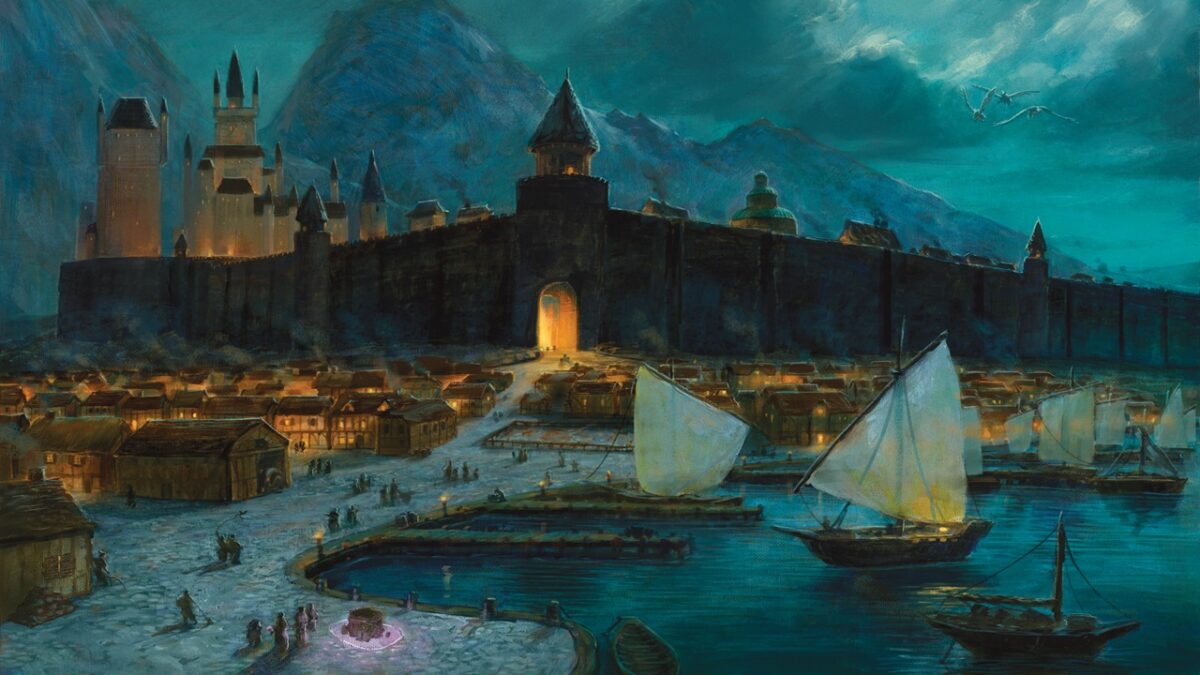
The rest of the book is divided between treasures, the new rules for strongholds—a type of building that serves as the players’ group’s base of operations—and even a small campaign setting. And surprisingly, it’s not the Forgotten Realms. This time they have chosen to return to Greyhawk, presenting some of its most iconic locations, possible adventure hooks, and very good reasons to play adventures in this iconic world that gave birth to Dungeons & Dragons. And if you don’t like it, you can always create your own world, use any other from the Dungeons & Dragons multiverse, well detailed in the book, or any fantasy world from literature, film, or any other medium.
For all these reasons, the new Dungeon Master’s Guide for Dungeons & Dragons is absolutely essential. It is more. It is better. It is more usable. It is even more beautiful. Anyone who wants to start playing Dungeons & Dragons will not find a better entry point to become a master than this book. At least not from Wizards of the Coast. And if that’s not the best thing that can be said about a new version of the Dungeon Master’s Guide, may a beholder strike us down right now.
D&D has fans across the globe, from those who played the first pen and paper editions to those who follow the many comics, movies, video games and board games that arose from this iconic fantasy setting. D&D Beyond is a brand-new era for the game, a digital toolset which allows players to read all about the setting, make characters and plan games entirely on the web or on devices. All the elements of the hard copy books are there, but now you can edit on the fly as if building a character for a computer game.
It will be 256 pages filled with enemies, twists, and -obviously- deaths. Vecna has returned, and it promises to be one of those unforgettable campaigns.
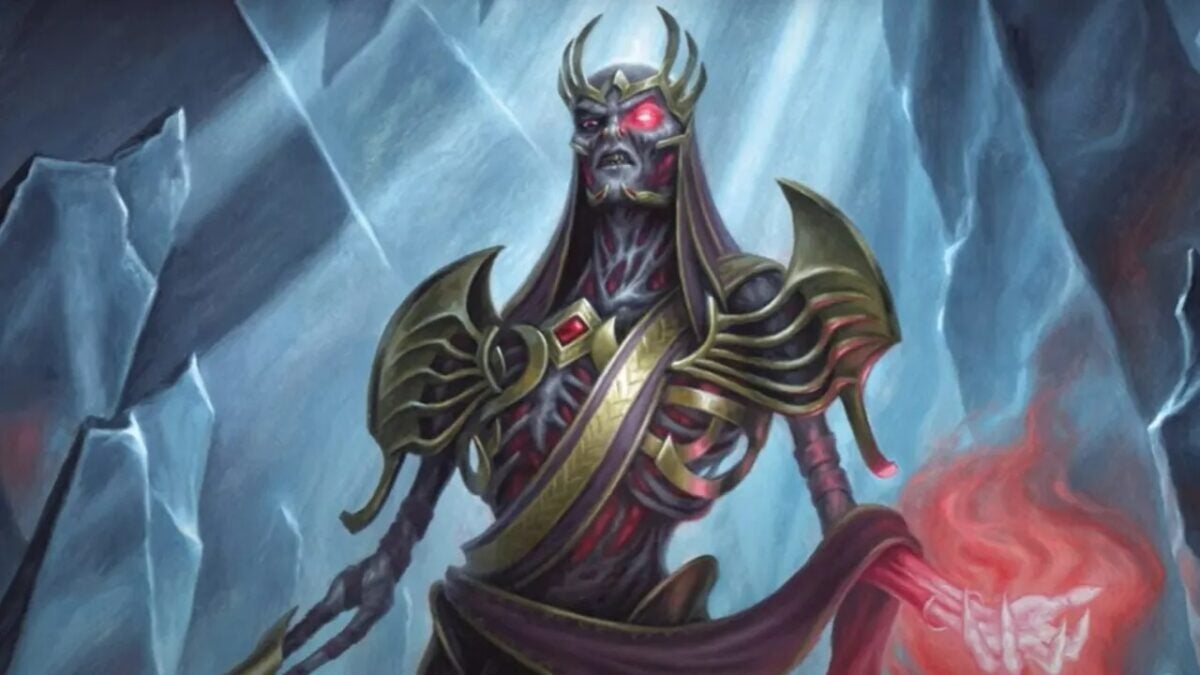
There were not a few who discovered (or rediscovered) the existence of Dungeons & Dragons thanks to ‘Stranger Things’ and the famous Demogorgon. However, in later seasons they bet on a new villain: a certain Vecna that sounded to the more adult fans but left many doubts to those who picked up the books for the first time. Who was Vecna? And why should he be feared? Now, finally, Wizards of the Coast has set to work to bring the character back into the spotlight before the last season of Netflix.
Now, the villain will appear in the new campaign for characters from level 10 to 20, ‘Vecna: Eve of ruin’, where he will try to destroy the game’s multiverse. And yes, that includes Dragonlance, Planescape, Spelljammer or Eberron (even that one you made on your own one day) in a manic race throughout the different hidden places of D&D. In order to do that, players have to be fully immersed and soaked in what it means to play in order to not hesitate for a moment when preparing a fireball or wasting time at the tavern (being D&D, frankly, it’s the thing to do).
Rarely has the world of D&D been in such danger: in fact, the only way to defeat Vecna will be to work with three well-known archmages to rebuild the Staff of the Seven Parts. Perhaps then they will have a chance against the most evil being that has ever set foot in the multiverse. It will be 256 pages full of enemies, twists, and -obviously- deaths. Vecna has returned, and promises to be one of those unforgettable campaigns. Get your 20-sided dice ready, the adventure awaits you.
It’s time for someone to break all this and make it not just easy but also incredibly fun. Of course, it had to come from Deadpool (known as Masacre in Spain).
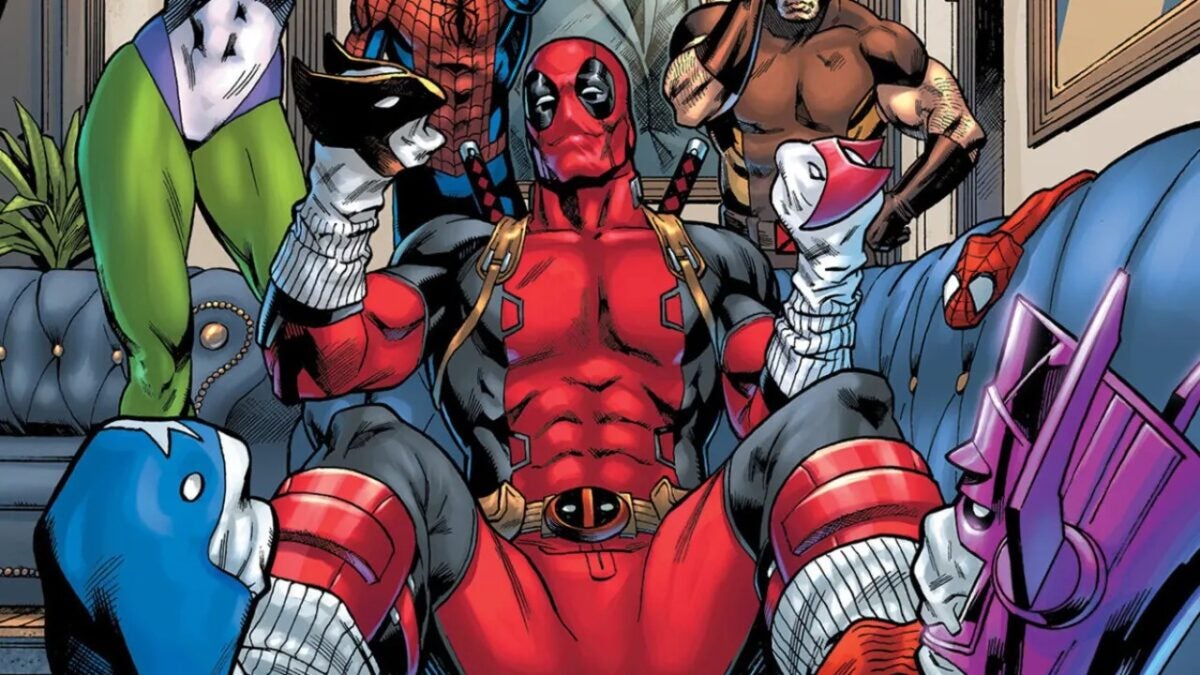
If you think of a role-playing manual, what comes to mind? Gigantic monsters, incredible dice systems, complex character sheets, pages and pages of rules that are almost impossible to understand… Well, it’s time for someone to break all this and make it not only easy, but also a lot of fun. And who better than Deadpool (in Spain, Masacre) to do it.
Within the new multiversal role-playing game from Marvel, it has already been announced that Deadpool will make his appearance in his own way, with a comic titled ‘Deadpool Roleplays the Marvel Universe’ that, in addition to explaining its rules, is an adventure in itself perfectly playable. Yes, you heard it right. A comic. A true madness. Obviously, we can’t tell you exactly what happens beyond the fact that the character gathers his own team of heroes (to which you can add, of course, your own) and breaks the fourth wall as much as possible.
Deadpool usually changes everything in the games he is present in, like Marvel Snap or Marvel Champions because, after all, he is the character with whom anything can happen. This second expansion of the Marvel role-playing game (with its simple d616 system) will be released in the United States on July 17, and in our country we are still waiting for the publication of the original role-playing game. We won’t need to call Wolverine to pay a visit to the publishers, right?
There’s a key piece of the millionaire puzzle that is D&D that we thought we’d never ever have in our hands to explore freely… Until now.
‘Dungeons & Dragons’ is not only a vital part of understanding pop culture in the last fifty years: it is also a game that, even after so much time, continues to be indestructible against all odds. And that is demonstrated thanks to a fifth edition that, combined with the Internet, has meant the definitive resurgence of role-playing games. However, there is a key piece of the million-dollar puzzle that is D&D that we thought we would never have in our hands to explore at will… Until now.
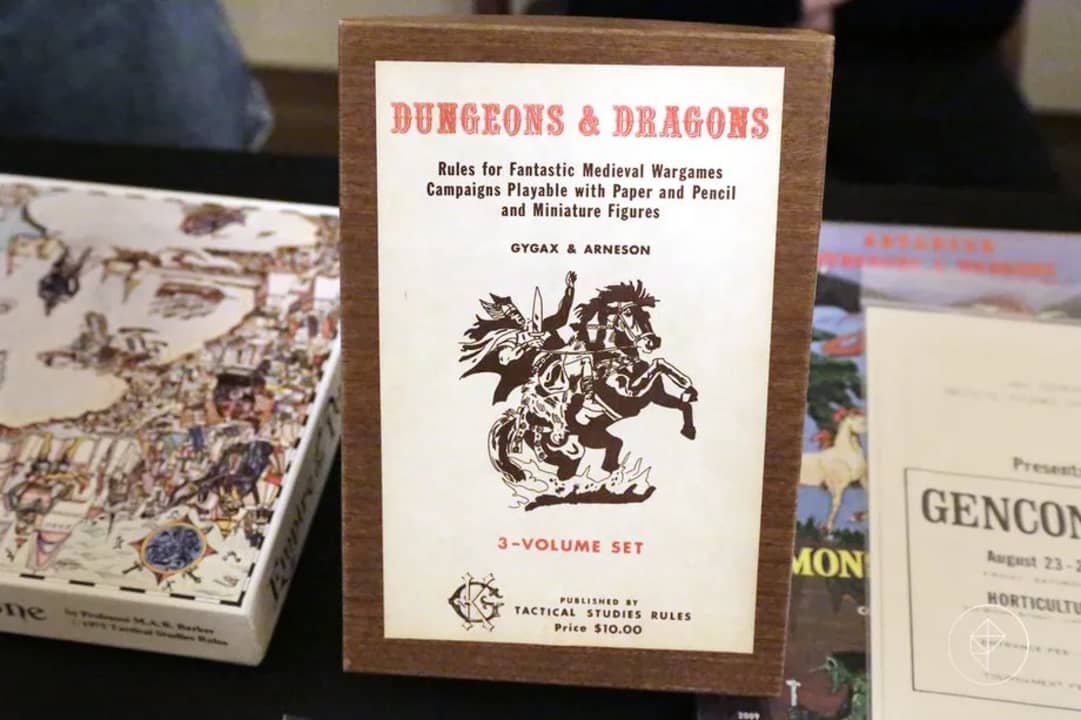
In reality, ‘Dungeons & Dragons’ didn’t start with the iconic red box that appeared in, for example, ‘Stranger Things’, and that has been portrayed so many times in movies and television. Actually, it all began with the famous “brown box” from TSR back in 1974, which contained three volumes intended for playing fantasy medieval war campaigns with pencil, paper, and miniature figurines. If you want an original one, be prepared to pay at least $13,000. And that’s in poor condition.
But there is something even earlier: the manuscript that gave rise to this book, the Holy Grail, the Rosetta Stone of role-playing games. Now, it will be reproduced in its entirety for the first time in history in a book about the evolution of D&D from 1970 to 1977. It all started when Gary Gygax, who had written the game ‘Chainmail’ (nothing like the role-playing you imagine today), discovered that another player, Dave Arneson, was running his own campaign called ‘Blackmoor’. They began to correspond, Arneson sent him the notes from his game and Gygax turned them into a 50-page outline for what would later become ‘Dungeons & Dragons’.
Afterwards, this 50-page document became a 100-page one when both of them started adding notes. Both writings, typed by Gygax, will be available in the book. In fact, according to its author, it is the only reason why it is going to be released. The world needed to see it because it is something that, no matter how much you search, you won’t find on the Internet (at least not in its original format). And, certainly, after reading it, D&D historians are going to go completely crazy. The fifth edition’s renewal? It can wait a bit.
We are aware of the concerns of the community regarding the use of generative AI in a piece of art that we recently showcased. We have confirmed with the author that generative AI was not used.
2023 has been the year of massive layoffs. Few gigantic companies have kept all their staff and have started to lay off people in droves, something that has been particularly noticeable in the world of video games. And, of course, in the end, it is something that has also affected board games, with Hasbro at the forefront, which has laid off 1900 employees in just one year. It is worth remembering that they are now the owners of Wizards of the Coast or, in other words, of Magic and Dungeons and Dragons. And chaos has taken over social media.
Fans are jumping on the bandwagon with AI, and with good reason: even though we buy role-playing and card games to play, we also enjoy the artwork, and there is not much interest in having machines create it. Wizards of the Coast recently faced backlash for using artificial intelligence to create an image, and fans are not willing to let their guard down.
That’s why, to the layoffs they have added a job application in which they offered between $71,000 and $116,000 to a digital artist who “can use magical tools in Photoshop” or “Refine and modify illustrative art for print and digital media through retouching, color correction…”. And of course, all the alarms have gone off in the homes of role players, especially after seeing a new image for 2024: AI in D&D? Not on our watch.
However, all these accusations have been dismissed by Wizards of the Coast themselves, who posted on the D&D Beyond Twitter account “We are aware of the concerns of the community regarding the use of generative AI in a piece of art that we recently showcased. We have confirmed with the author that generative AI was not used, which is consistent with our style guidelines for artists that restrict it.”
After everything they have gone through in D&D to let people know that they will continue to use original art, it seems unlikely that Hasbro has forced them to throw it all away and ask for it from MidJourney. Are we angry and eager for AI not to take over the market? Of course. But maybe we should be looking more at department store toy catalogs and less at role-playing books, which, for now, have decided not to take advantage of unsuspecting people by charging them a fortune. At least one thing is clear: 20-sided dice will never be replaced by artificial intelligence. Hopefully.