8 ways to boost mindfulness at work

8 simple steps to stay mentally healthy at work.

Like other buzzwords and a lot of the concepts tangentially related to the wellness movement, it’s fair if you’ve considered writing off mindfulness as a passing trend.

Mindfulness is about paying attention to the things in your daily life.

The idea is, focusing on how you feel in certain situations will give you more control over how you respond.

As such, mindfulness is well worth exploring. And, it can get you through the frustrations, stress, and other hallmarks of your working life.

In today’s office, you’re dealing with office politics, a soundtrack of chatty coworkers, and passive-aggressive messages firing from all directions.

Here are a few mindfulness tips you can take with you, even if you have a wide open desk in the middle of an open plan.

How to boost mindfulness at work

meditation

1. Prioritize tasks in advance

Mindfulness in the office starts with thinking with intention about how your day will play out. When you start the day with no clear plan, you risk wasting time hanging out in your inbox or playing it by ear.

Instead, set an alarm 15 minutes before you leave and use that time to write down a list of priorities for the next day.

This pre-planned to-do list gives you something to get started on first thing in the AM. And, it also allows you to start being mindful of where your time goes. As time passes, you’ll learn how much you can take on each day and can plan with greater accuracy.

We also recommend writing down a big picture to-do list at the end of the week. Every Friday, list goals to address for the following week.

2. Practice your breath work

relaxing work

It’s not just for the yoga mat. Deep breathing can change the way your brain works. Controlled breathing may improve immune health and boost energy metabolism, which might play a role in fighting fatigue and avoiding the office cold.

Research published in the Journal of Neurophysiology found that deep breathing can help you access new parts of your brain.

Deep breathing can help you control your emotions, meaning you’ll be able to keep your cool in the face of those little frustrations. Think passive aggressive CCs or interrupting colleagues.

Get started by following these steps:

  1. Sit in a relaxed position — in a comfortable chair or on the floor.
  2. Try to relax your body and notice any areas of tension. Notice where you shift your weight and notice any sensations, stress, or other feelings.
  3. Tune into your breath. Notice the natural flow when you breathe in and breathe out. No need to change anything, keep it natural.
  4. Pay attention to where you feel your breath inside the body — it might be in the stomach, chest, throat, or right there in your nose. Notice whether you can sense any evidence of the last breath. Paying attention to those slight sensations is an exercise in mindfulness; you’re learning about your body a
  5. If your mind wanders (perfectly normal), try to redirect it back to the breath.
  6. Sit for about five minutes and observe your breath. Return to your breath and repeat.
  7. Relax — take a moment to acknowledge your effort (whatever that means for you) and return to work refreshed.

3.  Focus on one task at a time

We’ve said it before — and science backs it up — pretty much everyone sucks at multitasking. It’s not a strength. In a study from Ohio State University, students who multitasked felt like they were more productive, though their output suggested the opposite.

Task switching can cost you up to 40% of your productive time.

The APA says the brain wasn’t designed to perform multiple tasks at a time, and rapid switching between tasks can result in a mindfulness disaster.

Instead, take some time to slow down and take things one step at a time. Your brain might freak out at first, tempted to click over to your inbox after just a few minutes of single-tasking.

4. Address emails and small tasks ASAP

email

Now, we’re not suggesting hanging around your inbox all day. That’s a major productivity killer to be sure.

But, emails are like tasks, and when you do check them, make sure you respond right away — as they come in.

This way, those little stressors like remembering on the drive home that you forgot to email a colleague about something important won’t come up as frequently.

Same goes for tasks that take less than five minutes. Often we put off things that take minimal effort — be it a boring errand or a simple organization process. The longer it waits, the more it’ll feel like pulling teeth when you finally get down to business.

5. Write some stuff down

Mindfulness experts and enthusiasts alike will be quick to tell you to write down what you’re grateful for.

The traditional gratitude journal usually entails writing down three things that make you happy. This is all well and good, but if the gratitude journal isn’t quite your bag, frame it a little differently.

When you’re getting ready to head out, shut the computer, or whatever signifies the end of the day, write down at least one positive thing that happened during the workday. This could be something simple like: “finished follow-up calls” or “wrote the first draft.”

Or, use this space to document your goals. Even better if you can break goals up into a series of actionable steps.

Another idea is writing a “done list.” While not a straightforward representation of gratitude, a done list is a way to keep track of your accomplishments. It’s something you can look back at when you need a boost—like a “hey, I really am getting things done” reminder.

6. Start the day with meditation

meditation

Kicking off the day with 10-15 minutes of mindfulness meditation can set the tone for a day of calm. Before you head out, sit down in a quiet room, close your eyes, and breathe deeply.

Acknowledge your thoughts as they come, but refrain from judging. It’s about awareness. While meditation might not be for everyone, it’s worth giving a try. Experts and a whole range of successful people swear that the practice has made them more productive — improving clarity and calm.

7. Set mindfulness reminders

As the day wears on, your brain will start to hit a wall. Whether you’ve chowed down on a big old lunch or just feel fatigued, mindfulness can help you sharpen up the old brain.

Set timers on your phone, every hour or so. Each time the timer rings, take a mini break to do a short mindfulness exercise. Be it a five-minute meditation or a walk around the block; these little breaks will keep you from working like a zombie.

8. Make time for the outdoors

The glow of your laptop is no match for the good old sun. Make sure you pencil in some time to go outside a few times a day.

Movement can help you boost memory retention and focus. Leave your phone behind (or on airplane mode) and pay attention to the sights and sounds in your environment.

The point is, this little act of mindfulness allows you to reconnect with how you’re feeling in the moment.

Coping in a toxic work environment

Hate your job but can’t quit just yet? Here’s how to survive.

A toxic workplace is defined as any work environment that makes you feel uncomfortable, undervalued, or underappreciated. Toxic can run the gamut from bullying and bad management to sabotage and hostility.

Often, people accept their fate, feeling trapped or lucky to have a job at all.

Your work environment plays a critical role in your long term happiness and health. According to research published in the PLOS ONE journal, happiness is directly linked to:

  • Having a strong emotional support system
  • Feeling in control at work
  • Low levels of job strain

Workers in demanding roles with little control over their situation have higher rates of depression and heart disease.

And, when you factor in nasty coworkers and low social support, a negative work environment could be slowly poisoning both body and mind.

Here are some ways to identify whether you’re stuck in a negative environment, as well as some ways to make the time waiting out new job opportunities more bearable.

Signs that your workplace is toxic:

toxic workplace

Poor communication

Poor communication can take a few different forms. This could mean that your boss fails to provide feedback or gives you the brush off. In other cases, you might be on the receiving end of negative feedback with no constructive information.

Other signs include colleagues deliberately not inviting you to important meetings or failing to CC you on important communications until the last minute.

Drama

Cliques, gossip, rumors, favoritism, and fighting. This is the stuff you should run away from fast. The watercolor shouldn’t feel like the high school cafeteria. When colleagues are gossiping, whispering into each others’ ears, it creates a sense of paranoia, anxiety, and stress.

Your boss is toxic

Sometimes, the toxic work environment can be chalked up to the trickle-down effect. How the boss treats employees has a major impact on the employee experience.

When employees see their boss acting like a bully, some may be inspired to follow suit and undermine their reports or colleagues. Turnover tends to increase, and motivation declines.

In some cases, people work in fear of being embarrassed, fired, or betrayed.  Additionally, bad managers contribute to a culture of toxic competitiveness and dysfunctional office politics.

No respect

work stress

Disrespect comes in several different forms. Examples include making overt comments, interrupting someone before they are done speaking, or making jokes at someone’s expense.

People need to feel as though their opinions matter–and that they are being taken seriously on the job. Your boss should not ignore your comments or make negative comments, and neither should your peers.

Find your support system

Having a strong support system is essential regardless of how things are going at work, but especially so when you’re feeling like your colleagues are talking behind your back, your boss won’t listen to you, and you’re just plain miserable.

Building a support system outside of the office is recommended, but finding internal allies is even better. You need to be able to vent to someone who “gets it,” or at the very least, feel that you have someone you can trust in an uncertain environment.

Still, airing your grievances to anyone at work can cross over into the danger zone, so tread carefully and try to focus on building positive relationships at work. A friendly face can make the difference between total misery and a more bearable way to bide your time.

Those expletive-filled tirades about your boss? Save those for when you get home–just don’t do it all of the time. Friends and family will quickly grow tired of listening to the work rants.

Sometimes it is personal–try not to engage

bad workplace

We can always say, “Oh, don’t take it personally.” As much as that’s a noble goal, it’s just not realistic.

Gossip is often extremely personal. Or, your direct manager might really be treating you unfairly. Maybe there’s a colleague that just won’t stop throwing you under the bus.

Whatever it is, it probably is personal. Your best bet in these outwardly toxic situations is to avoid the gossip as much as possible and keep that head down. Your goal is to get the work done, collect a paycheck, and get out of there.

That said, sometimes conflict is inevitable. If confrontation finds you, be assertive and so that bullies don’t pick up on the message that you are a prime target.

Stick up for yourself

Look, nothing is going to change if you passively accept abuse in the workplace. For one, it might result in more bad behavior from the workplace bully. And secondly, failing to stick up for yourself can cause you to feel worse about the situation for letting yourself accept poor treatment.

Stand up for yourself when someone talks over you or fails to provide essential information. Just make sure you do this calmly, privately, and professionally. Yelling or getting upset in full view of your office mates won’t end the way you had in mind.

Unfortunately, you’re somewhat stuck in a relationship with these folks. So, be sure to make clear how you feel when someone says or does something that frustrates you. Initially, speaking up might be difficult–especially if you get red or shaky in the face of confrontation. Still, it’s better to stand your ground–over time, it will get easier. Plus standing up for yourself will help you hang onto your self-esteem during this trying time.

Make sure you take care of yourself

staying calm

The impact of a toxic environment is significant. Some people find themselves getting sick more often, dealing with chronic pain or insomnia. Over time, these things can impact our health, our relationships, our well-being.

Make sure you focus on getting enough sleep, exercising, and eating well. Try spending time outside and connecting with the people that make you feel good.

The thing is, focusing on your happiness will keep you grounded as you seek out new opportunities. When you’re desperate and stressed, the interviewer might pick up on those cues. Or, you might end up in another toxic workplace after making a rash decision to jump ship.

Work-life balance matters more when you’re miserable at work

Set clear boundaries. That means no more checking emails at all hours, working late, or coming in early.  Work-life boundaries can reduce the negative impact of an unhealthy work environment. Things like spending time with friends and family outside of work, exercising, and taking lunch breaks away from the office can help you better manage the stressful situation.

Use this as a teachable moment

Look, we all end up in a job we hate at some point or another. But as you start looking for jobs, make sure you do not find yourself in a similar situation.

Do your homework by reading reviews on Glassdoor and Payscale to see what employees thought about the company. Additionally, pulling a company’s public record can reveal whether they get involved in a lot of lawsuits, engage in unlawful practices, or treat their customers poorly—red flags, to be sure.

Ask cultural questions in the interview. Examples include:

  • What does success look like in this position/organization?
  • Are their growth opportunities available?
  • Do people do things together?
  • What do you like most about working here?

Additionally, try to look around the office as much as possible — is it clean and tidy? Do people seem happy? Is the bathroom in good shape? Did the interviewers seem prepared?

The point is, when you start booking interviews, exhaust all options during the research phase. After what you’ve been through, you deserve a job that values you.

How to use music to be more productive and creative

Looking to boost your brain? Here are the ingredients for the perfect playlist.

Headphones signal a commitment to productivity. Slapped on in open office spaces, busy train stations, school, and elsewhere, encasing our ears in sound means transporting yourself elsewhere — at least a little.

Music sets the stage for our moods and occasion. It’s there when we want to power through a workout or provide the backdrop for a friendly get together.

But, whether music is an actual productivity tool is somewhat divisive. Some types of music get in the way of getting stuff done, while others provide a sort of idea lubricant.

Here’s a little more about what science says about using music to your advantage — as well as which types are likely to help you tap into something great.

How music affects your productivity and creativity

music

Brains love rhythm

Human brains are inherently responsive to music, whether we’re aware of it or not. In 2016, researchers found that the brain automatically picks up on musical beats, meaning we recognize sound patterns on a subconscious level.

Music you love can increase your output

Positive feelings lead to better output. Kind of a no-brainer, right? A study published by the  University of Windsor measured the impact of music on work quality, finding the results were largely positive.

The study compared the output of workers listening to music as they went through their daily tasks, compared to counterparts who went without. Music was found to provide a little mood boost and it had a soothing, anti-anxiety effect, too.

According to another study from the BMS College of Engineering in Malaysia, subjects found that music played around 60 beats per minute had a calming effect.

Repeat, repeat, repeat

While lyrics can hamper concentration, a tried and true list of favorites can be the perfect soundtrack for productivity.

WordPress founder Matt Mullenweg says that one of his favorite productivity hacks is listening to one song or a very short playlist on repeat. He says his brain begins to register these familiar tunes as white noise. Another great option? Video game soundtracks. Their simple loops can tend not to be annoying and it’s more fun to work while imagining yourself traversing Hyrule.

In general, this works best if you like the songs. Familiarity gives us positive feelings. Yet, in playing the same music again and again, the brain stops trying to interpret the meaning of the lyrics.

The Mozart effect

According to the Baby Geniuses school of thought, classical music makes you smarter. And, many people believe that Mozart, specifically, offers some sort of musical biohacking benefit.

The focus on this particular composer is interesting, but some believe that Mozart had unlocked some magical formula for productivity.  We can just picture this: someone reads an article, finds Mozart on Spotify, and begins banging out the great American novel.

The Mozart effect is this idea that children who listen to Mozart will become more intelligent.  When tested in the wild (more specifically, in college students at the University of California, Irvine), students who listened to Mozart were better at completing tasks that required them to create shapes in their minds.

Still, the study concluded that those boosts only lasted about 15 minutes, not enough to move the needle on one’s IQ.

Classical music has been shown to be beneficial to listeners, but the reason isn’t the genius of a handful of dead guys from the history books. Rather, music with lyrics can create a conflict in the brain — especially if you’re trying to read or write.

Instead, workers who choose to use classical music or low-fi beats, receive that same benefit of blocking out distractions.

Different types of thinking

creativity

Abstract thinking. Big ideas. Spitballing. All that loose, creative work can be enhanced with music. If you’re trying to tap into this creative space — turn up the volume. Moderate-to-high noise stimulates abstract thought.

Though, when it comes time for implementation, turn the dial to a low-grade murmur. Loud noises make it hard to zero in on the details.

Music tempo, too, comes into play when you’re trying to optimize for certain tasks. Fast music has been shown to help listeners perform better on IQ tests.

What’s important to consider is, specific types of music aren’t a prescription for productivity. You need to actually like it to reap the benefits, otherwise, it could have a negative effect.

Classical music gets all the glory because Mozart (and others) arrangements are complicated, up-tempo, and give the brain something to do — without lyrics getting in the way.

Quitting time: signs that it’s time to look for a new job

These days, nearly every job is temporary. Here’s how to know when to move on.

We all have bad days at work, but when it feels like you haven’t had a good day in recent memory, it might be time to pack your things and move along.

Quitting your job can be scary, and it’s not the kind of decision you can make lightly. Whether you’re daydreaming about a more challenging role or you’re dealing with some nasty coworkers, it’s important to know when it’s time to pull the plug.

Here are some signs that it’s time to get out.

How to know when you should quit your job

quitting job

1. Your skills are being underused

One of the most disheartening realizations you can have on the job is that management doesn’t recognize what you have to offer.

This might hit after being passed up for a promotion or later on as you ask for challenging projects repeatedly to no avail.

It’s not uncommon that starting a new job means easing into more and more responsibilities. But, if you’ve been waiting too long for your boss to call you up to the big leagues, it’s time to start looking at other options.

Our brains like tackling problems on a daily basis, and when you’re stuck in a role that feels like it’s centered on moving data around or writing emails — it can feel like your brain is just rotting away.

2. There are no learning opportunities

If there is little in the way of learning opportunities, it’s a sure sign that it’s time to look for a new job. Sure, you can’t expect to learn something new every day you’re at work.

But if you’ve leveled up as much as possible in this role, sticking around can cause your career to stall out. If you’re not learning anything new and you’re sitting around watching others get promotions — get out fast.

When you start looking for work, make sure you look for companies that support professional development. Look at company websites, read employee reviews, and ask the right questions.

Example questions might include:

  • Do you have mentorship opportunities?
  • What does success look like in this role?
  • How do you support continuous learning?
  • Do you typically promote from within?

3. Company culture isn’t a fit

bad office

Whether the office culture is just plain toxic or it’s not a match, when your daily grind isn’t quite right, it can feel as though you’re trying to be something you’re not.

It could be the people you work with, the set-up in the office, the approach to meetings. Maybe you hate the in-office foosball or catered lunches that prevent you from going outside midday.

Additionally, if you don’t share the company’s values or the direction they’re moving in just plain sucks, it likely feels disingenuous to work toward a goal that doesn’t mean anything to you.

4. Your job is affecting your personal life or health

Feeling overworked and miserable can impact the rest of your life in harmful ways. You might have a shorter fuse with your spouse or children. Or, you’ve started ignoring your friends. Maybe anxiety and stress are keeping you from enjoying yourself outside of work.

Stress symptoms affect more than relationships, they affect your body, too.

Left unchecked, you could start seeing your blood pressure climb, or develop heart disease, obesity, or diabetes. According to the American Psychological Association, stress impacts just about every major system in the body — so your unhappiness at work could turn into chronic pain, upset stomachs, and a whole lot of colds.

5. You dread going to work or can’t be bothered to care

If it feels like pulling teeth to perform basic tasks, it’s time to move on.

That said, you could simply be experiencing burnout. We experience burnout even at jobs we love — so if possible, take a vacation or a couple of days off to evaluate your feelings about the situation.

If that sense of dread is omnipresent and you find yourself watching the clock day in, day out, it’s time to get out of there. 40+ hours a week is a lot of time to dedicate to something that makes you miserable.

Additionally, if others can sense your unhappiness, it can impact your relationship with your boss and your colleagues. It might even be interpreted as a performance issue.

6. You don’t feel valued

There are several ways that a workplace might make you feel undervalued. One example is if colleagues routinely leave you out of the loop when discussing project details or scheduling meetings. In other cases, your ideas are not acknowledged or other people take credit for your accomplishments.

These slights add up over time — and you may become resentful, unmotivated, or just plain angry.

The other way this might play out is if you’re underpaid. If your responsibilities demand a bigger paycheck, it’s time to reevaluate your market value. Do some salary research to learn the average rate for your role — and maybe start applying for jobs.

Final thoughts

Hanging around a bad job can hurt your career, your relationships, and your self-worth. If you’re not growing or you’re just not happy—it’s time to leave.

Don’t burn bridges and keep things professional during the job hunt and transition period. Instead, explain that you’re leaving to pursue the next phase in your career.

How to respond to (and learn from) constructive criticism

Accepting criticism is a key part of advancing your life. Here’s how to do it without losing your cool.

Whoever said feedback was a gift never experienced the racing heartbeat, hurt feelings, and sense of embarrassment that comes with a cryptic, “we should talk.”

If you struggle to deal with feedback gracefully, know that you’re far from alone. None of us like to have our flaws pointed out, but the fact is, others can provide some valuable perspectives on our shortcomings.

Being sensitive to criticism can hold you back. Avoiding confrontation can damage relationships with colleagues and stand in the way of professional growth.

How to handle criticism

criticism

What is constructive criticism vs. just plain criticism?

Criticism is a term that refers to an evaluation or judgement — and it could be good or bad.

Constructive criticism is used to help people grow and improve. It’s thoughtful feedback that presents some form of actionable advice.

By contrast, criticism is not constructive if the main point made is “you suck” with no feedback on why that is and how to improve.

Naturally, if you’re dealing with negativity at work in the form of personal attacks, it’s best to shut it down, ignore it, or report your problem to HR or your boss.

Controlling your reaction

If you’ve ever tried to hide your feelings, you know that it’s not easy. Try not to take things personally.

Do not blurt out the first reaction that comes after hearing something critical. Take a breath and process what’s going on here. That initial impulse to be defensive is not going to serve you well.

Right off the bat, your first instinct might be to explain your actions or shut down the conversation.

In this initial moment, take a few seconds to remind yourself that feedback is a powerful tool. This is a chance to improve your skills, better your relationships, and get on the same page with the person giving the feedback.

That less-than-stellar performance review doesn’t reflect on your personality. Instead, it’s an opportunity to learn about your weaknesses.

On the spot, controlling your feelings is a bit more difficult. If you’re feeling overwhelmed, consider asking the person giving the feedback if they have time to chat about it later.

This will allow you to take a walk, listen to music, and calm down a bit. You may also want to write down your stresses, and reflect.

Listen closely

negative review

When it comes time to have that hard conversation, approach the situation with an open mind. If a colleague says you were too aggressive in a meeting, consider how your actions made them feel — what did you say or do that rubbed them the wrong way? Do you get excited about sharing your own ideas and cut others’ off mid-sentence? Maybe you’ve been inadvertently dismissive.

Whether you agree or not, your critic might have a point. We have to exist in this world with others, and it makes things easier when we bring up the things we don’t like.

If you can see things from the other person’s point of view, you can better understand why they brought this issue up. So, if you’re blowing past deadlines you don’t consider important, your boss might call you out on your time management skills. Or, assume you don’t take your job seriously. You might think these deadlines are arbitrary, or an extra step.

Let them go over how your actions impact their ability to finish their work. Your boss might say that you need to turn a client proposal early because it allows them to review milestones and assign tasks to others. Then, it’s understandable that operating on your own timeframe can cause your boss to stress.

The point is, when we understand why something is important to someone else, it can inform how we set our priorities.

Ask questions

You might find yourself in a situation where you receive vague feedback that doesn’t seem to have a clear solution attached.

Often, the person tasked with giving the feedback isn’t stoked about the situation, either. Your manager might not be comfortable with this aspect of their role, and instead, try to deliver news as gently as possible.

In this case, ask questions and get specifics. Sure, it’s counterintuitive to stay in this moment for longer than necessary, but the more details you can dig up, the better.

Ask questions like “do you have any suggestions for how I can improve?” “What would you add or change about X?”

When you make a point of asking for advice, you show that you’re flexible and willing to learn, even when it’s hard.

Responding the right way

working

Responding is the hardest part for a lot of us.

For one, even the most productive forms of criticism can leave us feeling hurt, humiliated, or downright defensive. And, if you’re prone to tears, then your focus may be on trying to make it out of a situation without crying in front of a boss or colleague.

If you don’t agree with the criticism, take a deep breath and say something like, “from my end, it seems like XX…”. Or, “I’m sorry, I didn’t realize I came across that way, __ is what I really meant.” This gives you a chance to explain your decisions and emphasize the subjective nature of our work and interactions with others.

If the critic has some valid points, try to respond positively. Set aside your ego and make it clear that you hear what they’re saying, and that you’ll use that feedback in the future.

Focus on being solutions-based

Building on the importance of responding to feedback gracefully, talking about your feelings too much misses the point.

Instead, come up with a game plan for enacting change. Are there tools you can use to become a better time manager? Do you need to work on being a better listener? Responding to emails faster? Whatever it is, come up with some steps for improvement.

That said if someone is being cruel or calling you out in front of a group of colleagues, that crosses a line. It’s perfectly acceptable to say, “hey, next time can you bring this up in private?” Or, “I’d rather not have you CC the whole team about this issue.”

How to look for a new job without your boss finding out

Ready to find a new job? Here’s how to scout for a new one without jeopardizing your current gig.

We’ve talked about it before; it’s essential to have a strong online presence if you’re looking for a new job. That’s all well and good, when you’re unemployed, self-employed, or not being monitored by your boss.

But, attempting to job hop while employed in a full-time situation is a whole other story.

Sure, most employers aren’t completely blindsided when an employee gives notice. It’s the way of the world, especially in 2019, when no one stays at a job for long.

Still, looking for a job while on the job can be a minefield. Will you get fired if you get caught? How will you schedule interviews? What happens if your employer finds out you’re looking for greener pastures and the search takes longer than expected?

Below, we’ll dive into some of the concerns job hunters have while keeping up the charade at a job they’re not exactly thrilled about.

Doing a secret job search — how to find work on the DL

hiding worker

Don’t search at work

If you work in an office, it’s hard to fight the urge to do some job hunting while you’re on the clock. But, by all means — don’t do it. Write your cover letters at home, fill out your applications at the coffee shop, and stay off of company networks.

For one, you’ll still need to be respectful of your company while you’re on the clock. They are still paying you to work for them, not going out and wooing some new company.

Second, employers are increasingly spying on their staff. In some cases, companies are looking at internet histories, keeping tabs on social accounts, and reading their emails. As such, it’s smart to avoid using any company equipment for personal business. Like anything else in this digital age, your online activity can affect your reputation down the road. Tread carefully.

For timely responses, limit your email replies to your phone. Or pack your personal laptop and have lunch in a local coffee shop.

TL/DR, do the heavy lifting at home.

Social media precautions

Again, social media is an essential tool for job hunters. Secret job hunters, not so much. Where freelancers and the unemployed can benefit from sharing their goals publically, employed seekers must err on the side of discretion.

LinkedIn will be one of the first places that a hiring manager will visit before deciding to schedule a call. Make sure your photos are in good shape, current, and that your job information is up to date.

Beyond keeping your social media sites clean and current, be careful about what you’re posting online. This means no Facebook posts about your job hunting process, no tweeting at potential employers, and so forth. Even if your boss doesn’t look at your profiles, someone else might pass the word along and blow your cover.

Building on staying mum on social, we should also mention that it’s smart to avoid posting your resume in any public settings.

What if interview times conflict with your real job?

This is a hard one.

One of the best parts of being alive in the digital era is that it’s super easy to submit online applications — rather than running your resume around town. Still, if you plan on working in an office setting at least some of the time, prospective employers and recruiters will want to meet you in person.

You’ll want to schedule your interviews carefully — early in the morning or at the tail end of the day make the most sense — as these short absences are easier to explain — you have to pick up your kid, go to the doctor, etc. Another smart idea is to schedule a few interviews on the same day — and use a vacation day.

If you do plan on leaving early or coming in late, you’ll want to bring a change of clothes. Many offices tend toward the casual and showing up in a suit when you’re usually a jeans person will draw some unwanted attention to yourself.

Recruiters can blow your cover

coworker spying

Most recruiters will say that they’ll be discreet, but they may accidentally blow your cover if you aren’t careful. Make sure you let them know your situation and be completely upfront about not revealing your name unless a prospect is serious.

Another concern is, the recruiter might work for your current employer. Recruiters, of course, don’t work for the job seekers. They get paid by the employer that uses them to find qualified candidates. As such, you need to remember these folks aren’t on your side. Be careful about what you tell the recruiter about your salary requirements, other prospects, and current job situation.

What if you do get caught?

Letting your employer know you’re thinking about moving on isn’t an easy conversation. But, if someone sees through your stealth attempts to duck out of the office for the latest “dental” appointment, it’s not a bad idea to clue your employer into your plan.

If you have a good relationship with the management team, they may try to convince you to stay — but they’ll likely understand this is the best move for your career.

Alternatively, it might be an awkward situation for the next few weeks, months, and so on.

As far as whether or not you can get fired, it depends. Hourly employees are getting paid for their time, so getting caught scrolling for openings while on the clock can undoubtedly result in loss of employment. Salaried employees might have an easier time, as schedules are often flexible so long as projects are completed.

Finally, make sure you don’t give notice until you have a firm offer and you’ve accepted it. In some cases, the new employer might withdraw an offer, so don’t put in your two weeks’ until you’ve signed a contract.

Level up your pay with these 8 free(!) online certifications

A few hours of studying could make your resume stand out to recruiters.

Free online courses have been around for a while now. There are thousands of choices, from MOOCs (online college-level classes) to specialized boot camps and program-specific certifications.

Getting free training where you can is a great way to make moves toward a higher paying job. But it’s important to understand that what you get out of these offerings depends on what you put into these options.

Below, we’ve listed a collection of digital resources that can help you keep pace with changing tech–whenever you have time.

Let’s have a look…

8 free online classes to make you more valuable

online learning

1. Hubspot: online certification courses

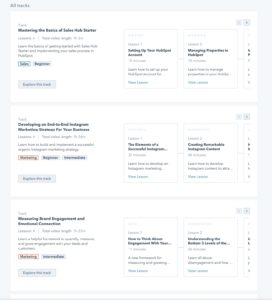
Hubspot certification tracks

Hubspot is a go-to site for sales and marketing professionals hoping to stay relevant in rapidly changing fields.

The site offers access to several training modules like sales strategy, inbound marketing, and social media—free of charge.

The marketing course, for example, will walk you through the basics of creating content for every stage in the buyer’s journey. It should take around four hours to complete, and you’ll then be able to take the test — a final exam delivered multiple choice style.

Are Hubspot certifications worth it?

They are, but they aren’t a requirement. For example, Hubspot Inbound Marketing is a great resource for the beginner marketing pro. Course offerings cover all of the “best practice basics,” and once you earn certification, you’ll have some proof that you’ve mastered the tricks of the trade.

Certifications are good for one year, and most are free. These courses are well-known in the sales and marketing spaces—often recommended by supervisors hoping to educate their teams quickly.

2. Udemy: This is how you make iPhone apps

iOS app workshop free

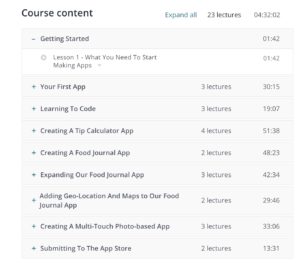
Udemy’s course is more of a workshop, designed to teach you how to create apps and submit your very first attempt to the App Store in less than a day.

This five-hour course is free and promises to teach you every step in the iOS App development process. While this might be easier for those with a bit of coding background under their belts, the course description does mention that coding newbies are more than welcome.

Course includes:

  • 4.5 hours on-demand video
  • Nine downloadable resources
  • Full lifetime access
  • Access to mobile and TV
  • Certificate of Completion

3. freeCodeCamp

free coding courses

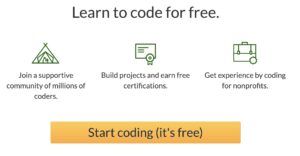
freeCodeCamp is a non-profit online resource that will teach you HTML5, Python, CSS3, Javascript, and more. The mission is to help people learn to code through a vast library of online articles, lectures, and interactive coding lessons. Work at your own pace and earn certifications.

We should mention, the programs will be a significant time investment. Each certification requires 300 hours and the completion of five final projects.

Additionally, you can gain work experience by working on coding projects for nonprofits. So, while this is a lot of work, you will have the unique benefit of getting a free education and the documentation to back up your new found skill set.

4. Facebook Blueprint Certification

Facebook Ads Certifications

Facebook is a crucial element in any organization’s digital strategy, whether you’re striving for organic traffic or better ad results.

One way to go from generic marketer to social media pro is to become a certified Facebook pro through the site’s Blueprint training program.

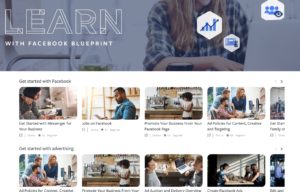
What is Facebook Blueprint?

Well, it’s a comprehensive guide to all things Facebook ads. There are 100+ courses available, free, which show you how to do everything from creating Facebook pages to generating more Instagram activity.

FB offers two Blueprint certifications, one for planning and one for buying. Both require participants to pass two exams and certification is valid for 12 months. At which point, you can renew your credential. While the training is free, you do need to pay $150 per exam.

5. edX: Academic and business writing

UC Berkeley Business Writing free

Considering leveling up in the soft skills department? If so, brushing up your writing skills isn’t a bad place to start.

edX offers access to UC Berkeley’s intro to academic and business writing course, which provides an excellent overview of grammar, structure, editing, vocabulary, and publication.

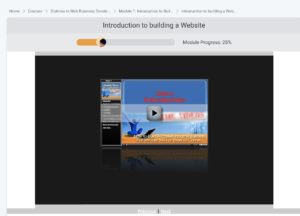
6. Alison: Diploma in web business development and marketing

business marketing alison

Building a web presence is a complicated process, especially if you’re newer to the world of autoresponders and driving traffic. This free course blends email marketing basics and lead generation methods with backend stuff like web hosting and creating pages.

According to the site, you’ll finish the course with the ability to create a website, understand web design concepts, and identify different ways to monetize your website.

Alison courses are free, but obtaining certification means you’ll need to score 80% or higher in each assessment and you’ll need to pay for official certification via the Alison shop.

7. Copyblogger: Internet Marketing for Smart People

internet marketing for smart people

Copyblogger isn’t just a great blog for the internet writers out there; they also provide several certifications aimed at helping people become better writers.

This specific course, which consists of a collection of eBooks, modules, and more covers the best practices associated with creating a profitable online business.

So, it’s essentially a valuable tool for any business. Level up copywriting, content marketing, and relationship building.

You might not get an official diploma, but you will walk away with some new skills you can add to your CV.

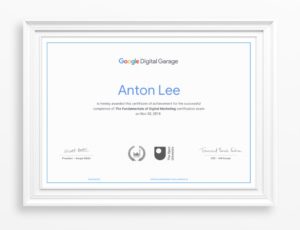
8. Google Digital Garage

Digital Garage online certification

Google’s Digital Garage is a hub for free tutorials that cover everything related to digital marketing—including video marketing, SEO, email marketing, search engine marketing, and more.

While the Google Analytics certification is better known (and worth doing as well), the search giant’s garage certification is essential for anyone who wants to learn digital marketing basics or brush up on the latest best practices.

Keep in mind that this isn’t a quick five-hour workshop. The free program spans 26 modules and 40 hours. Once you pass the test, you can download and showcase your new set of skills on LinkedIn and elsewhere.

7 ways to stay inspired when you are your own boss

Do you work alone? If so, these tips can keep you creative, balanced, and happy.

Working for yourself might seem like the ultimate dream. You make your own hours, wear sweatpants if you want to, and don’t live life dreading pointless meetings.

Your business, your rules.

But, being a model employee and running a tight ship isn’t always easy. It’s hard to stay inspired, motivated, creative, when it’s day-in, day-out, cranking out work on your own.

Below, we’ve compiled a list of seven ways to stay inspired when you work for yourself.

How to stay motivated when you work for yourself

1. Make time for reading

reading

Adding reading to a never-ending pile of to-dos may sound counterintuitive. Where is that time for leisure reading supposed to come from anyway?

Even 45 minutes or an hour spent reading a good book can do a world of good.

For one, if you’ve ever spent days on end writing a ton of content, you know that you’ll start to sink into the habit of using the same words over and over. Reading works in a different style than your own can help you pick up some new ways to communicate an idea — even if you’re not aware of it.

Reading business books or self-help books can be great sources of inspiration, but don’t discount the power of a good pleasure read.

Emory University’s Center for Neuropolicy published in a 2013 study that found reading changes the brain not only during the activity but afterward, as well. The study found that reading promoted heightened connectivity in the temporal cortex, an area associated with our ability to process language.

In turn, reading can serve as inspiration, no matter the genre or relation to your day-to-day work.

We should mention though, the way we read on the web — scanning in an F formation — your Apple news habit doesn’t offer the same benefits as reading an old-fashioned book.

2. Spend time looking at the big picture

Focusing on the zoomed out view can help you keep your head in the game. Revisiting your mission is super important. Long term, you should look at two things: what do you want to create with your business? And, second, how far do you want your reach to extend?

It’s easy to lose sight of primary goal when you’re caught up in the weeds invoicing, editing, or putting together spreadsheets.

3. Write down goals—and review them frequently

goals

Writing down smaller goals is a basic concept. But this is different than making your to-do list.

Instead, write down goals, along with a progress report or the steps that need to be completed.

The point is, do whatever it takes to keep your big picture items in view, documenting your progress, and making plans for your business in the long run.

4. Become a mentor

Spending a lot of time working alone can make you a bit self-absorbed.

Taking some time to help someone who is just getting started in their career can renew some of the passion that gets lost in the day to day shuffle — between to-do list items, calls, and demanding clients.

Whether you choose to hire an assistant, get an intern, or spend time with someone who needs a little extra help — this relationship can be mutually beneficial.

For them — they’re benefitting from your knowledge and experience. On your end, you’ll have access to a fresh perspective. You’d be surprised; rattling off ideas and listening to what the new blood has to say can be a powerful motivator.

5. Delegate or outsource to save time

delegating

Knowing when to delegate is a skill that all bosses need to nail. It’s essential for time management and allows you to focus on the stuff that matters.

You may have started out doing everything yourself, but you can’t be a master of everything, right?

Instead, you need to realize that growing your own business means taking the time to hire an assistant for your social media accounts. Or outsourcing a graphic design job for your new website.

By all means, do the things you love, but know that getting qualified help allows you to take your vision to the next level.

One reason that people don’t delegate as much as they should is, it’s hard to write a job description and create a system for deadlines, deliverables, and standards. As such, you should start by taking a day to create your own SOPs and writing them out — for each job type.

Things to do before hiring a helper:
  1. ID tasks and associated deliverables
  2. Who do you need to delegate tasks to? How many different people do you need to find?
  3. Where will you find people? Some roles may be filled by gig workers, while others may be better suited to a real-deal employee.
  4. Management plan — from communication to deliverables ownership, to payments, write out all of the specifics, according to each role that needs to be filled.
  5. Set a schedule for status meetings and updates. Communication is critical, and regular check-ins mean you have the chance to make corrections if your designer/developer/freelance writer/social media guru isn’t entirely on the same page.

6. Brainstorm/network/talk with others

When we ditch the old 9-5, we miss out on the positives of working in an office setting too. As much as it’s nice to do your own thing, there’s a lot of creativity that comes from working with other people or you know, just chatting.

With the rise of social media and all of these business tools that have made it easier to work from anywhere, we lose something in the process. Make a point of grabbing lunch with a friend, attending local Meetups or networking events, or reaching out to contacts in your industry.

7. Find a schedule that works

schedule

Some say the secret to success is waking up early. Others get their best work done in the dead of night after everyone has long been asleep.

Whatever your chronotype, your preferences, and so on — it’s essential that you find a schedule that works for you and your brain.

Set the start of the day and the end of the day at the same time and stick to it Monday through Friday.

You’ll start to understand the times of day when you’re most productive and from there, can structure your daily tasks according to that schedule. Second, working the same hours every day makes it easier to set boundaries with your friends and family, as well as your clients.

While freelancers and entrepreneurs don’t always have the luxury of on time and off time, working during the same hours each day also prevents that inevitable work-life bleed.

Wrapping up

Inspiration comes in part by being smart with how you spend your time. For example, if you fail to delegate the tasks that are boring or hard or just not your thing, you’re sapping your mental energy before you get to the “good stuff.”

Instead, making time for networking and mentoring means you’re exposing yourself to new people and perspectives, which can help you break out of a rut. Or listening to podcasts you enjoy, reading a few chapters of a book before you go to bed each night, or even taking on a new hobby — these things get your brain working in ways that don’t immediately seem related to your work.

In the end, these habits listed above work together to save you time and help you avoid burnout.

Boost your creativity with slow thinking

Want to be more creative? Slow down.

creativity

The prevailing theory in today’s world is that creativity is a collaborative effort. We value extroversion, spit-balling, and 24/7 connectivity. We’re expected to be good at Slack and to speak up at meetings. What’s more is, there’s also the expectation that our best and brightest thinkers broadcast a never-ending wellspring of fresh ideas.

But when it comes to creativity, the best ideas don’t always come from brainstorming aloud. We need some time to let our thoughts grow back, after all.

Research suggests that slowing the old brain down can lead to more original ideas than trying to find the fastest path from point A to point B.

And with that in mind, it might be worth circling back to this idea of slow thinking.

Here’s a little more about the term, as well as its potential effects on creativity

What is slow thinking?

Behavioral scientist Daniel Kahneman popularized this idea of slow thinking a few years back.

In his book, “Thinking, Fast & Slow,” he describes fast thinking as the quick judgments we make. While slow thinking, by contrast, takes more time and effort.

Slow thinking isn’t what it sounds like. The term doesn’t refer to someone who isn’t cognitively, well, fast. Instead, slow thinking is a deliberate act of processing information.

It kicks in when you need to focus on a solution to a complex problem or when you’re given some time to think away from smartphones, notifications, and the rest.

In short, slow thinking comes with this pressure-free, unhurried approach to solving problems or exploring our own thoughts. Without building some “thinking time” into the day, we may miss out on our best ideas.

So, it’s wise to take some time to doodle, free write, or even daydream at least a few minutes each hour to come up with some new ideas.

We need time to idle

creativity

LinkedIn CEO Jeff Weiner is a proponent of this idea. Weiner schedules periods of “nothing” into his workday, time purposely spent outside of meetings, alone, for processing ideas.

The idea is that building in some quiet time to think allows you to take off some of the pressure, and let your ideas just flow freely. Research has found that time pressure can squash creative thinking, as you don’t allow for the best ideas to develop naturally.

It’s also worth pointing out that workers stop developing new skills when they’re in “go mode” all the time. According to LinkedIn’s 2018 Workplace Learning report, ongoing learning leads to more success on the individual and organization level.

But expecting a constant wave of tasks and communications means that employees don’t have the bandwidth to take on all of these challenges at once.

People who continually learn are more productive, engaged, and creative than those who don’t. The thing is,  learning new skills must also come with the time to synthesize new information.

Where does creativity come from?

art creativity

There are a lot of myths about creativity. Some people believe they are more creative when they’re placed under time-pressure. However, studies have found that constant pressure can create this creative hangover of sorts.

Meaning, you might bang out some great ideas under pressure one day, but you’re exhausted the next day or two afterward.

Others think of creativity is innate, or a marker of intelligence.

Science suggests that the parts of the brain associated with creative thinking are made up of these tiny, winding paths. Creative thought stems from using those parts of the brain that sometimes get neglected.

A study from the Proceedings of the National Academy of Sciences looked at distinct patterns of brain activity in the most and least creative people. The more creative people in the group showed a strong connectivity from networks in the brain.

One is called the default network — an area known for spontaneous thinking and mind wandering. The second is the control network, where people focus in on a thought.

These two systems are often at odds with one another — much like the slow vs. fast dichotomy that Kahneman refers to. System one works to “feed” new information to system two, which processes unwieldy thoughts into a viable idea.

In a study cited by Scientific American, participants were asked to perform a simple task, that would allow the mind to wander as they worked through the mind-numbing activity. Think “busy work” like stuffing envelopes or basic data entry.

Researchers measured the results against those engaged in a period of quiet rest and participants engaged in a cognitively demanding task. Individuals who were given the easy, mind-wandering task showed a 40% improvement in creative performance, compared to their initial baseline.

The study found that the “inability to suppress” unnecessary cognitive activity might actually allow participants to come up with new ideas.

So it seems that system one was given the space to explore the various pathways in the brain, while system two kept that participants grounded in a reality of sorts.

Getting used to slowing down

creative thinking

The benefits of taking time to think are clear. You’ll make fewer mistakes when thinking through each logical step and likely will generate some more novel ideas sure to impress your colleagues.

Still, there may be an adjustment period for people used to thinking in the fast lane. For one, it’s tempting to check your phone or email, or to knock out multiple tasks with your spare time.

If it’s hard for you to “idle,” we recommend setting a timer, try spending just 10 minutes doing nothing or journaling. From there, you can work up to 20 minutes, 30 minutes, or an hour.

Another issue is feeling like you haven’t accomplished anything. Because we’ve grown used to multi-tasking, focusing on one task or none at all feels like a waste of time. For that, we recommend creating a “done list.”

Unlike a to-do list, a done list focuses on things accomplished both big and small. This list serves as a counterbalance to your fast-thinking inclinations by proving that, yes, you really are making progress.

Think about it like a set of personal, analog analytics that you can use to inform future decisions.

And while you’re at it, maybe write down some of those new ideas, too. It always pays to keep some concepts in the pipeline.

7 healthy habits for remote workers

Working from home? Here’s how to stay happy and productive.

remote worker

For some, working remotely means staking a claim at a local coffee shop. For others, it’s staying home in sweats, rarely emerging during daylight hours.

And then there are the lucky ones, the digital nomads — who somehow fit working in with hitting the beach.

In any case, working from home means you’ll develop your own habits — some good and others bad.

And worst case scenario, you’re looking at a day marred by procrastination, isolation, and our favorite — digital loafing.

Here are some ways to strike a balance. Even if it sounds miserable right now, you’ll thank us down the road.

7 healthy habits for remote workers

1. Don’t forget about your friends

friends

One of the hardest parts of remote work is revealed within the name — it’s isolating at times. We lack the camaraderie of a traditional office plan, occasionally pining for idle chatter about that new lunch spot down the street or how Bob from accounting spent the weekend.

Without the built-in interaction, you’ll find in a traditional office; solo workers must “make their own fun,” so to speak.

While it can be challenging to close the laptop from time to time, giving yourself the space to do something leisurely like grab lunch with a friend, go to a happy hour, or have some people over for a meal can do you a lot of good.

There’s always going to be something you could be doing — whether that’s fine-tuning your website or digging around for new leads.

But, when you start skipping too many events, the invitations may eventually dry up. Friends assume you can’t do anything or feel rejected after too many “nos.”

On the flip side, remote work is a relatively new way of life, and for that reason, many people don’t “get” why you’re not always available.

Explain (nicely) to friends and family that you will not be available during specific working hours, and stick to them. Over time, those people will begin to get the message that your flexibility doesn’t mean you can shirk your responsibilities at any given moment.

2. Invest in good nutrition

Eating well is hands down one of the best things you can do to stay sane, energized, and focused. It’s well documented at this point that nutrition plays a significant role in making sure our brains are operating smoothly.

Additionally, you’ll want to make sure you stock the kitchen with healthy options. Even the most productive workers among us wander into the kitchen out of boredom, especially if you know that it’s packed with sweet and salty treats.

Save the junk food for the odd occasion and don’t keep in the house. Instead, load up on fruits, veggies, and some quick protein sources.

3. Find a productive workspace

It’s critical that you carve out a designated workspace in your home. Now, many people have some constraints—there might not be enough space for a full-on home office. Still, you can always create a workspace in the corner of a room — dedicated just to work.

What we’re getting at is, you need to create a physical distance between your work and your life outside of work.

The reason for this is, having a designated workspace kicks your brain into gear — going into your office each day provides a trigger that says, “get to work” and will, ideally, help you fight distractions.

The second part of this is building in environmental changes. If you work from a home office, spending a few hours working from a coffee shop or the local library can give your creativity a bit of a boost.

4. Stop multitasking. Seriously.

multitasking

Look around in any working environment — the coffee shop, the coworking space, and so on — and chances are you’ll see several folks looking at phones while emailing, writing, or working on some presentation slides.

We like to think we’re skilled at multitasking — it makes us feel like we’re checking off to-do list items like a badass.

But, multitasking also means we remember less and make more mistakes. And, if you’re trying to promote a greater sense of well-being, these little mistakes can be sources of stress and shame down the road.

Think about it, when a client gets back to you with a laundry list of mistakes, it sucks, right?

Practice doing one thing at a time. Set a timer — for say, 20 or 30 minutes at a time. Initially, it may be difficult to do just one thing at a time, but practice makes perfect. Over time, you’ll find that you’ve improved your turnaround time and accuracy.

5. Learn to leverage your mental capacity

When you’re working from home, failing to be productive means that you’re leaving money on the table.

It’s not like the days at the office where, despite those post-lunch slumps, you can still count on money coming in at a predictable interval.

So, when there’s a disconnect between your work and your mental state—focusing becomes this uphill battle. As such, you’ll want to adapt your work habits to your energy levels.

Many people are more detail-oriented in the morning or more creative during the evening.

At first, you might want to start tracking these things. You probably already know whether you’re a morning person or a night owl, but diving deeper into your natural rhythms can help you tap into a productive routine.

6. Take some time to tidy up

clutter

It’s hard not to develop a case of “it’s my office, I’ll do what I want.”

However…

A messy desk or a poorly equipped office will hinder productivity — and clutter the mind. Studies have shown that clutter can contribute to stress, procrastination, and a lack of focus — all killers for an effective day spent working from home.

If your desk is in a state of disrepair, spend just 15 minutes throwing out the La Croix cans, coffee cups, and energy bar wrappers. We promise it will make a world of difference.

Invest in things like calendars, planners, and the pens you like most, but keep the office supplies to a minimum.

7. Take action against Imposter Syndrome

Imposter Syndrome, a term that’s been around since the 1970s, has gotten a lot of play in the media over the past few years. The term refers to a phenomenon, primarily in high achieving women that feel as though they are intellectual phonies.

We bring this up because imposter syndrome can do a number on your motivation. Because you don’t witness colleagues’ activities, you might find yourself comparing yourself to others in similar positions — better credentials, a style you like better than your own, the list goes on.

When you’re off on your own, managing your time with little oversight, you’re also spending a lot of time alone without any feedback—and in some cases, may feel like a fraud.

Keep tabs of your achievements and positive feedback you receive — and check in with your remote connections from time to time.

Wrapping up

Healthy habits mean a lot more than simply eating more vegetables. From a productivity standpoint, your job is to create routines that work for you and stick to them.

Get dressed every day and ditch the Doritos. Make your home office a personalized productivity center — and for God’s sake, drink water.

How you deal with the challenges associated with working from home will set the tone for your success down the road — a productive life with the space for friends, family, and a little alone time, too.