Soon, Google Bard will be able to adapt to you thanks to its (future) newly acquired memory.
The pace at which AI-powered chatbots are updated continues to be rapid. The race in artificial intelligence is only just beginning, and Google aims to make a strong commitment to it. Soon, Google Bard will be able to adapt to you thanks to its (future) newly acquired memory.
Currently, all conversations we initiate with Google Bard start from scratch. However, constantly reminding details for Google Bard to consider can be very tedious. For instance, if we wanted to ask Google Bard for recipe suggestions but also have food allergies, we would have to mention it in every chat.
To address this, Google has decided to give Bard ‘memories.’ According to Dylan Roussel, the feature called “Memory” will allow Bard to take specific details from our conversations into account. In an initial screenshot revealed by Google, there are some examples of what Bard can do.
From the Memory page, accessible through the menu on the left, you can add your preferences. Thanks to this, there’s no need to repeat data to Google Bard over and over again. And in case you don’t want to use “Memory,” Google will allow you to deactivate it at any time. Currently, the feature is still in development, so we don’t know yet when it will be publicly released.
OpenAI leading the way: ChatGPT also gains “memory”
It seems like the folks at OpenAI are ahead of the game here. ChatGPT was already updated with a similar feature called “custom prompts“. The announcement was made during the summer months, and it’s now available for all users. Just like with Bard, ChatGPT’s custom prompts allow us to input specific parameters that the bot will consider when responding.
This metagame is one of the most famous in the world and we explain how you can play it on your newly purchased Chromebook. So you can get…
There are few games more complete, complex, and enjoyable than Roblox. This metagame is one of the most famous in the world, and we explain how you can play it on your newly purchased Chromebook.
Roblox is an incredibly popular online game. If you’ve recently switched to a Chromebook, you might be eager to have Roblox on your new laptop. Unfortunately, it doesn’t have a native app for ChromeOS.
Luckily, like many other games, you can use Android app compatibility to enjoy it on your new Chromebook, provided the feature is enabled on your Chromebook.
For those with older Chromebooks, you can also play Roblox through the web browser on a third-party website, as long as it’s not blocked.
How to run Roblox on a Chromebook using the Android app
If your Chromebook is from 2017 or later, there’s a good chance it can run Android apps, which also means you can play Roblox on your Chromebook by downloading it through the Google Play Store.
Usually, Google Play Store should be enabled by default and pre-installed, but just in case it’s not, here’s a step-by-step guide on how you can install it and Roblox.
Click on the time in the bottom right corner of the screen and then on the gear icon for Settings.
Once in ChromeOS Settings, choose Apps in the sidebar.
Next, select Google Play Store.
Click on the button that says Enable.
Your Chromebook will download and install Google Play Store. This may take a few minutes.
Once installed, click on the circular launcher icon located on the left side of the screen. Look for Google Play Store.
Launch the app.
In the search bar at the top of Google Play Store, type Roblox or click on the following link to access the game listing.
In second place, we have Elon Musk, who has traveled almost 600,000 km by plane in almost 200 flights, emitting 1,019 tons of CO₂.
There’s a part of society that spends their days advocating for using buses, trains, and the subway. And there’s another, much smaller part, that decides to burn CO₂ on our behalf through thousands of unnecessary flights each year. Of course, we’re talking about the celebrities and the millionaires.
Celebrity Flight has released a list revealing the carbon dioxide (CO₂) emissions of celebrities through their private jets or long-distance flights. The purpose of this ranking is to raise awareness about pollution and promote transparency.
And then they tell us that we should use public transportation
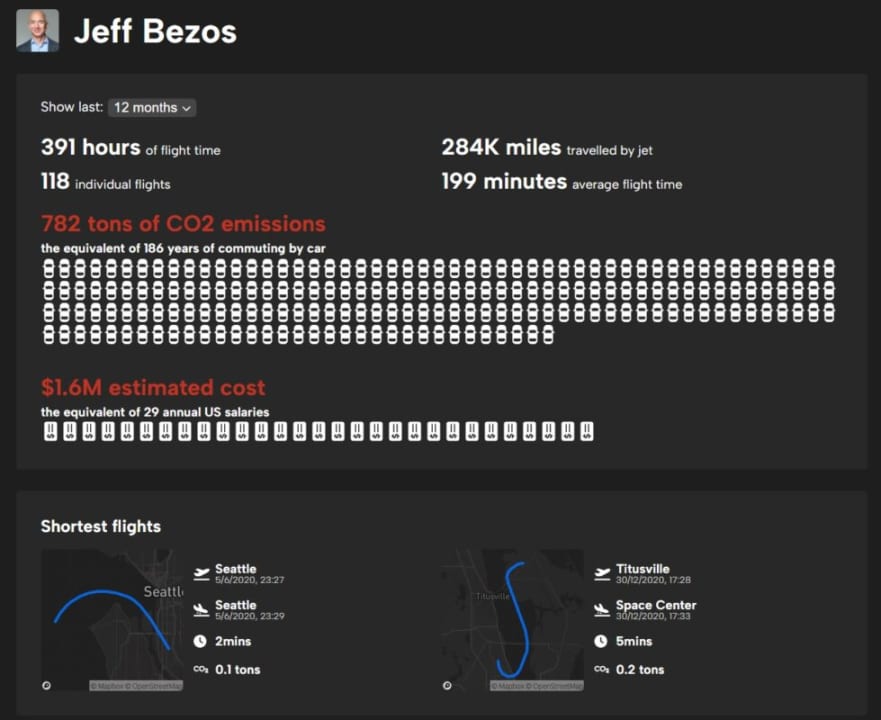
In second place, we have Elon Musk, who has traveled almost 600,000 km by plane in nearly 200 flights, emitting 1,019 tons of CO₂. They are followed by Jay-Z in third place, Melinda Gates in fourth, and Jeff Bezos in fifth.
The list continues with more celebrities, each with a profile detailing their shortest and longest trips, emission equivalents, and most recent flights. It is not specified whether these celebrities compensate for these emissions in any way.
The information used to compile this list is obtained by tracking private planes through transponders and specialized software.
A website to raise awareness?
The Celebrity Flight website hopes that this list will promote awareness about polluting emissions and encourage the adoption of measures to reduce the environmental impact of celebrities’ flights.
But of course, this website is not of interest to those who appear in the ranking. They are well aware that they are harming the planet, but they see it as necessary to maintain their way of life and style.
On our part, the only way we can offset this harmful attitude is by walking to the store and using the bicycle more often, right?
A reflection of how the company constantly seeks ways to optimize its production process and, consequently, offer the most reasonable prices possible.
It is likely that we have never noticed an almost imperceptible detail on our iPhone: a QR code hidden just beneath the screen. Although it sounds surprising, since 2020 — including the iPhone 15 — Apple has been engraving tiny codes on its devices, and the reason behind this decision directly impacts the prices of the same.
For those cruising in a BMW with an iPhone 15 in hand, it’s advisable to steer clear of using the car’s wireless charging pad at the moment.
In recent developments, several BMW owners have reported a concerning issue on the digital platform X (previously known as Twitter). After utilizing the vehicle’s integrated wireless charging pad for their iPhone 15 devices, they’ve observed a subsequent malfunction within the phone’s NFC chip.
In a weird issue, Wireless charging pads in BMW cars are reportedly breaking NFC chips inside the iPhone 15 Pro.
If you have a BMW car with wireless charging, please avoid charging your iPhone 15 on it, or else your phone will have to be replaced if the NFC chip fails. pic.twitter.com/H5JUqoKk09
Following the charging process, the affected iPhones transition into a data recovery mode, characterized by a distinct white screen. Upon rebooting, the NFC chip appears to be non-functional, raising questions about potential compatibility issues between the iPhone 15 and BMW’s charging technology.
“Could Not Set Up Apple Pay”
Within the iPhone’s ecosystem, the NFC chip is integral to functionalities such as Apple Pay and the utilization of digital car keys. Users impacted by this anomaly are confronted with a “Could Not Set Up Apple Pay” error notification when accessing the Wallet application.
As of now, no direct remedy seems to be available. Some users have reported that Apple provided replacements after verifying the NFC chip malfunction. However, these replacement units remain susceptible to the identical glitch, indicating the absence of a lasting resolution.
While the grievances primarily emanate from iPhone 15 Pro and iPhone 15 Pro Max users, there’s a potential risk for the base iPhone 15 and iPhone 15 Plus models as well. Hence, it’s prudent for all iPhone 15 series owners to exercise discretion until a definitive solution emerges.
The exact cause of the problem is still unknown. Additionally, the exact number of impacted customers and the specific BMW models involved in this situation have yet to be determined.
Knowing that this is a software issue, never a hardware issue, and seeing the commitment to correct the error and collaboration with the developers responsible for the apps that are affecting phones, promises a definitive solution to the situation.
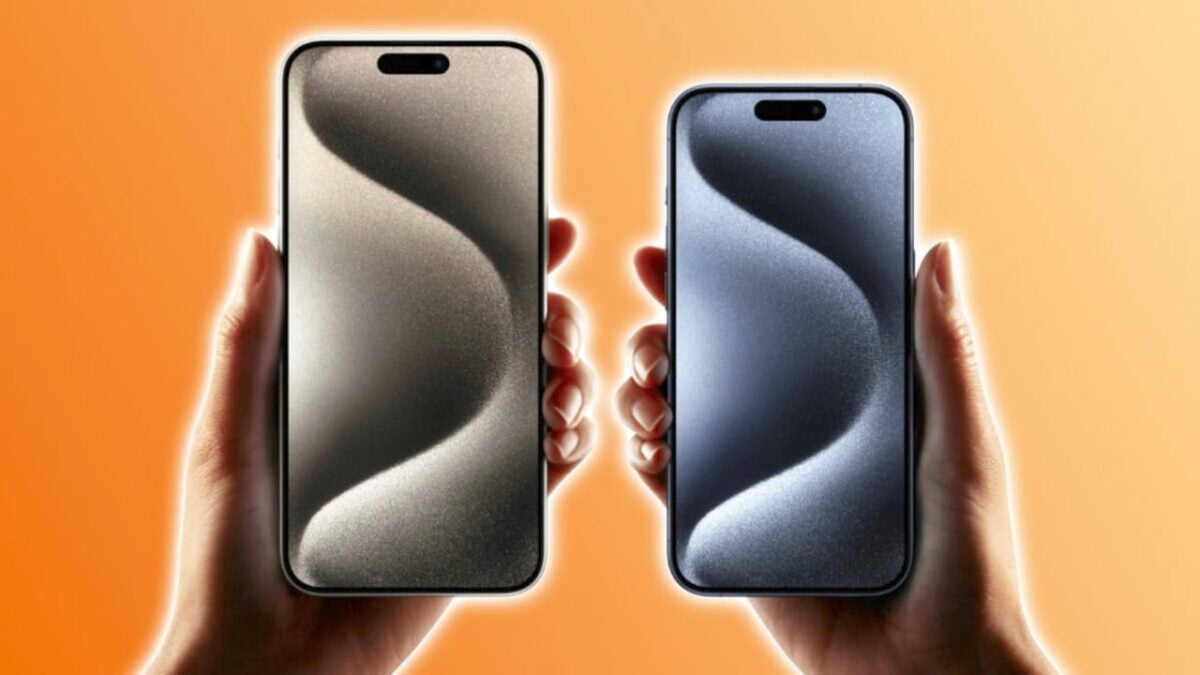
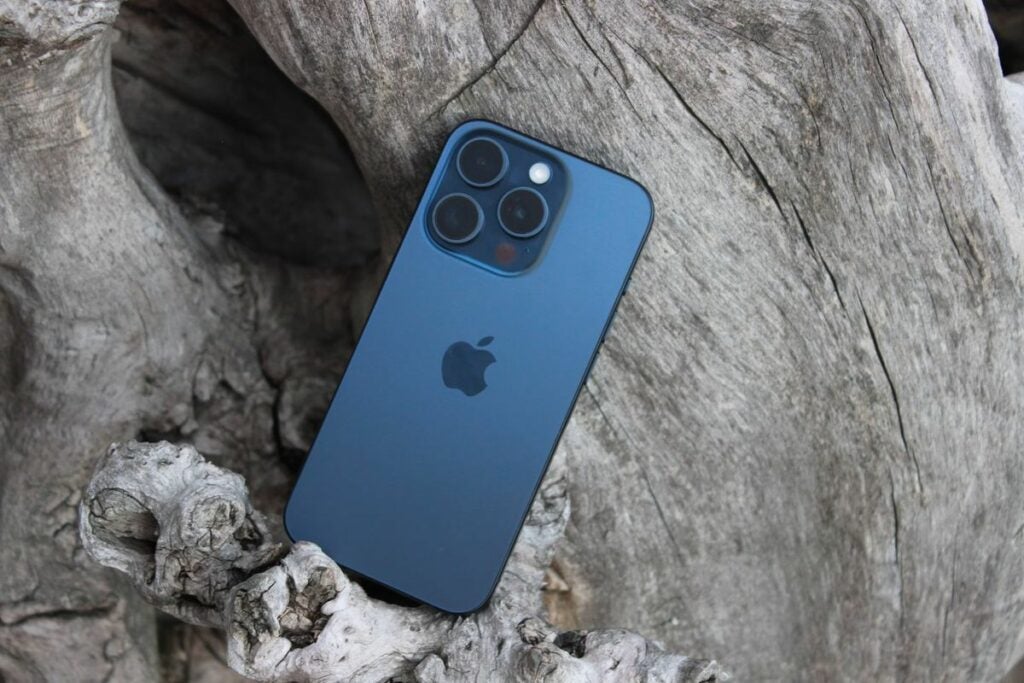
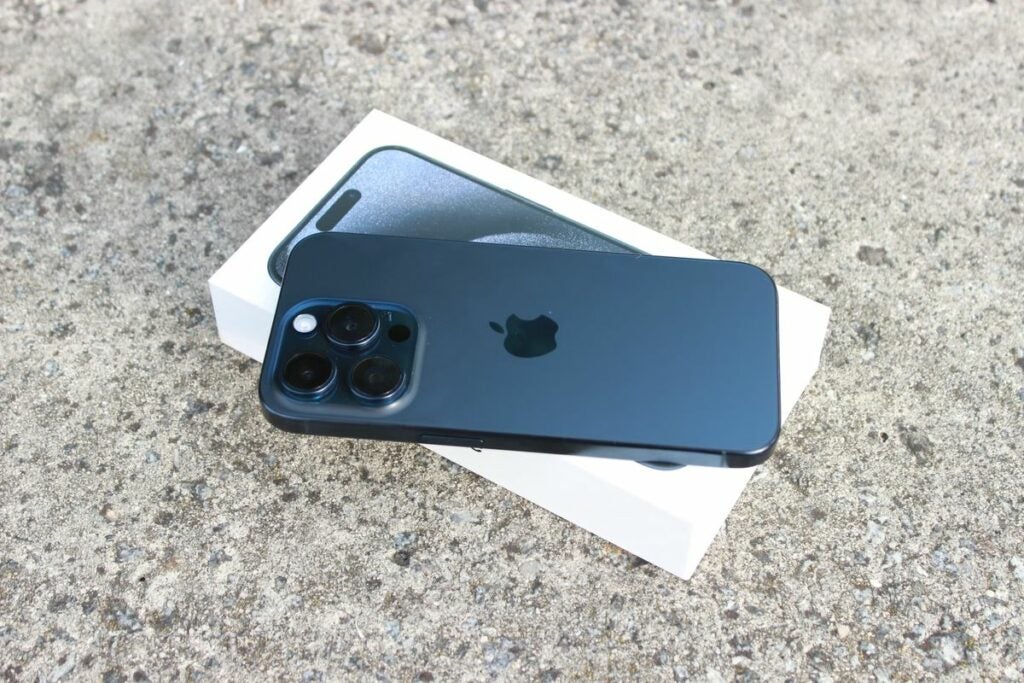
Since their launch, the iPhone 15 Pro and iPhone 15 Pro Max have been the talk of the town due to their impressive features and technological advancements. Also, to a much lesser extent, due to an issue that some of them experience under specific circumstances: heat. While some users claim their phones get warmer than they should, Apple has confirmed that the cause of this peculiar situation has been identified and that a software update will fix it soon.
One of the first consoles that had an online option was the Super Famicom, which in Japan launched a small modem called Satellaview. It came out in 1995, had content until 2000, and is now a fantastic paperweight.
In 1995, the Internet sounded like something from the future. With Windows 95 about to change everything, the world was gearing up to change and adapt. And of course, video games were part of that change. One of the first consoles that had online capability was the Super Famicom, which in Japan released a small modem called Satellaview. It was launched in 1995, had content until 2000, and now it’s a fantastic paperweight.
Satellaview managed to attract 100,000 subscribers in Japan, a significant number considering that what it offered wasn’t groundbreaking by today’s standards: the gaming system itself was a game where you could create an avatar, buy items, play minigames, and participate in contests. In a way, it was a bit like Mark Zuckerberg‘s metaverse, but with pixelated graphics.
The most curious part is that all the games released for Satellaview were lost forever. And there were quite a few notable ones: remakes of ‘F-Zero’, ‘Kirby‘, or ‘Super Mario Bros’, a fishing game created by the author of ‘Earthbound’ that ran for eight episodes from April to November 1997 and eventually appeared on Nintendo 64. One of the few that got saved.
Thanks to the service, you could even read free magazines, listen to audio commentary, and ambient sounds. However, nothing can surpass the legacy of ‘BS Zelda no Densetsu,’ a remake of ‘The Legend of Zelda‘ that was “broadcast” for two hours a day, divided into four chapters, one per week, in 1995. The game was not just the classic Zelda; it also featured a narrator who provided hints and narrated the game’s plot, creating a unique storytelling experience.
This Zelda had 16-bit graphics, different dungeons, a smaller world, and replaced Link with a boy wearing a backward cap or a girl with red hair, the mascots of Satellaview. There was even a second version of the game in 1996, ‘BS Zelda no Densetsu MAP 2’, before it disappeared. It was a different time; nobody cared much about preserving things before they were lost, but it’s still a shame that both this game and ‘BS Super Mario Collection,’ which included everything from cinematics to live music and live commentary from Mario and Luigi, succumbed to the ineffable passage of time. Sigh.
Addressing the iPhone 15 overheating problem, Apple has announced an imminent update. The tech giant acknowledges that the root of the issue isn’t solely theirs but also involves popular apps like Instagram, Uber, and the mobile game Asphalt 9, among others.
Numerous iPhone 15 users have raised concerns about their devices turning uncomfortably hot.
iPhone 15 overheating will be addressed
On Saturday, Apple stepped forward, confirming their awareness of the iPhone 15 overheating problem. They recognized instances where the device would become excessively hot, whether actively in use or merely charging.
“We have identified a few conditions which can cause the iPhone to run warmer than expected. The device may feel warmer during the first few days after setting up or restoring the device because of increased background activity,” told an Apple spokesperson to Forbes.
Many iPhone 15 enthusiasts have voiced that while they did encounter the iPhone 15 overheating problem initially, it seemed to dissipate once the device’s setup concluded. These fortunate individuals are precisely whom Apple alludes to in their statement. Yet, the company doesn’t stop there; they extend their narrative to empathize with users who haven’t been as lucky.
“We have also found a bug in iOS 17 that is impacting some users and will be addressed in a software update. Another issue involves some recent updates to third-party apps that are causing them to overload the system. We’re working with these app developers on fixes that are in the process of rolling out,” stated Apple.
Apple has pinpointed several third-party applications contributing to the iPhone 15 overheating problem. Notably, Instagram, Uber, and the iOS game “Asphalt 9” were among those specifically highlighted by the tech giant. Forbes reported that Meta, the parent company of Instagram, has already taken steps to mitigate the issue, releasing an update on September 27 to address the overheating concerns.
In a conversation with Forbes, Apple was quick to clarify that the iPhone 15’s hardware design isn’t the culprit behind these heating challenges.
Earlier, Ming-Chi Kuo, a seasoned Apple analyst, theorized that certain design elements of the iPhone 15, like its new titanium frame, might be at the heart of the overheating dilemma. Yet, it’s essential to note that while the iPhone 15 Pro and iPhone 15 Pro Max models seem to be more affected, the base iPhone 15 and iPhone 15 Plus users haven’t been spared either. Interestingly, these latter models don’t even sport the titanium frame, further complicating the narrative around the root cause.
Ming-Chi Kuo, a respected voice in the Apple analyst community, postulated that to effectively address the iPhone 15 overheating problem, Apple might have to dial back the device’s performance. Contrary to this, Apple has confidently debunked such speculations. The forthcoming update, iOS 17.1, which is currently undergoing beta testing, promises to rectify the overheating issue without compromising the iPhone’s performance.
Furthermore, Apple has issued guidance concerning the USB-C power adapters used for charging the iPhone 15. Given that this is the inaugural iPhone model to embrace USB-C, some users might inadvertently use USB-C chargers designed for other gadgets. Apple cautions that chargers with a capacity exceeding 20W could lead to the iPhone experiencing temporary warmth during the charging process.
But the metaverse has lost some of its luster since 2021. Companies like Disney have closed their metaverse divisions and stopped using the term, while cryptocurrency-based startups’ metaverses have quietly languished or imploded.
In 2022, Meta’s Reality Labs division reported operational losses of $13.7 billion. However, at Meta Connect 2023, Zuckerberg hasn’t given up on the metaverse; he has just changed the way he talks about it.
Previously, he focused on the metaverse as an entirely new digital world. Now, his goal is to convince the public that the future is a blend of the digital and the physical.
The metaverse has changed to adapt to us
At Connect this year, Zuckerberg emphasized that the modern “real world” combines the physical and the digital world that is still being constructed, all built into “this concept that we call the metaverse.”
Meta has been working for years on the integration of virtual and physical spaces. However, the discourse was notably different from his presentation in 2021. Amid the COVID-19 pandemic, he promised that, in the next decade, most people would spend time in a three-dimensional and fully immersive version of the Internet, primarily on Meta’s Horizon Worlds platform.
In his opening speech, he put on virtual reality glasses to meet with his friends in space and play poker as a cartoon avatar.
The presentation emphasized the wonder of being in an unreal world, showing cards and players floating in zero gravity. This year’s keynote, however, focused much more on the living roomand playing real video games.
Meta can’t abandon the metaverse like many companies have done. After all, it’s right there in their name. Fortunately for Meta, the metaverse has always been a slippery term. Is it VR? Is it AI? Is it gaming? We’ll see.
A way to start over on our Mac that, thanks to the options that the system itself offers us, we can do in just a few minutes.
With the recent announcement of macOS Sonoma, many users want not only to update but also to start from scratch for a smoother and error-free experience. Fortunately, on Macs with Apple silicon chips and Intel Macs with T2 chips, this process is easier than ever. Let’s see how to install macOS Sonoma from scratch.