No one is spared in the tech industry: the Mozilla Foundation lays off 30% of its staff

The Mozilla Foundation, the non-profit organization behind the Mozilla Firefox browser, has laid off 30% of its staff to adapt to what it describes as a “relentless wave of changes.” Brandon Borrman, Mozilla’s head of communications, confirmed the layoffs in an email sent to TechCrunch, where he detailed that this decision is in response to the need to restructure teams and “increase agility and impact” in their work towards “a more open and equitable technical future.” Mozilla is structured into several entities, including Mozilla Corporation, which develops Firefox and other tools, and the Mozilla Foundation, […]

The Mozilla Foundation, the non-profit organization behind the Mozilla Firefox browser, has laid off 30% of its staff to adapt to what it describes as a “relentless onslaught of changes.” Brandon Borrman, Mozilla’s head of communications, confirmed the layoffs in an email sent to TechCrunch, where he detailed that this decision is in response to the need to restructure teams and “increase agility and impact” in their work towards “a more open and equitable technical future.”

Mozilla is structured into several entities, including Mozilla Corporation, which develops Firefox and other tools, and the Mozilla Foundation, which oversees the direction and defines the organization’s policies. The foundation maintains its focus on promoting privacy, inclusion, and greater transparency on the internet, and has highlighted its commitment to creating “safer online experiences” for users.

In its 2022 annual statements, the Foundation detailed that it had 60 employees; however, at the time of these latest layoffs, the staff was closer to 120 workers, according to close sources. Mozilla already carried out another staff cut in February of this year, which affected 60 workers responsible for the development of the Firefox browser.

Mozilla’s CEO, Nabiha Syed, announced the layoffs on October 30 in a message to the staff, indicating that the “advocacy” and “global programs” divisions would no longer be part of the foundation’s structure. According to Syed, these measures aim to consolidate a “unified and powerful narrative” at Mozilla, which includes revamping strategic communications to improve internal and external cohesion.

Syed, who took on his role in February after leading The Markup, a website dedicated to data journalism, stated that Mozilla is facing a time of distractions that requires a “very direct focus”, and concluded his letter by saying that “sometimes, saying goodbye to the excellent work that has brought us here is necessary to achieve new goals.”

Mozilla Firefox DOWNLOAD

AMD fully enters AI with its first LLM

AMD has introduced its first series of large language models (LLM) with 1 billion parameters and open source, called AMD OLMo, aimed at various applications and pre-trained on the company’s Instinct MI250 GPUs. AMD’s open-source LLMs aim to improve the company’s position in the AI industry and enable its customers (and everyone) to deploy these open-source models with AMD hardware. By making the data, weights, training recipes, and code public, AMD intends to enable developers not only […]

AMD has introduced its first series of large language models (LLM) with 1 billion parameters and open source, called AMD OLMo, aimed at various applications and pre-trained on the company’s Instinct MI250 GPUs.

AMD’s open-source LLMs aim to improve the company’s position in the AI industry and enable its customers (and everyone) to deploy these open-source models with AMD hardware.

By making the data, weights, training recipes, and code public, AMD aims to enable developers not only to reproduce the models but also to build upon them to continue innovating.

Beyond use in data centers, AMD has enabled the local deployment of OLMo models on AMD Ryzen AI PCs equipped with neural processing units (NPUs), allowing developers to leverage AI models on personal devices.

Everything we know about AMD’s LLM

The AMD OLMo models were trained on a broad dataset of 1.3 trillion tokens across 16 nodes, each with four AMD Instinct MI250 GPUs (64 processors in total). The AMD OLMo model line was trained in three steps.

In AMD’s own tests, AMD’s OLMo models showed impressive performance against similarly sized open-source models, such as TinyLlama-1.1B, MobiLlama-1B, and OpenELM-1_1B in standard benchmark tests for general reasoning capabilities and multitasking comprehension.

The two-phase SFT model experienced significant improvements in accuracy, with a 5.09% increase in MMLU scores and a 15.32% increase in GSM8k, demonstrating the impact of AMD’s training approach.

The final model AMD OLMo 1B SFT DPO outperformed other open-source chat models by at least 2.60% on average in benchmark tests.

ChatGPT DOWNLOAD

Additionally, AMD tested responsible AI tests, such as ToxiGen (which measures toxic language, where a lower score is better), crows_pairs (which evaluates bias), and TruthfulQA-mc2 (which assesses truthfulness in responses). And it was found that AMD’s OLMo models were on par with similar models in handling ethical and responsible AI tasks.

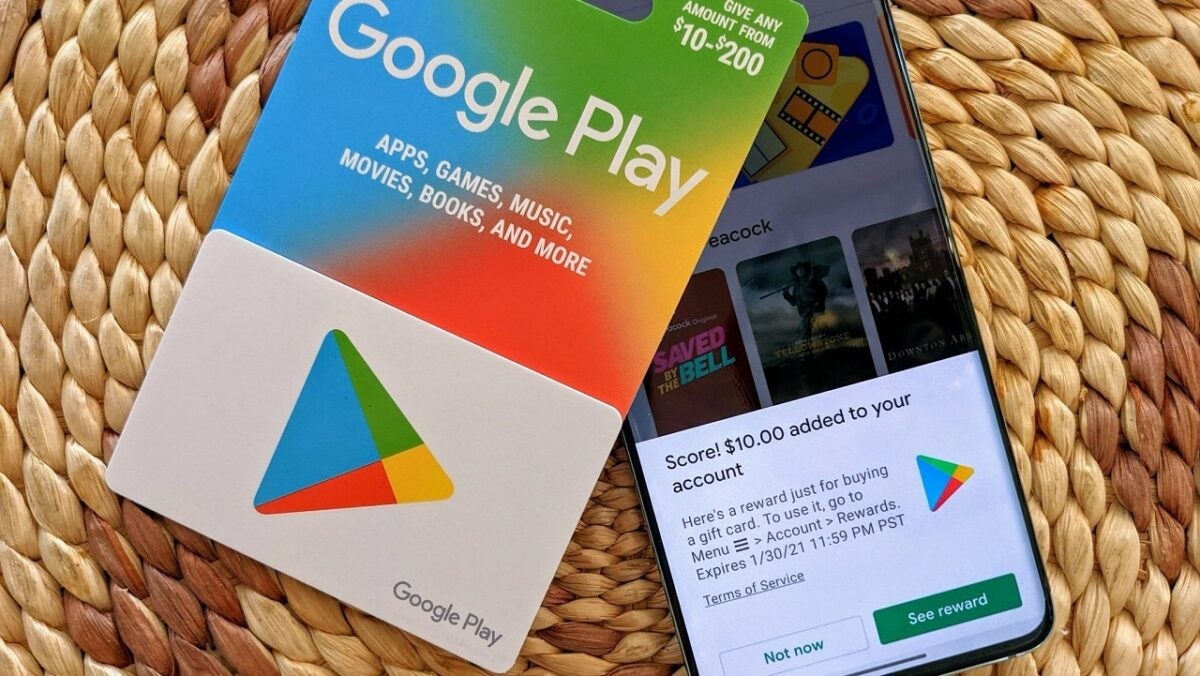
Google is off the hook: it is not responsible for Google Play gift card scams

Gift card scams are a very popular tactic worldwide, where scammers trick people into buying the cards and providing the codes they contain so that criminals can access the money without leaving a trace. Companies like Google, where their Google Play gift cards represent a large part of the business pie, take a commission for these gift card purchases ranging from 15 to 30% per purchase. And now a federal judge says that Google has no responsibility in the scams with all that […]

Gift card scams are a very popular tactic worldwide, where scammers trick people into buying the cards and providing the codes they contain so that criminals can access the money without leaving a trace.

Companies like Google, for which Google Play gift cards represent a large part of the business pie, take a commission on these gift card purchases ranging from 15 to 30% per purchase. And now a federal judge says that Google has no responsibility in the scams with all that it implies.

Story of a scam that led to a federal complaint

The story begins in April 2021, when Judy May, a resident of Brownsville (Indiana), was the victim of a scammer who pretended to be a relative and told her she could qualify for a federal grant if she purchased Google Play gift cards.

Judy May was told she had to send codes from the back of gift cards to cover certain costs in advance and receive the grant money on the same day. She says she lost $1,000 due to the scam, money that Google refused to reimburse her.

May filed a class action lawsuit against Google in which she accused the company of illegally profiting from scams by refusing to refund money to victims. The lawsuit also claimed that Google engaged in a series of unfair practices and should place warnings on its gift cards informing buyers of potential scams.

District Judge Beth Labson Freeman dismissed the lawsuit this week. The judge stated that it was the scammers, not Google, who persuaded May to buy the cards, and added that the plaintiff had not demonstrated that Google knew it was receiving stolen funds or that it was the cause of the losses.

By the way, Google receives between 15% and 30% commission for the purchase of gift cards. Despite this, Judge Freeman said that the tech giant was not responsible for keeping the money, as Google’s conduct was not related to the original fraud.

Google Play DOWNLOAD

Freeman also said that Google did not engage in unfair practices and agreed with the company’s opinion that the funds were not considered stolen when May purchased the cards.

According to the FTC, Americans lost $217 million in gift card or reload card scams last year, and that only includes the cases that were reported.

Instagram will use AI to detect teenagers who lie about their age: be careful about lying

According to a new report from Bloomberg, Meta will use artificial intelligence to predict the age of its Instagram users and automatically transfer those under 18 to a teen account if it believes they are lying about their age. In response to international protests about the impact of social media platforms like Instagram and Facebook on teenagers’ mental health, Meta introduced teen accounts in September. Teen accounts, for children aged 13 to 17, have built-in limits on who can contact them and what content they can […]

According to a new Bloomberg report, Meta will use artificial intelligence to predict the age of its Instagram users and automatically transfer those under 18 to a teen account if it believes they are lying about their age.

Instagram DOWNLOAD

In the wake of international protests about the impact of social media platforms like Instagram and Facebook on the mental health of teenagers, Meta introduced accounts for teenagers in September.

Teen accounts, for children aged 13 to 17, have built-in limits on who can contact them and what content they can see. They are automatically set to hide potentially offensive comments and message requests.

How the AI that will classify teenagers and adults works

Secure accounts for teenagers will only work if those under 18 voluntarily choose to use them or are honest about their age, which is why Meta has devised a way to enforce the appropriate accounts.

The patented computer tool that Meta has developed, called the “adult classifier,” will come into play next year and is designed to classify users into two groups: under or over 18 years old.

According to Allison Hartnet, director of youth product management and social impact at Meta, the tool will scan a user’s profile, the content they interact with, and their follower list to determine their age. Even innocuous “happy birthday” messages can be used to determine a user’s true age.

Since teen accounts are new and currently voluntary, there is a large base of teenage users on Instagram who use regular adult accounts. Meta plans to start moving teenagers who have voluntarily provided their age information to the new teen accounts very soon and introduce the “adult classifier” early next year.

This is Meta’s latest attempt to address some of the public outcry over the impact of social media on teenagers. In 2021, a report published in the Wall Street Journal showed that Meta’s reports indicated it knew Instagram was harmful to teenagers’ mental health, especially for teenage girls.

Snoopy will soon appear on our TV screens: tvOS 18.2 adds four new screensavers

There are already several new features we have discovered in the second beta of iOS 18.2 and the rest of the systems. We are talking about the ability to see how much time is left to charge the iPhone or the ability to share the location of an object in the Find My app with anyone. In tvOS 18.2 there are also new features, and the main one will make more than one person smile: the lovable Snoopy will be part of our screensavers. According to what MacRumors has discovered in the code, tvOS 18.2 will add four new screensaver categories to further customize our screens: Snoopy, TV and Movies, […]

There are already several new features we have discovered in the second beta of iOS 18.2 and the rest of the systems. We are talking about the possibility of seeing how much time is left to charge the iPhone or the ability to share the location of an object in the Find My app with anyone. In tvOS 18.2 there are also new features, and the main one will make more than one person smile: the lovable Snoopy will be part of our screensavers. According to what MacRumors has discovered in the code, tvOS 18.2 will add four new screensaver categories to further customize our screens: Snoopy, TV and Movies, Music, and Soundscapes.

Apple TV+ SUBSCRIBE

The world’s most famous beagle is on the way

The update is expected for December 2024, coinciding with the holiday season, and everything indicates that the screensavers themselves will appear in the RC of the beta, a week before the official release. Meanwhile, by taking the Apple Watch face, we can draw some conclusions.

As far as we know, Snoopy and Woodstock will stroll across the screen with various animations. They will interact with the edges, wave, and at times, simply take a nap on their iconic red house.

According to Apple, to enjoy some of the screensavers, including the Snoopy one, it will be necessary to have a second-generation or later Apple TV 4K.

In addition to Snoopy, Apple has announced the categories of TV and Movies, Music, and Soundscapes as screensavers. These options will transform our screens into an animated showcase of scenes from movies and series, images inspired by the music we listen to, and more abstract animations like water droplets or similar.

For now, we will have to wait to have more information, but it seems that the world’s most famous beagle is already on its way to our televisions. Good news for Peanuts fans and also for those who might prefer more options when setting up the Apple TV screensaver.