
Your future may depend on your social score

Discover how companies and governments are tracking you and why.

social scoring

Social media isn’t exactly an accurate representation of a person’s life. In fact, it’s a well-known fact that Instagram is all about constructing a personal life that looks great in photos.

But as machines increasingly learn more and more about us and whether or not we lock down a job can hinge on a Facebook picture, we’re inching closer to a social credit system.

How your social score could affect your future

While it’s safe to say, most of us are still alarmed by the rollout of China’s social scoring system, we’re also getting used to data aggregators collecting information about our shopping habits, whether we pay bills on time, and smartphones that track us.

There’s also the fact that companies have begun using algorithms to look at job seeker social profiles or monitor employee performance on the job.

While we’re nowhere near China’s social credit system, we may be losing some autonomy little by little.

Wait — are social scores being used outside of China?

China’s social credit system is a government-run program that collects data based on consumer behavior, social media activity, and IRL missteps — like failing to take care of your parents or getting a parking ticket.

From there, citizens receive a score, which serves as a numeric representation of their value as a person. The idea is, model citizens receive perks — access to better schools, luxury hotels, and the ability to board a plane.

In the U.S., there’s no government-backed mandate that we opt into social media or shop on Amazon. However, private companies are implementing a number of applications that rate customers and employees, sometimes in ways that mean more advertising, but often in ways that impact our livelihoods.

Companies are now rating you based on customer lifetime value, which is a metric aimed at helping companies identify those users that will net them the most cash.

In most cases, this involves a brand tracking how much you spend on their goods and services and using that information to make predictions about their revenue or market more goods and services to you.

Now, we’re all familiar with things like our Uber ratings, which we can see — and are based on how we interact with a driver — were we rude or did we vomit in the car? Which is fine; we should have protections in place for drivers who transport strangers.

But algorithms that score teacher performance or look at whether someone should receive welfare benefits might infringe on civil rights.

Then, there’s Upwork’s Work Diary that takes webcam shots of freelancers as they log billable hours. Yes, users agree to these terms, but they might not feel that they have a choice.

The worst part is, we have to play along

In the U.S., creditworthiness is determined based on a few different factors. Payment history, the percentage of available credit, number of accounts open, and the age of accounts, all come into play.

The higher someone’s credit, the easier it is to access things like housing or auto loans.

But those scores are limited to a selection of relatively predictable factors. And, while the credit reporting system is flawed, it doesn’t account for things like what your Facebook page is up to.

The frustrating thing about these privacy invasions is, you have to play the game.

According to CareerBuilder, 70 percent of employers scan social media accounts before they make a hiring decision. And those who choose to avoid social channels aren’t in a good position either.

According to the same survey, 57 percent of employers said that no social media account made them less likely to hire someone. Basically, no digital footprint either means you have something to hide or you don’t know your way around a computer.

While job seekers and professionals, in general, would be wise to recognize this—it’s disheartening that there’s a built-in obligation to use these tools, even if we don’t want to.

Especially where employment is concerned, opting out may mean we don’t get to land or keep a job. Welcome to the future.


Affordable pet insurance for 2019

Keep your pets safe this year. Here are the best insurance plans for your furry friends.

affordable pet insurance

The moment you get home with your new pet, you’re responsible for making sure they stay healthy. That’s why pet insurance is such an important idea. Pet insurance should offer coverage that meets your dog or cat’s healthcare needs — general care, plus high enough limits to provide a cushion in case of a medical emergency.

Pet insurance can lower the costs associated with visits to the vet, just like health insurance does for humans. But, there are a lot of bad deals out there, which have led many pet owners to skip out on insurance altogether.

Below, we’ll look at some of the best affordable options for keeping your pet healthy in 2019 and beyond. Let’s have a look, shall we?

Best affordable pet insurance for 2019

Trupanion

trupanion pet insurance

Trupanion offers complete medical coverage with no annual limits on payouts. It’s also one of the few pet insurance providers that pays vets directly. This is a pretty big deal, as many providers require that you submit a claim for reimbursement after paying fees upfront.

The Trupanion website lays out some pretty solid benefits right off the bat. Most notably, the company offers 90% coverage of all eligible costs; including hereditary and congenital conditions.

Policyholders can visit any veterinarian in the U.S., Puerto Rico, or Canada, and they promise to never raise your rate — even if your pet requires a whole bunch of visits to the doctor.

Overall, it’s clear from the testimonials and the 5-star Trustpilot rating that Trupanion is a great option for pet owners seeking the most bang for their buck.

Healthy Paws

healthy paws insurance

Healthy Paws is another favorite plan — it’s got great reviews across the web and is one of the lowest cost options out there. Customers have raved about the services provided, and the short 15-day waiting period for injury and illness coverage.

The only caveat is, Healthy Paws is best for younger pets. Pets older than six will receive fewer, less generous benefits than their younger counterparts, and if you have a large dog, the company requires a 12-month waiting period on hip dysplasia, a condition that affects large dogs as they age.

Hip dysplasia is treated with pain medication in many cases, however, severe cases may require surgery which can get expensive, topping $7,000 in many cases.

That said, if you have a smaller, younger pet, Healthy Paws is a solid option.

Figo

figo pet insurance

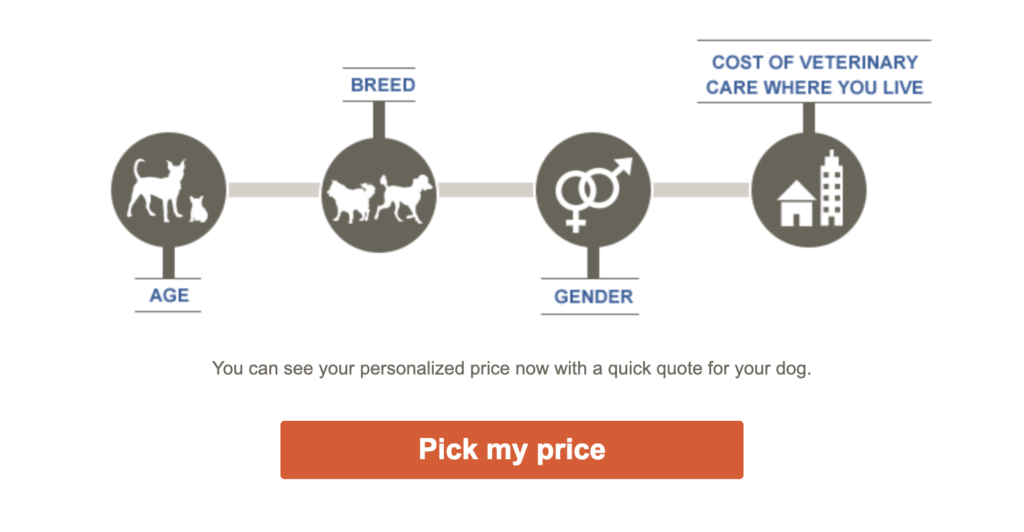
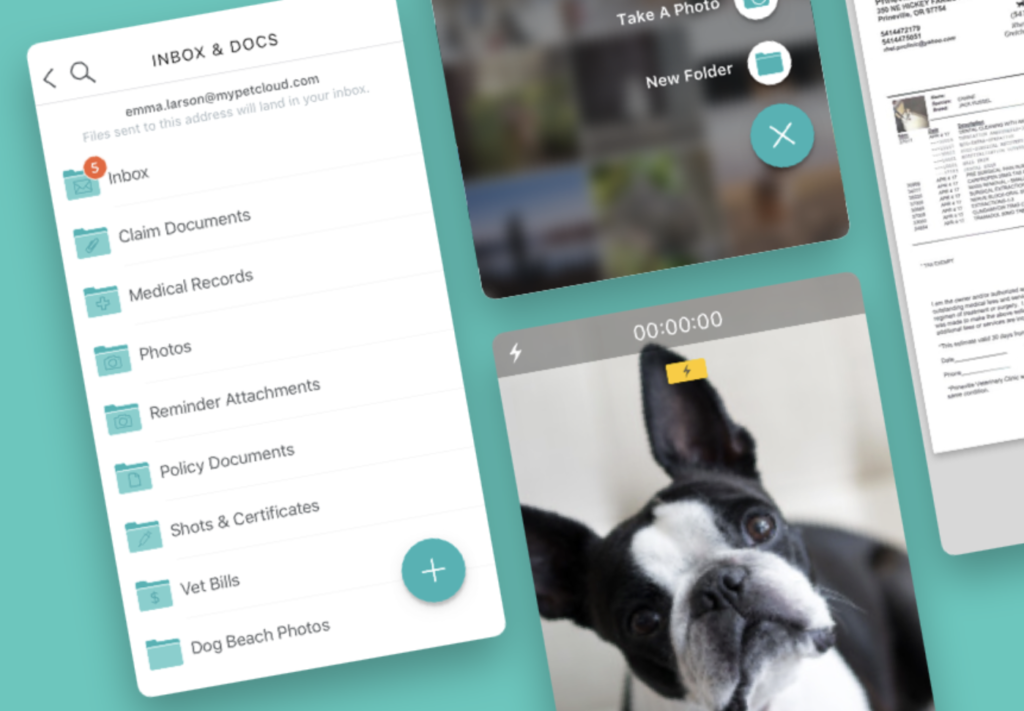
We like Figo, as the insurance company comes with some distinct advantages over some of the other plans we’ve reviewed. Figo provides a cloud-based record keeping system called Pet Cloud. Not only can you quickly access records, but you can also track microchipped pets — a real lifesaver in the event that your pet runs away.

Figo offers three tiers of health coverage, all of which include comprehensive protections. Plans range from $10,000 to $14,000 in coverage in a given year, or you can choose an unlimited plan for a higher premium.

Figo’s coverage means the company pays vet exam fees when the exam is related to a specific accident or illness. So in the event that your pet gets bit by another animal or breaks a bone, you won’t pay for the office visit.

Embrace

Embrace pet insurance

Embrace is one of the lowest cost pet insurance providers we found during our research. This company offers no per-incident limits on claims, no lifetime limits, and an A+ rating with the BBB. Claims are paid within 5-15 days, and if you have multiple pets, you may be eligible for a discount.

Like Healthy Paws, Embrace puts some hip dysplasia limits in the policy. There’s a six month waiting period for care related to the condition — but plans will cover at least part of the costs in the event your dog needs to have hip surgery.

What we like about Embrace is that plans come with an annual allowance for wellness care, which can be used for vaccinations, microchipping, and check-ups. And you even get a 10% discount if you’re covering more than one pet.

Bottom Line

Whether you decide to buy pet insurance boils down to a few different elements. It’s an emotional decision that impacts the quality of care your furry family members receive.

It’s important to understand that pet insurance works a bit differently than human health insurance. The main difference is, when you go to the doctor, you’ll pay for medical bills at the rate predetermined by your provider. Conversely, when you take your pet to the doctor, you’ll typically cover the fees yourself and apply for reimbursement — kind of like car insurance.

Make sure you look for a policy that covers both illnesses and injuries. Most plans don’t cover preventative care, so you’ll also want to consider that you’ll still be paying for routine care. Finally, as we’ve seen with Healthy Paws, pet insurance rates and coverage depends on your pet’s age and sometimes, size. As such, read the fine print closely before signing a contract.

This is what happens when you lie on your resume

Discover why a little white lie could derail your career.

Lying on your resume is one of those things that most of us have done at some point. And we get it, sometimes it feels like the only way to lock down the job of your dreams. Or… just a job in general.

But, a quick Google on the matter quickly reveals that lying is bad news for job hunters — as it can cost them an opportunity or come back to haunt them down the road.

Exaggerating on your resume might not be illegal, but it’s not part of your recipe for success.

Here’s why you shouldn’t fudge your credentials—at least not too much.

What happens when you lie on your resume?

Why lying is a bad idea

Okay, the main reason you shouldn’t lie on your resume doesn’t have to do with morals.

Rather, it’s likely to catch up to you at one point or another. Many employers go through great lengths to check out their candidates during the initial screening process.

For one, online background checks can reveal a lot about a person — from criminal records to college degrees, work experience, and salary. And, of course, hiring managers are expecting an exact match to come back.

Will multiple meetings happen before you get hired? Is an algorithm involved at any stage?

We ask these questions together, as even if you “check out” on paper, a body language analysis might come into play.

For example, interviewers might ask a series of behavioral questions—which are detailed questions along the line of, “Can you think of a time when you did XYZ to boost revenue?”

These questions require a certain depth, and if you’re not prepared for the line of questioning, an interviewer might think you’re not honest.

Algorithms — which are increasingly coming up in the screening process — will scan for eye movements, fidgeting, and other indications that an interviewer isn’t being completely honest.

Finally, some recruiters opt to secretly collect references by secretly contacting people who worked with you in the past.

The idea is to get around the possibility that you’ve asked your friend to pose as your former boss or coached a colleague to talk up your positive attributes and none of your weaknesses.

In any case, there are plenty of opportunities to get caught before the hiring process kicks into high gear.

What counts as a lie?

lying

A lie isn’t necessarily an all-out falsehood. Omissions, too, can be just as dishonest.

Things like altered employment dates, as well as embellished reasons for leaving your previous position, are technically lies, as they prevent the employer from understanding your role and performance.

Again, there’s nothing morally wrong with lying about why you want a job or couldn’t stay in your old one. However, if you’re lying about how you feel, you risk landing in a position that doesn’t work for you.

And then there’s the tangible stuff. Employers can verify where you went to school or issue a skills assessment to see if you really know all those languages.

Obviously, if your social media accounts reference your work history, or there’s a Google-able trail of your experience, hiring managers can easily spot a faker.

On top of that, it’s very easy for hiring managers to contact your past employer, to do some fact checking or run a formal background check before making an offer.

That said, even if your references check out and your social media is pristine, your body language can betray you.

Interviewers can pick up on specific cues like looking at the ground or touching your face that indicates you’re not telling the truth.

Big lies spell big trouble

The bigger the lie, the higher the chance that your attempt to level up will come back to haunt you.

Lies like swapping out your state school credentials for something more Ivy League or saying you have a master’s degree when you’re a few credits shy of a bachelor’s tend to be among the worst lies according to a survey by the resume company Hloom.

Another study found that the majority of hiring managers revealed that if they found out that a candidate was lying, they’d remove them from consideration.

The thing is, even if you make it through the hiring rounds, the story isn’t over. You might be forced to lie more to coworkers or employers to keep up the facade.

There have been several instances of high profile executives who were publicly fired after resume lies came to light.

And, that kind of big deal lie makes it onto your permanent record. Take, for example, the Walmart exec forced to resign, 20 years after lying about graduating from college. Or the Notre Dame football coach whose lies caught up to him just five days into the job.

In some cases, lying might not only tarnish your reputation but land you in jail. Earlier this year, New York made it illegal for nannies to lie about their credentials.

What about the small stuff, then?

According to a CareerBuilder survey, 75% of employer respondents have caught a lie on a resume.

The survey found that the most common lies on a resume included relatively small offenses — inflated responsibilities, embellished skillsets, employment dates, job titles, and academic degrees earned.

Everyone wants to sell the best version of themselves.

Saying you’ve taught yourself how to code or edit videos is fine, just don’t lie about earning a degree or certificate when you haven’t.

And, we should mention if you are a few skills shy of meeting the requirements, apply anyway and make the case for why you deserve to be there.

Best questions to ask before leaving your next job interview

Ready to ace your next interview? Keep these questions in mind.

job interview

Interviews are more than an opportunity to dazzle a new potential employer with a pristine resume and your quick wits, it’s a two-way street.

While the interviewer is there to ask questions that help them understand you and what you bring to the table, you need to be prepared to ask the questions that will help you understand if the job is right for you.

That said, many of us dread that final interview question — “so, do you have any questions for me?”

The answer should always be “yes,” regardless of the position or how well your interviewer explained the role. It’s one of those weird unwritten rules—like how you have to say “good” or “fine” anytime someone asks how you’re doing.

Recruiter Angela Smith told The Muse that if an applicant doesn’t have any questions, it’s a red flag. She says it makes her think that they either didn’t do their research or don’t care whether they get the job.

Additionally, asking smart questions can give you a leg up on the competition. This is a chance to show that you’re smart and engaged — as well as help you identify red flags of your own and get a sense of what your new daily routine might look like.

Here are some high-level questions that can help you wow your interviewer and clarify some things that’ll help you make a decision, too.

Best questions to ask a prospective employer in a job interview

job interview

“Describe the perfect candidate for this role”

This question can uncover some valuable information about the role that you might not find in the job description. You might learn more about which skills the company values most, how the ideal candidate fits into the culture, and potential expectations.

“What are the day-to-day responsibilities of this job?”

This question is an important one to ask if the description wasn’t 100% clear. More so if you’ll be working with a small team or the company itself is small — as in these cases, there may be more cross-functionality than you were expecting.

Additionally, it’s worth pointing out that this question isn’t appropriate for every role. A marketing manager or a consultant may have responsibilities that look different from company to company.

In a sales position, this may make it seem like you don’t know what you’re doing—as chances are, you’ll be connecting with prospects and clients day to day. In this case, a more appropriate question might be something like, “How much time do sales reps spend in the field or traveling vs. in the office?”

“What is the company culture like?”

A question like this is a good one, especially if you’re concerned about turnover or the company’s approach to creating growth opportunities for their employees. The interviewer, of course, will be trying to make the position sound as appealing as possible, but feel free to build on this question after they give an initial response.

Follow-up questions might include the following:

What activities are offered to employees? If there are a lot of game nights, sports leagues, and so on, there’s likely an expectation to participate in extracurriculars.

  • What career paths are available?
  • Do people have flexible schedules?
  • What’s the dress code?
  • What do you like about working here?

“What metrics do you use to determine success?”

Another way to identify any potential red flags here is to ask about how the company measures performance.

Gaining some insight into how this company measures success will help you understand what you’ll be judged against, which may add some weight as to whether this position is a fit or not. Does the interviewer have unrealistic standards or follow a system that seems fair and easy to grasp?

Additionally, if the interviewer doesn’t have a sense of what success looks like in the context of this role, that might be a sign of frustration to come.

“What are the biggest challenges the company is currently facing?”

Challenges stand to help you identify the key issues affecting the industry, and the organization itself. Asking this question could identify areas where your particular expertise stands to help the company overcome weak areas — i.e. a great place to gain an edge on the competition.

“What are the next steps?”

Don’t leave without asking what’s next.

For one, this question allows you to make certain that the interviewer has all of the information they need to make a decision.

Two — it gives you a timeline, so you won’t be waiting by your laptop refreshing your Gmail obsessively. And three, this question indicates interest about the position — which, of course, is always a plus.

And… we’ll leave you with a few things to avoid

First of all, don’t ask any questions that you should already know the answer to.

Think, “What does this company even do?” A small misstep will make it look like you haven’t bothered to prepare.

Additionally, you shouldn’t ask about salary in an interview. If they like you, that conversation will happen in time.

We’re not completely on board with this norm, as you might waste your time jumping through hoops when something might not work for your lifestyle. Indeed recommends providing a range, as opposed to a set amount. The Muse says skip it.

In any case, tread lightly here.

If you’re working with a recruiter, it might be worth asking them at the outset and doing some research behind the scenes.

During the actual interview, your job is to build trust and demonstrate your competency. And, the best way to do this is by asking smart questions that dive deeper. Good luck!

How to future-proof your career

What skills will be the most coveted in the future?

skills for the future

For today’s students, figuring out what to study is a big, hairy challenge.

Machines are on the verge of taking the jobs that their parents had, data mining is changing our relationships with brands, and even things like law or coding — relatively safe bets in the past — are changing.

So, how do we prepare for the robot revolution? The answer, it seems, may lie into learning into our inherent humanity. Here’s why.

Future-proofing your career

Work is changing

Technology, of course, reshapes every job. Some people believe that there will be no work in the future — but, chances are, we’ll all need to do some sort of job for the foreseeable future.

For example, work stands to become more fluid — focused more on mission-based teams, rather than rigid org charts.

Additionally, the gig economy isn’t going anywhere either, so future workers can expect to earn money from various sources — often working remotely on their own or with a changing cast of characters.

According to Deloitte’s Future of Work report, the skills of the future tend to fall into this “soft skills” category.

If you look at the skills we’ve outlined below, you’ll notice that things like being able to work with others bring big advantages to workers, same goes for flexibility, problem-solving, and creativity.

With that in mind—we may need to lend the liberal arts some respect that they haven’t seen in a long time. Here is a look at some of the skills that are increasingly in-demand.

Most-coveted work skills of the future

Creativity

Creativity is no longer exclusively the domain of painters and novelists. Rather, it’s a leg up when you can work alongside algorithms. Thinking in abstract terms, creating original content, and coming up with novel solutions to complex problems are valued skills when nothing is certain but change.

Teamwork

Social skills, of course, rule in the age of automation  Learning to manage teams, work collaboratively, and use your empathy at work will all help you go far in the workplace of tomorrow.

Problem-solving

Technology is bound to make things easier, as well as more complicated. Human workers will need to be able to analyze technology’s performance and its impact on the people its supposed to help.

Cognitive flexibility

Cognitive flexibility is a big one as the pace of tech-driven change has increased dramatically. So, the expectation that you enter a career and stop taking classes or earning certifications no longer makes sense.

So, where should we focus our efforts?

Students still face some tricky decisions. This McKinsey interview asked a panel of experts what, exactly, should incoming students study in college?

While all had different answers, there was this sense of agreement — students should develop core skills that can fit in anywhere. Things like being creative, being able to write and persuade, may serve students better than preparing for a specific career path.

The other thing we keep seeing over and over is this idea that humans need to develop their human talents and learn to use them in a range of diverse settings.

But, this also means people need to have a clear understanding of how their skills fit in with the skills that AI brings to the table.

According to Pew, experts seem to believe that technological advancements will push governments, educational institutions, and the private sector to create more educational and training opportunities that support flexible, lifelong learning, as it will no longer be reserved for those people who want to earn a promotion or change careers.

Final thoughts

In looking at the skills with a rising profile, there’s a sense of optimism there. Social skills, collaboration, creativity, and problem-solving are these very human things — and in the end, make us more valuable to our employers and lay the groundwork for success.

While we may need to adjust our mindset to get used to the idea of an abstract, ever-changing workplace, how we earn a paycheck in five, 10, 20 or years could get a lot more interesting.

How much does “trust” in the internet matter?

How can we navigate a less trustworthy internet?

does trust matter on the web?

Trust has been brought up a lot lately, especially in the context of our digital lives and the real-life implications of our online activities.

There’s no doubt that people have become increasingly susceptible to conspiracy theories. And, opinion and fact have seemingly morphed into one powerful tool for preying on emotions.

But who is responsible for fixing this information crisis? Is it up to us to educate ourselves or does a massive media intervention need to happen?

Let’s dive into this problem area.

How to navigate trust in the internet era

What’s next for news?

According to Pew Research, experts are pretty evenly divided on what the future holds for online narratives.

The 51% of respondents who said that things wouldn’t get better, say the fake news landscape preys on our survival instincts, and humanity’s manipulators will use new tools to take advantage of our natural desire for convenience and comfort — you know, our fear of change.

Others say our brains just weren’t built to handle change on the scale of what we’ve experienced in the past two decades. These respondents predicted the future information landscape would be overcrowded with false information, making it more difficult to find trustworthy sources.

The 49% of hopeful experts believe technology might fix the problems it caused in the first place, predicting better methods of weeding out fake stories and promoting quality reporting.

A Vox discussion from earlier this year looks at the role of Facebook and fake news in the 2016 election. In it, Brooke Binkowski of Snopes brings up a good point. She says that everyone was so quick to bring up the failure of the media, when we, as a society have failed journalism.

So, perhaps it is a matter of giving more funding to investigative projects and quality outlets, reviving the victims of pivot to video.

Binkowski also says that quality news organizations have hurt themselves by publishing articles based on Twitter gossip or other unchecked sources.

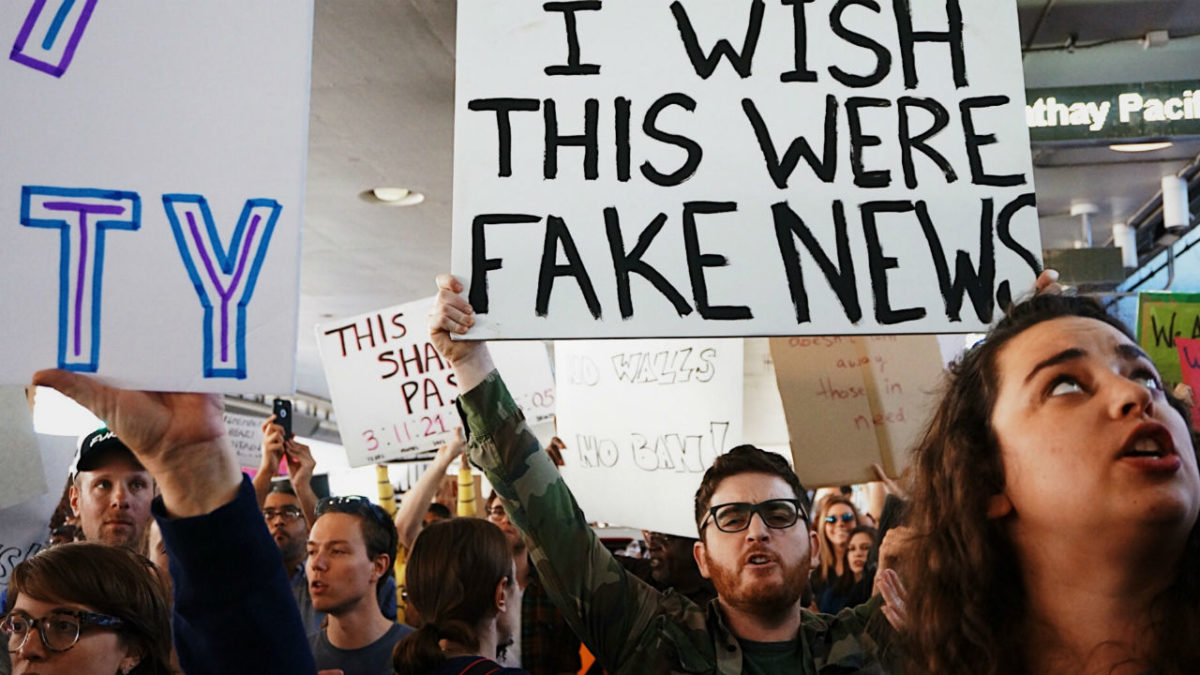
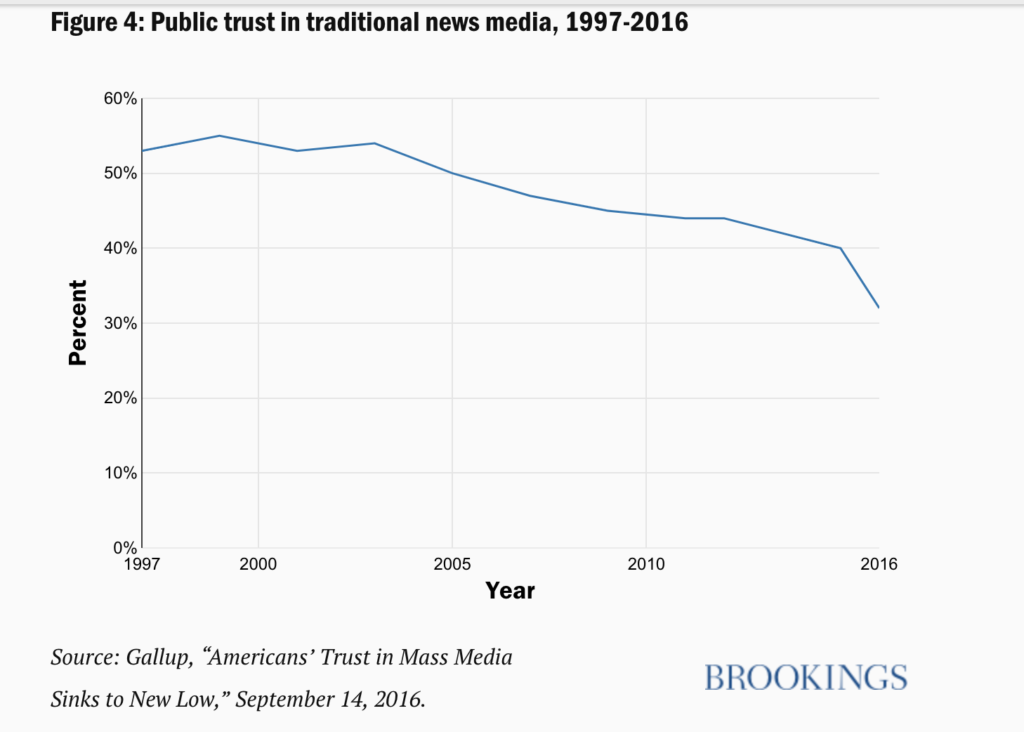
There’s also the fact that public trust in the media overall has eroded. So, whether NPR and the New York Times continue to push out quality news, will people increasingly just write them off as fake news?

peoples' in the media trust declines

Are we responsible for identifying fake news ourselves?

The reason we even pose the question, “should trust matter on the internet?” is, it seems that making clear distinctions between informational sources was once common sense.

For example, citing someone’s blog as a primary source is generally a no-no.

But, is it elitist to assume that people know this?

There are plenty of resources available for students; just about every university has a page dedicated to evaluating information on the internet. Filtering questions like: is news coming from an established institution? Are sources clear and documented? Does that information reflect bias? should maybe be part of the social media experience.

The Brookings Institute report dove into how we can combat fake news as a group effort. Their report mentions that fake news “fools” American adults about 75% of the time.

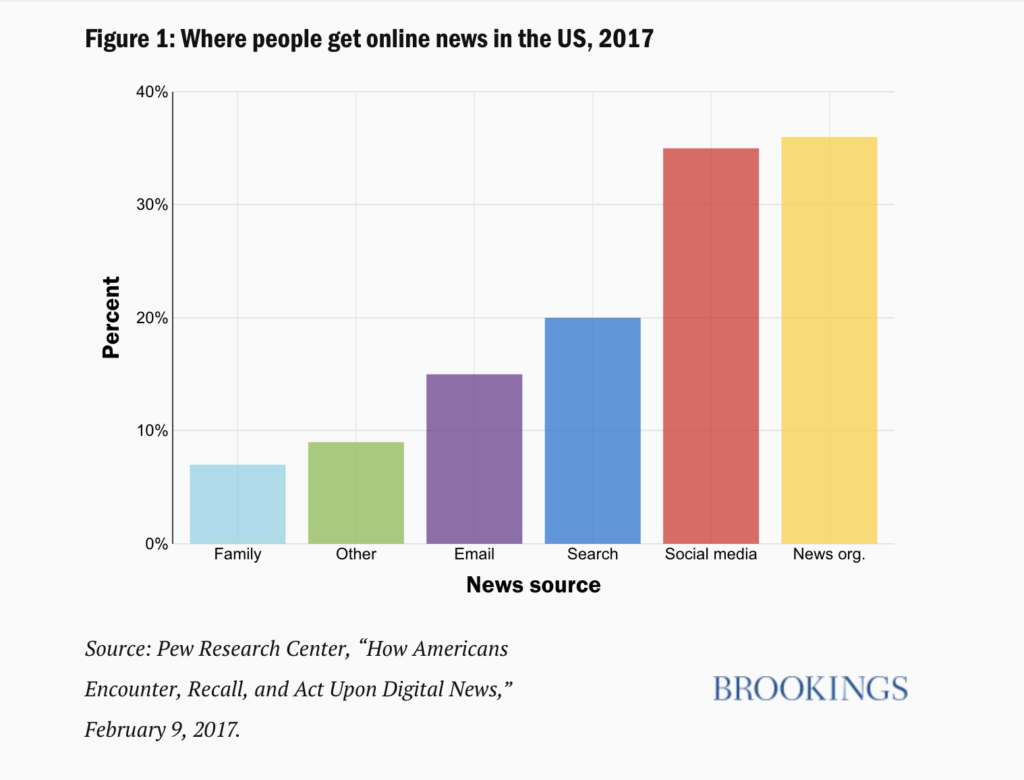
And recent data from the Reuters Institute for the Study of Journalism found that less than 25% of Americans feel social media channels do a good job separating fact and fiction. Yet, people get a good chunk of their news from social media and continue to share misinformation.

social media top news source

What do we do about this problem?

The Brookings report recommends that news organizations focus their efforts on quality journalism that builds trust and stresses the importance of calling out misinformation as they see it.

They also say that technology companies should focus on developing better ways to identify and remove harmful, fake content and that online users should learn to be skeptical about what they read online.

The point is, in an era of fake news, maybe we should revisit these research basics when it comes to informing our understanding of the world.

Trust matters, but we all need to work together if we want to improve the digital news landscape.

Trick yourself into better time management

Do more in less time with these great strategies.

trick yourself into better time management habits

Humans are natural procrastinators—if we have extra time, we’ll milk it to the very last drop, regardless of how it worked out last time.

Yet, procrastination sucks. It makes us feel anxious, lazy, and stressed.

Where sometimes procrastination is harmless, other times, it can hurt our careers, our personal lives, and of course our well-being.

The worst part is, we often do this to ourselves. Deadlines creep up on us over and over,  yet we fail to plan accordingly.

Below, we’ve rounded up some tips for getting a handle on your productivity, and we promise, they’re not too hard.

How to trick yourself into better time management

Break projects into small tasks

Instead of a sprawling to-do list, you should approach your tasks as bite-sized pieces. Staring down a massive project can be overwhelming, to be sure.

So, break it up.

Your to-do list should contain a few steps at a time, which makes it more manageable. Plus, when you check off each task, you’ll see a record of what you’ve already done.

On top of this divide and conquer approach, we recommend including the learning process on your list, as well. We tend to get frustrated when something is hard, which, of course, leads to procrastination.

Instead, build time into your day that accounts for research, ideation, just grasping new concepts. It’ll make things easier, to be sure.

Set time limits for each item

Setting time limits can be an effective way to blow through tasks. We like this approach for getting smaller items done.

Allocate one hour to sending emails, and that’s it. Maybe 20 minutes go toward doing research, and another hour gets spent on revising a colleague’s latest article.

You should also block in time buffers, as you’ll have a little cushion to finish that blog post or invoicing your clients.

Rethink your approach to the things you don’t want to do

Another reason we procrastinate is that we have to do something that sounds plain awful. While this might seem impossible, you’ll need to think about putting together a report, answering those emails, whatever it is, in a fun or interesting way.

Try setting a timer to see how much you can get done within 20 minutes or an hour. Or, change the process of doing a task to something a little different.

Make a plan

to do list

If you’re prone to procrastination, never go to bed without a plan. Before you shut down your computer for the evening, spend 10-15 minutes making a list of what’s on the agenda for the next day. Then, clean up your workspace, so you’re not kicking things off with clutter.

Before you go to work, or wherever you do — write down your three top priorities. These are the things that need to be addressed that day, for sure.

No exceptions.

Work on those high-priority tasks when you’re at your most productive.

And, by the way, those times may depend on the task. If you have to come up with several ideas for a new content strategy, that time might be in the evening. If you’re editing a piece of writing, approaching it first thing in the morning might be your best bet there.

This two-pronged approach is not very much work, but it will help keep you from starting the day off on the wrong foot. You know, like those kinds of days where you can’t settle on where to start, so you start online shopping or surfing the web instead.

Eliminate that fear of failing

The reason many of us put things off is fear. After all, you can’t fail at something that you don’t do.

This is where a lot of perfectionist-types get tripped up. While perfectionists are associated with attention to detail, that tendency can also hold them back, as they may become overly worried something won’t turn out as planned.

Do your best, turn it in, and move on.

Overestimate how long you need to finish a task

Look, we all like to imagine ourselves as someone who can quickly put together a great project in record time. But how often do you start a task you thought was going to be over and done within an hour, only to find it’s taken all day and messed with your other deadlines?

Allow yourself some extra time, so you don’t overextend yourself, and especially if you’re working with clients, add in an extra day or two at the outset of a project. This will prevent you from falling shy of expectations.

The second part of this, is, you should learn to track your time as you move through these tasks. If there’s a disconnect with how long something takes and what you anticipated, it’s time to gather some data.

With these strategies, you’ll set yourself up for a more productive life. And it’s worth checking in every so often to reset your expectations of what you can accomplish in a day. By establishing some good habits, you’ll reap the rewards for years to come.

Can your Instagram posts reveal depression?

Discover what your filter choice says about you.

instagram depression

Look, curating an Instagram profile is a challenging exercise in appearing cool, connected, and fun. Exhausting, right?

When you’re feeling down, people might already be on to you — the answer lies in your body language, your tone of voice, and the odd defeated sigh.

Apparently, your Instagram photos can provide a window into the state of your mental health, too. Filters, color preferences, and how many faces, on average, you’ve featured in your feed, could reveal that you have clinical depression.

What your Instagram could reveal about your mental state

Filtering for depression

While you may not think much about your choices when you edit a photo to post, it can actually reveal a lot about your wellbeing, and could even signify depression.

Researchers at Harvard and the University of Vermont found several indicators of depression within photos posted to Instagram. The 2016 study looked at Instagram data from 166 people and relied on machine learning tools to identify markers of clinical depression.

Researchers asked Instagram users for permission to analyze their posts and asked if they had received a diagnosis for clinical depression from a qualified professional.

From there, researchers used the algorithm to assess common photo features in people both with and without depression. The algorithm sorted through things like filters, metadata, comments, and likes.

The program revealed some links to certain photo features and depression. For one, the depressed participants tended toward darker, cooler colors. Filters like Inkwell and Crema won out over the more cheerful Valencias.

filters preferred by depressed instagram users

They were also less likely to post photos of large groups of people, suggesting they spent less time socializing in group settings. Interestingly, the study also found that people with depression had more comments, but fewer likes than those without.

The researchers behind the study did acknowledge that they were looking at a small sample size. But, they said that there could be some real-world applications available in the future. As it stands, scanning accounts for depression comes with significant privacy and legal issues.

And, given the fact that companies are now leveraging algorithms for hiring, there are some scary implications lingering beneath the surface.

What’s the deal with color psychology, anyway?

paint colors

This talk about depression markers lying in Instagram’s gloomier filters brings us to this question: is color psychology a real thing?

The idea that blue makes us feel calm, reds rev us up, and yellows make us happy are Western ideas. And, they feel arbitrary.

There’s no shortage of blogs covering the merits of using color psychology in advertising, art, and design.

So, how does this play out in real life? Is color psychology as valid as, well, psychology psychology? According to researchers, the results are as mixed as your box of colored pencils.

Some believe that your experiences color (sorry) your perceptions of certain hues.

Chromotherapy has been around since ancient times. The idea is, the visible spectrum of colors of electromagnetic radiation could be used to cure diseases. For example, red was thought to stimulate circulation, while blue was used to relieve pain.

Researchers have made discoveries related to the effects of color on the mind, but most of the observations have been anecdotal at best. Still, some studies have revealed that color can affect our performance. Take, for example, this one that found that the color red can hurt test taking performance. Or, this one, that found sports teams with black uniforms were more likely to receive penalties during a game.

In Tokyo, railway operators found that adding blue lights to subway platforms resulted in a reduction in suicide attempts. It’s unclear if the novelty of the lights were a distraction or if the lights provided a sense of calm.

Wrapping up

In the end, it’s unclear whether we should put too much stock into this type of study. As we mentioned above, the Instagram study looked at data from a small sample size.

If your Instagram is purely for personal purposes, go ahead paint the whole thing black.

However, if you’re managing social channels for a brand or trying to monetize, best spread those positive vibes, no matter how cool that moody lighting looks.

While color’s effects are completely subjective, we still have these cultural attachments that inform the way we interpret art, sports teams, and maybe even our Instagram friends.

New year, new scams: what to watch out for in 2019

Protect yourself against these evolving threats.

phishing scams

No matter how often we’ve been warned about phishing scams and shady web-based transactions, we still fall for the fraudsters. According to an article in Forbes, costs associated with cybercrime are expected to top $2 trillion next year.

The Better Business Bureau Scam Tracker shows over 142,000 scams were reported this year in the U.S. — ranging from healthcare and Medicare scams to counterfeit products and online purchases.

And it’s not just the elderly falling victim to fraud. According to the FTC, 40% of consumers who reported fraud were between the ages of 20 and 29.

In any case, here are some of the biggest scams to watch out for in the coming year.

Online scams to avoid in 2019

Phishing — evolved

Phishing isn’t exactly new. This form of fraud has been with us for a long time now. But as tech gets ever more sophisticated, so does phishing.

In the past, phishing attacks were more numbers game than anything. Hackers would cast a wide net using a generic email asking for credit card info, passwords, or other pieces of sensitive information.

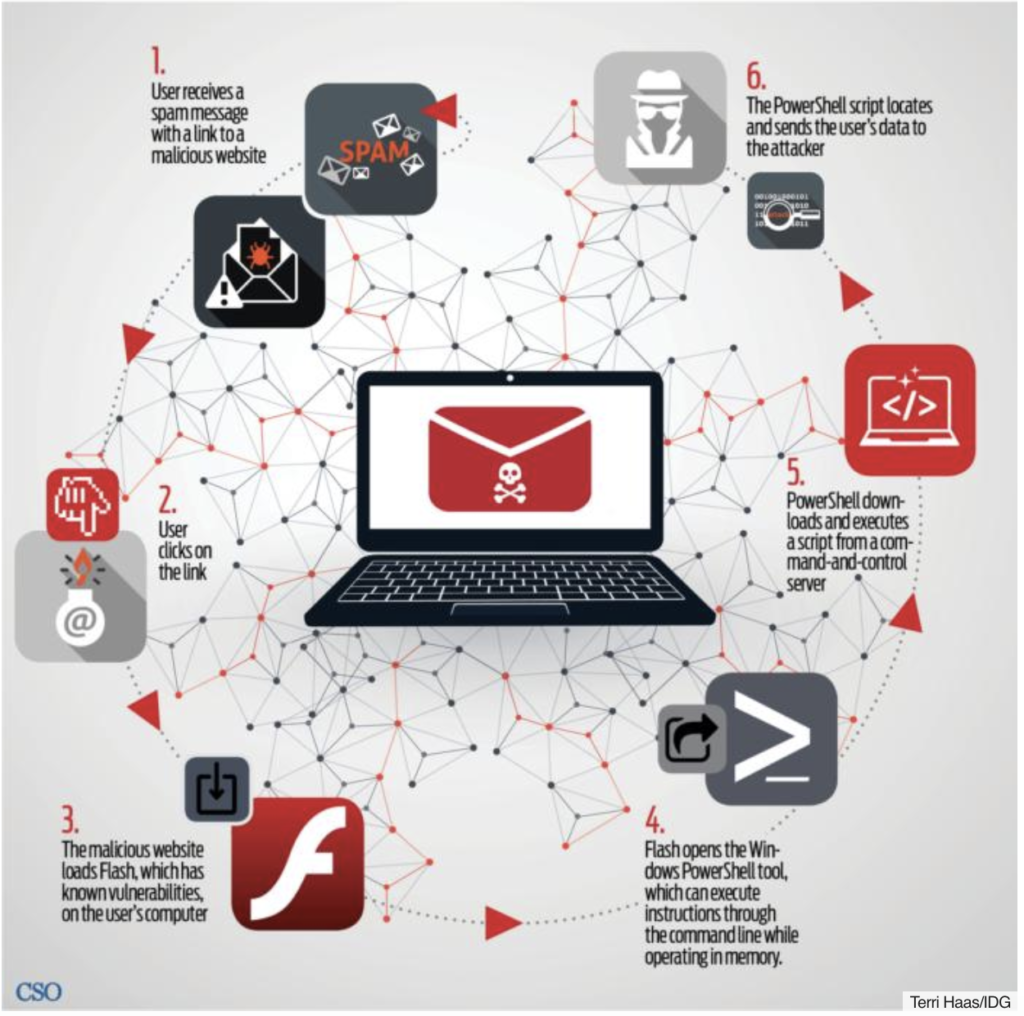
Today, phishing attacks look more like they came from a specific company. Called “spearfishing,” hackers might pose as your bank, credit card company, or a site like Dropbox or PayPal. Generally, targets receive an email that looks as if it came from a legitimate business. You might be prompted to click on a link to “verify account details” and from there, fileless malware is installed on your device.

Where you once had to download a file or an app to get malware, it’s now a matter of clicking a link. These fileless attacks are also more difficult to detect, as most antivirus programs only scan your hard drive.

Here’s a look at how fileless phishing works, courtesy of CSO Online:

Fileless malware

Mobile fraud

With the rise of mobile traffic, it’s no major surprise that fraudsters are meeting victims on their turf. Losses from mobile fraud are reportedly in the billions, expected to rise.

Mobile fraud comes in a few different forms. One example is click flooding, or click spamming, which takes advantage of users of some unpaid apps. When someone installs certain free apps, a serious of fraudulent clicks take place — which makes it seem like people are clicking on a paid ad.

Click flooding is an issue for advertisers more than consumers — as this form of fraud messes brands’ marketing strategies.

Marketers might think they’re getting a high volume of organic clicks and end up paying more for ads that ultimately don’t work.

phone scams

Then there’s a newer form of mobile ad fraud, SDK spoofing. This involves a bot that hides on an app, which is essentially a cheaper way to buy fake followers.

With SDK spoofing, bots create fake requests made from an app to the servers of attribution companies and app publishers. The fake requests make it appear that a certain amount of users are running an app, though in reality, the app was never opened.

Social security scams

According to Consumer Reports, fraudsters are increasingly making harassing calls posing as the Social Security Administration.

The SS scam is the new IRS scam, and it’s more dangerous for a couple of reasons. Today, crooks have their hands on robocalling technology, so they can call more people, playing the numbers game until someone eventually pays. Second, it’s gotten easier to spoof caller IDs.

You might have noticed this on your cell phone. Often, scammers call using a number from your local area code — and a similar phone number. In the case of the social security scam, scammers are using an 800 number that looks like a real deal call from the administration.

What to look out for: this scam is generally preying on Medicare patients and the elderly. Scammers reportedly have told people they’re going to lose their benefits and ask for personal information to keep those benefits.

Tech support fraud

According to Experian, tech support scams were responsible for over $15 million in losses in 2017. These scams take a few different forms.

One example involves using phishing emails as a way to send Apple users to a fake website where malicious code is inserted into apps like WhatsApp and Telegram. The code collects information like SMS data, photos, and contact details, which may be used for blackmail later on.

Users might receive a message like the one below, which looks like a routine update.

fake apple support scam

Other forms of tech support fraud include things like phone calls claiming your computer is infected with a virus, or you’ll receive a pop-up message or locked screen prompting you to call a fake company.

Credit report scam

The credit report scam targets job seekers and apartment hunters. Generally, you’ll run into this one on Craigslist and other online job boards.

The scam occurs when the prospective employer asks that you submit a credit report as part of the application process. If you agree they’ll send you to a specific reporting service, and you might end up having to pay for the report.

In some cases, the fake employer will ask you to send your social security number along with an application or an image of your license or a utility bill. These reports serve as a way to obtain personal information for later use.

Protect yourself

So, how can you defend yourself against spearfishers or robocalls that seem legit?

The usual advice is: never click a link in an email that comes from a bank, government agency, or commercial institution. If the link comes from a company, check your account by going directly to the website by typing the URL into the navigation bar manually.

Sound advice, but protection is limited to web apps. With mobile attacks, watch out for links that come by way of text message.

While the concept is the same as traditional phishing, mobile users tend to be more distracted and may inadvertently click on a bad link without realizing it.

The FTC also recommends that you hang up on recorded calls, avoid free trial offers, and be aware of how you pay for things online.

Finally, it might be worth looking into virus protection software for your computer, too.

How chatbots are changing small businesses

You could be interacting with a chatbot without even knowing it.

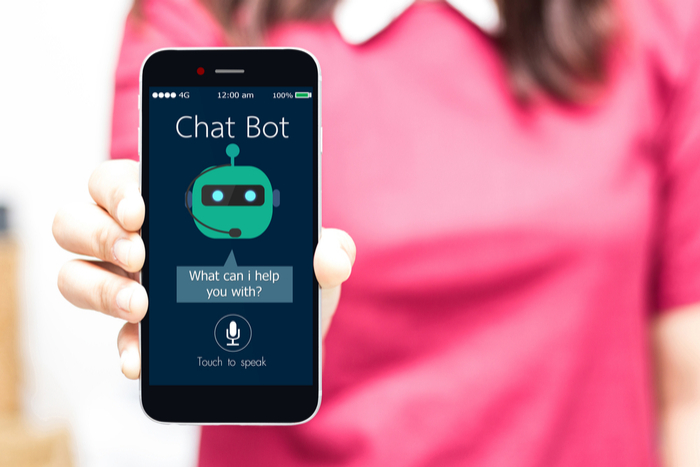
chatbot

Chatbots are spreading like wildfire.

You’ve seen them around the web; on retail sites or popping up when you’re getting some online banking done.

We’ve already seen digital assistants like Siri and Alexa have become staples in the home, but it seems that the chatbot is poised to help people at work, too.

Sure, bots are already pretty ubiquitous. However, there’s a shift happening. The technology isn’t just for the Amazons and Apples of the world, now, even”regular Joe e-commerce,” can have a bot all his own.

Oracle just announced the availability of Oracle Digital Assistant, which allows companies to incorporate existing chatbot technology into their own solutions. And they’re not the pioneers, here.

Google, Amazon, and Facebook have already released the algorithms behind their smart assistants, which allow third-party providers to build on top of an existing chatbot framework.

Here’s a little more about where chatbots can fit into the small business space, as well as some of the capabilities that extend beyond IM-ing with algorithms.

How chatbots are changing the internet

So what can a chatbot do?

Well, the idea is a chatbot can carry on a conversation with users like a real live human. Companies across all industries from banking to food delivery and retail are taking advantage of this technology is growing numbers.

Still, a report from Gartner found that as of spring 2018, most businesses were not using chatbots and were not evaluating the technology at all.

Chatbots, though, do promise some answers to some of the problems that small organizations have faced since, well, forever.

Between picking up the slack for overwhelmed owners or boosting customer engagement, small businesses should really consider jumping on the bot bandwagon ASAP.

1. Chatbots becoming live assistants

Chatbots are now being used as a way to deliver information to customers and provide a tailored customer experience in businesses of all sizes.

In small businesses, these digital assistants serve as the first point of contact, offloading customer questions, while you attend to other things.

For example, one might integrate a bot into an event app. So, when attendees show up to a conference or music festival, the bot can fill them in with all the basics: Wi-Fi passwords, bathroom locations, last-minute changes, the list goes on.

2. Bots offer some sales support

A bot can take orders from customers using simple commands. So, instead of making a phone call or manually adding items and credit card details to a website, customers can tell the bot what they want.

And your bot can explain add-ons or upgrades to visitors, just like a sales rep might—minus the commission check.

Chatbots can be customized to upsell items and cross-sell related products. Small businesses can use bots to fill in the blanks created by a smaller sales force.

It’s not so much that chatbots are replacing jobs in this case. Instead, small businesses can only hire so many people and employing chatbots as a way to sell products means, they don’t need to bulk up their salesforce—and get on the hook for payment if they don’t end up bringing in the money promised.

3. Increase engagement

A helpful chatbot on your social profiles can help you boost engagement. For example, if a customer visits your Facebook page and asks a question, your bot can direct them to your site—delivering the content that matches the question.

Or take Sephora for example. The cosmetics brand developed their own bot on Kik, which functions as a shopping assistant. The bot works to understand customers by gathering data that informs the content they serve up.

Here’s a look at the glamorous bot in action:

How exactly do chatbots collect data?

The chatbot records all conversations, saving a repository of data that it can reference to get better as time passes.

The chatbot, when coupled with natural language processing, or NLP, gives bots the potential to identify specific keywords. And those keywords (think “return,” “refund,” “exchange”) help bots recognize context and route inquiries accordingly.

The benefit of the bot is, it remembers the small stuff. Even the best customer service rep is going to be focused on several other things while talking to a customer—they need to focus on providing the best service right then and there.

Chatbots are predictive. Meaning, they can remember an earlier conversation with a customer and make targeted recommendations based on likes, dislikes, and habits.

Based on that, small brands stand to offer highly customized service, without adding to their workload.

Big data is no longer just for big business

Big data, buzzword of yore, is another potential area where chatbots can thrive.

Here, the value comes in the form of deep analysis. Chatbots’ core algorithm works to identify patterns. That’s how they mimic our conversational patterns, after all.

More sophisticated bots can be trained to identify tones or specific groups of words that signify whether a customer is upset or pleased with a product or service.

The goal is to catch underlying issues as they emerge before they become a problem.

Conclusion

While chatbots have been cropping up as something as an annoyance across every site with something to sell, there are stirrings of something else happening in the space: accessibility.

As humans, we crave a certain personal touch.

We want bots that toss the conversational “ball” back and forth, not chat partners who spit out a link and call it a day. But today’s AI helpers are starting to take on a more conversational tone.

Developers are working on making these digital assistants more helpful and industry-specific. And, eventually, it seems, we’ll start seeing the payoff in the form of better service and more personal solutions.

The exciting thing about chatbots is, most of the benefits they provide are about making things personal. Where small businesses of the past got to know their customer in person, they’re now operating on this global scale. The automated, tailored experience makes customers feel seen.