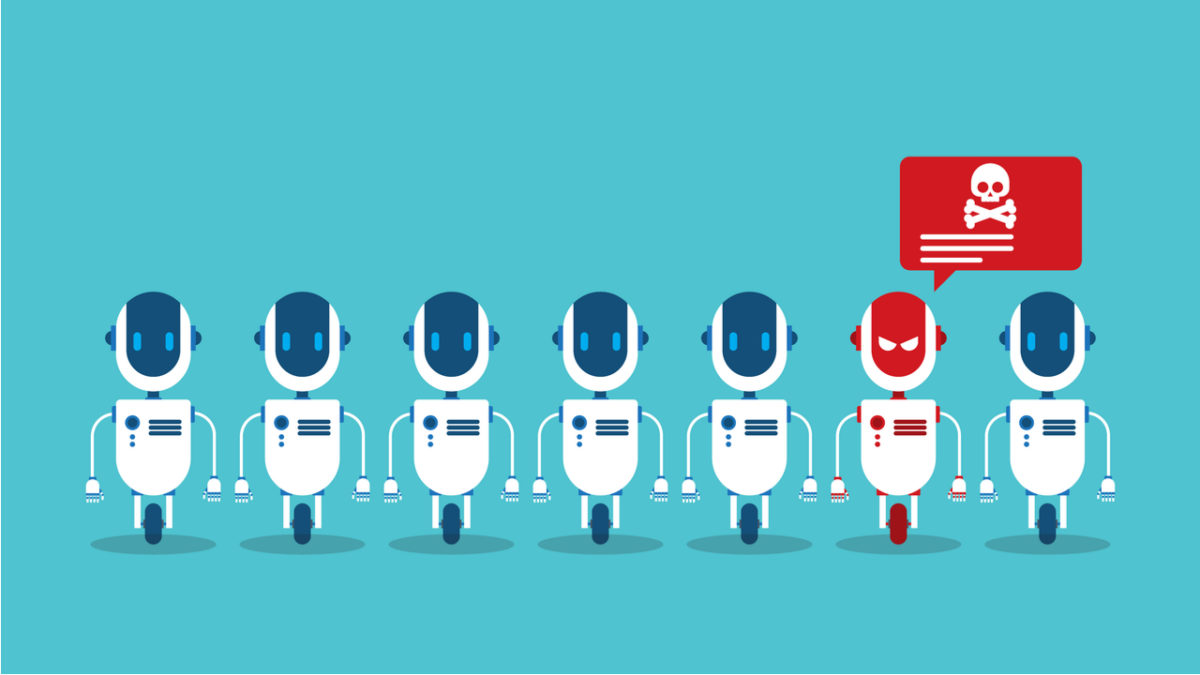
What are the biggest threats associated with AI?

Artificial Intelligence is coming, and it’s bringing trouble with it.

Advancing artificial intelligence brings a lot of promise—to help with everything from curing diseases to making for a better customer service experience.

Most of the talk tends to center on doomsday scenarios or a future where humans don’t work anymore. While there’s no doubt that automation will transform the modern workplace, in many ways it stands to benefit society in several ways. Aside from our natural fear of change, what else is there to fear?

But what are the most significant realistic risks we may be battling in the future? Here’s a look at a few things that humanity, as a whole, might need to worry about.

What are the biggest threats associated with artificial intelligence?

Increased cybersecurity woes

A key issue we face with advancing AI is the automation for vulnerability discovery. It will be increasingly difficult for humans to keep up with the bots — and may leave organizations tasked with handling sensitive data exposed.

One of the biggest concerns about AI is what happens when the technology falls into the wrong hands.

Hackers are learning to perform something called smart phishing, which allows them to leverage AI to analyze huge swaths of data to first, ID potential victims, then create believable messaging that better targets those victims.

As it stands, about 88% of US cybersecurity teams are using AI as part of their strategy. While AI might not be super reliable as a standalone security solution, many professionals believe that it will become a key ingredient in fighting back against time-sensitive threats.

As more bad actors adopt automated hacking methods, the good guys need to train themselves in the language of cyber attacks — ethical hacking of the future, if you will.

Fake news could get faker

Automation is threatening democracy. Or at least some researchers think so.

We’re seeing early signs of the effects that AI can have on how we receive information. From Russian interference in the 2016 U.S. election to the spread of misinformation across social channels, the implication for the future of journalism is pretty scary.

And then there’s the fact that almost anyone can create videos documenting events that did not occur. There’s the issue with DeepFakes, where people are transferring someone’s face to another body—which unsurprisingly has been used to create custom porn by adding a celebrity face to a porn star’s body. Another example is that Obama video developed by researchers at the University of Washington.

What’s more, it seems that automated fake news is on the horizon. Sean Gourley, CEO of Primer, a data mining software company told the MIT Review that we might see fake news offered on a personalized basis. Meaning, reports that are tailored to a person’s interests and essentially, optimized for maximum impact.

Autonomous weapons

The Terminator

Artificial intelligence would presumably take the dirty work out of carrying out a deadly attack. While this sounds like the stuff of a dystopian thriller, AI weaponry is moving from nightmare to reality.

As it stands, there are no weapons that can specifically target a person. Over the past several years, the UN has debated whether to consider banning lethal autonomous weapons systems, or LAWS, outright.

Last year, CEOs from 130 AI companies signed an open letter to the UN urging them to ban autonomous weapons before they become an unfortunate reality.

But given there are already war drones and weapons that can track incoming missiles, we’ll need to figure something out ASAP.

Our biases could spread

AI is known to pick up human biases, intentional or not. We’ve seen this play out in the Microsoft chatbot experiment—remember Tay? And, again in Amazon’s recruiting AI test, where, the algorithm somehow learned to weed out job applicants who included the word “women’s” in their resumes.

Unfortunately, one of the biggest risks of using AI is that it will reinforce stereotypes, many of which, we weren’t consciously carrying around. Take, for example, this ProPublica investigation into a commonly used software platform that predicts future criminals — and placed black people at a higher risk of committing violent crimes.

The issue here is, we can (hypothetically) teach our AI to make the right choices, but it’s a challenge to identify these biases until they happen.

Additionally, when machines must make their own decisions, they sometimes behave in ways that their programmers don’t understand. Meaning, it’s almost impossible to know how the bot got from point A to point B in the event of a bad decision.

Wrapping Up

Considering the risks of AI means looking at a wide range of problems that aim to upend humanity as we know it.

From the spread of misinformation to the risk of devastating physical harm, not to mention the whole business about our future employment prospects, there will need to be a massive global effort to keep AI from falling into the wrong hands.

While it seems the AI companies themselves take social responsibility seriously, it’s hard to predict how this will play out on the global and political level — especially when you consider most people don’t exactly understand the technology.


Making money on Instagram — even if you’re not quite an influencer

Turn your hobby into a side-hustle.

selfie
Monetizing your Instagram account may be an excellent way to build some side income—whether that’s drawing attention to an outside business or leveraging your talent for food photography to hook some affiliate deals.

While influencers get the big paydays, business owners and side hustlers alike can boost their income on the channel if they nail the marketing aspect.

Not sure how to get started? Here’s a look at some ways to monetize, outside of slinging FitTea for ungodly sums of cash.

How to make money on Instagram

Start building a solid following

Successful marketing on social media tends to fall into proportion with your follower count. That’s not to say that you need to have this massive following. But you’re not going to sell anything if no one can find you. Sorry.

So, assuming you’ve got your Instagram following — an engaged audience that likes what you’re putting out there — it’s time to figure out how to profit off of your influence.

The next step is learning what your audience wants to see, and either promoting your products to that audience or connecting with brands that this group already likes.

The third ingredient is pulling those elements together in a way that feels authentic to everyone involved.

That means you, your followers, and any brands you work with. It’s a tricky balancing act.

Get your bio in order

We recommend skipping the links and the keyword overload here. Instead, keep it simple and follow this basic formula: who you are + what you do + a little personality.

The app allows you to add one link to your bio, so use this to promote your website, or a sale or campaign.

Become an affiliate

If you have an account and like talking about products, becoming an affiliate might be a good move on your part.

Those in the fashion, beauty, or lifestyle space might want to go this route, as they may be more inclined to talk about products naturally.

Affiliates aren’t exactly influencers, though there may be some overlap. Your primary goal here is making sales for the brands you work with, and you do have to apply for this opportunity.

The easiest way to find potential partners is by working with a third-party affiliate marketplace — where you can pick and choose from a selection of partnering brands.

Some of the more popular affiliate platforms include Shopify, ShopStyle Collective, Amazon, Skimlinks, among others.

Generally speaking, you’ll earn money based on how many times someone uses your unique link or code to buy a product. The code allows advertisers can to monitor performance and pay out accordingly.Here’s an example:

While some people make major cash doing affiliate marketing, it’s generally more side hustle than actual career.

A few tips:

  • Only work with brands you’d actually use
  • Stay away from aggressive sales pitches
  • Create sponsored posts for your affiliate content
  • Don’t promote the product in every post.
  • Mix affiliate content into your feed along with your usual content

Open your own store

Instagram store

While most earning opportunities involve working with other brands, an Instagram store of your own presents an opportunity to make some sales.

This might be a good bet if you’re a creator in one way or another—that might mean you sell inventory that you’ve purchased, digital photos, services, or fine art.

We should mention that Instagram has some requirements in place for potential sellers. You’ll need to convert your account into a business account, and platform prefers users to sell physical goods.

So — artists selling reproductions should offer physical prints or add their designs to tote bags, mugs, or apparel.

Often, smaller brands like indie designers and artists use the platform both as a selling platform and as a source of traffic for an external site.

The benefit of selling your own stuff is, you don’t have to work awkward affiliate codes into your posts, and all the work you do reflects your brand.

The downside is, it may often be more work than working with an affiliate or attempting to get brand sponsorships — bigger brands come with more name recognition, so you might earn more followers by choosing the right brand.

Spend time on your brand aesthetic

Whether you’re promoting your own artwork or a collection of affiliate products, you need to curate photos that both represent your brand and show off the product you’re trying to sell.

Professional-looking photos are a must here, especially when you consider that 67% of customers consider detailed images more valuable than positive customer ratings. Given the visual aspect of the platform, photos should be colorful, appealing, and indicative of your brand’s aesthetic.

With that in mind, you will also need to make sure all photos work together in a larger context.

Look for collaboration opportunities

Another way to increase your reach is by working with others. Collaboration might mean working with a brand or an influencer, but it also could mean connecting with other creators in your niche.

Engage with other users

The Instagram algorithm looks at engagement as a way to determine how many people to show your content to. With that in mind, consider hosting contests, and making sure you reply to comments and likes, as well as liking and commenting others’ posts.

Additionally, it’s smart to mix up your content. Try sharing videos and stories to engage your fans.

Get a handle on hashtags

While Instagram is all about creating a visual impact, you can’t forget about the caption and the hashtags inside.

Use tools like TagBlender, Hashtagify.me, or Hashtagforlikes to uncover possible tags to add to your pages.

One thing to note, though, you’ve got to shake up your tags. Keep using the same hashtags for every post and Instagram may flag your content as spam, which of course, will have a negative impact on visibility.

Conclusion

While you might think of Instagram as just a hobby, it’s worth looking at its value as a source of income. If you already have an engaged following, you’re doing something right.

The key here is figuring out where, exactly, your opportunities lie. If you’re more of a social media presence than a creator, it may be worth it to pursue brand relationships.

Those focused on selling products or using the platform to promote something else should turn their efforts toward engagement and using the right keywords and hashtags—three simple things that can help users grow their following.

Facebook payments and beyond — why big tech is slowly taking over our wallets

A monster disruption to the banking industry is coming.

internet money

Fintech startups have been working to overtake the stronghold of traditional banks on the financial services industry for several years at this point.

And to some extent, they’ve been successful. However, it’s the so-called “platform companies” that banks need to keep an eye on.

McKinsey and other consulting groups have warned the financial sector that Amazon, Facebook, and others are poised to shake up the space in a way that fintech just couldn’t swing.

And there’s the fact that a growing number of millennials believe that tech companies could feasibly wipe out traditional institutions and replace them with their own take on financial products.

Every so often, new moves by Apple, Google, Amazon, and Facebook make headlines for their latest foray into finance. Think Apple Pay or Facebook’s relationship-building attempts with banks.

But, what’s on the horizon? Are we looking at a future where we buy our homes on Amazon or apply for auto loans using a social credit score?

Here’s a look at what’s happening with the platforms.

How big tech is making a play for your wallet

Convenience and branding bring big advantages

According to an Accenture survey from 2016, one in three banking and insurance customers would consider switching their accounts over to Google, Amazon, or Facebook if it were an option. And a report from Bain and Co. suggests tech companies are succeeding where alt-finance failed for a few reasons.

For one, tech firms already have the name recognition, trust, and the massive customer base required to drive change. Fintech startups, by contrast, had more niche appeal than anything and can be hard for the average consumer to understand.

It makes sense that Amazon could start successfully offering loans alongside bulk paper towels and unauthorized beauty supplies. It’s easy.

As American tech companies are wading into the banking space, Asian companies are diving in. Japan’s Rakuten, the country’s largest online marketplace and messaging app, already offers credit cards, mortgages, and securities services.

China’s Alibaba also functions as a lender and payments processor and AliPay and WeChat Pay are massively popular payment platforms that sidestep traditional banks altogether.

From Facebook to Apple, what’s big tech got planned for our wallets?

Facebook started dabbling in payments back in 2015 and hired PayPal’s CEO to lead its messaging products group and added the ability to send payments to friends across the platform.

Then last year, the social networking behemoth enhanced the platform by allowing people to use PayPal as a funding source.

Which—fine. Square Cash and Venmo work more or less the same way. Plus, PayPal made similar deals with Slack and Skype anyhow.

But over the past year or so, the noise about tech giants making a play for the banking space has gotten louder—which left us wondering, is something big planned?

In August, we learned that Facebook was trying to climb deeper inside our collective wallets, and now, Amazon and Apple are doing the same.

Apple is in the midst of launching a credit card with Goldman Sachs, while Amazon is working on a peer-to-peer payments function where you can just tell Alexa to send money to a friend.

The big push into finance makes a lot of sense. Americans are increasingly using online banking—as well as taking advantage of convenience from things like Venmo, mobile deposits, and so on.

Facebook’s whole deal was more about streamlining existing payment platforms than creating their own payments infrastructure.

The benefit for Facebook is, despite the fact that they’re not creating new products, they will gain access to new datasets. And that’s where banks will lose if they don’t embrace automation and faster processing.

Why banks need to worry about losing data

data

When you move small payments and transactions into Facebook Messenger or the WhatsApp chat box, it’s those apps reap the real reward: data.

And banks, of course, lose out on that valuable resource.

While it sounds like a real “who cares” situation, there might be a cost down the line.

When banks don’t have data, they have a hard time developing new financial services and delivering accurate risk mitigation. Meaning, we might have to place our trust in big tech instead.

And after Facebook’s myriad privacy gaffes, it might be a pretty big risk. On the customer side, those who continue to use traditional financial products may see lower quality offerings.

For example, it’s harder for banks to identify risks without access to large datasets—which could impact investments down the line.

Final thoughts

While we’re still enamored with our devices, many of us are starting to look at tech giants through a similar lens as we viewed big banks and Wall Street.

Platform companies have huge power as it stands. They’ve provided the infrastructure powering the gig economy and the sharing economy, which have had significant ripples throughout the economy-economy.

While financial products are bound to get better when reimagined by tech, there’s the risk that too much power falls in the hands of this small group of companies. Banks need to respond with better products and an improved customer experience — or risk the same fate as taxis or travel agents.

Best apps for tracking your vitals

Get healthier with these great apps.

Exercise

Staying healthy is about way more than eating vegetables and moving around here and there. And these days, we spend countless hours pouring over our iPhones, tablets, and computers. Screens dominate both work and play, leaving little space for good old-fashioned movement.

Still, there is a huge pool of apps—both free, paid, and those somewhere in the middle—aimed at keeping you happy, healthy, and connected to the digital world.

Some of these options are there to help you understand your body, diagnose symptoms, or gently remind you to get up and move from time to time. While they can’t replace an actual doctor, arming yourself with the right knowledge can help you become a better advocate for yourself when you do have an appointment.

Best apps for tracking your vitals

Red Cross First Aid

Red Cross First Aid

Though many of us have gone through some CPR or first aid training, a good chunk of the population doesn’t quite know what to do when an accident happens.

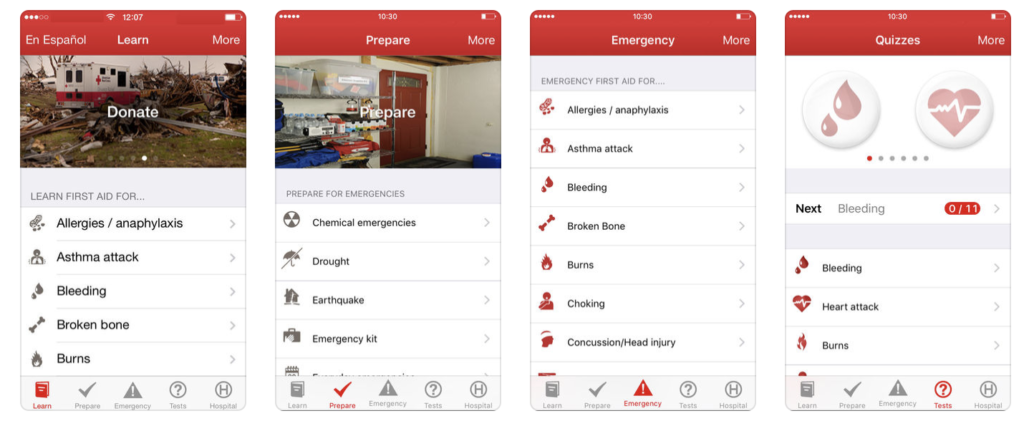
The Red Cross First Aid app is a great resource. You’ll have access to step-by-step instructions for what to do in the event of a natural disaster, when someone is having an asthma attack, or how to protect a broken bone.

What’s more, the content preloads, so you don’t need to worry about finding a cell tower in the event of an emergency.

First Aid - American Red Cross Download Free
8

Doctor on Demand

Doctor On Demand iPad, iPhone

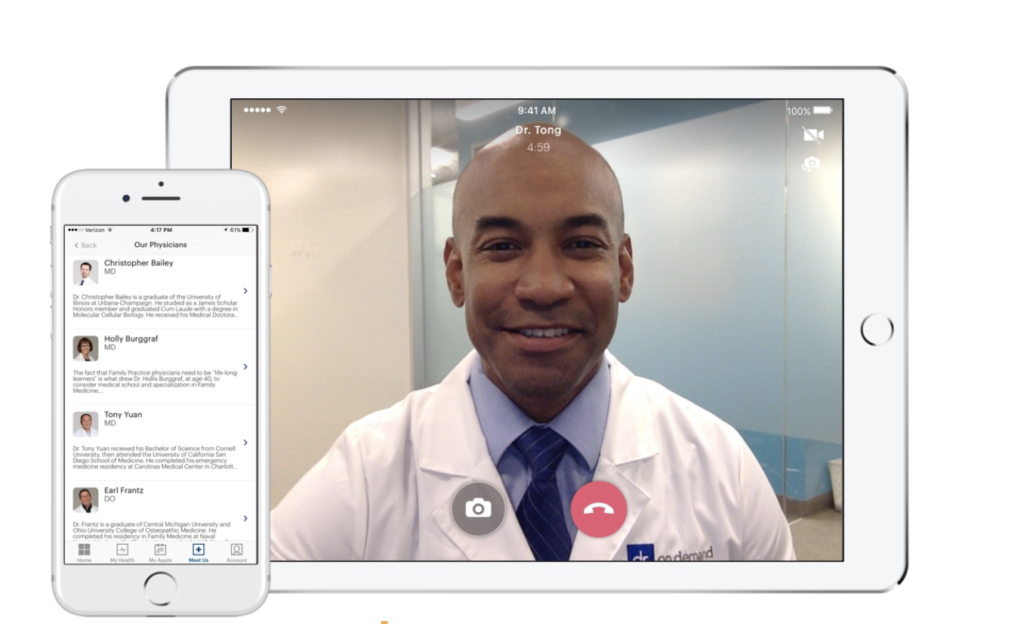
Doctor on Demand has a whopping 4.9 average rating in the App Store for a reason: the app works to increase patient access by facilitating appointments via video chat. So, you can set up an appointment from your phone to address any concerns you have. They’ll take your medical history and go over symptoms, just like a typical check-up.

The app is available to anyone in the U.S. and offers access at a lower rate than you’d pay at your average urgent care facility. The service takes most insurance plans but is priced low enough that even those without insurance can take advantage of the service without breaking the bank.

While this certainly won’t solve the current issues in the health care system, the app definitely fulfills a need—and is perfect for those who need treatment in a pinch.

Doctor on Demand Download Free
7

MyFitnessPal

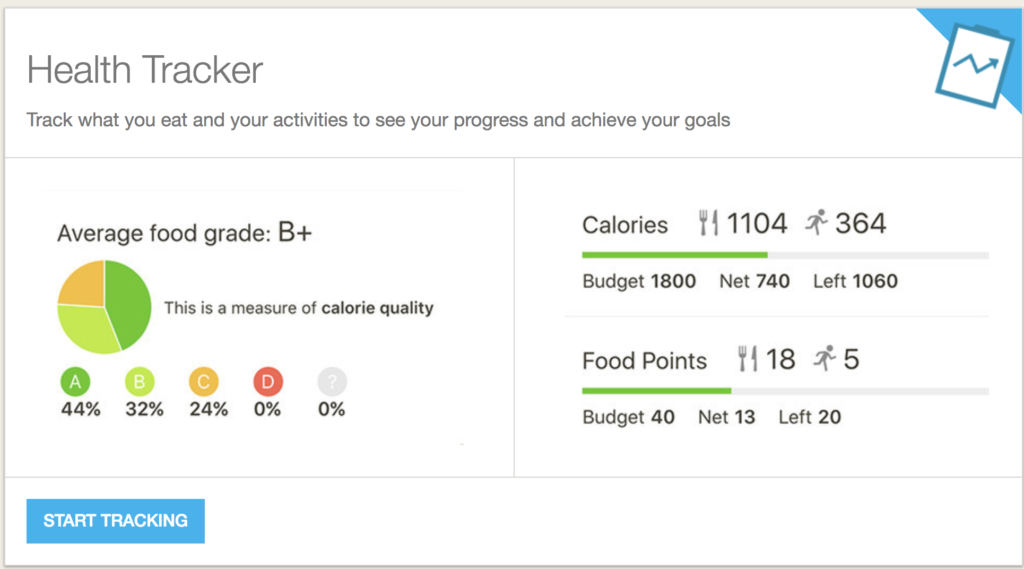
MyFitnessPal is probably the best-known health and fitness app in the game. It’s been around since 2005 and allows users to track calories, break down ingredients, and log their calorie counts and physical activity in one app.

The idea is that keeping a food diary helps users understand their habits and increases the likelihood of achieving your goals. As a bonus, the website provides a ton of content geared toward helping readers make healthier choices.

MyFitnessPal Download Free
9

FooducateFooducate App

Reading labels at the market is a lot of work. It’s also not optional if you have allergies or dietary restrictions—or you just want to avoid processed foods, added sugars, or too many grams of fat.

The app allows you to scan labels via mobile barcode scan or you can search their database. The Fooducate directory is crowdsourced, and users upload new items to add to the database. Users rate and score options themselves, so be mindful that the scoring model is subjective.

While this is a great resource, it doesn’t fully replace the guidance of a nutritionist or even doing your own research.

The app doesn’t quite have a handle on how to deal with terms like “natural” which don’t actually mean anything. Still, the ability to search for gluten-free options and adjust your macronutrients is a great feature.

Fooducate - Diet Tracker & Healthy Food Nutrition Scanner Download free
8

Happify

Happify App

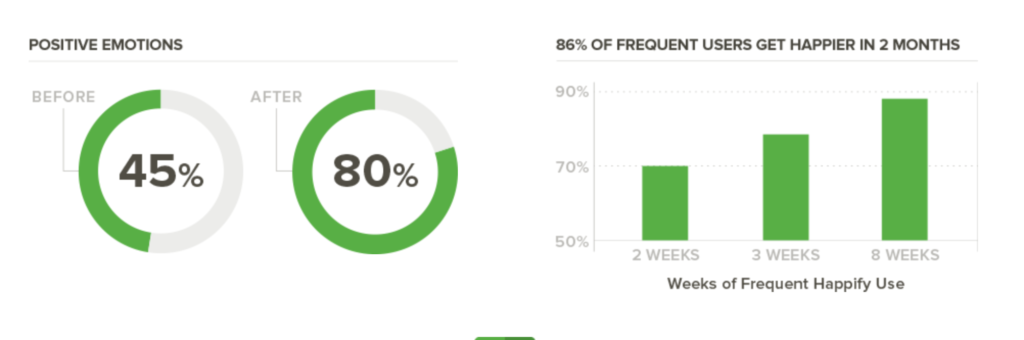
Happify is an app that aims to help users overcome stress by leveraging scientific research to improve emotional health and resilience. Stress is linked to so many risk factors for death—heart disease, liver problems, and even suicide.

The app arms you with the tools you need to start making positive changes—and even offer solutions geared for the workplace.

They do mention that it will take some effort on your end, but in all, the free app is worth a shot, right? Who couldn’t stand to be a bit happier, right?

Happify Download free
7

CDC Mobile App

CDC health app screenshots

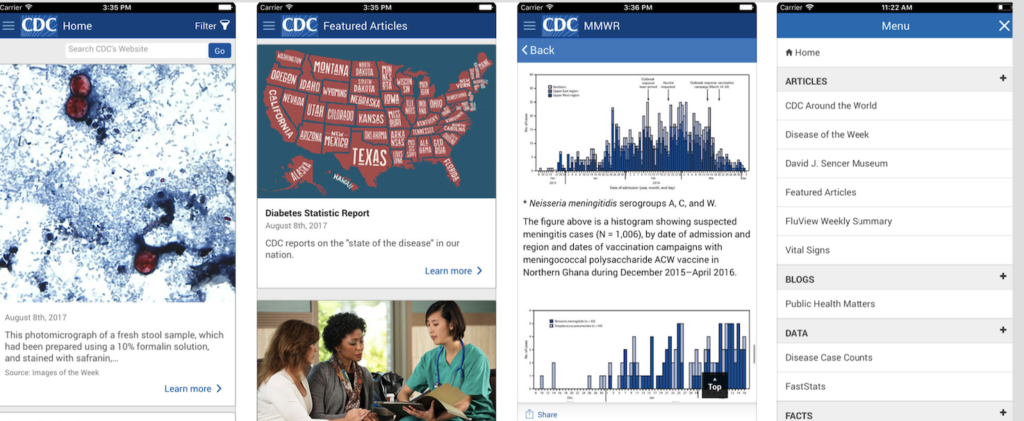
The CDC mobile app isn’t exactly a fun lineup of healthy content. The featured screenshots include a stool sample, while the dashboard menu serves up items like “Disease of the Week.”

But that’s not to say it isn’t useful. Patients who want a complete library of medical information, public health updates, disease tracking, and access to medical journals are bound to see a ton of value here.

Calm

Calm App

Calm, the popular meditation app, has the wellness corner covered. The idea is, many of us don’t know how to mediate and could benefit from a little bit of guided support.

The app takes you through a few sessions, which vary in length and with the option of adding soothing rain sounds or crashing waves to boost relaxation potential.

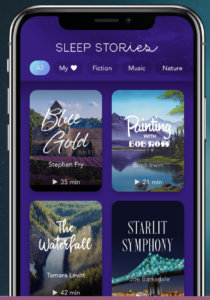
And, just so you know, Calm isn’t just about meditation anymore. They’ve really bulked up their features as of late—there’s a selection of guided stretching videos, soothing playlists, and sleep stories, which read to you as you drift off.

8

Social media worse for mental health than we thought

Discover how Instagram erodes self-esteem and how to fight back.

social media depression

The link between social media and our collective mental health has been the focus of news coverage since Tom’s My Space was the biggest name in the game.

But, many of these worries have been more speculation than fact. Social media is still relatively young, so its full-blown effects remain something of an unknown.

But, as it turns out, social media can do a number on our brains.

A recent study from the University of Pennsylvania found that Instagram, as well as Facebook and Snapchat, might not be so good for our well-being.

In fact, the research revealed a causal link between the time we spend on social media and an increase in loneliness and depression.

Here’s a look at how, if we’re not careful, social media can affect our overall mental health.

The impact of social media on mental health

Why is Instagram the “worst” social platform?

is instagram the worst social channel?

What’s interesting about the ill effects of Instagram is, it’s supposed to be a positive force. It’s all bright colors, beautiful food, and many of the top posts boast messages of self-love or inspirational affirmations.

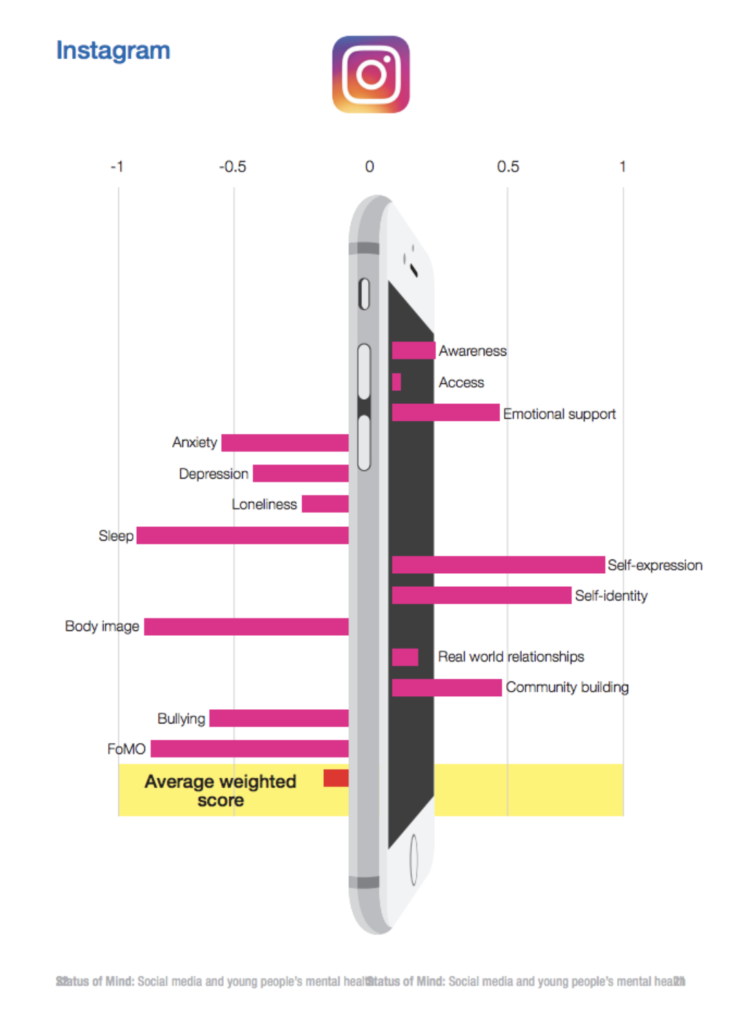
But that may well be the big issue with the platform. In 2017, the Royal Society for Public Health, a nonprofit focused on well-being found that of the top social platforms, Instagram had the most negative impact on 18-24-year-olds.

Participants in the UK survey stated that the photo-sharing app came equipped with a negative impact on sleep and a hefty dose of FOMO.

Instagram’s emphasis on positivity has resulted in a platform of users that use the tool to present the best version of themselves. Users edit pictures, selected from a lineup of rejects, and upload vacation highlights, #fitspiration, and their prettiest meals.

As such, those scrolling at home feel as though all of their friends are off living this glamorous life—without them.

Body image is just the beginning

body image

The combination of face-tuning, fit-spiration, and glamorous influencers has undoubtedly had an effect on body image–particularly for girls and young women.

This Dazed Digital article cited research from Carmen Papaluca, a researcher from the University of Notre Dame in Australia, who focused her Ph.D. on Instagram and its effects on 18-25-year-old women. Inspired by studies suggesting the platform’s risk factors, Papaluca wanted to dive deeper into how the visual platform and its effects on overall well-being.

She found that the girls were dealing with more than the common issue of wanting to look like someone else; it was more about wanting someone else’s life altogether.

The University of Pennsylvania study we referenced above uncovered similar results as Papaluca’s research. Their experiment split student participants into two groups–with one group limited to 10 minutes of social media activity per day, while the other group going about their social business as usual.

The students who limited social media use saw a reduction in symptoms of anxiety and depression. One participant said they felt much better about themselves during the three-week experiment, as they no longer were comparing their lives with others.

The FOMO factor is strong

The fear of missing out–FOMO–concept sounds a bit silly, but its effects are the real deal. With social media, we now have this portal into our friends’ lives, and often, we see them spending more time with other people than they do with us.

Two studies from the University of British Columbia looked closely at the effects of FOMO. One found that 48% of student participants believed that their friends had more close friends than they did themselves.

The second study found that those students who felt less social than their friends had a lower sense of wellbeing and belonging.

On a positive note, researchers mentioned that the negative feeling could motivate students to get out there and socialize.

Censoring yourself takes a toll, too

self-censorship online

In general, we think before we speak. And, with social media, we often overthink before we type. According to researchers from Carnegie Mellon University and Facebook, 71% of surveyed users self-censored at least one post or comment over a 17-day period.

While this may sound like a good thing—and perhaps more of us should do this before blasting out our opinions on social media—there’s also a downside.

We’re tailoring our comments to fit into what we assume our audience wants to hear. So beyond trying to use language that won’t offend (probably good) we’re also trying to conform to a set of standards that may be at odds with our sense of self.

Final thoughts

As we spend more time on social media, we’re beginning to understand more about its impact on our mental health and wellbeing.

The RSPH report found a lot of positives associated with social media—from emotional support to community building, so it’s not like it’s all doom and gloom. And, according to their report, YouTube’s only real negative effect was that participants stayed up too late watching videos.

However, between bullying and body image issues, as well as anxiety, depression, and loneliness, we may need to start arming future generations with a better toolkit for mitigating the ill effects linked to Instagram, Facebook, and the rest.

For those of us already entrenched in FOMO hell or sad scrolling, it may well be time to rethink how we approach our use of the platforms. Follow real friends only and skip the influencers, save for a few pet accounts. And, perhaps consider imposing your own 10-minute limit on use.

eBay adds installation services to big purchases

Need a hand installing that new purchase? eBay can help.

eBay home installs

eBay recently announced a new partnership with three companies that would give customers the ability to book home install services along with their purchases.

Be it televisions, bikes, or a new dining set, there’s no need to worry about your ability to lift big boxes or work an Allen wrench into an impossibly small corner.

The online marketplace is expanding its offerings, adding an extra convenience for shoppers who don’t quite know their way around a physical toolbox.

eBay adds installation services to big purchases

How does it work?

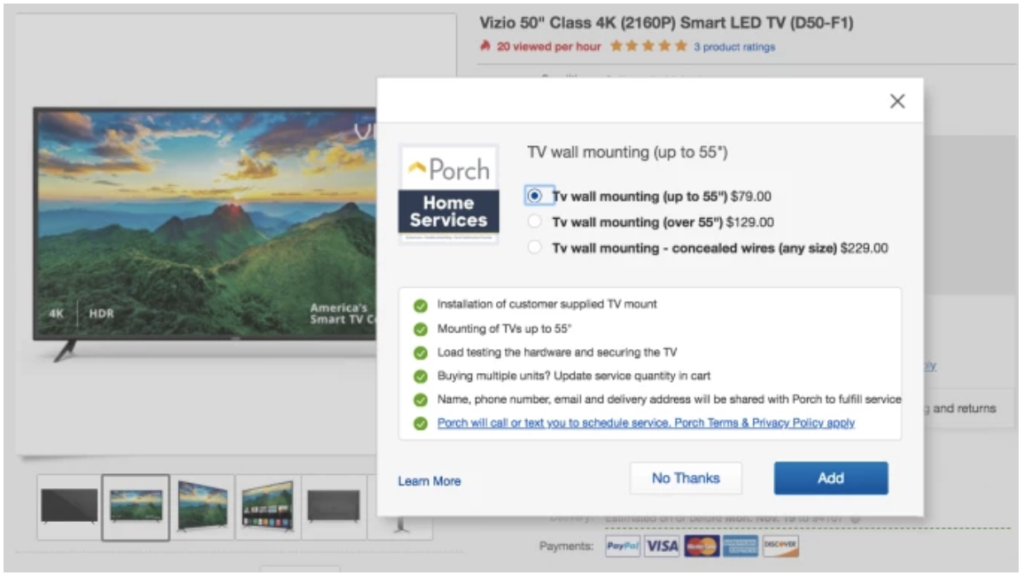
Various product pages now host a drop-down menu that allows customers to select an assembly service from Handy, InstallerNet or Porch, adding the service to your purchase like a protection plan.

After you complete your purchase, someone from your chosen assembly service will contact you to set up an appointment.

book an install on eBay

Handy is an NY-based company that will handle things like TV mounting, furniture assembly, and setting up your smart home devices. Porch is based in Seattle and does roughly the same thing. And InstallerNet, a Massachusetts company, is a network of independent contractors you can use to coordinate consumer and commercial electronic installation.

We came across some online shoppers expressing concern over whether the platform would be using unlicensed freelancers a la TaskRabbit to perform the installs.

Handy’s site mentions that all professionals are background-checked and experienced, though there’s nothing on the site stating that these folks are licensed, bonded, and insured.

InstallerNet’s site is just plain confusing. For example, there’s little information and it reads like a business jargon algorithm put the whole thing together.

Installs are par for the course now

Home installs aren’t exactly an innovative move these days. Rather, it’s become a natural extension of the buyer journey, something users have increasingly come to expect.

REI, for example, offers installation services along with their purchases, and IKEA’s site allows you to pay extra for assembly. eBay itself has had a tire installation service available on the website since 2017.

However, what eBay has done well here is that they’ve streamlined the process—putting everything together on one page, turning a multi-stage process into something that can be done within a matter of clicks.

Amazon competitor once again?

The new service aims to compete with Amazon’s Home Services, and it appears to be a move to keep the company in the game—as Amazon expands its reach into more and more markets.

Interestingly, this announcement comes about a month later than eBay’s lawsuit against Amazon, where the auction site alleges that Amazon engaged in a scheme to poach eBay sellers by infiltrating its internal messaging system.

That said, eBay has been on a dramatic kick to revitalize and rebrand as a membership-fee-free go-to marketplace. CEO Devin Wenig is aiming high, using an influencer marketing strategy to grow its 175 million user base to 500M.

Wenig, however, doesn’t necessarily want to compete with Amazon, stating that he sees eBay as a destination for people can discover the things that they want, not necessarily the things they need.

While it’s unlikely that eBay will overtake Amazon, it’s nice to see that they’re making some changes that stand to boost the customer experience.

Best online classes for leveling up your tech skills

Bulk up your resume from the comfort of your couch.

Best Online Classes for Leveling Up Your Tech Skills

If you work in marketing, tech, or really any industry, change is the only constant. So, the idea that education stops upon earning a certain number of credits is just plain silly.

But while most of us can acknowledge the benefits of becoming a lifelong learner, it can be hard to find the time or the money to head back to school. Luckily, there are plenty of online courses that allow you to level up your skills in just about any topic you could think of.

With that in mind, here are some valuable opportunities for anyone looking to add a few more lines to their resume that will actually make a difference.

Best online classes for leveling up your tech skills

Introduction to Artificial Intelligence, EDX

This course provides a high-level overview of AI and machine learning, explaining how AI is becoming the driving force behind smarter apps and more efficient organizations.

As part one of the Microsoft Professional Program in AI, the course will show you have to build basic machine learning models. You’ll use Azure Machine Learning and the Microsoft Bot Framework. While this all sounds super high-tech, you don’t need to be a coding expert to start playing around with the technology. The EDX website mentions that a high-school level statistics understanding and a working knowledge of Python are recommended, though not required.
Learn to Code for Data Analysis, Future Learn

Coding for Data Analytics

Data analysis is becoming an in-demand skill that may come in handy when you try to negotiate your next raise. Still, Learn to Code for Data Analysis will be easier to grasp if you know your way around a spreadsheet and are fairly good with numbers.

This course focuses primarily on Python–covering assignments, variables, expressions, functions, basic data types, and if-statements. You’ll practice programming in Jupyter Notebooks, writing and testing your own code.

The final component of the course is analysis. Students will use pandas to read Excel and CSV files, as well as clean, aggregate, and filter data into simple, readable charts.

Of course, the class will be easier if you have some knowledge of coding or data analytics. However, we like that this is an approachable “in” for data science beginners hoping to keep up with the latest technologies.

Video Editing, Lynda

Video Editing Course -- Intro Lynda

Lynda is a good source of online classes of all stripes. But, the video editing course stands out, because no matter your industry, this interactive medium has become essential for marketing and engagement across all channels.

Even small businesses need to learn to run a camera and splice together some behind-the-scenes clips or video tutorial here and there.

Lynda’s video editing course is about three hours and shows you the basics of good video editing. You’ll learn about transitions, composition, pacing, and post-production effects.

While you’ll need to continue your video education after the course is over, this is a great primer for people looking to build on their online content skills.

Diploma in Web Design, ALISON

Diploma in Web Design

ALISON is something of an aggregate for online courses. The site is a central hub that showcases courses from colleges and digital learning platforms, so it’s easy to compare programs during the research phase.

ALISON’s module allows you to sort through their courses based on career goals, which makes it easy to find a new skill that will come in handy down the road.

This particular program allows you to learn web design at your convenience, free of charge. Here, you’ll learn how to use Dreamweaver to create websites with HTML, CSS, Flash, and JavaScript. You’ll also learn the basic basics like registering a domain name and choosing a hosting provider.

Like Hubspot, Google Academy, and MOOCs from MIT, Harvard, and others, ALISON allows you to purchase a digital diploma, which you can show to potential employers.

General Assembly Dash Program

General Assembly is a for-profit educational resource with locations based around the US. Unlike Trump University or ITT Technical Institute, General Assembly provides workshops and longer-term programs that allow professionals to get their tech skills up to speed.

The Dash program, however, is an online course, offered free that teaches development in HTML, CSS, and JavaScript. We like Dash, as it’s a nice starting point for those who don’t know much about coding—build your foundation before signing up for more advanced courses.

Code Academy Web Development

Web development continues to be an in-demand skill, and Code Academy’s user-friendly approach to teaching you the basics of building web apps and sites is one of our top picks.

This course follows a structured curriculum, they’ll teach you HTML first, then venture into CSS fundamentals, JavaScript basics and go from there. By the end of the course, you’ll be able to put together interactive sites.

What’s more, the website promotes these self-paced paths that allow you to customize your coding journey.
Courses are offered on a subscription basis—$19.99 per month or you can pay $199 per course.

Hubspot Social Media Certification

Hubspot Dashboard Social Media Certification

Hubspot offers a number of certification programs on their site for free, but the social media course is a good one for marketers—or anyone—who wants to gain a better understanding of how to use social media to drive business.

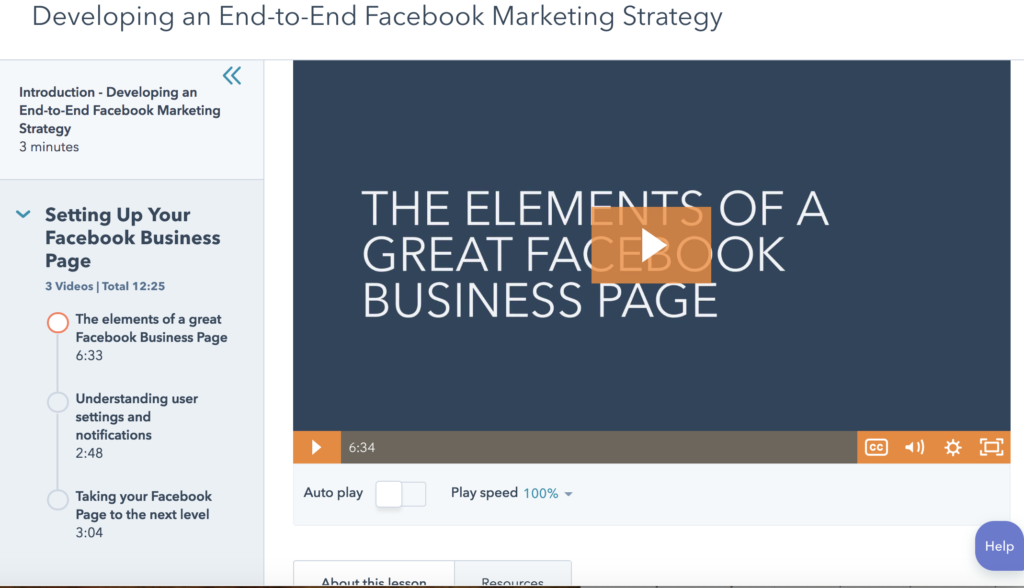
The curriculum is broken down into eight chapters, each with a few short video lessons. You’ll learn to develop a social media strategy, understand the importance of social listening, and learn to expand your reach on social. You’ll also look at things like digital advertising and how to measure your return on investment.

While you might know the basics already, it’s nice to get a quick refresher on just what metrics we should be measuring and how to hone in on a strategy that aligns with your brand.

Wrapping Up

Beyond the courses listed above, each of their home platforms, as well as Coursera, MIT Open Courseware and others provide a long list of options to professionals looking to expand their skillset.

And, with many of these courses being either free or fairly low-cost, there’s no excuse not to explore some new pathways. You may just find a new passion.

A third of big tech workers believe they’re being spied on — should we be more concerned?

Is your boss watching what you type?

worker surveillance

According to a report by the Blind app, employees of over 26 of the biggest companies in tech were surveyed with a true or false statement: “my company goes to unreasonable lengths to monitor employees.”

More than a quarter— 25.8% of participants — responded “true.” Booking.com employees doubled the survey average—with 54.12% stating that they felt the company spied on them.

Rounding out the top five, were Intel (43.45%), Snapchat (40%), PayPal (38.6%), and Veritas (37.74%) with notable percentages of employees feeling that their employer crossed a line with it came to privacy,

For those who don’t know, Blind is an anonymous social network for working professionals. The app gives workers a place to leave honest feedback about what it’s really like to work for companies like Apple and Google, without risking retaliation.

And while the companies themselves haven’t added their two cents post-survey, a whopping 67% of companies take part in some form of electronic monitoring.

Electronic monitoring is easier and cheaper than ever, so it’s not really a surprise that workplaces of all kinds are testing out new technologies. But just because it’s accessible doesn’t mean that its the best way to get results from employees. Though billed as tools that facilitate empathy, communication, improved customer relations, spying is spying.

Which brings us to this question…

Should we be more concerned about electronic monitoring at work?

office camera

What are the more common uses of surveillance on the job?

The modern workplace has gotten, well, weird.

Not only are in-office workers increasingly thrust into collaborative open office plans, expected to engage all day, and still meet deadlines, there’s also a decent chance they’re being watched as they make it through their to-dos.

But the thing is, working under pressure stresses us out.

And with electronic monitoring, there’s an added pressure element, making us feel like we’re being watched. According to Psychology Today, productivity suffers when we believe we’re being monitored for quality.

In general, studies have shown that employee monitoring lowers morale and can create additional stress and alienation at work.

Despite the fact that these adverse effects are well-documented, workplace monitoring has ramped up and there’s no clear line between what’s appropriate and what’s invasive.

What’s actually allowed?

Employers monitor for all kinds of reasons, and there’s no law in place that prevents employers from monitoring their employees.

Courts typically find that when employees are at work, they should expect that privacy is somewhat limited. For example, employers have the right to monitor activities on their computers, as they own the property.

Email monitoring is par for the course as well.

If employees are using a workplace email account, then messages sent within that system are subject to review. This includes chats, as well as Gmail missives.

However, when employers start tracking us after hours via GPS or listening in on conversations with clients and colleagues—things get a little murky.

The Fourth Amendment actually protects Americans from unreasonable searches, but it only applies to government actions. So if law enforcement needs to search your house, they’ll need a warrant before moving forward. But, if your boss tracks your phone, there are little protections in place.

While it makes sense to use GPS technology to keep tabs on company cars during business hours, tracking an employee’s whereabouts during off hours or while working from home isn’t especially clear.

office surveillance

And then there’s the issue of workers who object to being tracked. A lot of people are okay with it, according to a TSheets (a time-tracking platform) survey from 2017.  It may be because a lot of us don’t feel like we have much to hide.

Still, there’s the issue that if someone goes to a pregnancy center or a lot of doctor’s appointments, or a gay bar, employers could look for other ways to oust that staff member.

The point is, while an employer can’t lawfully discriminate against staff for any of the examples above, they might look for other reasons to get rid of someone based on that knowledge.

Quantified workspace

The idea of the quantified workspace is sort of the HR version of the Quantified Self movement.

Fast Company lays out the concept in a 2015 article, citing tools like Meeting Mediator that alerts you when you’re talking too much on a call. Or, apps that push out automated requests to introduce your colleagues over Slack, instead of email.

And then there are examples like Cogito, a tool that monitors call center agents for tone and phone demeanor. Wired highlighted its use at the MetLife offices, quoting a woman who mentioned a coffee cup graphic that shows up on the screen each time the program detects a hint of fatigue in her voice.

The idea behind these automation tools isn’t insidious at its core, and there are certainly some key benefits involved.

Analyzing phone calls can help staff identify better ways to connect with people, by highlighting interruptions, a change in tone, or subtle things we might not ever think about.

However, there is a concern for privacy. In the case of a tool like Cogito, employees know they’re being monitored, and may be okay with it. The issue is, all of these little human things — fatigue, sickness, and inevitable irritation — are reduced to an algorithm.

The boss receives a report at the end of the week, quarter, etc. and evaluates soft skills with hard metrics. It’s this use of big data that could have some scary implications down the road, with managers scoring their staff against a robot’s set of standards.

Wrapping up

In the end, there’s no doubt that the pros and cons of workplace spying both pose compelling arguments. However, employers should keep in mind that too many pieces of tracking software can frustrate employees, leading to burnout and turnover. If productivity and consistency are the ultimate goal, perhaps it’s better to look toward the bots.

LinkedIn report shows worker skills gap is largest on the two coasts

Discover how to stand out in your next job search.

linkedin skills gap biggest on the coasts

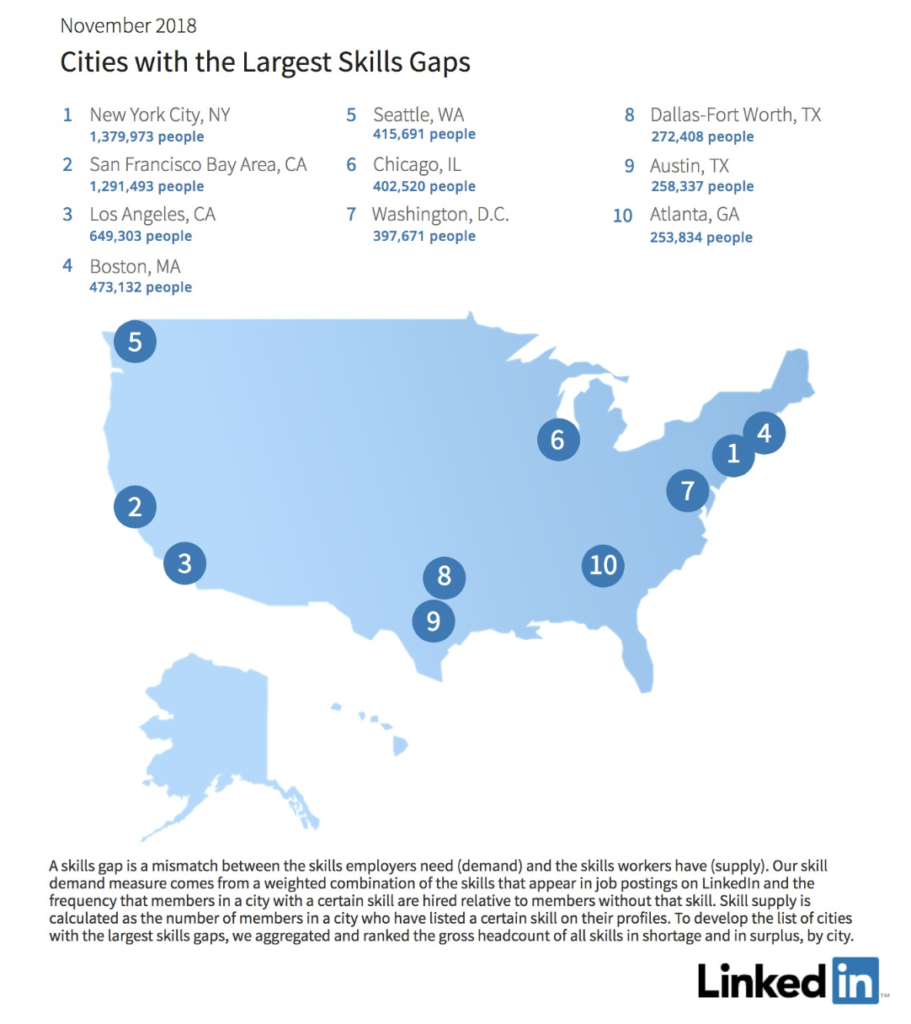
The latest LinkedIn Workforce report found that the skills gaps on both coasts are the largest in the United States.

While the same report mentions that hiring is up since last year, there’s something of a mismatch between the skills job hunters actually have and what employers are looking for.

This comes as good news for those workers with in-demand skills, but poses a challenge for those trying to stake a claim in a crowded landscape.

Many employers are finding it difficult to hire people with the skills they need, even at the entry level.

What’s more, it seems that our big metropolises — Los Angeles, San Francisco, and New York City — all have a similar surplus and shortage breakdown when it comes to workforce skills.

Here’s a little more about what this all means.

LinkedIn Workforce Report shows skills gap is largest on the two coasts

Big cities have a big soft skills shortage

skills gap map

As we mentioned above, the LinkedIn November report found that NYC, LA, and SF had similar surpluses. Skills like negotiation, procurement, real estate, and management accounting made the surplus list, as did wellness and personal coaching.

According to LinkedIn CEO, Jeff Weiner, employers are primarily on the hunt for soft skills these days. For example, written and oral communication, leadership, and project management are among the top skills employers want in their staff.

This means desirability isn’t always linked to a STEM background.

Coding, of course, is still in demand, but it’s worth pointing out that it isn’t the only skill that’s valued right now.

The reason for the new emphasis on the soft is, AI is on the verge of replacing a lot of the technical skills we associate with employability. Robots, at least at this point, haven’t nailed things like leadership, projecting warmth or recognizing body language.

The future, it seems, may well be characterized by humans — with their communication and empathy — working side by side with AI — and their quick processing power.

Measuring soft skills

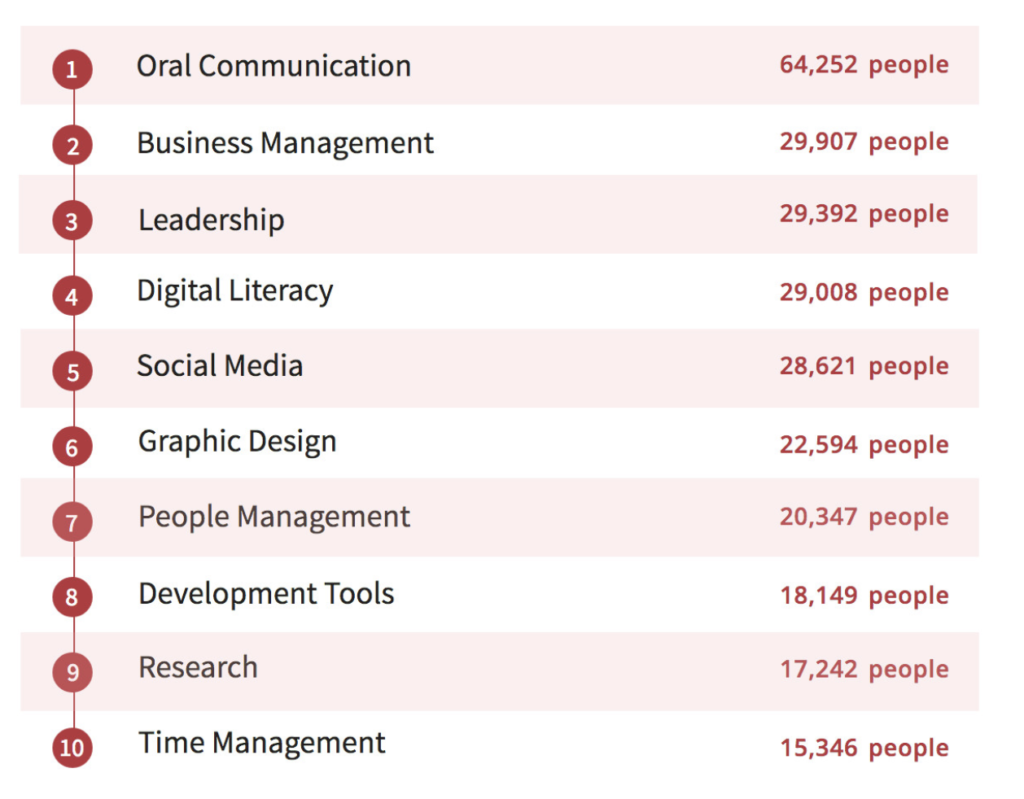
Soft skills are important in just about every job, but many are role specific. If you look at the break down of Los Angeles skills shortages, you’ll notice that oral communication, business management, and leadership top the list.

LA skills shortages

According to a 2017 study by the HR software provider, iCIMS, 62% of recruiters seek out employees with excellent problem-solving skills, and 39% of recruiters look for highly organized candidates.

The challenge is, these skills don’t come with a certification attached.

While management and leadership may be implied by way of a resume with experience in a management role, things like oral communication or time management aren’t so cut and dry.

Recruiters these days screen candidates for evidence of soft skills, so including them in your application materials is a must. Make sure you highlight your softer strengths by highlighting searchable keywords in your job description and resume.

During the interview process, you should also be prepared to answer questions that begin with the dreaded, “can you give an example of a time when…”

These questions are called behavioral questions and are used to help interviewers evaluate one, how you respond to being put on the spot, and two, how your communication or time management skills have produced measurable results in the past.

Additionally, it’s worth noting that employers and recruiters may not be clear about what they’re looking for. For example, they might report in a LinkedIn survey that they want better communicators on staff, but fail to communicate that desire during the interview process.

As such, you should always emphasize your soft skills along with your hard ones — that combination of technical know-how and interpersonal savvy is what will ultimately land you the position you want.

Closing up those gaps

According to another article from the social networking platform, skills gaps can be narrowed in several ways. Businesses may choose to move to cities with a surplus of the skills they need. Or, they may decide to look at working with remote employees by recruiting in those areas.

Job seekers may consider moving to a place that needs more of what they have to offer, and communities may start offering training programs that address the shortages.

The goal of the report was to highlight these areas, as cities with more skills shortages tend to have lower unemployment rates. And, transparency allows people to work on developing in-demand skills as they come up in the workforce.

While some skills may come with experience and practice, it’s always worth looking for development opportunities. Additionally, working on things like conflict resolution, body language, and listening can help you advance, too.

Leveling up other in-demand skills like social media or digital literacy is something you can do in a relatively short amount of time. Workers can pursue online courses aimed at teaching the latest best practices, without breaking the bank. Coursera, Udemy, and countless others are all great places to boost those in-demand skills from the comfort of your own home.

Amazon is ditching unauthorized Apple resellers — are knock-offs next?

How can you be sure you’re not getting a fake from Amazon?

amazon selling authorized apple products

It’s no secret that Amazon has a major counterfeit problem.

From hot beauty products that don’t live up to expectations to knock-off electronics, shoes, and more — it’s become a real challenge to know whether you’re getting the real deal or some shoddy imitation.

By sheer volume, Amazon’s marketplace is hard to regulate. The bookseller-turned-platform company is a sprawling digital pool filled with more third-party sellers than they can realistically monitor for quality.

Still, the e-commerce giant has made some inroads toward remedying the problem.

Amazon announced recently would stop selling unauthorized Apple products, two years after a 2016 audit found that 90% of MacBooks, iPhones, and iPads were fake.

Amazon faces its counterfeit problem

Counterfeits disproportionately affect small sellers

Amazon has made it relatively easy for smaller brands to expand their reach to a broader audience, but it’s also made it easy for counterfeit sellers to infringe on those smaller businesses.

Back in July, the Wall Street Journal reported that counterfeiters have been creating fake versions of smaller manufacturers’ products and undercutting sellers’ profits.

In short, the digital seller has become an online hub for the kind of goods you’ll find on New York’s Canal Street or Los Angeles’ Santee Alley.

According to the Los Angeles Times, it’s become increasingly difficult for Amazon shoppers to identify counterfeits based on photos.

Seller John Fawcett found that months after receiving rave reviews from customers for his durable phone chargers, reviews began dipping into the one-star territory.

Initially, he was confused by the dramatic turn, but Fawcett told the Times that he found a clue in an image of his brand logo that just didn’t look right. He then placed a few orders and confirmed his suspicions: consumers were getting low-end counterfeits instead of the real product.

The Global Brand Counterfeiting Report 2018-2020 from ResearchAndMarkets.com found losses from e-commerce scams totaled $323 billion last year alone.

And, another report from Gartner found that one in three third-party products sold on Amazon has at least one customer review stating that they received a fake product.

So, while it seems like Amazon is in over its head, there is a hint of evidence the company is taking steps toward improving their efforts, or risk brands ditching the platform in higher numbers.

Swatch and Birkenstock are out. Likewise, many smaller brands don’t want to risk their reputation or their bottom line by selling their wares with the platform.

Is the Apple move a step in the right direction?

Apple authorized store

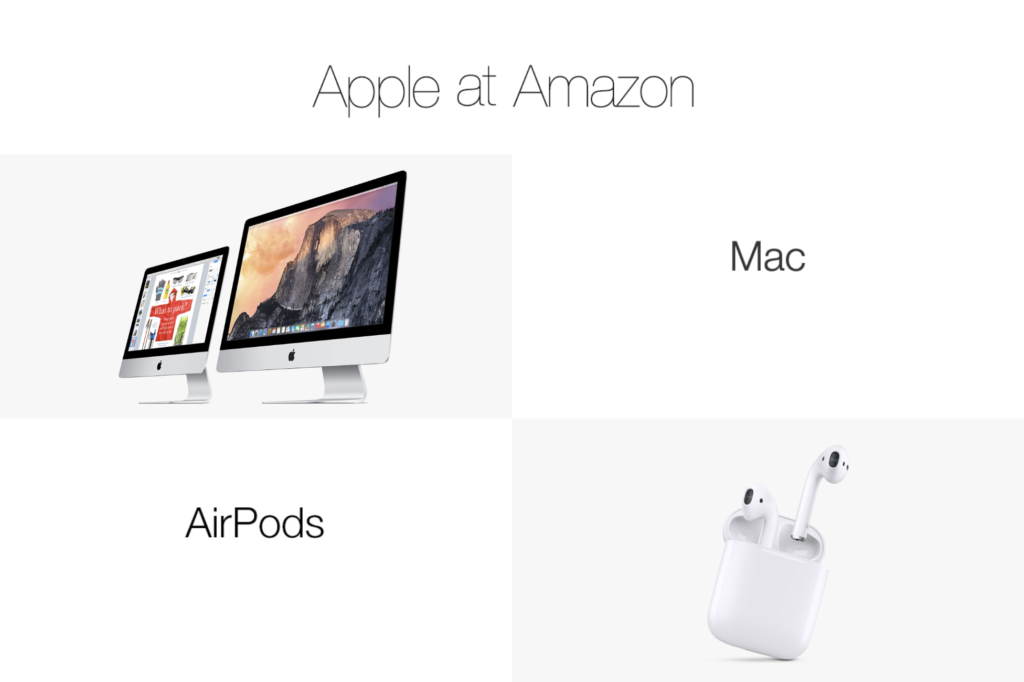
Earlier this month, Apple and Amazon announced that they struck a deal marking the return of the Apple TV to the platform, as well as the launch of an Apple Authorized Reseller page. The new page gives shoppers access to iPhones and such with Prime shipping — and it protects against the rampant problem with fake electronics.

The Apple announcement is undeniably a big deal, but it’s unclear if similar deals are in the works. The brand registry tool has been around for a while now, and the problem persists.

Amazon’s Brand Registry 2.0, which rolled out last year, gives brands access to tools that allow them to manage their presence on the platform. Sellers can accurately represent their products, report violations, and share information about suspicious actors on the platform.

Brand Registry can help you prevent counterfeiters. However, it does not prevent nonauthorized resellers from selling your products on the platform below the minimum advertised price.

Additionally, brands need to police their channels on a regular basis, meaning smaller sellers may not have the resources to fight against bad actors.

Do counterfeits affect the brand?

Amazon stresses that they strictly prohibit the sales of counterfeit products and have invested tremendous resources in combatting sales of illicit goods.

But counterfeits might offer some benefits for Amazon. Stacy Mitchell of the nonprofit Institute for Local Self-Reliance says fakes “enhance its market power over suppliers.” While sellers suffer, Amazon still takes a cut from all sales that pass through the platform.

On the downside, consumers may well lose trust in Amazon if they can’t count on receiving an authentic product from the e-tailer. Where things like household goods, books, or media will likely remain big sellers, other products like makeup brands, skincare, fashion, and consumer electronics may fall.

Brands won’t want to sell on the platform and consumers won’t want to risk receiving an item that doesn’t match their expectations.

While Amazon is currently working on new AI technology aimed at reducing the number of counterfeits in their warehouse, we wonder if it will be enough to protect consumers and sellers alike.

Brands like Apple can throw their weight around and come out with a deal. But small sellers face a tough decision. They can pull their wares and see a drop in traffic or stick with the platform and risk bad reviews.