Warhorse Studios has achieved notable success with its first two installments of Kingdom Come: Deliverance, which has led many to speculate about the possibility of a third part. However, while that expectation remains in the air, other developers are taking the opportunity to present similar proposals. One example of this is Knight’s Path, a new fantasy RPG set in the medieval era, although it incorporates fantastical elements like dragons and unconventional creatures, such as giant snails. Giant snails are always a good viewpoint In Knight’s Path, players will take on the role […]
Warhorse Studios has achieved notable success with its first two installments of Kingdom Come: Deliverance, which has led many to speculate about the possibility of a third part. However, while that expectation remains in the air, other developers are taking the opportunity to present similar proposals. One example of this is Knight’s Path, a new fantasy RPG set in the medieval era, although it incorporates fantastical elements such as dragons and unconventional creatures like giant snails.
Giant snails are always a good viewpoint
In Knight’s Path, players will take on the role of Alryk, a young noble who has fallen from grace and must now fight to regain his social status. The game’s narrative is clearly centered on the player’s decisions, which will influence the development of the story, allowing users to choose paths that range from nobility to selfishness and self-interest. This moral choice is a key aspect that has been highlighted in the game’s design.
One of the distinctive features of Knight’s Path will be its focus on realistic third-person combat. The player’s position and the timing of attacks and defenses will be crucial for achieving success in battles. This mechanic is expected to provide a level of immersion and satisfaction to the player, especially in high-risk situations in the early stages of the game, as Alryk will start with limited abilities.
The game will also feature castle sieges, political intrigues, and tournaments, further enriching the player’s experience. Although Knight’s Path does not yet have a defined release date, enthusiasts of proposals like Kingdom Come: Deliverance can already add it to their wishlist on Steam, reflecting a growing interest in this new medieval adventure.
Emilia Clarke has shared in a recent interview with The New York Times that she feels “more or less done” with the fantasy genre after her prolonged experience in the acclaimed HBO series, Game of Thrones. In her role as Daenerys Targaryen, known as the Mother of Dragons, Clarke became an icon of the genre, captivating millions of viewers during the eight years the series lasted. Fed up with dragons The actress is currently on a press tour to promote her new spy series titled Ponies, which will premiere in the […]
Emilia Clarke has shared in a recent interview with The New York Times that she feels “more or less done” with the fantasy genre after her lengthy experience in the acclaimed HBO series, Game of Thrones. In her role as Daenerys Targaryen, known as the Mother of Dragons, Clarke became an icon of the genre, captivating millions of viewers during the eight years the series lasted.
Sick of Dragons
The actress is currently on a press tour to promote her new spy series titled Ponies, which will premiere on the Peacock platform. This new television adventure marks a turn in her career, moving away from the world of dragons and magic towards a more contemporary narrative focused on espionage.
Clarke, who has been associated with the fantasy universe for so long, has expressed a desire to explore other genres and characters in the future. Her decision to distance herself from fantasy could be an attempt to reinvent herself and demonstrate her versatility as an actress. In addition to Ponies, she is also involved in other film and television projects that span a variety of different genres.
While her connection with Daenerys Targaryen will always be remembered, Clarke seems ready to leave behind the chains of fantasy and dedicate her talent to stories that resonate more with her desire for change. Rumors suggest that there may be a renewed interest in taking on more challenging and emotionally complex roles in future projects, although those possibilities have not yet been officially confirmed.
Dungeons & Dragons continues to expand with new books, this time with one that teaches us all the secrets about dragons.
Dungeons & Dragons has defined modern fantasy in a way we haven’t seen since The Lord of the Rings. It has directly or indirectly influenced the imagination of millions of people to such an extent that when we think of fantasy, we think in the terms first conceived by J.R.R. Tolkien and later embraced by Gary Gygax, the original creator of Dungeons & Dragons, more than any other pair of authors we can imagine. And unsurprisingly, in addition to the importance of dungeons and exploring them, the other thing that wasn’t as significant in fantasy before its existence was dragons.
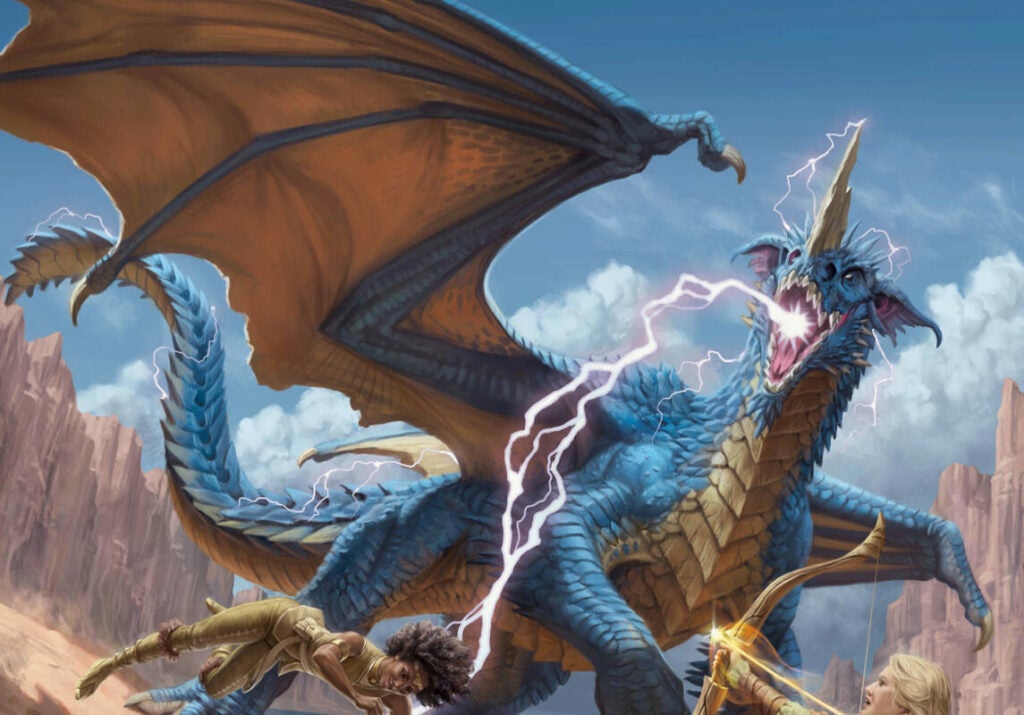
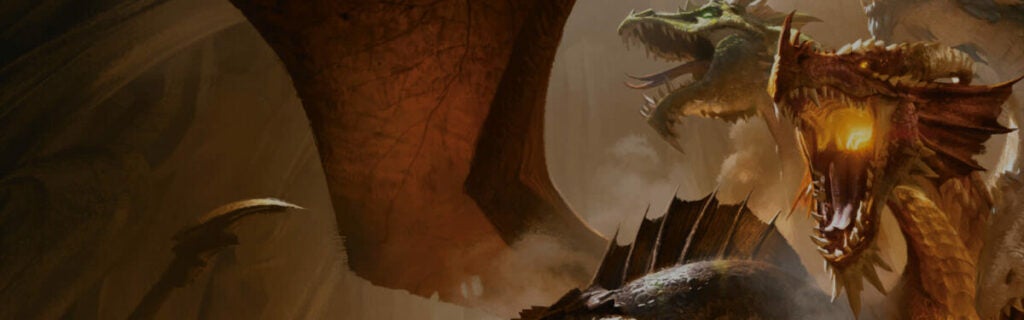
Dragons have always existed in fiction and mythology, playing significant roles. However, it was Dungeons & Dragons, in particular, that made them the centerpiece of fantasy. That’s why it’s so fascinating that Wizards of the Coast, the company behind the game, has decided to publish a book dedicated to our fiercest adversaries and, on occasion, our most intriguing allies and patrons.
Fizban’s Treasury of Dragons is a 224-page book that aims to expand upon everything we know about dragons and how to use them in our Dungeons & Dragons campaigns. It focuses particularly on how dragons fit into each of the game’s worlds, their purposes, and how the different creation myths associated with them in each world align with the true creation myth detailed in the book. It wants to demonstrate from the very beginning the central importance these creatures hold in the game’s cosmology, not only as antagonists but also as entities that literally shape the world.
All of this translates into new possibilities for players as well. With rules for creating characters who are dragon worshippers or hunters, who have dragon ancestry, who derive their powers from dragons, and even spells related to these most reptilian of creators, Fizban’s Treasury of Dragons ensures that it is possible to introduce these creatures at all levels of the game, both from the player’s and the Dungeon Master’s perspectives. This adds depth and flavor to the overall experience, providing a unique tool for gaming tables that want to incorporate a more draconic touch into their campaigns.
Adding to its appeal, beyond rules and numbers, the book is filled with details about the differences between dragons. A metallic dragon with tendencies towards good is not the same as a chromatic dragon with tendencies towards evil, and within each of these categories, each subspecies also exhibits significant variations in character and preferences. All of this is meticulously explored, even providing maps of what their average lairs would look like based on dragon type, providing comprehensive details that differentiate between the various classes of dragons.
Practically all dragons share characteristics of longevity, wisdom, and a fondness for treasures, but Fizban’s Treasury of Dragons emphasizes that each class of dragon has its own unique approach. Furthermore, the book emphasizes that as dragons age, they are more likely to have ambitions and interests that extend beyond mere accumulation of wealth, even beyond the comprehension of mere mortals.
In addition, Wizards of the Coast takes a daring leap in this book by introducing a third type of dragon: gem dragons. More focused on psionic powers rather than magic, seeking to maintain balance in the multiverse, and positioning themselves as judges and mediators, gem dragons are an interesting inclusion because they break the mold of dragons being either wise heroes or ultimate villains. They are mysterious, enigmatic beings, whose inclusion in any campaign automatically adds a much more exotic touch to any adventure involving them.
Fizban’s Treasury of Dragons is a fascinating read, even for those who don’t play Dungeons & Dragons. Players will find valuable resources in the book if they want to incorporate dragons into their stories in any capacity. For those who don’t play but are interested in role-playing or want to learn how to play Dungeons & Dragons, the book is filled with ideas that help understand the motivations and roles of dragons in a deeper way. That’s the brilliance of this book. It recognizes the importance of dragons in Dungeons & Dragons and not only places them where they belong but also elevates them to an even higher level.
Some of the links added in the article are part of affiliate campaigns and may represent benefits for Softonic.
In your usual store you will find hundreds of D&D manuals. And you just wanted to know if you were going to like it! Don't worry: we'll tell you everything you wanted to know about the most famous role-playing game in the world.
Surely more than once in your group of friends there has been someone who has wanted to form a group to play ‘Dungeons & Dragons‘. Since the arrival of Critical Role and the popularity of Twitch, more or less everyone has been curious to leave everything behind, learn a bit of magic, pick up a sword and set off to explore the Forgotten Realms. But of course, when it comes down to it, where to start? In your usual store you’ll find hundreds of D&D manuals. And you just wanted to know if you were going to like it! Don’t worry: we tell you everything you wanted to know about the most famous role-playing game in the world.
50 years ago…
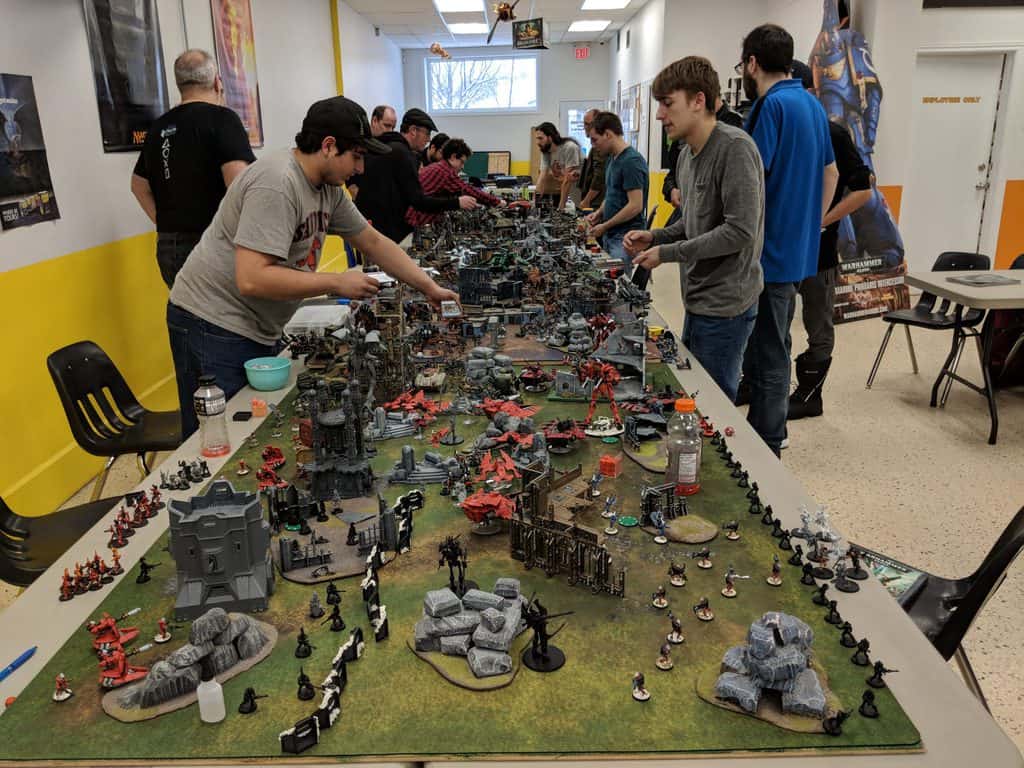
At the beginning of the 70’s, in the United States, board games were reduced to those that families could play: ‘The game of life’, ‘Monopoly’, ‘Connect Four’… The current boom in which we can take a ‘Gloomhaven’ or an ‘Exploding kittens’ to the table is terribly recent. If back then you wanted to find something of complexity you had to go to the tables of the young (and not so young) where they played what some have considered the pre-role-playing game: wargames.
Or, to put it in English, the war games that are still popular today. For example, the humorist Javier Cansado is a great fan of painting figurines and sending them to fight in the Napoleonic wars. These were realistic games in which two armies faced each other: the armies were not made up of fantastic creatures and fighters, but of Napoleonic soldiers or soldiers from the American Civil War at the Battle of Gettysburg. A party, come on. And among those gamers there was a thirty-something so fanatic that he had even set up one of the first conventions in history (the now ultra-famous Gen Con)… in the basement of his house: Gary Gygax.
Gygax did not know that she was destined to change the world of board games forever. In fact, more out of curiosity than anything else he helped create the game ‘Chainmail’, set in the Middle Ages with realistic battles, which had a small appendix explaining how to play with wizards, dragons, orcs, elves or… hobbits. With permission from JRR Tolkien? Of course not.
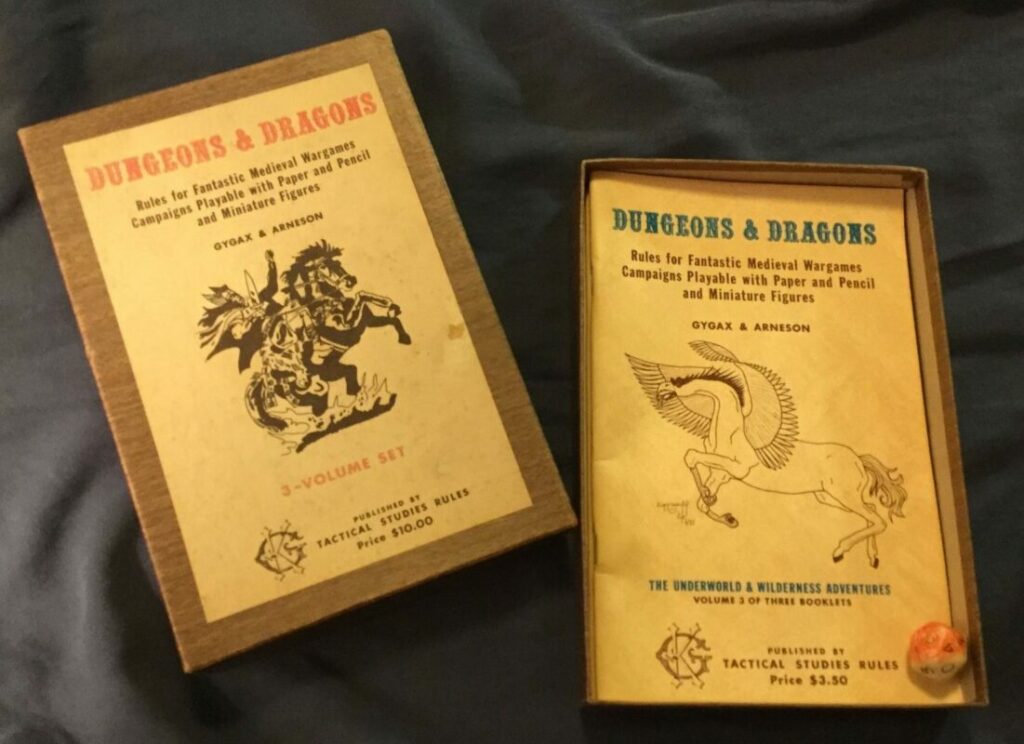
And you know what happens when you introduce a change, no matter how small, to a group of fans? A large part of them will angrily reject it. Chainmail’ had three editions but it didn’t seem that Gygax was going to become more than just a fan… Until 1974 when he released ‘Dungeons & Dragons: Playable medieval fantasy wargame campaigns with paper and pencil and miniatures‘. And the world changed forever… Even though this was not a role-playing game. Among other things, because nobody knew what a role-playing game was.
You the barbarian, you the archer
Actually, it cannot be said that this first edition of D&D was a role-playing game as we understand it now. In fact, a “referee” was supposed to be able to manage groups of up to 50 people at the same time – imagine doing that in a game right now if it’s already hard for four players to control themselves! This was a wargame at its core, but with one essential change that made it special: instead of moving armies, each person played with an original and unique character, which over the course of a campaign could evolve.
At no time was role-playing assumed as part of the experience, but the players adopted it naturally. Playing Napoleon’s army was not the same as playing Elf Langolier. Five years later, wargames took a back seat: the 80s were to be dominated -always in the United States, mind you- by D&D. In high schools, colleges… And on television.
Although now it may seem to us a thing only of a small group, really D&D, in its day, was an absolute devotion. So much so, that in 1983 began what for many was the first contact with the game: the cartoon series that, although it may seem impossible now, caused controversy in its day because of its violence. In total, 27 episodes co-produced by Marvel and Toei that coincided with the decision that ‘Dungeons and Dragons’ was a public danger.
There was no proof, but that has never stopped a generation from being frightened by what a more modern one does. Overnight, murder cases began to be linked with ‘Dungeons & Dragons’: mothers’ associations even pretended that before every episode of the very innocent series, warnings were issued that the franchise was linked with violent deaths.
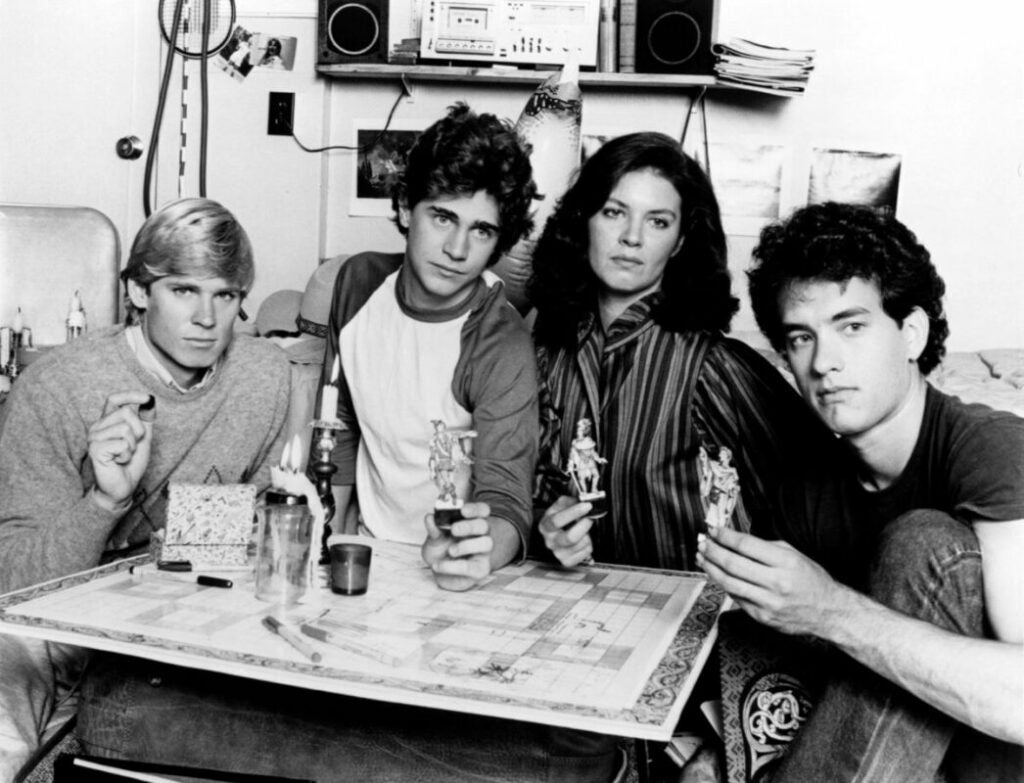
Even Tom Hanks’ first starring role was in a 1982 anti-game pamphlet movie called ‘Monsters and Mazes’! In fact, at the time it was thought that playing the game led you to look up how to kill enemies in real life. Patricia Pulling, the mother of a child who committed suicide in the same year that the Tom Hanks movie appeared, claimed that there were 150 D&D-related deaths: “The child who is easily obsessed can end up looting graves while searching for objects needed to perform occult rituals, and is only one step beyond the need for blood”.
It may seem silly (because it is), but in the United States, which welcomed the board game with open arms, it gradually sank into marginalization. It ceased to be a game for everyone and only for a few, viewed with suspicion and a certain fear. Even in Spain, in 1999, ABC even linked it with Hitler and Marilyn Manson. Almost nothing. A year later, the third edition of D&D did not end up pleasing the fans (although more than the infamous 3.5) and the horrifying movie ended up sinking its fame completely.
The return
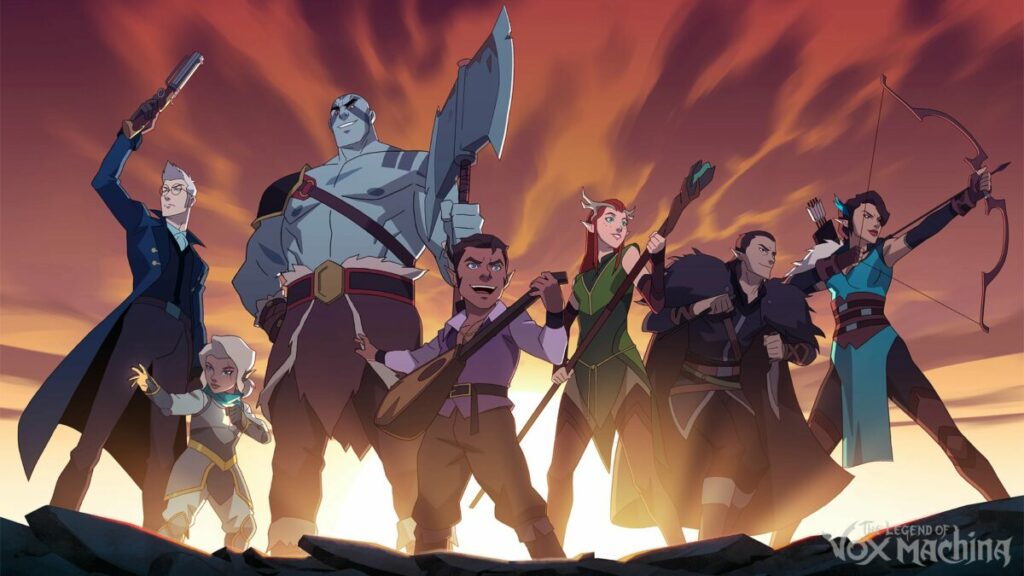
For a while it seemed that video games, even those based on D&D, had killed tabletop role-playing forever, but then came Twitch, Critical Role, Vox Machina and thousands of games played around the world in podcasts, live, videos, with celebrities, with voice actors, with anonymous. D&D was once again the king of fantasy. And no one could ever throw away its fame again.
And that brings us back to the beginning: if you want to play Dungeons & Dragons, what manuals do you need? If you want a recommendation, you can read most of the online rules on Wizards of the Coast’s own website, but it is possible that, instead of leaving your eyes and to always have something to consult, and in the absence of the Basic Box, you want the Player’s Handbook. This is the essential one, the one that has everything: the race, the class, the archetypes, how to set up each character and the adventures of the world.
As you progress, and especially if you have no idea how to make a game, you will need the Dungeon Master’s Manual and the Monster Manual. These are the three essentials (all three must be of the same edition, preferably 5E), to which you can add all sorts of additions. As for adventures, if you don’t want to create them yourself, there are entire manuals, such as Ravenloft, Strahd or the one that comes in the Basic Box, The Lost Mines of Phandelver (which I personally don’t find amazing, but it is true that, for convenience, it is one of the most played ones).
Dungeons & Dragons’ has become more than just a role-playing game. More and more, people are expressing themselves through their characters, their claims, their internal struggles, their powers and their relationships within their world. If you could be anything, what would you choose to be? What twist would you give to your character? How would you be with others? Maybe it’s time to pick up your die of 20 and find out.