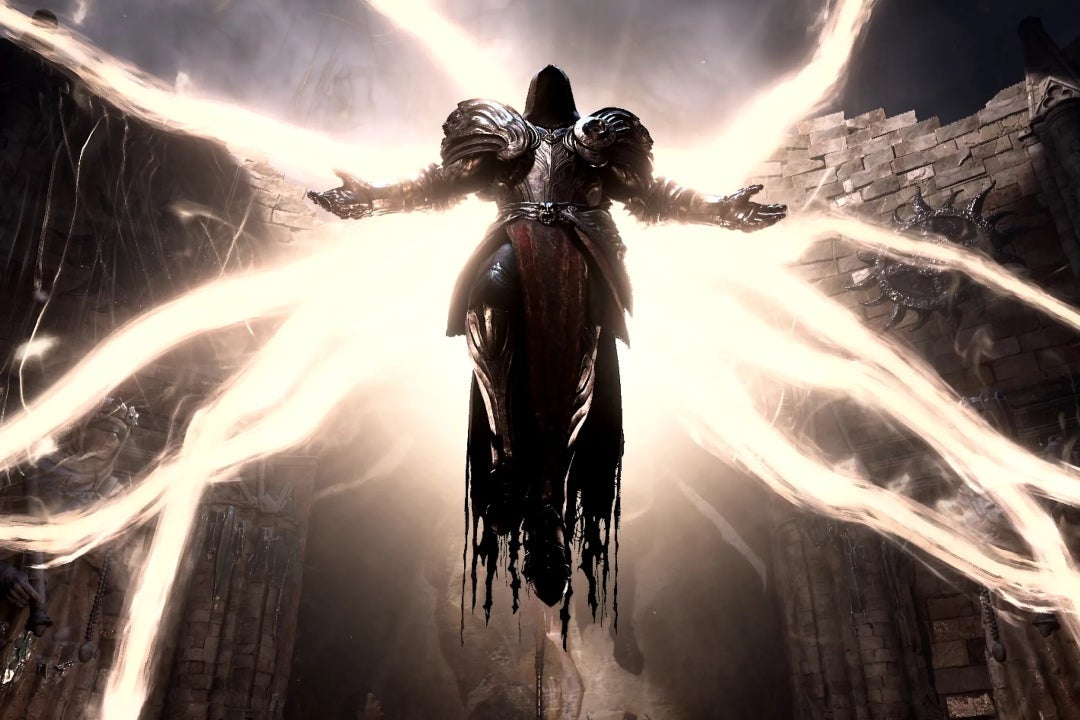
Diablo 4 is undergoing its second major change in almost three years, with updates that transform both the way monsters fight and the way players customize their gear. With the addition of the new Tower dungeons in the upcoming season, Blizzard aims to revive aspects that felt outdated since the game’s launch. Zaven Haroutunian, the game’s associate director, indicated in an interview that it was essential for old systems to be combined with new mechanics, ensuring that no element of the game becomes obsolete. Much more challenging monsters Since its launch, […]
Diablo 4 is undergoing its second major change in almost three years, with updates that transform both the way monsters fight and the way players customize their gear. With the addition of the new Tower dungeons in the upcoming season, Blizzard aims to revive aspects that felt outdated since the game’s launch. Zaven Haroutunian, the game’s associate director, stated in an interview that it was essential for the old systems to be combined with the new mechanics, ensuring that no element of the game becomes obsolete.
Some much more challenging monsters
Since its launch, the types of monsters in Diablo 4 had not received significant adjustments, so their update became a priority before the implementation of the new dungeons, which require evaluating the player’s progress based on creatures that challenge the user more. “A part of the game simply felt old and neglected,” commented Haroutunian, emphasizing that maintaining irrelevant systems represents a burden for the development team.
The Blizzard team proposes a holistic vision of the game, which means that changes will not be made impulsively, but rather to improve the player experience. While it is understandable that some players appreciate the more static nature of previous titles in the saga, the current strategy will prevent the experience of Diablo 4 from becoming monotonous. However, this approach poses the risk of blurring the identity of the game, as frequent changes may force players to relearn key mechanics at regular intervals.
As the next expansion looms, which is apparently set to be announced soon, fans are hoping to get more details that will stabilize the foundations of the game and allow for the addition of new content, thus avoiding an excess of changes that could confuse the community. This will be a crucial component in maintaining relevance and interest in Diablo 4 in the context of a live service game with annual expansions.
Ion Hazzikostas, game director of World of Warcraft, has announced significant changes in the use of add-ons within the game, specifically those that assist in combat. During a recent interview, Hazzikostas warned players that add-ons that predict or help in responding to combat mechanics will be disabled in future updates. This move aims to reduce players’ reliance on these add-ons, especially in raids and dungeons, where many complaints have arisen about the need for multiple add-ons for adequate performance. World of Warcraft wants to return to being old-school Blizzard has […]
Ion Hazzikostas, game director of World of Warcraft, has announced significant changes in the use of add-ons within the game, specifically those that assist in combat. During a recent interview, Hazzikostas warned players that add-ons that predict or assist in responding to combat mechanics will be disabled in future updates. This move aims to reduce players’ reliance on these add-ons, especially in raids and dungeons, where many complaints have arisen about the need for multiple add-ons for adequate performance.
World of Warcraft wants to go back to being old-school
Blizzard is committed to improving game accessibility by enhancing the functionality of the default interface, which will include updates for the Cooldown Manager, visual effects, and the interface editing mode. The goal is to allow players to customize their experience without fully relying on add-ons. Hazzikostas emphasized that while encounters will remain challenging, they will not require add-ons that simplify the challenges, which could significantly change the game’s dynamics.
In this new direction, Blizzard is also considering collaborating with amateur developers to improve aspects of the game, which could result in a greater variety of customizations. Despite these changes, Hazzikostas assured that most add-ons will not be affected, including those that focus on gameplay and social experience, such as quest helpers and role-playing add-ons.
As these changes are implemented, Blizzard hopes that gameplay will remain at the same level of difficulty, but without the intervention of combat add-ons. The company aims to foster an environment where challenges are solved by the players’ own skills, rather than relying on external algorithms that facilitate the gaming experience.
In your usual store you will find hundreds of D&D manuals. And you just wanted to know if you were going to like it! Don't worry: we'll tell you everything you wanted to know about the most famous role-playing game in the world.
Surely more than once in your group of friends there has been someone who has wanted to form a group to play ‘Dungeons & Dragons‘. Since the arrival of Critical Role and the popularity of Twitch, more or less everyone has been curious to leave everything behind, learn a bit of magic, pick up a sword and set off to explore the Forgotten Realms. But of course, when it comes down to it, where to start? In your usual store you’ll find hundreds of D&D manuals. And you just wanted to know if you were going to like it! Don’t worry: we tell you everything you wanted to know about the most famous role-playing game in the world.
50 years ago…
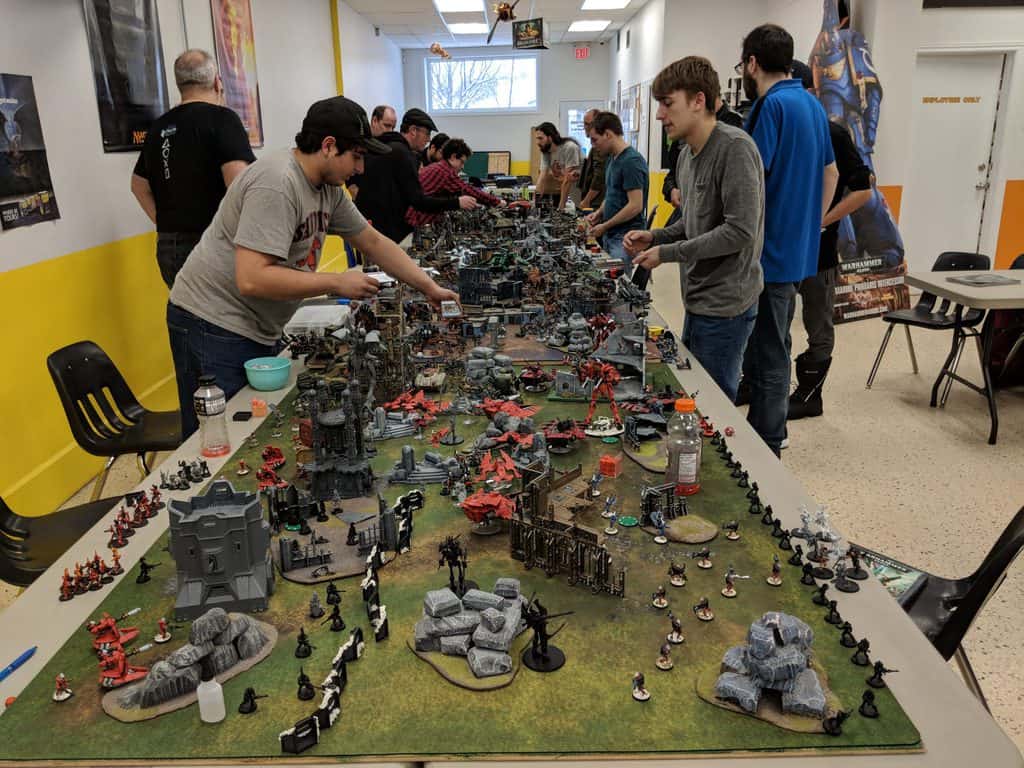
At the beginning of the 70’s, in the United States, board games were reduced to those that families could play: ‘The game of life’, ‘Monopoly’, ‘Connect Four’… The current boom in which we can take a ‘Gloomhaven’ or an ‘Exploding kittens’ to the table is terribly recent. If back then you wanted to find something of complexity you had to go to the tables of the young (and not so young) where they played what some have considered the pre-role-playing game: wargames.
Or, to put it in English, the war games that are still popular today. For example, the humorist Javier Cansado is a great fan of painting figurines and sending them to fight in the Napoleonic wars. These were realistic games in which two armies faced each other: the armies were not made up of fantastic creatures and fighters, but of Napoleonic soldiers or soldiers from the American Civil War at the Battle of Gettysburg. A party, come on. And among those gamers there was a thirty-something so fanatic that he had even set up one of the first conventions in history (the now ultra-famous Gen Con)… in the basement of his house: Gary Gygax.
Gygax did not know that she was destined to change the world of board games forever. In fact, more out of curiosity than anything else he helped create the game ‘Chainmail’, set in the Middle Ages with realistic battles, which had a small appendix explaining how to play with wizards, dragons, orcs, elves or… hobbits. With permission from JRR Tolkien? Of course not.
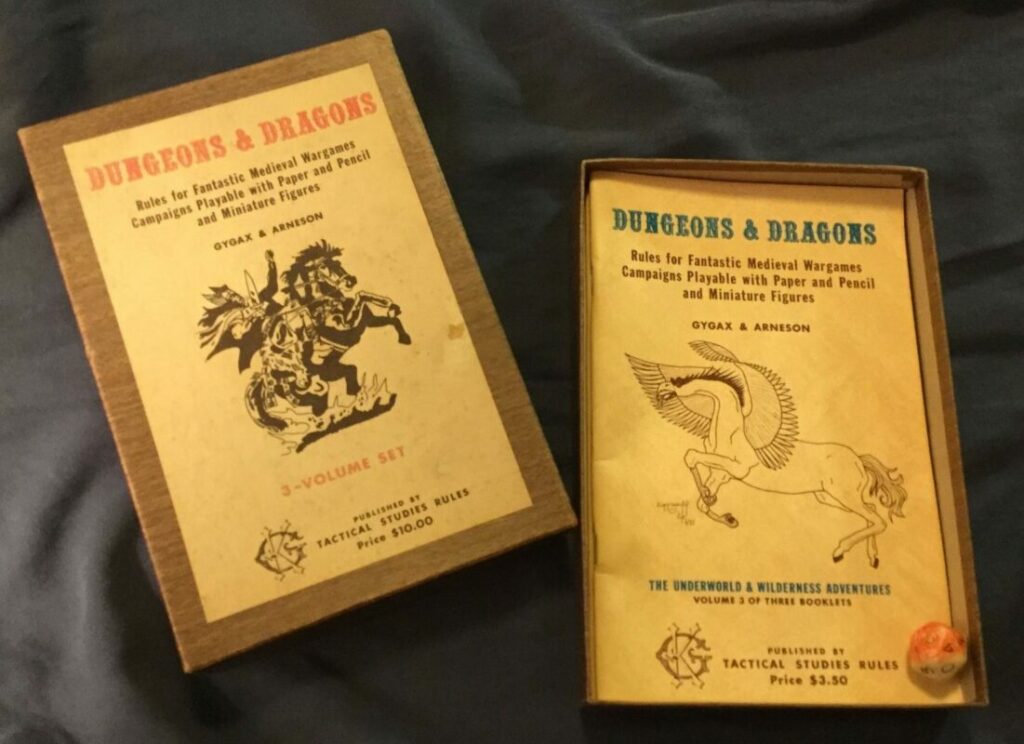
And you know what happens when you introduce a change, no matter how small, to a group of fans? A large part of them will angrily reject it. Chainmail’ had three editions but it didn’t seem that Gygax was going to become more than just a fan… Until 1974 when he released ‘Dungeons & Dragons: Playable medieval fantasy wargame campaigns with paper and pencil and miniatures‘. And the world changed forever… Even though this was not a role-playing game. Among other things, because nobody knew what a role-playing game was.
You the barbarian, you the archer
Actually, it cannot be said that this first edition of D&D was a role-playing game as we understand it now. In fact, a “referee” was supposed to be able to manage groups of up to 50 people at the same time – imagine doing that in a game right now if it’s already hard for four players to control themselves! This was a wargame at its core, but with one essential change that made it special: instead of moving armies, each person played with an original and unique character, which over the course of a campaign could evolve.
At no time was role-playing assumed as part of the experience, but the players adopted it naturally. Playing Napoleon’s army was not the same as playing Elf Langolier. Five years later, wargames took a back seat: the 80s were to be dominated -always in the United States, mind you- by D&D. In high schools, colleges… And on television.
Although now it may seem to us a thing only of a small group, really D&D, in its day, was an absolute devotion. So much so, that in 1983 began what for many was the first contact with the game: the cartoon series that, although it may seem impossible now, caused controversy in its day because of its violence. In total, 27 episodes co-produced by Marvel and Toei that coincided with the decision that ‘Dungeons and Dragons’ was a public danger.
There was no proof, but that has never stopped a generation from being frightened by what a more modern one does. Overnight, murder cases began to be linked with ‘Dungeons & Dragons’: mothers’ associations even pretended that before every episode of the very innocent series, warnings were issued that the franchise was linked with violent deaths.
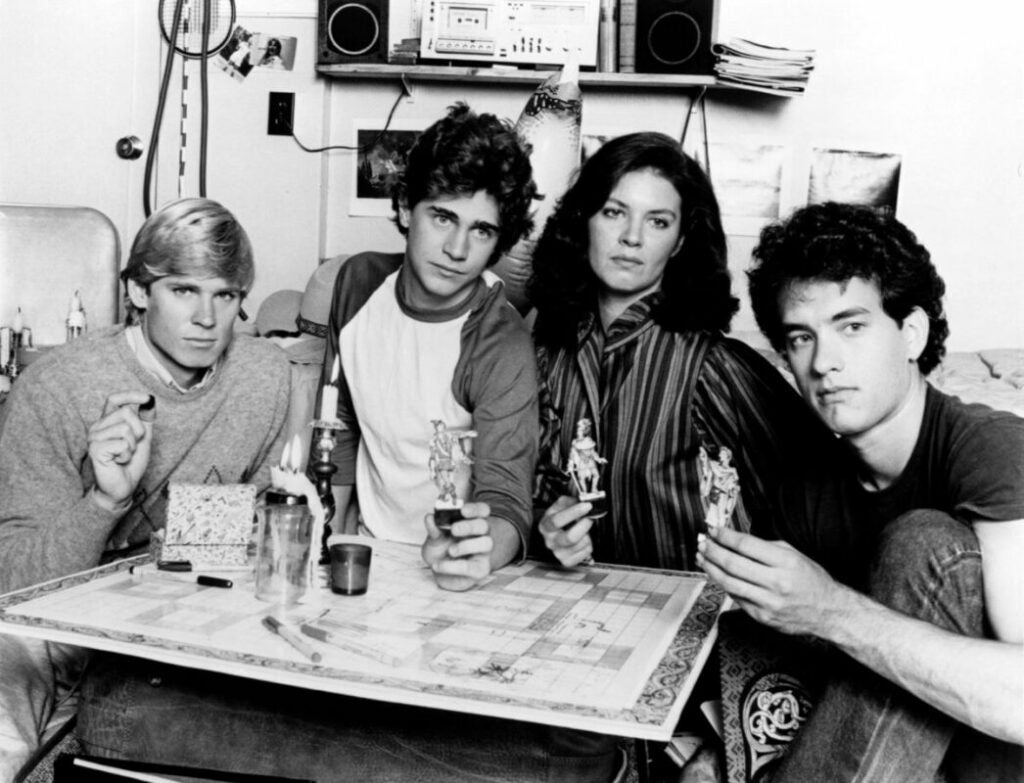
Even Tom Hanks’ first starring role was in a 1982 anti-game pamphlet movie called ‘Monsters and Mazes’! In fact, at the time it was thought that playing the game led you to look up how to kill enemies in real life. Patricia Pulling, the mother of a child who committed suicide in the same year that the Tom Hanks movie appeared, claimed that there were 150 D&D-related deaths: “The child who is easily obsessed can end up looting graves while searching for objects needed to perform occult rituals, and is only one step beyond the need for blood”.
It may seem silly (because it is), but in the United States, which welcomed the board game with open arms, it gradually sank into marginalization. It ceased to be a game for everyone and only for a few, viewed with suspicion and a certain fear. Even in Spain, in 1999, ABC even linked it with Hitler and Marilyn Manson. Almost nothing. A year later, the third edition of D&D did not end up pleasing the fans (although more than the infamous 3.5) and the horrifying movie ended up sinking its fame completely.
The return
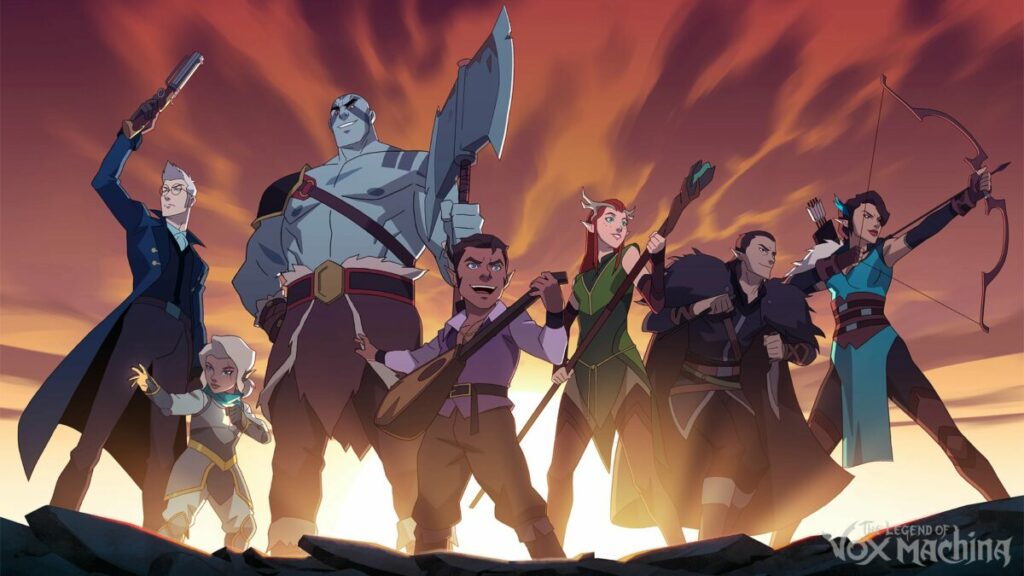
For a while it seemed that video games, even those based on D&D, had killed tabletop role-playing forever, but then came Twitch, Critical Role, Vox Machina and thousands of games played around the world in podcasts, live, videos, with celebrities, with voice actors, with anonymous. D&D was once again the king of fantasy. And no one could ever throw away its fame again.
And that brings us back to the beginning: if you want to play Dungeons & Dragons, what manuals do you need? If you want a recommendation, you can read most of the online rules on Wizards of the Coast’s own website, but it is possible that, instead of leaving your eyes and to always have something to consult, and in the absence of the Basic Box, you want the Player’s Handbook. This is the essential one, the one that has everything: the race, the class, the archetypes, how to set up each character and the adventures of the world.
As you progress, and especially if you have no idea how to make a game, you will need the Dungeon Master’s Manual and the Monster Manual. These are the three essentials (all three must be of the same edition, preferably 5E), to which you can add all sorts of additions. As for adventures, if you don’t want to create them yourself, there are entire manuals, such as Ravenloft, Strahd or the one that comes in the Basic Box, The Lost Mines of Phandelver (which I personally don’t find amazing, but it is true that, for convenience, it is one of the most played ones).
Dungeons & Dragons’ has become more than just a role-playing game. More and more, people are expressing themselves through their characters, their claims, their internal struggles, their powers and their relationships within their world. If you could be anything, what would you choose to be? What twist would you give to your character? How would you be with others? Maybe it’s time to pick up your die of 20 and find out.