The legacy of Dante’s Inferno, a title remembered as an imperfect gem of the Xbox 360 and PS3 era, was recently enriched by the revelation of details about its canceled sequel, Dante’s Inferno 2: Purgatorio. Despite the successful sales of the original game, which reached half a million at launch, the proximity to God of War 3 and the subsequent problems of Visceral Games, which closed its doors six years later, left the game without the continuation it promised. A game so ambitious that it was never made. On the occasion of its fifteenth anniversary, IGN has […]
The legacy of Dante’s Inferno, a title remembered as an imperfect gem of the Xbox 360 and PS3 era, was recently enriched by the revelation of details about its canceled sequel, Dante’s Inferno 2: Purgatorio. Despite the successful sales of the original game, which reached half a million at launch, the proximity to God of War 3 and the subsequent issues of Visceral Games, which closed its doors six years later, left the game without the continuation it promised.
A game so ambitious that it was never made
On the occasion of its fifteenth anniversary, IGN has unveiled previously unreleased materials that reveal the sequel was going to be much more ambitious than previously thought. The writer of Assassin’s Creed 2, Joshua Rubin, completed a 240-page script, where the story promised a deeper and more intricate approach, intertwining the work of Dante Alighieri with elements of John Milton’s Paradise Lost. The narrative would have allowed Lucifer to transition from an absolute villain to a morally ambiguous figure, while Dante faced a total war between Heaven and Hell.
The story would begin in the Garden of Eden and continue through an epic journey with new characters like Lilith and the angels Gabriel, Uriel, and Michael. In a narrative twist, Dante would not only fight against demons but also against his own guilt, even questioning the existence of God. In terms of gameplay, the title aimed to distance itself from the hack and slash style, seeking a more fluid and cinematic system, evoking the influence of Uncharted 2.
Although it was never produced, the project was conceived as part of a trilogy that would culminate in Dante’s Inferno 3: Paradiso, where Dante would fight alongside his daughter against a corrupt divine system. This bold approach would have turned the trilogy into a radical reinterpretation of Christian theology.
The impact of Dante’s Inferno continues to resonate, with its narrative ambition influencing later titles such as Dead Space 3, Uncharted 3, and God of War (2018), which have inherited its blend of epic and reflection.
Director Qiwei Liang of Phantom Blade Zero has sparked a notable debate about the saturation of the video game market, stating that “nowadays there are too many Souls-style games.” This observation reflects a growing frustration among players who face a constant repetition of formulas in fantasy RPGs. Unlike many titles that align with the “Soulslike” style, Liang assures that his work does not fit into this category nor into that of a traditional action game. His game is not a soulslike, no matter what Sony says Instead […]
The director Qiwei Liang of Phantom Blade Zero has sparked a notable debate about the saturation of the video game market, stating that “nowadays there are too many Souls-style games.” This observation reflects a growing frustration among players who face a constant repetition of formulas in fantasy RPGs. Unlike many titles that align with the “Soulslike” style, Liang assures that his work does not fit into this category nor that of a traditional action game.
Its game is not a soulslike, no matter what Sony says
Instead, Liang describes Phantom Blade Zero as a “kung fu action game,” emphasizing a focus on acrobatic and frantic combat, which seeks to differentiate itself by incorporating elements from different genres within the realm of RPGs and action. “People are not going to understand exactly what it is until they play it,” Liang expresses, suggesting that the evolution of the video game industry lies in the fusion of genres.
However, the originality of the term “kung fu action” has been questioned by some critics, due to the existence of games like Sifu and Shenmue, which have already explored similar combat styles. Still, Liang seems convinced that there is untapped potential in combining the Souls-style experience with a martial approach, which could offer a fresh perspective for genre fans.
For the moment, players must wait for more information, as Phantom Blade Zero still does not have a confirmed release date. In the meantime, Liang invites enthusiasts to explore this new combat journey that promises to be both innovative and exciting.
Many games go under the radar of most people, or receive criticism from the public, because they are aimed at a very specific audience. They ask for very specific things from those who are going to play them, and that makes it difficult to adjust expectations. It requires having a particular awareness and vision of what the game wants. And that is not always easy to provide. That’s why many games gain value over time. When more players and a certain distance allow them to be seen in a different light. Because that makes it easier to play them for what they are and not […]
Many games go under the radar of most people, or receive criticism from the public, because they are aimed at a very specific audience. They ask for very specific things from those who will play them, and that makes it difficult to adjust expectations. It requires having a particular awareness and vision of what the game wants. And that is not always easy to provide.
That’s why many games appreciate in value over time. When more players and a certain distance allow us to see them in a different light. Because it makes it easier to play them for what they are and not for what we expect them to be.
Hell Is Us, the new game from Rogue Factor, is in many ways exactly that. From the outside, it may seem like a soulslike heavily inspired by From Software games, with a contemporary style and a particular emphasis on combat. The reality is that the game is something very different from that. Because the audience it seeks is one that comes here not for the combat, but for the exploration and, to a lesser extent, for the quality of the puzzles.
The Legend of Zelda meets Resident Evil and hack and slash
If we had to describe Hell Is Us in a simple way, we could say it’s like a The Legend of Zelda from SNES or Nintendo 64 with puzzles like those in Resident Evil and the combat of a hack and slash from PlayStation 2. All of this does not mean that it is a game that feels old or that aims to be a tribute to the classics. On the contrary. It is a very fresh and interesting game because it knows where it draws inspiration from and why, making this combination make sense for one very simple reason: it knows its limitations.
The grace of Hell is Us is that we have to navigate very broad levels, semi-open world, where we have no indicators of any kind. Some characters give us hints about what we should do, we can look into the distance to see where there are interesting places to go (or exactly the place we need to go!) and some documents provide us with relevant information, but there are no extradiegetic indicators of any kind. There is neither a map nor an arrow nor a button we can press to indicate where our next objective is. The only way to progress is to interpret the information we have and move forward.
This is always enjoyable because the environments are spacious, but not gigantic. Dense, full of things, but never so vast as to be absurd. So getting lost and not knowing exactly where to go is never a problem. And since puzzles require finding the right object or knowing which symbols go where, exploration and observation are rewarded more than the pure ability to decipher what the game wants from us.
Of civil wars and battles
As the game is based on exploration, it is appreciated that the world to explore is very interesting. And terrifying. Because Hadea, the region we visit, has two defining characteristics: it is in the midst of a civil war and is invaded by strange monsters ravaging everything.
The game does not shy away from the first part of the premise. We will constantly be facing the horrors of war and it will have no problem throwing images at us that are hard to shake off. But it does so in an elegant and appropriate manner for the context, adding to the atmosphere and theme of the game. All while the story follows something more mundane: the search for the truth about the protagonist’s past. Which, of course, has a lot to do with the state of the region and the monsters that inhabit it.
Speaking of monsters, the combat might be what doesn’t convince a certain part of the audience. Not because it’s bad, which it isn’t, but because it’s relatively simple. With not much variety in either enemies or weapons, it can become a bit repetitive, especially given the game’s length. This shouldn’t be a problem since it’s not the central focus of the game and is well executed, but there will be those who find it an issue.
A future cult title
But if something must be clear, it is that Hell Is Us is one of those games that has all the potential to become a cult game. Surely not immediately, but in a few years.
It’s like playing a classic The Legend of Zelda, but with a much more mature and darker atmosphere and narrative. If we add puzzles in the style of Resident Evil and hack and slash combat, along with its incredible setting, the result is a fascinating game that is also difficult to sell to the general public at first glance. But if all of this sounds good to you, really: Hell Is Us is a game for you. One of those games that will be talked about for a long time in the world of video games.
Since its launch on Steam, Stellar Blade has surpassed 193,000 concurrent players, becoming the second most successful PlayStation game on the PC platform. Developed by the South Korean studio Shift Up, this hack and slash has resonated deeply with the community, demonstrating that interest in PlayStation exclusive titles on PC is on the rise. The game director acknowledges that there are things they could have done better. In a recent interview, the game director, Kim Hyung Tae, expressed his commitment to creating a sequel following the success of the original title. In particular, Tae […]
Since its launch on Steam, Stellar Blade has surpassed 193,000 concurrent players, becoming the second most successful PlayStation game on the PC platform. Developed by the South Korean studio Shift Up, this hack and slash has resonated deeply within the community, demonstrating that interest in PlayStation exclusive titles on PC is on the rise.
The game director acknowledges that there are things they could have done better
In a recent interview, the game director, Kim Hyung Tae, expressed his commitment to creating a sequel following the success of the original title. In particular, Tae identified the narrative as a key aspect to improve, acknowledging that production limitations affected the story of Stellar Blade. Although he could refer to the relationship between artificial intelligence and humanity as a cliché, he remained optimistic about the evolution of the plot towards a more serious and profound tone in the sequel.
Tae revealed that the development of the sequel is underway and that the high costs of the cinematics forced the team to cut secondary content, affecting the narrative of the first game. The ambition for the sequel has led the team to discard the idea of a story expansion for the first title, focusing on a complete development that is expected to be released in 2027. “We hope it will be a great game,” said Tae, as the team continues to work on new ideas and concepts.
With the success of Stellar Blade on Steam, Sony has begun to lift some restrictions regarding its exclusives on PC, reflecting a broader strategy to capitalize on the growing video game market on this platform. As the industry evolves, player responses to titles like Stellar Blade could significantly influence the company’s future decisions.
If you like Dynasty Warriors, you’ll love these 7 games!
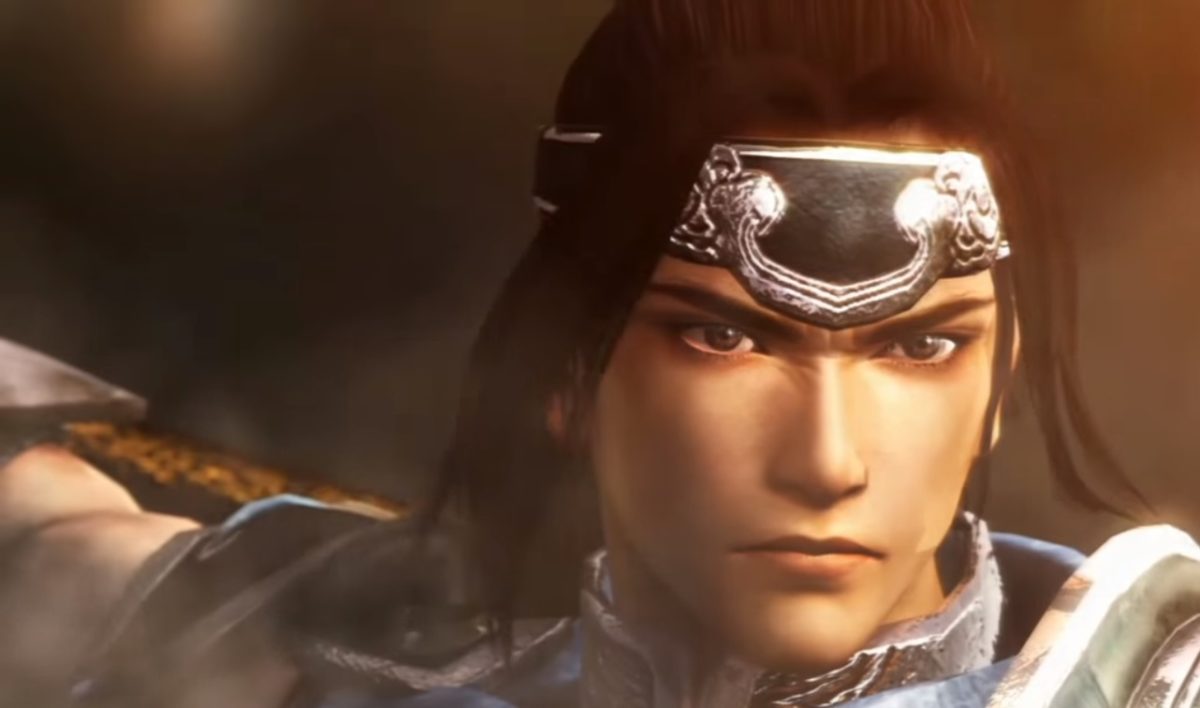
Dynasty Warriors is a unique franchise of hack-and-slash warlord games where you fight against large armies of warriors. This popular series draws strong inspiration from Chinese history, with many of the characters being major historical figures. The spin-offs of this series tend to follow the same unique gameplay, but with crossover characters of various different series. Here are some of the best.
7 Dynasty Warriors spinoff games that you have to try
7. One Piece: Pirate Warriors
One of the first crossover games that Dynasty Warriors did, and it is a hidden gem. While popular in Japan, this spin-off series has gone mostly unnoticed in America. Using pirates instead of traditional warriors is a contrast that works surprisingly well.
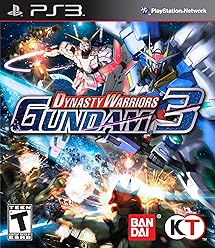
Another unique crossover that creates an amazingly interesting aesthetic of mecha space warriors with swords. Definitely worth checking out, even if you’re not a fan of traditional Gundam, as it is one of the most unique games in the Dynasty Warriors franchise.
Not all of Dynasty Warriors’ spin-off games are crossovers, and these two series have made their own unique canons as well. Samurai Warriors is the same concept as Dynasty Warriors but with historical Japanese characters, while Orochi is a combination of the two series. Both have grown popular to the point where they have become their own stand-alone games as well.
Unlock the other titles on this list, Godseekers does not follow the same gameplay as the traditional Dynasty Warriors games. Instead, Godseekers is a tactical RPG featuring many of the main characters from the Dynasty Warriors series. It is essentially the inverted concept that Dynasty Warriors spin-offs have, with the gameplay changing instead of the characters. This creates a unique and interesting take on a typically static gameplay formula.
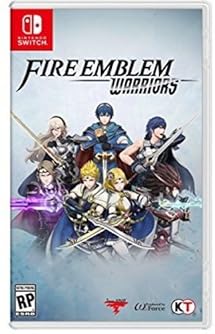
Fire Emblem is a perfect fit in the Warriors universe, as it features many noble characters in feudal-like situations. That’s why this crossover is one of the most natural ones for a fan of either series. Fans of Fire Emblem will enjoy this unique take on some of their beloved characters.
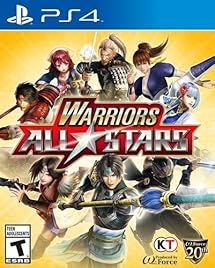
Similar to the Warriors Orochi series, Warriors All-Stars follows the gameplay of Dynasty Warriors but features characters from all Koei games. This includes games such as Ninja Gaiden, Dead or Alive, and the Atelier series. Fans of Koei will love seeing these familiar characters in the unique gameplay of Dynasty Warriors.
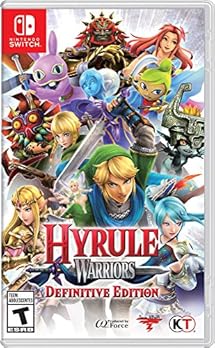
Even among non-Zelda fans, this game is what brought many gamers to the attention of Dynasty Warriors. Not only does it allow a much-appreciated gameplay change to the Zelda franchise, but it also stands as a great addition to the Dynasty Warriors series itself.
There aren’t many games like Dynasty Warriors besides its own spin-offs, however, our Softonic Solutions community offers some similar games that you’re sure to enjoy if you’re a fan of the Warriors series.