Everyone is talking about AI. Some believe it presents a new world where we can rest and let computers do everything for us (because, apparently, they still haven’t realized how the real world works), and others think it’s the end of times. In any case, and as Mafalda used to say, this is not the end, but the continuation of the beginning of society. Now we are surprised that a machine can create videos of Han Solo dancing a polka, but in 1996 the battle against the […]
Everyone is talking about AI. Some believe it presents a new world where we can rest and let computers do everything for us (because, apparently, they still haven’t figured out how the real world works), while others think it’s the end of times. In any case, and as Mafalda used to say, this is not the end, but the continuation of the beginning of society. Now we are surprised that a machine can create videos of Han Solo dancing a polka, but in 1996 the battle against AI was different: in front of a chessboard.
This love is blue like the sea, blue
In 1985, a group of students led by Feng-hsiung Hsu began developing, at Carnegie Mellon University, a computer designed exclusively to play chess called ChipTest, which later changed its name (when IBM bought the project) to Deep Thought, and finally to Deep Blue thanks to a contest in which its fans had to name the invention. And although everyone interested in it knows about its battle against Garry Kasparov in the mid-90s, the truth is that in 1989 there was another equally fierce battle that did not end well for the machine.
Deep Thought lost both games against the champion, and at IBM they couldn’t contain their frustration: Joel Benjamin, a Grandmaster, helped redesign it, convinced that it could defeat Kasparov. And so it was: on February 10, 1996, Deep Blue became the first computer capable of winning against a chess Grandmaster. However, the next day it lost. Humanity was not entirely lost. So much so that the AI did not win again (it did draw twice) and Kasparov emerged as the great victor of the contest by 4 to 2. The human race had demonstrated that a computer could not match a brain.
Until 1997, the year after, when they introduced improvements and learned from their mistakes. It is said that in those matches played between May 3 and May 11, Kasparov did not play well, but the machine did not understand the meaning of “playing well” or “being tired”: after 6 games, Deep Blue won 3.5 to 2.5. In total, the computer won two and the chess player only one. Enough to proclaim a new era for AI, which shortly after found no rival: there is no human capable of defeating a chess-specialized AI today, and the last recorded victory in an official match against a Grandmaster was, in fact, in 2005. Oops.
However, in these times where it seems you can write a prompt and have anything at your fingertips, it is the best moment to reclaim the brain, to know where each bishop can go, what moves the knight can make, what the pawn’s objective is. In other words, a classic game of chess, using your head instead of LLMs. Kasparov, by the way, is still alive at 63 and currently leads an online chess community (subscription-based, of course) called Kasparov Chess, where you can find everything from articles to interviews and podcasts. Who would have thought that years before proving that robots could beat us, Kasparov would end up using AI to earn some extra rubles?
In a world where artificial intelligence plays an increasingly crucial role in various sectors, Forcepoint has revealed the existence of ten new indirect prompt injection attacks that could compromise AI agents. These types of attacks emerge as a concerning threat, as they seek to manipulate the responses generated by AI systems through the injection of misleading or malicious messages during user interaction. New threats Indirect prompt injection attacks are a sophisticated technique in which an attacker can influence the output of AI without […]
In a world where artificial intelligence plays an increasingly crucial role in various sectors, Forcepoint has revealed the existence of ten new indirect prompt injection attacks that could compromise AI agents. These types of attacks emerge as a concerning threat, as they seek to manipulate the responses generated by AI systems by injecting misleading or malicious messages during user interaction.
New Threats
Indirect prompt injection attacks are a sophisticated technique in which an attacker can influence the output of AI without users being aware of the risk. This could lead to the generation of inappropriate content, bias in responses, or even the leakage of sensitive information. Forcepoint highlights that most of these attacks originate in collaboration and communication platforms, where users can interact directly or indirectly with AI models.
The addition of these techniques to the arsenal of cyber threats presents a considerable challenge not only for AI developers but also for the companies and users who place their trust in these technologies. As a result, it is essential for organizations to implement robust security measures and employ secure development practices to mitigate the risk of these attacks.
In addition to technical concerns, this new discovery highlights the need for ongoing education about cybersecurity among end users. With the increasing integration of AI into our daily lives, individuals must understand not only the benefits of these tools but also the risks associated with their misuse.
Forcepoint warns that defense against these threats cannot be merely reactive, but must be part of a proactive approach in the development and regulation of AI. Meanwhile, the debate intensifies regarding the responsibility of companies to ensure the security of their artificial intelligence systems against these new modes of attack.
Microsoft has launched AI Max, a tool designed to improve query matching and personalize ad delivery on the Copilot and Bing platforms. This launch represents a significant shift in how brands can interact with consumers, moving the focus from visibility of positions and clicks to being selected within AI-driven experiences. Transforming consumer interaction The new options allow advertisers to see how their brands appear in AI-generated responses and how their content is interpreted. This transformation is key as more and more interactions […]
Microsoft has launched AI Max, a tool designed to improve query matching and personalize ad delivery on the Copilot and Bing platforms. This launch represents a significant shift in how brands can interact with consumers, moving the focus from visibility of positions and clicks to being selected within AI-driven experiences.
Transforming Consumer Interaction
The new options allow advertisers to see how their brands appear in AI-generated responses and how their content is interpreted. This transformation is key as more and more interactions are taking place within AI interfaces, rather than traditional search result pages. With AI Max, ads can be directly integrated into AI interactions, offering greater relevance and conversion opportunities.
Additionally, Microsoft has introduced Offer Highlights, which highlight sales features such as free shipping in AI-guided conversations. These functionalities are designed to align with the way users ask questions and evaluate their options, providing a more user-friendly and consumer-centric experience.
To further facilitate purchasing, Microsoft has implemented improvements in Copilot Checkout, allowing users to complete transactions directly on the platform without needing to leave it. This approach reflects a trend towards embedded commerce, where purchasing decisions are made in the environment where the product is discovered, significantly reducing the opportunities for abandonment.
Finally, the company has added an AI-powered tool for audience generation, allowing advertisers to describe their ideal customer in simple language, automatically creating market segments. This innovation simplifies the process of setting up advertising campaigns, making advanced advertising more accessible to a wider variety of advertisers.
A serious authorization vulnerability in the Lovable platform, a popular AI-powered app builder, has allowed unauthorized users to access sensitive data from numerous projects. According to reports, this critical flaw, classified as Broken Object Level Authorization, affects all projects created before November 2025, exposing confidential information that includes source code, database credentials, and customer interaction logs. Change your keys now This vulnerability occurs when an API grants access to objects without verifying whether the requesting user actually has the authorization to view them. Recent investigations […]
A serious authorization vulnerability in the platform Lovable, a popular AI-powered app builder, has allowed unauthorized users to access sensitive data from numerous projects. According to reports, this critical flaw, classified as Broken Object Level Authorization, affects all projects created before November 2025, exposing confidential information that includes source code, database credentials, and customer interaction logs.
Change your passwords now
This vulnerability occurs when an API grants access to objects without verifying whether the requesting user actually has the authorization to view them. Recent investigations have revealed that users with free accounts can make unauthenticated API calls to the platform and retrieve data from other users’ projects. Among the exposed information, database credentials and customer data have been found, linking organizations such as Connected Women in AI and Accenture, as well as employees of Nvidia and Microsoft.
The problem was reported to Lovable through HackerOne approximately 48 days before its public disclosure on March 3, 2026, but a patch has still not been implemented for older projects. Although the platform has applied fixes for new projects, the risk for existing applications remains critical, leaving many users vulnerable.
Experts warn users of old projects that they should urgently change their API keys and credentials, assuming that their information may have already been compromised. This situation highlights a recurring challenge in AI-native development platforms: security measures are often insufficient compared to the rapid deployment of new features, leaving early adopters of these technologies in a dangerous position.
Meta is intensifying its efforts to compete with TikTok in the fields of artificial intelligence and e-commerce, presenting new tools and features at the Shoptalk event recently held in Las Vegas. Among the new offerings is the implementation of affiliate advertising tools, similar to those offered by TikTok Shop, which will allow brands to measure the return on investment generated by sales driven by creators. Fighting against TikTok Shop Although some industry experts highlight the importance of these tools, there are brands that show resistance to adopting them, considering them less critical compared to methods […]
Meta is intensifying its efforts to compete with TikTok in the fields of artificial intelligence and e-commerce, presenting new tools and features at the Shoptalk event recently held in Las Vegas. Among the new offerings is the implementation of affiliate advertising tools, similar to those offered by TikTok Shop, which will allow brands to measure the return on investment generated by sales driven by creators.
Fighting against TikTok Shop
Although some industry experts highlight the importance of these tools, there are brands that show resistance to adopting them, considering them less critical compared to traditional advertising methods like paid advertising. Kevin Simonson, CEO of the marketing firm adMixt, pointed out that despite the growth of affiliate marketing, many brands still do not prioritize them in their strategies.
One of the most relevant features presented is the possibility for Instagram Reels to be shoppable. Creators can now tag products and affiliate links, which potentially increases their visibility and income opportunities. Additionally, Meta is testing affiliate experiences on Instagram with partners like Amazon and the e-commerce platform Shopee, aiming to enhance interaction between creators and brands.
Another great announcement was the integration of a new checkout system in its AI sales agent, in collaboration with companies like PayPal and Stripe, to simplify the purchasing process. This approach reflects an effort to reduce friction in the buying process and increase conversion rates.
However, despite the enthusiasm and innovations, some brands are still in the early stages of their catalog strategy and may take time to adopt these new features. As Meta moves forward in its efforts to capture a larger share of the e-commerce market, it remains to be seen how brands will respond to these new opportunities.
All games are a miracle. The development of a video game is a very long process that involves a lot of people who need to row in the same direction and it is difficult for it to go well. But some are more miraculous than others. Because for every project that goes out without any notable incidents that warrant being made public, there is at least another that never even sees the light of day. And then there is the case of Subnautica 2. A rare bird where, after signing a tremendous success, it seemed that everything was going well, until news started to come out without […]
All games are a miracle. The development of a video game is a very long process that involves many people who need to row in the same direction, and it is difficult for it to go well. But some are more miraculous than others. Because for every project that comes out without any notable incidents that warrant public attention, there is at least one other that never even sees the light of day.
And then there is the case of Subnautica 2. A rare bird where, after signing a tremendous success, it seemed that everything was going well, until endless news started to emerge about the disaster of its development. Followed by lawsuits, negligent uses of AI, and truly surreal stories about its development. All while it is discovered that it is the game on the most wishlists on Steam, making it a serious candidate to hold its own even against GTA6. But what is its story? That’s what we are going to talk about today.
A little context
To understand everything else, we first need to understand where the first Subnautica comes from. An adventure and survival game with action elements where we embody the only survivor of a space expedition on an entirely oceanic alien planet. With no way to escape from there, we will have to do the only thing we can do: catalog the flora and fauna of the place, find resources to survive, and look for a way to escape the planet by diving through its vast oceans.
Inspired by Minecraft, but with a strong emphasis on the underwater aspect, the game was a modest critical success. Released in January 2018, it seemed like it was going to be a title that wouldn’t go unnoticed, winning the award for best PC game of the year at the Golden Joystick Awards, but it also wouldn’t be revolutionary. But players thought otherwise. Selling over 5 million copies in less than two years.
With these excellent numbers, they decided to release an early access sequel in January 2019, Subnautica: Below Zero. And although the critics did not respond enthusiastically, seeing it as excessively continuist, the game has ended up finding its audience. Today considered a spinoff, it would lead to a true sequel, Subnautica 2. In addition to the initial problems of its studio, Unknown Worlds Entertainment.
Huge Problems
In October 2021, Krafton, the Korean multinational, acquires Unknown Worlds Entertainment after the success of Subnautica. For a few years, there is hardly any new or relevant information. Subnautica: Below Zero leaves early access on May 14, 2021, but for a while, they continue to not announce their next project. Until on April 7, 2022, they confirm from Unknown Worlds Entertainment that they are working on “the new game in the Subnautica universe”.
The information will not be fluid or constant from this point on. The next thing we will know will be in November 2023, when Krafton, at its shareholders’ meeting, states that its intention is to launch the game sometime in 2025. On February 8, 2024, during another shareholders’ meeting, they reveal more details, stating that it will be a multiplayer game as a service, which causes Subnautica fans to strongly oppose the project. In response, the studio claims that “there will be no season passes, battle passes, or subscriptions.”
But problems arose in 2025. In July of that year, Krafton announced that the founders of Unknown Worlds, Charlie Cleveland and Max McGuire, and the company’s CEO, Ted Gill, had left the company and were replaced by Steve Papoutsis, CEO of Striking Distance Studios. Moving the game’s release to 2026, they did not provide further explanations about what was behind that moment. Until a journalist decided to investigate.
Jason Schreier, an investigative journalist specializing in the video game industry, discovered that they did not leave, but were fired. What was the reason? If Subnautica 2 reached early access status on time, during the year 2025, Krafton would have to pay Unknown Worlds a bonus of 250 million dollars. According to Cleveland and McGuire, the game was ready to be launched in early access throughout the year. That’s why they were fired. To avoid having to pay the bonus.
Of Trials and AIs
All of this led to Cleveland and McGuire suing Krafton. This is when everything behind the scenes started to come to light. Krafton’s legal defense was that the game did not have enough material to “drive the growth and expansion of the IP,” needing to create 30% more content. And they made this known to Unknown Worlds. The problem, in Krafton’s eyes, is that Cleveland and McGuire were only focused on the $250 million bonus, offering an unpolished product, which led Krafton to decide to delay its release, saving them $250 million, “to protect the interests of the game’s fans.” This was something Unknown Worlds refused, which led Krafton to replace its founders and its CEO.
This could have been upheld in a trial were it not for an important detail. There were 250 million at stake. And the CEO of Krafton himself stated in writing that he wanted to do whatever it took to avoid paying them.
In one of the most surreal twists in the recent history of the video game industry, the trial revealed all the conversations about Chang-han Kim’s attempt, the CEO of Krafton, to avoid paying those 250 million. First, he consulted his lawyers who told him the obvious: there is no legal way to avoid paying them. They have a contract. It is binding. If they comply, he must pay. But since the answer was not satisfactory to him, he did what all executives in the world currently do when they want to hear the answer they want: he consulted ChatGPT. And ChatGPT, after insisting that there had to be a way to avoid paying them, told him that he could always replace them. And that’s what he did.
With the records being read in court, that was enough for Krafton to lose the lawsuit. It was demonstrated beyond any doubt that they had made a business decision not to fulfill a legal contract, the judge in the case, in March 2026, reinstated Cleveland and McGuire at the studio and Gill as CEO of Unknown Worlds and gave him control over the early access launch, extending the date associated with the bonus until September 2026.
After all this, on April 7 of this year, Krafton has completely distanced itself from the project. Unknown Worlds is the distributor and publisher of the game. Does that mean they won’t have to pay the 250 million anymore, in exchange for granting them the studio’s freedom? It seems most likely, but we still don’t know for sure. What does seem certain is that Subnautica 2 will be released in early access this year. And it has everything to be a hit. Because it certainly hasn’t lacked publicity.
OpenAI has announced GPT-5.4-Cyber, a specialized variant of its GPT-5.4 artificial intelligence model, designed specifically for advanced workflows in cybersecurity. This new model provides cybersecurity professionals with expanded access to tools that facilitate the analysis of compiled software, the identification of vulnerabilities, and malware analysis, without requiring access to the source code of applications. The launch of GPT-5.4-Cyber comes in the context of the expansion of OpenAI’s Trusted Access for Cyber (TAC) program, which will now allow thousands of verified defenders to access this model
OpenAI has announced GPT-5.4-Cyber, a specialized variant of its GPT-5.4 artificial intelligence model, specifically designed for advanced workflows in cybersecurity. This new model provides cybersecurity professionals with expanded access to tools that facilitate the analysis of compiled software, the identification of vulnerabilities, and malware analysis, without requiring access to the source code of applications.
Cyber SeGPT
The launch of GPT-5.4-Cyber occurs in the context of the expansion of OpenAI’s Trusted Access for Cyber (TAC) program, which will now allow thousands of verified defenders to access this model. The company has emphasized that this new model variant has fewer restrictions than the standard versions, allowing for more permissive use within secure and verified environments.
A significant part of OpenAI’s cybersecurity strategy is its Codex Security tool, which automatically monitors codebases and has helped fix over 3,000 critical vulnerabilities since its launch. With the advancement of technology, OpenAI has also highlighted improvements in the performance of its models in cybersecurity-related tasks, including a notable increase in capture the flag (CTF) performance since its previous version.
The new model allows professionals to defend against cyber threats more effectively by enabling capabilities such as vulnerability research and exploit analysis. However, initial access to GPT-5.4-Cyber is restricted to verified security providers, reflecting a risk mitigation strategy in an environment where the misuse of artificial intelligence remains a concern.
The introduction of GPT-5.4-Cyber aligns with the industry’s growing focus on specific artificial intelligence models for cybersecurity, especially following the launch of Claude Mythos by Anthropic, signaling an arms race in this technological sphere.
Artificial intelligence (AI) is revolutionizing the way research is structured and validated in various fields, especially in market research and data analysis. This change goes beyond the implementation of tools that simply accelerate tactical tasks, and moves towards a collaborative environment where knowledge is shared and insights are built in a more integral and continuous manner. Future… or destruction? One of the most notable innovations is the ability of new AIs to remember previous work and reference materials over time. For example, platforms like Projects […]
Artificial intelligence (AI) is revolutionizing the way research is structured and validated in various fields, especially in market research and data analysis. This change goes beyond the implementation of tools that simply accelerate tactical tasks, and moves towards a collaborative environment where knowledge is shared and insights are built in a more comprehensive and continuous manner.
Future… or destruction?
One of the most notable innovations is the ability of the new AIs to remember previous work and reference materials over time. For example, platforms like Projects from Anthropic allow teams to upload documents and maintain a persistent environment where the AI can access and reason about information from previous research. This makes research a dynamic process, where previous findings become an active source of intelligence and not just static reports.
Moreover, data security has become a crucial factor in the adoption of AI, with models like Google’s Gemma offering the ability to perform analysis locally. This allows sensitive information to remain within the client’s infrastructure, eliminating concerns associated with sending data to the cloud.
Another significant development is the collaboration between multiple AI systems. Just like in a peer review process, different models can analyze and validate results, thus increasing the accuracy and reliability of the analysis. This allows researchers to focus on data interpretation, ask better questions, and design more robust studies.
The combination of these capabilities is accelerating the generation of insights and elevating the role of the researcher to a more strategic one. As organizations that still rely on manual workflows fall behind, those that adopt AI will benefit from uncovering hidden patterns and improving decision-making.
After four years of waiting, Ascendance of a Bookworm has returned with new episodes, generating great anticipation among fans of fantasy anime and isekai. This comeback has come with significant changes, including a new studio in charge of production: WIT Studio, which promised to elevate the visual quality of the anime. However, not everything has been well received. In a surprising revelation, it was confirmed that the studio used artificial intelligence (AI) in the opening sequence, specifically in the backgrounds that mimic the Art Nouveau style, which has created a divide among fans. WIT […]
After four years of waiting, Ascendance of a Bookworm has returned with new episodes, generating great anticipation among fantasy and isekai anime fans. This comeback has come with significant changes, including a new studio in charge of production: WIT Studio, which promised to elevate the visual quality of the anime. However, not everything has been well received.
In a surprising revelation, it was confirmed that the studio used artificial intelligence (AI) in the opening sequence, specifically in the backgrounds that imitate the Art Nouveau style, which has created a divide among fans.
WIT or without you
WIT Studio admitted to the use of AI after quick detection by anime fans, and although they assured that this technology has not been used in other parts of the anime, the controversy remains.
NAM HAI ART, the art company responsible for the opening, was not aware that generative AI was being applied in their work. For its part, WIT also noted that the previous use of AI in the short Inu to Shonen was experimental and has not been repeated to date.
In response to the criticism, the studio committed to redrawing the affected parts of the opening with new, hand-drawn material. This effort to remedy the situation could modify the sequence in the coming weeks, leading fans to expect results that meet the expectations surrounding the series.
The controversy over the use of AI in anime production raises questions about the quality of animation and time management in a medium where details are crucial. As the season progresses, fans hope that the narrative of Ascendance of a Bookworm will shift the discussions away from the techniques used, refocusing on Myne’s story.
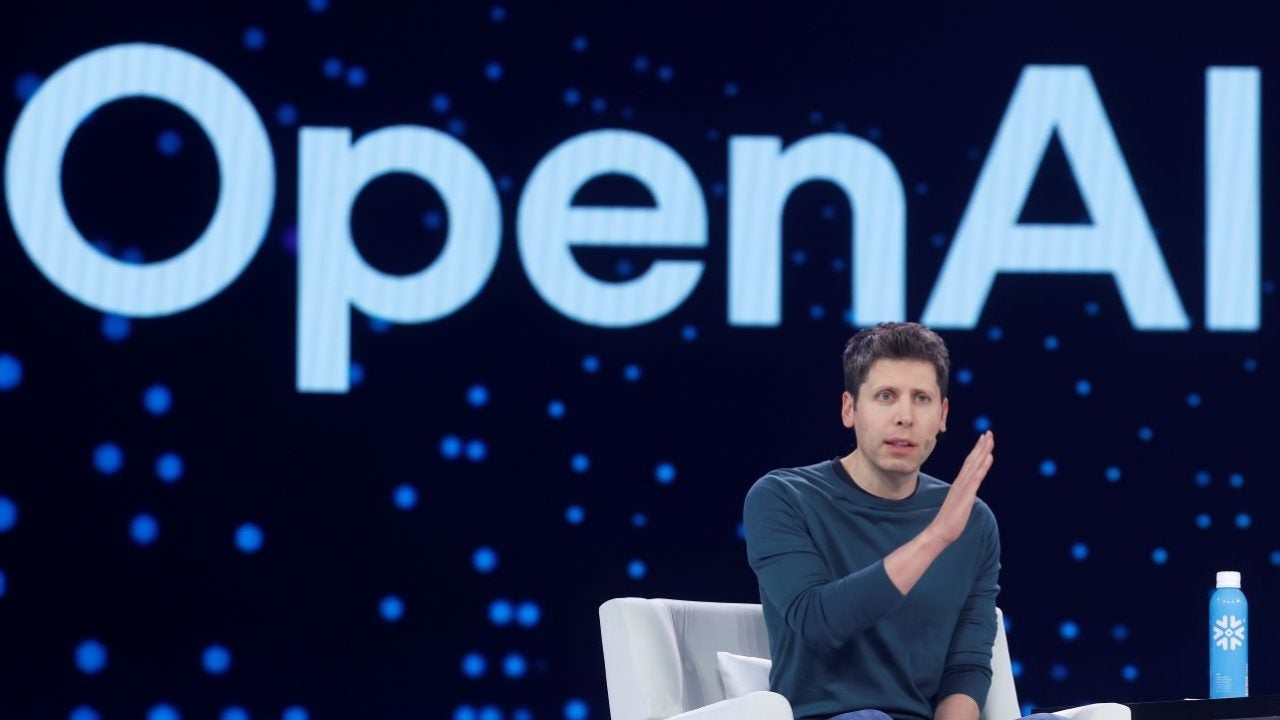
A lengthy article from The New Yorker has called into question the trust in Sam Altman, CEO of OpenAI, revealing accusations of habitual dishonesty. This 16,000-word analysis examines controversial episodes in Altman’s career, including his temporary ousting in 2023 and his return, as well as his conflict with Elon Musk and his transformation from a proponent of safety in artificial intelligence to an ally of Donald Trump. A plan worthy of a James Bond villain One of the most controversial aspects of the article is a failed plan that proposed OpenAI act as a “weapon […]
A lengthy article from The New Yorker has called into question the trust in Sam Altman, CEO of OpenAI, revealing accusations of habitual dishonesty. This 16,000-word analysis examines controversial episodes in Altman’s career, including his temporary ousting in 2023 and his return, as well as his conflict with Elon Musk and his transformation from an advocate for safety in artificial intelligence to an ally of Donald Trump.
A plan worthy of a James Bond villain
One of the most controversial aspects of the article is a failed plan that proposed OpenAI act as a “nuclear weapon” among world leaders. The idea was to force nations to invest in OpenAI technology to avoid falling behind, creating a kind of global competition. Although OpenAI has stated that this characterization of the discussions is “ridiculous,” former employees contradict this version, claiming that conversations about this plan did take place and reached a considerable degree of seriousness.
Greg Brockman, president of OpenAI and a significant donor to Trump’s campaign, reportedly suggested that the company could benefit from playing world powers, such as China and Russia, against each other. Jack Clark, former policy director at OpenAI, described the approach as a “prisoner’s dilemma,” where countries would need to fund the company, implying that failing to do so could have dangerous consequences.
A junior researcher who attended a meeting about the plan expressed that what was being discussed was “completely insane.” The employees’ reaction was so negative that it led to discussions about possible mass resignations. This article provides interesting context about OpenAI’s ambitions and Altman’s reputation in the field of artificial intelligence, at a critical moment for the industry.