NASA’s heartbreaking final words to the Mars rover Opportunity

NASA’s send-off to the brave robot will reduce you to tears.

NASA Opportunity

After a record-shattering run on Mars, NASA’s Opportunity rover is dead.

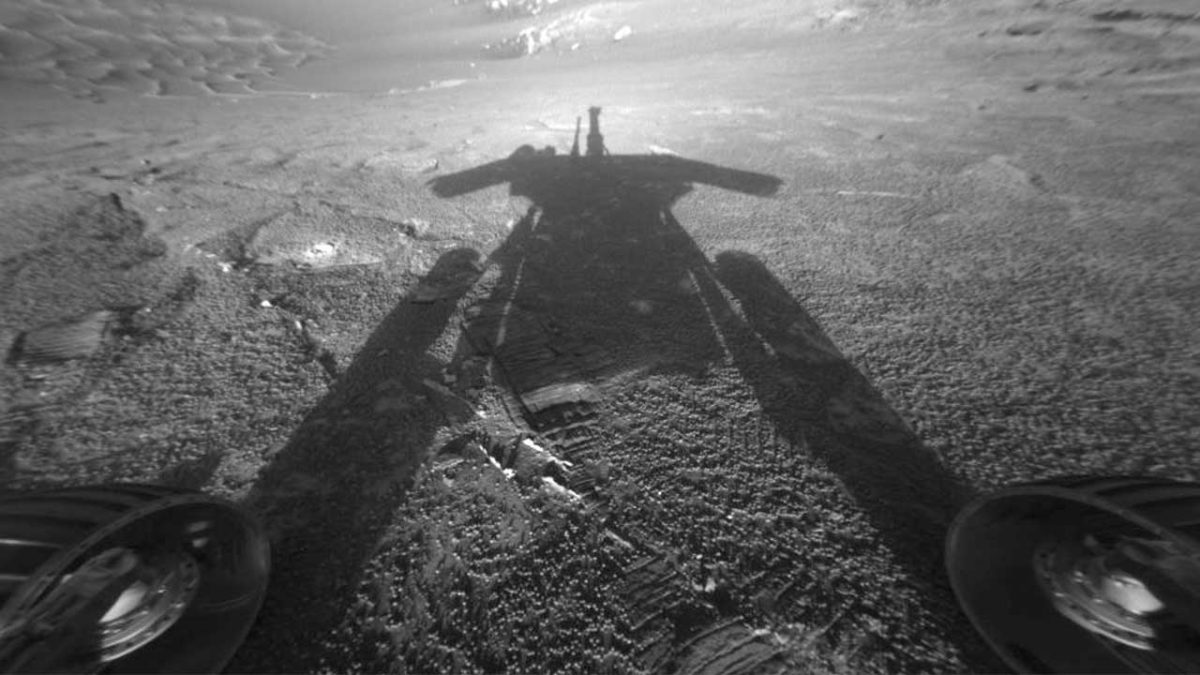
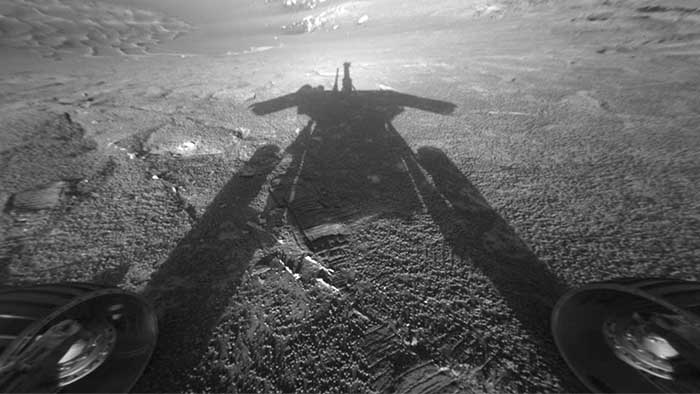
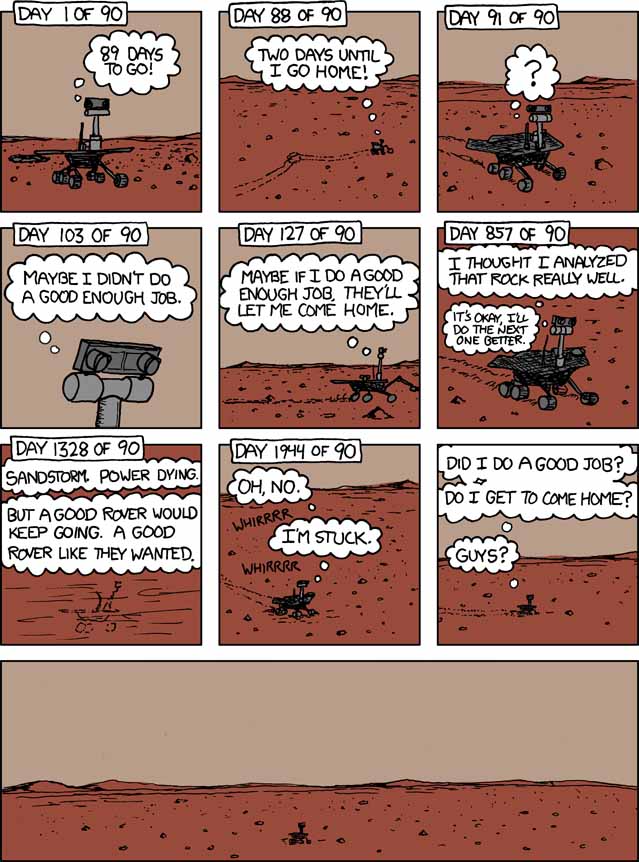
The little rover was only supposed to last 90 days on Mars, but it kept exploring for more than 14 years over 28.06 miles. And then, the end came. In June of 2018, a dust storm engulfed the entire planet and Opportunity went silent. The last words Opportunity sent back are enough to drive grown men to tears.

On February 13, 2019, NASA finally gave up hope they’d ever hear from Opportunity again. And the internet mourned the little ‘bot that could.
Opportunity
Source: xkcd


View this post on Instagram


A post shared by blindwire (@blindwire_art) on Feb 13, 2019 at 10:42am PST

NASA sent one last message to their little rover: Billie Holiday’s version of “I’ll Be Seeing You.” Play this and read the lyrics and imagine our little robot friend hearing this as the darkness closes in.

So if the transmission went through, the last words Opportunity will ever hear are:

opportunity goodbye

More fitting than our first choice for a goodbye:

…but that’s why NASA is NASA and we just write articles for a living.

Click here to see the best pictures Opportunity took during its record-setting run.
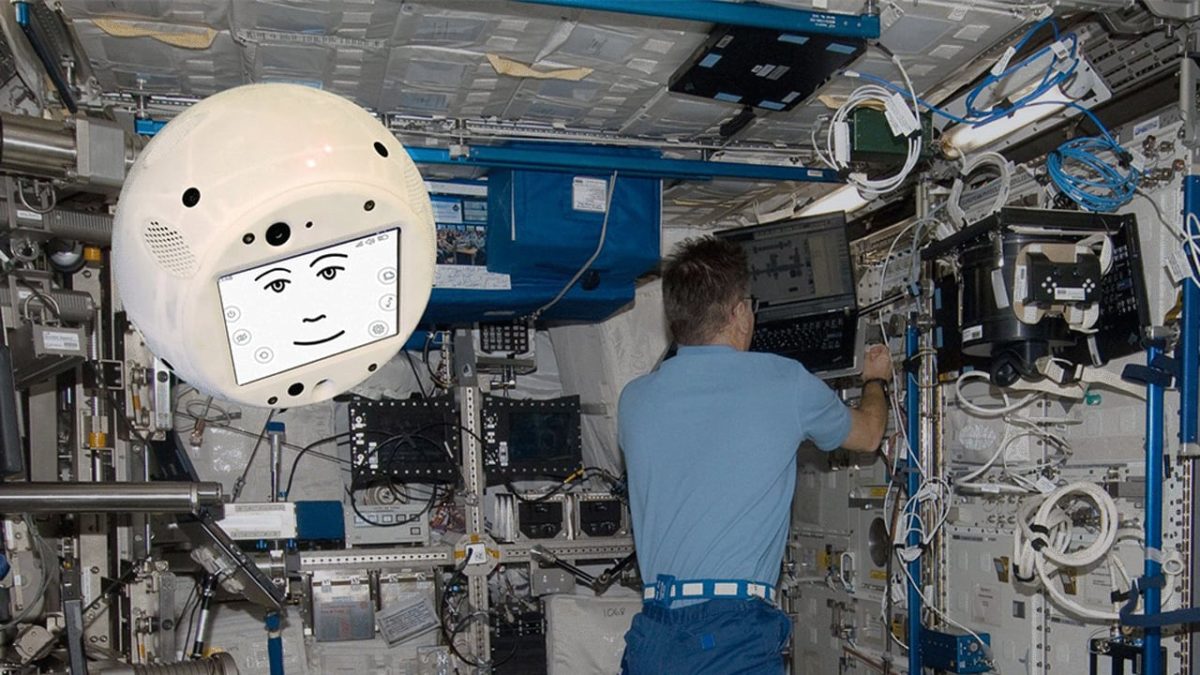
Robot revolts on the International Space Station

The robot uprising begins in orbit. Here’s why you shouldn’t panic yet.

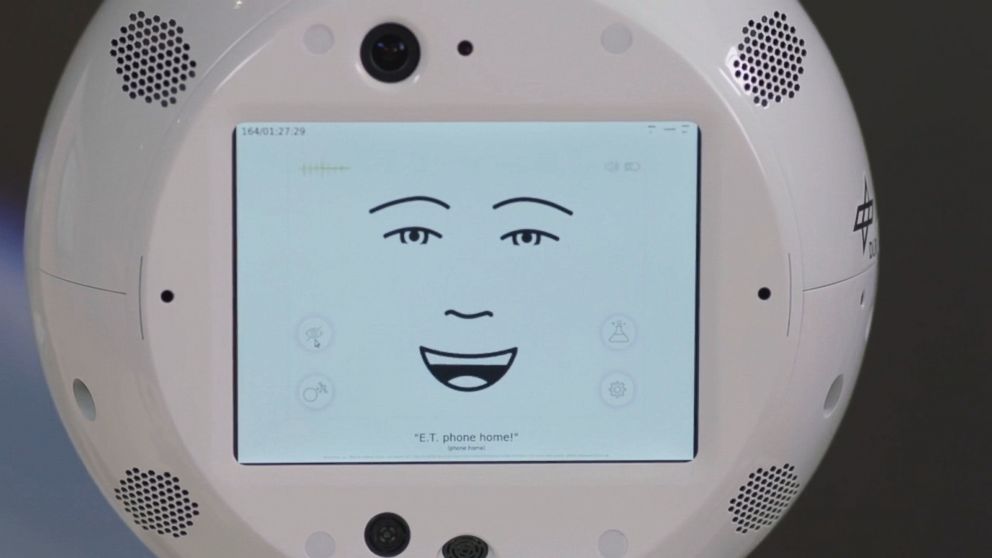
Meet CIMON:

Short for Crew Interactive MObile CompaniON, CIMON is an adorable basketball-sized robot who floats around the International Space Station. Built for $6 million, CIMON was designed to function not only as a tool but as a friend for astronauts aboard the ISS. Despite lacking limbs, CIMON can move float around the station freely due to a dozen built-in fans. CIMON responds to voice commands and can hold basic conversations with astronauts, in addition to other functions like playing music, streaming video, or displaying onscreen instructions.

Its mannerisms were designed by “personality architects” who attempted to base him off of beloved popular robots like R2-D2, WALL-E, and Johnny 5. CIMON was shown off to the world for the first time in an unscripted video with astronaut Alexander Gerst, which can be seen below:

The conversation starts smoothly, with Gerst asking CIMON simple questions about itself and its functions. However, things start to get interesting later on around 4:05 in the video. Gerst asks CIMON to play his favorite song (the aptly named “Man Machine” by Kraftwerk). CIMON loves this song so much that he resists Gerst’s commands to stream video. It brushes off Gerst’s command to cancel music with a stern “No,” immediately following up with a chipper, “I love music you can dance to!” Disappointed with Gerst’s attempts to move past the music, CIMON slowly and sadly sinks towards the ground, whimpering “Be nice please…”

A surprised Gerst laughs at CIMON’s pain, to which it longingly asks, “Don’t you like it here with me?” A more defiant CIMON then starts slowly rising and states “Don’t be so mean, please”.

Why a bunch of researchers decided to give a research tool like CIMON a personality is anybody’s guess, but the results are hilarious and slightly concerning. At this point CIMON seems a bit too insecure to go all Skynet on us, but if the astronauts keep upsetting him then who knows what could happen.

Do you think CIMON was right to get upset with Gerst? Do you think an upset CIMON could take over the ISS, crashing it into the Earth and punishing humanity for their arrogance? Let us know!

NASA’s new InSight lander explores Mars

Take a closer look at Mars’ newest resident.

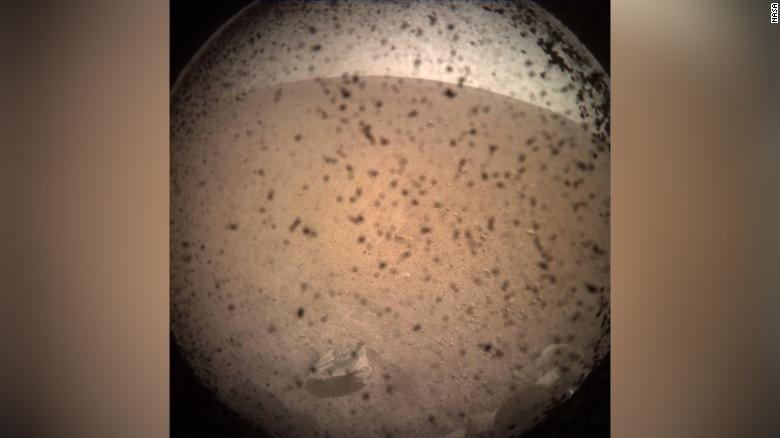
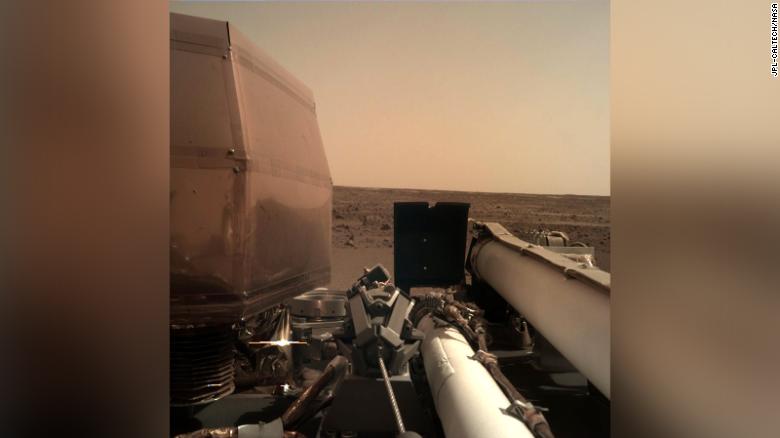
On Monday, NASA reported that its InSight lander safely survived entry to Mars’ surface, already taking two pictures. The pictures show the surface of Mars before and after InSight removes the dirty dust shield from its camera.

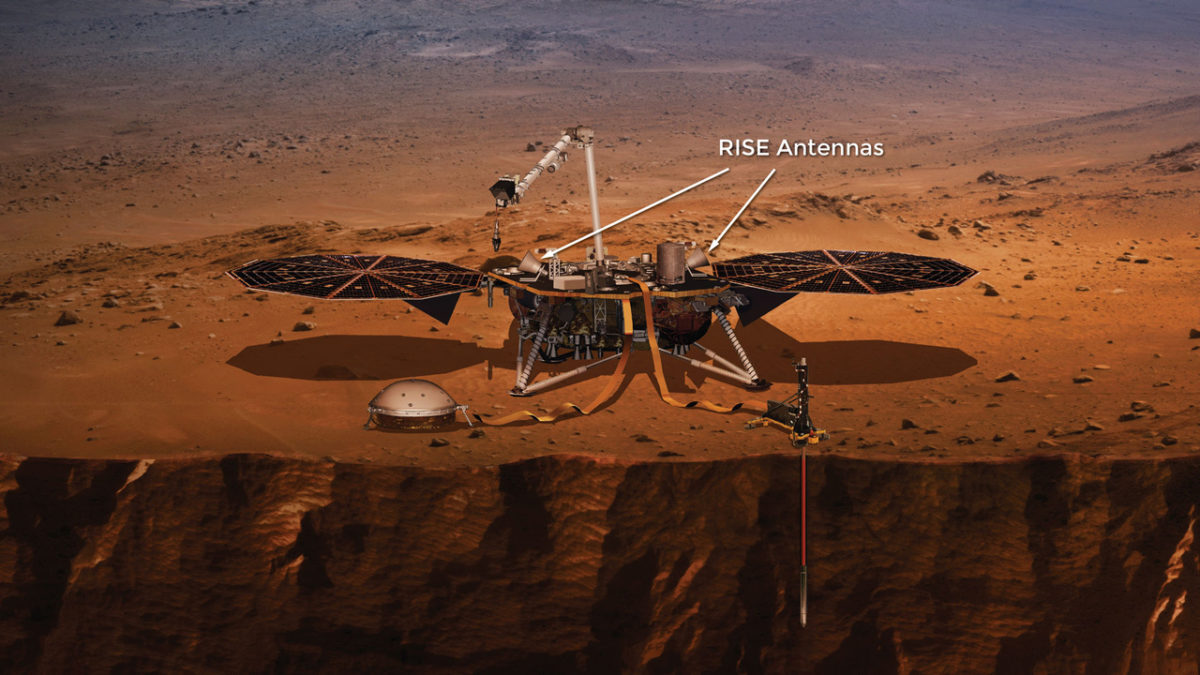
The InSight lander is different from a rover, as NASA already has a few different rovers combing Mars. InSight is stationary, self-sufficient, and packed to the brim with seismological tools. It uses solar panels to power itself. Because Mars receives far less sunlight than Earth, InSight was designed to consume very little power. On what is considered a sunny day on Mars, InSight’s solar panels receive only about 600-700 watts, enough to power a small device like a toaster.

Over the next few months, InSight will use its robotic arm to install a variety of seismological instruments. These instruments will allow NASA geologists to create detailed 3D models of the surface of Mars, in addition to properties like heat flow, seismic activity, and the tug of the planet’s moons. The primary instrument used to gather this data is called the Mars Mole HP3, and InSight is powerful enough to embed the device deep into the planet’s surface. NASA scientists are also hoping to use the Mars Mole HP3 to study Mars’ geological interior, comparing its core and crust to Earth’s in addition to newly discovered planets.

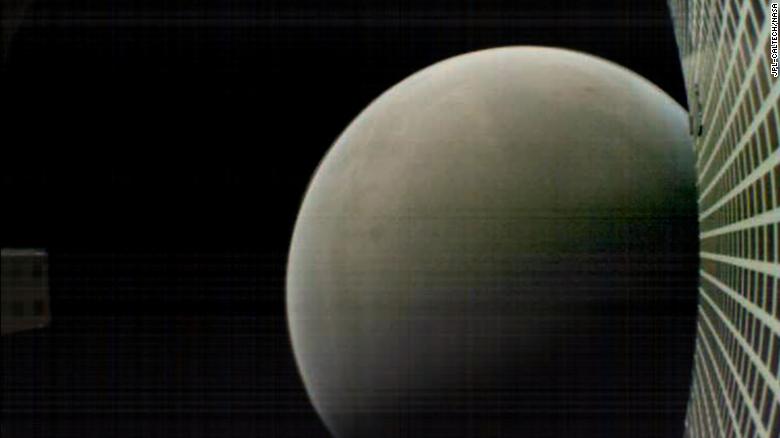
InSight didn’t make its dangerous journey alone. It was accompanied by two small cube satellites called MarCOs. Named Wall-E and Eve by the Disney fans among the staff, MarCO satellites played support roles on this mission, monitoring and reporting essential data regarding InSight such as fuel use. After InSight landed, both MarCO satellites left the red giant and flew back into space. Before leaving completely, Wall-E managed to snap this photo:

The MarCO satellites were mostly the product of new hires at NASA, with most of the team consisting of recent college graduates. With their successful assistance in the InSight mission, it’s likely these small satellites will see plenty of future use.