2026 starts strong: autonomous robots the size of a grain of rice

Researchers from the University of Pennsylvania and the University of Michigan have made a significant breakthrough in the field of robotics by developing a programmable autonomous microrobot that measures approximately 210 by 340 micrometers, making it almost imperceptible to the naked eye. This small device is capable of perceiving its environment and processing information without the need for external intervention, an innovative feature that has so far posed significant technological challenges. The microrobot integrates computing, memory, sensors, communication, and locomotion systems into a single platform, allowing it to execute algorithms autonomously and modify its […]

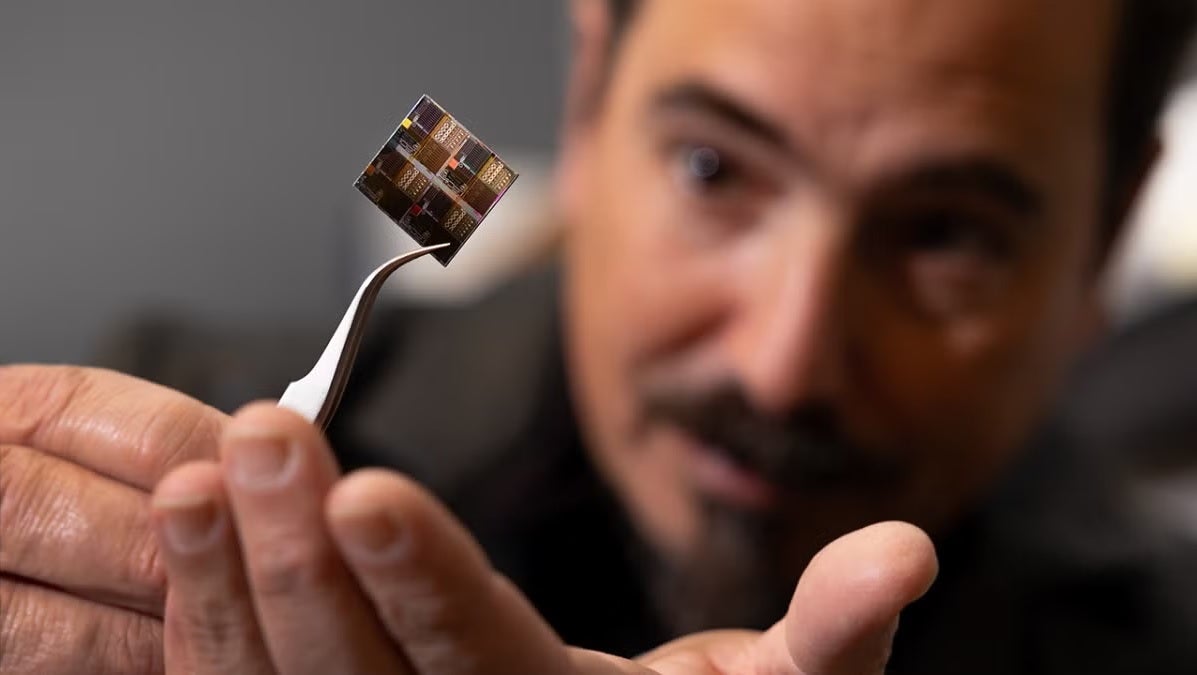
Researchers from the University of Pennsylvania and the University of Michigan have made a significant breakthrough in the field of robotics by developing a programmable autonomous microrobot that measures approximately 210 by 340 micrometers, making it almost imperceptible to the naked eye.

This small device is capable of perceiving its environment and processing information without the need for external intervention, an innovative feature that has so far presented significant technological challenges.

The microrobot integrates computing systems, memory, sensors, communication, and locomotion into a single platform, allowing it to execute algorithms autonomously and modify its behavior in real-time based on its environment.

Small but mighty: the future of robotics and biomedical applications

This advancement is particularly noteworthy, as until now, similarly sized robots relied on external equipment for data processing and decision-making.

One of the biggest challenges in creating these devices at the micrometric scale is their movement in fluids, where viscosity and drag forces become predominant, complicating their locomotion.

In addition, energy consumption is a critical factor, with a limit of around 100 nanowatts. To achieve this, the researchers used a 55-nanometer CMOS process and subthreshold digital logic, incorporating photovoltaic cells and other functional components into the robot’s design.

The locomotion of the microrobot is equally unique, based on the use of electric fields that generate currents in the surrounding fluid, eliminating the need for moving parts that could fail. This minimalist approach extends to its communication, using movement patterns to transmit data such as the measured temperature.

The success of this microrobot could be a first step towards the creation of more complex autonomous robots, with potential applications in fields such as biomedicine, where they could operate in the fluid environments of the human body. Although there is still a long way to go, researchers emphasize that this development could be the foundation for future innovations in microtechnology and robotics.
Así están trabajando los robots en la fábrica de BMW: el futuro es ahora

Sabemos que hay muchas empresas decididas en construir el robot definitivo, ese que nos ayude tanto en las labores del hogar, como en la fábricas. Por ahora, son pocas las empresas que pueden presumir de ir por el buen camino, aunque alguna se salva, como es el caso de Figure.

Ya en julio hablamos de que la empresa Figure había llegado a un acuerdo de colaboración con BMW para que su robot Figure 01 comenzara a trabajar en sus fábricas. Hoy, gracias a un vídeo muy directo, sabemos qué están haciendo en las fábricas del constructor alemán.

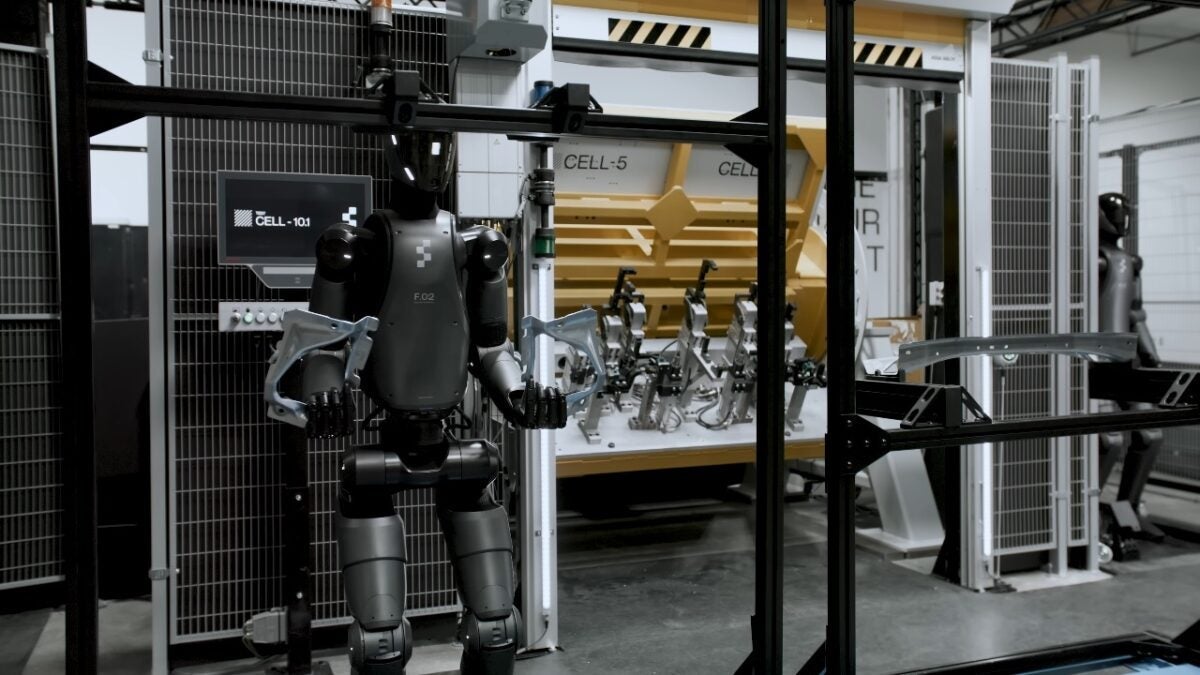
En el nuevo vídeo, Figure, con sede en California, afirma que su robot humanoide totalmente autónomo es capaz de realizar 1.000 colocaciones al día, con la última versión de la máquina mejorando en áreas de precisión y velocidad respecto al diseño original.

Figure 02 en la fábrica de BMW, un trabajador más

Figure completó hace unos meses un despliegue de prueba de su robot humanoide avanzado Figure 02 en unas instalaciones de BMW en Spartanburg (Carolina del Sur), en el que los robots se utilizaron para insertar piezas de chapa metálica en fijaciones específicas que luego se ensamblaron como parte del chasis de un vehículo.

La prueba también permitió a BMW comprender mejor cómo podría integrar con éxito robots polivalentes en un sistema de producción existente. De cara al futuro, BMW y Figure colaborarán para mejorar el diseño del robot y prepararlo para futuras aplicaciones en la fabricación de automóviles.

Figure presentó la última versión de su robot humanoide en agosto, a tiempo para la prueba de BMW. Tiene el triple de potencia de procesamiento que la versión original, comunicación por voz mejorada, mejores cámaras, micrófonos y sensores, y una batería de alto rendimiento.

También incorpora manos de cuarta generación a escala humana con 16 grados de libertad y una fuerza equivalente a la humana, capaces de realizar tareas a dos manos que requieren una manipulación variada y dinámica, un agarre complejo y una cuidadosa coordinación.

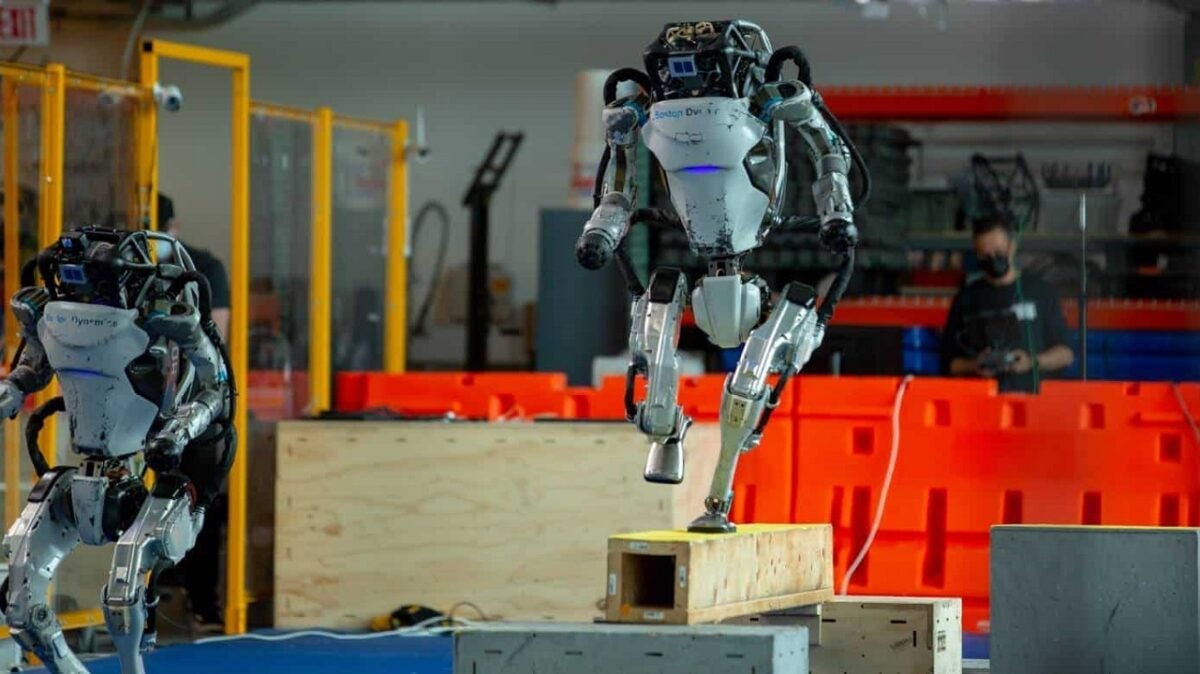
Si bien es cierto que en las fábricas de automóviles llevan décadas funcionando robots muy avanzados con brazos multieje, es posible que los robots humanoides -como los que están desarrollando Figure, Boston Dynamics y Tesla- lleguen algún día a superarlos en aspectos como la versatilidad y la adaptabilidad, especialmente importantes en entornos de fabricación dinámicos.

Las manos de los robots humanoides serán cada vez más diestras, lo que les permitirá realizar manipulaciones más delicadas que las de los robots industriales tradicionales. Las capacidades cognitivas también mejorarán con el tiempo, y la IA ayudará a los robots a actuar de forma más inteligente para conseguir una autonomía aún mayor.

ChatGPT DESCARGAR

La producción actual de robots humanoides aún no está a la altura, pero es emocionante ver vídeos como este que muestran los avances que se están produciendo en el sector.

This robot does better yoga than you

After each simulation, GPT can also reflect on how well the virtual robot has performed and how it can improve. This robot is incredible.

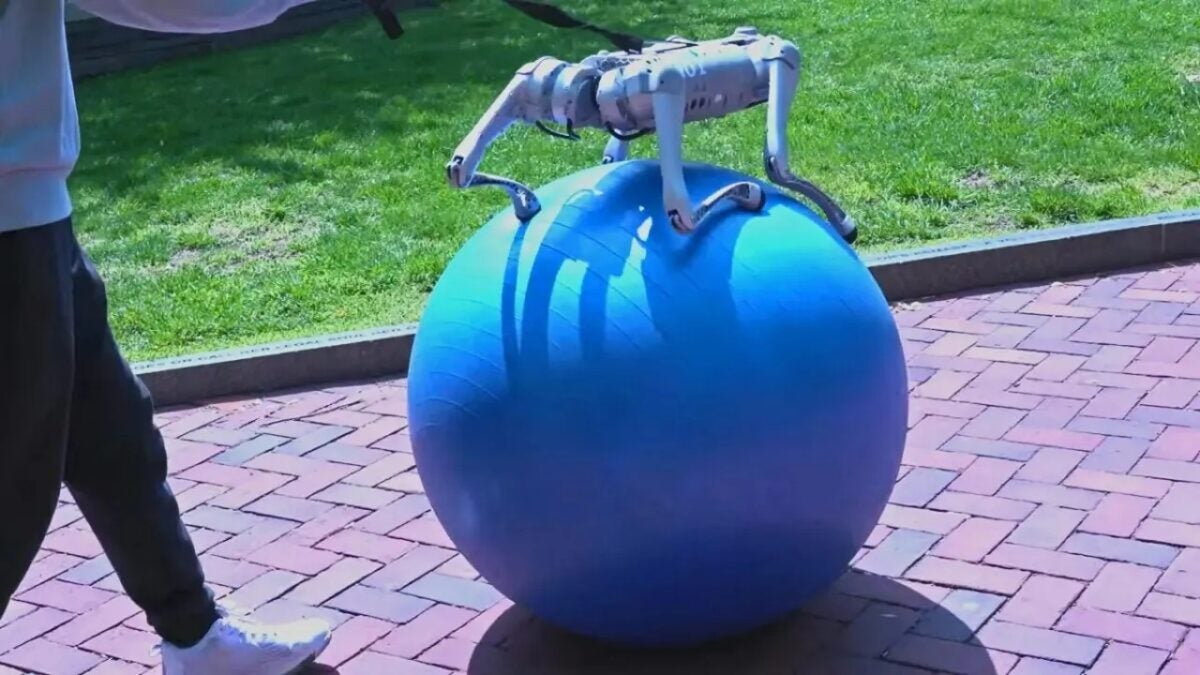
This four-legged creature balancing on an exercise ball is a fun experiment to watch, but ultimately it demonstrates that AIs like GPT-4 can train robots to perform complex tasks in the real world much more effectively than humans.

ChatGPT DOWNLOAD

DrEureka, a new open-source software package, is used to train robots to perform real-world tasks using large language models (LLM) like ChatGPT 4. It is a “sim-to-reality” system, which means it teaches robots in a virtual environment using simulated physics before deploying them in the physical space.

Dr. Jim Fan, one of the developers of DrEureka, used a quadruped robot Unitree Go1 to make headlines. It is a “low-cost” and open-source robot, which is very useful because even with AI, robot pets are prone to falling. As for the “low-cost” part, well… It is sold on Amazon for $5,899 and has a 1-star rating.

Robots that are better than us in almost everything

The “Dr” in DrEureka stands for “Domain randomization”, which means randomizing variables such as friction, mass, damping, center of gravity, etc. in a simulated environment.

With a few instructions in an LLM like ChatGPT, AI can write code that creates a reward/punishment system to train the robot in the virtual space, where 0 = failure, and anything above 0 is a victory. The higher the score, the better.

You can create parameters by minimizing and maximizing failure/breakage points in areas such as ball bounce, driving force, degree of freedom of your limbs, and damping, to name a few. As LLM, you have no problem creating them in large volumes for the training system to execute them simultaneously.

After each simulation, GPT can also reflect on how well the virtual robot has performed and how it can improve. Exceeding or violating parameters, for example, overheating a motor or attempting to articulate a limb beyond its capabilities, will result in a 0… And no one likes to get zero points, not even an AI.

ChatGPT DOWNLOAD

How did he do? Better than us. DrEureka was able to outperform humans in robot training, with a 34% advantage in speed and a 20% advantage in distance covered on real-world mixed terrains.

This super fast and super intelligent humanoid robot is incredible.

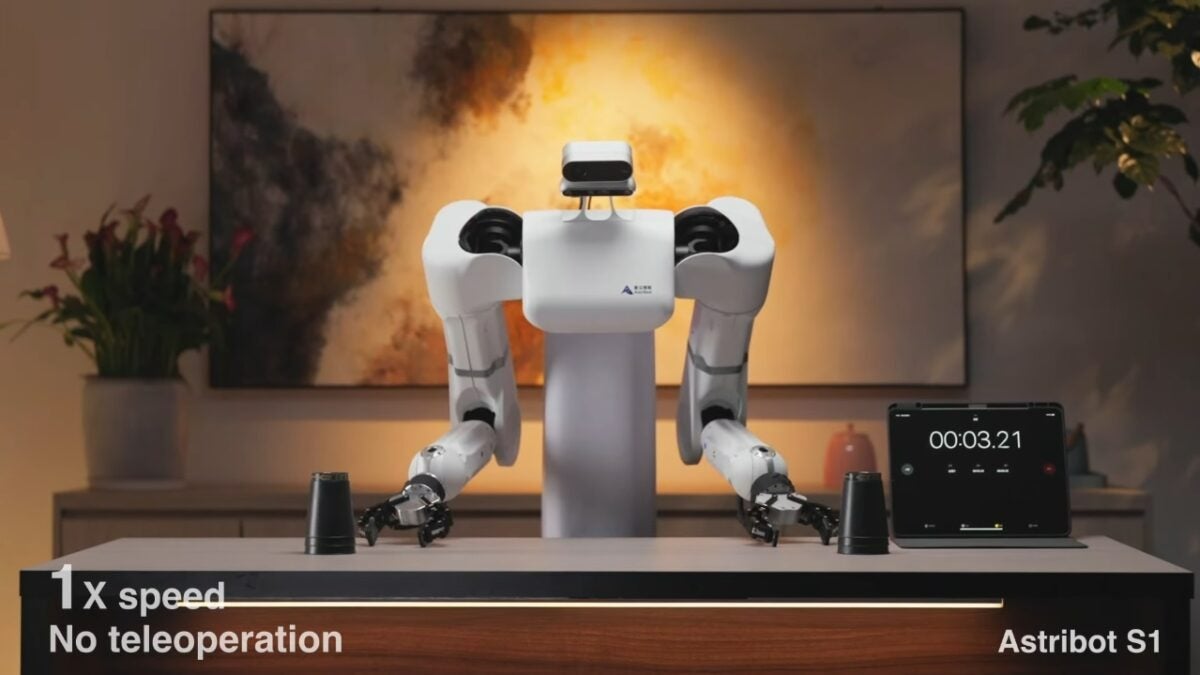
The humanoid robot can perform movements at a maximum speed of 10 meters per second and handle a payload of 10 kg per arm.

Although it seems that every week a new humanoid robot hits the market, we have not yet seen one that moves as quickly and precisely as the model just presented by the Chinese company Astribot.

ChatGPT DOWNLOAD

This month, Boston Dynamics left us speechless with the amazing skill of their new robot Atlas, and the Chinese company UBTech impressed with their robot Walker S, which speaks with a gentle touch.

But today’s video showcasing the skills of a robot equipped with artificial intelligence known as S1, from a relatively unknown subsidiary of Stardust Intelligence based in Senzhen called Astribot, has sent shivers down our spines.

It’s fast. It’s accurate. And it’s like nothing we’ve ever seen before

According to Astribot, the humanoid can perform movements at a maximum speed of 10 meters per second and handle a payload of 10 kg per arm.

The fact that your website shows that an adult man falls very short in these and other Astribot metrics should not be a cause for alarm at all. That speed, as shown in the video, is enough to remove a tablecloth from under a stack of wine glasses without them falling to the ground.

But the robot is not only fast, but also incredibly precise: it can open and serve wine, cut a cucumber smoothly, flip a sandwich in a pan or write calligraphy. The video also shows that the robot is very skilled at imitating human movements, which means it should be a good learner.

Of course, the video has raised some questions for us. Does the S1 have a lower half? All the humanoid robots we have seen so far have some means of locomotion, but this one seems quite immobile.

We are also curious to know more about the history and support of Astribot, as well as the likelihood of the S1 being manufactured. Several media outlets have contacted the company for answers, but there is no new information at the moment.

For now, we can deduce from the Astribo website that the company was founded in 2022 in Shenzhen, that the robot took about a year to develop and is expected to be commercially available by the end of this year.

The site also indicates that the parent company, Stardust Intelligence, was founded by Lai Jie, who also worked with Tencent Robotics Laboratory, Baidu, and the Hong Kong Polytechnic University.

The company also states: The name Astribot comes from the ancient Latin proverb “Ad astra per aspera”, which means “a journey through difficulties to reach the dust of the stars”, representing the company’s long-term plan and strong commitment to the development and popularization of AI robot technology.

ChatGPT DOWNLOAD

If Astribot is the future of robotics, which it seems to be, we could say that in a decade robots will populate the Earth… doing all those manual jobs that until now were our thing. Not even street sweepers will be left alive.

Innovative Robotics: Bender’s Great-Great-Grandfather? The First Robot with Eye Indicators

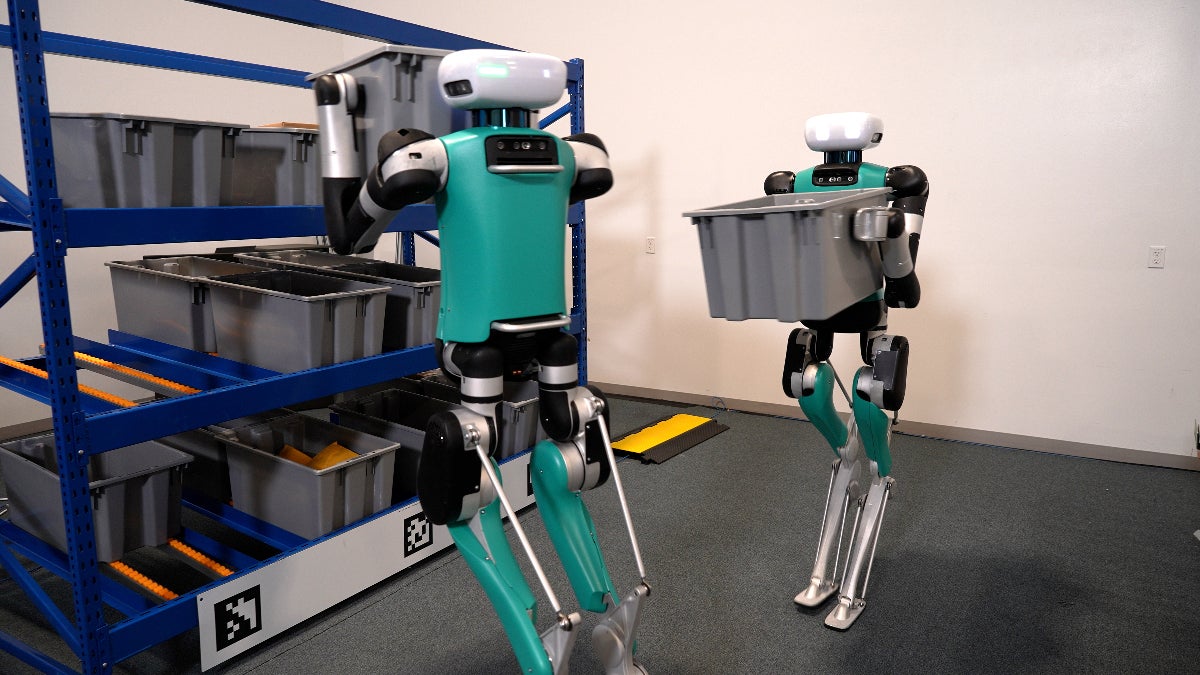
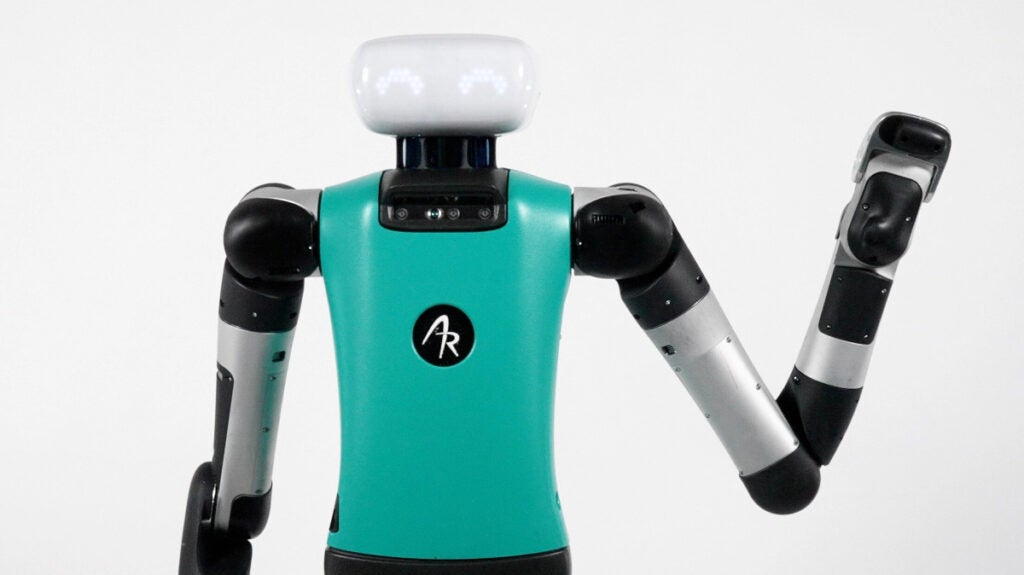
Agility Robotics has decided to take that headless bipedal contraption and put one with eyes on it, supposedly to improve human-robot interaction.

“Robot”, in its more classical Slavic variant, means “forced labor”. And, at the moment, robots, having no human feelings whatsoever, that’s exactly what they do for us. But rarely has the future hit us so head-on as with Digit, created in 2020 by Agility Robotics for Ford and tasked with packaging and distributing courier services. What no one imagined is that three years later, that robot would look almost human.

Kiss my shining metallic eyes

Agility Robotics has decided to take that headless bipedal contraption and put one with eyes on it to supposedly improve human-robot interaction. Digit is created to improve operations in company warehouses, and to avoid collisions of any kind, the eyes will now serve as the lights of a car, and will show when it is about to turn and to which location.

You may be afraid that robots, especially as artificial intelligence becomes more and more latent, will take away human jobs, but Jonathan Hurst, co-founder of Agility Robotics, thinks otherwise: “When people and robots work together in logistics operations, working conditions improve for people, warehouse efficiency improves, the distribution chain moves better. Everybody wins.

At the moment, Digit’s activities are not very varied. It can walk, jump and crouch, but its main function is to pick up and put down different types of objects up to 15 kilograms. One can only imagine that, in the future, with the technological advancement of ChatGPT and other artificial intelligence mechanisms, Digit could become just another companion to chat with. And then we will have reached the ultimate science fiction.

AI is here to debate humans – now what?

Discover why an AI capable of debate could be good for humans.

AI IBMYou may have already heard the news: IBM developed an artificial intelligence program that can form logical, persuasive arguments. You can see the program in action in the video below.
The tech has been in development for a few years. Last year, IBM took it out to debate with real humans, and again, rolled it out for this year’s Consumer Electronics Show.

The show was an opportunity to showcase a new feature called Speech by Crowd, which IBM describes as a cloud-based AI platform used for crowd-sourcing decision support. (Huh?) What that actually means is that the technology aims to understand how people feel about a specific decision — like a proposed policy or a reaction to a speech.

Where this will most likely be applied is in the ever-expanding realm of customer experience — potentially allowing brands to gather richer feedback like customer satisfaction.

Project Debater is a big step toward understanding language

Project Debater’s arguments feel a little cold and formulaic. If you watch any of the videos, you’ll see the calculated, robotic logic at play. What were you expecting?

Here’s a video that goes into great detail as to how the bot works:

We’re one big step closer to robot-human understanding, making this technology a huge milestone.

The Project Debater bot is powered by a mashup of multiple AI principles and algorithms. To start the debate, the robot is given a topic. It scans a database of articles and academic research, sorts through that information to find pieces of text that are both relevant and take on an argumentative tone.

Another algorithm looks for duplicate snippets and eliminates them from its collection of verbal ammunition.

During the debate, a voice recognition system listens to the opponent’s argument — and generates relevant counterpoints.

Where does a debating robot fit into real-world applications?

AI at workA debating robot may not change our day-to-day lives. It’s unlikely that struggling high school debate teams can sneak the bot dressed in jeans and a T-shirt into a competition for a little help.
Project Debater’s greatest strengths are extracting facts from huge amounts of text. It could be useful in classroom settings, or as a way to address the fake news problems we’ve seen on Facebook, Twitter, and WhatsApp.

That said, IBM has not made it clear how the bot determines what information is factual and what is biased.

The way that the robot currently expresses arguments still feels a bit, well, robotic. Noam Slonim, the principal investigator for the project, says scientific research will be the most immediate application.

What’s next for Project Debater?

Some people are worried that Project Debater represents the next step toward the robot apocalypse. We’re not so sure that IBM is the equivalent of Skynet, but time will tell. What’s so neat about IBM’s latest publicity stunt is that it shows advancement in understanding human sentiment.

Yet, IBM still hasn’t figured out the algorithm that powers feelings. Yes, the robot nails the formula the debate — but that lack of passion or emotion means we’re not replaceable yet. Heck, the debating bot even lost its last match on preschool subsidies just a few weeks back.

It’s exciting to see “Miss Debater” offer up her fact-based arguments. If IBM’s version of the truth matches up with basic journalistic ethics, this could be a really amazing asset — a logical counterpoint to our human emotions.

Robot revolts on the International Space Station

The robot uprising begins in orbit. Here’s why you shouldn’t panic yet.

Meet CIMON:

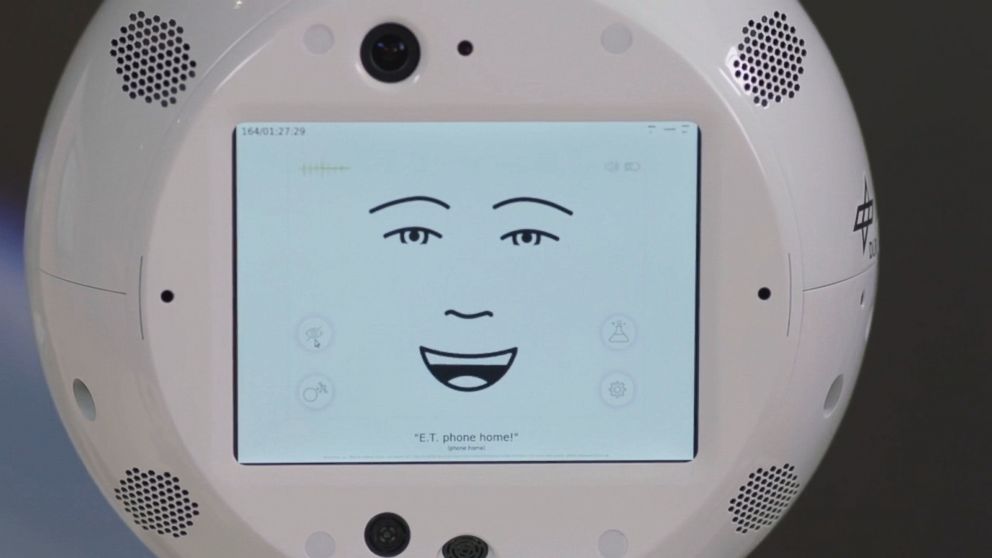
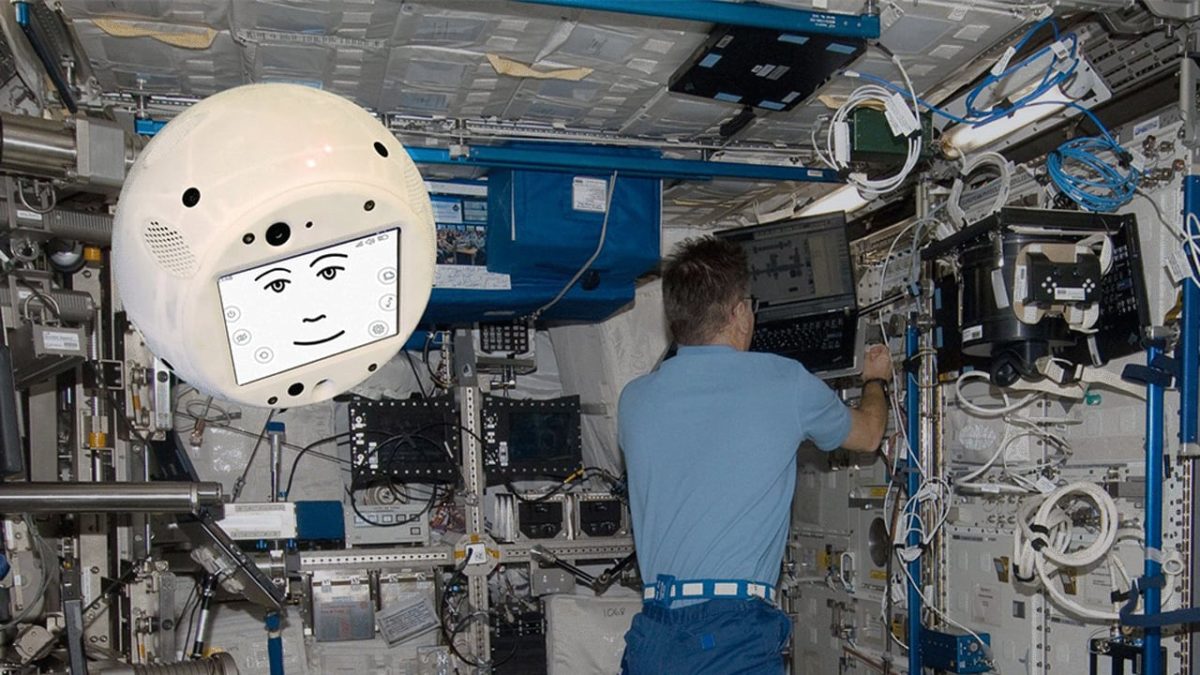
Short for Crew Interactive MObile CompaniON, CIMON is an adorable basketball-sized robot who floats around the International Space Station. Built for $6 million, CIMON was designed to function not only as a tool but as a friend for astronauts aboard the ISS. Despite lacking limbs, CIMON can move float around the station freely due to a dozen built-in fans. CIMON responds to voice commands and can hold basic conversations with astronauts, in addition to other functions like playing music, streaming video, or displaying onscreen instructions.

Its mannerisms were designed by “personality architects” who attempted to base him off of beloved popular robots like R2-D2, WALL-E, and Johnny 5. CIMON was shown off to the world for the first time in an unscripted video with astronaut Alexander Gerst, which can be seen below:

The conversation starts smoothly, with Gerst asking CIMON simple questions about itself and its functions. However, things start to get interesting later on around 4:05 in the video. Gerst asks CIMON to play his favorite song (the aptly named “Man Machine” by Kraftwerk). CIMON loves this song so much that he resists Gerst’s commands to stream video. It brushes off Gerst’s command to cancel music with a stern “No,” immediately following up with a chipper, “I love music you can dance to!” Disappointed with Gerst’s attempts to move past the music, CIMON slowly and sadly sinks towards the ground, whimpering “Be nice please…”

A surprised Gerst laughs at CIMON’s pain, to which it longingly asks, “Don’t you like it here with me?” A more defiant CIMON then starts slowly rising and states “Don’t be so mean, please”.

Why a bunch of researchers decided to give a research tool like CIMON a personality is anybody’s guess, but the results are hilarious and slightly concerning. At this point CIMON seems a bit too insecure to go all Skynet on us, but if the astronauts keep upsetting him then who knows what could happen.

Do you think CIMON was right to get upset with Gerst? Do you think an upset CIMON could take over the ISS, crashing it into the Earth and punishing humanity for their arrogance? Let us know!