Smart home trends to watch this year

Discover the cool tech that everyone will have in their homes in the coming years.

Gartner predicted in 2017 that Internet of Things use would top 8.4 billion connected devices by the year 2020. We’re almost there, and interestingly, it doesn’t feel like we’re living in a world where IoT rules our lives.

But it’s undeniable that the smart fridge, Alexa, Google Home, and connected cameras have earned a place in the mainstream.

Cambridge technology company Arm commissioned a survey from research firm, Northstar to uncover the trends and expectations global consumers have for technology in 2019.

The results revealed consumers were expecting more energy efficiency, increased device flexibility, and high-tech healthcare tools.

What’s interesting is that the study demonstrates a shift in thinking. Earlier smart home devices were more convenience or novelty, and kind of felt like a showcase for what we can expect in the future. Now, we’re seeing things that speak to the mundane, like smart leak detection.

Still, tech trends for 2019 are looking pretty diverse. We’ve compiled a list of trends featured at CES and elsewhere, you can expect to see more of soon.

Smart home trends for 2019

smart home

Smart screen command centers

We saw Amazon launch the Echo Show, Google its home hub, and there’s Facebook’s entry, the Portal. Smart screens had a strong showing in 2018, though much of the technology was limited to smaller displays.

This year, larger smart screens, TVs, rather, are entering the mix.

LG has been solidly building a smart home strategy over the past few years, as has Sony and others. With Alexa-enabled TVs filling up Amazon, it’s only a matter of time before our virtual assistants start upgrading to newer, bigger homes.
Smart mirrors

smart mirrors

Smart mirrors bring voice search and a variety of applications into the bathroom. Sure, smart mirrors sound like a frivolous piece of technology, but their appeal is undeniable.

So, as you get ready for the day you can ask Alexa about the weather, play your favorite songs, or get your morning news update. Brands like Seura offer access to your calendar, email, and a long list of apps, allowing for voice-activated control and the option for touch navigation.

The smart mirror is the perfect high-tech upgrade for those considering a remodel anyway — though it certainly falls into that category of things you never thought you’d need.

Enhancements for dumb tech

Many home automation companies have started making smart-enabling devices that take your basic devices and well, make them smarter. Basically, you’ll now be able to buy a smart relay, which controls analog devices with tech like Bluetooth or Z-Wave.

Smart relays have been around for a while but digital assistants like Google Home and Alexa have made the technology more appealing. We’re bound to see more applications in the near future — think old technology like CD players, record players, and VCRs, equipped with the convenience of our day.

Energy efficiency expands

Energy efficient devices are going mainstream. From LED lights to low flow shower heads, we’ve long had a handful of methods aimed at reducing consumption. But, 2019 brings more to the home than energy efficient bulbs.

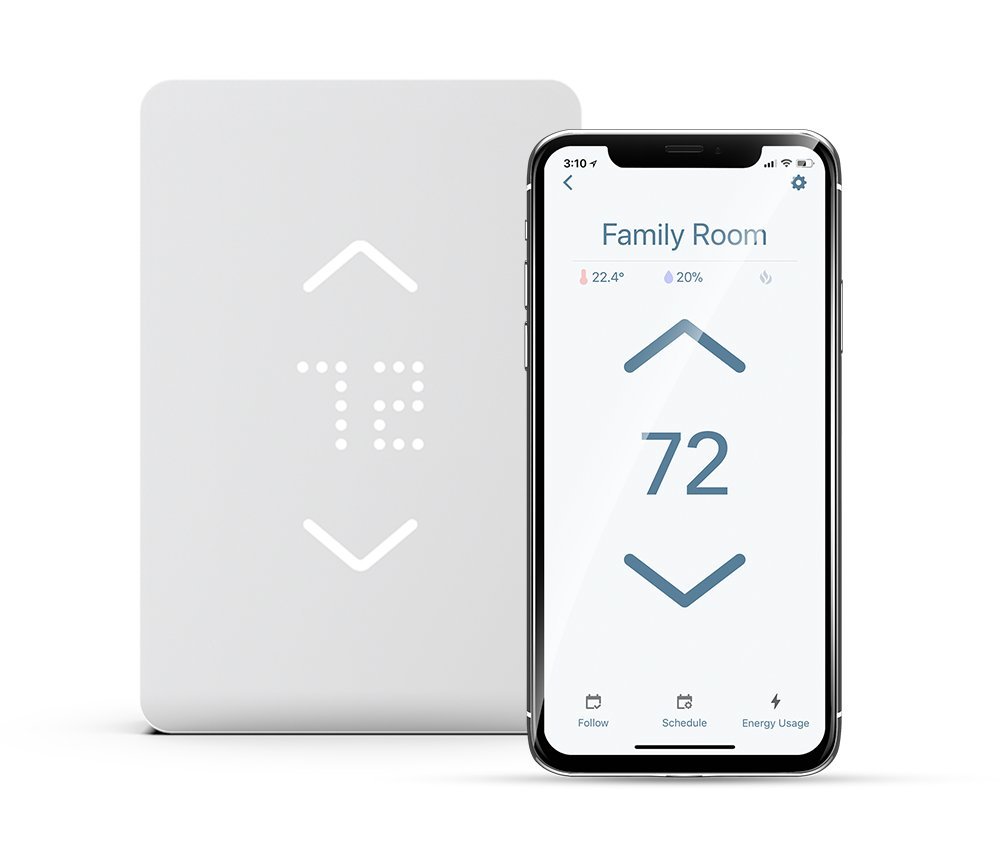
Take Mysa, for example, a smart home application that allows you to use your phone to control your heat. According to the company, the app can reduce your spend by up to 60% — and works with most electric baseboards.

mysa thermostat IoT

And then there are the smart leak detectors and water valve controllers. Leak detectors alert homeowners when water is detected in places it doesn’t belong. This allows you to get ahead of a burst pipe or leaky appliance before the damage spreads.
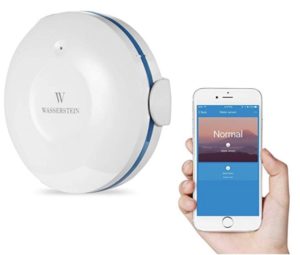
leak detector with app

A practical smart home application, a leak detection device can lead to major savings in damage.

Final thoughts

In the end, it’s interesting to see that 2019’s smart home innovations include more than speakers and screens. It might not be the year where we finally adopt IoT solutions across the entire home, but between the smart mirrors and the leak detectors, it’s clear that day is just around the corner.

Google Project Soli will make every object smart

How will Google’s new tech change our lives at home and work?

The Internet of Things has already changed our everyday lives: Turning on the lights with a clap of the hands, dictating shopping lists into the air, and letting everyone live out their Sci-Fi dreams. The fantasy has always been to live in a home where all our devices can communicate with each other, and we like to imagine we’re there. Then practicality sets in and you concede that you still have to get up off the couch to pick up the sandwich that you left on the counter.

Maybe we’re too lazy.

The biggest roadblock remains: In order to reach this new technological milestone we’d have to replace our “dumb” objects with far more expensive “smart” ones – a move we’re not ready to make. That’s not even getting into the privacy issues, the inevitable security breaches, the whole nine yards. Google formed Project Soli in search for an answer.

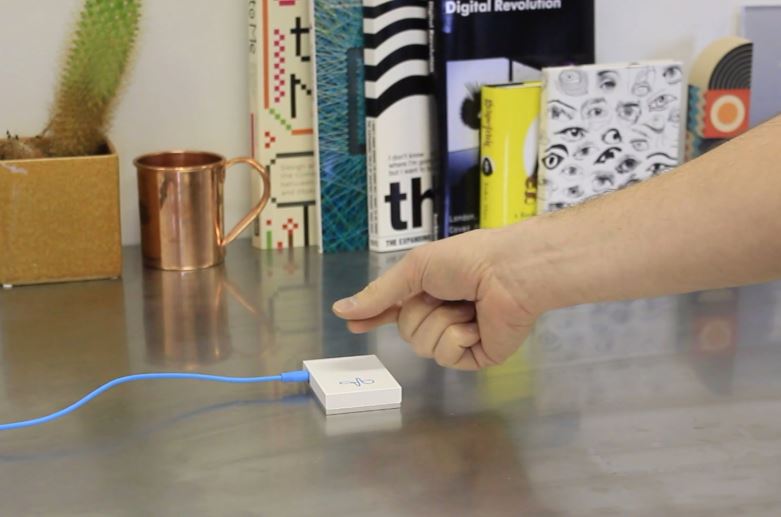
Adjust the volume by miming it.
Simple hand and finger gestures transmit unique signals to the tech.

Project Soli

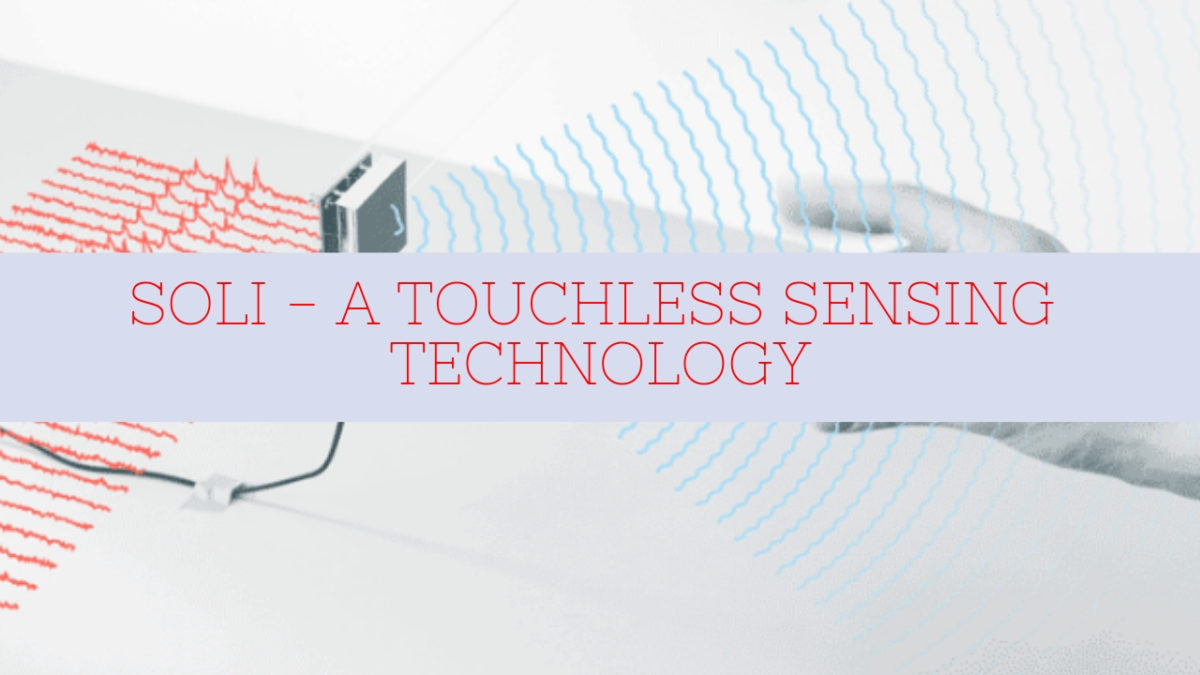
Project Soli’s focus was to use radar to accurately track hand gestures. It’s a simple idea that can now have far more interesting applications; Soli can detect the typical big motions, but it can also detect minute movements (of less than a millimeter) through obstructions and with extreme accuracy. “Radar has been used for many different things: To track cars, big objects, satellites, and planes,” says Ivan Poupyrev, the founder of Project Soli.

“We’re using the radio frequency spectrum to track micro motions of the human hand, and use that to interact with wearables, the Internet of Things, and other computing devices.”

That was four years ago.

Design Lead Carsten Schwesig says that “now we are at a point where we have the hardware where we can sense these interactions and we can put them to work.”

So how does it work?

Project Soli has designed extensive recognition software that sees gestures through radar. Certain patterns reflect human intent and the new technology can convey those intents to various devices around the house. “Imagine a button between your thumb and index finger,” says Schwesig.

How does one mime "get me a sandwich?"
If you can mime pushing a button, the sensor gets what you’re trying to convey.

“The button is not there, but pressing [as though it was] is a very clear action.” Radar can sense that action and attribute it to specific intentions. The past four years the team has taught the software to recognize a wide variety of physical signals:

How will this build a smart home?

“Soli interaction makes us realize we can interact with computers just using day-to-day objects,” explains Professor Aaron Quigley, Chair of Human Computer Interaction in the School of Computer Science at the University of St Andrews. “If I had this kind of sensor in, for instance, a regular kettle and a cup, it’s possible to detect them [with radar]. You can interact with them, and the computer will understand what you’re doing. Suddenly, every physical object in your home becomes a way to communicate with your computer.”

This could usher in a new level of digital art!
Soli recognizes gestures that make brush strokes on tablet thinner or thicker.

It’s 2019 now and radar chips are tiny, cheap, and low-powered enough to become ubiquitous in today’s market. A recent U.S. Federal Communications Commission waiver has even authorized Project Soli to utilize frequencies between 57 and 64 Ghz – higher frequencies that are commonly permitted in everyday gadgetry. This opens up even more possibilities for what Soli could do, and could mean we’re drawing excitingly close to where this powerful tech is regularly available.

Are you excited for a fully smart home, or do you think the inexorable privacy and security issues will quash any real profit from this excursion? Let us know in the comments below, and stay tuned for more news on Project Soli!

5 smart thermostats to help you control your home’s temperature and cut your energy bill

These smart thermostats will pay for themselves in just a few months.

thermostat

The world saw the first smart thermostat hit the mainstream market in 2011, when Nest released its Learning Thermostat. This innovative tool used Wi-Fi connectivity to program room temperature depending on homeowners’ schedules and the desired temperature inside their homes. Since then, smart thermostats have developed into highly effective tools for conserving both money and energy, generally saving 10 percent or more on energy bills every month for their users.

The technology is regarded as both sophisticated and environmentally friendly. But some smart thermostats have more advanced capabilities than others. Though our list is by no means comprehensive, below we’ve compiled a list of some of the newest and best smart thermostats available for purchase. Just follow our links to snag one from Amazon.

5 smart thermostats to help you control your home’s temperature and cut your energy bill

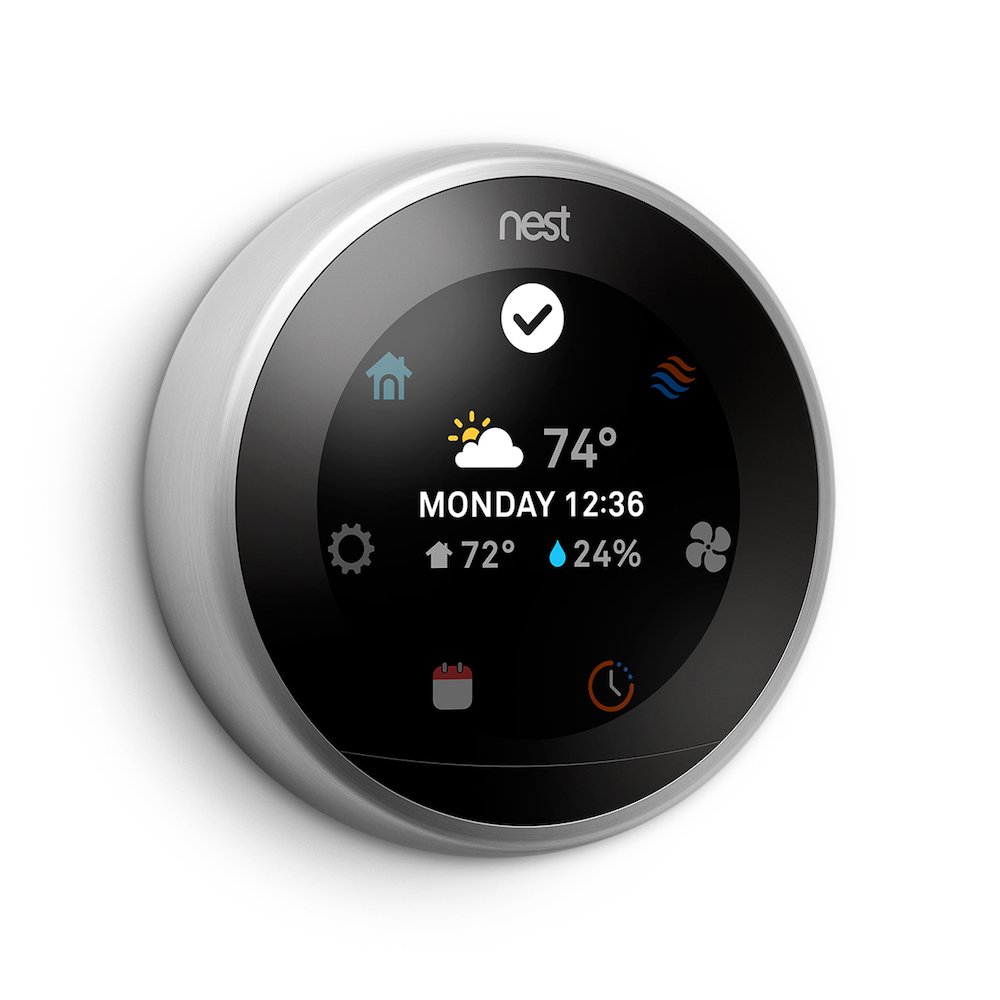
1. Nest Learning Thermostat (3rd generation)

Though competitors have recently been successful in releasing thermostats of equal quality, the Nest Learning Thermostat ranks high due to its easy-to-use interface, easy at-home installation process, and multi-stage compatibility with smart tech like Amazon’s Alexa and Google Assistant. The thermostat also includes geofencing: This feature detects when users’ phones have come within a certain distance of their homes and triggers the thermostat to turn on and begin cooling or warming a room.

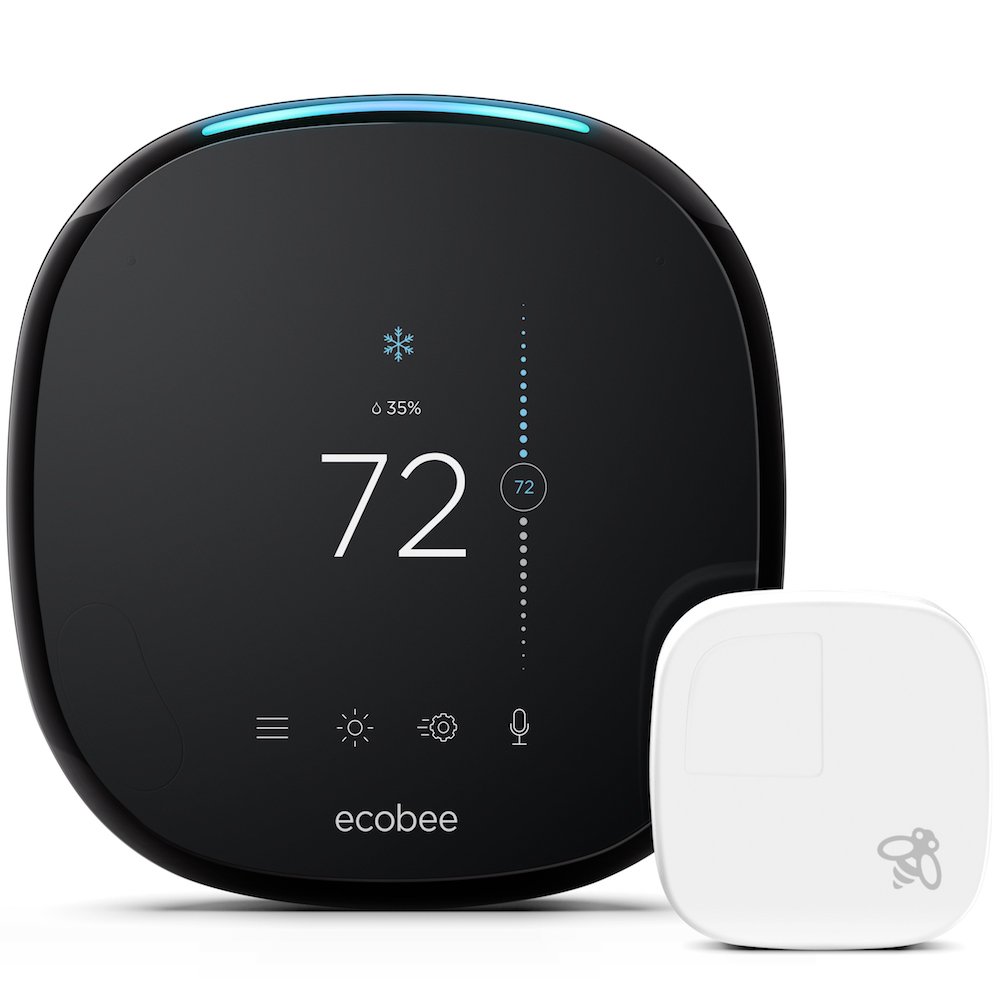
2. Ecobee4 Alexa-enabled thermostat with sensor

The Ecobee has all the same features as the Nest and then some, including a built-in compatibility with Alexa so homeowners can play music, listen to sports, and change the temperature by speaking aloud to the device. The Ecobee also has remote room sensors that can measure the temperature in a room and change it to the regular desired setting. This eliminates the need for a person to signal either nearby or on the app.

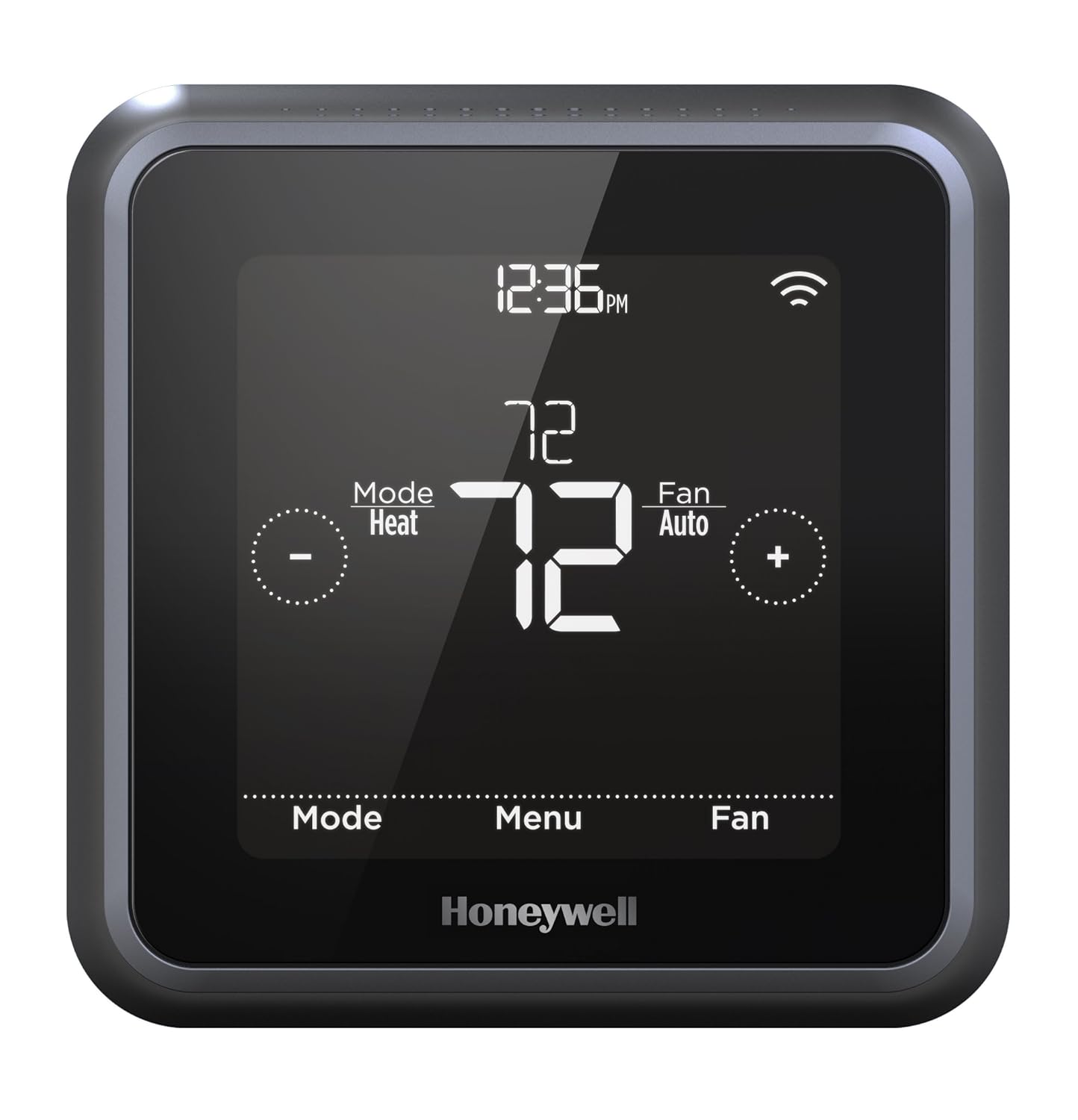
3. Honeywell Lyric T5 Wi-Fi thermostat

While this thermostat does not come with motion sensors, it does have built-in geofencing capabilities and can sync with Amazon Echo, Google Assistant, and Apple HomeKit. Users will also appreciate the sizable touch-screen display and low price.

From: Amazon

4. Lux/Geo Wi-Fi thermostat

Like the Lyric T5, the Lux/Geo thermostat is budget-friendly and includes important features like geofencing, smart speaker compatibility, and numerous scheduling options that can be controlled from a smartphone in a different location.

From: Amazon

5. Mysa Smart Thermostat

Though the Mysa Smart Thermostat didn’t make it onto many mainstream lists of 2018, the smart thermostat does weigh in as one of the only available HomeKit-compatible line voltage thermostats on the market. That means it can control baseboard heaters and fan-forced heaters. It is also a more affordable option.

If you’re thinking about investing in a smart thermostat, you should get familiar with your home’s wiring as well as the specific features you want in your device. In many cases, components like geofencing and motion sensors drive the price of the thermostat up. You may find that all you need is a simple device that can be controlled from a phone at a distance. Whatever you choose, look forward to saving money on your energy bill and living more comfortably in your own home after purchasing a smart thermostat.