The Lord of the Rings trilogy, directed by Peter Jackson, is recognized as a milestone in the history of cinema, but its path to success was marked by significant challenges, especially due to the intervention of producer Harvey Weinstein. In the late 1990s, Jackson had a clear ambition: to adapt J.R.R. Tolkien’s monumental work into three films, one for each book. However, Weinstein had other plans. He proposed to condense the story into a single two-and-a-half-hour film, compromising the integrity of the original material. Weinstein, evil to the core The resistance of […]
The Lord of the Rings trilogy, directed by Peter Jackson, is recognized as a milestone in the history of cinema, but its path to success was marked by significant challenges, especially due to the intervention of producer Harvey Weinstein. In the late 1990s, Jackson had a clear ambition: to adapt J.R.R. Tolkien’s monumental work into three films, one for each book. However, Weinstein had other plans. He proposed condensing the story into a single two-and-a-half-hour film, compromising the integrity of the original material.
Weinstein evil to the core
Jackson’s resistance to Weinstein’s dictates led to enormous pressure. The producer threatened to replace him with renowned directors like Quentin Tarantino or John Madden, which underscored the vulnerability of Jackson’s position in an industry dominated by big names. This situation reached a critical point when Weinstein gave Jackson a week to find another studio willing to finance the trilogy, jeopardizing one of the most anticipated projects in cinema.
Fortunately, luck smiled on Jackson when Bob Shaye, founder of New Line Cinema, decided to back the full vision of the project. The final result not only managed to faithfully adapt Tolkien’s work, but it also became a global phenomenon, grossing nearly 3 billion dollars and winning 17 Academy Awards. However, the memory of the treatment received from Weinstein lingered in Jackson’s mind, who even subtly included traits of the producer in the design of an orc in The Return of the King as a form of symbolic revenge.
Now, years later, it is evident that while Jackson’s legacy remains alive, Weinstein faces a completely different fate, serving a sentence for multiple sexual offenses, highlighting an important lesson about justice in Hollywood.
If trilogies are so famous, it is because of The Lord of the Rings. No trilogy has had such an impact and has shaped a genre so radically. Thinking of fantasy without thinking of Tolkien’s work in general, and The Lord of the Rings in particular, is impossible. Without The Lord of the Rings, we wouldn’t have Dungeons & Dragons, nor 99% of contemporary fantasy stories. This demonstrates the power of its legacy: it created, by itself, what the genre is today. That makes […]
If trilogies are so famous, it’s because of The Lord of the Rings. No trilogy has had such an impact and has shaped a genre so radically. Thinking of fantasy without thinking of Tolkien’s work in general, and The Lord of the Rings in particular, is impossible. Without The Lord of the Rings, we wouldn’t have Dungeons & Dragons, nor 99% of contemporary fantasy stories. This demonstrates the power of its legacy: it created, by itself, what the genre is today.
This makes its importance crucial. And there are always people willing to bring back the trilogy in one way or another. Something that happened with particularly resounding success at the turn of the century when New Line Cinema decided to make the most epic and beloved trilogy of films in the history of cinema.
The film trilogy of The Lord of the Rings by Peter Jackson does not have the cultural impact that the novels had, because that is impossible, but they were a mass phenomenon. Everyone went to the cinema to see them, and it was a financial, critical, and awards success without absolutely any precedent. Something that made the absolute failure of its subsequent continuations even more surprising, something we are going to review today. Because we know you are eager to have an excuse to watch the movies again.
The Lord of the Rings trilogy premiered in 2001. Filmed simultaneously between October 11, 1999, and December 22, 2000, in New Zealand, it had a then-disproportionate budget of 281 million dollars, equivalent to about 530 million dollars when considering inflation. The three films were released in quick succession: The Fellowship of the Ring would premiere in 2001, The Two Towers in 2002, and The Return of the King in 2003. An exceptional fact, given that films are usually not shot simultaneously. But in this case, it helped to cement their success.
Upon their release with little waiting time, the films managed to capture the audience’s attention and the enthusiasm did not wane. Maintaining the interest of critics, the public, and the academy throughout the entire trilogy. Something that became evident through the numbers.
The Fellowship of the Ring grossed $887.8 million, The Two Towers reached $938.5 million, and The Return of the King made it to $1.1 billion. An exceptional fact, as it is normal for movie series to tend to earn less money with each new installment. But the rapid release of new installments, along with their quality, attracted more people to each new premiere, resulting in increased revenues.
What were the reasons for its success? Generally, it has been considered that fidelity to the novels, the strength of its direction, its enormous production values, and the quality of its performances are the main factors that captivated the general public. Although the fidelity to the novels was questioned at the beginning for not adapting certain parts of The Fellowship of the Ring, leaving out characters like Tom Bombadil, which later versions of the film showed were better off that way.
It swept even more in the houses
In fact, the movie was an even greater success in home formats. With numerous editions on DVD and Blu-ray, the three movies would have extended versions that would first be released in home format, but later would also be shown in theaters. This would extend the total runtime of the trilogy from 558 minutes to 683.
There are conflicting opinions about which of the two versions is better. According to some, the purest way to watch the movies is the extended versions, because they leave nothing out. According to others, the original versions are better because everything that was originally cut was for a reason, and it is noticeable in the excessively slow pace of the extended versions. A debate that still continues today among fans of the movie trilogy.
There was no doubt that they were masterpieces. Both critics and the academy agreed. With an average of over 90% on Rotten Tomatoes and a 9 on Metacritic, it is a tremendously respected trilogy. But nominated for 30 Academy Awards, with The Return of the King being the big winner, taking home 11 of them, including Best Director, Best Picture, and Best Adapted Screenplay, it demonstrates why they were an absolute cultural milestone. One that we have not experienced again and that, probably, we will never experience again: there was an absolute consensus on the quality of these films, and no one would have dared to question it.
A hobbit who couldn’t
That’s why everyone was eagerly awaiting the next from Peter Jackson and what would come from the Tolkien universe. Which was disappointing. Making several films in between, he released the Hobbit film trilogy between 2012 and 2014, resulting in a notable box office success, but a tremendous critical and awards fiasco. With the audience turning their backs shortly after.
What happened? To begin with, The Hobbit is a tale, not a trilogy of novels. The treatment as a trilogy of films made no sense. Furthermore, the excessive use of CGI, questionable direction, and performances that left much to be desired made it everything that the Lord of the Rings trilogy was not. It felt cheap, shabby, and not epic. Like one of those low-budget fantasy films where, instead of with enthusiasm, they try to disguise all the things where they lack imagination or money with second-rate effects.
After this, The Lord of the Rings spent several years dozing. It has had its ups and downs, with various series and movies, but nothing has achieved the success and significance of the original trilogy of The Lord of the Rings films. They are now returning to HBO Max so you can watch them in the comfort of your home, remembering something important: we are living through a historic event for culture, and we knew it. Because it was impossible not to know, when we were going to watch the trilogy of The Lord of the Rings films, that this was our Star Wars. And that only happens once per generation. If it happens at all.
In December 2001, the world of cinema witnessed the premiere of The Lord of the Rings: The Fellowship of the Ring, an ambitious adaptation directed by Peter Jackson of J.R.R. Tolkien’s masterpiece. This release marked the beginning of a trilogy that, in its three installments, grossed nearly 3 billion dollars and won 17 Academy Awards, cementing its place as one of the most iconic sagas in fantasy cinema. A golden era of fantasy and J.R.R. Tolkien The year 2001 stood out as a golden period for fans of the fantasy genre, as […]
In December 2001, the world of cinema witnessed the premiere of The Lord of the Rings: The Fellowship of the Ring, an ambitious adaptation directed by Peter Jackson of J.R.R. Tolkien’s masterpiece. This release marked the beginning of a trilogy that, across its three installments, grossed nearly 3 billion dollars and won 17 Academy Awards, cementing its place as one of the most iconic sagas in fantasy cinema.
A Golden Age of Fantasy and J.R.R. Tolkien
The year 2001 stood out as a golden period for fans of the fantasy genre, as Harry Potter and the Sorcerer’s Stone was also released in November. However, the first glimpse of The Lord of the Rings dates back to May 25 of that same year, when New Line Cinema unveiled the first trailer, increasing anticipation among fans and introducing renowned actors such as Elijah Wood, Ian McKellen, Orlando Bloom, and Viggo Mortensen. Despite initial doubts about the viability of such an ambitious project, the first images generated great hope that Jackson could meet the high expectations.
The trilogy was not only a box office success, but it was also praised for its fidelity to Tolkien’s work and its ability to attract both critics and fans. Since the success of The Lord of the Rings, Tolkien’s universe has expanded through various adaptations, including the Hobbit trilogy and the Amazon series The Rings of Power, which is currently in development for its third season.
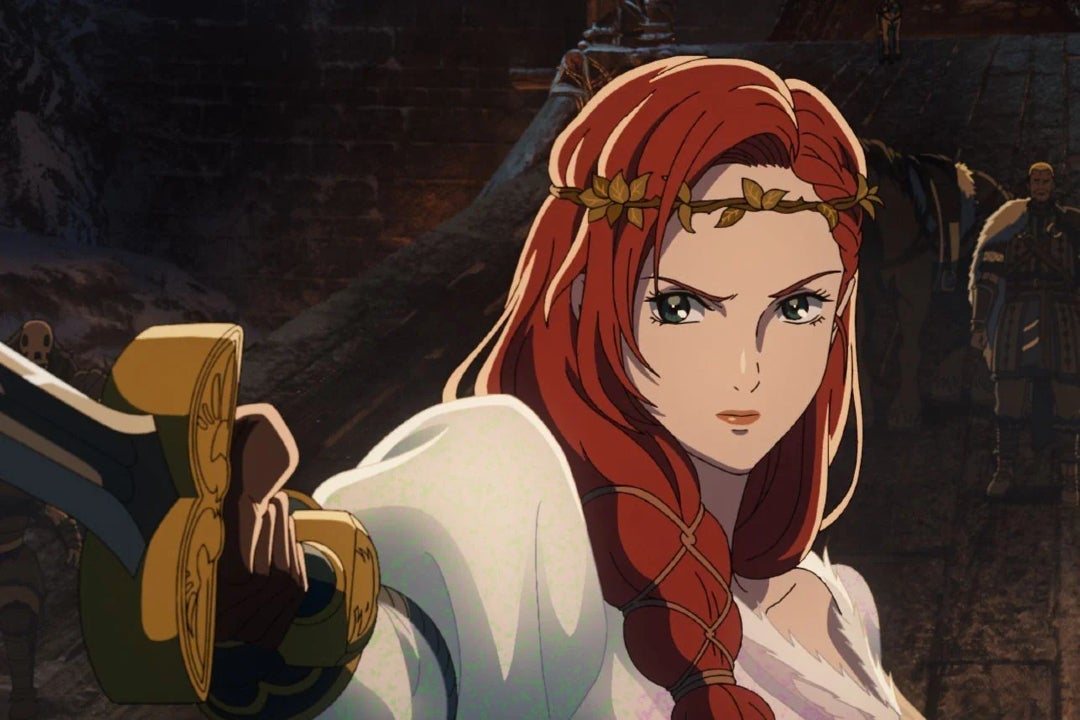
With the ongoing adaptations, including the animated film The Lord of the Rings: The War of the Rohirrim released in 2024 and The Hunt for Gollum, directed and starring Andy Serkis, it can be anticipated that Tolkien’s legacy will continue to thrive in cinema and television in the years to come. And that they can now be enjoyed streaming on Amazon Prime Video.
Ubisoft Montpellier released in 2005 Peter Jackson’s King Kong: The Official Game of the Movie, a video game that, although it received mixed reviews at the time of its release, stood out for its ambition and innovative gameplay. Developed in less than two years, the creation of the game was designed to synchronize its release with the film by the renowned director, who played an active role in its development. A game that was a challenge for multiple reasons Peter Jackson, acclaimed for his work on the Lord of the Rings trilogy, was excited to collaborate with Ubisoft, especially because it was […]
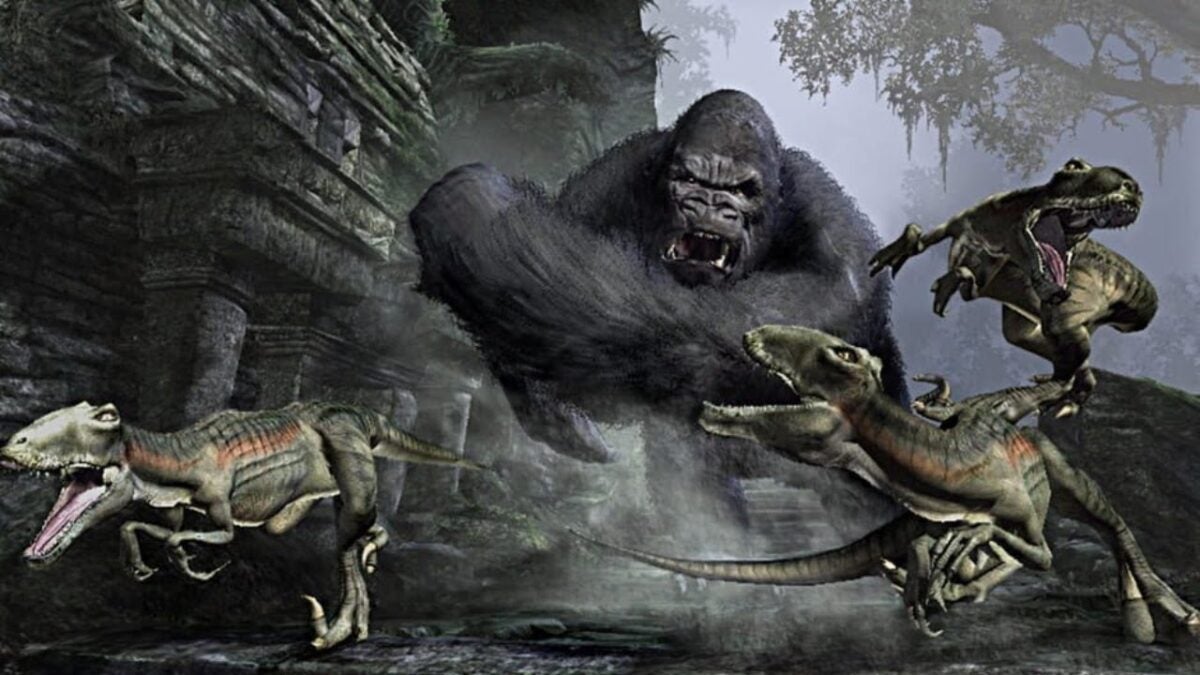
Ubisoft Montpellier released in 2005 Peter Jackson’s King Kong: The Official Game of the Movie, a video game that, although it received mixed reviews at the time of its release, stood out for its ambition and innovative gameplay. Developed in less than two years, the creation of the game was designed to synchronize its release with the film by the well-known director, who played an active role in its development.
A game that was a challenge for multiple reasons
Peter Jackson, acclaimed for his work on the Lord of the Rings trilogy, expressed excitement about collaborating with Ubisoft, especially because he was a fan of another title from the studio, Beyond Good & Evil. From the beginning of the project, Jackson contributed significantly, even requesting changes to the character design. A notable example was the reconfiguration of King Kong’s face, based on feedback from his son after trying a preliminary version of the game.
The Ubisoft Montpellier team faced a significant challenge due to the lack of access to complete data about the film’s production, which forced them to turn to the 1933 movie to define the artistic direction of the video game. As explained by the art director Florent Sacré, photographs were taken of the Cévennes region in France, which were used to create the textures and materials of the game’s natural environment.
Despite the criticism it received at launch, the game stood out for its survival and combat-focused experience, with a HUD-less presentation that clearly marked an attempt to innovate in film adaptations. Although “King Kong” is not considered a timeless classic, it is still remembered for its creativity and while its flaws can be attributed to its short development cycle, it left a mark on the movie-based game genre.
The Alien saga has been an emblem of science fiction cinema since its beginnings, but few chapters have generated as much controversy as Alien: Resurrection, released in 1997. Considered by some as a risky and original installment, the film did not achieve the same level of enthusiasm among all fans. A notable element of the production is the mix of human and alien DNA that allows the resurrection of Ripley, played by Sigourney Weaver, which was met with skepticism by many followers of the franchise. Alien with a Spanish accent Prior to its arrival in the hands of Jean-Pierre Jeunet, renowned […]
The Alien saga has been an emblem of science fiction cinema since its inception, but few chapters have generated as much controversy as Alien: Resurrection, released in 1997. Considered by some as a daring and original installment, the film did not achieve the same level of enthusiasm among all fans. A notable element of the production is the mix of human and alien DNA that allows the resurrection of Ripley, played by Sigourney Weaver, which was met with skepticism by many followers of the franchise.
Alien with a Spanish accent
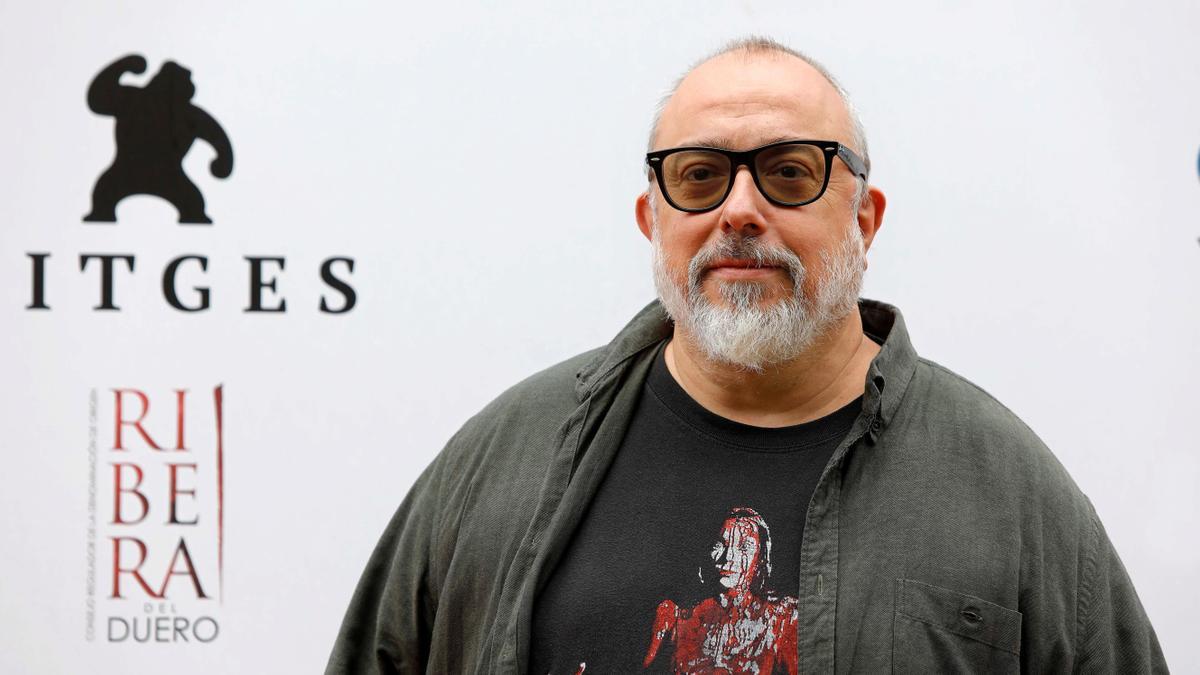
Before it came into the hands of Jean-Pierre Jeunet, renowned directors such as Álex de la Iglesia, Danny Boyle, and Peter Jackson showed interest in directing this fourth installment. De la Iglesia, in an interview, revealed that he received the offer while he was on the set of Titanic, although he already had a commitment with Perdita Durango, which prevented him from accepting the proposal. Despite this, the Spanish director confesses that he would have liked to be part of such an iconic saga.
Since its release, Alien: Resurrection has had a polarized reception both at the box office and among critics. The film grossed 161 million dollars worldwide, an amount that, although solid, fell short of expectations and the earnings of previous installments. This project is framed within a problematic context for the franchise, which was seeking revitalization after the mixed reviews of Alien 3.
For fans who want to relive the saga, all the Alien installments are currently available on Disney+. This offer allows both new viewers and veterans to enjoy Ripley’s adventures, as well as the different visual and narrative styles that have characterized each installment. At a time when debates about the creative directions in the franchise are resurfacing, this is a good moment to reflect on its legacy.
Tom Bombadil, Imrahil or the first of the ent to charge against Isengard are among the characters who are not in the movies and with a letter in The Lord of the Rings: Tales of Middle-earth.
Adaptations of literary works to other media are always accompanied by a mixture of excitement and tension. Excitement to see the characters coming to life, taking shape in a way we could never have imagined, with the story unfolding before our eyes in a different way than we had experienced it before. Tension, too, because it implies facing the unknown of whether they will know how to adapt it, whether they will understand what makes it special, whether it will really be a good adaptation or, as so many times before, it will be an absolute disaster.
The Lord of the Rings was not spared from this mixture of illusion and tension. Fortunately, the adaptation was fantastic. Peter Jackson and his team knew how to not only adapt the books, but also adapt them to contemporary sensibilities, making them more accessible, vibrant and current. Almost as if they were a work of the present, not the past.
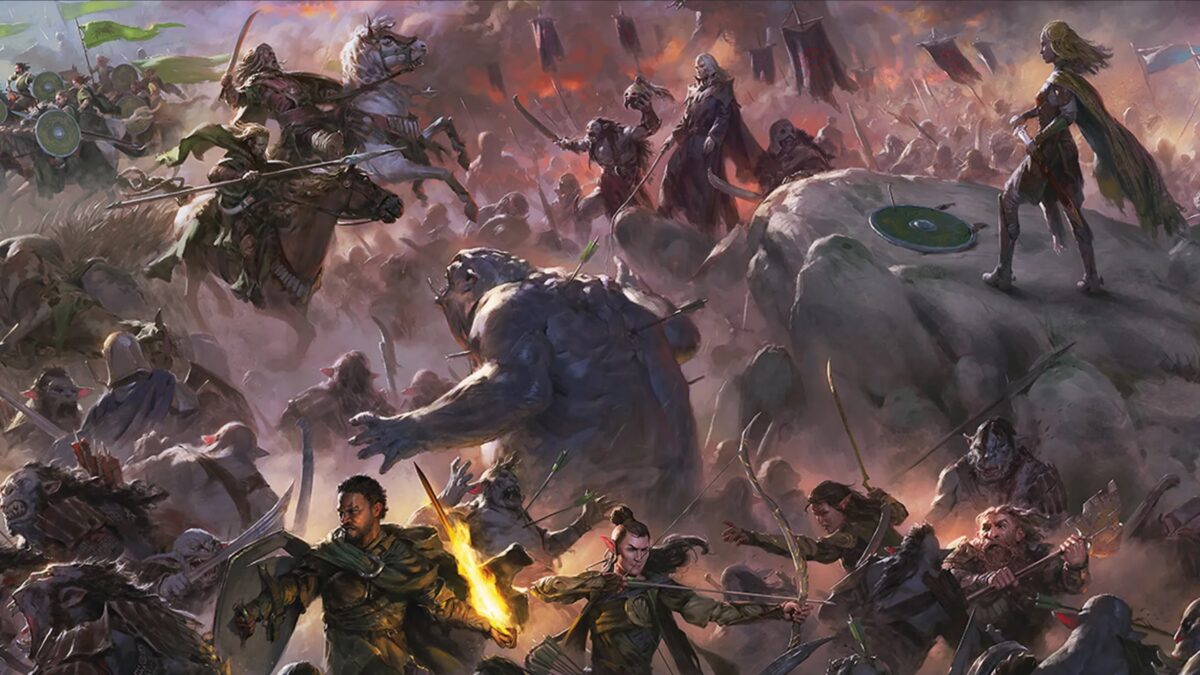
Its only problem is that, being a movie and having a limited space, many mythical and beloved characters could not make their way into it. Something that has not happened in another adaptation as meritorious as the movies, such as The Lord of the Rings: Tales from Middle-earth. That is why today we are going to review all the cards that represent characters that appear in the books and do not appear in the movies and how they are represented on the cards, seeking to characterize them through the game mechanics themselves. Because Peter Jackson did an amazing job, but so has Wizards of the Coast.
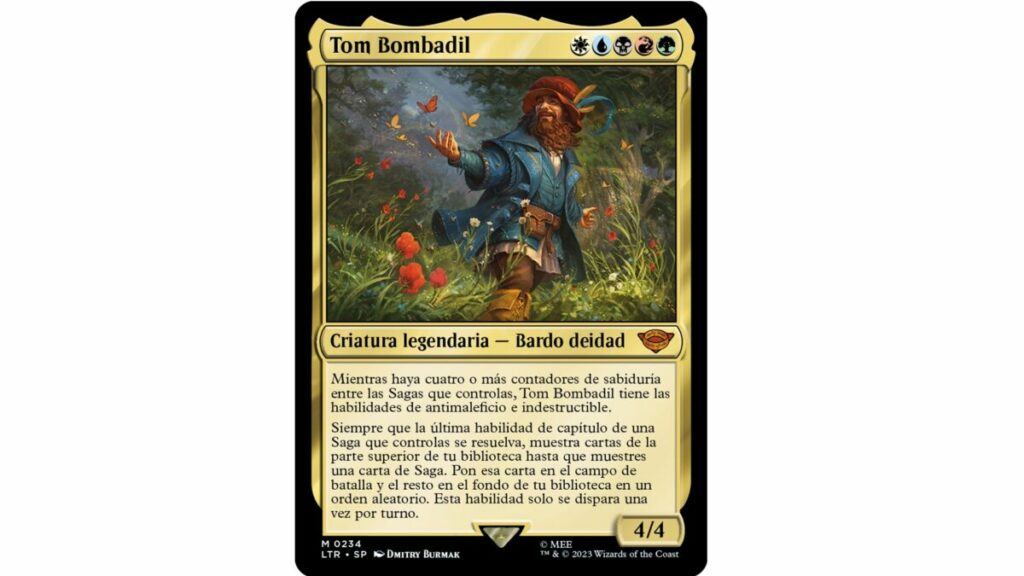
Tom Bombadil
One of the great missing from Peter Jackson’s adaptation of The Lord of the Rings was Tom Bombadil; someone so powerful that, during the Council of Elrond, the Fellowship of the Ring considered giving him the One Ring for safekeeping, as not even Sauron would have dared to enter his domain. To his misfortune, Tom Bombadil was more interested in naps, smoking, eating, drinking, and being with his wife, Goldberry, and that made it a logical cut in the movies. Even if it is an excellent card for Commander players.
Having the five colors of the game in his cost, his abilities are related to the Sagas: cards that represent ancient stories and events that happened in the past. The more sagas there are on the battlefield the more powerful Tom Bombadil is, thus demonstrating his power. He is old, wise and always has knowledge to fall back on. Something that in terms of how to build the deck makes it very easy how to build a Tom Bombadil deck. Sagas of all sorts of colors, creatures and enchantments to ensure we have all five colors, and good old Tom Bombadil will show us why even Sauron himself feared him.
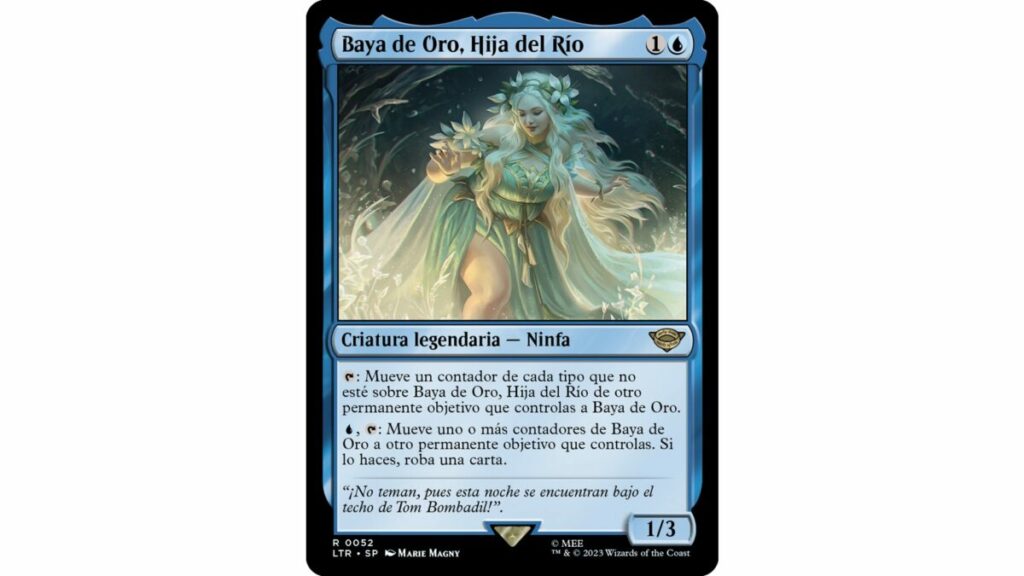
Gold Berry
Known as the Daughter of the River, named more than once as the most beautiful woman in Middle-earth, Goldberry is the wife and companion of Tom Bombadil, and lives with him in his shelter in the Old Forest. Although it is true that her role in the book is more anecdotal, acting as support for her husband, that does not detract from the fact that she is a character that many fans of the franchise are fond of, and have a lot of respect for all the power that she has always been understood to possess.
In playable terms, this is shown by her nymph abilities. With minimal cost, she is able to move counters of any type between other permanents and Goldberry and from Goldberry to other permanents. If left unanswered and we have other cards that create synergies with Goldberry, being able to straighten it after turning it, it can become an infinite value machine very much to be reckoned with. One that does nothing on its own? Perhaps not. But as in the novels, even if Goldberry is not by herself the most powerful person in Middle-earth, without her support it is inconceivable that the Company of the Ring would have even made it to the Council.
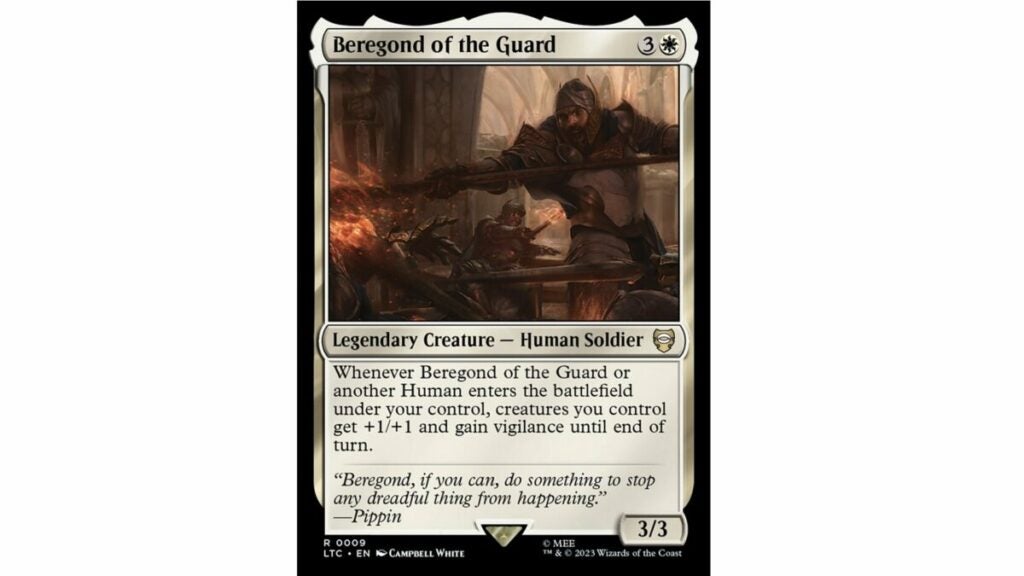
Beregond was the first captain of the White Company of Gondor, the guard of Faramir, brother of Boromir. Ignored in the films, Beregond was the one who accompanied Pippin when he arrived at Minas Tirith, and also the one who confronted the city’s Guards during the chapter of Denethor’s Pyre. He was also the one who marched alongside Aragorn in the battle of the Black Gate, which means that although it is understandable his lack of importance in the movies, the reality is that he is a capital character for the story: he was always there, acting as a leader and protector for his troops.
In fact, that’s its function as a card. Beregon of the Guard is a 3/3 for four mana, which isn’t too impressive, but when it enters the battlefield it gives +1/+1 and vigilance to all your creatures. Why? Because it inspires them. It gives them strength. When Beregond arrives, everyone knows that they are facing a reliable leader with whom nothing bad can happen. If they lead them, they will succeed. That’s why, every time a Human-type creature enters the battlefield, the same thing happens again. It grants +1/+1 and vigilance to all your creatures. Because reinforcements, when you are leading the Beregond army, you know they make you unstoppable.
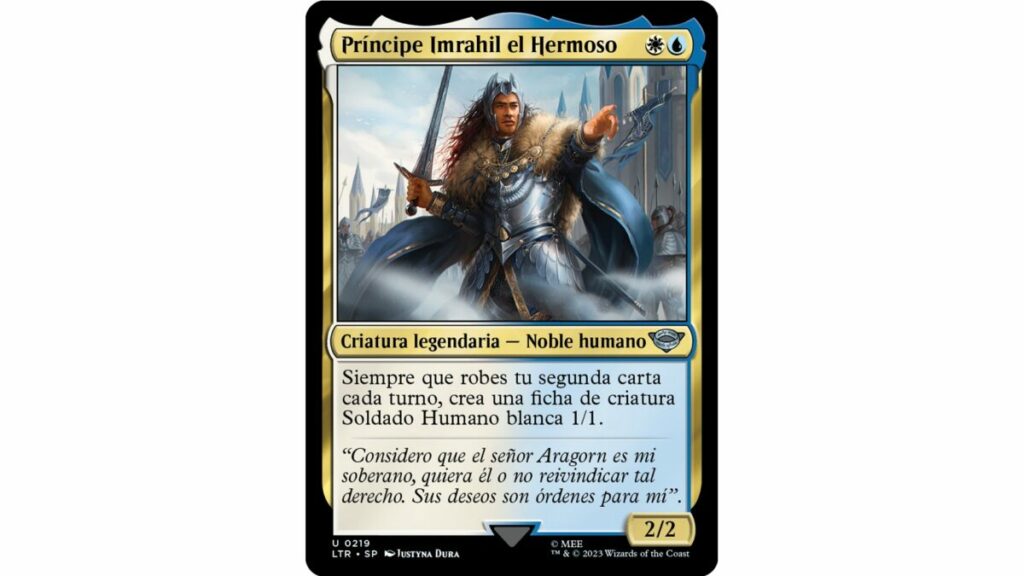
Prince Imrahil
The uncle of Boromir and Faramir also makes an appearance in Tales of Middle-earth. During the War of the Ring, Imrahil accompanied Gandalf out of Minas Tirith to rescue Faramir on his suicidal crusade from Osgiliath, and also took part in the defense of the city against the Nazgul. He survived all this and, in fact, it was he who brought Eowyn to the Houses of Healing after the battle of the Pelennor Fields. Something that translates in a very peculiar way within the game.
Prince Imrahil the Fair is an azorius creature, white and blue in color, that every time you draw your second card each turn, creates a white 1/1 Human Soldier creature token. It is he who at all times believes that Aragorn is the true rightful heir to the kingdom of men and puts his armies at his disposal. That is why he seeks to create as much advantage as possible. Drawing more cards, to have more strategic options, and thus have more soldiers, thanks to his passive ability. A demonstration of Prince Imrahil’s dedication to his king.
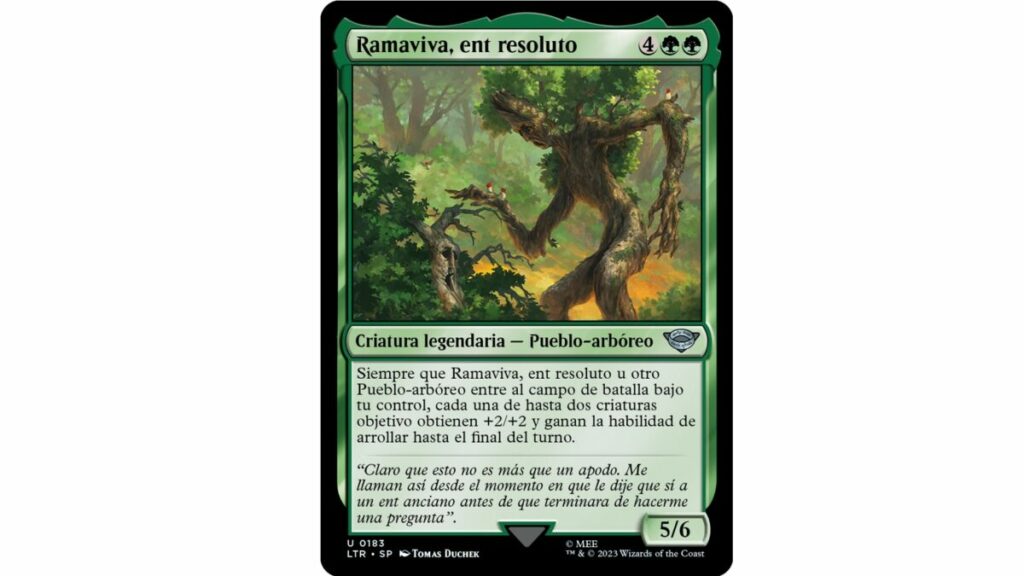
Among the most peculiar creatures created in The Lord of the Rings are the Ent, sentient trees that are just another race like humans, elves, or dwarves. Among these, Ramaviva, affectionately known by fans of Tolkien’s universe as the fastest Ent, was one of the youngest Ent among those who participated in the House of Ents, the meeting in which they decided to put an end to Saruman’s nefarious influence over their lands. In fact, it was Ramaviva who was the first to attack Isengard and who took charge of Merry and Pippin during the conflict, both of whom were unharmed thanks to him.
When it comes to translating this in terms of gameplay, Wizards of the Coast wanted to bring these two facets together. To show that he is an Ent that cares about others, but at the same time, that he has an impulsive and brutal side. That’s why every time he enters the battlefield, or when another Arboreal-People does, up to two target creatures get +2/+2 and gain the ability to run over until the end of the turn. Something that makes it a protector, in its own way, but above all a real bulldozer capable of finishing many games if there are other sides on the field to help it pass over the enemy troops.
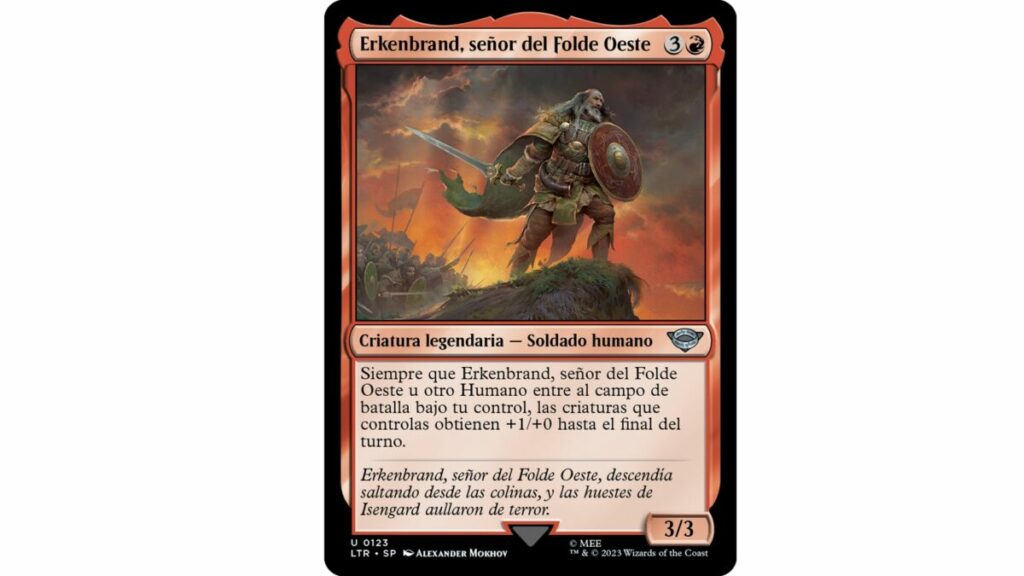
Erkenbrand
If there is one character that even many fans of the Lord of the Rings books would not know who he is, it is Erkenbrand. Lord of the West Folk in Rohan during the War of the Ring, he was in charge of defending the West Folk from the Orc invasion until Gandalf’s arrival, then joining him in the battle of Helm’s Deep. Although he does not appear in the movies and in fact, all his actions are transferred to Éomer, he is a very important character in the books, as he was the one who restrained Saruman, preventing Rohan from falling.
In Magic: The Gathering’s Tales of Middle-earth collection, he stars as a red monkey creature that every time he or another Human enters the battlefield, he makes all your creatures get +1/+0 until the end of the turn. This is explained by the fact that he spent a very long time defending himself against Saruman’s orcs, but also because it took him three days to march with Gandalf to Helm’s Deep. Not on a whim, but because they spent three days searching for every last person in Folde West who could still wield a weapon to fight in the bloodiest battle so far of The War of the Ring; a battle in which they were victorious, thanks to Gandalf’s power, but also to Erkenbrand’s steely leadership.