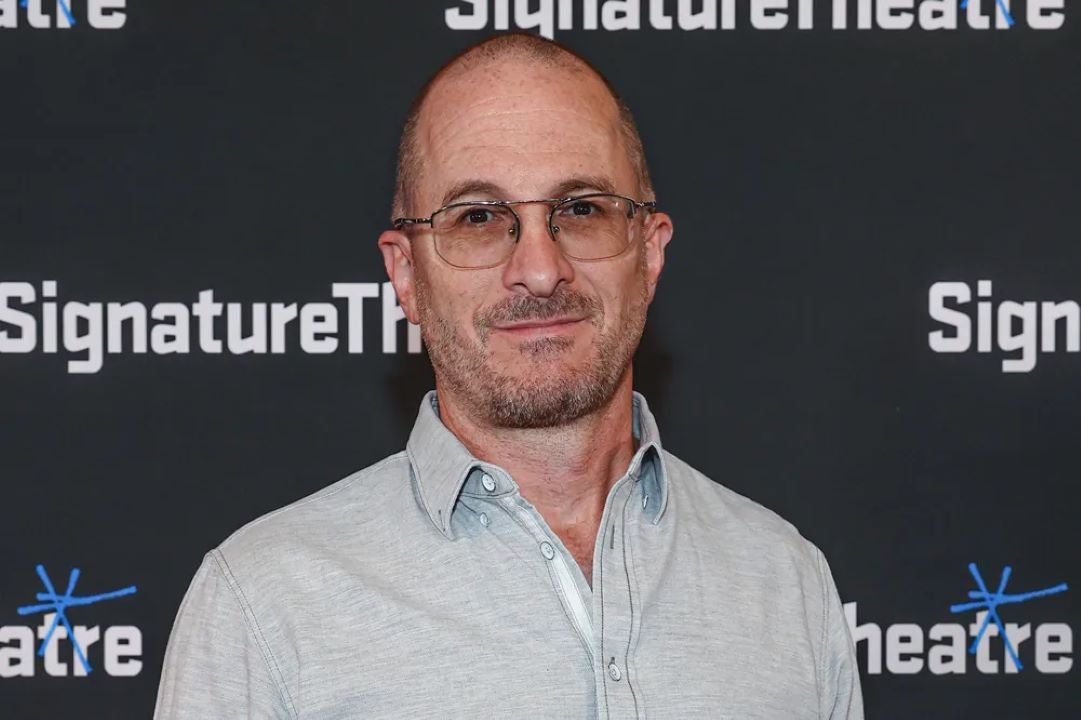
Darren Aronofsky, the acclaimed director known for his work on films like Requiem for a Dream and Mother!, is in preliminary talks to direct a new adaptation of Cujo, the famous horror novel by Stephen King. This work, which tells the story of an infected Saint Bernard that becomes a dangerous and bloodthirsty predator, has captured the director’s attention, who could make the leap to the streaming platform Netflix with this project. A project that undoubtedly creates a lot of curiosity for us. How will Aronofsky approach the story of this killer dog? According to sources with knowledge […]
Darren Aronofsky, the acclaimed director known for his work on films like Requiem for a Dream and Mother!, is in preliminary talks to direct a new adaptation of Cujo, the famous horror novel by Stephen King. This work, which tells the story of an infected Saint Bernard that becomes a dangerous and bloodthirsty predator, has captured the director’s attention, who could make the leap to the streaming platform Netflix with this project. A project that undoubtedly creates a lot of curiosity for us.
How will Aronofsky approach the story of this killer dog?
According to sources familiar with the matter, Cujo is still in the early stages of development and, so far, no creative meetings have taken place between Aronofsky and Netflix executives. Although the director has expressed interest in the project, agreements still need to be formalized for it to officially move forward. If it materializes, this film would mark Aronofsky’s first feature film for the platform, expanding his already diverse filmography and the horror content offering on Netflix.
King’s original novel, published in 1981, has been a constant source of inspiration in the horror genre, and the story of the rabid dog has resonated with several generations of readers and filmmakers. The possibility of a new interpretation by Aronofsky, known for his innovative and emotionally resonant approach, could offer a fresh and chilling perspective on the original material.
Fans of horror movies and Aronofsky’s work are keeping an eye on the developments of this project, which could revitalize a story that has left an indelible mark on popular culture. Although there is still uncertainty about the final direction of Cujo, the initial conversations are a promising sign for horror movie fans.
The classic humorous horror anthology, Creepshow, returns in audiovisual format, but this time it is not a film
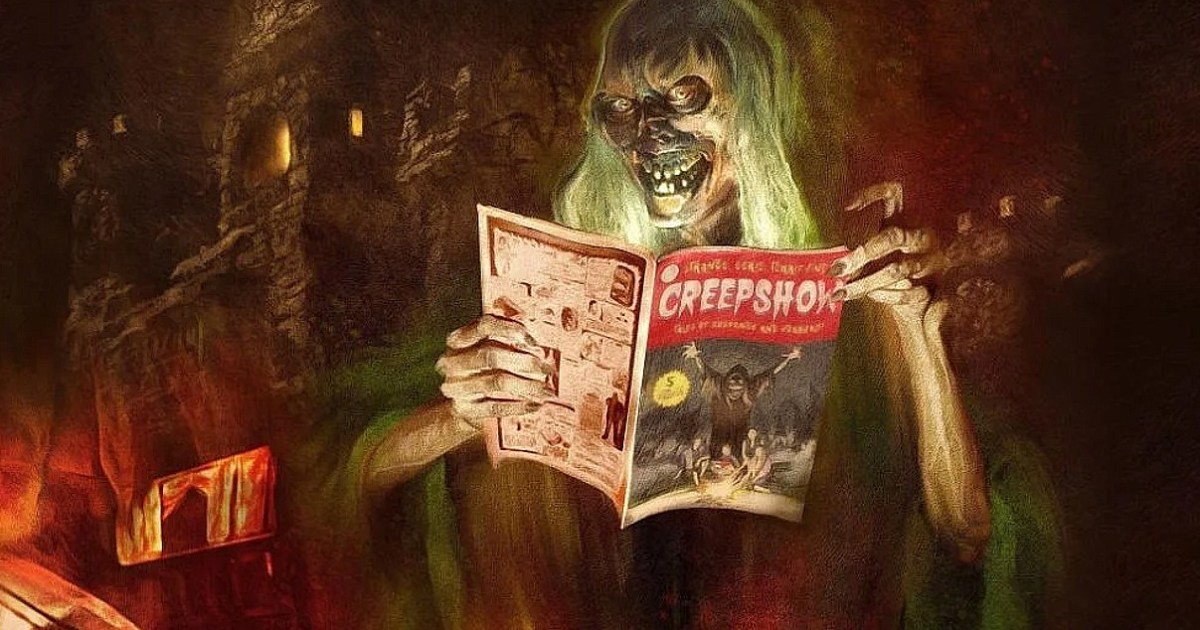
Creepshow is a name that, for many, will evoke a little tingle at the base of the back. A little spook of terror; a slight shiver combined with a half smile, the memory of a storytelling monster a little too obsessed with the morbid, the macabre and black humor. Because Creepshow is one of the best horror comedy anthologies ever, and now it’s back, albeit in an unexpected way.
For those who do not know Creepshow, it is a 1982 film that paid homage to the 50s comic books of EC Comics as Tales from the Crypt or The Vault of Horror, written by Stephen King and directed by George A. Romero. With an epilogue and prologue acting as the nexus of the five stories told throughout the film, the whole is a wonderful horror comedy that seeks to create horror stories that feel like the comic book stories they seek to pay homage to. Something that is helped along by the presence of Tom Savini doing practical effects for the film.
Being a critical and public success, it will have two sequels, the second of relative success, and a television series in 2019, which premiered its fourth season just a week ago. Something that makes it one of the longest running humorous horror franchises in the US, and probably, the most beloved of those still active today.
This comes as a coalition that last October 19, during the Indie Horror Game Showcase, a game based on Creepshow was announced. Without a release date, with a brief 2024 and promising that it will be multiplatform, we only know that it will be an anthology of horror games born from the collaboration between Shudder, current owners of the franchise, and DreadXP, creators of excellent horror anthologies such as Dread X Collection. That and that its creative director will be Brian Clarke,creator of the quite terrifying The Mortuary Assistant.
To know more about this anthology we will still have to wait until next year. But being DreadXP, who have published under their wing some of the best humorous horror games of the last few years, the franchise is in good hands.
Stephen King, the unbeaten horror genius, has said that he is fine with nurturing her with his books because she is an unstoppable force. It influences that he is 75 years old and life more than solved, of course.
It could be the plot of one of his novels (an evil artificial intelligence taking over humanity), but the truth is that, to everyone’s surprise, Stephen King, the undefeated genius of horror, has said that he’s okay with feeding it with his books because it’s an unstoppable force. It helps that he’s 75 years old and has life more than sorted out, of course.
The writer of masterpieces like ‘The Long Walk,’ ‘Rita Hayworth and Shawshank Redemption,’ or ‘The Green Mile’ (and others, let’s not deny it, not such masterpieces precisely) has published an article in The Atlantic about AI, a debate that is now in the spotlight of all discussions due to the writers’ and actors’ strike. His position is neither positive nor negative, but that of someone shrugging and taking it for granted that he has no choice but to go along.
“I see this possibility with a certain ghastly fascination. Would I forbid the teaching (if that’s the word) of my stories to computers? No, even if I could.” King appears resigned but somewhat hopeful: there can’t be creativity without consciousness, and there are some AIs that are starting to develop it. However, the work, for now, seems to him “like movie money: good at first sight, not so good when you look into it closely.”
“Does it make me nervous? Do I feel like they’ve invaded my territory? Not yet, probably because I’ve reached a fairly advanced age.” King seems to be one of the few individuals in the industry who doesn’t take a radical stance against AI: in the United States, they shut down Prosecraft, a platform that used artificial intelligence to analyze thousands of pirated novels, ironically including about twenty of the horror genius from Maine himself.
By the way, the writer still has a long way to go before retirement: he publishes at least two books a year, almost always, and is as respected by the industry as he is by fans. Could an AI write a sentence like “If being a kid is learning how to live, then being an adult is learning how to die”? Allow me to doubt it.
What if we told you that the King of Terror was about to throw everything away?
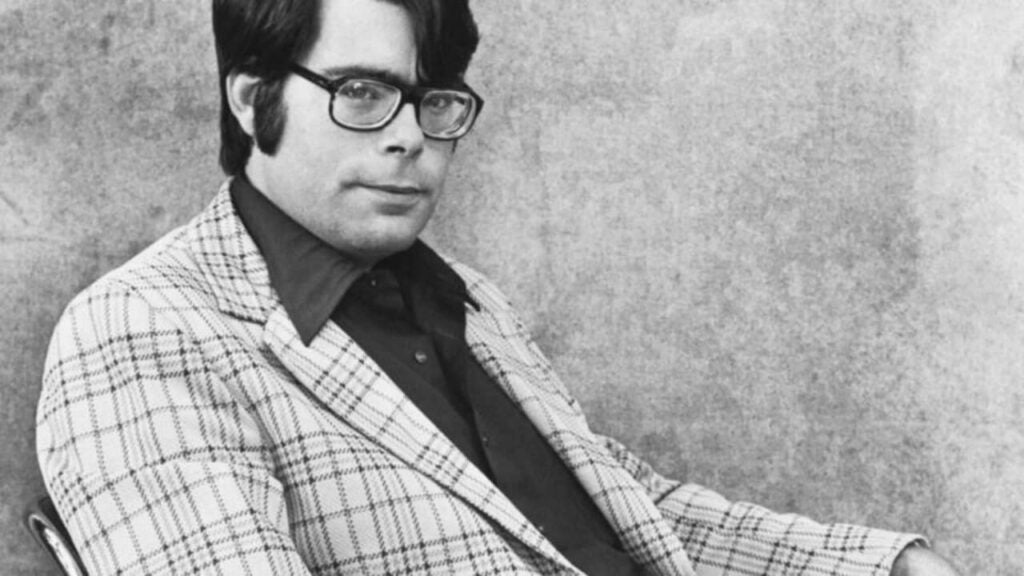
“Stephen King’s physical appearance does not reflect his tremendous intelligence as a writer.” Years ago, a book about the author introduced this caption that has gone down in history. And that King (also known as Richard Bachman) is one of the most respected and prolific authors in history: to his credit he has 65 novels, more than 200 short stories and some 60 films based on his work, to which we can add a whole host of short films, plays and even musicals. But what if we told you that the King of Horror was on the verge of throwing it all away?
1967. A twenty-year-old Stephen King manages to sell his first short story to the magazine ‘Startling mystery stories’ for 35 dollars. The story, which appeared in issue 6 of the magazine, would never be reprinted in the author’s anthologies or officially translated into Spanish (it was in a fanzine). Little by little, King was selling stories to different media while he combined it with his job as a janitor in a high school and English teacher in another. The good life.
Not that he didn’t try to write novels, of course, but they all inevitably ended up in a drawer after being rejected by different publishers. It happened to him with ‘The Long Walk’ (which would later become one of his best works) and with ‘Sword in the Darkness’, an anti-war story of 150,000 words that, as King later acknowledged, is absolutely unreadable. His wife Tabitha (to whom he has been married since 1971) and he lived in a trailer outside Hermon, Maine, and their situation showed no signs of improving. And yet…
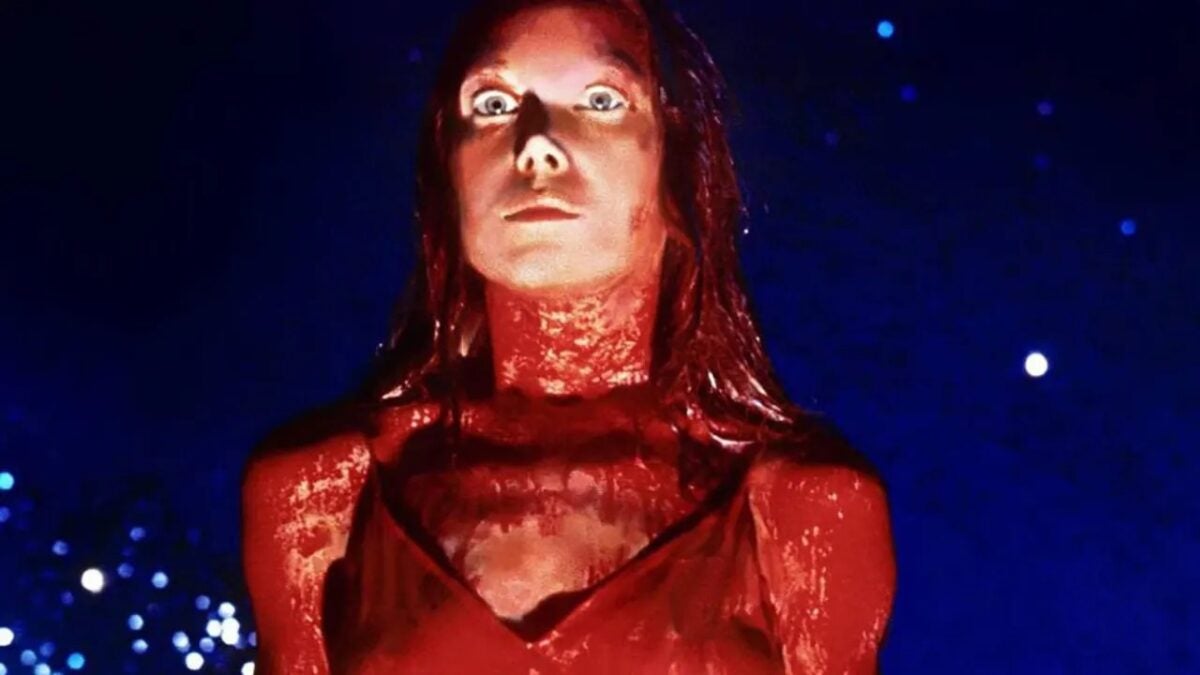
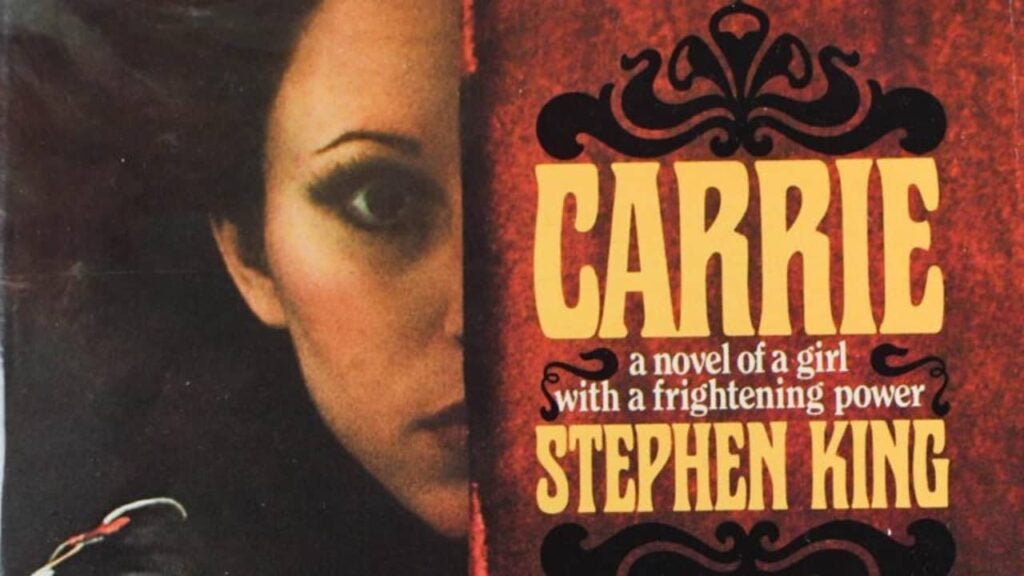
In 1971, our protagonist was cleaning the girls’ restroom at a high school when he came face-to-face with a box of feminine hygiene items and was shocked. It was a different era. Soon after, he remembered an article he had read in ‘Life’ magazine about poltergeist phenomena and telekinetic activity in teenagers. Sound familiar? Stephen King took Tabitha’s typewriter and began to write from the perspective of a high school student: one Carrie White.
To the garbage can
The basis of the story, as the author had it in his head, was similar to the beginning of the adaptation that Brian De Palma would later make: a girl starts menstruating in the showers and the rest of her classmates laugh at her. However, after three pages he decided he wasn’t doing it right: he couldn’t put himself in a woman’s point of view and he wouldn’t know how they would react. Also, Carrie didn’t end up liking him as a character because of his lack of emotional connection to her. He balled up the pages, threw them in the trash and went to sleep, thinking that the next day he would still be trapped in that life he didn’t want to have.
It was Tabitha who picked up the pages from the wastebasket the next morning and who convinced him to keep writing for one simple reason: she wanted to know how the story continued. And if her husband didn’t know how to introduce the female perspective, she would give it to him. It didn’t help him to fully understand Carrie, but he finally got it by talking to two students at his high school: one wore the same dress to class all the time because of her family’s poverty and, as a result, was being bullied. The other was growing up in a fervently religious family.
Adding the two together, telekinesis and tampons, he could get down to real writing, even though for him it was a waste of time that would never lead to anything. After 98 pages he finished it and put it in a drawer. He hated it with a passion, although that did not prevent him from reworking it in December 1972 until it became a full-fledged novel. In that novel, Carrie, at the end, destroyed an airplane after it grew horns, but his editor convinced him to change it. For whatever. To the author’s own surprise, Bingo was called: the publisher Doubleday had bought the rights and was willing to publish it.
The cow Carrie
This is what is usually told, but the truth is that he was rejected up to thirty times. Note: Thirty! Not surprisingly, Stephen King has never hidden his absolute hatred for ‘Carrie’, which he describes as clumsy and artless, but that did not stop him from releasing 30,000 copies in 1974 for which he got 2500 dollars at the time (about 15,000 today). Shortly thereafter, New American Library would pay 400,000 for the rights. It didn’t do badly: in its first year it sold a million copies and, after the 1976 movie, it was number one for weeks.
In 1975, taking advantage of the cinematic success that was to come, King published ”Salem’s Lot’ and, soon after, ‘The Shining’ and ‘Cujo’. Since then, rare is the year in which he does not publish at least one novel (or a collection of short stories). ‘Carrie’ had three film adaptations, a terrible film sequel, a musical, an episode of ‘Riverdale’ based on said musical and was on the verge of being spun off as a TV series. For such a supposedly clumsy film, not so bad.
So if you’ve ever felt like throwing everything you were writing into the recycle garbage can, let someone else take a look at it. Hey, maybe your letter to become a millionaire is resting in the trash right now.
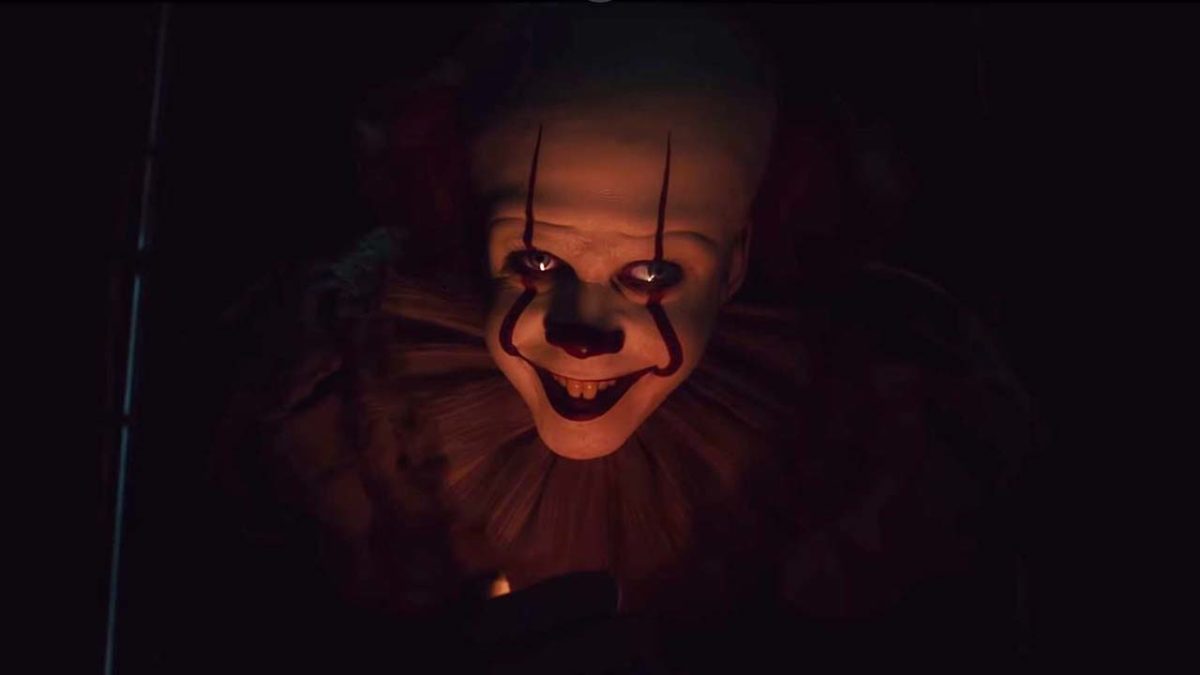
The trailer focuses mainly on a single scene featuring Jessica Chastain’s character Beverly Marsh. In the scene, she’s interviewing an elderly woman who may have a connection to Pennywise. Something is clearly off about the woman, and she ends up attacking Beverly.
The rest of the trailer shows the same characters from the previous film, but in their adult roles. The new adult cast includes James McAvoy who plays Bill Denbrough and Bill Hader who plays Richie Tozier.
The trailer only shows two quick scenes of Pennywise.
If “IT: Chapter 2” is anything like its predecessor, we can expect a chilling film with gut-wrenching horror. If it has a scene anywhere near as horrifying as the death of Georgie, we are in good hands.
VIDEO IS NSFW
If this film is anything like the book or TV movie with Tim Curry, we can take a stab at what the story might entail. In both interpretations, the Loser’s Club returns to Derry after about 30 years to kill Pennywise once and for all.
Although we do not see as much as we’d like in this trailer, it is just a teaser. Hopefully, we will see more before the movie releases in September of this year.
Here’s what you never knew about the best prison movie ever made.
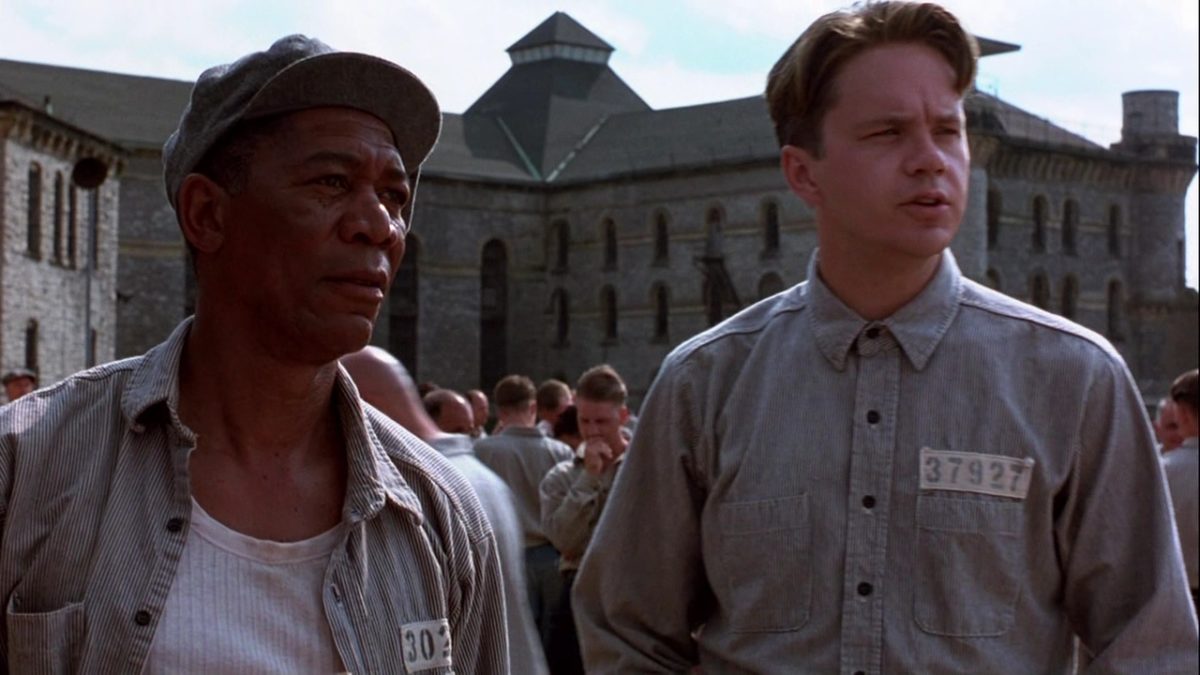
It’s approaching 25 years since Andy Dufresne crawled through a “river of sh*t and came out clean on the other side.” “The Shawshank Redemption” was released on Sept. 23, 1994 by director Frank Darabont, starring Tim Robbins as Dufresne, a wrongfully imprisoned banker, and Morgan Freeman as Red, the narrator of the film “who knows how to get things.” If you haven’t seen the film, you can watch “The Shawshank Redemption” online!
Let’s take a peek behind the scenes behind the bars.
10 facts about The Shawshank Redemption
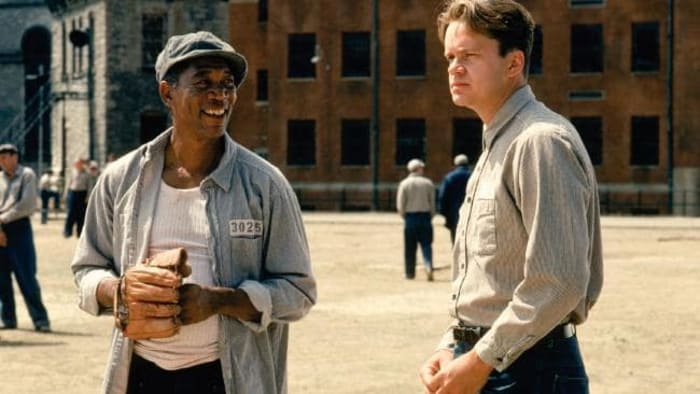
1. Morgan Freeman hurt his arm throwing the baseball
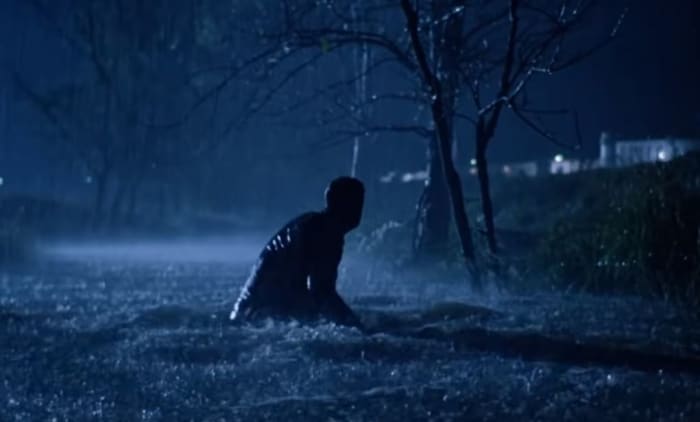
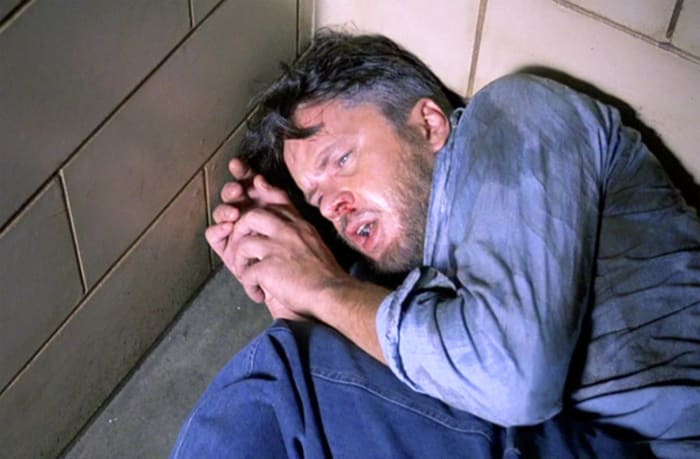
In what’s probably the most famous scene in the film, Andy crawls through 500 yards of sewage before emerging a free man on the other side. “We got a local chemist to test the quality of the water,” said production designer Terence Marsh on the DVD, “and he said this water is absolutely lethal.” “It was cow country,” Robbins grimaced, “enough said.” The only reason the actor agreed to do the scene was that there was a hot shower nearby. Funnily enough, the actual ‘sewage’ was just water, sawdust and chocolate syrup.
3. Freeman’s real-life son has a cameo
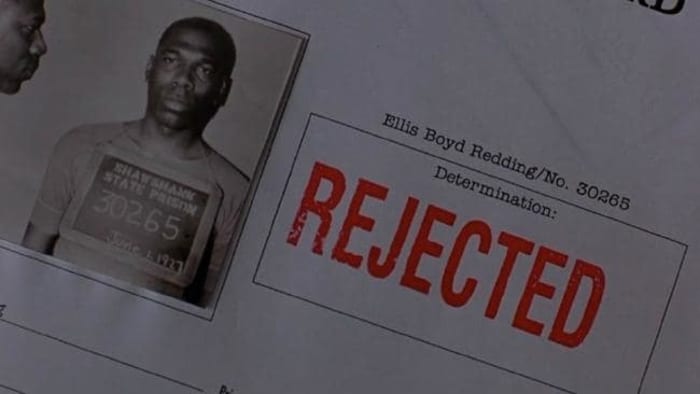
Red pleads for parole multiple times throughout the film, and we are shown a picture of what a young Red (and a young Morgan Freeman) might have looked like. The mugshot bears a strong resemblance for a reason: The picture on the parole papers is actually Freeman’s son, Alfonso. That’s not his only presence in the film either; he’s also a con shouting, “Fresh fish! Fresh fish today! We’re reeling ’em in!”.
4. Red and Andy don’t meet at the end
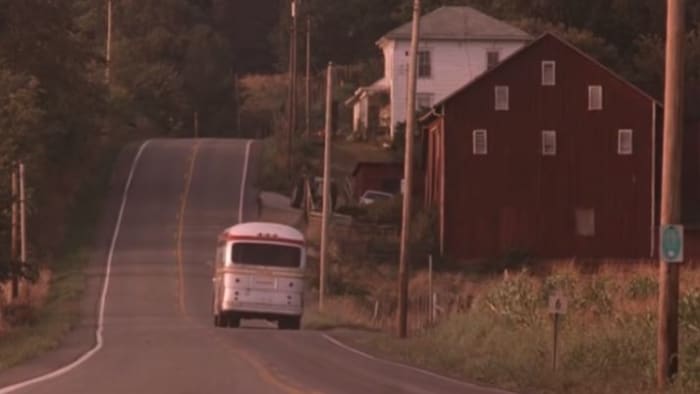
Rather than the happy ending where Red and Andy reunite on the beach, Darabont wanted to end it when Red gets on a bus and goes out to look for him. In later interviews, Darabont said the ending that he’d envisioned was more open, ambiguous note. The production company, Castle Rock, pushed for the ending we got in the film.
5. Freeman was always choice #1
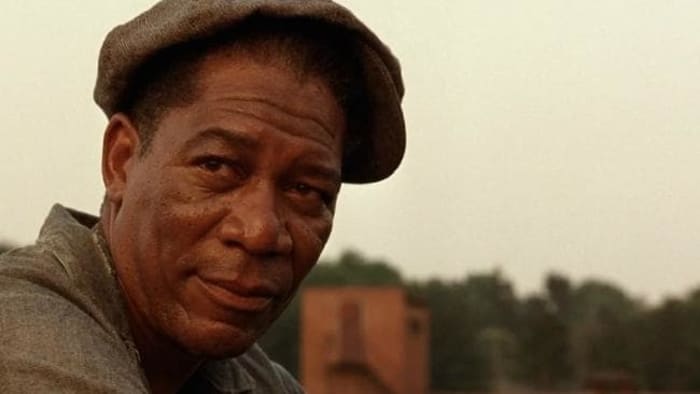
A number of actors were considered to play the part of Red, including big names such as Clint Eastwood, Harrison Ford, Paul Newman and Robert Redford. In the novella, Stephen King originally wrote the part as a white Irishman. Before the film’s production, however, Darabont already knew he wanted Morgan Freeman.
6. Cruelty to maggots
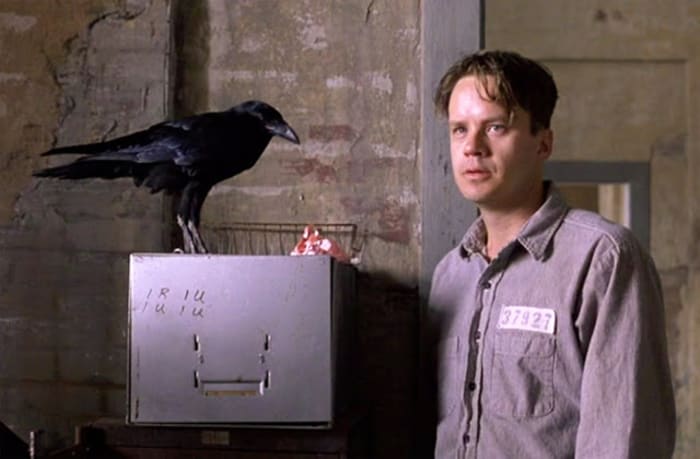
For scenes involving Brooks crow, the American Humane Association was brought in to monitor the scene. Ironically enough, it wasn’t the crow they ended up having issues with. Instead, the AHA objected to the use of a live maggot during a scene where Brooks feeds the bird, citing that it was cruel to kill it. The maggot that made it into the film was already dead of natural causes.
7. The 40 minutes that took 3 weeks
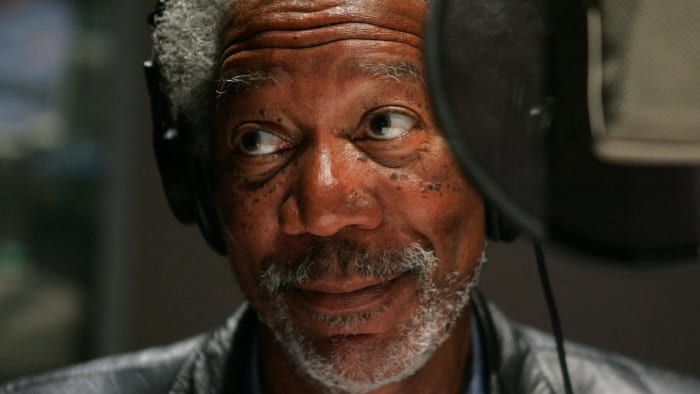
Morgan Freeman recorded the complete voice-over for “The Shawshank Redemption” before filming even began. This was used as a guide track to establish the rhythm of each scene. There was a slight hiss on the track, however, and the sound engineers were unable to remove it. Instead, they had to re-record the entire thing – and this time it took three weeks.
8. Solitary Refinement
It’s hard to feel in-character when you’re playing an inmate if you’ve never been convicted. For some pretty hardcore method acting, Tim Robbins requested time in solitary confinement to better get a feeling of what the experience is like. “I wanted to go in for a day or two,” Robbins said in an interview, “but they wouldn’t let me for security reasons.” He was in solitary for a couple of hours.
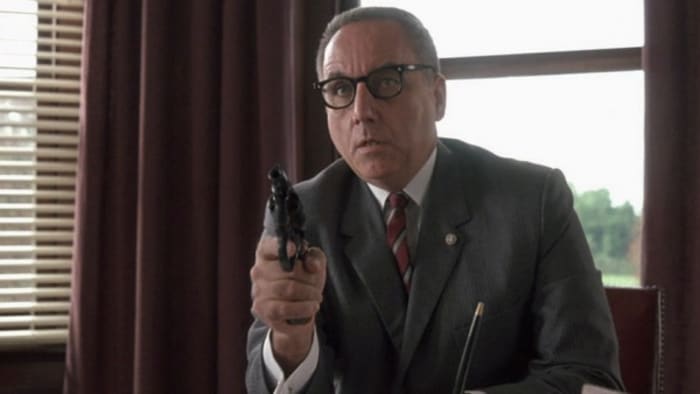
The sound effect used towards the end of the film when the corrupt Warden shoots himself is actually the same sound effect as the man stamping ‘approved’ on Red’s paper during his parole hearing. Now that’s the sound of justice being served!
Hopefully these facts will make you enjoy your next viewing even more! Let us know your favorite scene in the comments below, and get busy living!





 “You’ll float, too.”