The music from Jaws, composed by the renowned John Williams, is considered one of the most iconic in film history and was fundamental to the success of the movie directed by Steven Spielberg in 1975. However, curiously, Spielberg did not understand the musical proposal at first and thought Williams was joking. This simple yet terrifying two-note pulse has not only become an instantly recognizable melody but has also been one of the pillars that supported the transformation of Jaws into the first modern blockbuster. A soundtrack that bites […]
The music from Jaws, composed by the renowned John Williams, is considered one of the most iconic in film history and was fundamental to the success of the movie directed by Steven Spielberg in 1975. However, curiously, Spielberg did not understand the musical proposal at first and thought that Williams was joking. This simple yet terrifying two-note pulse has not only become an instantly recognizable melody but has also been one of the pillars that supported the transformation of Jaws into the first modern blockbuster.
A soundtrack that bites
In a recent interview with Stephen Colbert, Spielberg reflected on his initial doubts regarding the score and how he decided to trust Williams’ talent. Despite his skepticism, the director came to understand that the simplicity of the music, combined with the string orchestration, created an atmosphere of threat that intensified the viewer’s experience. “The music replaced the absent animal”, Spielberg commented, referring to the mechanical issues the shark faced during filming. Without the effective musical composition, the film would not have had the same impact on the audience.
Williams’ score not only helped to elevate the tension of the narrative, but also compensated for the shortcomings in the special effects. Spielberg defended his collaborator, acknowledging that Williams’ relentless sound “saved the movie” and brought a level of terror and suspense that would have been difficult to achieve otherwise. Jaws not only set new rules in the film industry but also became a cultural phenomenon that resonated throughout the decades.
The music from Jaws, composed by the renowned John Williams, has become synonymous with fear and tension in cinema, establishing itself as one of the most iconic pieces in the history of the seventh art. With just a simple sequence of notes — Duh-duh… duh-duh… — Williams managed to make viewers cling to their seats, anticipating the imminent threat lurking in the water. This unsettling effect did not arise without controversy, as initially, director Steven Spielberg did not take the composition seriously. Spielberg did not understand Jaws at first In an anecdote that has endured in […]
The music from Jaws, composed by the renowned John Williams, has become synonymous with fear and tension in cinema, establishing itself as one of the most iconic pieces in the history of the seventh art. With just a simple sequence of notes — Duh-duh… duh-duh… — Williams managed to make viewers cling to their seats, anticipating the imminent threat lurking in the water. This unsettling effect did not arise without controversy, as initially, director Steven Spielberg did not take the composition seriously.
Spielberg did not understand Jaws at first
In an anecdote that has endured over time, Spielberg revealed that when he first heard the theme, he did not feel panic, but instead laughed, believing that Williams was playing a joke on him. In an appearance on The Late Show with Stephen Colbert, the director shared how Williams convinced him that the piece really had potential, adding zeal and orchestral basses to intensify the sense of danger.
This successful collaboration between Spielberg and Williams not only brought Jaws to life but also laid the groundwork for a prolific partnership that has resulted in cult classics such as E.T. The Extra-Terrestrial, Indiana Jones, and Jurassic Park. The music of Jaws has endured for 50 years and continues to be recognized, testifying to Williams’ exceptional talent. The composer’s ability to blend tension and emotion with so few elements has left an indelible mark on the film industry.
In a world where music can make the difference between an unforgettable scene and a forgettable experience, John Williams’ legacy rises, positioning him as one of the greatest composers of all time. Undoubtedly, his work on Jaws continues to resonate in the collective memory of movie lovers around the globe.
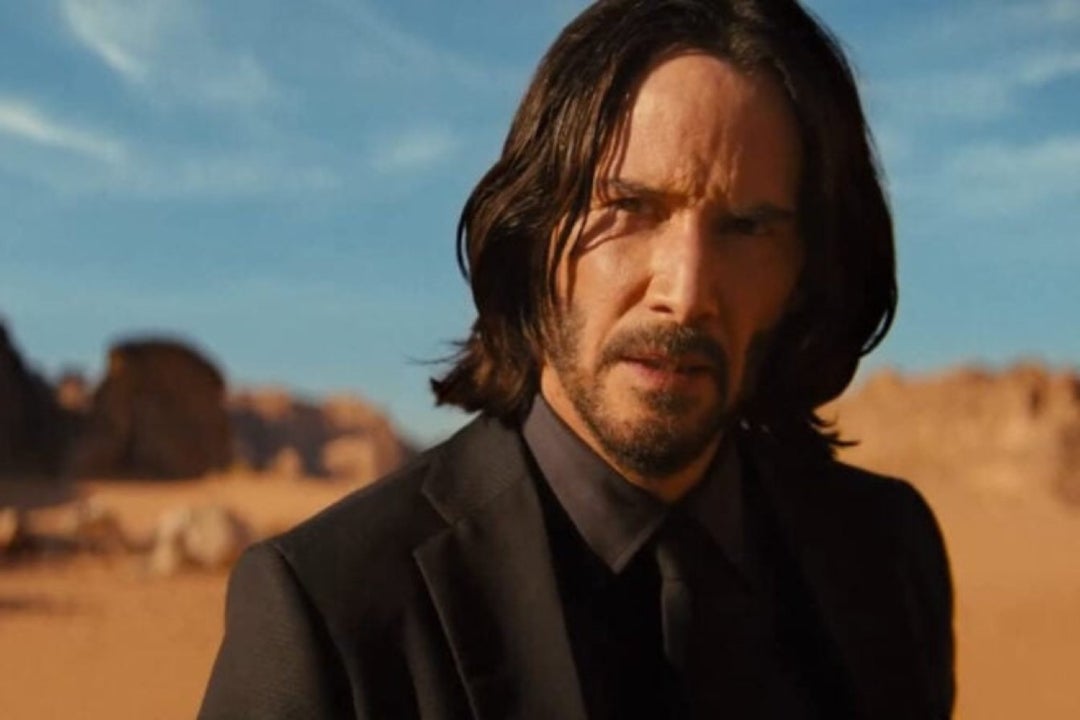
The movie Shiver, starring the renowned actor Keanu Reeves, is generating great anticipation in Hollywood, especially among shark movie enthusiasts, a genre that has not had much luck in recent years. This film, which combines elements of action and science fiction, presents a narrative that involves time loops, transporting the viewer’s experience to an intriguing setting in the Caribbean Sea. Action, science fiction, and sharks Directed by Tim Miller, known for his success with Deadpool, and written by Ian Shorr, Shiver promises to be an exciting experience. The plot follows a ruthless smuggler […]
The movie Shiver, starring the renowned actor Keanu Reeves, is generating great anticipation in Hollywood, especially among shark movie enthusiasts, a genre that has not had much luck in recent years. This film, which combines elements of action and science fiction, presents a narrative that involves time loops, transporting the viewer’s experience to an intriguing setting in the Caribbean Sea.
Action, science fiction, and sharks
Directed by Tim Miller, known for his success in Deadpool, and written by Ian Shorr, Shiver promises to be an exciting experience. The plot follows a ruthless smuggler who, after a deadly betrayal, becomes trapped in a repetitive cycle, facing not only man-eating sharks but also hostile mercenaries. This narrative approach suggests a mix between Edge of Tomorrow, the iconic film starring Tom Cruise, and The Shallows, the survival thriller featuring Blake Lively, which fuels expectations for a movie capable of capturing the audience’s attention.
Rumors suggest that there has been intense competition in Hollywood to develop Shiver, reinforcing the idea that the premise has the potential to attract a wide audience. It is said that the movie will premiere on the 50th anniversary of the classic Jaws, a milestone that could rekindle interest in the genre. Meanwhile, shark movie fans have had to settle for less impactful productions like Megalodon 2: The Trench, which have failed to capture the classic spirit of the genre.
Without a doubt, the idea of seeing Keanu Reeves deal with sharks in a suspense-filled action environment sparks curiosity, and although not many details about the film have been provided yet, anticipation continues to grow. Will Shiver bring back the greatness that the shark genre once had? Only time will tell.
In a year marked by the celebration of cinematic milestones, Steven Spielberg’s Jaws stands out as it celebrates 50 years since its release. Considered by Quentin Tarantino as the best film of all time, this masterpiece of horror cinema has not only left an indelible mark on the audience but has also forever changed the Hollywood industry. Its release in 1975 established the model for summer blockbusters, becoming a cultural phenomenon that continues to resonate to this day. A film that still gives goosebumps The movie is not only characterized by […]
In a year marked by the celebration of cinematic milestones, Steven Spielberg’s Jaws stands out as it reaches its 50th anniversary since its release. Considered by Quentin Tarantino as the greatest film of all time, this masterpiece of horror cinema has not only left an indelible mark on the audience but has also forever changed the Hollywood industry. Its release in 1975 established the model for summer blockbusters, becoming a cultural phenomenon that continues to resonate to this day.
A movie that still gives you chills
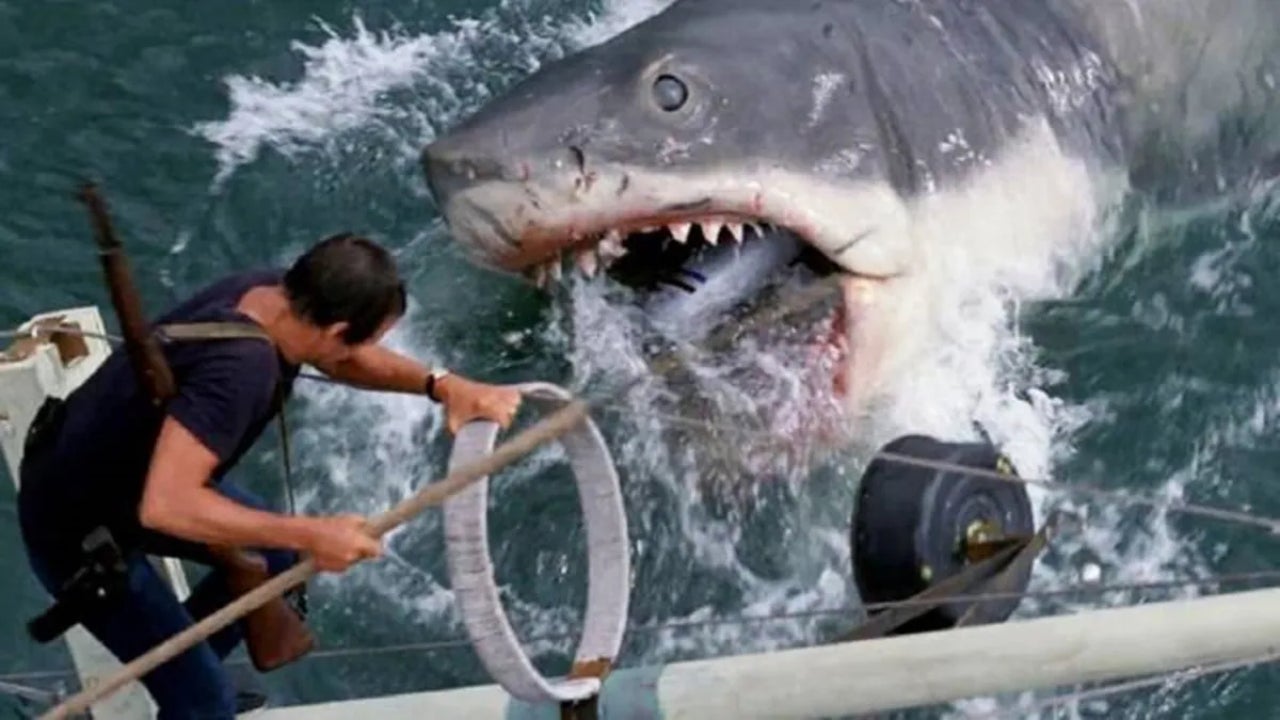
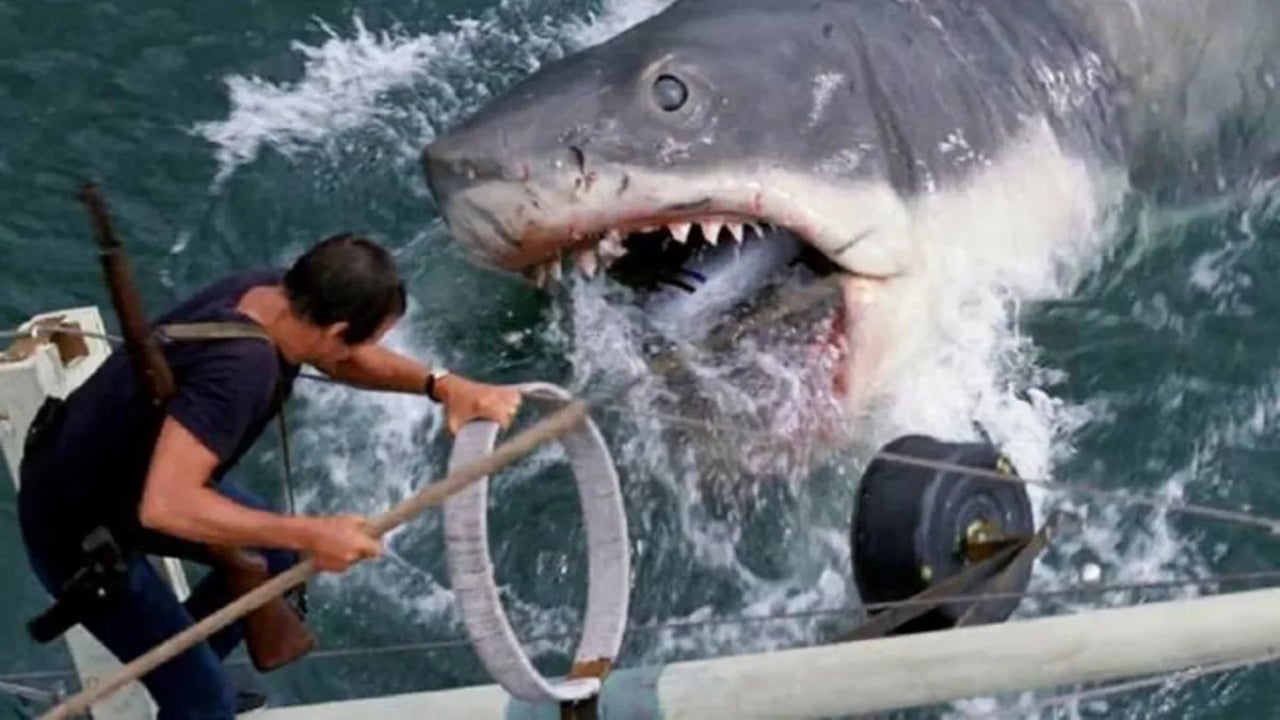
The film is not only characterized by its iconic mechanical shark, known as Bruce, but the technical problems that arose during production heightened the suspense, turning an obstacle into an effective narrative tool. This contributed to the creation of a tense atmosphere that culminates in an exciting climax. The combination of drama, action, and horror has led many critics to consider Jaws not just as a horror film, but as one of the best works in Spielberg’s filmography.
Upon its release, Jaws became the highest-grossing film of all time, marking a turning point in the way film premieres were conceived. Now, with the possibility of watching the movie on platforms like Netflix, Disney+, and Movistar Plus+, new generations of viewers can experience this work that has influenced countless subsequent titles about sharks and sea creatures.
Despite the differences of opinion on what the best movie of all time is, Jaws deserves to be in the conversation, not only for its box office impact but also for its masterful direction, its memorable soundtrack by John Williams, and its ability to intertwine human drama with the imminent threat of the shark. Thus, the film remains a must-see reference for cinema and horror lovers.
Jeffrey Voorhees, known for playing Alex Kintner, the second victim in the iconic movie Jaws, continues to generate income at 63 years old thanks to his brief but memorable appearance in Spielberg’s classic. Although his screen time was short, the impact of his character has allowed Voorhees to receive annual checks for royalties every time the movie is broadcast on television or purchased on streaming platforms and physical copies. An absolute career success in film In a recent interview, Voorhees shared that he not only benefits from […]
Jeffrey Voorhees, known for playing Alex Kintner, the second victim of the iconic movie Jaws, continues to generate income at 63 years old thanks to his brief but memorable appearance in Spielberg’s classic. Although his screen time was short, the impact of his character has allowed Voorhees to receive annual checks for royalties every time the movie is broadcast on television or purchased on streaming platforms and physical copies.
An absolute career success in cinema
In a recent interview, Voorhees shared that he not only benefits from royalties. He also makes appearances at fan conventions, where he charges around 10,000 dollars per event. During those appearances, he not only signs autographs but also shares stories and memories from his experience on the film set, which creates a notable euphoria among attendees. “If this makes some people so happy, you catch a bit of that euphoria,” the actor commented.
Aside from his participation in conventions, Voorhees has created a website where he sells signed photos, t-shirts, and other collectible items. His merchandise includes an iconic yellow raft with the shark bite mark that has attracted the attention of many fans. In an anecdote that reflects the demand for Jaws memorabilia, a copyright receipt he had thrown away in 1981 was sold on eBay for the astonishing amount of $80,700.
This phenomenon not only highlights the lasting connection that fans have with certain movie characters, but also demonstrates how an actor can capitalize on a fleeting moment in their career, transforming their legacy into a sustained source of income over the years.
SkyShowtime is a streaming platform from which you can stream series, movies, and entertainment programs in video on demand (VOD) format. It is an ambitious project by SkyShowtime Limited, available in Spain and 20 other countries in the European Union and its area of influence, such as Norway or Bosnia and Herzegovina. SkyShowtime aims to carve out a niche in the market thanks to its very competitive prices. Thus, they will compete with services like Netflix or Disney +, two similar platforms that have increased their prices recently.
In the world of cinema, the screen time of a character does not always translate into their iconic reputation. Throughout the history of the seventh art, we have seen notable examples like the shark in the movie Jaws, which appears for just 4 minutes, as well as Hannibal Lecter in The Silence of the Lambs, who has only 12 minutes of footage. A more recent and fascinating case is that of Draco Malfoy, played by Tom Felton in the Harry Potter saga. Although his total screen time is only 31 minutes and 45 seconds throughout […]
In the world of cinema, the screen time of a character does not always translate into their iconic reputation. Throughout the history of the seventh art, we have seen notable examples such as the shark in the movie Jaws, which appears for only 4 minutes, as well as Hannibal Lecter in The Silence of the Lambs, who has only 12 minutes of footage. A more recent and fascinating case is that of Draco Malfoy, played by Tom Felton in the Harry Potter saga. Although his total screen time is only 31 minutes and 45 seconds across the eight films, his character has managed to capture the attention and affection of many fans.
An absolutely stratospheric cache
Draco Malfoy, initially seen as an antagonist, has evolved throughout the story, and his complexity has resonated with viewers, showing that goodness and evil are not always black and white. Despite his brief presence, Malfoy has become one of the most recognizable characters in the series based on the books by J.K. Rowling, highlighting the importance of character development in cinematic storytelling.
Interestingly, actor Tom Felton has become the highest paid member of the Harry Potter cast, receiving a salary of 17 million dollars for his participation. This amounts to more than 500,000 dollars for every minute on screen, a surprising figure when compared to his co-stars. Daniel Radcliffe, who played the protagonist Harry, earned 86 million for 539 minutes; Rupert Grint and Emma Watson received 36 and 40 million respectively for 211 and 205 minutes on screen. These figures not only reflect the popularity of the characters but also the appeal that the Harry Potter franchise has maintained over the years.
The Labor Day weekend in Hollywood was characterized by being moderately celebrated, with no major box office hits. The film Weapons, which is in its fourth weekend of screening, managed to maintain the top spot despite competition from new releases. This film has shown remarkable resilience, especially in a film market that seems to be absorbed by nostalgia and the repetition of past successes. Watch out for the shark! Despite Weapons being at the top, the new offerings Caught Stealing and Los Rose failed to attract […]
The Labor Day weekend in Hollywood was characterized by being moderately celebrated, with no major box office hits. The film Weapons, which is in its fourth weekend of screening, managed to maintain the top spot despite competition from new releases. This film has shown remarkable resilience, especially in a film market that seems to be absorbed by nostalgia and the repetition of past successes.
The shark is going to eat you!
Despite the presence of Weapons at the top, the new proposals Caught Stealing and Los Rose failed to capture the public’s interest. Both productions fell behind in the box office race, reflecting a growing challenge for studios trying to launch new stories at a time when audiences are more reluctant to leave their favorites. This phenomenon became evident, as the classic Jaws, which is now 50 years since its release, managed to surpass the most recent releases and reaffirm its status as a timeless masterpiece.
Jaws, one of the most iconic films in cinema history, showed remarkable resilience in its re-release, exceeding expectations and attracting an audience that continues to find value in its iconic scenes and captivating narrative. This type of box office performance highlights the challenges that new productions face in making an impact in a saturated landscape focused on past blockbusters.
As the film industry navigates these turbulent waters, it remains to be seen how studios will adapt to the changing demands of the audience and whether they will find the formula to draw audiences back to new original narratives. Undoubtedly, this weekend’s analysis will allow experts to review and rethink strategies for the future of cinema.
On June 20, 1975, cinema was about to change forever. But of course, no one knew it back then. Who would have thought, after all, that the movie by a certain Steven Spielberg, who had only directed a television movie (the fantastic Duel) and something called The Sugarland Express, would achieve more than a box office failure? Not even he wanted to direct it, fearful of being known as “the guy with the trucks and the sharks.” He, instead, wanted to make Lucky Lady, which ended up […]
On June 20, 1975, cinema was about to change forever. But of course, no one knew it back then. Who would have thought, after all, that the movie by a certain Steven Spielberg, who had only directed a television film (the fantastic Duel) and something called The Sugarland Express, would achieve anything more than a box office failure? Not even he wanted to direct it, fearing being known as “the guy with the trucks and the sharks.” Instead, he wanted to make Lucky Lady, which ended up being directed by Stanley Donen. And now, 50 years later, no one celebrates the existence of Lucky Lady, but rather the immense Jaws.
Don’t let it give you a stomach cramp!
Before 1975, we had already seen movies about sharks, of course: titles like The Sharkfighters, ¡Shark! Double-edged weapon, or the documentary Blue Water White Death made it clear that cinema was ready for beaches, fangs, and blood. Now we just needed someone with the expertise to not hide the shark, to manage to build a plot behind the attacks, and to be a pioneer in the genre.
It didn’t happen immediately, of course: Peter Benchley himself, the author of the novel, tried to create a script based on it, but without success. Although he is credited, he himself has acknowledged that practically none of those scripts made it to the screen, and that Carl Gottlieb was able to give it the rhythm that Spielberg was looking for, who wanted to focus on the third act of the book (the shark chase) and lose a good handful of subplots along the way. No one cared too much when it hit theaters.
In fact, it cost only 9 million dollars and grossed 477.9 million, eternally solidifying Spielberg’s figure and turning the little shark movie that no one gave a dime for not only into a franchise but also forcing other production companies to establish marine creatures as a subgenre of horror in general. They made three more sequels (each worse than the last, by the way) and knew when to bow out. The strange thing is that no clever person in today’s Hollywood has wanted to do a reboot. And let’s cross our fingers that it stays that way.
Ducklings in the water!
Everything is immortal in Jaws: the soundtrack by John Williams, which we have all heard in our heads at some point when terror approached; the animatronic shark itself devouring its victims; Roy Schneider saying “We’re gonna need a bigger boat”; the mayor reassuring the public and which has served as a metaphor for the current world… In fact, it is one of those few immortal movies. Yes, new generations may point out that the killer’s head is static, or that the blood is too bright, but they will be hooked to the screen with the force of a Spielberg who, against all odds, knew exactly what he was doing. At the risk of his own health, of course: throughout the filming, he suspected more than once that he was going to have a heart attack.
Later, he would dazzle the world with ET, Minority Report, Close Encounters of the Third Kind, The Fabelmans, Raiders of the Lost Ark, Jurassic Park, or Schindler’s List, but back then he was a newcomer who was able to dazzle the industry like few have done before or since. Five decades have passed, and if we listen to that “Taaaa-naaa” from John Williams, it still gives us a bit of a chill to dip a toe in the water. After all, you never know when you might end up being simple involuntary bait!