Paramount Pictures has signed a film agreement with Activision, the video game publisher owned by Microsoft, to bring the iconic Call of Duty franchise to the big screen. This new project promises to expand the vast universe of Call of Duty, which includes over 30 main titles since the release of the first game in 2003. Shooting for the box office The agreement stipulates that Paramount will develop, produce, and distribute a live-action film based on this popular video game world. Call of Duty has been a pillar in the industry, with a strong legacy that spans various eras and themes, […]
Paramount Pictures has signed a film agreement with Activision, the video game publisher owned by Microsoft, to bring the iconic Call of Duty franchise to the big screen. This new project promises to expand the vast universe of Call of Duty, which includes over 30 main titles since the release of the first game in 2003.
Shooting at the Box Office
The agreement stipulates that Paramount will develop, produce, and distribute a live-action film based on this popular video game world. Call of Duty has been a pillar in the industry, with a strong legacy that spans various eras and themes, from World War II to contemporary conflicts. The franchise has not only revolutionized the first-person shooter genre but has also created a passionate fan base that hopes to see a film adaptation that does justice to its rich narrative.
With this announcement, many voices in the industry are questioning the creative directions the project will take. While no details about the plot or cast have been revealed, there is talk of an approach that could explore the various characters and stories that have emerged over the years in video games. This initiative could open the door to a series of movies or even the creation of a cinematic universe that integrates different stories from Call of Duty.
Historically, many video game adaptations to film have had variable success, but the potential of Call of Duty, given its rich narrative and large fan base, suggests that Paramount may be on the right track. On the other hand, it is rumored that the movie could have a release date set in the coming years, depending on how production progresses.
Ian Fleming created James Bond in 1953, in the novel Casino Royale (adapted not once, but three times to audiovisual media). It was an immediate success and, from then until 1966, when the author died, not a year went by without a story of agent 007. Fleming got to see how his character became a movie star when Agente 007 contra el Doctor No premiered in 1962, but he was very, very far from seeing how his perfect British MI6 agent also transitioned to video games. Sometimes sadly, other times fortunately: the […]
Ian Fleming created James Bond in 1953, in the novel Casino Royale (adapted not once, but three times to audiovisual media). It was an immediate success and, from then until 1966, when the author died, not a year went by without a story of agent 007. Fleming got to see how his character became a movie star when Agent 007 against Dr. No premiered in 1962, but he was very, very far from seeing how his perfect British MI6 agent also transitioned to video games. Sometimes sadly, other times fortunately: studios did not always succeed in bringing Bond to computers and consoles… And, no matter how much Goldeneye you have in mind, it is perfectly demonstrable.
Shaken, stirred, and whatever it takes
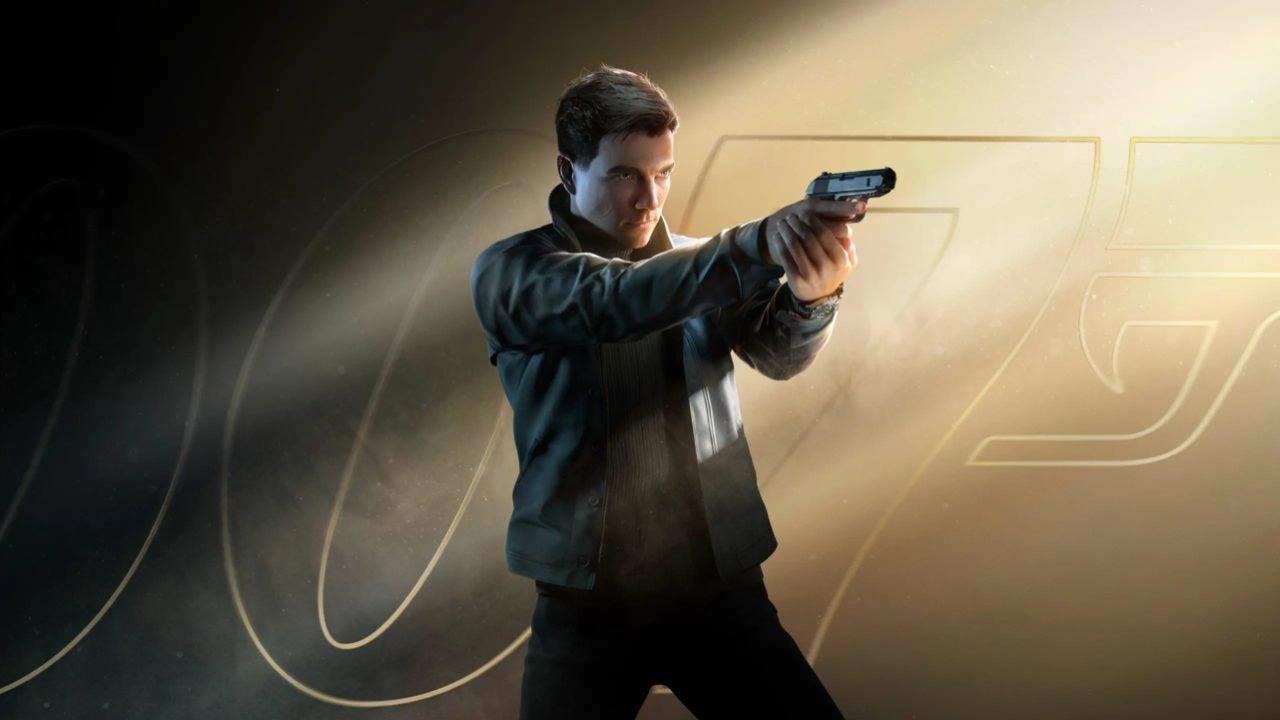
In 1983, Spectrum launched the first attempt at the market, Shaken but not stirred, a conversational adventure that pleased most of the audience (although let’s not kid ourselves, it is unplayable today). That same year, Parker Brothers published James Bond 007, a hastily made platformer that already hinted at what the saga could bring us: very, very little. Anyone who was playing at that time is likely to be skeptical about 007 First Light, created by IO Interactive: after several hits against the wall, it’s unusual to want to throw yourself at it again.
Until 1997, when Nintendo 64 surprised everyone with Goldeneye, most video games based on licenses were little more than disasters. Titles like License to Kill or License to Kill (a side-scrolling shoot-em-up that was not even well regarded at the time) could hold their own, but alongside them came things like Live and Let Die, a racing game that wasn’t even born as a James Bond title: it was something called Aquablast that somehow got the license slapped on it. And not to mention the adaptation of High Tension, which strayed so far from the original work (and was so poorly understood) that a cassette came with the game in which Desmond Llewelyn, Q, explained the plot.
Another example of how they mistreated the franchise was The Stealth Affair, a graphic adventure with a completely new plot… with a protagonist who was only called “James Bond” in the United States. In the rest of the world, he was a certain John Glames, a CIA agent. A chaos that definitely did not go down in history. But even after Goldeneye, and despite wanting to stay on the right path with adaptations of Tomorrow Never Dies and The World Is Not Enough, we quickly returned to the path of cheap exploitation with things like 007 Racing, an unredeemable and generic racing game.
From there, once again the fall from grace: Agent Under Fire, an original story where Bond has to prevent the world’s political leaders from being replaced by clones, or Rogue Agent, in which the character is called “GoldenEye” after losing his eye and having a golden cybernetic replacement, did not help people want more James Bond. If since 007 Legends, which aimed to be a tribute to the entire saga and ended up being a soft entertainment, we haven’t had a new game until now, there must be a reason. Fourteen years have passed, and the question still lingers in the air: Have they been able, in some way, to create an action game as it should be… a proper action game that lives up to the saga?
In 2023, the Steam platform recorded the release of 14,531 video games, increasing to approximately 19,000 in 2024. This exponential growth, observable over the last decade, raises questions about the sustainability of the accelerated pace of releases, especially in a context where artificial intelligence is beginning to play a crucial role in video game development. No one wants to compete against the king One of the most notable events in the industry has been the imminent release of Hollow Knight: Silksong, whose impact has caused a series of delays in other titles scheduled for this month of September. Until […]
In 2023, the Steam platform recorded the release of 14,531 video games, increasing to approximately 19,000 in 2024. This exponential growth, observable over the last decade, raises questions about the sustainability of the accelerated pace of releases, especially in a context where artificial intelligence is beginning to play a crucial role in video game development.
No one wants to compete against the king
One of the most notable events in the industry has been the imminent release of Hollow Knight: Silksong, whose impact has caused a series of delays in other titles scheduled for this month of September. So far, several developers have decided to move their release dates, some without providing a specific new date, indicating that the influence of Silksong could be broader than initially thought.
According to data from SteamDB, only 635 video games are expected to be released in September 2025, a notably low figure compared to the 1,564 titles released in August and the peak of 1,817 in March. Historically, the month of September has been a productive period with over 1,000 monthly releases; however, this year is showing a contrary trend.
Statistics indicate that the first week of September had 216 releases, while a significant increase is anticipated for October, with 718 titles projected for that month. This marked contrast has led analysts to go back to March 2020 to find a month with so few releases on Steam, right at the beginning of the pandemic.
Additionally, developers comment that the Silksong phenomenon has led some titles to reconsider their release strategy, becoming a triggering factor in the industry’s calendar. Meanwhile, uncertainty continues regarding how many more titles could be affected as the release date of this highly anticipated game approaches.
A recent study has highlighted the effects of excessive gaming and internet gaming disorder (IGD) among young people, revealing significant differences between genders. Conducted in Hong Kong, the study involved 2,000 primary and secondary school students, with an average age of 12 years. The findings show that 38% of boys self-report as excessive gamers, compared to only 24% of girls, indicating a clear gender gap regarding disorders linked to video games. Gamers, pause for a moment The results of the study suggest that gamers […]
A recent study has highlightedthe effects of excessive gaming and the disorder of online gaming (IGD) among youth, revealing significant differences between genders. Conducted in Hong Kong, the study involved 2,000 primary and secondary school students, with an average age of 12 years. The findings show that 38% of boys self-report as excessive gamers, compared to only 24% of girls, indicating a clear gender gap regarding disorders linked to video games.
Gamers, stop for a moment
The results of the study suggest that male players who engage in prolonged gaming sessions, that is, five hours or more, are at a higher risk of showing symptoms of IGD. These symptoms may include depression, stress, poor sleep quality, and a decrease in educational self-efficacy. On the other hand, children who are not excessive gamers and girls who do not play show lower levels of stress and anxiety, highlighting the psychological implications of high gaming consumption.
Given the relatively new and poorly understood nature of IGD, the study calls for the need for gender-specific interventions to address these mental and physical health risks. The research highlights that, although the results are significant, the size of the studied group is small and not definitive, suggesting that more studies are needed to confirm and expand these findings.
With the growing popularity of video games and online connectivity, the phenomenon of excessive gaming could have a broader impact on youth health. Upcoming studies may help unravel the complexities of this issue, while professionals in the mental health field begin to address these matters in a more specialized way.
Year 2003. Running With Scissors, the video game studio (which, somehow, is still open), releases Postal 2, the sequel to one of the most violent and crude games in history. In this open world, you can commit all the acts of violence you want, and in fact, the game rewards you for it, to such a sickening extent that it was banned in New Zealand, under penalty of 10 years in prison and $50,000. It faced issues all over the world, but no one stopped talking about it and it became, […]
Year 2003. Running With Scissors, the video game studio (which, somehow, is still open), releases Postal 2, the sequel to one of the most violent and crude games in history. In this open world, you can commit all the acts of violence you want, and in fact, the game rewards you for it, to such a sickening extent that it was banned in New Zealand, with a penalty of 10 years in prison and $50,000. It faced issues all over the world, but no one stopped talking about it, and it inevitably became a brutal bestseller despite the critics not being very impressed. And then, the third part arrived.
More violence than ever!
In Running With Scissors, it took eight years to continue the saga, until in 2011 they finally released Postal III, a game that, on paper, was supposed to be a true revolution both graphically and in gameplay… until players discovered, resigned, that it was a complete disaster. It was released exclusively for Windows and abandoned the open world to focus on specific missions with a new third-person perspective that nobody ended up liking. It took all the steps backward that the franchise could have taken and became a resounding failure both critically and commercially.
In fact, the ports that were planned for Xbox 360 and PS3 were never even made, fearing that the backlash would be heard throughout the entire gaming world. There was a reason why Postal III was so bad, of course: the studio was going through the inevitable economic problems that come from having released only two moderately successful games in 15 years, and didn’t know what to do with the license, so they took their initial designs and handed them over to Akella, a Russian producer who developed it for five years. You do it, because it makes me laugh.
But wait, because there’s more: the 2008 crisis wreaked havoc in Russia and ended up further damaging Akella, which categorically refused (aware of the absurdity they were committing) to allow Running With Scissors access to Postal III. What was the result? On one hand, the original studio could not create enough patches to alleviate the mess. On the other, Akella declared bankruptcy immediately, and that is never a good sign. The studio had no choice but to bear the burden and try to release patches to improve the experience, until in 2012 they decided to remove it from their store, asking people to buy their two previous titles, “a far superior product for less money.”
They could not allow this to continue, and in 2015 they prepared an expansion for Postal 2 called Paradise Lost, which began with the protagonist waking up after an eleven-year coma. In other words, completely erasing Postal III from existence and leaving it as a figment of his imagination. In the end, in 2022 Running With Scissors managed to complete their Postal IV which… nobody liked either, this time without any Russian developer to blame. Surely they could say the typical phrase of their protagonist: “I regret nothing!”.
Naughty Dog, the renowned studio behind hits like The Last of Us, is at the peak of anticipation with its upcoming project, Intergalactic: The Heretic Prophet, an ambitious science fiction adventure set thousands of years in an alternate future. Five years after its last release, the arrival of … Continue reading “”
Naughty Dog, the renowned studio behind hits like The Last of Us, is at the peak of anticipation with its upcoming project, Intergalactic: The Heretic Prophet, an ambitious science fiction adventure set thousands of years in an alternate future. Five years after its last release, the arrival of this game has become a highly anticipated event for fans of the industry.
Kiss me until the haters are left speechless
Despite the widespread enthusiasm, the title has faced criticism and hate campaigns, especially directed towards its protagonist, actress Tati Gabrielle. However, the actress has shown a proactive attitude towards the criticism, assuring that the game will offer a surprising experience that will win over everyone, even its detractors. Gabrielle has praised the direction of Neil Druckmann, who has personally guided every gesture and glance of her character, allowing for a unique immersion in the world of the video game.
The filming of Intergalactic included motion capture suits and sets designed to facilitate realistic interaction between the actors and the digital environment. Gabrielle compared her creative process to the experience of a lost child in an imaginary world, emphasizing the dedication of the Naughty Dog team to create believable and fascinating worlds.
As the development of Intergalactic: The Heretic Prophet began in 2020, an official release date has not yet been established. However, some reports suggest that the game will not hit the market before 2027. In addition to Gabrielle, the cast will feature recognized talents such as Tony Dalton and Kumail Nanjiani, as well as Halley Gross, writer of The Last of Us: Part II, which raises even more expectations for the title that promises to redefine storytelling in video games.
Hideo Kojima, the acclaimed director and screenwriter of video games, has expressed his admiration for two Hollywood legends he would have liked to work with: Steve McQueen and David Lynch. In a recent interview with IndieWire, Kojima mentioned McQueen, whom he considers his “childhood hero,” and revealed his desire to include him in a future project, even using CGI technology, despite the fact that the actor passed away 45 years ago. “If it were possible, I would love for him to appear in one of my games someday,” Kojima stated. Jo, Kojima On the other hand, the Japanese director also felt […]
Hideo Kojima, the acclaimed director and screenwriter of video games, has expressed his admiration for two Hollywood legends he would have liked to work with: Steve McQueen and David Lynch. In a recent interview with IndieWire, Kojima mentioned McQueen, whom he considers his “childhood hero,” and revealed his desire to include him in a future project, even using CGI technology, despite the fact that the actor passed away 45 years ago. “If it were possible, I would love for him to appear in one of my games someday”, Kojima stated.
Jo, Kojima
On the other hand, the Japanese director was also devastated by the death of David Lynch, which occurred in January of this year. Kojima had always dreamed of collaborating with the acclaimed filmmaker on a video game, a possibility that, unfortunately, will no longer be realized. “I always hoped to be able to work with him”, commented the creator of the Metal Gear series.
Throughout his career, Kojima has collaborated with several renowned film directors, such as Jordan Vogt-Roberts, Edgar Wright, Guillermo del Toro, and Nicolas Winding Refn, who made cameos in his latest title, Death Stranding, released in June of this year. Looking ahead, Kojima is working on a new game titled OD in collaboration with Oscar-winning director Jordan Peele. However, specific details about this collaboration have not yet been revealed.
Additionally, Kojima is developing another espionage project called Physint, which is currently in the conceptual phase and he is working on alone. The search for new narratives and innovations in the video game industry seems to be the driving force behind Kojima’s creativity in these uncertain times.
Facebook reached the peak of its popularity in 2009 and 2010, before the rest of the social networks came to sweep everything away and condemn it to a refuge of people who did not adapt to modern Internet. Back then, it was not uncommon to log in and have several messages and comments on your photos, yes, but above all, messages from games. From many, many games. Whether it was Scrabble, Pet Society, or Mafia Wars, everyone was asking you to help them, lend them something, or simply connect there as well. It was the Steam for people who did not […]
Facebook reached the peak of its popularity in 2009 and 2010, before the rest of the social networks came and swept everything away, condemning it to a refuge for people who did not adapt to modern Internet. Back then, it was not uncommon to log in and have several messages and comments on your photos, yes, but above all, messages from games. From many, many games. Whether it was Scrabble, Pet Society, or Mafia Wars, everyone was asking you to help them, lend them something, or simply connect there as well. It was the Steam for people who didn’t have consoles, the ultimate pastime, the trap that later evolved into freemium games and “pay to win.” But among all of them, there was one that stood out more than any other: FarmVille.
On the Facebook farm, ia, ia, oh
In fact, Zynga didn’t invent anything: FarmVille was the evolution (or rather the plagiarism) of Happy Farm, a game launched by the company 5 Minutes on the Tencent QQ instant messaging app. And it was already a success: in fact, at its peak, 23 million people were playing daily in Asia. Zynga saw that planting vegetables and starting your own garden had appeal and created a version for the rest of the world that spread like wildfire.
It may seem silly to us, but in its day, FarmVille surpassed any game from Sony, Nintendo, and Microsoft with a staggering nearly 84 million active users worldwide, of which more than 34 million logged in every day. A huge success for a game whose first version took just over a month to develop by four students from the University of Illinois, who maintained the social component and added something very important that was practically unheard of at the time: micropayments.
Now they are part of everyday life, but back then the name sounded somewhat distant (even World Of Warcraft came later!). With Farm Cash -not to be confused with Farm Coins, which were earned by completing objectives within the game- we could buy all kinds of upgrades, such as making your trees grow immediately or resurrecting those that had died along the way. And how was Farm Cash obtained? Well, although you could also help Aunt Manoli and Cousin Juan fix their farm, usually it involved spending money.
In addition, in FarmVille you could send gifts to your friends, something that, I assure you, happened constantly and at all hours to the point that it was almost frightening. In the end, of course, people got tired, and even teaming up with different brands did not help its survival: on December 31, 2020, the game disappeared from Facebook without anyone missing it much. To replace it, Zynga had already laid the groundwork in 2012 and 2021, respectively, with the launches of FarmVille 2 and FarmVille 3, the latter fully intended to be a mobile app. The times a’changing.
Over time, we could see FarmVille for what it was: a machine destined for the absurd, a program that forced us to log in every day, insist on our friends, perform the same meaningless tasks over and over again, and if we got frustrated, spend money to keep going. In fact, when it won an award at the GDC in 2010, the audience did not hesitate to boo Zynga, although that doesn’t seem to matter much today: it was bought for $12.7 billion by Take Two. It may seem outrageous, but it should be noted that, according to estimates, about 10% of the world’s population plays something created by Zynga daily, whether it’s Words With Friends or their slot-style games. If someone here isn’t getting rich, it’s because they don’t want to (or have too much ethics).
Hideo Kojima, the famous creator behind iconic titles like Metal Gear and Death Stranding, has expressed his discontent with some military video game developers who lack practical experience in handling weapons. In a recent interview with the fashion store SSENSE, Kojima described this situation as “sad” and revealed that he has decided to train himself to learn “many ways to kill.” This decision stems from his concern about authenticity in the development of games that address military themes. Making military games requires knowing military reality. Kojima has also expressed his disappointment with the lack of originality […]
Hideo Kojima, the famous creator behind iconic titles like Metal Gear and Death Stranding, has expressed his discontent with some military video game developers who lack practical experience in handling weapons. In a recent interview with the fashion retailer SSENSE, Kojima described this situation as “sad” and revealed that he has decided to train himself to know “many ways to kill”. This decision arises from his concern about authenticity in the development of games that address military themes.
Making military games requires understanding military reality
Kojima has also expressed his disappointment with the lack of originality he has observed in many recent video game trailers, particularly during this year’s Summer Game Fest. According to the Japanese creator, a large number of these trailers present similar concepts of killing aliens and spilling blood in environments like castle ruins. “Even the visuals and systems are practically the same,” he argues. While he acknowledges that many players enjoy these repetitive elements, he emphasizes the importance of introducing innovations in the video game industry.
On the other hand, regarding its anticipated sequel, Death Stranding 2, Kojima has shared that the hyper-realistic graphics that will characterize the game are due to a live-action lighting workshop conducted over two years ago. This approach reinforces his commitment to visual quality and player immersion. Meanwhile, the world of video games watches as Kojima not only seeks to revolutionize the narrative and aesthetic realm but also to raise the standard of authenticity in the representation of conflicts and weaponry.
With these statements, Kojima continues to position himself as a critical voice in the industry, promoting the need for creativity and truthfulness in the narrative of contemporary video games.
No one saw this coming just five years ago. In an unexpected turn of events in the console market, Microsoft has crowned itself as the most successful publisher on PS5 during the last quarter, occupying more than half of the list of the 10 best-selling games. According to a new report from analyst Mat Piscatella of Circana, six of the ten best-selling titles between April 6 and July 5 are from Microsoft, with games like Forza Horizon 5 and Oblivion Remastered. Microsoft? Yes, but with Sony’s brand The strategy of […]
No one saw this coming just five years ago. In an unexpected turn of events in the console market, Microsoft has crowned itself as the most successful publisher on PS5 during the last quarter, occupying more than half of the list of the 10 best-selling games. According to a new report from analyst Mat Piscatella of Circana, six of the ten best-selling titles between April 6 and July 5 are from Microsoft, with games like Forza Horizon 5 and Oblivion Remastered.
Microsoft? Yes, but with Sony’s brand
Microsoft’s strategy of launching Xbox titles on third-party platforms has proven to be key to its recent success. Games like Hi-Fi Rush and Grounded have arrived on PS5, and with the promise of future releases like The Outer Worlds 2, which will be a day-one title on Sony’s console, the trend seems to continue. This approach has allowed Microsoft to expand its presence in the gaming ecosystem beyond its own console.
However, not everything is good news. Despite its commercial success, the latest update of Oblivion Remastered has generated criticism, as players have reported performance issues that do not match the patch notes. This problem could affect the perception of the quality of Microsoft games on PS5.
In this best-sellers list, the only PlayStation title is MLB: The Show 25, which has declined in sales compared to the previous quarter. This underscores the significant changes the console market is experiencing, leading to increasingly intense competition between platforms. Most of the games on the list come from Bethesda, recently acquired by Microsoft, which speaks to the growing influence of the company in Sony’s market.
In conclusion, Microsoft’s outstanding performance on PS5 is a reflection of the evolution of the video game industry, where partnerships and cross-platform strategies are becoming increasingly relevant in a competitive landscape.