Learning to play Dungeons & Dragons can be intimidating, but Wizards of the Coast has created a tool to make it less so.
Dungeons & Dragons is a popular game, but it can also be intimidating. It requires a group of people to play, a Dungeon Master, and while it seems fun, it also appears challenging. There are many things to consider, such as certain acting skills and improvisation, which may make role-playing games seem not suitable for everyone. Especially when there hasn’t been an easy way to enter this fascinating world, where you can quickly get a sense of what it’s like to play without committing a significant amount of time and money to find out. Until now.
Wizards of the Coast, the company behind Dungeons & Dragons, has created an interactive digital demo called “Before the Storm,” which lasts just ten minutes. Adapting the introductory adventure from their Starter Set, this demo is designed for new players to learn the basics of Dungeons & Dragons and what it means to play a role-playing game. In this demo, players will choose a class, receive some context about the world and their character, and be immersed in an adventure centered around a treasure. Through the Dungeon Master’s narration, players will unravel the story, making decisions that, at times, will require rolling dice to determine their success or failure in certain circumstances.
In a way, “Before the Storm” is indeed similar to the classic Choose Your Own Adventure books, but with more elements. However, role-playing games are essentially an extension of that idea, involving more people, dice rolls, and a narrator guiding the story, without a pre-defined narrative or set situations as found in books. That’s the magic of role-playing games – the ability to inhabit your character and explore a world created collaboratively with the people you are playing with.
In this sense, “Before the Storm” is a great way to get started in the world of role-playing games in general, and Dungeons & Dragons, in particular. It may have some minor flaws, such as formatting issues, but nothing that can’t be overcome. Both veterans, who will enjoy a different way of playing something light and enchanting, and newcomers who want to understand why role-playing games shouldn’t be intimidating, will find delight in this demo.
Some of the links added in the article are part of affiliate campaigns and may represent benefits for Softonic.
The One Ring is the most sought-after card in Magic: The Gathering and it’s already made an appearance, but exactly how much is this card worth?
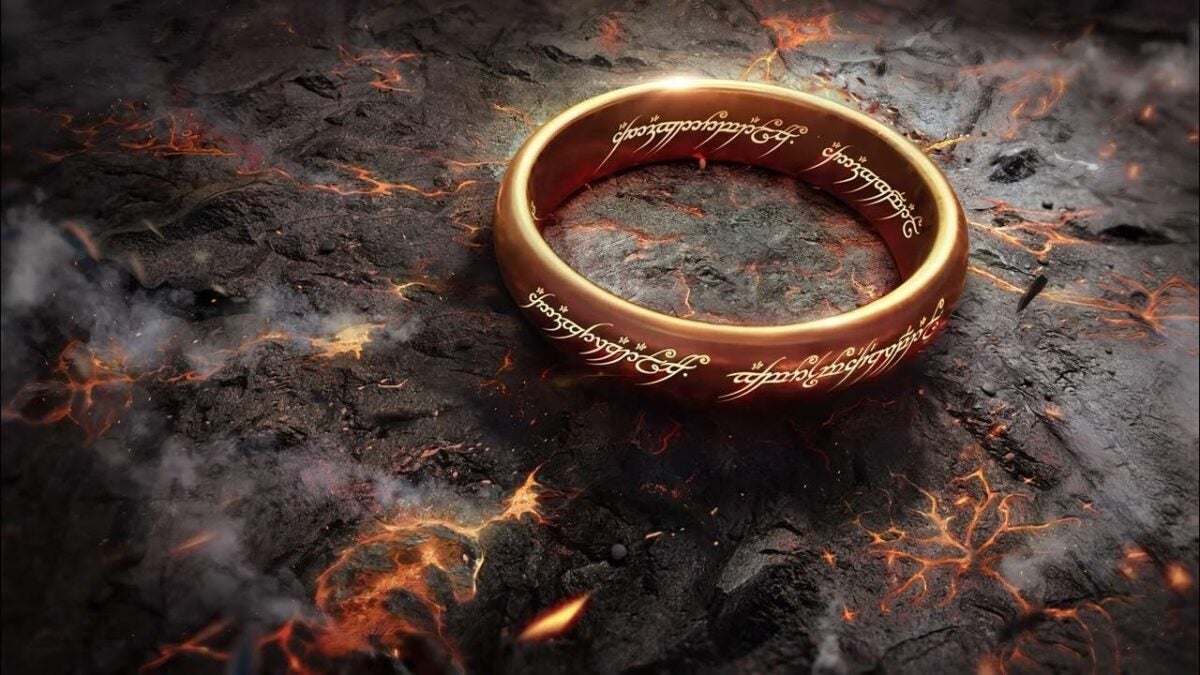
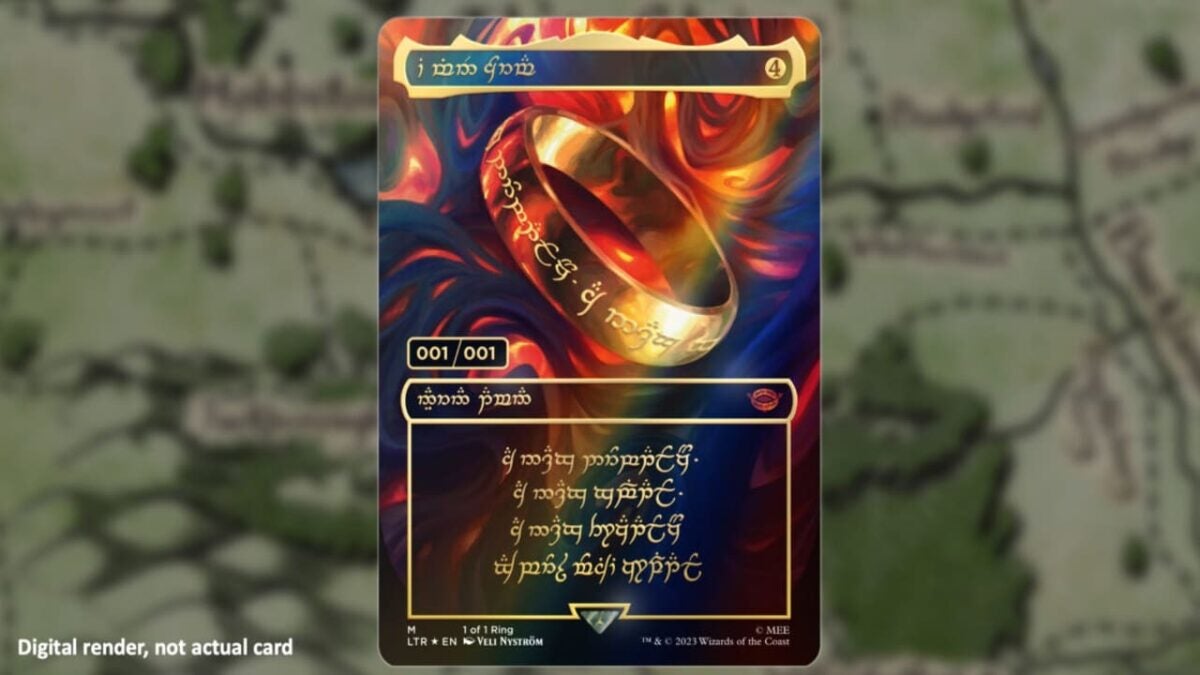
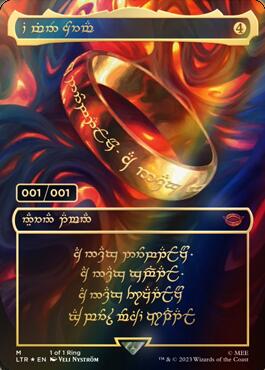
Magic: The Gathering has made headlines in recent weeks for printing potentially the most expensive card in its history. Perhaps even in the history of collectible cards. The One Ring from The Lord of the Rings: Tales of Middle-earth collection is a card that has a specific copy with gold trim, serialized, of which there is only one. To ensure this, Wizards of the Coast created a sheet of copies of this card, kept only one copy, and shredded all the others, making that one surviving copy special from its very inception: it is the only one that survived the shredder.
The Lord of the Rings: Tales of Middle-earth collection was officially released on June 23rd, but its contents have been opening up at least a week prior. Being exclusive to English-language collector boosters, the most expensive boosters of the game, it naturally led to a significant increase in the prices of these booster boxes. Selling for over 500 euros, double the normal price for this type of product, The One Ring tempted the community and anyone who was aware of its existence, effectively becoming a sought-after item.
But why? While the non-serialized version of the card is valued at around 60 euros, already a substantial price for highly sought-after cards in the game, the serialized version of The One Ring could potentially exceed that price by a significant margin. However, if you were considering embarking on a hunt for the ring, we have bad news for you: the ring already has an owner. According to PSA, one of the largest collectibles grading companies, and confirmed by Wizards of the Coast, the card has already been found. Therefore, we can only speculate on the potential value of this card, as its actual worth remains unknown. After all, it is a collector’s item, and its value is not defined by a market price per se.
Currently, there is a confirmed offer of one million dollars from the New York-based card reselling business, Dave & Adam’s. In Spain, a store in Valencia called Gremio de Dragones offered two million euros, a trip to Valencia, and a paella for anyone who found The One Ring before it was opened. However, once the ring was found, all attempts to contact them have been unsuccessful. Therefore, the highest serious public offer for the ring can be considered to be one million euros. This explains the enthusiasm with which this card has been sought after.
Upon finding the ring, the prices of collector booster boxes have decreased, and the owner of The One Ring is currently listening to offers above one million dollars through a lawyer. How much will it ultimately cost? We don’t know. It’s impossible to tell. It is a unique collector’s item that does not have a set price. It all depends on what someone is willing to pay for it. And it appears that it is entirely possible for that to be even more than one million dollars.
Some of the links added in the article are part of affiliate campaigns and may represent benefits for Softonic.
Baldur’s Gate 3 had a close release date, but now it has become absolutely imminent with the date change they’ve made.
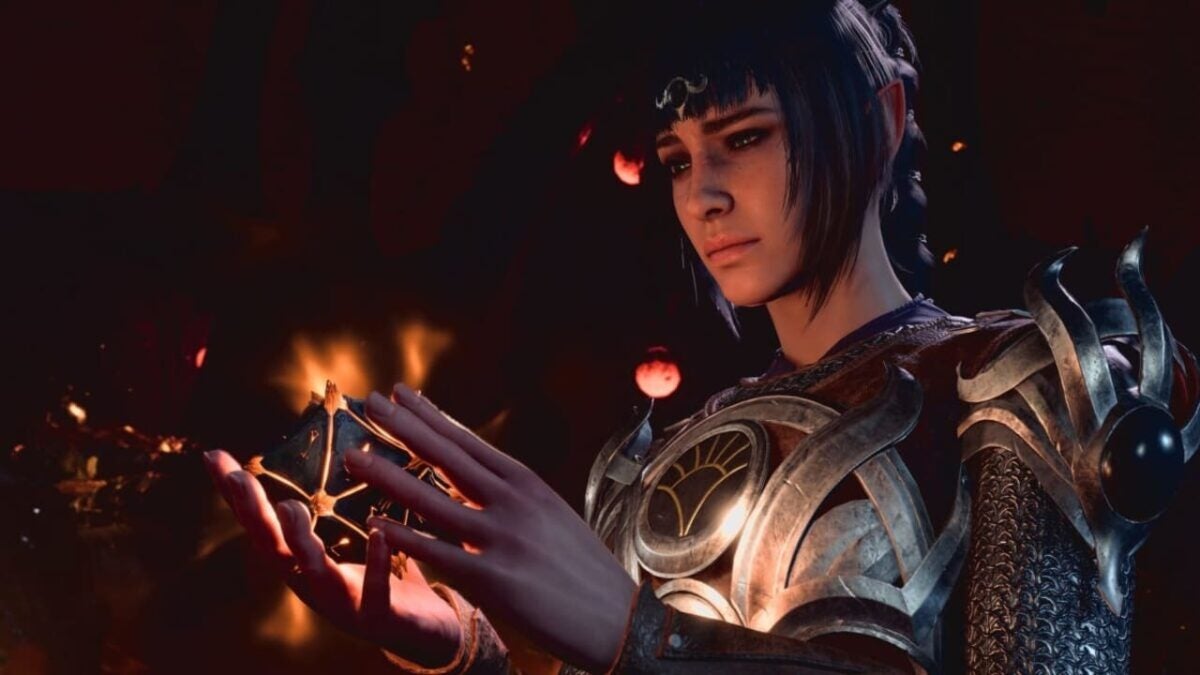
Baldur’s Gate 3 is the most anticipated game for many people, especially for fans of western role-playing games and Dungeons & Dragons in particular. It’s not surprising because, even though it’s still in early access, what can be played of the game is already absolutely fabulous and it has continued to grow over time, even with a lot of content yet to be added. The remaining content has now been finalized, and finally, an exact release date has been announced in a community update on the game’s Steam page. There’s great news for PC players and just a slight disappointment for PlayStation 5 players.
The game will be released on PC on August 3, earlier than its original release date of August 31. On the other hand, the PlayStation 5 version will have to wait six days longer than expected, as it will not be released until September 6. This delay is due to the difference in polishing both versions.
While the PC version is essentially complete, the PlayStation 5 version still needs some polishing. At Larian Studios, the studio behind the game, they aim to deliver a consistent 60FPS experience on PlayStation 5 without any drops, and although they are close to achieving it, they are still in the process of fine-tuning it. As they do not want to compromise the quality of the game by setting an arbitrary date that they believe they cannot meet, they have decided to prioritize the PC players by advancing the release date. Meanwhile, they will continue to work on polishing the details to provide PlayStation 5 players with the best possible version of the game.
Among other intriguing details that explain the heights reached by Larian in this game, it is said that Baldur’s Gate 3 has more cinematic dialogue than the three Lord of the Rings novels combined. Together. This is due to its 174 hours of cinematics, twice the length of each season of Game of Thrones. Together. This gives context to the absolutely massive volume that Larian aspires to achieve with this game.
Furthermore, they have specified some important details about what we can expect from the final version of the game. We will be able to choose from 12 classes and 46 different subclasses, 11 races and 31 different subraces, 37 feats to choose from at certain levels to enhance our characters, over 600 spells and subspells, a story mode, and a hardcore mode. Additionally, everything will be fully translated into both European Spanish and Latin American Spanish, with cinematics dubbed in English and Spanish subtitles. This demonstrates that Larian is not content with creating a good game; they aim to make an exceptional game. And if you are playing on PC, congratulations: you won’t have to wait much longer to experience it.
Magic: The Gathering is experiencing strange weeks seeing how some people become Gollum due to the release of The One Ring.
Sometimes it’s hard to know where to draw the line with seemingly harmless things. For example, collecting cards, stickers, and other similar products. The fact that they are randomly obtained, with some being more common than others, doesn’t seem like a big issue. However, it is true that in recent times, with loot boxes and competitive online gaming, they have become a problem that intersects with and reinforces patterns associated with gambling addiction. That’s why good ideas, which make sense in terms of marketing and have value in addressing design issues, can end up creating unforeseen problems. And it appears to be the case with the creation of “The One Ring” from the “Lord of the Rings: Tales of Middle-earth” collection in Magic: The Gathering.
In this collection, Wizards of the Coast, the company behind Magic: The Gathering, wanted to pay a special tribute to the works of J.R.R. Tolkien. They aimed to capture the essence of his work in terms of mechanics, narrative, and aesthetics. That’s why the collection features meticulously crafted artwork and gameplay elements that reference various aspects of the Lord of the Rings story, while also challenging certain conventions of the game. This unique approach has led to a situation that has sparked a lot of discussion.
The entire story of the Lord of the Rings revolves around the One Ring and its destruction. That’s why they decided to print only one copy of the One Ring card. It is a numbered version of the One Ring card, written in Elvish script, with gold accents, and it only appears in English collector booster packs of the game. This is not a new concept in Magic, as similar things have been done before. On a smaller scale, alternate art and numbered cards have been used to create collector’s versions of cards that are attractive to collectors, increasing their value and encouraging them to purchase more booster packs. As a result, more cards enter the secondary market when more packs are opened, which leads to a decrease in prices for non-collector’s cards since there is a greater supply and they are not sought after as exclusively.
The problem is that this also encourages a certain economic mindset, rather than a recreational one. It’s as if it were a gamble. Opening packs and boosters to see if you get a special or rare artwork to make money, not for the excitement of obtaining a card that we particularly want or have been searching for a long time. And that’s what seems to have been emphasized with The Lord of the Rings: Tales from Middle-earth.
Although there are many exclusive cards with special artwork treatments, and a handful of numbered cards whose price ranges from hundreds to thousands of euros, the crown jewel is The One Ring. It’s a card without an official price, but rather the price that people want to assign to it. But therein lies the problem. There is only one. And Magic: The Gathering is a game with enough fame and credibility to be considered an investment that provides security. That’s why, even though its value started at the $100,000 offered by collector Dan Bock, currently we are already at €2,000,000 offered by the Valencian store Gremio de Dragones.
This has several problems. The first is that a lot of material is being opened, but a lot of that material is being opened by people who are not interested in Magic. This means that there are lots and lots of Lord of the Rings: Tales of Middle-earth cards being opened, but not as many are being resold as collections geared towards the gaming community, so secondary market prices are not dropping as much as they should be. The second problem is that many generalist streamers are taking the opportunity to open boxes of collection envelopes to see if they can find the unique ring. Spending huge amounts of money, creating a dangerous trend that is nothing short of a form of gambling.
Ignoring the former, because it is only a commercial failure, it is difficult to overlook the latter, because it has created an ethical crossroads of the first order. Recently the famous streamer xQc, which has switched its platform from Twitch to Kick for a $100 million semi-exclusive contract, has opened a box of collector’s envelopes worth $9,000. As is evident, he hasn’t found the ring, but the seed has already been planted. After opening eighteen boxes of collector’s envelopes in front of an underage audience, the image I send to the world about Magic: The Gathering and about The Lord of the Rings: Tales from Middle-earth is that it is a collection and gambling-based game whose value as a game is possible to ignore entirely.
Of course, Wizards of the Coast is not to blame for what xQc does in its streaming. It can’t even foresee how far the situation might go. In terms of marketing, the idea of The One Ring is brilliant. And if we stick to sales, it’s a triumph. It is undeniable that they are selling a lot. But if we add the advertising interests, not to give a pernicious image of the product, and the medium and long term business interests, to make the game viable for the players, the collection is on a tightrope.
What should Wizards of the Coast do? Disassociate itself from what xQc and similar streamers are doing. Emphasize the importance of the game. Reprint the most important cards in a way that they will now reach those who will play them. Demonstrate to the players who care and to society that this is a game, competitive and casual, and not a lottery. Because The Lord of the Rings: Tales from Middle-earth is a great collection full of exceptional cards that every player deserves to enjoy, without controversy, without thinking about looking for financial gain. And also because, at the end of the day, Wizards of the Coast does not deserve to end up having the same fame that EA has today with FIFA and its lootboxes.
The Lord of the Rings: Tales from Middle-earth, the new Magic: The Gathering set, is out, and these are its best cards.
Wizards of the Coast officially launched its new Magic: The Gathering collection, The Lord of the Rings: Tales from Middle-earth, on June 23rd. By closely following J. R. R. Tolkien’s texts, reinterpreting them in certain points -especially in terms of aesthetics-, they have created a collection that, in terms of respect for the original work, is absolutely exceptional. A collection of cards that will fascinate all fans of J. R. R. R. Tolkien. Even if getting all nine versions of the Nâzgul is not going to be easy.
Now, that doesn’t take away from the fact that this is a Magic: The Gathering set. And although the discourse of a certain part of the players is that the set does not have especially powerful cards, in reality The Lord of the Rings: Tales of Middle-earth has much more than what the eye can see at first glance. That is why we have decided to highlight those cards with more potential to become key pieces of competitive decks in the formats where this set is legal. That is, in Modern, Legacy, Vintage, Commander and Pauper. Although not all of them are here, they are all here, or at least we hope so: this is our particular choice of what we consider to be the best cards of the collection. A collection that, besides being beautiful and nostalgic, has some cards that can strongly shake the meta of the game.
The One Ring
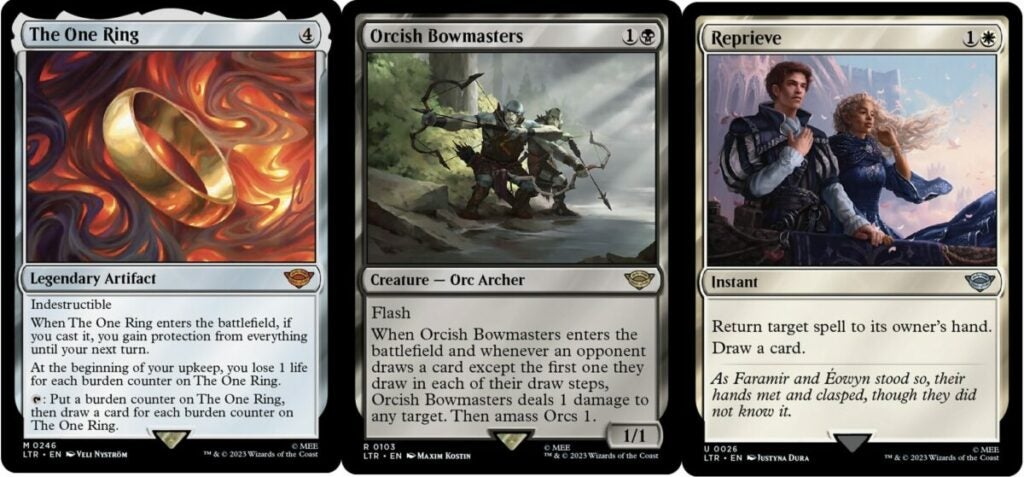
As a matter of lore, it was logical that the single ring would be a powerful card. In fact, you don’t need to think much about it to see why it is so. Just with Indestructible and giving us protection against everything until our next turn for 4 mana, it would already be a piece to consider, but being able to turn it, add a counter on it and draw as many cards as counters in exchange for suffering as much damage as counters at the beginning of our turn, it is a bargain. Why? Because in two turns, for three life, we can draw six cards. If we draw a second One Ring, as it is a legendary artifact, we can sacrifice the original one and keep the new one, without counters and without losing lives. What does that mean? That with three The One Ring in the deck, one on the bench and a Karn, the great creator; or with four in the deck and an Emry, stalker of the lake, we have a combo that makes the One Ring the best card in the collection.
Orcish Bowmasters
But is The One Ring the best card in the set? Actually that position is hotly contested by the most unexpected card of them all: two Orcish Bowmasters. Orcish Bowmasters can enter the battlefield any time you could cast an instant and does 1 damage to any target. No conditions attached. In addition, every time an opponent draws a card after the first one each turn, it does 1 damage to any target and amasses an orc; that is, it creates a 0/0 Orc counter with a +1/+1 counter, or gives a +1/+1 counter to a 0/0 Orc counter. How much is drawn in Commander, Legacy, Vintage and Modern, the formats where this collection is legal? Even without unique rings, a lot. And that makes Orcish Bowmasters one of the most powerful cards in the set.
Sometimes a card just needs to do something that its color can’t normally do. That’s what Reprieve does. Our opponent is going to cast a spell and for two mana, one of them white, we return that card to his hand and draw a card. Are we just buying time? Indeed. do we sometimes just need that, especially when white specializes in very aggressive tribal strategies and value-based control strategies, where it’s all about buying time? Also.
Flame of Anor
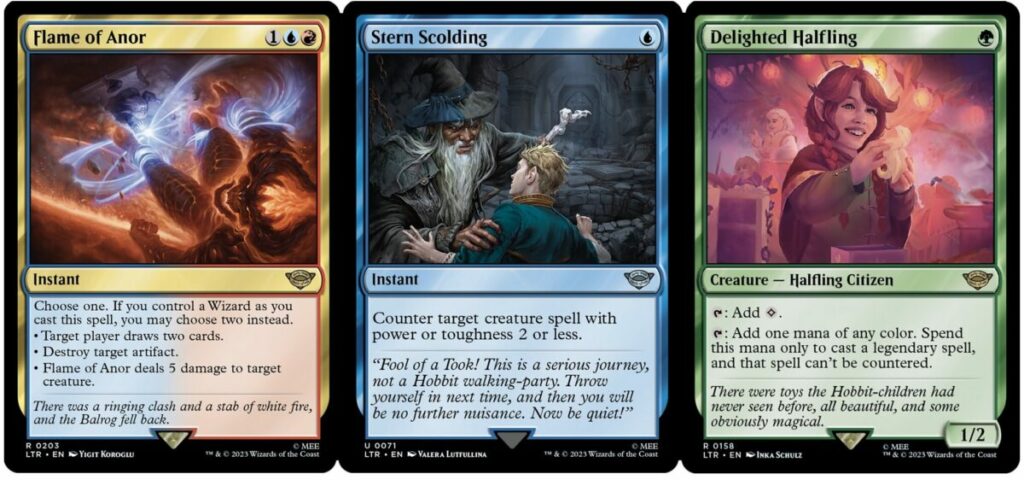
Modal spells, which allow us to choose between several options, are always interesting. If they are instantaneous, they always find some place. Flame of Anor requires a blue and red mana plus a colorless, but it has three very good modes separately, and lets us choose a second one if we control a Mage. Does this card have a place? If there’s room in Modern and Legacy to put Snapcaster Mage back into Izzet decks, those that have blue and red mana available, then rest assured that Flame of Anor is a card you’re going to see a lot of.
Stern Scolding
An uncommon counter for a mana counter is always interesting. If it is able to kill any creature with life 2 or less, it has a good chance of becoming a spell to be reckoned with. It kills the bulk of small and medium creatures in the format, particularly Modern’s most insidious creature, Ragavan, Skilled Rustler, but in return, it’s completely useless against any deck that plays no creatures or only plays big creatures. But that doesn’t mean that Stern Scolding doesn’t have potential in formats where, behind the bench, it can make us beat more selfish decks for value.
Nobody likes a creature that gives mana. While it is true that Delighted Halfling only gives colorless mana unconditionally, it is also true that it gives colored mana to cast legendary spells and makes them impossible to counter. This makes Delighted Halfling an absolutely insane card. Where classic cards like Llanowar Elves are better in terms of being more reliable for single-color decks, Delighted Halfling works better at giving a reliable source of mana that also confers protection against any kind of opponent’s attempt to disrupt our plans, provided we play a decent amount of legendary creatures; something likely in any three or four-color deck.
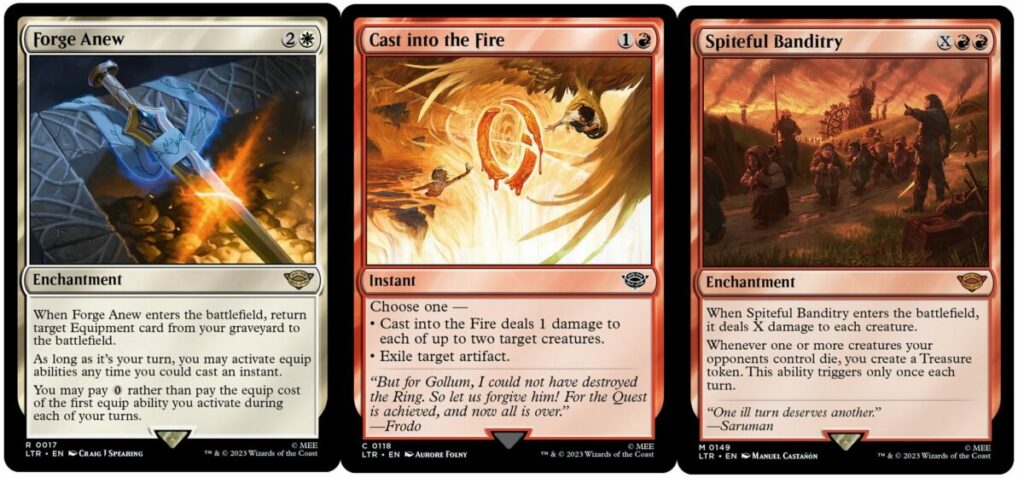
Forge Anew
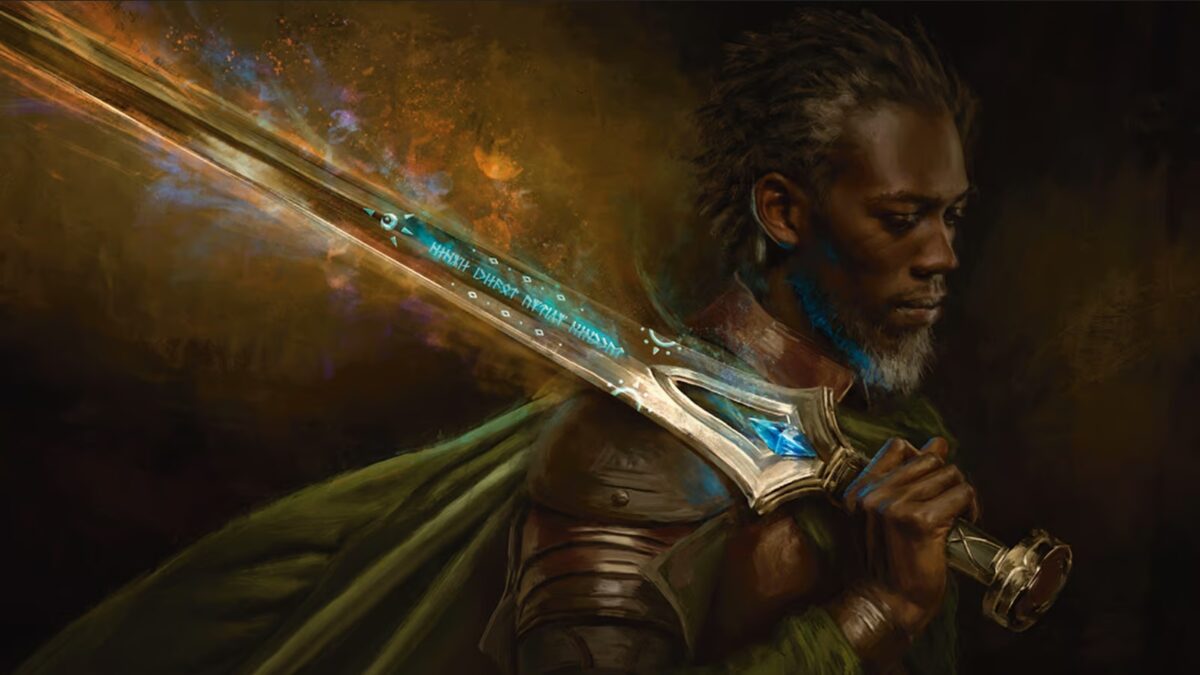
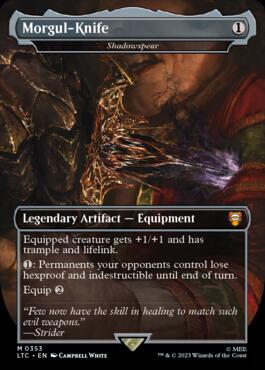
If there is one card that is secretly broken, in the sense that it will win a lot of surprise games in a way that no one expected, it is Forge Anew. Reading over it, it doesn’t seem to do anything particularly spectacular. It’s true, for starters, that it does a lot of things for a ridiculous cost. It returns a piece of equipment from the graveyard, allows us to activate equipment abilities at any time, and also allows us to equip for 0 the first time we activate an ability each turn. Hammer Time loves this because, wow, it’s based on doing exactly that, but Forge Anew does some very sinister things with it. Change who’s carrying Colossuss Hammer or Shadowspear once you’ve chosen blockers? Attack with Kaldra and, once you’ve resolved the first attack, equip it to another creature? It is also possible. That’s why it’s hard to imagine a world where Forge Anew doesn’t find a place at least in Modern.
Cast into the Fire
In a world where the single ring exists, there has to be a response to match. Under normal circumstances. Cast into the Fire would be a bad Erosionar. What happens is that The One Ring is indestructible and while Erosionar doesn’t affect it, Cast into the Fire exiles and by extension, can kill the One Ring. If we also add that it is legal in formats where an Emry, Lake Stalker and Hammer Time roam freely, then there is no doubt: Cast into the Fire is a card that every good player needs in his collection.
There are cards that are easy to despise a priori. Spiteful Banditry is one of those cards. At first, it seems clunky, slow, not too useful. It is a card that does not really fit in aggro and when red wants to go midrange or control, it depends on the other colors. But don’t be fooled: Spiteful Banditry is too similar to Ganchocarne Massacre, a card that had to be banned in Standard, to not take it into account. If we also add that it stays on the battlefield and generates a treasure for each enemy killed, giving us tremendous value for each new copy we cast, Spiteful Banditry has potential if you find a deck that wants to clear tables and generate value systematically.
Some of the links added in the article are part of affiliate campaigns and may represent benefits for Softonic.
The Nazgûl card from the new Magic: The Gathering Lord of the Rings set increases its price by 1,000% in 24 hours.
Magic: The Gathering is launching its collection dedicated to The Lord of the Rings this Friday, and things are starting to heat up. While this collection may not have a significant impact on the competitive scene, it certainly excels in flavor, capturing the essence of J.R.R. Tolkien’s work. The artwork is breathtaking, and with the original texts accompanying the cards, this collection boasts some of the best descriptive texts in the game’s history. However, despite the limited number of cards that meet the competitive standards, the unique nature of the collection is causing the prices of some typically inexpensive cards to skyrocket.
First and foremost, it’s important to understand that Magic: The Gathering operates on a scarcity-based economy. A certain number of cards are printed, and once they are sold out, unless they are reprinted in a future collection, no more are available. This means that the more a card is played or in demand due to its artwork or exclusivity, the higher its price will climb. This is precisely the case with the Nâzgul cards.
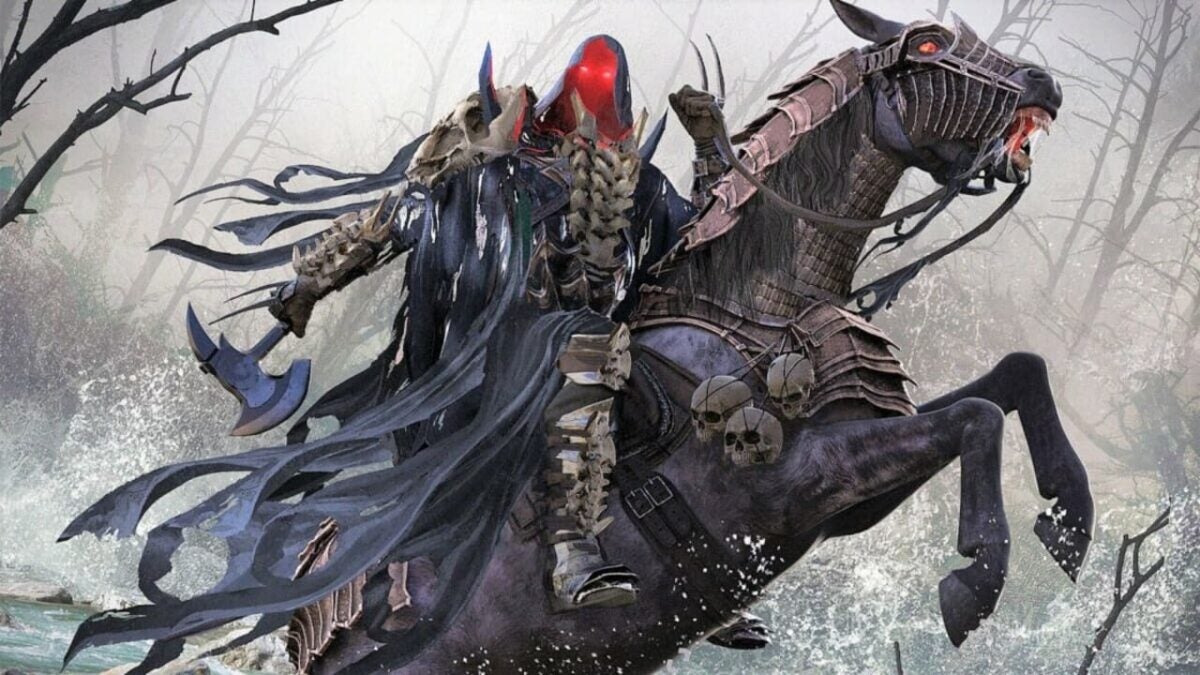
Initially, the Nâzgul card itself is nothing special. Being a 1/2 creature with deathtouch for a cost of 3, it doesn’t stand out as particularly playable. So where does its value lie? It’s in the last line of text and what they’ve done with the card. The final line reads, “Each deck may contain up to nine cards named Nâzgul.” This is an anomaly because, unless specified otherwise, each deck can only have up to four copies of any given card, which doesn’t apply to the Nâzgul. Now, as we mentioned, it’s not a playable card, so it doesn’t matter whether you can have four or nine copies if it’s not going to see play. But that’s where the trick lies. In The Lord of the Rings, there are nine Nâzgul, just as there are nine human kings corrupted by the rings of power given to men. And in this Magic: The Gathering collection, there are nine versions of the Nâzgul card, each representing one of the nine different riders.
That’s what has made it scarce. Despite being an uncommon card, being the second rarest type of card —in terms of rarity, from most common to least common to find in packs, there are: commons, uncommons, rares, and mythic rares—, having nine versions of the same card makes it harder to find all the versions than simply finding nine copies of the same one. If we also consider that they seem to appear less frequently than usual for uncommon cards, we have a case on our hands of a card that is poised to explode in price on the secondary market.
As the first packs of the collection have been opened, the price of the Nâzgul card has skyrocketed. Going from around one to two euros to approximately ten euros in the European market, and reaching nearly twenty dollars in the American market, its value has exponentially increased in less than twenty-four hours as people realized that acquiring a collection of all nine Nâzgul could be much more difficult than initially thought.
On the other hand, there’s a small catch to consider. So far, only a very limited number of packs from The Lord of the Rings collection have been opened. The collection doesn’t officially release until Friday, June 23rd, and while stores open boxes early to sell cards that can be used in tournaments as soon as they become legal, one week before their release, it means there’s a relatively small amount of material circulating. This suggests that it’s expected for Nâzgul’s price to decrease over time if the collection is widely opened, which is likely given that it’s The Lord of the Rings, and if many cards are sold, although that is more questionable given the set’s focus on collectors.
At the end of the day, Magic: The Gathering is a game that treats its cards as luxury products. In recent times, they have tried to alleviate this by introducing special treatments for cards, increasing reprints and their frequency, but they don’t always achieve their goal. In any case, this will only affect collectors and not the competitive game, and as we know, this is how it works: if you want something, you have to pay for it. And no one ever said that collecting something is cheap.
Magic: The Gathering visits the Lord of the Rings universe and the result is some incredible cards, both in art and in their respect for lore.
The Lord of the Rings is a beloved fantasy classic that has greatly influenced virtually every major name in fantasy. Including Magic: The Gathering. So the announcement that the world’s most famous card game was going to make a collection featuring J.R.R. Tolkien’s characters seemed like the perfect mix. It’s not just that the audience for both franchises overlapped to some extent, but the beautiful artwork that Magic cards are known for could give us a new glimpse into the world of The Lord of the Rings like we’ve never seen before. And now that they’ve finally started to unveil them, the result is even more impressive than expected.
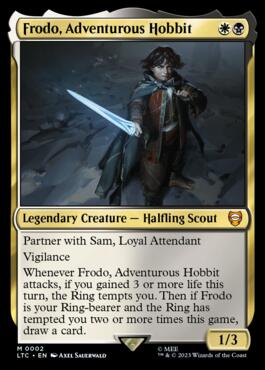
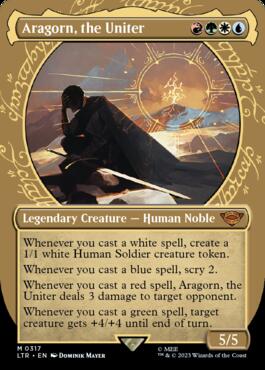
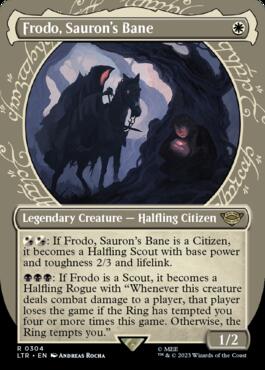
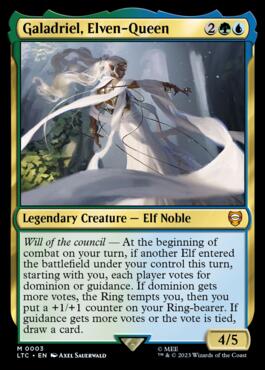
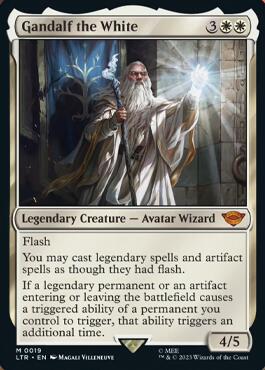
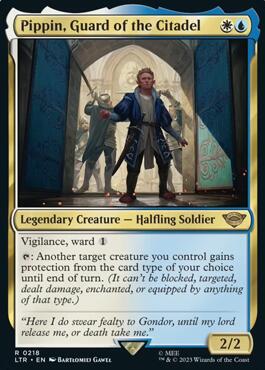
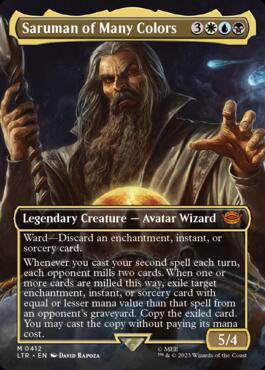
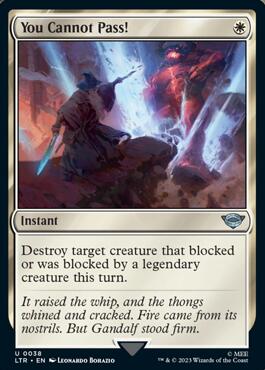
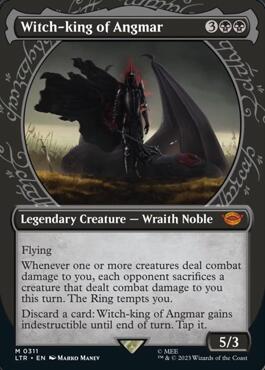
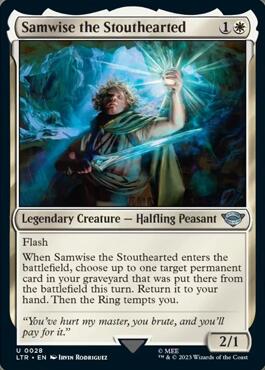
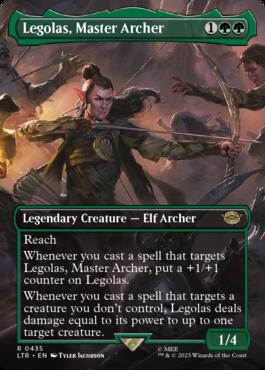
With a video of just over twenty minutes explaining the collection, its contents and showing some of the cards, Wizards of the Coast has already shown 120 of the more than 300 cards that will complete this collection called The Lord of the Rings: Tales from Middle-earth. So far we have already been able to see mythical characters such as Aragorn, Legolas, Gimly, Gandalf or Saruman, as well as Frodo and of course the One Ring, which even has its own game mechanics: the one ring tempts you.
Given the importance of the franchise, The Lord of the Rings: Tales from Middle-earth will get special treatment in terms of the quantity and quality of the products they will be releasing. For those who are new to Magic: The Gathering they will release a Starter Kit and Jumpstart booster packs, two ways to start playing without having to build your own deck beforehand. For those who already have some experience or want to get into a non-competitive mode, they will release four commander decks, a format where up to four people can play at the same time, with decks themed around humans, hobbits, elves and Sauron’s forces. Finally, franchised Magic players will have draft and collection booster packs, as usual, and collectors will have the aptly named collector packs, which contain cards with special artwork and borders, giving the cards a unique look.
As if this were not enough, they have also wanted to make this collection feel even more unique by making several special editions of the cards. There are editions of some cards that are numbered, there being a limited quantity of them with an exclusive illustration, there being one of them that stands out above all the others: the unique ring.
In Elvish, with a special treatment and with a unique unit existing in the world, it may only appear in English collector’s packs. There is only one unique ring card with this illustration and the text in Elvish in the whole world, which will give its owner even more the feeling of being in possession of a unique and special object. Especially since it is likely to end up being the most expensive card in Magic history.
While cards from the set will continue to be unveiled until June 9, The Lord of the Rings: Tales from Middle-earth set will be released on June 23 and will be legal in all formats except Standard and Pioneer. In addition, the cards will be playable a little earlier in Magic: The Gathering Arena, being available on June 20 at around 17:00. All this makes for a great opportunity to get into the world of Magic: The Gathering for all those who are curious and like The Lord of the Rings, if only for the sheer gorgeousness of the card art and the care and fidelity with which they have treated J.R.R. Tolkien’s story from Wizards of the Coast.